


The Power of Storytelling in Your Art Marketing Campaign
👁 91 Views
Let’s begin with a simple truth: great art doesn’t always sell itself. Yes, even if it’s striking, layered with meaning, and finished with exquisite technique. What truly moves people? What makes someone pause mid-scroll, click into your website, or save your work for later?
A story.
We are drawn to stories. It’s how we make sense of the world, through the narratives we hear, the ones we tell, and the ones we see. And in the world of art, storytelling is what helps bridge the distance between what you create and how others experience it.
If “marketing” feels overwhelming or impersonal to you, this is where things can shift. You don’t need to force anything. You’re not selling a product, you’re sharing something meaningful. Your process, your purpose, your perspective. And chances are, your art is already filled with stories. Let’s explore how to make them part of your marketing in a way that feels genuine, clear, and warm.
Why Storytelling Matters in Art Marketing
Storytelling isn’t just a clever marketing trick, it’s something deeply rooted in how humans connect. From ancient murals to bedtime tales, stories help us understand each other. When you frame your art through story, you offer a way in. You invite someone to experience your work not just visually, but emotionally.
Research shows that storytelling can boost empathy and retention. People are more likely to remember a narrative than a list of features. When someone hears the story behind your work, they aren’t just seeing an image, they’re feeling something, too.
Whether it’s a brief caption, a studio blog, or something you share in a conversation, these stories help others connect with your work in a lasting way.
1. Your Artist Origin Story
Every artist has a beginning. Maybe you discovered painting during a rough season of your life. Maybe you’ve always been the kid with paint-streaked fingers. Maybe your art journey started later, after years in a different field.
Sharing where you come from isn’t about giving a formal résumé. It’s about letting people understand what fuels you. The why behind your practice. Your origin story creates trust and adds depth to everything else you share.
Try this: Think about the first time you made a piece of art that felt truly yours. What were you feeling? What did that moment unlock for you?
2. Behind-the-Scenes Moments
People are naturally curious about how things come to life. Sharing the behind-the-scenes of your process, what worked, what didn’t, what surprised you, adds dimension to your work.
Even small details count: what inspired your color choices, how you solve a composition problem, or what music you listen to while working. These moments build connection and give people something to relate to.
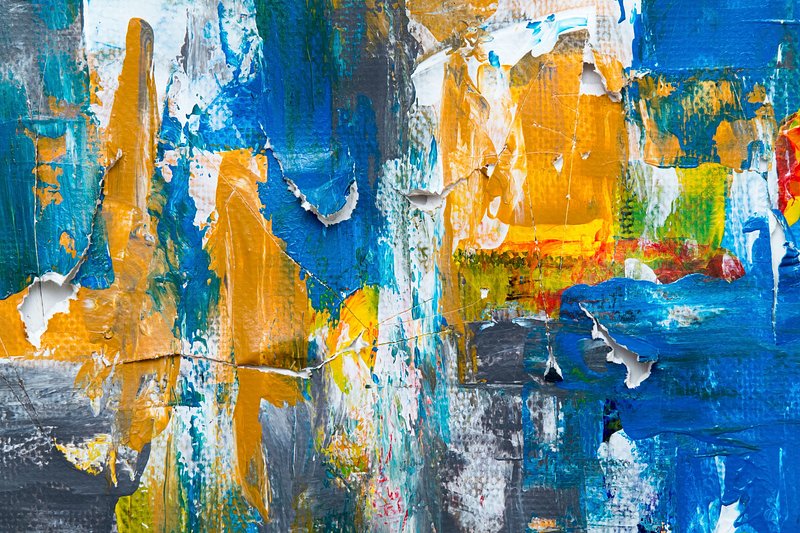
Example: “I worked on this piece over three weeks, and changed the background four times. The third version was a warm orange that I almost kept, but it never quite settled. In the end, a deep green just felt right.”
3. The Themes That Run Through Your Work
Even if your subject matter shifts, there’s often a thread that runs through your work—a feeling, a question, a topic you keep returning to.
Maybe you’re exploring ideas of belonging, identity, nature, transformation. Sharing those themes makes your work feel intentional and layered. It helps others understand the heart behind what they’re seeing.
Prompt: Try completing this sentence: “Lately, my art has been trying to say…” It doesn’t need to be perfect. Just honest.
4. Small Personal Touches
Sometimes, the most powerful stories are in the smallest moments. Maybe a piece began from something you saw while walking to your studio. Or a memory resurfaced unexpectedly during your process. Or maybe the work is tied to a specific scent, season, or dream.
These small anecdotes don’t need to be dramatic. They just need to be true.
Try this: For every new piece, jot down one note about what made it special to create. Maybe it was the quiet morning light. Or a scrap of a song lyric. Those little details can go a long way in making your work memorable.
5. Weaving Story Into Everyday Marketing
You don’t need to write essays or blog posts to include storytelling. Here’s how you can build it into your usual flow:
In Captions:
- “This piece changed shape three times before I knew it was finished.”
- “Inspired by the view outside my grandmother’s kitchen.”
On Your Website:
- Include your origin story on your About page.
- Write your artist statement in your voice, not like a press release.
In Emails:
- Start with a short personal insight or memory that led to a recent work.
People appreciate honesty. A simple sentence that offers context can often mean more than a paragraph of jargon.
6. Include the Stories of Others
When someone brings your art into their home, they’re becoming part of the story. Invite them to share their side, too.
Ask your collectors why they chose a piece. What it means to them. Where they placed it. These stories deepen the sense of connection and remind new audiences that your work lives beyond the frame.
Example: “This painting now lives in a cozy reading corner in a small beach house. The collector said it reminds her of early morning walks by the ocean.”
These shared stories create a loop, your story, the viewer’s story, and the space in between.
Gentle Storytelling Prompts
Feeling stuck? Here are some light prompts to help you begin:
- What surprised me while creating this piece?
- What did I learn about myself during this project?
- Is there a sound, smell, or feeling that this work reminds me of?
- What part of this process felt the most challenging or the most peaceful?
Use them in your captions, your newsletter, or even in quiet notes to yourself. Over time, you’ll find the stories begin to emerge naturally.
Why Storytelling Lasts
Marketing strategies will shift. Social media platforms will change. But your story? It’s uniquely yours. No one else can offer it the way you do.
When you center storytelling in your art marketing, you create something that resonates more deeply than algorithms or ads. You create a relationship. A sense of trust. A reason for people to return, not just to see what you made, but to feel something through your work.
Share What Matters Most
You don’t need perfect grammar or poetic captions to tell your story. You just need to start.
Start with what moved you. What challenged you. What delighted you. Speak like yourself. Share what you wish someone had told you. Let your marketing be an extension of your creative voice, not a separate performance.
Because in a world flooded with images, it’s the stories that make us pause. That make us care.
And the more you allow your story to live alongside your art, the more your audience will connect, not just with what you made, but with who you are.
That’s the kind of connection that lasts.
P.S. Next time you finish a piece, ask yourself:
- What was I thinking about while working on this?
- What unexpected moment shaped this piece?
- If someone asked, “What’s the story behind this?”, what would I say?
Start there. The rest will follow.