



The Most Unexpected Art Moments of 2025
👁 285 Views
Some years reveal their character slowly, and 2025 has been one of those years. It unfolded at its own pace, offering art moments that you did not see coming but immediately felt. They appeared naturally, almost as if they were waiting for the right stretch of time, and once they arrived, they carried a surprising amount of meaning.
What made these moments memorable was how clear they felt. Nothing overly dramatic, just shifts that made you stop for a second. A new approach in an artist’s process that suddenly clicked, a thoughtful public installation that seemed to meet people exactly where they were, a digital experiment that reached far beyond its original circle. These were the kinds of things that reminded you that art continues to move in its own rhythm, no matter how fast everything else is spinning.
There was a grounded feeling to these moments too. They encouraged artists to slow down, reconsider a few habits, and maybe question what they were aiming for. They offered a breather, the kind that settles in gently and makes the bigger picture feel a bit clearer the longer you sit with it.
And maybe that is why they stand out. They arrived without overthinking, yet somehow shaped conversations, sparked curiosity, and left people feeling a little more connected to the work around them. They marked the year in a way that felt steady and honest.
So, here are the art moments that moved 2025 in ways no prediction could have outlined, the ones that appeared naturally but ended up shifting how people create, process, and respond to the world.
1) The Klimt Sale That Reframed the 2025 Market Conversation
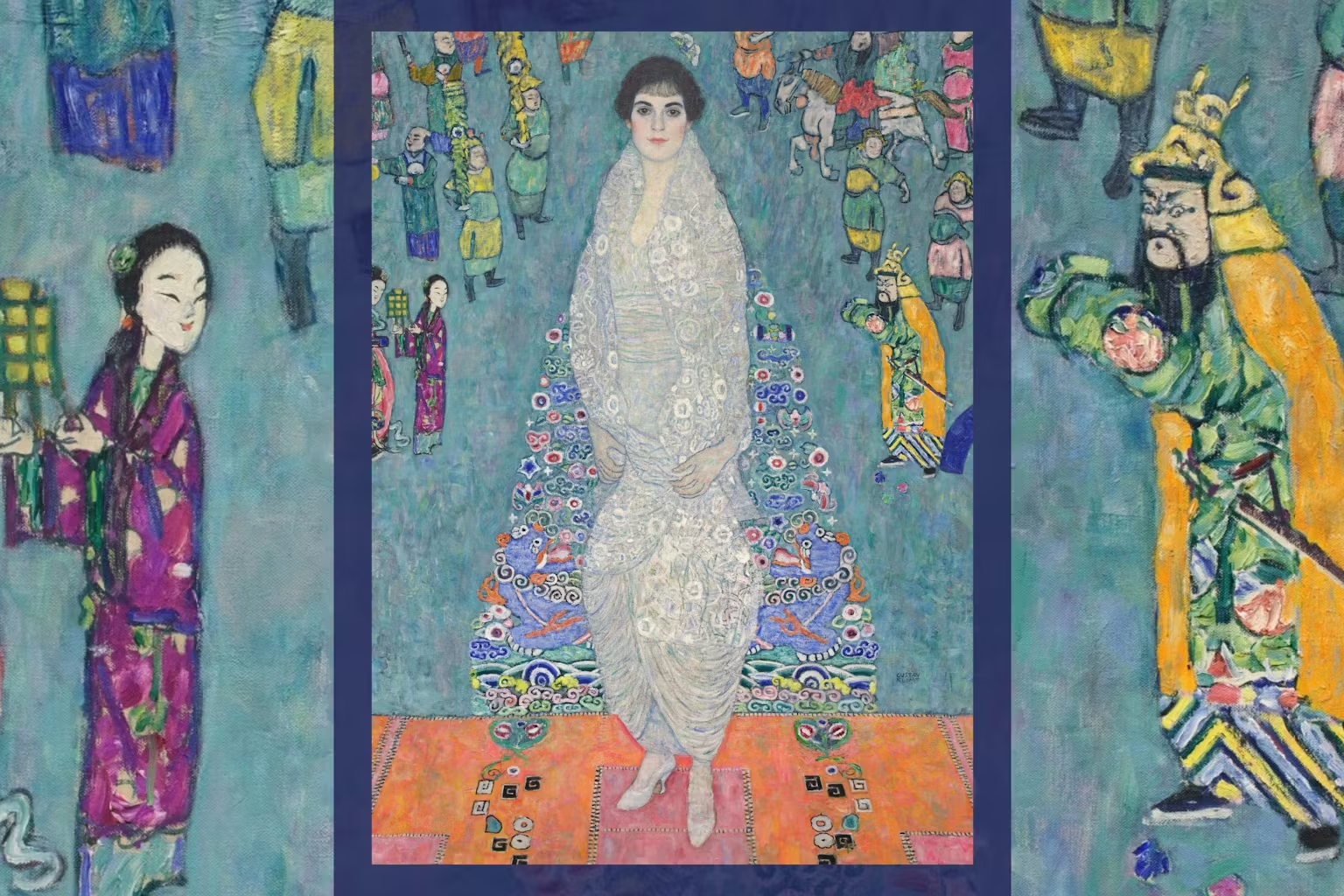
When Gustav Klimt’s Portrait of Elisabeth Lederer crossed the auction block in late 2025, the room shifted in the way it only does when something truly rare is unfolding. People expected a strong performance, but few anticipated the kind of feverish bidding that unfolded, the kind that makes even seasoned art watchers sit a little straighter. What made it a defining moment was not the final price alone, but the cultural weight attached to the painting’s timeline, its ownership history, and its place in Klimt’s evolving market arc. Suddenly, the year had a new benchmark, one that collectors and institutions used as a reference point in the weeks that followed.
The sale also sparked conversations about provenance, restitution, and how we handle complicated histories embedded in iconic works. Many institutions had been circling around these themes for years, but the attention on this piece pulled those dialogues into public view again. Collectors, curators, and even casual observers found themselves talking not just about Klimt’s extraordinary technique, but the ethics of stewardship, the symbolism of returning works to rightful families, and how museums should navigate that responsibility going forward. The conversation felt heavier, but also necessary.
Part of why this moment resonated so widely is because it reminded people of the emotional charge attached to major artworks. Even those who do not follow auction markets closely felt something when the hammer fell, as if the sale marked the closing page of a long chapter. Major sales often trigger market recalibrations, but this one felt more like a cultural reset. It pushed galleries to rethink their exhibition strategies, and museums to reassess how they frame works with difficult pasts. The impact was not confined to boardrooms and auction houses, it reached a much larger cultural audience.
Art fairs, galleries, and private dealers echoed the aftershocks for weeks. Price expectations shifted. Collectors reassessed their holdings. A renewed confidence began to ripple into the winter season, but it was not the kind of loud, speculative energy that sometimes dominates headlines. Instead it felt thoughtful, measured, almost contemplative. There was a sense that the art world had been reminded of its own responsibilities alongside its ambitions, and that balance changed how people talked about the months ahead.
By the end of 2025, many pointed to this single sale as the moment that subtly but unmistakably reshaped the year’s narrative. It wasn’t spectacle for spectacle’s sake. It felt like a recalibration, a reminder that the art world’s biggest moments often combine emotion, ethics, history, and ambition all at once. And that combination is exactly why this one stayed in the conversation long after the room emptied out.
2) Ruth Asawa’s SFMOMA Retrospective and the Shift Toward a New Canon
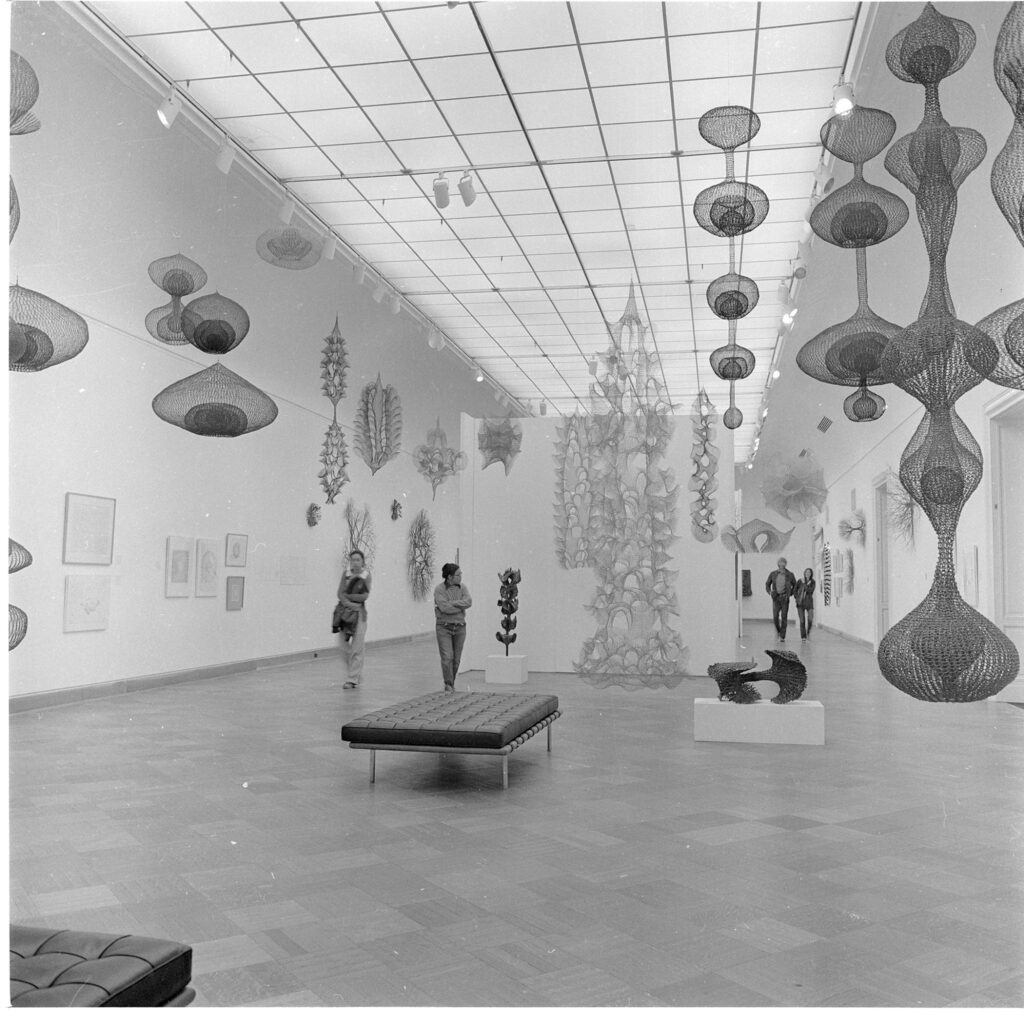
The Ruth Asawa retrospective at SFMOMA became one of those rare exhibitions that felt both overdue and perfectly timed. People walked into the galleries expecting a historical survey of her wire sculptures and community-based works, but what they got was something far deeper, almost like a gentle awakening. It reframed Asawa not just as an artist of extraordinary craft, but as a thinker and educator whose influence ripples through generations of artists working today. By the time visitors reached the final room, many described feeling a sort of quiet clarity, the kind that stays with you long after you leave the museum.
What made the retrospective so powerful was how it reoriented the public conversation around materiality. Her sculptures, with their floating forms and shadow-like presence, encouraged people to rethink what counts as monumental. Asawa always worked with deep care, weaving forms that seemed impossibly delicate yet structurally precise. In 2025, her work resonated as a counterpoint to the louder, flashier tendencies often dominating public art discourse. There was a sense of steadiness in her practice that felt refreshing and deeply needed.
The exhibition also sparked renewed conversations about whose work gets canonized and why. For decades, Asawa was celebrated by artists but under-recognized by institutions. The retrospective symbolized a shift toward acknowledging artists who worked at the intersection of community, education, and practice. It prompted museums to rethink how they build their collections, and to consider a broader range of voices when shaping the narratives they present. The timing felt important, arriving in a year when many institutions faced public pressure to evolve and broaden their curatorial lenses.
Critics responded with unusual unanimity, praising not just the quality of the exhibition, but the sincerity with which it was staged. It wasn’t trying to sensationalize Asawa’s legacy, it was contextualizing it with care. Many reviews called it one of the most grounded and emotionally resonant shows of the year. And beyond the art world, the public embraced Asawa in a way that felt deeply personal. Schools, community groups, and educators brought students in to see the work, turning the show into something larger than a museum event, almost a cultural moment.
By the time 2025 closed, this exhibition had become one of the year’s defining references. It marked not only a celebration of Asawa’s work, but a shift in how institutions think about legacies, labor, and the beauty of slow dedication. It showed that powerful art moments do not always arrive with fireworks. Sometimes they arrive with stillness, sincerity, and a deep invitation to look closer.
3) Es Devlin’s “Library” Installations and the Rise of Participatory Public Art
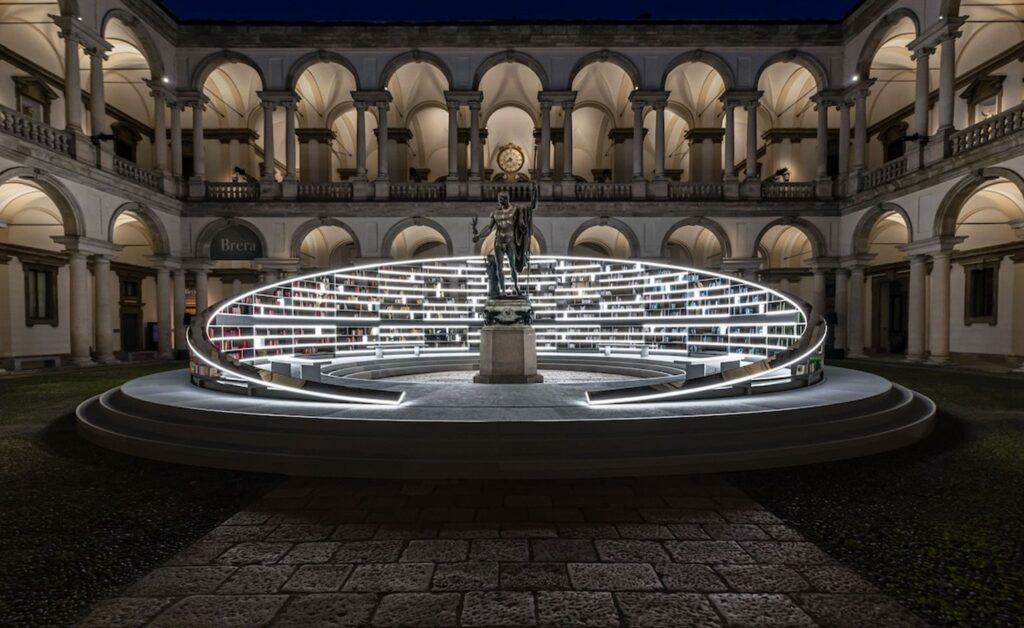
Es Devlin’s large-scale “library” installations became some of the most photographed and discussed works of 2025, but what made them significant was not the social-media buzz. It was the surprising emotional response people reported after experiencing them in person. Unlike the typical art-week spectacles, these installations invited people to slow down, read, listen, and occupy a shared space with others. They weren’t designed as backdrops. They were designed as environments, and that distinction changed how people interacted with them.
The installations felt especially meaningful in a year when public spaces were strained by political tension and cultural fatigue. Devlin’s work offered a kind of communal refuge, even in the middle of high-energy events like Milan Design Week or Miami Art Week. People stepped into these rotating structures and immediately felt the tonal shift. The experience was part-architectural, part-poetic, and entirely intentional. It encouraged visitors to move differently, speak differently, and breathe differently inside the space.
What separated this moment from other public installations of the year was the way it merged conceptual clarity with accessibility. Devlin’s work has always blurred categories, but in 2025 it became part of a broader conversation about what public art can accomplish. These installations weren’t just visually impressive, they were emotionally grounding. They presented reading, language, and quiet collective presence as forms of public participation. That framing resonated across generations and backgrounds.
Critics highlighted how the installations challenged the typical consumption of public art. Instead of standing at a distance, viewers were encouraged to inhabit the work, to become part of its shifting structure. This emphasis on shared experience landed at exactly the right moment, when many people felt disconnected from institutions, politics, and even their own creative routines. Devlin’s work managed to offer something rare: beauty without exclusion, scale without spectacle, and immersion without overwhelming stimulation.
By the end of the year, these installations were widely cited in discussions about the future of public art. They suggested a direction that prioritizes civic engagement, thoughtful design, and emotional resonance. Devlin showed that large-scale works don’t need to shout to be memorable. They can invite, gather, and hold people instead. And that made her “library” installations some of the most defining art moments of 2025.
4) Art Basel Miami Beach 2025 and the Return of a Confident Market Mood
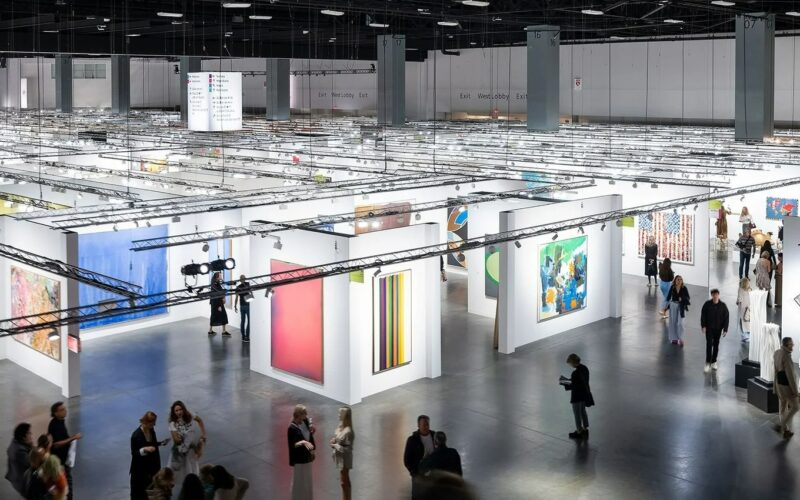
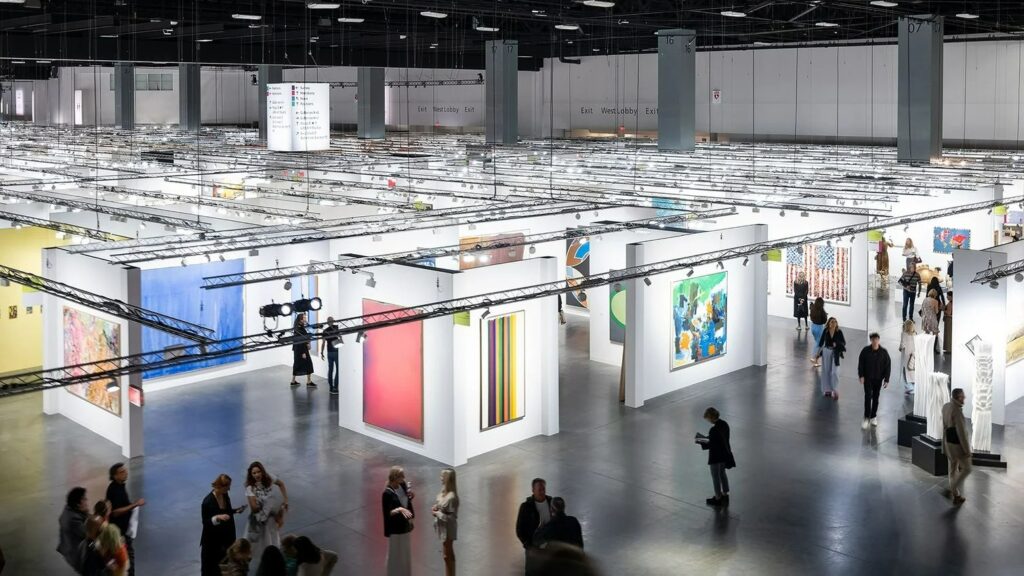
Art Basel Miami Beach in 2025 became a turning point after several years of market uncertainty. Collectors arrived prepared, galleries reported steady interest across price ranges, and the energy throughout the fair felt surprisingly grounded. Instead of the frenzy that sometimes characterizes Miami’s art week, this edition carried a tone of thoughtful re-engagement. People were genuinely looking, genuinely asking questions, and genuinely connecting with work. That shift in energy became one of the year’s defining market signals.
For many galleries, the fair served as a barometer of what collectors were seeking in 2025. There was strong interest in historically under-recognized artists, especially women, artists of color, and mid-career practitioners whose markets had been steadily rising. Blue-chip works sold reliably, but the standout stories came from placements of thoughtful, narrative-driven pieces that resonated with the broader cultural conversations happening elsewhere in the art world. It was a reminder that the market does not exist in isolation from the social climate around it.
Public installations also played an important role in shaping the mood of the fair. Miami’s beaches, parks, and hotel rooftops became temporary exhibition spaces, hosting sculptures, light works, and site-specific pieces that expanded the fair beyond the convention center. These installations offered a more inclusive art-week experience for people who weren’t attending the fair itself. Many described this year as feeling “more open,” “more accessible,” and “less performative” compared to previous editions.
Media coverage noted that the fair’s success was not just financial, but atmospheric. Collectors felt ready to buy with more clarity, less speculation, and greater attention to long-term value. The conversations taking place between artists, galleries, and institutions felt more balanced than in years past. There was a sense of shared investment in the health of the art ecosystem rather than a focus on quick wins or attention-grabbing headlines.
By the time the fair closed, it was clear that ABMB 2025 would be referenced for months as a sign of renewed momentum. It suggested that the art market was stabilizing, that buyer confidence was returning, and that the broader cultural appetite for art was strong. More importantly, it hinted at a future where fairs serve not only as commercial engines but as expansive cultural gatherings. That subtle shift was one of the most important takeaways of the year.
5) The Museum Reckoning of 2025: A Year of Pressure, Protest, and Redirection
While 2025 was full of beautiful exhibitions and record-setting sales, it was also a year defined by institutional pressure. Museums across the United States and Europe faced political scrutiny, public protests, funding instability, and rising questions about their role in a polarized climate. These tensions didn’t stay behind closed doors. They unfolded in headlines, public statements, staff resignations, and community-led campaigns that pushed institutions to rethink how they communicate, program, and operate.
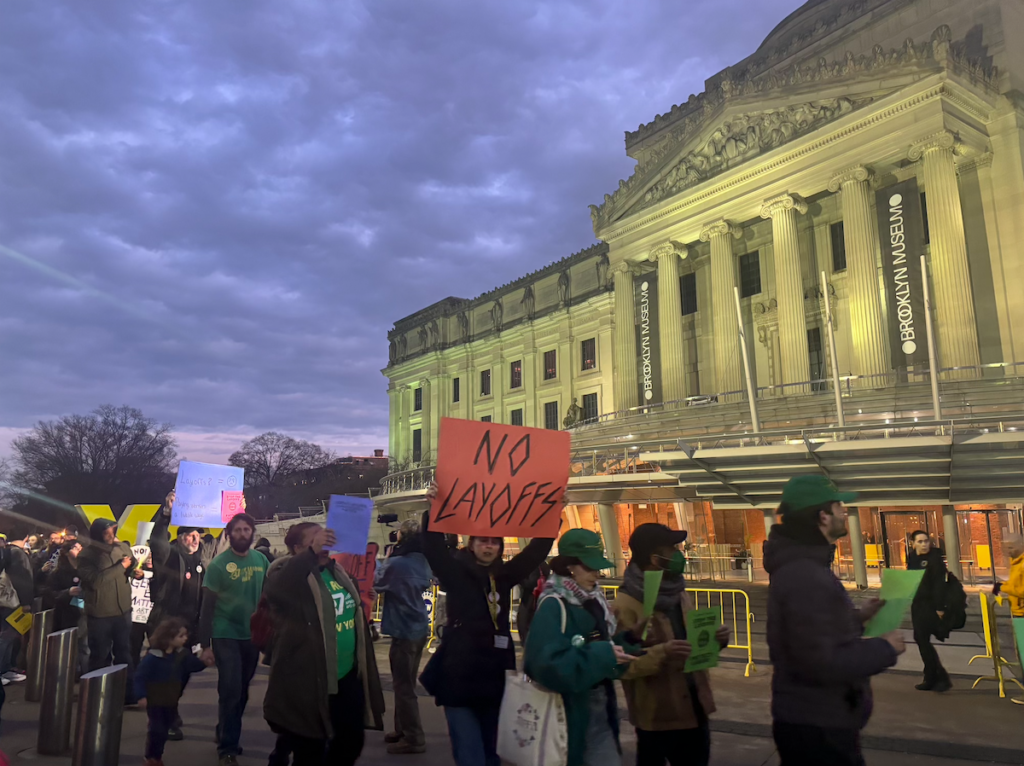
One of the most visible shifts was the way museums were forced to address their own decision-making processes. From programming choices to donor affiliations, institutions were held accountable more directly than ever. Artists withdrew from exhibitions. Curators spoke out publicly. In some cases, planned shows were altered or cancelled in response to public pressure. The year revealed how deeply intertwined cultural institutions are with political and financial currents, whether they intend to be or not.
Attendance numbers and financial reports added another layer to the conversation. Some institutions reported declining visitor numbers, while others struggled to rebuild revenue lost during previous years of instability. The result was a climate in which museums had to confront difficult realities. Their strategies for relevance could no longer rely on blockbuster shows or retail expansions. They needed to rethink community relationships, educational outreach, and the emotional tone of their public engagement.
At the same time, the institutional tensions prompted a wave of creativity. Smaller museums and artist-run spaces gained attention for their nimble, responsive programming. Collaborations between grassroots groups and mid-size institutions flourished, creating new models for dialogue and shared decision-making. Artists used their platforms to advocate for transparency and accountability, reshaping expectations for how museums engage with the public. Even critics began to reframe how they evaluated institutional behavior.
By the end of 2025, it was clear this was not a temporary storm but a turning point. Museums were being reshaped not by market forces, but by public voice, civic pressure, and cultural expectations. It was uncomfortable, messy, and sometimes chaotic, but it also felt necessary. This reckoning became one of the most consequential art moments of the year because it forced institutions to ask foundational questions about who they serve and how they communicate. And those questions will shape the next decade of cultural life.





Comments 1