


How Hurricane Helene & a tulip field inspired this artist’s colourscapes│ Rachel J Haungs

At Arts to Hearts Project, our 101 Artbook Landscape Edition is full of artists whose connection to landscape goes way beyond painting pretty views. Among our selected artists, Rachel J Haungs is someone whose story genuinely moved us. And not just because of the paintings, although the paintings are beautiful. Because of how she got here.
Rachel did not start as a painter. She spent years building a career in design and marketing. Corporate work. Team building. The kind of life that fills every hour of every day and does not leave much room for the thing you actually love doing.
And for a long time painting just got quieter and quieter in her life until it was almost gone. The way she found her way back to it, and honestly the courage it took to make that happen, is something really special. She tells it better than we ever could so we are going to leave that for the interview.
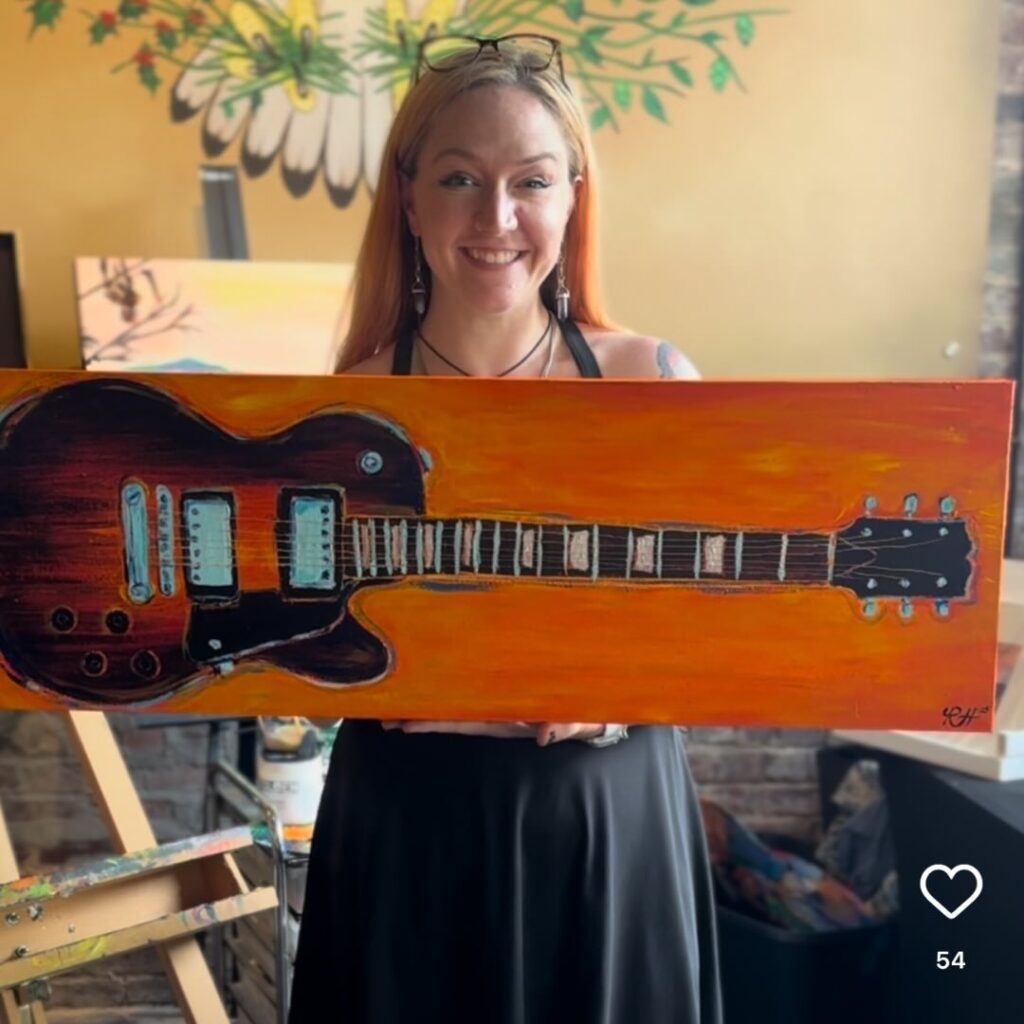
But we will say this. When we look at her paintings we can feel that this is someone who is not just making art. She is reclaiming something. There is an energy in the work that comes from someone who almost lost this part of themselves and is not going to let that happen again.
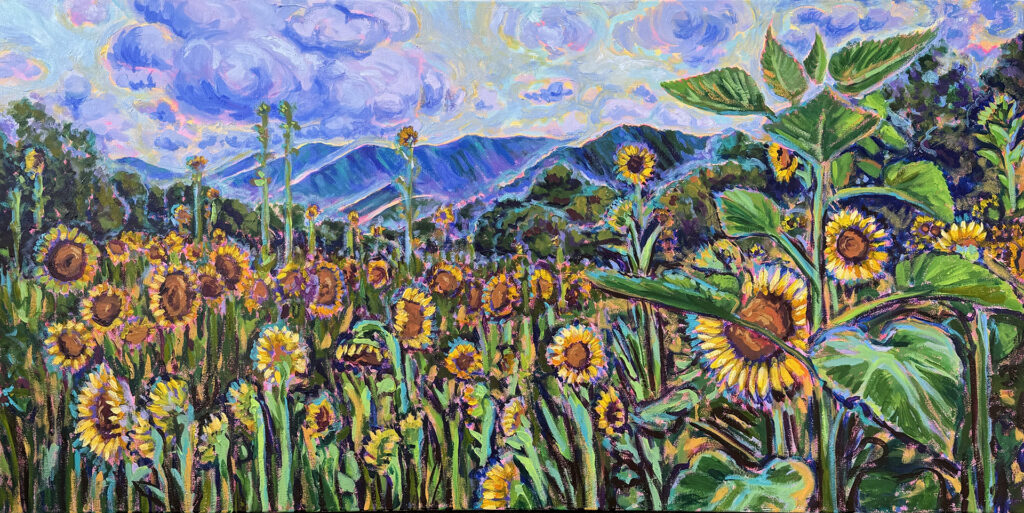
And that energy is contagious. You feel it in the colour which is bold and vivid and pushed further than reality because Rachel is not interested in showing you what a place looked like. She wants you to feel what it was like to actually be there.
How she finds that feeling and how she knows when a painting has caught it is something she explains in the interview and it is one of those things that once you hear it you start seeing her paintings completely differently.
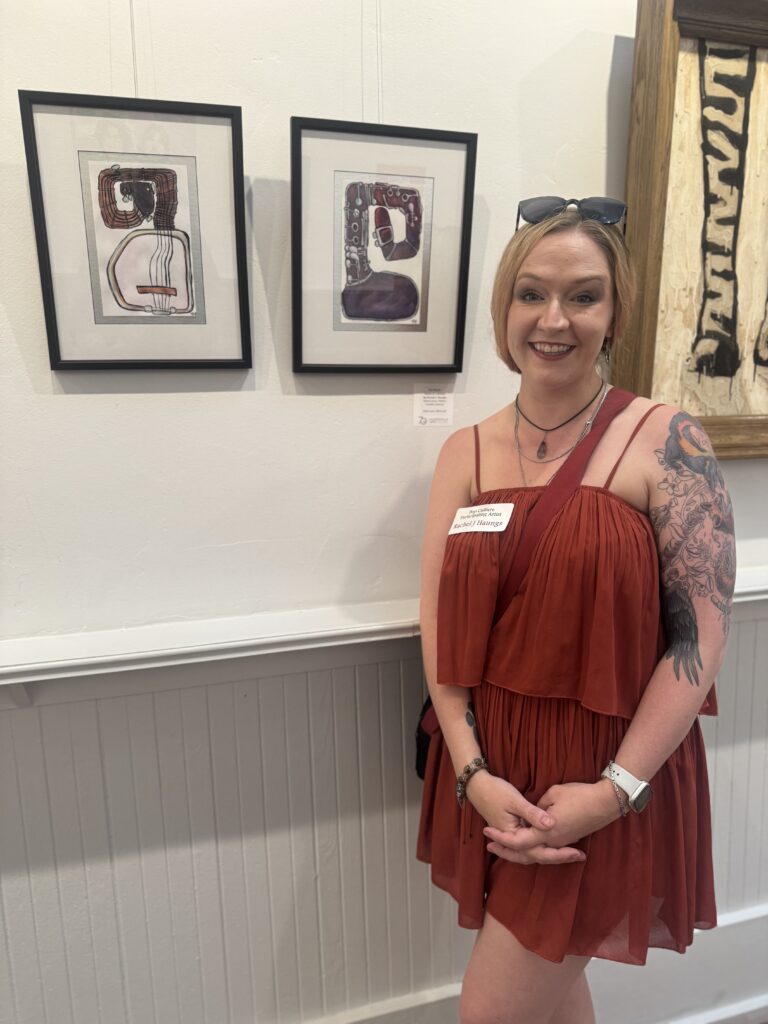
She has this deep relationship with specific places, mountains and gardens and landscapes that have been there for her when she needed them most. And that connection is not just emotional backdrop for her art. It is the reason the art exists.
She is not one of those artists who has unlimited time in a beautiful studio. She is grabbing five and ten minute windows wherever she can find them and making incredible work inside those windows. How she does it involves her son in the sweetest way and honestly it is one of our favourite parts of the whole conversation.
Let’s get to know Rachel through our conversation with her about the moment everything changed, why these mountains mean so much to her, how she makes colour feel like a lived experience, and the daily practice she built around the beautiful chaos of being a mother and an artist at the same time.
Q1. Can you share your background and what led you to transition from a design career into pursuing painting as your full-time practice?
From dance to martial arts, musical performance to fine art, my childhood was rich in art of all forms. My paternal grandfather was an artist and designer, my mother is a fiber artist, and thus I was fortunate to have support from all angles to pursue my passions. My high school had the largest art program in the state at the time with the only graphic design lab which is what sparked my interest in the career. I went on to study Graphic Design with the Department of Art at Appalachian State University, balancing the design courseload with as many painting classes as I could take.
I found a role in the field right out of college working in content marketing and design at a small local firm. There I learned about storytelling and communication while juggling teaching private music lessons, portrait and wedding photography, freelance art and design commissions, and a part time job at a music store. After a few years, I transitioned to an in-house team at the digital and tech arm of a very large corporation where I helped shape B2B2C brands and build a department from the ground up while growing my family.
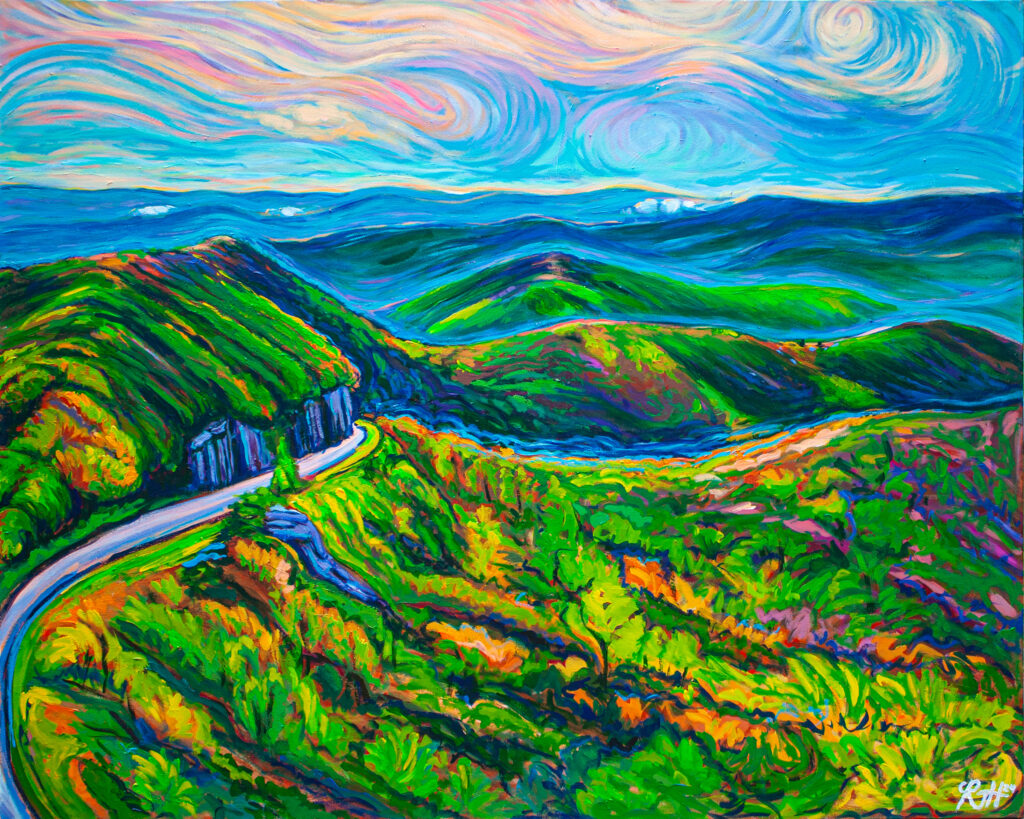
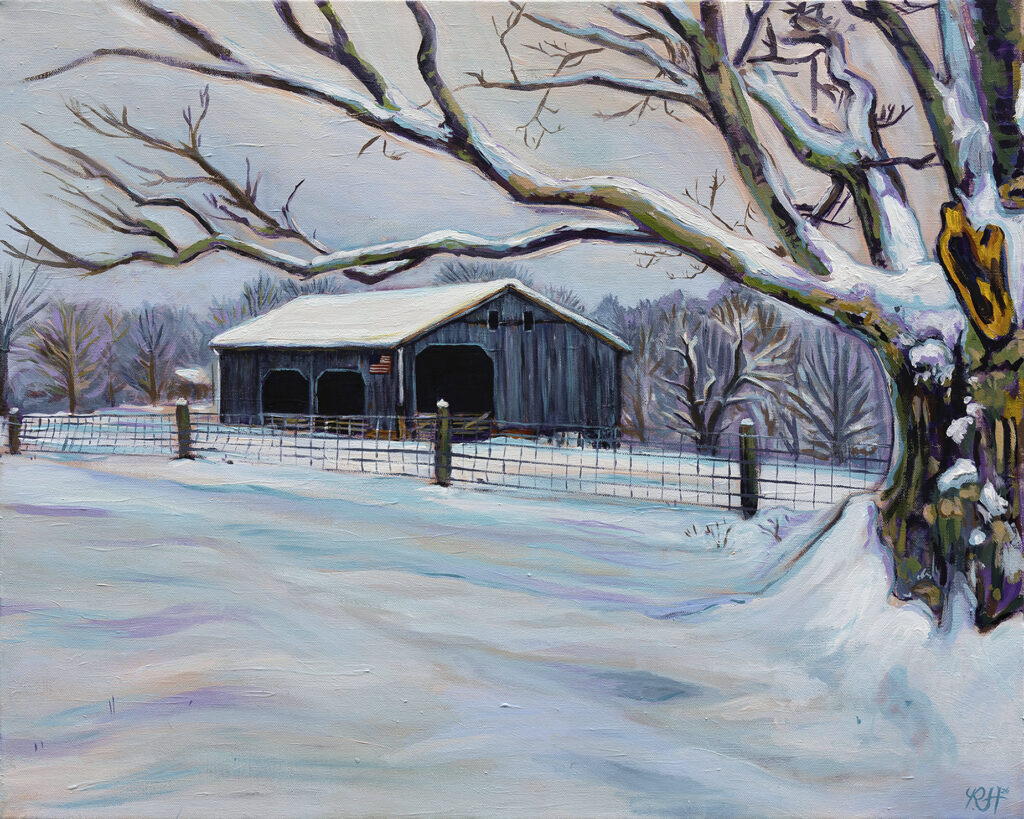
I chased the dreams of leading and mentoring a design team and becoming a mother in tandem, with my passion for art and all of my side gigs falling by the wayside. As it does, motherhood stripped me down to a raw, unfamiliar version of me. Exploring myself post-partum, I decided to show one piece of work in a public setting as a way to prove to myself I was still a “real artist”. Fast forward to 2025 when said piece of work—Craggy Pinnacle Colourscape±—was both accepted and awarded in a local juried show…the catalyst for change.
I decided it was going to be my “why not me?” year, and poured all of my free time and energy into art. I exhibited in over two dozen shows and events, won a few awards, was recognized in a handful of publications, and sold a few originals. Around the time I started to hit my breaking point at work, I asked myself, “if this is what I can accomplish just dedicating my free time to art, why not see what happens if I do it full time?” My husband gave me the final push of support I needed to take the leap, and here I am. I honestly think the decision saved my life.
Q2. Your work focuses strongly on landscape and the emotional impact of colour. When did nature become the central subject of your artistic exploration?
There is serenity in the silence, awe, and perspective that the mountains offer me—one of my favourite things about attending college there. It felt like a natural subject for my goal-setting piece of 2024—Craggy Pinnacle Colourscape, later published in the 101 Artbook – Landscape Edition.
Thereafter as I was trying to find my voice and later questioning the direction of my life, nature continued to offer a haven of peace and resiliency I desperately needed. My family started taking vacations to the mountains where I painted plein air and collected source material.
At the same time,I started my own garden at home for ritual and self care. After Hurricane Helene devastated much of Western North Carolina, it became a way for me to both channel my grief and fundraise for relief efforts. Soon enough, I started finding inspiration everywhere I looked in nature leading to my collections— Colourscapes and In the Garden.
Q3. Many of your works capture what you describe as “daily glimmers of peace.” How do you translate fleeting emotional experiences into visual form?
Capturing these experiences begins with a practice of grounding and presence. Last Spring, I found myself in a field of tulips in a town called Harmony surrounded by glowing orbs of vivid colour dancing in the wind. I thought to myself—if only I could just capture THIS feeling, this magic. Once I saw it on the tulip farm, I started finding moments like this everywhere—the way the sun makes the green in unripe strawberries glow or the curling vines of cucumber plants evoke whimsy.
In practice, this looks like pushing the boundaries of saturation and expressive brushstrokes in gouache without jeopardizing realism to emphasize light in scenes that evoke feelings of magic and awe. It’s an intuitive process where I genuinely just keep painting until the feeling that made me pause in the first place is felt again.
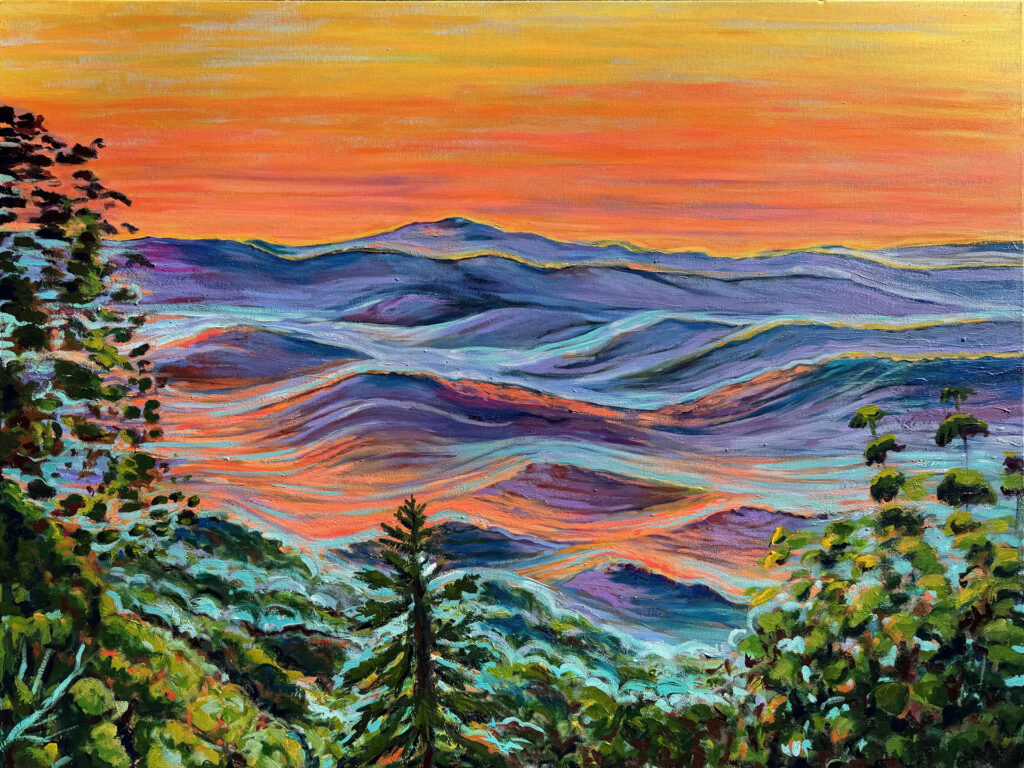
Q4. You work across acrylic, gouache, and studies that lead to larger paintings. How do small studies influence your final compositions?
Smaller mixed media studies are an easy way to fulfill the desire to create without the time commitment—which was crucial when I was balancing family, my job, and art. With the pressure of time, materials, and an expensive canvas removed, I’m free to explore composition, colour, and medium in as many iterations as I desire. Because so much of my career was rigid to layout and structure, these smaller studies help me loosen up my approach and improve my intuition with larger paintings.
Q5. Many artists struggle with maintaining momentum across multiple works. How do you structure your studio practice to stay creatively engaged?
Simply learning that keeping inertia is a key to staying creatively engaged changed everything for me. It began when my son started school and I sent him off with a drawing in his snack bag every single day. Initially, it was something he could use to break the ice and share with other students. He’s halfway through first grade now and we have kept the project going. I care much more about letting him down than myself, so tying a small 15 minute drawing or painting to that pressure has been the perfect hack to force myself to create at least five times a week.
It’s also changed how I perceive time needed to create—I’m constantly looking for five to ten minute pockets of time to paint now and keep an album of dozens of references ready at all times. When it comes to my daily studio practice, I build momentum by creating easy wins in the morning via house chores and admin work and reward myself with time at the easel afterward. What a gift it is to reward myself with work!
If I find myself needing art earlier than that allows, I paint a tiny watercolour piece while I eat breakfast.
My last hack is to have multiple projects going on at varying stages all the time. This is accommodating both to my impulses to create based on interest and energy, as well as time constraints. If I don’t have time to sit down to work on my large scale acrylic piece, I can paint a miniature version in watercolour. If I’m low on emotional bandwidth, I can work on The Band to reenergize myself. Being self aware enough to understand all of the excuses I’ve made to not create and finding accommodations to work around them is absolutely integral to my success.
Q6. Locations such as North Carolina landscapes appear frequently in your work. How does painting familiar environments affect your emotional relationship with the subject?
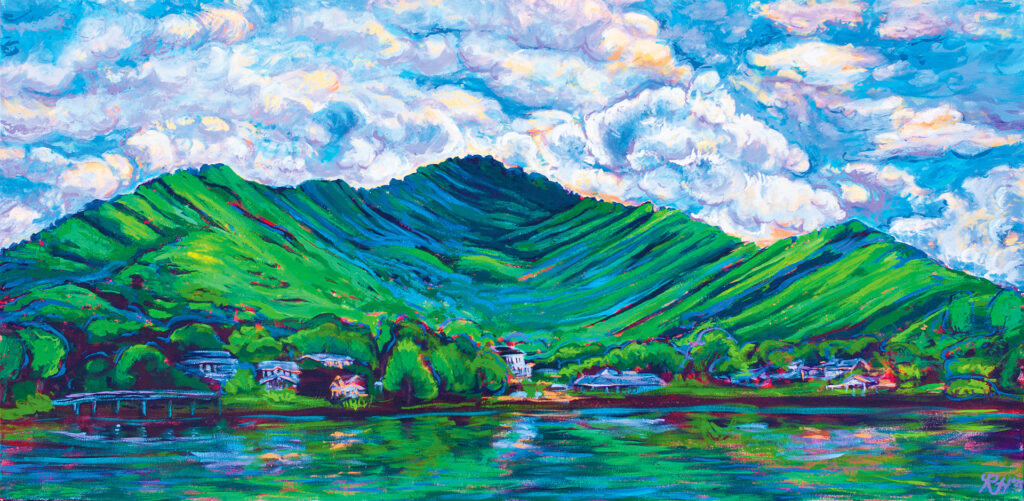
My strongest landscape paintings are of scenes I’ve personally visited. I do use stock from time to time—particularly if a scene strikes me. However, you can absolutely see a difference in the work I’ve either seen with my own eyes or to which I have an emotional tie. These places—Lake Junaluska, Craggy Pinnacle, Beacon Heights, the Ten Acre Garden, or just the Appalachian Mountains in general speak to my soul.
I’m captivated by the way shadows nestle into the creases of treescapes and emphasize the ridges in mountains. I am entranced by the glow of the sun—how it can shifts colour stories and softens edges. When I paint landscapes, I’m not just trying to accurately capture a scene; I’m trying to capture the way these places make me feel—always seeking things like joy, awe, peace. It’s only when the piece makes me feel it again that I know the painting is complete, and the feeling is always stronger when it’s a place I’ve visited.
Q7. Your work has appeared in juried exhibitions and gallery settings. How does preparing work for exhibitions differ from creating pieces for personal exploration?
I never want to force myself to fit into a box for a show or gallery. While I have frequently had the urge to create a piece to “show well” in a competition or exhibition, I genuinely try to stay true to my artistic voice and interests. I actively seek exhibitions related to music or ones that are open-ended enough that subjects of the natural realm are going to be relevant.
At the end of the day, positioning and storytelling is often all an artist needs to make a work fit a call for art. That said, the deadlines related to exhibition calls do add a touch of pressure, and I tend to thrive under pressure. Forcing myself to paint intuitively and removing the time to overthink has pushed me to create what I consider to be some of my best work.
Q8. What responses from viewers have most surprised you when they encounter your paintings in person?
“It’s even more vibrant in person,” or “it looks even better than the photo” are some of my favourite and most surprising responses. It’s funny—being someone who has worked in digital for so long and understanding the limitations of print versus digital colour…hearing people say that the photographs of my work don’t capture their vibrancy is just not something I anticipated experiencing. I work really hard to capture my work accurately in photos, but I’ll never get over that people enjoy them so much more in person.
Q9. Looking back at earlier works compared to recent paintings, what shifts in technique or artistic priorities feel most significant?
First and foremost, when I made my artistic practice a priority and considered the possibility of taking my art seriously was the most monumental shift. Self belief is still something that I’m working on, but it is absolutely the most significant change. In technique, moving from neutral to vivid underpaintings is where my style really began to take shape.
Namely, the use of Golden’s teal and their line of fluorescents has changed the game for me; access to those hues allows me to capture colour in the way I experience it.
Painting plein air and capturing things in the literal moment that they’re happening has made me more mindful and confident in colour application, structure, composition, and brushwork. Experimenting with abstracted form and working in mixed media has unlocked a part of my creative brain I didn’t know existed, and I’m loving watching it take shape through my newest collection, The Band. This series alone has gotten me recruited for three juried exhibitions and one of my paintings sent to New York to be exhibited in the Brooklyn Waterfront Artists Coalition in the historic Red Hook District.
Q10. What advice would you offer artists who want to build a practice rooted in observation, colour exploration, and emotional connection to landscape?
Speaking directly to these artists—go outside! As much as you are able, go observe, take notes, photograph references, look at shape, colour, texture, and edges. Pay less attention to the details of the landscape in the way you would read about—a line of trees leading to a meadow with a mountainscape behind it during sunrise. Instead, mentally capture and document the colours of the sun rays and flares blurring the edges of dark silhouettes the trees create.
Note how warm or cool the shadows look in the sun versus the shade. Consider how the saturation levels in the sky subside at the horizon line and those hues are reflected in all of the shadows beneath. Find music and other forms of art that remind you of these places and immerse yourself in them. Write down how the warmth of the sun in these locations feels on your face. Journal about memories that come to mind when sitting in these spaces. Be present, document, and capture YOUR lived experience.
As our conversation with Rachel came to a close, the thing that stayed with us most had nothing to do with technique or colour or landscape. It was about timing.
Because Rachel’s story is really a story about what happens when you give yourself permission at the exact moment you need it most. Not when everything is lined up perfectly. Not when the career is sorted and the kids are older and the schedule is clear. Right in the middle of the mess. Right when it makes the least sense on paper. That is when she said yes to herself. And honestly that is when it matters most.
And it made us think about how many artists are out there right now telling themselves the timing is not right. Next year. When things calm down. When I have more space. When someone tells me I am good enough. Rachel did not wait for any of that. She just started. And the starting was enough to change everything.
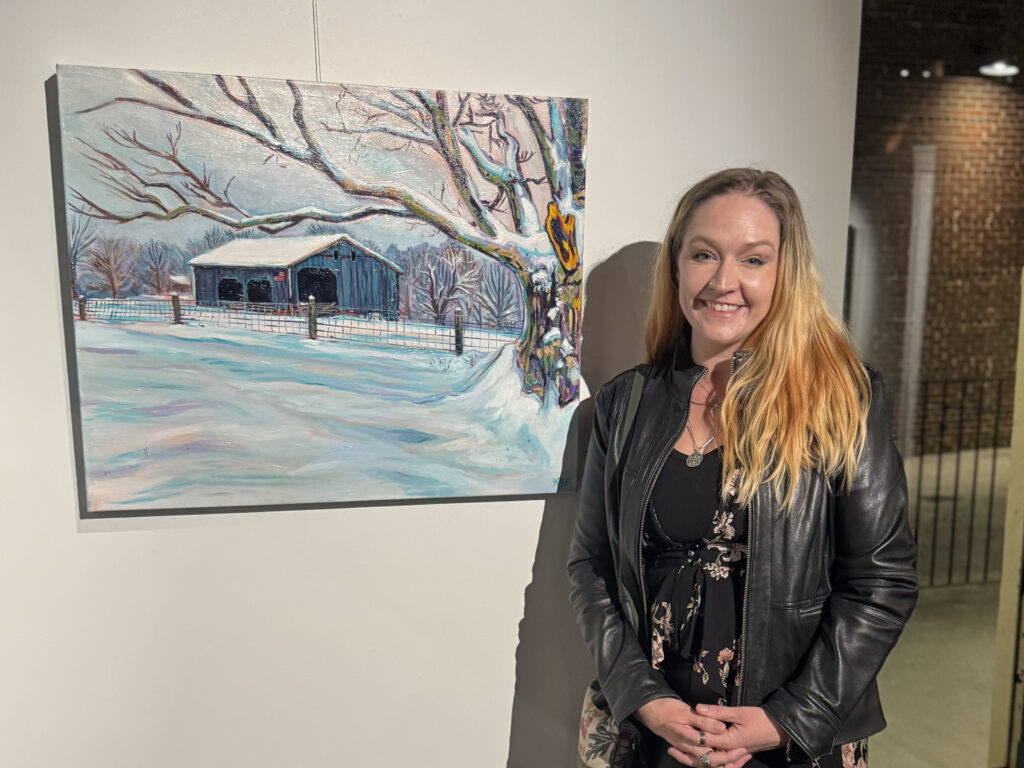
The other thing that has not left us is how much life is inside her paintings. There is a warmth and a brightness in them that does not feel manufactured or forced. It feels earned. Like someone who went through a stretch of not making anything and then came back to the canvas with so much built up joy and relief and gratitude that it all poured out in colour.
That is not something you can learn in a workshop. That comes from living. From losing something and finding it again and being so grateful to have it back that every painting you make after that carries the weight of how close you came to not making it at all.
And for anyone who is a parent trying to make art at the same time, Rachel is proof that it can be done. Not in the inspirational poster way where everything looks effortless. In the real way where you are painting at breakfast and drawing in five minute gaps and figuring out systems that work for your actual life instead of waiting for a life that does not exist yet. That is not a compromise. That is a creative practice built on honesty about who you are and what your days actually look like. And the work is better for it.
For anyone looking to bring Rachel’s paintings into their home, these are pieces that people consistently say look even more alive in person than in any photograph. The colour hits differently when you are standing in front of it. The energy of how they were made, quickly, intuitively, with real emotion behind every stroke, that energy does not translate fully through a screen. You have to be in the room with them. And when you are, they do exactly what Rachel wants them to do. They make you feel something bright and real before you have time to think about why.
Follow Rachel J Haungs through the links below and see what happens when someone stops asking why me and starts asking why not me.