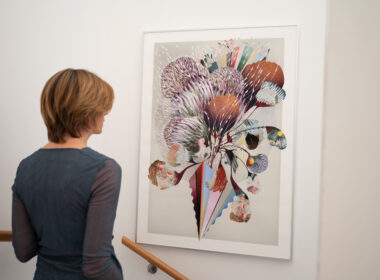

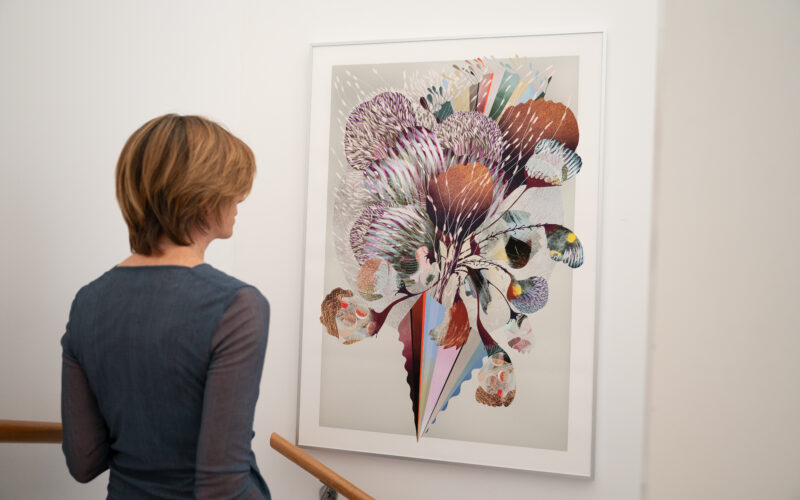
Olga Burkard’s work combines feather-like textures with geometric dots and circles
👁 13 Views
At Arts to Hearts Project, there is a specific kind of artist that excites us more than any other. The kind whose work you cannot figure out right away. You look at it and you feel something but you cannot immediately say what. It is not confusing. It is not difficult. It just operates at a frequency that takes a moment to tune into. And once you are tuned in you do not want to leave.
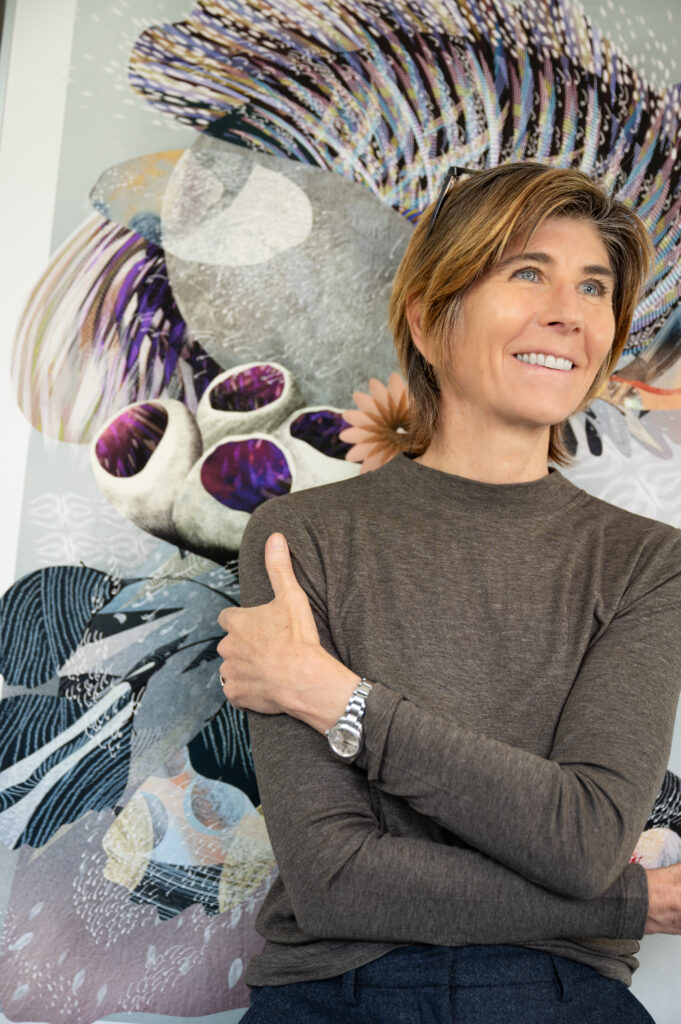
Olga Burkard makes that kind of work. She is a selected artist in Arts to Hearts Magazine Issue 11 and from the moment we saw her paintings we knew she belonged in this issue.
Olga is Swiss-Mexican. She grew up between two countries that approach the world in completely different ways. One values order and clarity and precision. The other values warmth and intuition and colour that comes at you like a wave.
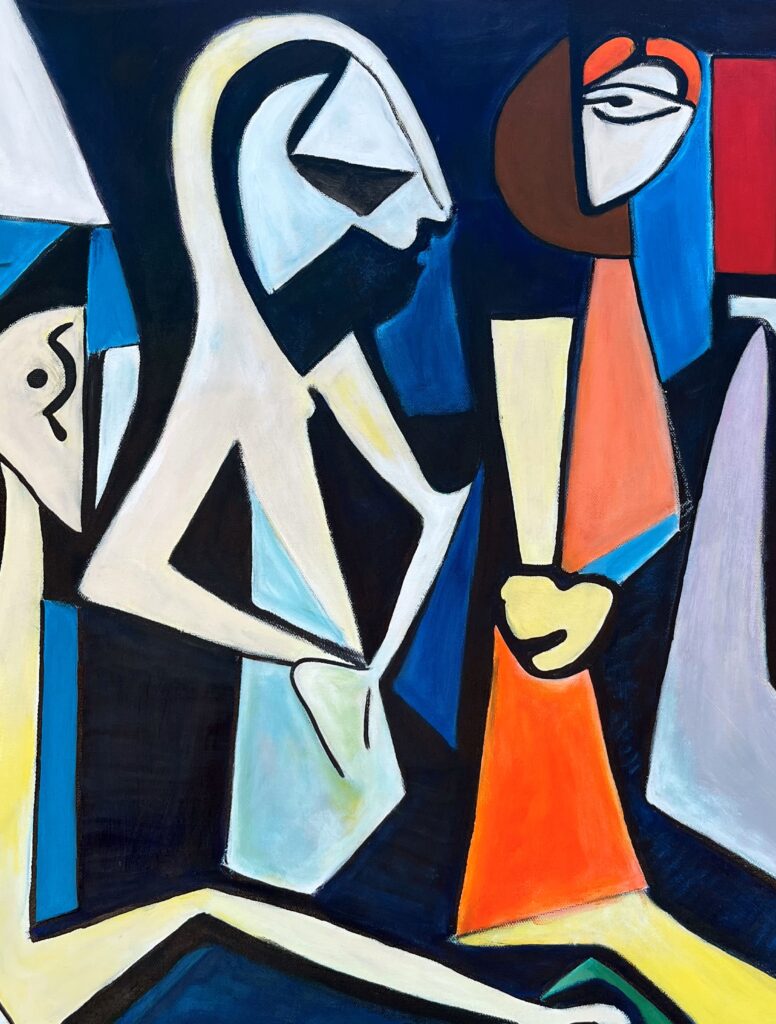
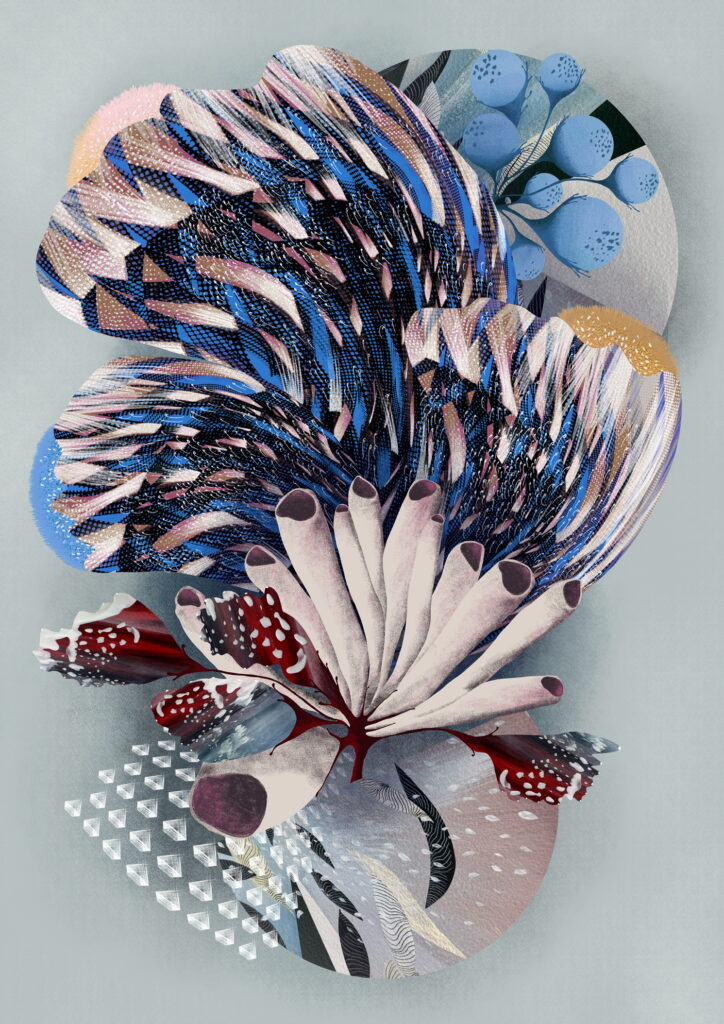
Growing up between those two realities did not confuse her. It gave her range. And that range shows up in everything she makes. Her paintings hold structure and wildness in the same breath. There is geometry but it pulses. There is control but it knows when to let go. The forms are simple, dots and lines and circles, but the way they interact with each other creates something complex and warm and rhythmic that you feel in your body before you process it in your head.
She never starts a painting with an idea. She starts with a feeling. Something unnamed. Something she is carrying that morning or that week. And she follows it. She lets one form appear and then waits to see what it asks for next.
She does not plan where the energy will live in the composition. She does not decide where movement begins or ends. She listens for it. And the painting becomes whatever that listening produces.
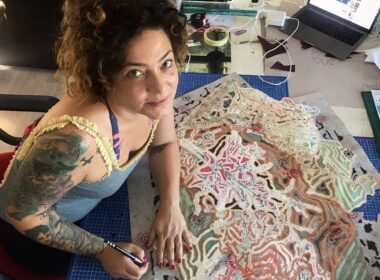
There is a part of her process that really caught our attention. She works digitally but she is very clear that the work is not real to her until she can hold it. Until it has been printed and she can stand in front of it and feel its scale and texture with her body.
She prints over and over until it feels right. That moment of transfer from screen to paper, from light to object, she describes it as the artwork being truly born. Everything before that is process. That moment is arrival.
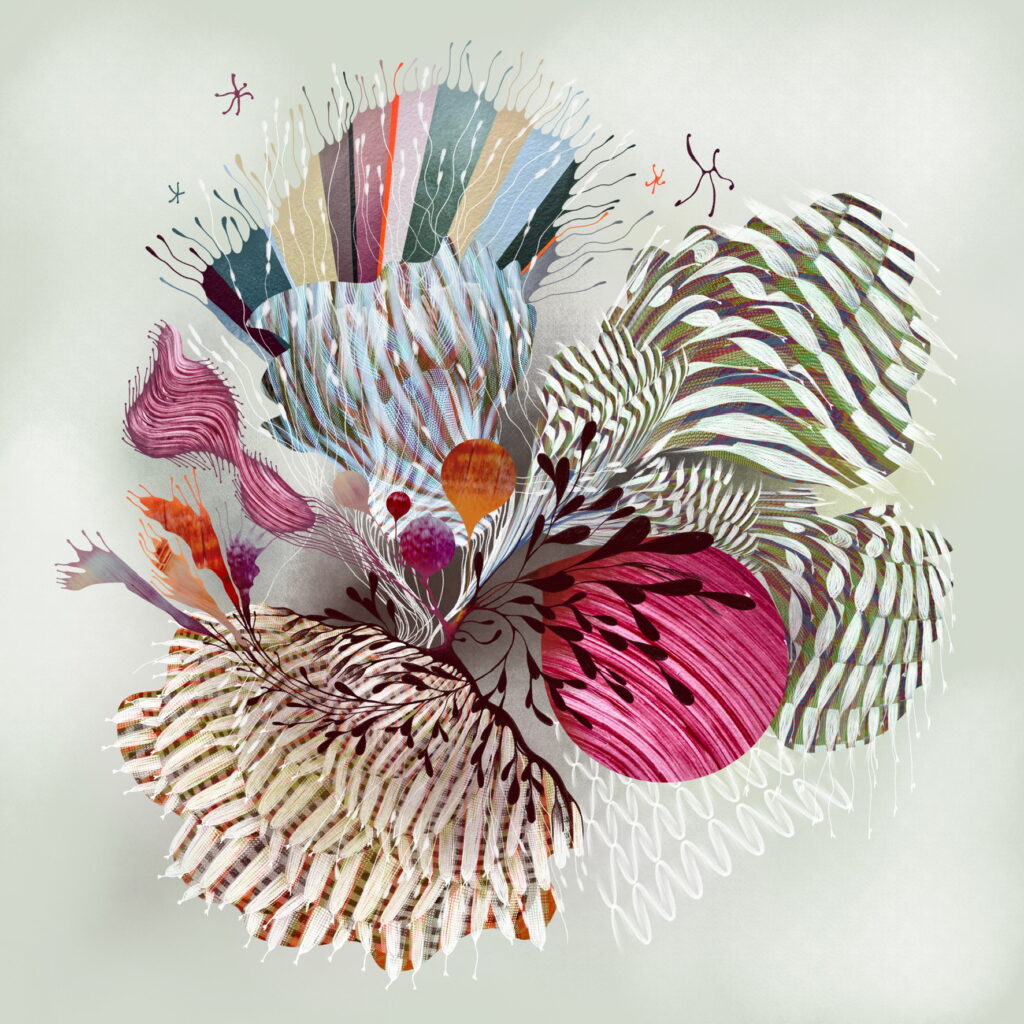
And her titles. Azul. Te Extraño. Juntos. They show up at the very end. After the painting is complete. Just a word that stayed with her during the making. Not a label. An open door. She does not need you to understand what she meant.
She actually prefers it when you do not. When you bring your own meaning. Your own memory. Your own reading. She said the more different your interpretation is from hers the happier she feels. We love that about her.
Let’s hear from Olga about how Switzerland and Mexico shaped her visual language, what it means to start a painting with nothing but a feeling, why the physical print matters more than the screen, and what happens when she lets go of a painting and hands it to the viewer.
Q1. When you look back to your earliest years, how did growing up between Swiss and Mexican cultures shape your sense of form, rhythm, and visual expression?
Growing up between Swiss and Mexican cultures gave me a balance that still lives in my work. Switzerland shaped my love for structure, clarity, and simple forms. Mexico brought color, warmth, rhythm, and a more intuitive way of seeing. Moving between these two worlds taught me that opposites can coexist — order and emotion, calm and intensity. That contrast naturally became part of my visual language and the way I express myself today.
Q2. You often talk about connection between form, between elements, between life and viewer. Is connection for you mainly formal, emotional, or philosophical and how do you enact each in paint?
Connection, for me, starts emotionally. I usually begin with a feeling rather than an idea. Form becomes the language I use to hold that feeling — simple elements like dots, lines, and circles that repeat, touch, or drift apart. There is also a quiet philosophical layer underneath: the sense that everything is related, that small elements together create something larger. In paint, I enact this by letting forms respond to each other, leaving space for pauses and movement, and trusting the viewer to complete the connection in their own way.
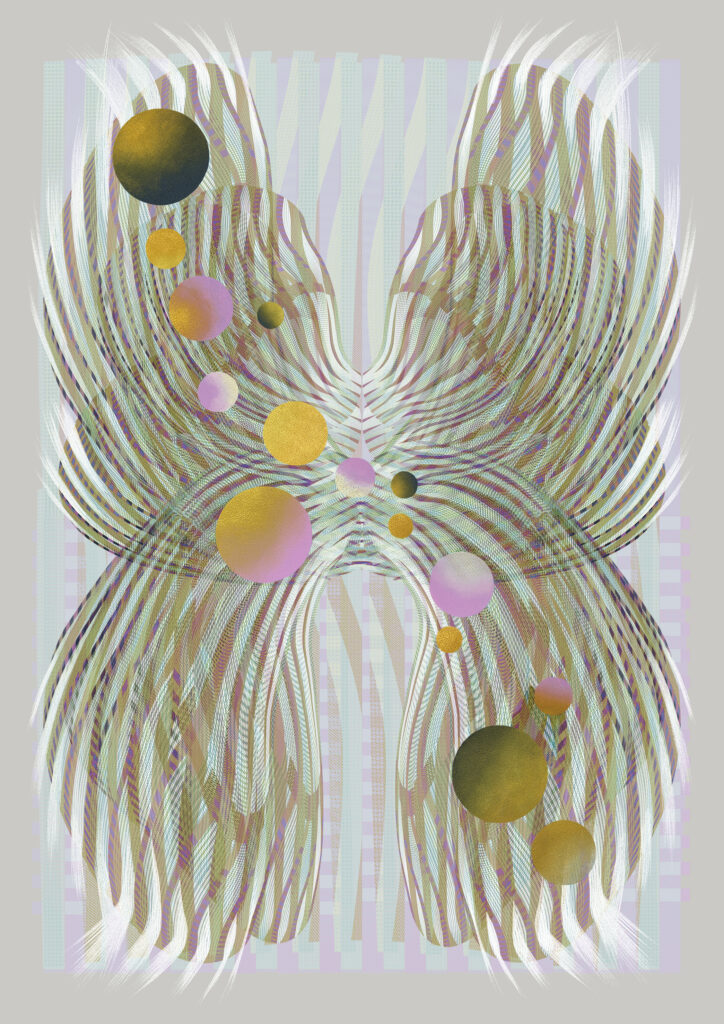
Q3. In works featuring swirling or interlocking forms, how do you balance center and edge what determines where movement begins and ends?
I don’t start by deciding where movement begins or ends. I let it emerge while I work. I listen to what one form asks and how the next responds, almost like a conversation. Sometimes a center appears naturally, sometimes the energy lives at the edges. I pay attention to tension and breathing space — when forms feel too contained, I open them; when they drift too far, I bring them back. The balance between center and edge is intuitive, guided by rhythm, repetition, and a sense of when the work feels alive and complete.
Q4. Titles like those in your recent portfolio (e.g., Azul, Te Extraño, Juntos) evoke emotional resonance. How do you choose titles that both anchor and expand a viewer’s interpretation?
Titles come at the very end of the process. They are usually connected to something that touched me while I was making the work — a feeling, a memory, a word that stayed with me. I choose them as anchors rather than explanations. They offer a small emotional entry point, but they remain open enough for the viewer to expand the meaning and find their own connection.
Q5. Do you use music, natural observation, or another sensory input to inform the pace and movement of a work in progress?
Most of the time I work with music, but sometimes I choose silence. It can be any kind of music, depending on my mood. What matters most is looking — really looking. That is what I am grateful to art for: it has opened my eyes to what is around me. I don’t follow real or recognizable forms; I work more intuitively, letting what I see and feel transform into something abstract.
Q6. Does your work function differently when seen digitally versus in person and how do you address that gap between screens and physical encounter?
That’s an important question for me. Things don’t feel fully real until I can touch them. Seeing the work printed is a crucial moment — it’s when the artwork is truly born. Paper size is very important to me, and I often print many tests until it feels right. The screen is part of the process, but the physical encounter changes everything: scale, texture, and presence. Printing allows me to meet the work in the real world and truly understand it.
Q7. When someone sees echoes of nature or life rhythms in your work, do you see that as a shared perception, or do you hope viewers discover their own patterns?
I love hearing people’s interpretations. The more they differ from my own, the happier I feel, because it means the work has sparked imagination. I don’t expect viewers to see what I see; I hope they discover their own patterns, memories, or rhythms. That openness is important to me — it’s part of what makes art, and life itself, so beautiful.
Q8. Comparing where your work is now with your earlier explorations, what shifts in focus or method feel most significant?
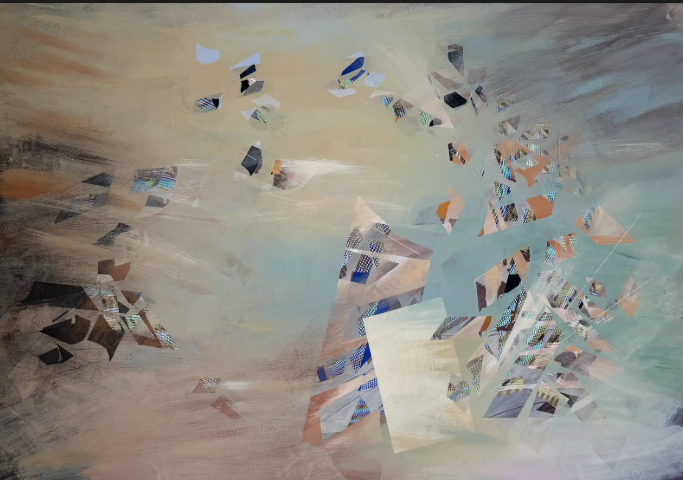
The biggest shift has been freedom — and the courage to experiment. Over time, I’ve learned to step out of my comfort zone, even if only sometimes. I allow myself to try, to make mistakes, and to follow intuition rather than control. That sense of openness has changed both my focus and my way of working, and it continues to shape where the work is going.
Q9. What advice would you give to artists working across digital and traditional mediums who aim to make work that feels alive, interconnected, and responsive to both intuition and structure?
I would say: see the mediums for what they are — just tools. Each one has its own strengths, and it helps to use them for what they do best. Don’t let the medium lead the work; let intuition and feeling come first. Structure can support that, but it shouldn’t restrict it. When you stay open and curious, the work naturally becomes more alive and interconnected.
As our conversation with Olga came to a close, we sat with something that we think every artist needs to sit with too. The idea that you do not need to know what you are making before you start making it.
That sounds obvious. But it is actually terrifying for most people. We want a plan. We want a direction. We want to know where we are going before we take the first step. Olga does not work that way. She starts with a feeling. Something she cannot name yet.
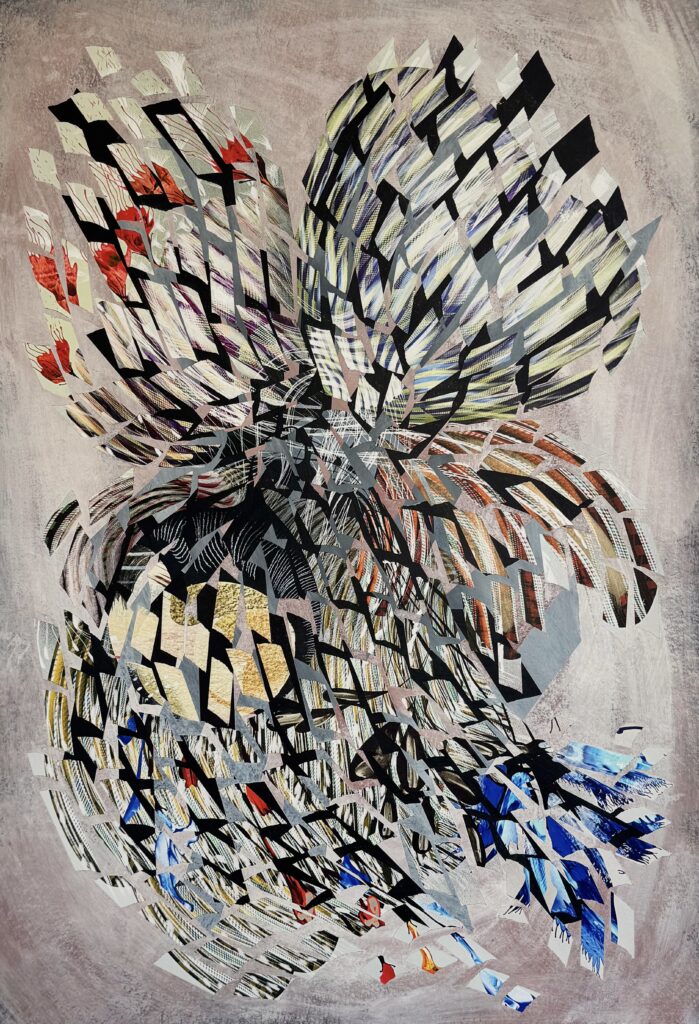
And she follows it. She lets one form appear and then she listens for what it is asking for next. She does not decide where the movement in a painting begins or ends. She lets it emerge. And she trusts that if she stays honest with what she is feeling the work will find its own balance.
That trust did not come easily. She told us the biggest shift in her practice has been freedom. The courage to experiment. The willingness to make mistakes. To follow intuition instead of control. That is not something that happens in a single moment. That is something you build slowly by showing up again and again and letting yourself be a little braver each time.
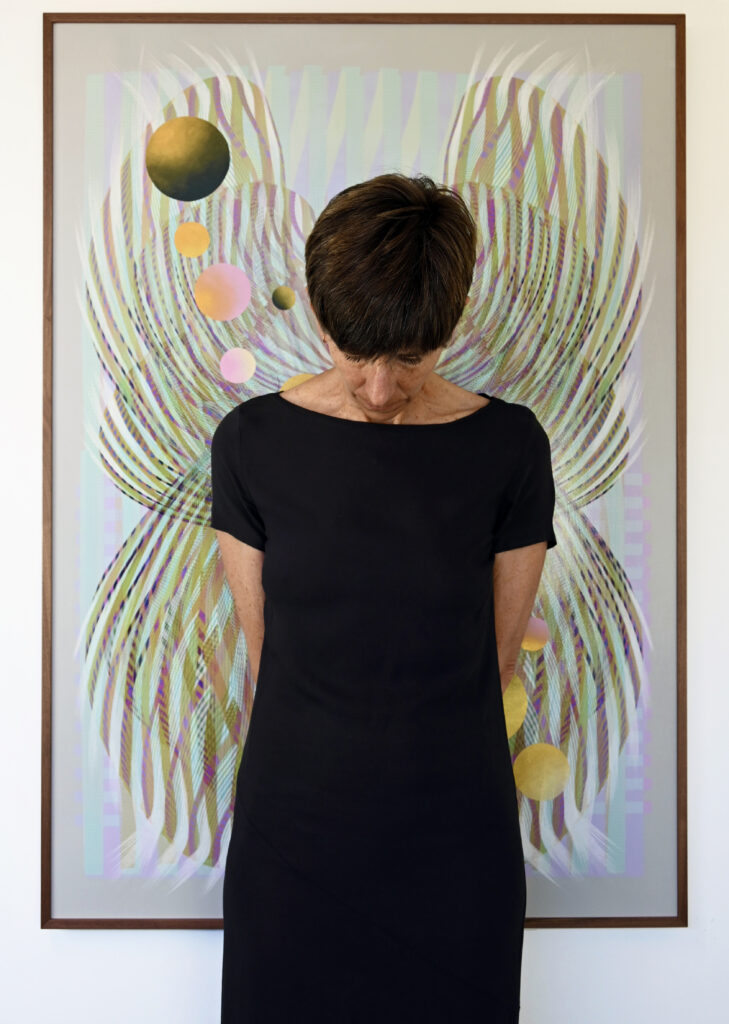
And there is something about how she relates to the people who see her work that really moved us. She does not need them to understand what she meant. She does not need them to get the reference or read the title the right way. She said the more someone’s interpretation differs from her own the happier she feels.
Because it means the painting did something on its own. It reached someone in a way she could not have planned. That is a rare kind of generosity in an artist. To make something deeply personal and then let it go completely. To trust the viewer that much.
We think the world needs more of that right now. More art that does not explain itself. More artists who trust that a feeling is enough to start with. More work that leaves space for the person looking at it to bring their own life into the frame. Olga does all of that with a quiet confidence that comes from knowing exactly who she is, a woman shaped by two cultures, two rhythms, two ways of seeing, who found a way to hold both without choosing either.
Follow Olga Burkard through the links below and see what happens when an artist trusts feeling over planning, openness over control, and lets two worlds live together on a single surface.