
How Masha Foya built an illustration career that reached The New York Times

At Arts to Hearts, we have seen a lot of illustration work. But every once in a while, something comes along that stops the room completely that has a quality so specific and so undeniable that you know immediately you are looking at someone operating at a completely different level.
Masha Foya is that kind of illustrator. And our Best of the Art World editorial was built for exactly this moment to bring artists like her to the people who need to encounter them.
Masha is a Kyiv based illustrator whose clients include The New York Times, The Guardian Weekly, Die Zeit, and Scientific American, some of the most demanding and most prestigious publications in the world. But the accolades and the client list are almost beside the point when you actually look at the work.
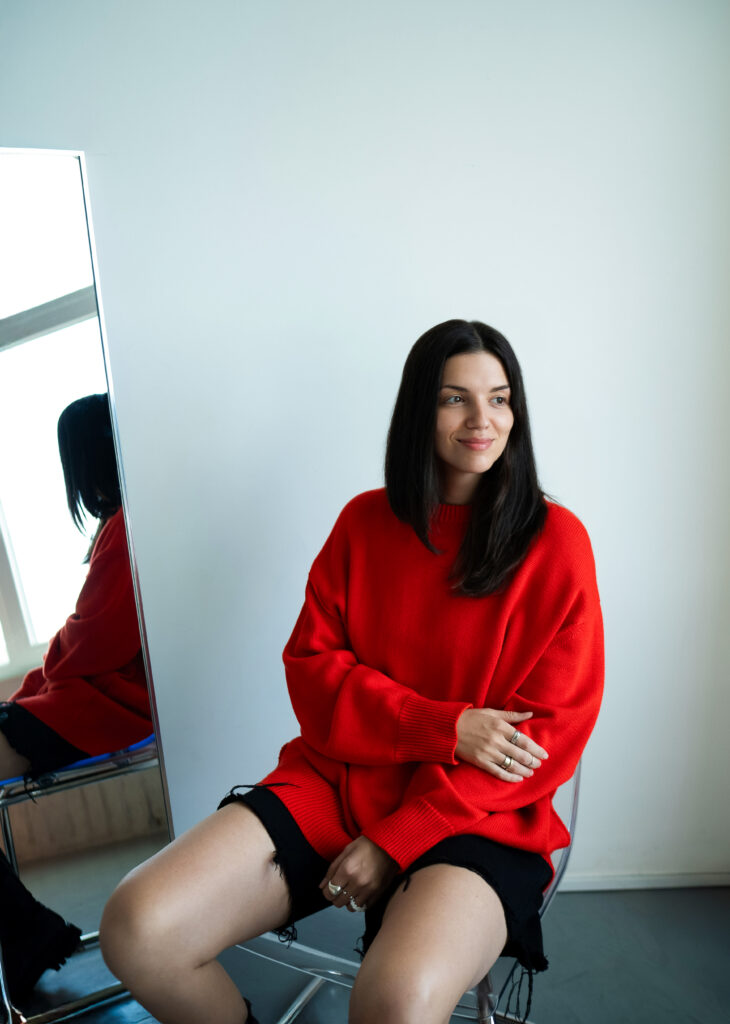
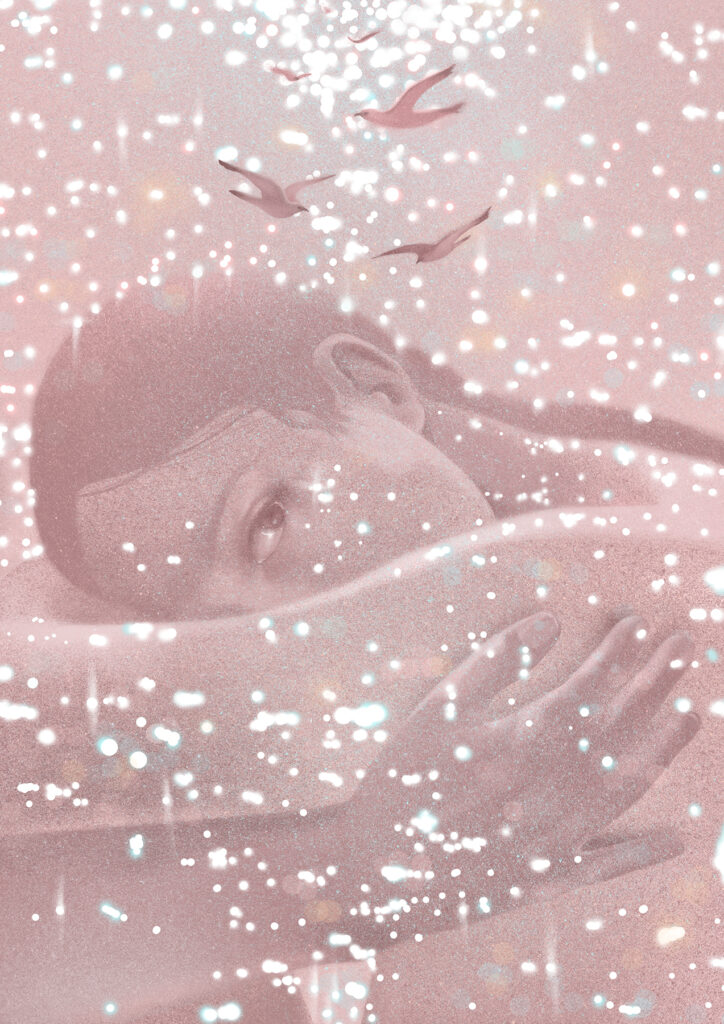
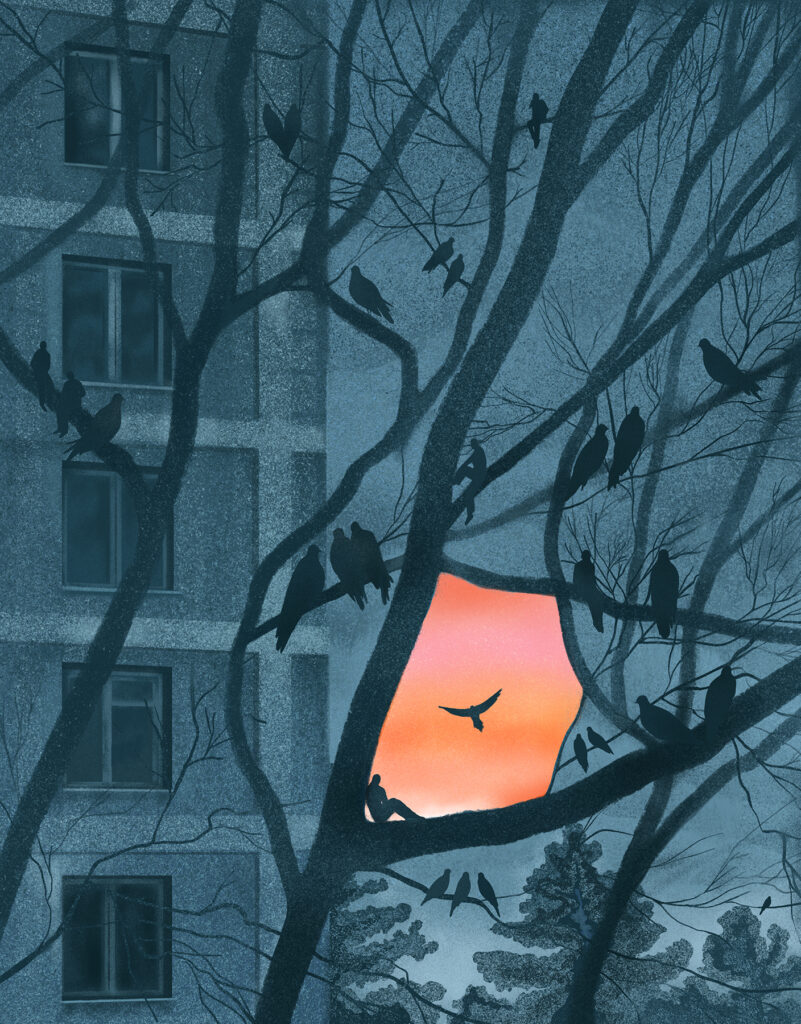
Because what Masha does with an image is something that goes far beyond editorial illustration. Her work exists in that particular space between dream and reality familiar scenes that feel just slightly out of reach, floating figures and vast spaces and portals of light that carry the particular mood of something you have felt before but cannot quite name.
Soft palettes that approach even the most difficult subjects through beauty rather than confrontation. Images that arrive in the mind like a dream you recognise but cannot place.
She grew up in Kyiv, fell in love with drawing long before she had the language to articulate why, studied Fine Arts and Book Graphics for six years, and built her practice the way the best ones are always built through obsession, through curiosity, through the kind of deep and patient love for the process that never really goes away.
She learned academic drawing, painting, and composition. She took commissions on the side paintings, tattoo designs, murals. She discovered illustration during her final years at university and never looked back.
And as a Ukrainian artist working today, she carries something else in her work a responsibility and a weight that is impossible to separate from the images she makes. The strength of Ukrainian defenders and the depth of overwhelming emotion that all Ukrainians are living through right now she translates all of that into images for the world’s most important publications.
With beauty. With softness. With barely visible metaphors that land deeper than anything loud ever could.
Let’s get to know Masha through our conversation with her, where she shares the dreams and the process and the in-between spaces that have made her one of the most quietly extraordinary illustrators working today.
Q1. Masha, can you share a bit about your journey into illustration and how your background in Fine Arts has shaped your work today?
Ever since I was a child, I’ve loved drawing. Until about the age of 14, I was convinced I’d become a fashion designer when I grew up. When I was 10-11, I even designed a sketch that was used to make my competition leotard (I did gymnastics until I was 12). Later, during my final year of school, I decided to devote all my free time to drawing; I still remember my sister gifting me my very first professional brushes.
After entering the Institute of Publishing and Printing (specifically the Department of Fine Arts and Book Graphics), I completely fell in love with drawing and everything connected to it. For the next six years, I immersed myself in studying academic drawing, painting, and composition. While studying, I earned some money on the side by taking small commissions, creating paintings, tattoo designs, and murals for various venues. During my final years at university, I became interested in illustration as a future career, which brought in my first commissions for book cover designs.
Q2. Your work often sits between dream, and reality is that in-between space something you consciously create, or does it emerge naturally?
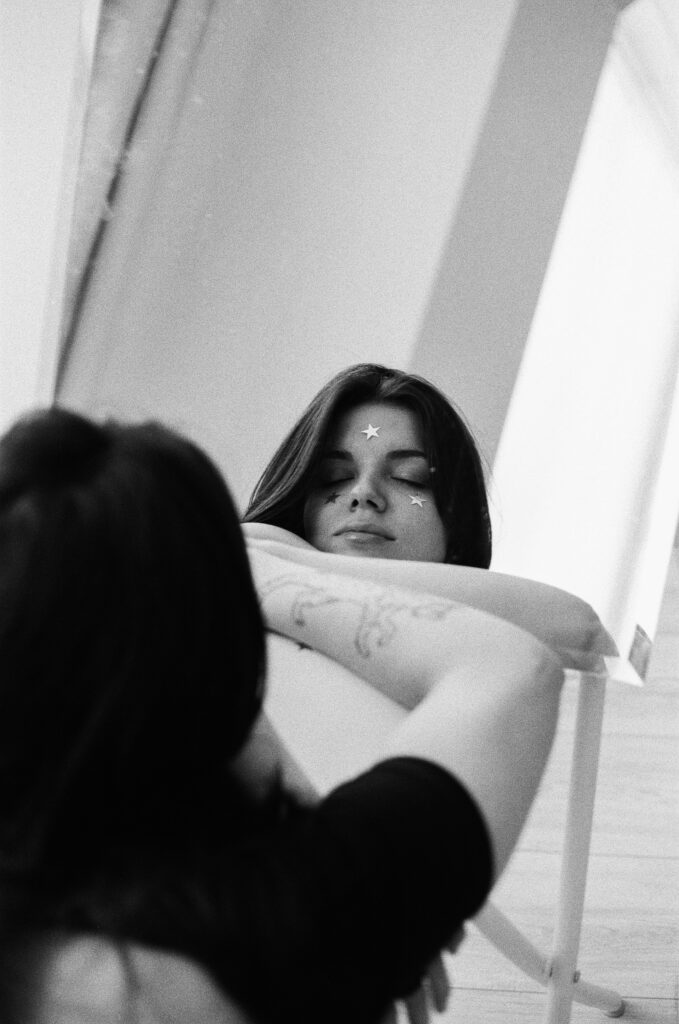
Thank you for such a poetic description of my works! Of course, before starting work, I have an inner vision of what I want to get as a result, I create many small rough sketches, then more elaborate sketches, and later I work on the final illustration.
But I always leave room for lucky coincidences (which I may not have planned). Sometimes the special mood of my works comes in the process, and I just go with the flow. But of course, each of my works is individual and it all depends on the task and whether it is a commissioned work or my personal graphic exploration.
Q3. Your work often feels dreamlike, but it’s also deeply grounded in human emotion. Do you begin with a feeling first or an image first?
Quite often I just see in my head an interesting (for me) story that just arises in the process of everyday things. Or I feel an incredible combination of colors that I want to recreate, and the plot comes later. But there may be situations where the desire to depict a feeling arises first, but the form comes much later.
Q4. Water, light, and floating figures appear throughout your work did these symbols evolve naturally, or were they always intentional?
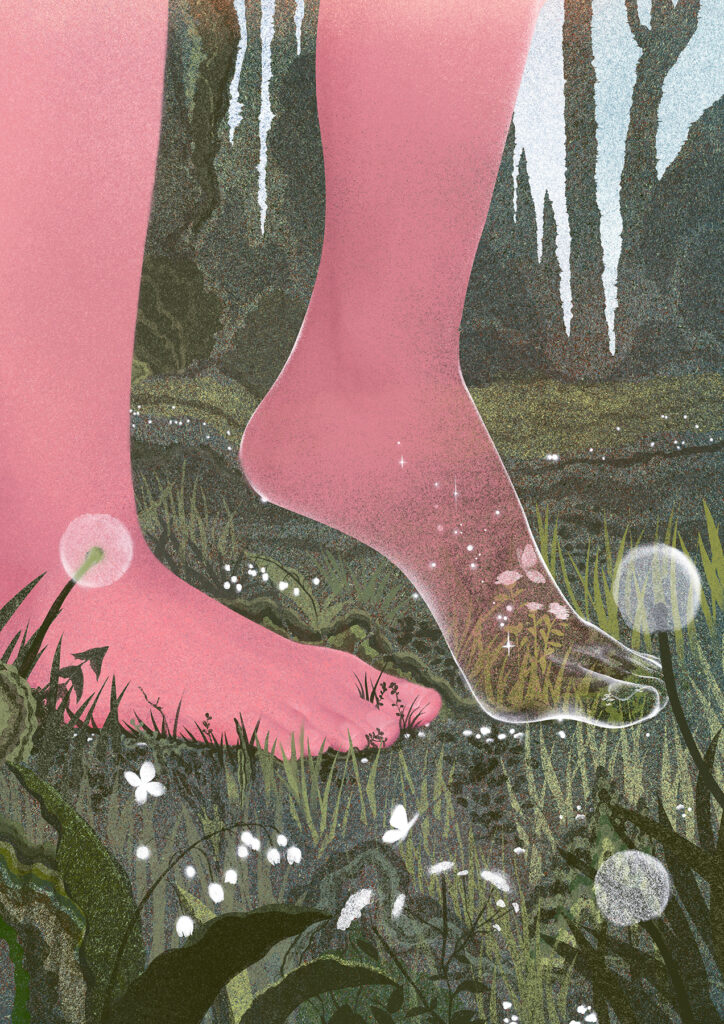
I think all these symbols appeared in my work naturally. I love exploring the moments of transition from the real world to the world of fantasy and illusions. It is precisely this meeting point, this contrast, that I usually want to represent in my illustrations.
Q5. Your palettes often feel soft and calming, even when addressing difficult subjects. what draws you to that approach?
I love noticing beauty in ordinary, everyday moments: a ray of sunlight creating an incredible atmosphere on a bookshelf, or a reflection in a lake that doubles the mystery hidden in its depths. Perhaps this is how I explore the world, and all of this is reflected in my subconscious.
That’s why, even when depicting conflict, I use subtle, barely noticeable metaphors and simply cannot do without beauty—even though in such moments it evokes a deep sense of melancholy.
Q6. How has being a Ukrainian artist shaped the stories you feel compelled to tell?
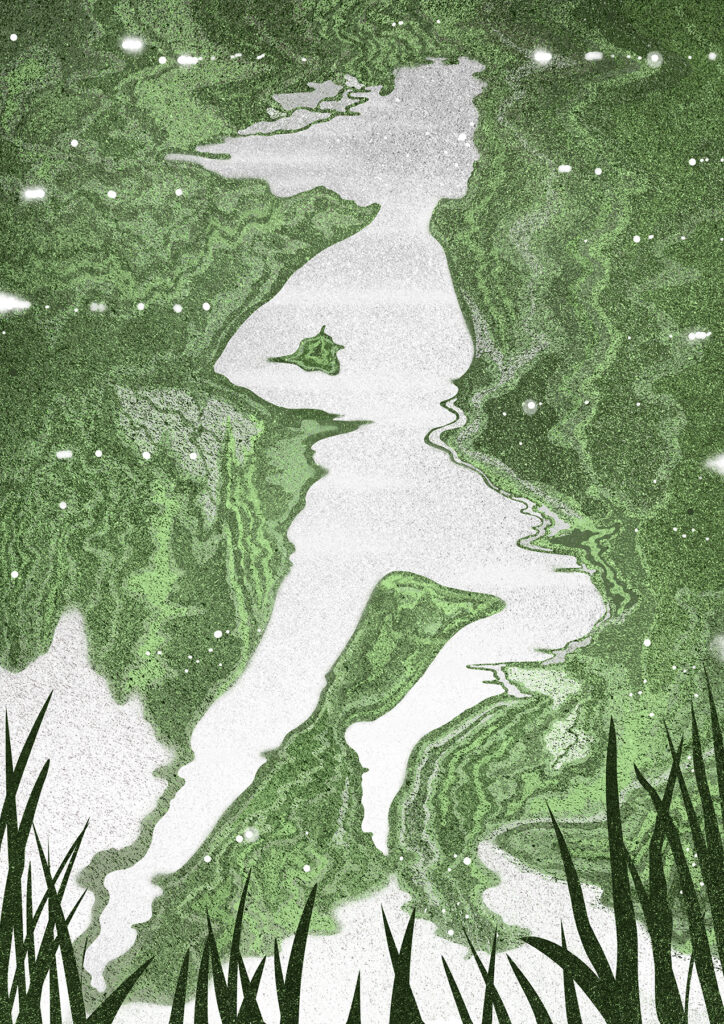
As a Ukrainian illustrator, I feel an incredible sense of responsibility when I’m commissioned to create illustrations related to Russia’s full-scale invasion of Ukraine or the history of the Ukrainian people. I understand that these illustrations must convey both the incredible strength of Ukrainian defenders and the depth of the utterly overwhelming emotions that all Ukrainians are currently experiencing.
Q7. You’ve illustrated for The New York Times, The Guardian Weekly, Die Zeit, and Scientific American. How does your approach change from one publication to another?
I probably wouldn’t say that I change my visual language much; it all depends on the tasks given by the art director. But I agree that the tone can definitely change. That’s why I work to ensure my visual language is quite broad and has certain gradations: from minimalist, fragmentary, monochromatic illustrations to textured, rich, landscape-inspired surrealist works.
Q8. Illustration often comes with tight deadlines, how do you protect your creativity when working under pressure?
I try to find a balance between commissions, my own visual explorations, and relaxation. Spending time alone helps me the most in maintaining my inner peace. Going for walks, swimming, and listening to music in calm surroundings.
Q9. What advice would you give young illustrators who dream of working with major publications?
Draw a lot, analyze, observe, experiment, and truly love what you do. Don’t forget to enjoy the process itself.

As our conversation with Masha came to a close, we kept thinking about softness. And how people constantly underestimate it.
Because there is this assumption in the creative world that if you want to say something important, you have to say it loudly. That powerful work has to look powerful. That if the subject is war or displacement or national identity, the imagery has to match that intensity with something equally sharp and hard and confrontational.
Masha proves that assumption wrong with every single piece she makes.
She illustrates some of the heaviest subjects imaginable for some of the most demanding publications in the world. And she does it with beauty. With soft palettes and floating figures and light that feels like it is coming from somewhere you cannot quite locate. And the strange thing is, her work lands harder because of that softness. Not in spite of it. A harsh image of conflict makes you flinch and scroll past.
We also kept thinking about something that applies to every creative person right now regardless of what they make. The way Masha protects her inner world. She goes for walks. She swims. She listens to music alone. She finds time to be by herself in the middle of an industry that is constantly demanding output and speed and deadlines.
That is not a luxury for her. It is the reason the work stays good. Because the images she makes come from somewhere internal and if she does not protect that internal space, the source dries up. Every artist knows this instinctively but very few actually build their lives around protecting it the way Masha does.
And as a Ukrainian artist working right now, she carries something in her practice that most illustrators never have to carry. A responsibility that is not chosen but inherited. The weight of representing what her country and her people are living through, not for a Ukrainian audience that already knows, but for an international readership that needs to understand. That she does this through beauty rather than horror, through subtle metaphor rather than graphic depiction, tells you everything about who she is.
For anyone looking to collect or commission Masha’s work, her illustrations carry a presence that goes beyond their original editorial context. They function beautifully as standalone pieces because the emotional depth in them is not tied to the article they accompanied. It lives in the image itself.
The soft palettes and the dreamlike compositions and the quiet surrealism give the work a timelessness that means it will not feel dated in five years the way trend-driven illustration often does. These are images that hold up because they come from somewhere real and are made by someone whose skill and sensitivity are in perfect balance.
Follow Masha Foya through the links below and see what happens when someone proves that the softest voice in the room can also be the most powerful.