
From a Lit Corridor to a Figure Hidden in Dark Sheets: Leo Rebolledo’s Mysterious Realism
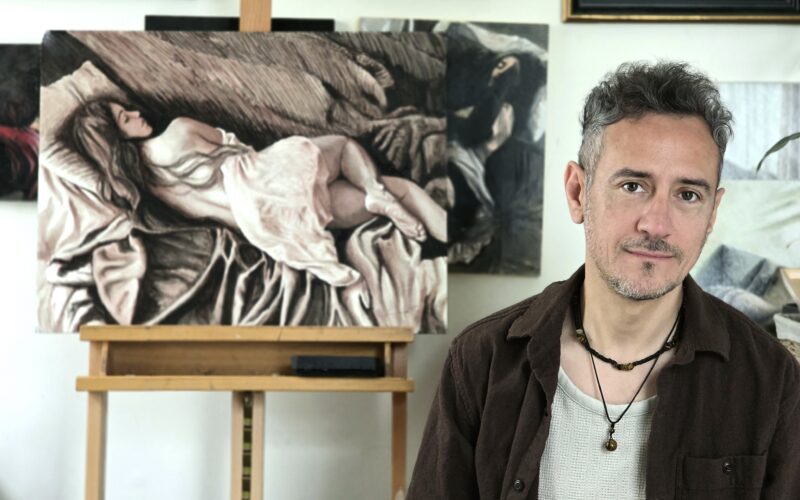
At Arts to Hearts, some of the most compelling practices we encounter are the ones built across decades quietly, consistently, without anyone watching until one day the world catches up. Our Best of the Art World editorial was built to find exactly those artists. And today we are so genuinely excited to introduce you to one whose entire practice is a testament to that kind of patient, unwavering commitment.
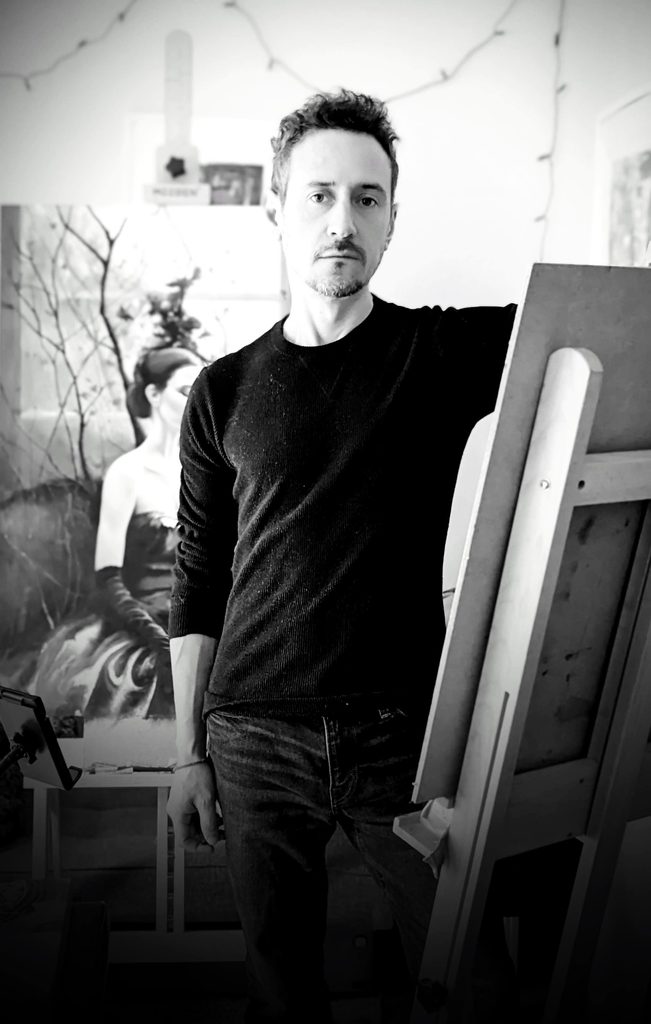
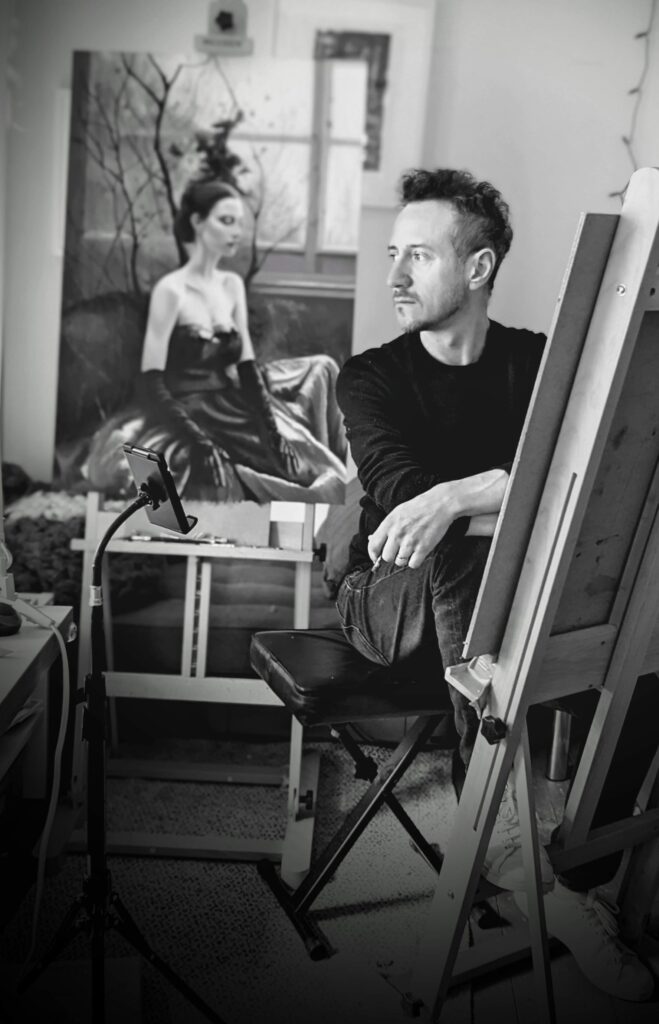
Leo Rebolledo was born in Chile in 1980 and is now based in New Haven, Connecticut and his story is one of the most quietly moving we have encountered in this series. He is an architect and an oil pastel painter, and both of those things are equally true and equally essential to understanding who he is and what he makes.
Architecture shaped his eye for structure, proportion, space, and the relationship between people and their environments. And painting, which he never abandoned through all those years of designing buildings, became the space where he could explore something architecture never quite allowed the poetic, the psychological, the dreamlike world that lives just beneath the surface of the visible one.
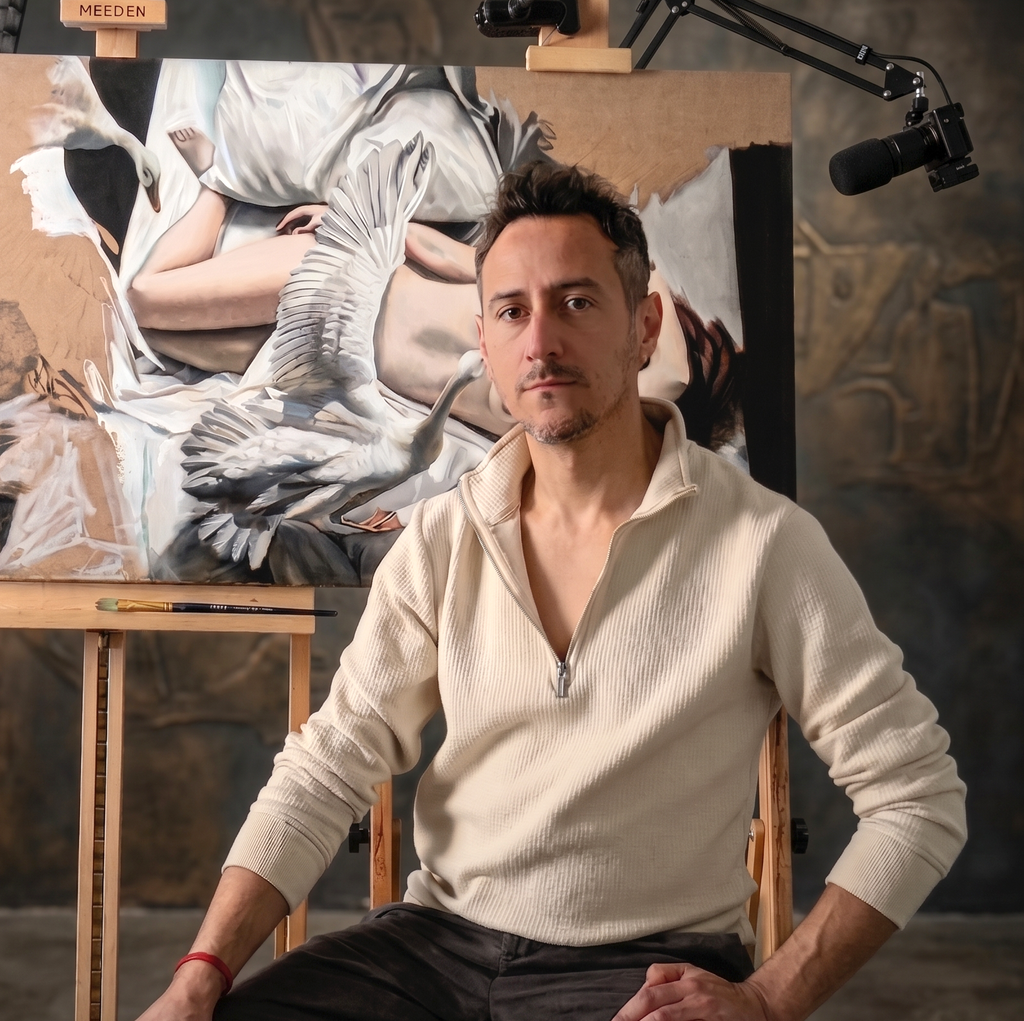
His technique is unlike anything else working in this space today. Over more than three decades, Leo has pushed oil pastel beyond what most people believe the medium is capable of achieving textures, luminosity, and depth that rival oil on canvas, while developing a tactile, intimate relationship with the surface that is entirely his own.
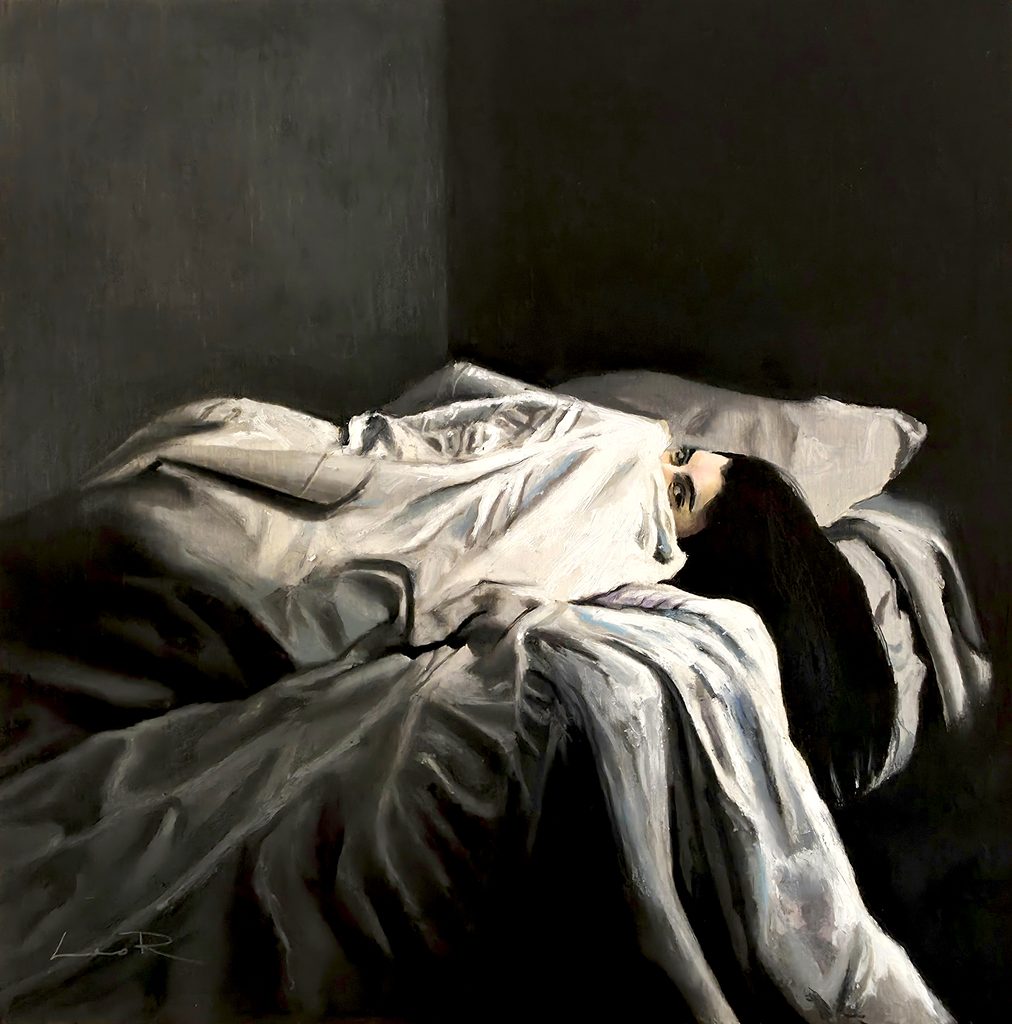
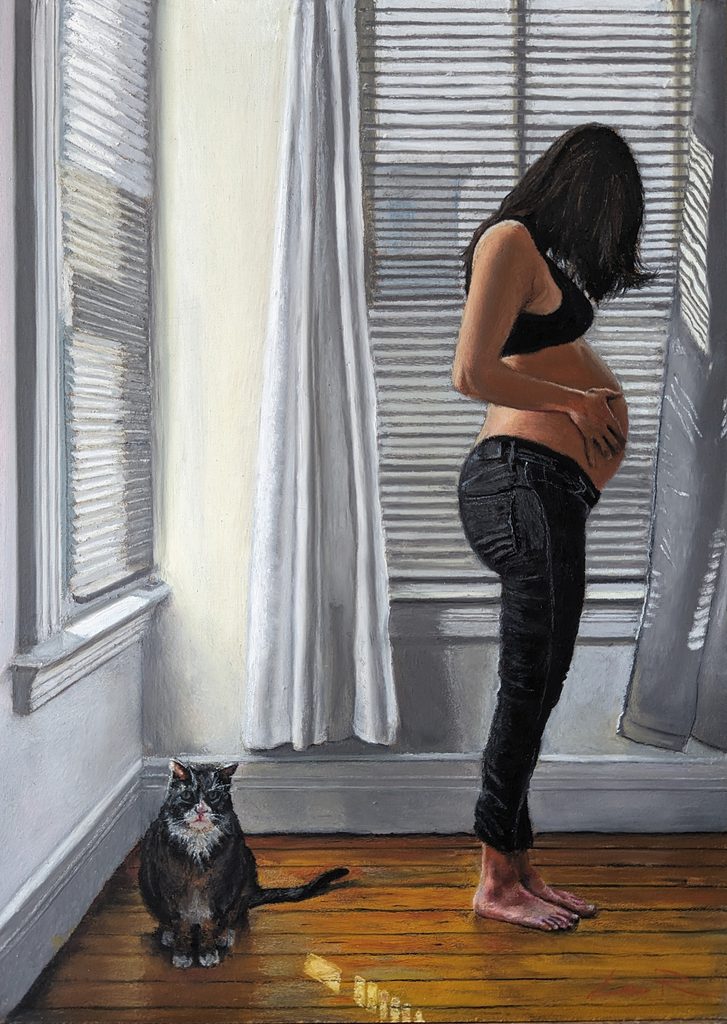
His work combines classical tradition with elements of magical realism and symbolism, creating meticulously composed scenes where the everyday becomes mysterious, where recognisable spaces are charged with psychological weight, where figures are caught in moments of quiet contemplation that suggest entire interior worlds the viewer is invited to complete for themselves.
The recognition has been significant. He is a member of the American Artists Professional League and Poets Artists a leading international association of figurative artists based in the United States. His work has been exhibited at the Salmagundi Club in New York and the European Museum of Modern Art in Barcelona.
And in one of the most extraordinary milestones we have come across in this series one of his works has been incorporated into the Lunar Codex project, the most important art collection to be deposited on the surface of the lunar south pole, scheduled for launch via SpaceX and NASA’s Polaris mission in December 2026. His work is going to the moon. And we are so glad we got to introduce him to you first.
Let’s get to know Leo through our conversation with him and discover the practice he has been quietly building for decades.
Q1. Can you share how your journey into art began and how architecture shaped your practice?
My path into art began early, as drawing and painting were always a natural part of my life. Although I pursued architecture professionally, I never stopped painting, and both disciplines evolved together. Architecture taught me to observe structure, proportion, space, and the relationship between people and their environments.
Those principles continue to influence my paintings, where I often approach composition almost architecturally, searching for a balance between structure, light, and emotion. Over time, painting became the space where I could explore more personal and poetic aspects of experience. Today, I see architecture and art as complementary languages: one helped me understand the visible world, while the other allows me to explore what lies beneath it.
Q2. You’ve spoken about how growing up in Chile often meant choosing a “secure” career over art. How did that mindset shape your path to becoming a painter?
I think it delayed me for many years, although not in the sense that I stopped making art. I never stopped drawing or painting. What it delayed was my willingness to fully embrace the identity of being an artist. I grew up in Chile during a time when creative careers were often seen as uncertain or impractical. If you showed talent for drawing, people might admire it, but the conversation usually turned toward finding a profession that offered stability and security. Architecture became that path for me.
It was a field I genuinely loved, but it was also a socially accepted way of being close to art without taking what many considered a risky leap.
For a long time, I viewed painting as something deeply important but somehow secondary, even though it remained a constant presence in my life. Looking back, I realize that I was already a painter long before I allowed myself to say it out loud.
The work was there, the commitment was there, the countless hours in the studio were there. What was missing was the permission, perhaps self-imposed, to claim that identity. Over time, I understood that being an artist is not something granted by institutions, galleries, or public recognition.
It comes from the practice itself, from the decision to dedicate yourself to a lifelong pursuit of understanding and expressing something meaningful through your work. Once I recognized that, calling myself a painter stopped feeling like a declaration and started feeling like a simple statement of fact.
Q3. How did oil pastel become the foundation of your distinctive visual language?
My relationship with oil pastel began out of necessity. As a child, I admired the richness and luminosity of oil paintings, but I only had access to inexpensive oil pastels and simple materials. What started as a limitation became a lifelong exploration. Over more than three decades, I developed a personal language through this medium, discovering its unique qualities: the intensity of the pigment, the tactile connection with the surface, and the possibility of working directly with my hands.
My goal has never been to imitate oil painting, but to reveal the expressive potential of oil pastel as a fine art medium.
Q4. Your figures often appear caught in quiet, reflective moments. What draws you to these kinds of scenes?
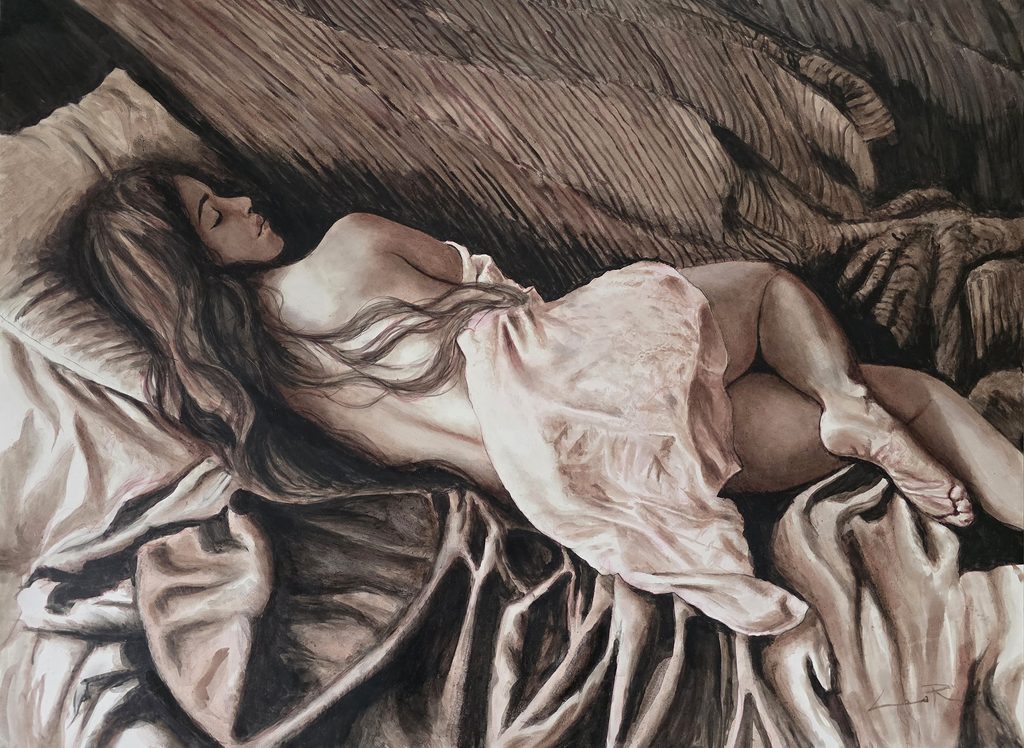
I’ve always been fascinated by the inner lives of people. I’m less interested in what a figure is doing than in what they might be thinking, remembering, fearing, or longing for. A quiet moment can often reveal more than a dramatic event. Many of my paintings begin with ordinary situations, but I look for ways to suggest that something deeper is taking place beneath the surface.
I’m interested in that threshold where reality and the inner world meet—where memory, emotion, and imagination begin to shape our experience. Ultimately, these scenes are about creating space for reflection. I want viewers to slow down, enter the painting, and perhaps recognize something of their own lives in the silence and ambiguity of the image.
Q5. Your paintings leave room for different interpretations. How important is the viewer’s imagination to your work?
The viewer’s imagination is essential to my work. I am not interested in creating paintings that deliver a single, fixed message. Instead, I try to create images that function as invitations, spaces where viewers can bring their own memories, emotions, and experiences. When I paint, I often leave certain narratives unresolved on purpose. A figure may be caught in a moment of contemplation, anticipation, or uncertainty, but I rarely explain exactly what is happening.
Life itself is full of ambiguity, and I think paintings become more powerful when they preserve some of that mystery rather than trying to answer every question.
I want the viewer to participate in the work, not simply observe it. The meaning of a painting is not created entirely by the artist; it emerges through the encounter between the artwork and the person standing in front of it. Two people can look at the same painting and see something completely different, and I find that fascinating. Perhaps this comes from my own experience as a viewer.
The artworks that have stayed with me throughout my life are not the ones that explained everything, but the ones that continued to reveal new meanings over time. If my paintings can create that kind of open dialogue—where each viewer discovers something personal and unique—then I feel the work has succeeded.
Q6. In On the Margins, the title suggests ideas of distance or belonging. What conversations were you hoping to open through this work?
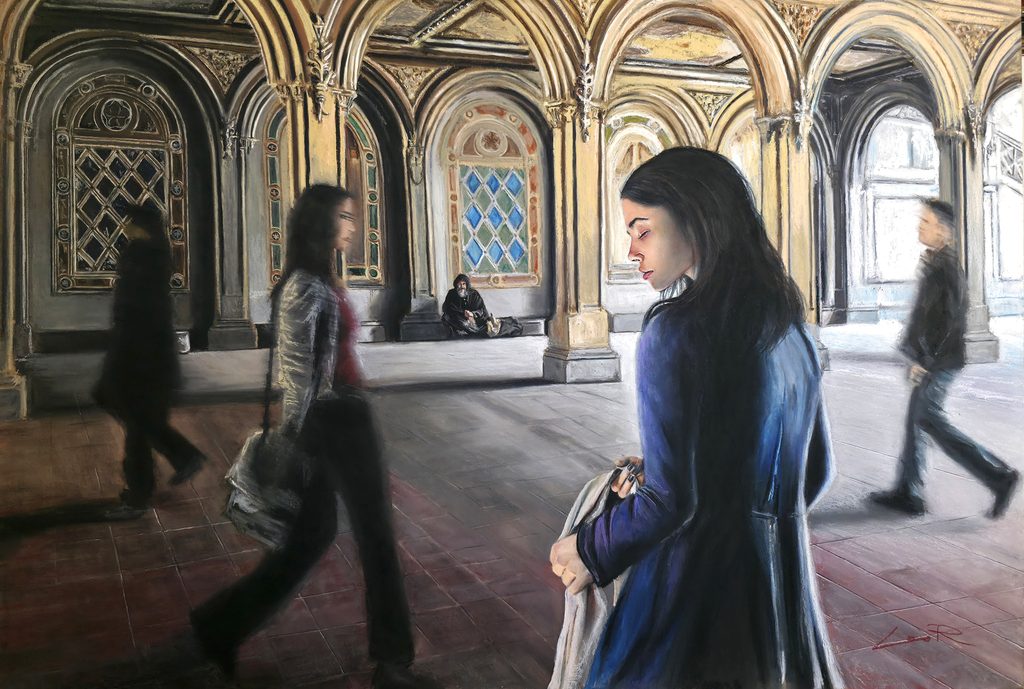
*On the Margins* was inspired by a question that has become increasingly relevant in contemporary society: what does it mean to belong? We live in cities that are more connected than ever, yet many people experience a profound sense of isolation, invisibility, or disconnection. The painting is set in Bethesda Terrace, one of the most visited and iconic spaces in New York City. People constantly pass through it, crossing paths without truly seeing one another. I was interested in that contrast between physical proximity and emotional distance.
The young woman occupies the foreground, absorbed in her own thoughts, while blurred figures move around her, suggesting the relentless pace of urban life. At the same time, a homeless figure sits quietly in the background, almost unnoticed. For me, that presence is important because it raises questions about who is seen and who remains invisible within our shared public spaces.
Rather than offering answers, I hoped the painting would open a conversation about belonging, exclusion, and human connection. We have all experienced moments of feeling at the center of things and, at other times, on the margins. What interested me was exploring that fragile boundary between being part of the world and feeling separate from it, even when surrounded by others.
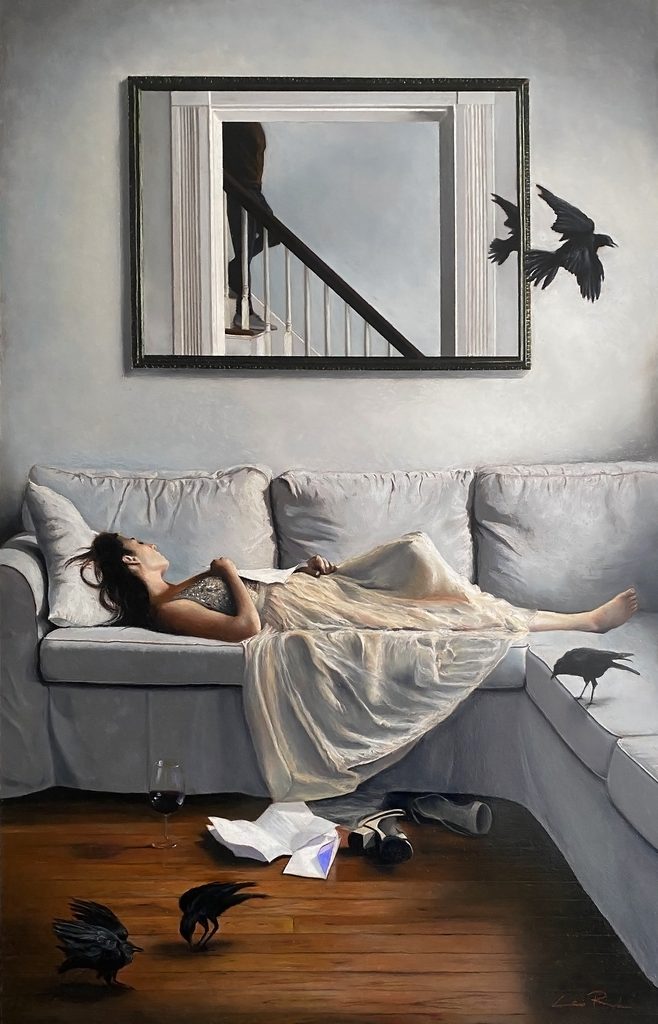
Q7. In The Letter, an everyday moment becomes quietly mysterious. What inspired that transformation?
The Letter began with something very ordinary: a woman alone, a letter, a quiet interior. But I was never interested in illustrating a specific story. What interested me was the emotional space that exists around an event rather than the event itself. I have always been fascinated by the idea that our most significant experiences often happen internally.
A letter can contain news, a confession, a farewell, a memory, or a revelation, but what remains invisible is the psychological landscape it creates. In this painting, I wanted to explore that unseen territory. The crows became an important vehicle for that transformation. They are not meant to function as symbols with a single, fixed meaning. Instead, they operate more like manifestations of thought, memory, anxiety, grief, or even imagination itself. They blur the boundary between the physical world and the inner world of the figure.
The viewer is left uncertain whether the birds are truly present or whether they belong to a psychological reality unfolding within the scene. I am often drawn to that threshold where reality and imagination coexist. The setting in The Letter is intentionally familiar and believable, but small disruptions begin to challenge that certainty. The painting asks the viewer to inhabit the same state of ambiguity as the figure herself.
Ultimately, I think the mystery emerges because the painting never reveals what the letter says.
The absence of that information creates a space that the viewer instinctively wants to fill. In that sense, the real subject of the painting is not the letter at all, but the emotional and imaginative possibilities that unfold around it.
Q8. Do your paintings usually begin with a written idea, sketches, photographs, or simply an image in your mind?
My paintings almost always begin with a reflection rather than a visual plan. Ideas tend to appear unexpectedly during everyday life, often triggered by something I encounter in my surroundings—a fleeting gesture, a particular quality of light, an interaction between people, or a moment that carries an emotional or symbolic weight beyond what is immediately visible. Those moments are usually brief, so when I recognize them, I take photographs.
Photography allows me to capture the raw material of an idea before it disappears. I often take many images from different angles and perspectives, not because I intend to reproduce them literally, but because they help me anchor a feeling or impression that first caught my attention. From there, the painting gradually takes on a life of its own.
The photographs become references rather than prescriptions. Elements are added, removed, rearranged, or transformed as I search for a composition that communicates the original idea more clearly. In that sense, my work begins with observation, but it ultimately evolves through imagination, memory, and reflection.
Q9. How do you balance classical realism with contemporary themes?
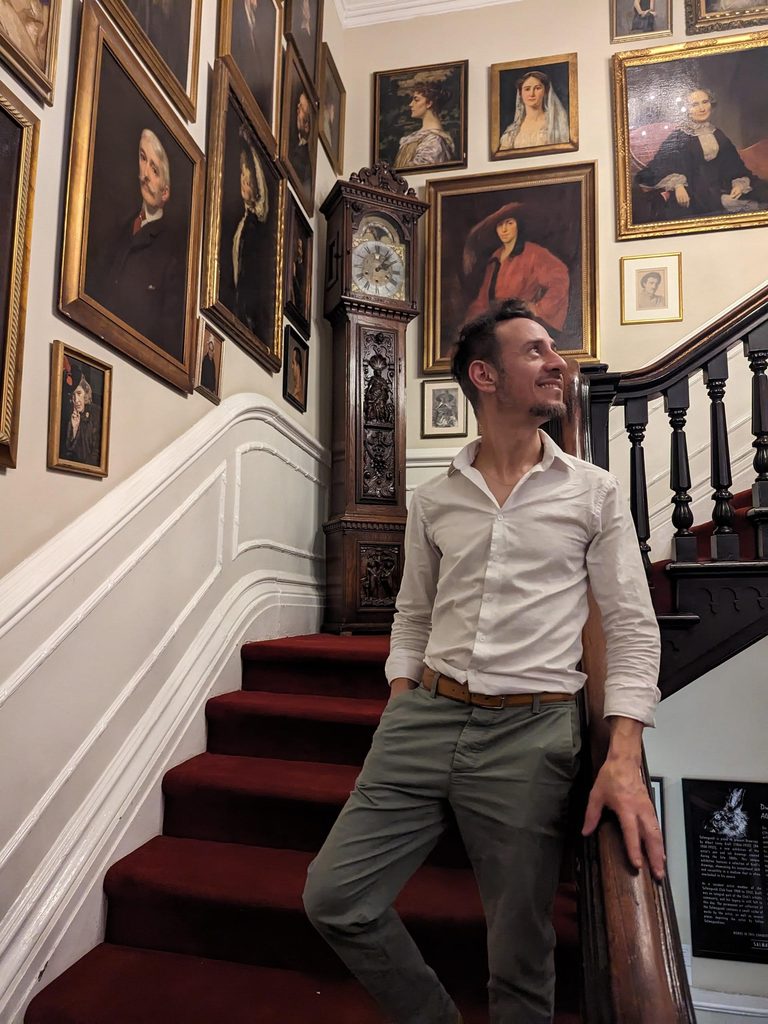
I have always admired the great realist painters of the past, not only for their technical mastery, but for their ability to communicate something timeless about the human experience. From them, I learned the importance of drawing, composition, light, and craftsmanship. Those foundations remain essential to my work. At the same time, I have never been interested in recreating the past. My goal is not to paint historical narratives or imitate the aesthetics of another era.
I want my paintings to speak about contemporary life and the psychological realities of the world we inhabit today.
I think the balance comes naturally from combining a traditional visual language with contemporary themes and questions. The people in my paintings are modern individuals dealing with solitude, memory, identity, belonging, and the complexities of everyday life. These are subjects that feel deeply relevant to our time, even when they are expressed through a realist approach.
Ultimately, I see realism not as a style tied to a particular period, but as a language that continues to evolve. My challenge is to honor the traditions that shaped me while using them to explore ideas that are personal, contemporary, and uniquely my own.
Q10. You’ve said your figures and settings usually come from your own life. How literal is that real people, real rooms?
There is usually a connection to my own life, but it is rarely literal. I don’t have access to many professional models, so I often use my wife as a starting point. I might borrow a pose, a gesture, or a particular expression, but I am not trying to portray her as a specific person. The figure gradually transforms into a character shaped by imagination rather than biography. I also gather a large number of photographic references, including images from social media, to help me develop these characters.
My goal is not to reproduce real people but to create believable fictional individuals who can carry the emotional or psychological ideas I want to explore. The settings work in a similar way. Many of them begin with real places—rooms, buildings, or locations that I encounter in everyday life. But as the painting develops, those spaces are altered, combined, or reimagined to serve the narrative.
I think of them less as records of actual places and more as stages where the story of the painting can unfold. So while my work is rooted in reality, it ultimately lives somewhere between observation and invention.
The paintings are built from fragments of the real world, but they are meant to function as works of fiction rather than documentation.
Q11. What do you think is more important for an artist: developing a recognizable style or continuing to evolve?
I have never been particularly interested in developing a recognizable style as an end in itself. What matters more to me is building a recognizable artistic discourse and narrative a body of work where the ideas, questions, and emotions behind the images create a connection with the viewer. For me, evolution is essential. Exploring new techniques and materials keeps me motivated and allows the work to continue growing.
I believe that an artist should remain curious and open to transformation rather than becoming trapped by a formula that has already been successful.
At the moment, I am developing a body of work using wine as a pigment, a technique I began exploring many years ago and that I am now working to bring into the professional field of painting. This process represents exactly what I value most as an artist: the constant search for new possibilities while maintaining a deeper continuity in the ideas that drive my work.
Q12. You’ve said nothing is wasted, not even your years in architecture. What would you tell an artist who feels time spent elsewhere was lost?
I would tell that artist that nothing is truly lost if it has contributed to shaping who they are. I don’t see my years in architecture as a detour from painting, but rather as a fundamental part of my visual language. Architecture taught me about structure, composition, space, light, and the relationship between humans and their environments all elements that are deeply present in my work today.
Sometimes we look at our path expecting it to be a straight line, but artistic development is rarely linear. Every experience, even those that seem unrelated at the time, can become a resource later. The important thing is to remain attentive and allow those experiences to transform into something meaningful. I believe an artist’s life is not a collection of separate chapters, but a continuous process of accumulation.
The things we learn, the places we go, and even the years we spend exploring other fields eventually find their way into the work. Nothing is wasted; everything becomes part of the story we are trying to tell.
As we wrapped our conversation with Leo, we found ourselves sitting with something that felt genuinely reassuring in the best possible way.
That nothing is truly lost if it has contributed to shaping who you are. That the years in architecture were not a detour from painting they were part of the painting. That every experience, even the ones that seem unrelated at the time, eventually finds its way into the work. That is such a simple idea. And such a difficult one to actually believe when you are in the middle of a path that does not look like the one you imagined for yourself.
Because most of us have a version of that story. The years spent doing something else. The detour that felt, at the time, like a loss. The creative identity we carried quietly and privately because the world around us was pointing somewhere more practical.
Leo carried his for decades painting through all of it, never stopping, never quite calling himself a painter until the practice itself made the declaration unnecessary. And the visual language that came from all of those year, the architectural eye, the childhood oil pastels, the classical training, the contemporary psychological themes is something that could not have arrived any other way. It needed all of it. Every single year.
There is something genuinely important in that for anyone who feels like they have lost time. Like the path has not been direct enough. Like the work they are making now is somehow behind where it should be. Leo’s entire career is the answer to that feeling.
Nothing is wasted. Everything accumulates. And the practice that emerges from a life fully lived with all its detours and disciplines and years of quiet commitment is almost always richer and more distinctly personal than the one that arrived in a straight line.
For those who collect work that carries that kind of depth work built across decades of genuine dedication, rooted in a visual language that could only have come from one particular life Leo’s paintings offer exactly that. The kind that reward every return visit with something new.
Follow Leo Rebolledo through the links below. Some practices are worth the wait.