
Everything You Need to Know Before Submitting to the 101 Art Book: Faces Edition
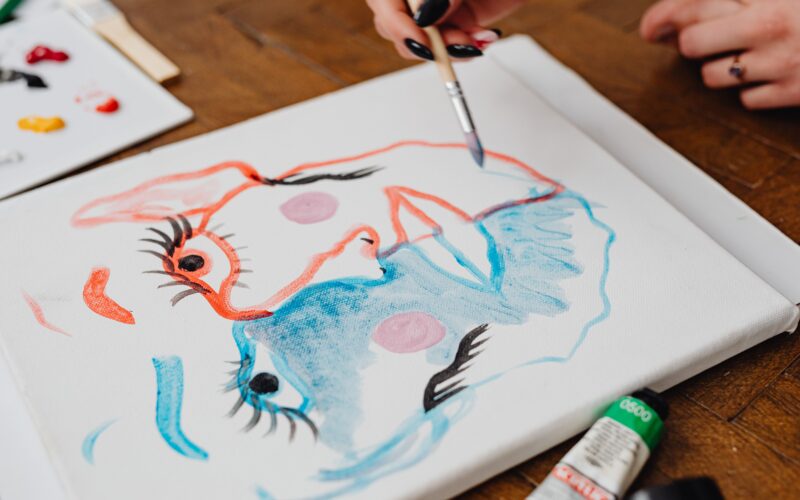
There are some subjects artists return to again and again, no matter how much art history changes. The human face is one of them.
We have painted faces, photographed them, distorted them, hidden them, exaggerated them, turned them into symbols, and used them to tell stories that go far beyond physical appearance. A face can hold identity, emotion, memory, age, culture, vulnerability, confidence, grief, joy, or simply a question we cannot quite answer.
That is exactly what makes the 101 Art Book: Faces Edition such an interesting opportunity for artists.
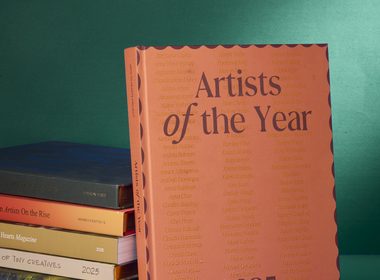
The 14th edition of the internationally recognised 101 Art Book series is inviting artists from around the world to explore the theme of Faces and become part of a professionally produced hardcover publication bringing together 101 contemporary artists. The open call is currently accepting submissions, with the deadline set for September 10, 2026.
And if you have been thinking about submitting but keep telling yourself I’ll do it later, this is your sign to stop waiting. With only the last 10 days left before submissions close, now is the time to look through your studio, revisit the work sitting on your computer, and ask yourself: Do I have a face I want the world to see?
Before you submit, here is everything you need to know.
First, What Is the Faces Edition About?
The theme is simple on the surface: Faces. But that does not mean your submission needs to be a traditional portrait.
The official theme explores the many things a face can carry, identity, emotion, expression, memory, experience, and the stories that exist behind a person’s appearance.
Think about the possibilities. A face can be realistic or abstract. It can belong to a real person, a fictional character, a memory, or an imagined figure. It can be recognisable or deliberately distorted. You can focus on expression, symbolism, colour, texture, identity, or the relationship between the face and everything surrounding it.
This is important when choosing your submission: do not limit yourself to what you think a portrait is supposed to look like. The strongest response to a theme is not necessarily the most literal one. It is the work that has something of its own to say.
Why Artists Have Always Returned to the Face
Before deciding what to submit, it is worth looking at how artists throughout history have approached the same subject.
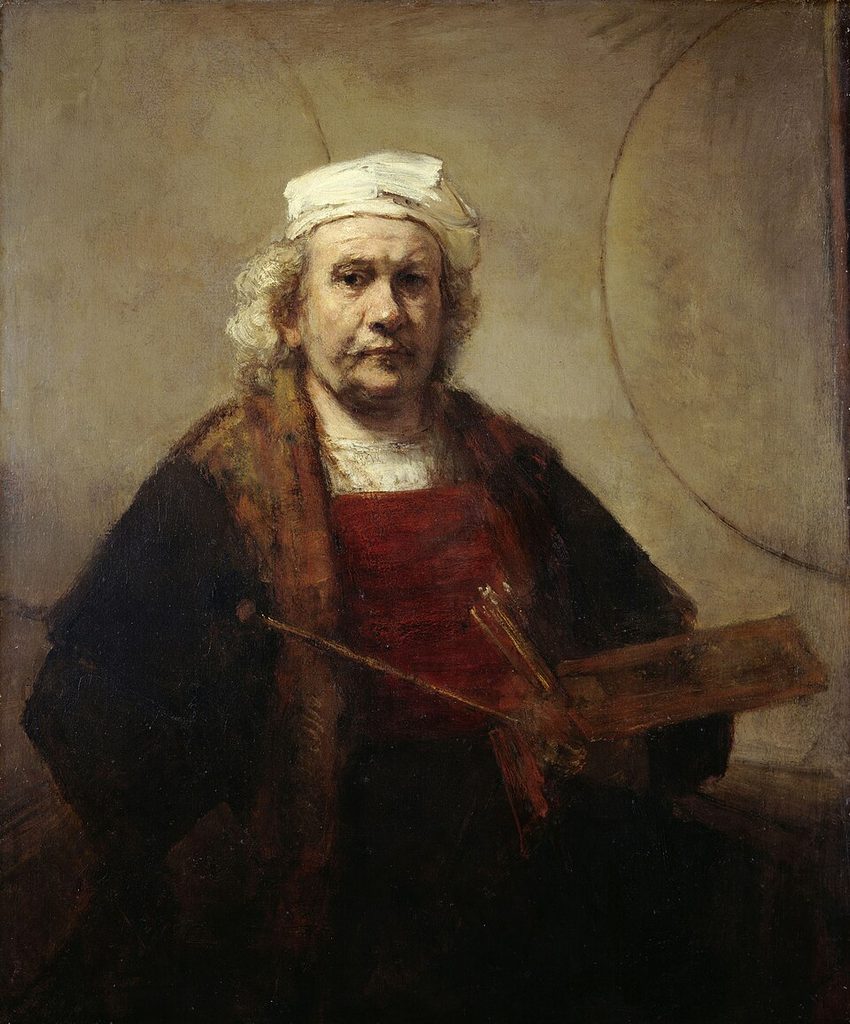
Take Rembrandt, who spent decades looking at his own face.
His numerous self-portraits, including Self-Portrait with Two Circles (c. 1665–69), show how radically a face can change when an artist returns to it over time. Rembrandt did not simply create one image of himself and move on. He observed his face through youth, maturity, and old age, making the self-portrait a record of time as much as a record of appearance.
Then there is Frida Kahlo, whose face became central to a much more personal form of portraiture.
In Self-Portrait with Thorn Necklace and Hummingbird (1940), Kahlo presents herself surrounded by symbols connected to her personal life, Mexican identity, nature, and physical and emotional experience. Her face is recognisable, but the painting is not simply asking us to recognise what she looked like. It asks us to understand something about who she was.
A face does not have to tell us everything directly. Sometimes the most interesting part is everything happening around it.
Faces Can Be Beautiful, Uncomfortable, Strange, or Completely Imagined
Art history also gives us plenty of examples of artists deliberately moving away from conventional beauty.
Amedeo Modigliani’s portraits, for example, are instantly recognizable because of their elongated faces, long necks, and distinctive eyes. In works such as Portrait of Jeanne Hébuterne (1918), the person remains identifiable, but Modigliani transforms the face into something stylized and dreamlike.
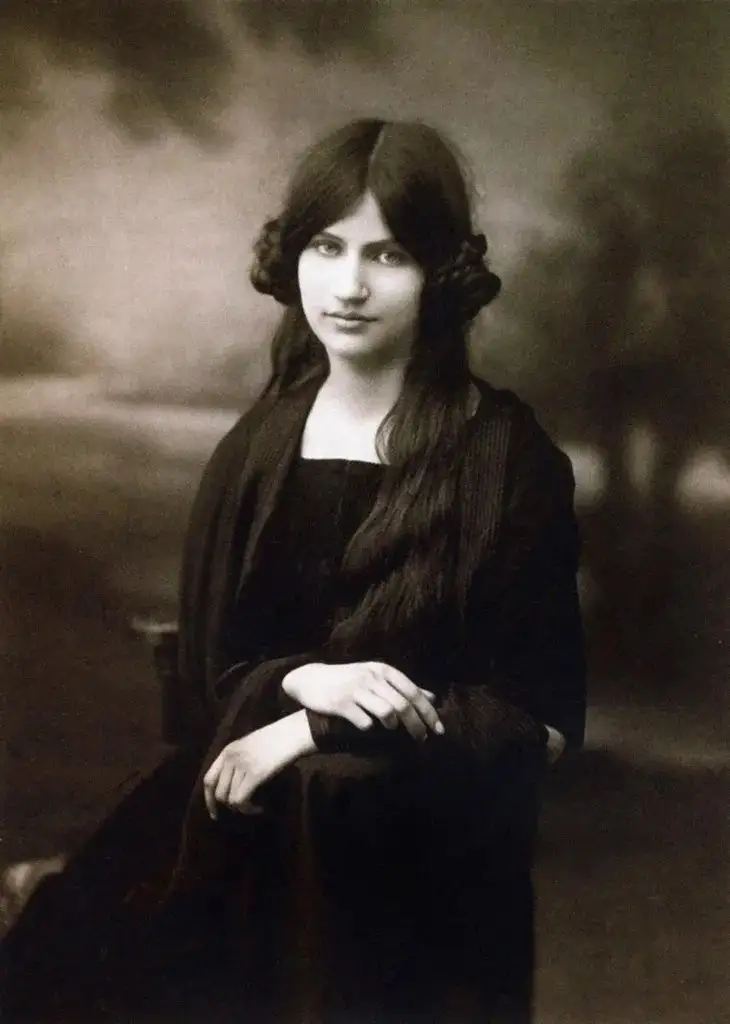
The face becomes less about anatomical accuracy and more about atmosphere.
Then there is Pablo Picasso, whose Cubist portraits demonstrated just how far a face could be taken apart and reconstructed. In works such as Portrait of Dora Maar (1937), multiple perspectives can coexist within one face. What should be one stable viewpoint becomes fragmented. And this is where the Faces theme becomes particularly exciting for contemporary artists.
You do not have to ask only, How do I paint a face?
You can ask:
What happens when a face is fragmented? What happens when it is hidden? What does identity look like when a face is distorted? Can colour communicate an emotion more effectively than an expression? Can a face represent a memory rather than a person?
These questions can lead you somewhere much more personal.
Faces Are Also About Identity
One of the most powerful things about the human face is that it is connected to how we recognise one another. Artists have explored this relationship with identity for centuries. A portrait can tell us about the individual sitting in front of the artist, but it can also reveal how that person wants to be seen.
This is particularly visible in the work of Cindy Sherman, whose photographic practice repeatedly explores constructed identities and the ways women are represented through images.
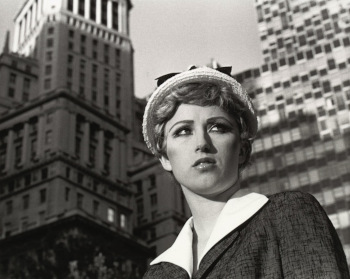
Her Untitled Film Stills (1977–80) series presents Sherman in a range of fictional roles inspired by the visual language of cinema. The face becomes part of a larger performance. It can belong to a character without necessarily revealing the real person behind it.
That idea feels particularly relevant today. We live surrounded by selfies, filters, avatars, video calls, profile photographs, and carefully selected versions of ourselves. We see our own faces more frequently than perhaps any previous generation has. And yet, the question remains the same one artists have been asking for centuries:
Who are we when we are being seen? That is one of the many directions your Faces submission could explore.
What Can You Submit?
The call is open to visual artists working across different mediums and practices, rather than being limited to painters or traditional portrait artists. The official call welcomes approaches including painting, photography, sculpture, textiles, digital art, collage, mixed media, installation, and experimental practices.
So if your work explores faces through an unexpected medium, do not immediately assume it is outside the theme. The better question is whether the work has a meaningful relationship with the idea of Faces. The theme gives you a starting point. Your artistic language is what makes the submission yours.
Who Can Apply?
The opportunity is international and open to artists aged 18 and above, across career stages. That means you do not need to be an established artist with years of gallery experience behind you to consider applying. Emerging, mid-career, and established artists can all submit.
This is one of the reasons it is worth taking the opportunity seriously if you have been hesitant about open calls.
You do not need to wait until you feel like a “real enough” artist.
If you have a body of work, a strong individual piece, or an image that genuinely responds to the theme, you already have a reason to consider submitting.
How Should You Choose Your Work?
This is probably the part artists overthink the most. You do not necessarily need to create something brand new simply because an open call has appeared.
Start by looking at what you already have. Go through your recent paintings, photographs, drawings, sculptures, digital pieces, or unfinished ideas. Look for the work where the face is doing something beyond simply sitting in the composition.
Ask yourself:
Does this work say something? Does it make me feel something? Does it have a clear visual identity? Does it fit the Faces theme naturally?
And most importantly: Would I still be proud of this piece if it appeared in a book alongside 100 other artists?
If the answer is yes, you may already have your submission.
Don’t Wait Until the Last Day
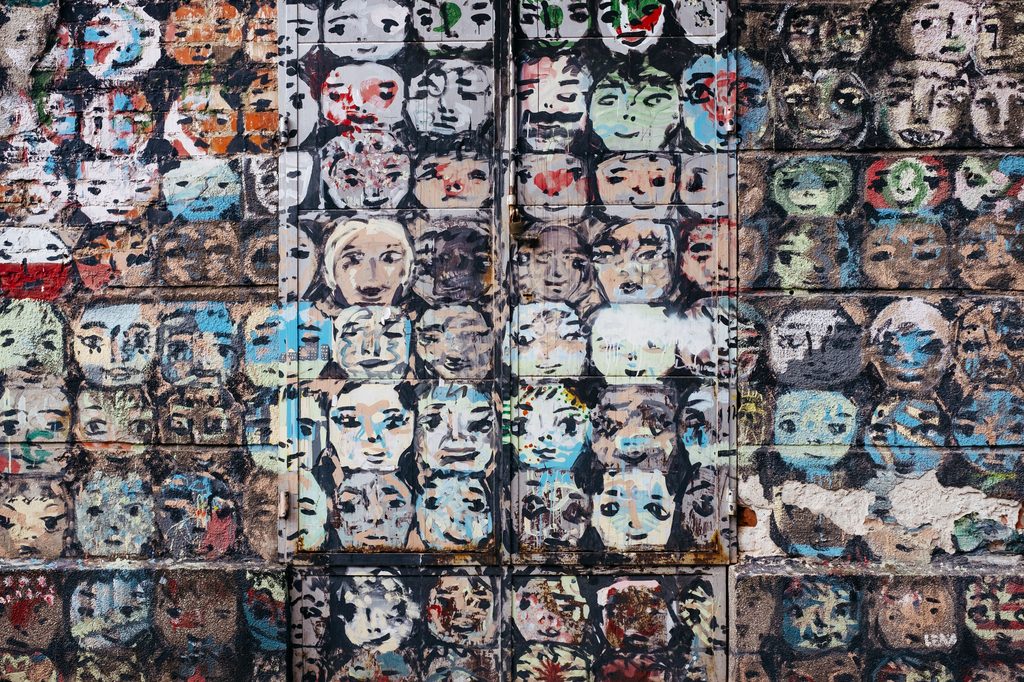
There are now only 10 days left until the September 10 deadline. That may sound like enough time, but anyone who has ever submitted to an open call knows how quickly the final days disappear.
You need time to select the work, prepare your images, check your details, read the submission requirements carefully, and actually complete the application. So don’t leave it sitting in your bookmarks.
If you already know which work you want to submit, apply now. If you are unsure between two pieces, give yourself an evening to look at them properly. Put them side by side. Ask someone whose artistic opinion you trust. Come back to them the next morning.
But don’t spend the next ten days endlessly questioning whether your work is “good enough.” At some point, you have to let the work leave the studio.
What’s In It for Artists?
The biggest opportunity here is, of course, becoming one of the 101 contemporary artists featured in the Faces Edition.
Selected artists receive a two-page editorial feature, a Digital Certificate of Recognition, and the opportunity to purchase the book at an exclusive artist price with complimentary international shipping.
There are also additional awards attached to the edition.
One winner will receive the Face Edition Award, including a $500 USD cash award, a four-page feature, a custom glass trophy, and a Certificate of Excellence. First and second runner-ups will receive Jury Recognition Awards, including a four-page feature, trophy, and Certificate of Excellence. Artists who apply also receive a Certificate of Participation and personalised jury feedback.
For an artist, being part of a publication like this is not only about having your work printed. It is about having your work placed within a larger conversation.
A book creates a physical record of the artists working today and the different ways contemporary artists interpret a shared idea. Your face, your character, your visual language, your interpretation becomes one part of that larger collection.
Before You Hit Submit
Take one final look at your work. Is the image clear and ready to be presented professionally? Does the piece genuinely connect with the theme? Have you entered your information carefully? Have you read the application requirements rather than assuming you know what they are?
And perhaps most importantly, have you chosen the work because you believe in it, rather than because you think it looks like what a jury might want? There is no single correct way to interpret Faces. The history of art proves that.
Rembrandt saw the face as a record of a life. Kahlo used it to explore identity and personal experience. Modigliani transformed it into an unmistakable visual language. Picasso fractured it. Sherman questioned the identities we perform through it.
Now contemporary artists have the opportunity to add their own interpretation to that long history.
Your Story, Your Interpretation
A face can be one of the simplest things to draw and one of the hardest things to truly capture.
Because underneath the eyes, expressions, lines, colours, proportions, and features is a person, and behind that person is a story.
The 101 Art Book: Faces Edition is an invitation to explore that story through your own artistic language. Maybe you already have the perfect piece sitting in your studio. Maybe this open call will make you look at an old work differently. Maybe it will inspire something entirely new.
Whatever your approach, don’t let the last few days pass you by.
The deadline is September 10, 2026. There are only 10 days left to submit, and 101 artists will have the chance to see their work become part of this international hardcover collection.