
This artist uses mixed media to make the female figure feel impossible to ignore │ Kourtney Yelton

At Arts to Hearts Project, one of the things we love most about curating our 101 Artbook: Landscape Edition is being surprised by what landscape means to different artists. For some it is the view from their window. For others it is the memory of a place they left behind. And for some, landscape is not about land at all. It is about the body as terrain. About skin and weight and presence as their own kind of geography.
That is where Kourtney Yelton’s work lives. And it is why she is one of our selected artists in this edition.
Growing up in Chesnee, South Carolina, creativity became an outlet for her very early on. Even without a large art scene around her, she was constantly making, drawing, painting, experimenting using art as a way to process things she didn’t yet have words for. That honesty still feels central to her work now.
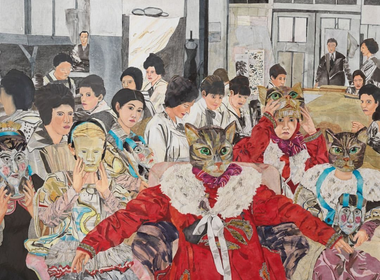
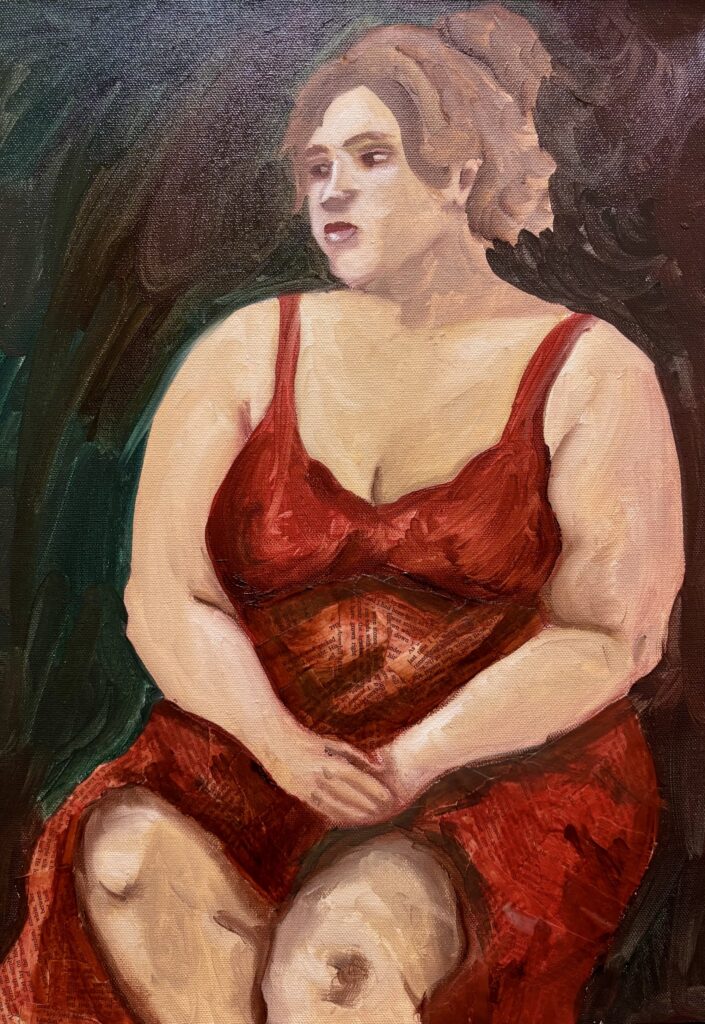
She paints the plus-size female body. And she does it in a way that never feels like it is arguing with anyone or proving anything. The figures just exist. They are present and warm and layered and human.
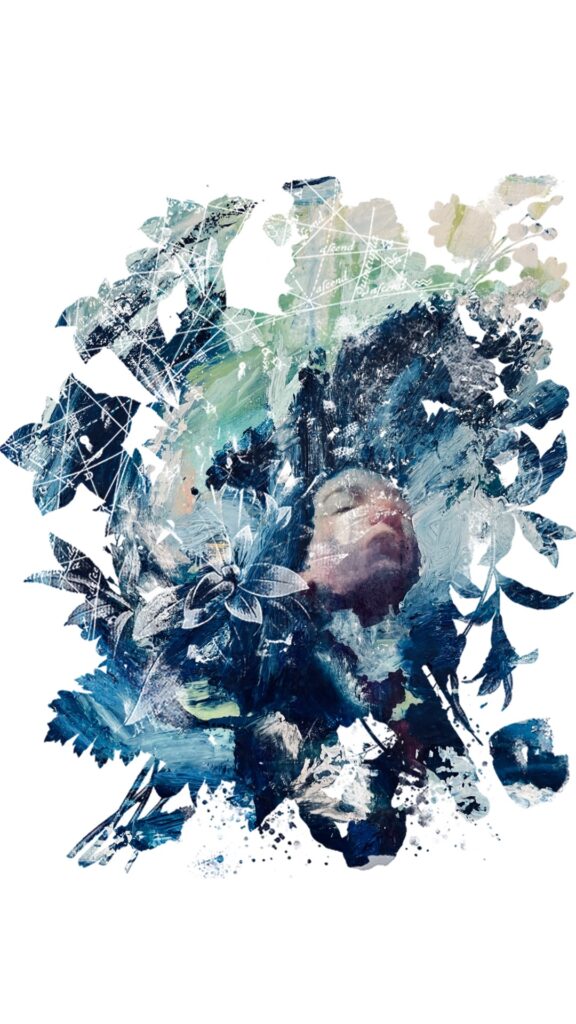
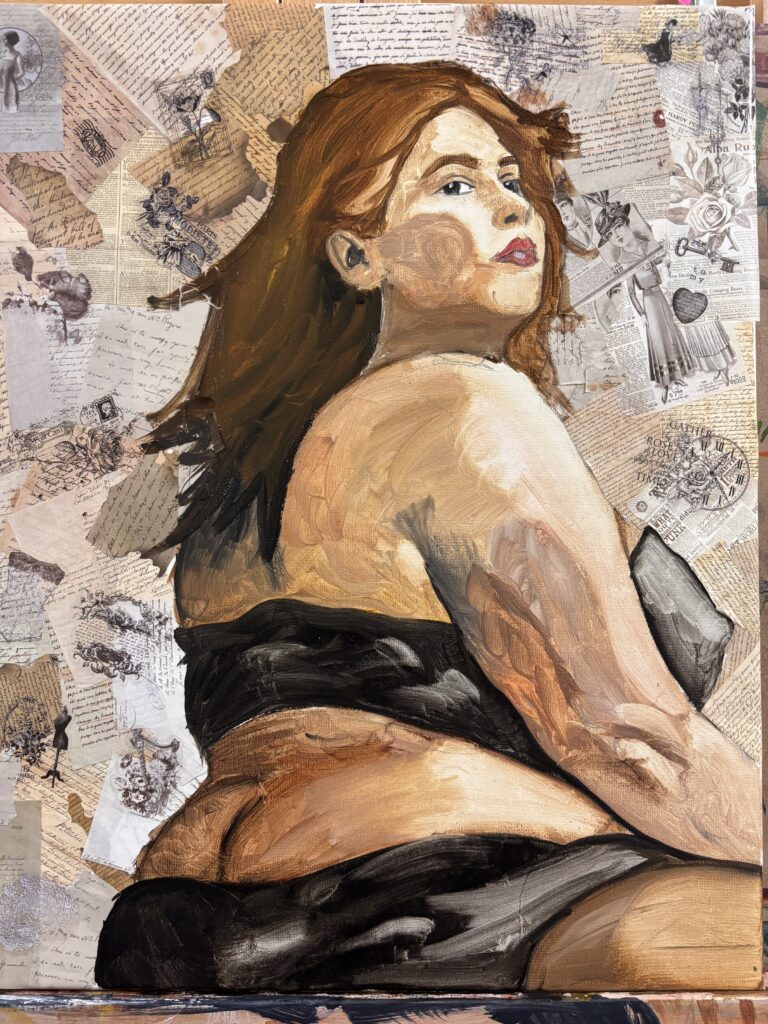
Some of the surfaces are built up with collage and texture until they almost feel three-dimensional. Others are quieter, more restrained, just colour and form and space. How she decides which approach a painting need is part of what makes her process fascinating, and she gets into it during the interview.
What we also find really compelling is the way her environment shows up in the work without being asked. She lives in Asheville now and those Blue Ridge Mountain tones, the misty blues and the soft greens and the earthy warmth of the light up there, they have settled into her palette so deeply that even her figurative work carries the landscape inside it.
Now let’s hear from Kourtney herself about mixed media, memory, abstraction, teaching, and creating work rooted in honesty, intuition, and the courage to fully take up space.
Q1. Can you share a bit about growing up in Chesnee, South Carolina, & how those early experiences shaped your creative path?
I grew up in Chesnee, South Carolina, a small town where creativity became my outlet early on, even without a strong art scene around me. I was always making—drawing, painting, experimenting—and art quickly became a space where I could process and express what I didn’t yet have words for.
Those early experiences shaped my focus on honesty over perfection and deepened my awareness of identity, visibility, and what it means to take up space. Today, that foundation drives my mixed media work, where I center the plus-size female form as a way of claiming presence, telling truth, and redefining beauty.
Q2. Your work moves between mixed media and traditional painting; how do you decide what each piece needs?
For me, the decision happens intuitively as I’m working some pieces ask for restraint, while others start pushing beyond the surface. If the emotion or concept feels layered, fragmented, or tied to memory, I naturally move into mixed media to build that depth through texture, collage, and material.
When the focus is more about form, color relationships, or quiet presence, I let the work remain in a more traditional painted space. I try to listen to what the piece needs rather than forcing it into a specific approach, letting the process guide the outcome.
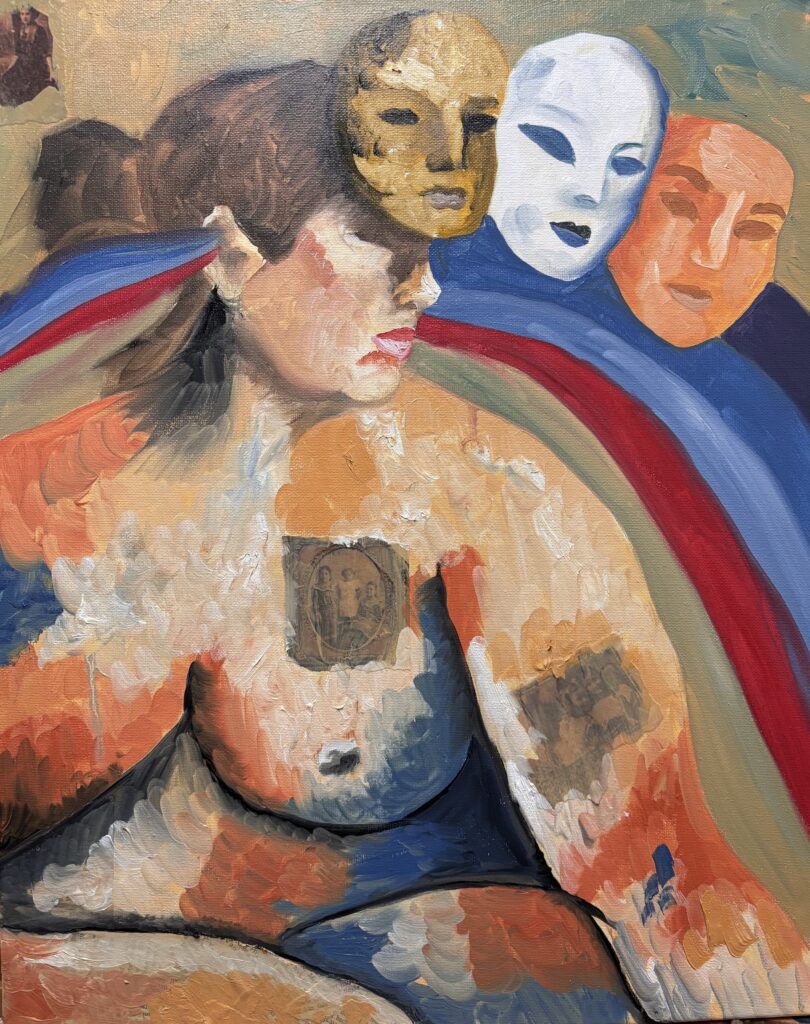
Q3. Your Artwork Pieces like Ancient Memory feel both personal and universal, how do you balance those two ideas in your work?
For me, Ancient Memory begins with something deeply personal, but I’m always thinking about how that experience connects to something larger—shared memory, the body, and inherited stories.
I see my work as a bridge between my own narrative and collective themes, where texture, layering, and the figure carry both individual and universal meaning. Even when the imagery is specific to me, the emotions—presence, weight, visibility, belonging—are things many people recognize in themselves. I want viewers to find their own story inside the work, not just observe mine.
Q4. How does the environment of Asheville, its light, landscape & creative community influence your palette and subject matter?
Asheville has shaped my work in such a natural, almost quiet way—the soft mountain light, the shifting atmosphere, and the richness of the landscape all find their way into my palette. I’m drawn to those Blue Ridge tones—muted greens, hazy blues, warm earths—and they often show up even when I’m painting the figure.
There’s also something about the creative community here that encourages risk and authenticity, which has pushed me to be more honest and expansive in my subject matter. Living here has deepened my connection to both place and self, and that balance shows up in the way I approach color, space, and presence.
Q5. As a teacher, what breakthroughs have you seen in students that remind you of something essential in your own artistic evolution?
I see it in those moments when students let go of perfection and just make—that shift where fear loosens and something real comes through. When they start trusting their instincts instead of second-guessing every mark, it reminds me of how important that freedom has been in my own growth.
I also notice it when they begin to see differently—slowing down, observing, and realizing they don’t have to draw what they think they see. Those breakthroughs bring me back to the core of my own practice: honesty, presence, and the courage to take up space on the page.
Q6. Do you plan your works through sketches and notes, or let them develop more intuitively as you create?
I do both, but I lean toward letting the piece develop more spontaneously. I keep sketchbooks, quick studies, and sometimes written notes—especially when I’m working through an idea or a feeling—but they’re more like starting points than strict plans.
Most of my larger works really come alive in the process, where responding to the surface, the color, and the materials becomes more important than following anything predetermined. I trust that balance—having just enough structure to begin, but enough freedom to let the work evolve into what it needs to be.
Q7. How do you think your work challenges conventional ideas of narrative or abstraction in contemporary art?
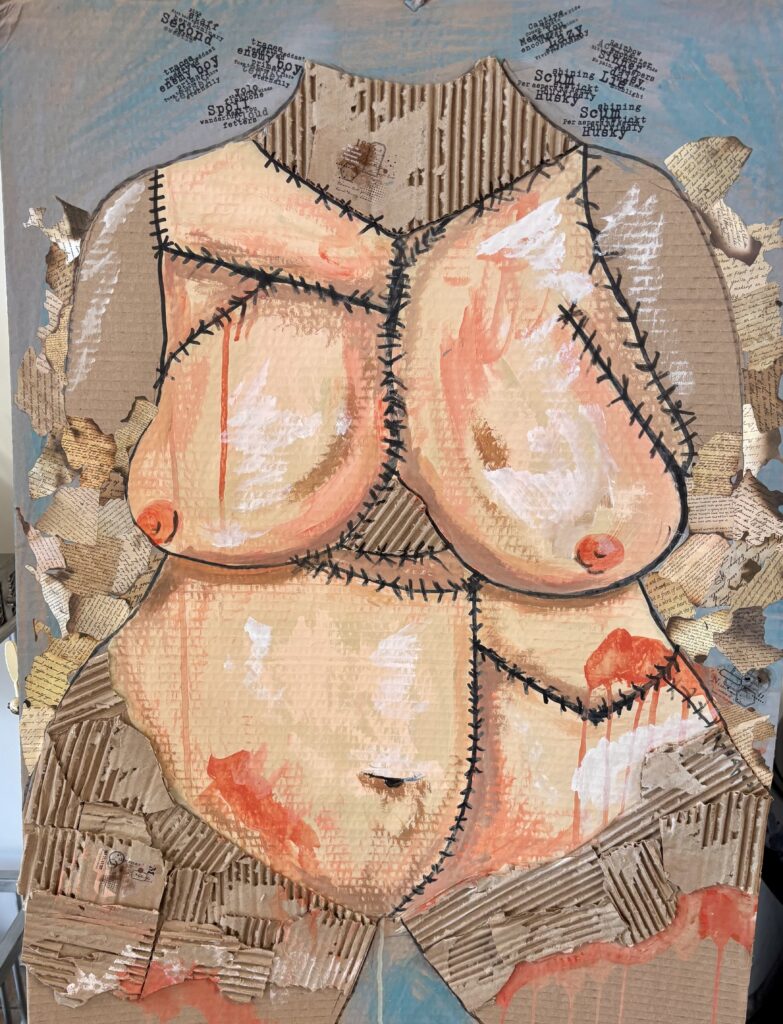
I think my work sits in that in between space where narrative and abstraction begin to blur. I use the figure as an anchor, but I disrupt it with color, fragmentation, and material so the story is not fixed or fully explained.
That pushes against the expectation that a body has to be clearly defined or that a narrative must be easy to read. I am more interested in creating a felt experience that is intuitive, layered, and open, where presence matters more than clarity.
Q8. What advice would you give to artists balancing their own practice with teaching, community work, and continued learning?
Give yourself permission to move at a sustainable pace and recognize that all of those roles feed each other rather than compete. Teaching, community, and study can deepen your practice if you stay attentive and bring those experiences back into the studio.
Protect your studio time, even in small consistent pockets, and treat it as essential rather than optional. Stay rooted in your own voice and questions so the work remains rigorous and resonant, not just productive.
As we wrapped our conversation with Kourtney, we kept returning to the idea of presence.
Not polished perfection. Not having everything fully figured out. Just the courage to exist honestly inside your work and let that be enough.
You can feel that throughout her paintings. The layered textures, fragmented forms, shifting colours, and openness in the compositions all feel deeply human, like the work is allowing emotion and identity to remain fluid instead of forcing them into something neat or easily explained.
We really loved that about her practice. There’s also something powerful in the way Kourtney speaks about visibility and taking up space, especially through the plus-size female figure. The work never feels performative or forced. It feels lived through. Felt. Built slowly through experience, observation, vulnerability, and trust in her own voice.
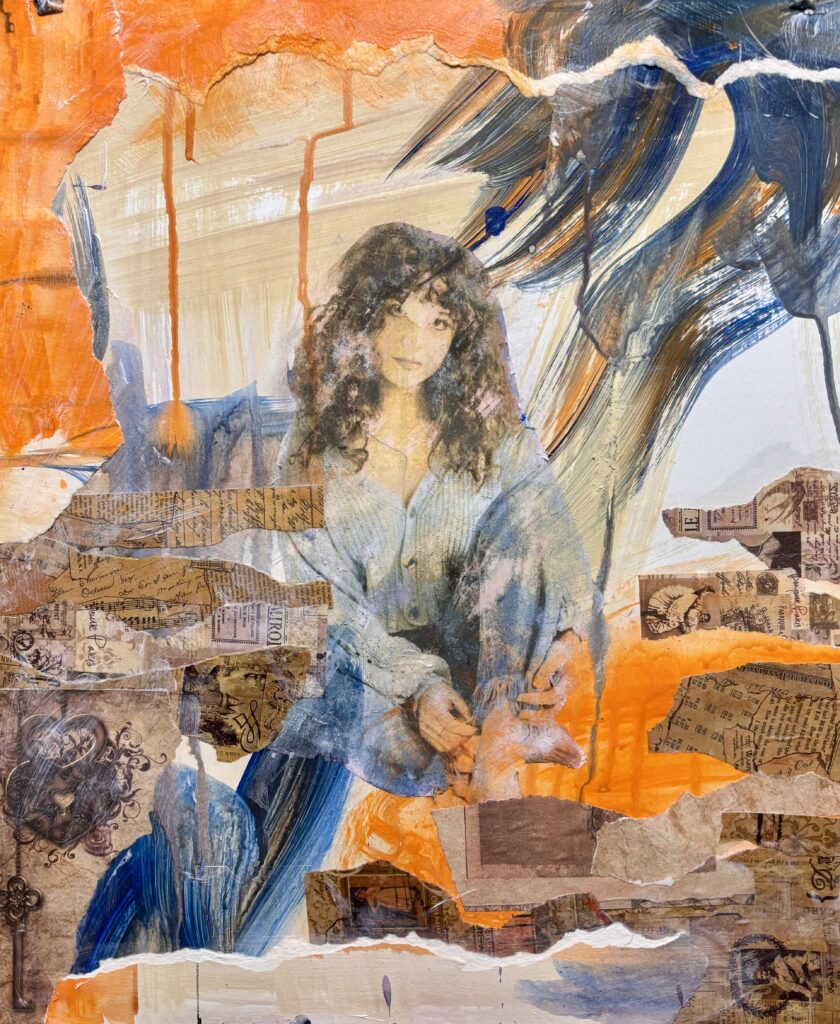
And maybe that’s why the paintings connect emotionally. They don’t tell viewers exactly what to think. They leave room for people to find themselves somewhere inside the layers.
For anyone looking to bring Kourtney’s work into their space, her mixed media pieces carry a physical warmth and a layered texture that you need to see in person to fully appreciate. They bring a presence into a room that is grounding and generous. Not loud, not demanding, just quietly insistent that beauty is broader and deeper and more interesting than the narrow version of it we have been sold. That is the kind of art that makes a home feel more like itself.
Follow Kourtney Yelton through the links below and see what happens when an artist gives every body the space it deserves.