
This artist walks through cities before bringing anything into the gallery I Kim Jung Soo
👁 61 Views
At Arts to Hearts Project, we have come across artists who paint, sculpt, build, weave, print. But every once in a while we meet an artist whose practice starts with something most people would never think of as art. Walking.
That is how we ended up with Kim Jung Soo in Studio Visit Book 7. And honestly she changed what we thought this book could be.
Studio Visit Book 7 is about getting inside the real spaces where artists work. The rooms, the routines, the mess, the quiet. But Jung Soo does not have a studio in the traditional sense. She has the world. She calls it studio without walls.
Her practice begins on the street, in the gaps between buildings, along coastlines, inside the sensation of entering an unfamiliar room and feeling your body respond before your mind has time to think. For her the work starts in the body. In the feet. In the act of moving through a place and paying attention to what most people walk right past.
We knew she had to be part of this edition. Not despite the fact that her studio has no walls. Because of it.
Jung Soo is Korean. She grew up in Seoul in a neighbourhood full of winding alleyways and narrow passages and hidden corners. That is where she first learned how to read space. Not through maps or plans. Through her body. Through discovery. Through the feeling of turning a corner and finding something unexpected. That way of seeing became everything.
hen she moved to Chicago and the world flattened into a grid. Ordered, logical, planned. No winding paths. No hidden corners. It threw her at first. But instead of resisting it she let Chicago teach her something new. She started finding stories in different places.
Along wide streets. At the edges of buildings. In the gaps where the built world meets the human one. She carried her Seoul eyes into an American city and both places changed her.
That is what her work is about. The space between two ways of seeing. The moment your body understands something before your brain does. The experience of being somewhere and suddenly realising you are actually there. Not passing through. Present.
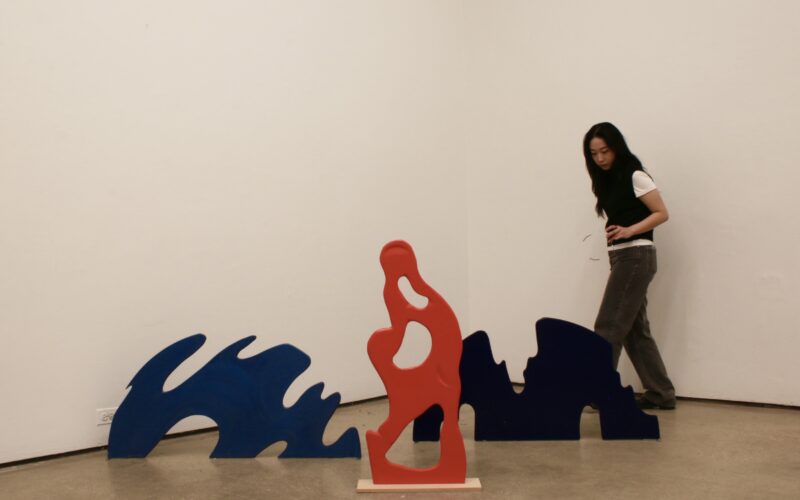
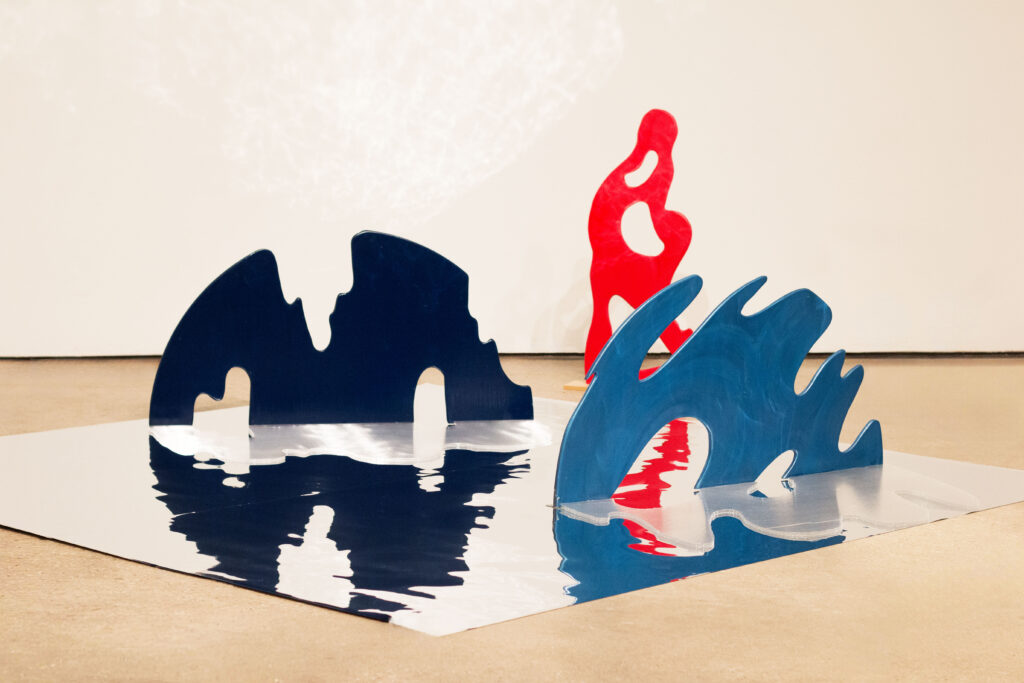
Her installations do not explain anything. They do not have labels telling you what to feel. They create a condition and put you inside it. A shift in light. A reflection that catches you off guard. A quiet moment that makes you aware of your own body in relation to the room around you. That is it. And it is enough. Because once you notice it, you cannot go back to not noticing.
Let’s hear from Jung Soo about what walking has to do with making art, how two cities with completely different rhythms built her way of seeing, and why she believes the body knows things the mind is still trying to figure out.
Q1. I’d love to start with your studio itself. Because so much of your work responds to specific sites, how do you experience the studio as a place for making, testing ideas, or thinking things through?
For me, the studio is a place where experiences gathered outside are reorganized and clarified. Much of my work begins with walking—moving through environments, listening, observing, and allowing certain moments or sensations to register in my body. These impressions often remain fragmented at first, living in my thoughts or sketchbook. When I return to the studio, I begin to rearrange those fragments. I ask myself: What did I encounter today, and why did it resonate with my senses? The work usually begins from that question. Once ideas start to align, the production process follows, and the choice of material emerges from the reorganized concept rather than the other way around. In this sense, thinking, testing, and making are inseparable. Every stage—from walking to arranging to producing—is part of the work itself. The studio is not a closed space but a threshold; its door continually leads me back out into the world and toward the next step of the process.
Q2. Your work is deeply connected to how bodies move and sense space. How do you begin exploring those relationships inside the studio, before you encounter the actual site?
That’s an interesting question, because my practice is grounded in the residues that form through real, physical relationships between the body and its environment. In many ways, I believe those relationships cannot be fully understood without being present—without physically entering and sensing the site itself. Before going out, the studio functions more as a preparatory space than a substitute for the site. I may begin with research, such as learning about the history or context of a place, but this remains secondary. What matters more is how my body responds once I encounter the environment—how space is felt through movement, distance, sound, temperature, and time. Inside the studio, I reflect on past bodily experiences and tune my awareness to those sensory conditions. I think through questions of scale, proximity, and rhythm—not to simulate the site, but to remain open to it. The studio prepares my perception, but the real exploration begins outside.
Q3. Your practice moves between Korea and the United States. How has living between these places shaped the way you think about orientation, distance, and belonging?
Living between Korea and the United States has made me acutely aware of how spatial structures shape orientation, perception, and belonging. The environments I’ve lived in are fundamentally different. Chicago, for example, is highly planned, with a grid system that creates clarity and order. In contrast, the neighbourhood where I grew up in Seoul was composed of winding alleyways and in-between spaces that felt almost maze-like. These conditions shaped not only how people move, but how they read space. Growing up in Seoul formed my foundational way of encountering environments—through exploration, hidden corners, and overlooked narratives. When I arrived in the U.S., especially in Chicago, the rigidity of the grid felt disorienting at first. Over time, I began to notice that stories still existed, just in different places—along wide streets, building edges, or moments where infrastructure meets human activity. By applying my own way of reading space while allowing the city to reshape me, I gradually learned to belong. That process now sits at the core of how I think about distance and orientation.
Q4. Your projects often explore how people locate themselves within environments. Do you remember an early experience that made you aware of space as something learned, emotional, or personal?
Yes, there is a specific experience I often return to. In 2018, I briefly rented a small room in Seoul on a monthly lease. It was the first time I became consciously aware of space as something that could be bought, sold, and contractually controlled. According to the lease, I had to leave after one year, regardless of how attached I had become. That experience fundamentally shifted how I understood space. I began to question what it means to have a place where I can fully exist—where my presence is not negotiated. When that space was no longer guaranteed, I realized how fragile and conditional belonging can be. From that moment, I started to think of the body as the most fundamental unit of space—constantly negotiating with architectural, social, and environmental surroundings. This realization continues to shape how I understand space as something deeply personal and emotionally charged.
Q5. In works like You Are Here, orientation feels both literal and emotional. When starting a project like this, what comes first—an idea, a spatial condition, or a bodily experience?
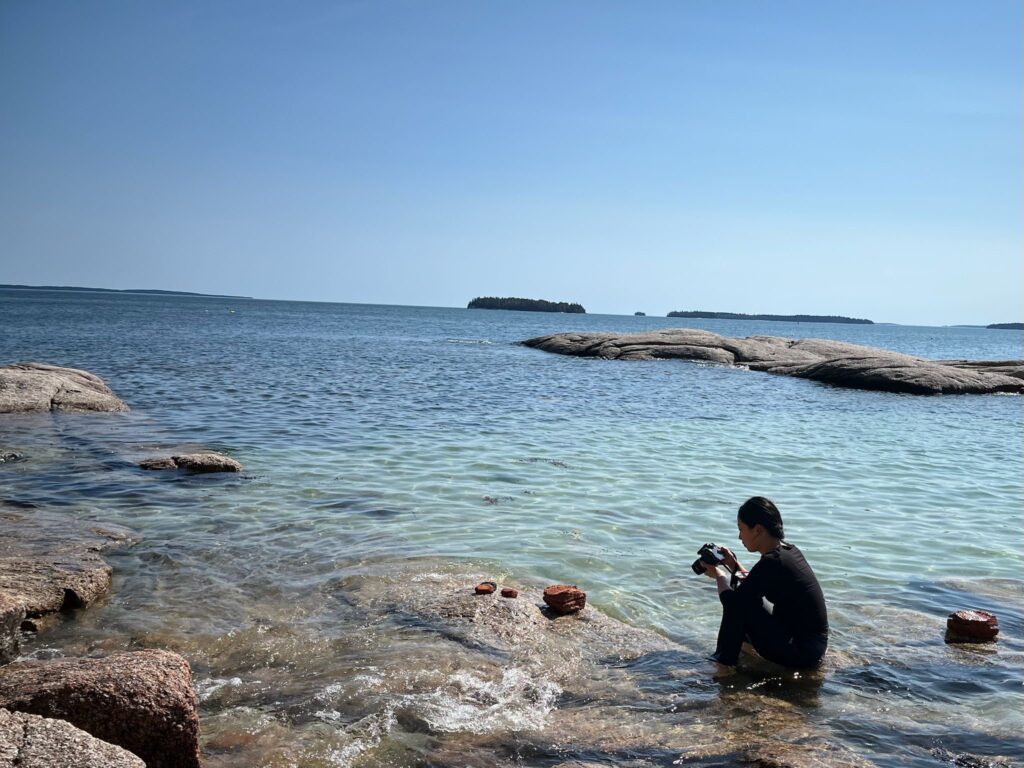
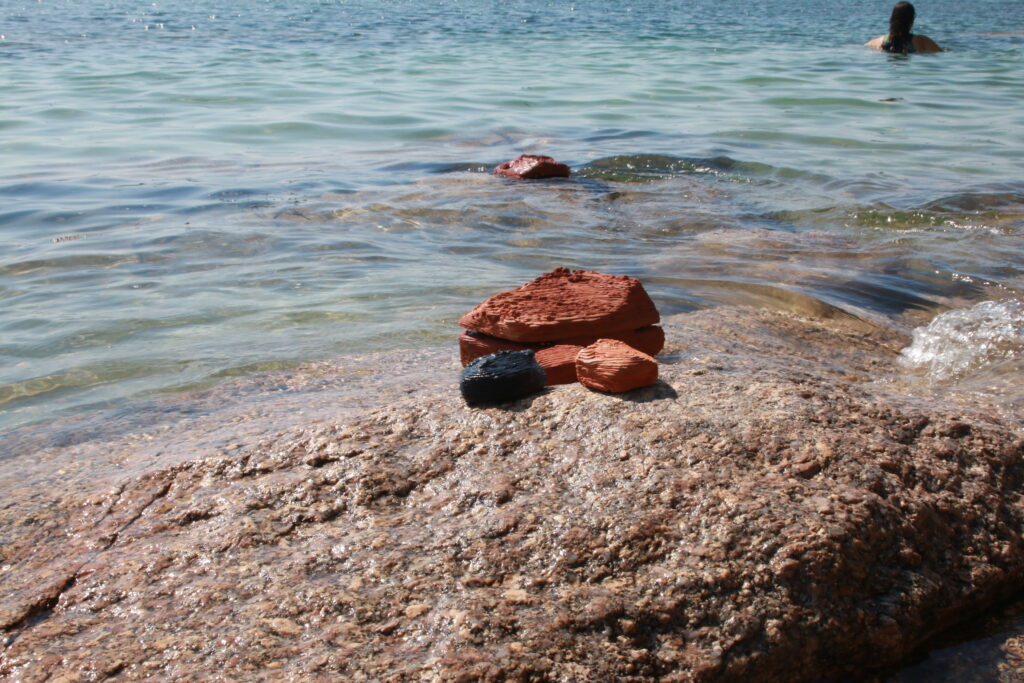
In a project like You Are Here, a bodily experience comes first. The work began from a single experiment during my residency in Pärnu, Estonia, which later expanded into a broader framework. I performed a simple action at the women’s beach—walking into the sea at sunset while holding a fabric banner illuminated from behind. As I moved further into the water, the banner appeared as a floating white surface, gradually drawing attention away from the horizon and toward a concentrated point of light.
As the sun set, that focus intensified into a single point. In that moment, I felt the audience “traveling” toward it through their gaze alone.
This made me aware of how orientation can occur through attention and perception, not just physical movement. Only after this experience did the conceptual layer emerge. I began thinking about reflective materials like mirrors as extensions of that point—returning the gaze back to the viewer. The work evolved into an exploration of emotional and perceptual orientation, where locating oneself becomes both literal and internal.
Q6. Your installations gently heighten awareness rather than directing attention. How do you work toward that balance while developing a piece?
When developing an installation, I am less concerned with making the work itself the focal point and more focused on the situation the viewer is placed in. My work establishes a subtle relational condition rather than demanding attention. Balance comes from designing an environment where the artwork mediates a relationship between space and body. Instead of directing how to look or feel, I consider what might be sensed depending on where the viewer stands, moves, or pauses. The experience unfolds differently for each person. The work often brings forward subtle impressions—light shifts, reflections, spatial tension, or quiet presence. By leaving room for these sensations, the installation heightens awareness without instruction.
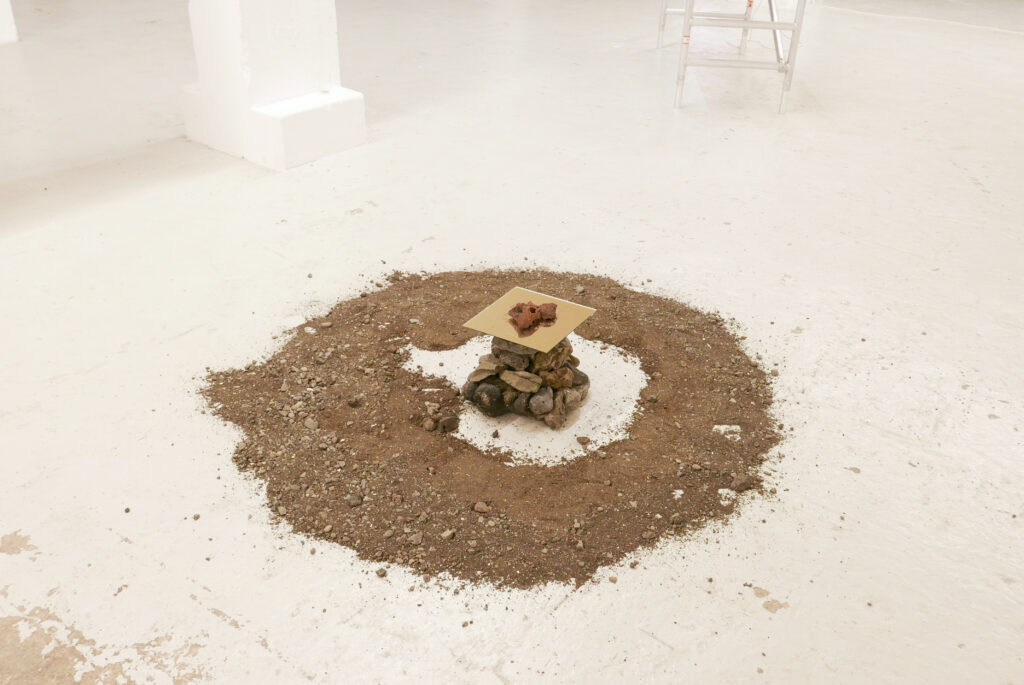
Q7. Since many of your works are temporary and experiential, how do you think about documentation without losing the essence of the lived experience?
Documentation is unavoidable, but I don’t expect it to carry the experience itself. What matters most is that the work was fully lived in that moment. Documentation remains only as a trace—evidence that something happened—without replacing the intensity of being there.
Q8. How does your studio practice balance between thinking reflection, research, listening and making touching, moving, and material engagement?
In my practice, these elements are not separate. Reflection, research, listening, and physical engagement all exist within the same process. Thinking happens through making, and making becomes a form of thinking. The balance is not something I divide, but something that naturally unfolds through the work itself.
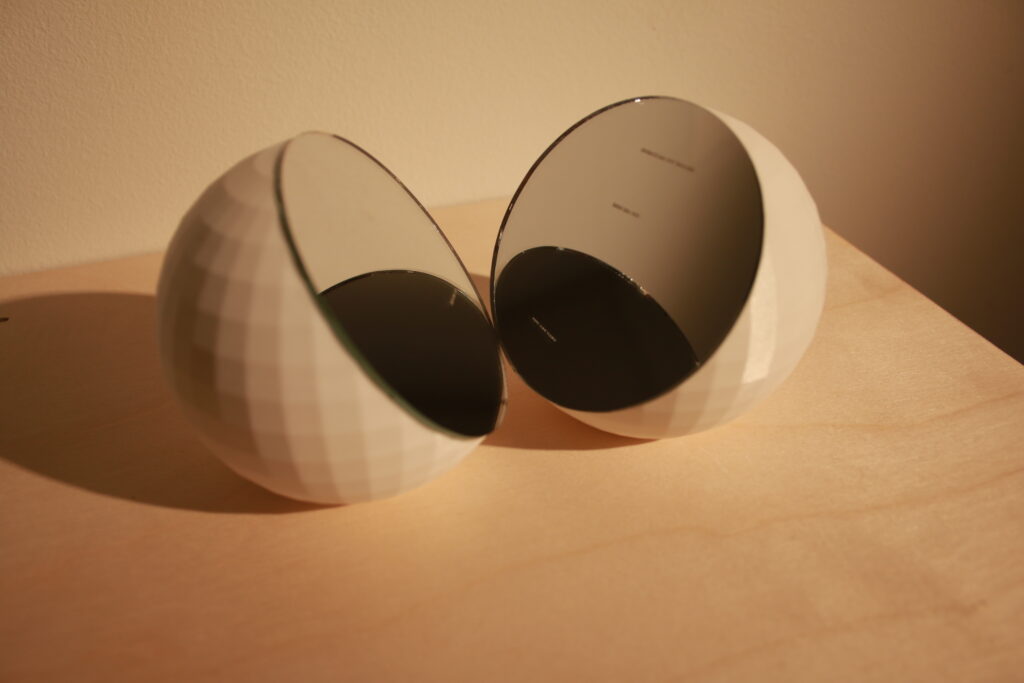
Q9. When a spatial idea feels unresolved, how long does it stay present in your studio before you decide to shift focus or revisit it?
Many unresolved ideas stay with me for a long time, often living quietly in my sketchbooks. Even if something doesn’t work initially, returning to it later can unlock new connections. Rather than forcing resolution, I allow these ideas to accumulate. Over time, they become a reservoir I can revisit when the right context or experience brings them back into focus.
Q10. How has your way of seeing space both visually and bodily shifted through years of working in your studio?
My way of seeing space has shifted more through encountering new environments than through time spent inside the studio. Travel and exposure to unfamiliar places have shaped my perception far more than remaining in a fixed room. Because of this, I don’t think of the studio as a contained site. For me, the environment itself becomes the studio—a space where perception is continually trained, tested, and transformed.
Q11. What advice would you share with fellow artists about building a studio practice that supports both rigorous inquiry and open-ended exploration?
Rather than advice, what I genuinely hope is that many artists find happiness in their practice.
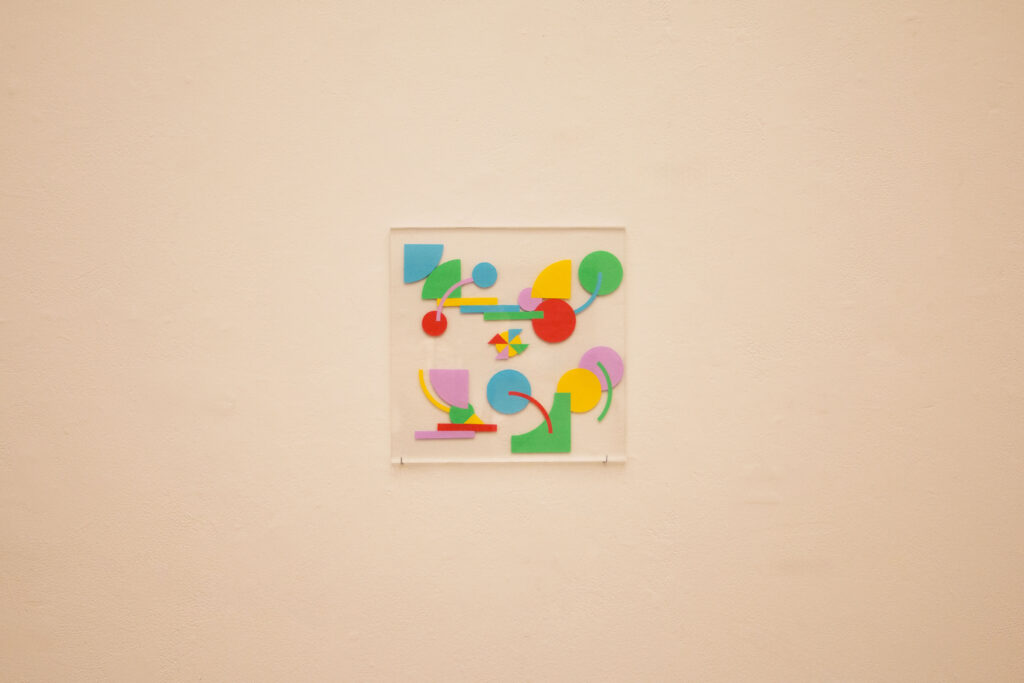
As our conversation with Jung Soo came to a close, one idea stayed louder than the rest. That the body knows before the mind does.
She said it in different ways throughout our conversation. That her work begins with walking, with sensing, with the physical act of entering a space and letting it register in her body before she tries to understand it intellectually. That the studio is where she goes to reorganise what her body has already gathered. That her installations are designed not for the eyes first but for the body. How you feel standing in a certain spot. What shifts when you take one step to the left. The way a reflection catches you before you were ready for it.
We live in a world that puts the brain first. We plan, we research, we strategise, we think our way into everything. Jung Soo is saying there is another way. That your body has been reading spaces your entire life.
That it knows things about distance and proximity and safety and belonging that your conscious mind has never had words for. And that if you slow down enough to listen to it, the work is already there. You just have to trust what your body is telling you.
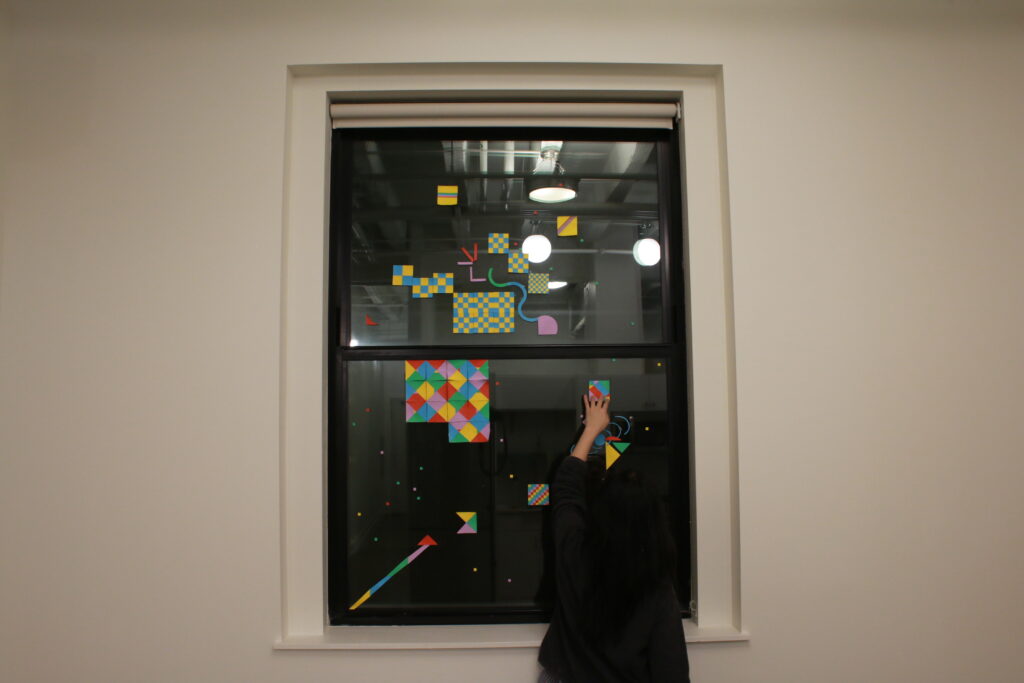
That takes courage. Because it means starting without a plan. It means walking into a place without knowing what you are looking for. It means letting a sensation guide you instead of an idea. Most of us are taught that is not enough.
That you need a concept first. A framework. A reason. Jung Soo’s work is proof that sometimes the reason comes after. Sometimes the body leads and the meaning follows.
So next time you walk into a room, any room, pause before you think. Feel it first. The temperature, the light, the weight of the air, the distance between you and the walls. Let your body tell you something before your brain takes over. That is not just how Jung Soo makes art. We think that might be how all of us could live a little more fully.
Follow Kim Jung Soo through the links below and discover what happens when an artist trusts her feet before she trusts her eyes.