


How Jason deCaires turned coral reefs into galleries & galleries into coral reefs

At Arts to Hearts, we are always looking for artists who are doing something that genuinely expands what art can be. Our Best of the Art World editorial was built around exactly that search and while searching artist, something caught our eye that we genuinely did not expect to find.
A museum with no walls. No roof. No lighting except the sun filtering down from the surface above. A museum on the floor of the ocean, where the exhibits are slowly, quietly, completely being transformed by the sea.
That museum belongs to Jason deCaires Taylor. And discovering him was one of those moments that reminds you why we do this.
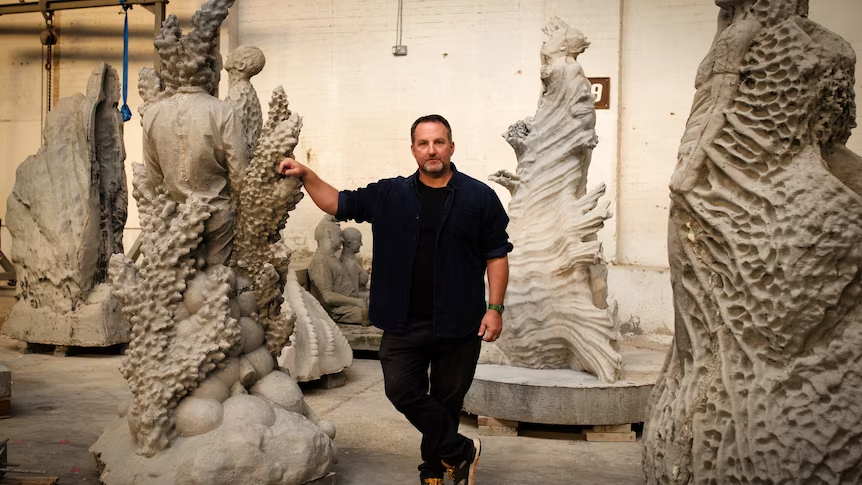
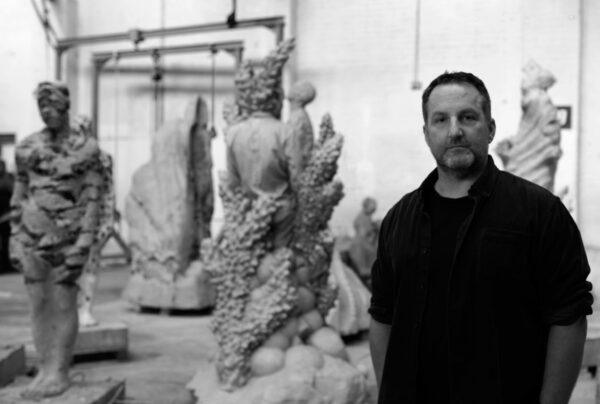
Born of English and Guyanese heritage, Jason is a sculptor and underwater photographer who has built one of the most extraordinary and unconventional practices in contemporary art. He creates life-casts of real people men, women, children from local communities and installs them on the seabed in locations across the world.
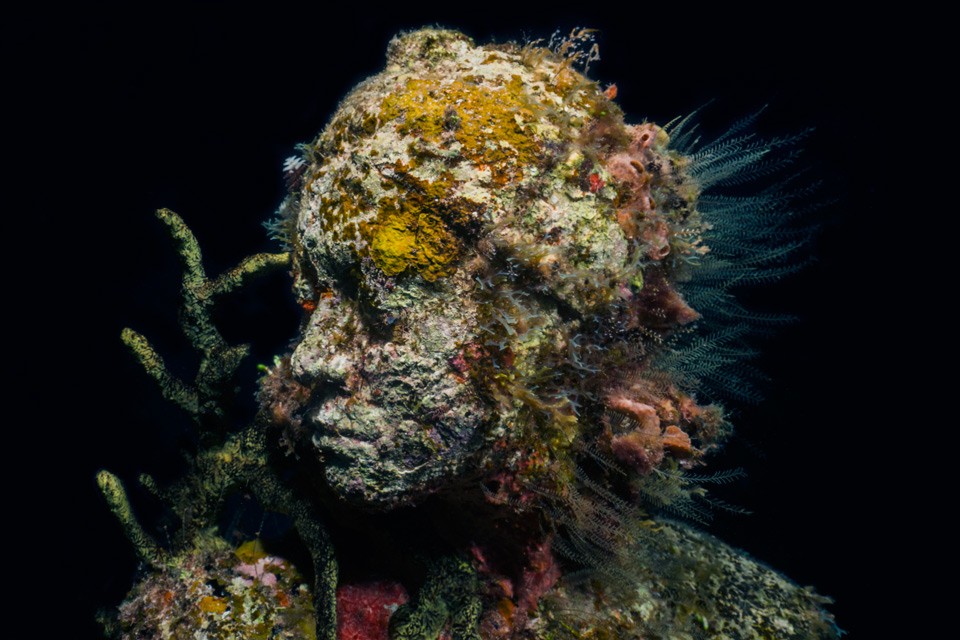
From there, nature takes authorship. Coral settles. Marine life finds shelter. The sculptures slowly transform into something that was never entirely in his hands to begin with living, breathing reefs that belong as much to the ocean as to any artist.
He describes them as catalysts rather than completed works. Starting points for a conversation between human creativity and the natural world that never really ends.
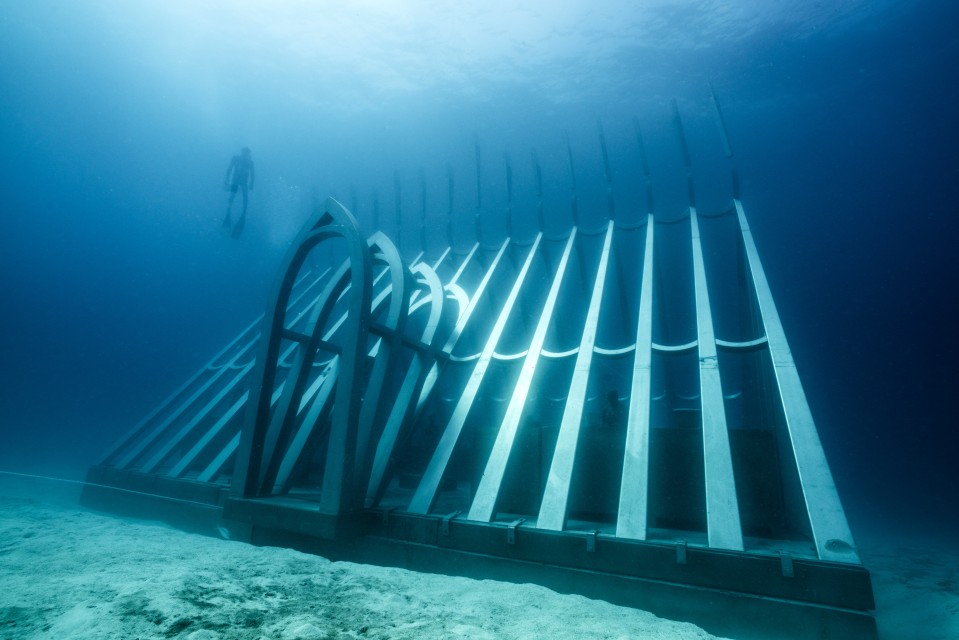
He came to this practice through a moment of profound loss. In 2004, Hurricane Ivan devastated Grenada’s coral reefs in hours.
Jason was there, watching ecosystems that had taken decades to grow simply disappear. And from that grief came a determination to do something to use sculpture not just as expression but as restoration. To ask whether art could actively help a damaged world begin to heal.
The answer, it turns out, was yes. His underwater sculpture parks have become thriving artificial reefs, home to thousands of marine species. His installation at Molinere Bay in Grenada was named one of the Top 25 Wonders of the World by National Geographic. And every person who dives down to encounter one of his figures on the seabed comes back up understanding the ocean and their place within it in a way they did not before.
We think that is one of the most beautiful things art can do. And we cannot wait for you to hear Jason talk about it himself.
Let’s get to know Jason through our conversation with him, where he talks about art that is never finished, sculptures that belong to the sea, and what it really means to let nature be your collaborator.
Q1. Jason, can you take us back to the beginning and share how your journey led to creating large-scale underwater installations around the world?
My artistic journey has been shaped by a curiosity about how environments transform both objects and people. When I first trained as a sculptor, I was interested in taking work out of the controlled space of the studio and placing it in outdoor environments such as city and beach settings. I was fascinated by how natural processes like weathering, erosion and lichen growth would gradually alter the surface, form and meaning of the work.
It made me realise that sculpture is never truly static, and that context is as much a part of the artwork as the material itself. That early experience opened up a deeper interest in how surroundings influence perception, identity and time. Although my practice began on land, everything shifted when I became a diving instructor and started spending more time underwater. Diving around coral reefs, often alongside marine biologists, exposed me to both the extraordinary beauty of these ecosystems and the growing environmental pressures they face.
became increasingly aware of how submerged structures are quickly colonised and transformed, almost as if they are being absorbed into a living system. That experience also challenged the way the underwater world is often portrayed as dark, hostile or unknown. For me it felt quite the opposite, something hopeful, poetic and almost archaeological in the way it preserves traces of human presence while continually reshaping them. By introducing sculptural elements into these environments, I was able to explore that relationship between time, perception and transformation in a much more direct way.
Over time, the work evolved beyond artistic exploration alone. It became increasingly focused on conservation and encouraging people to engage with the ocean in a more responsible and sustainable way. The sculptures became part of a wider ecological process rather than separate from it. Ultimately, my journey has been about merging art, the environment and awareness, using sculpture to shift how people see and understand the fragility and potential of underwater worlds.
Q2. In 2004, Hurricane Ivan devastated Grenada’s coral reefs while you were there how did witnessing that destruction change you?
Seeing the destruction firsthand made the environmental issues feel immediate and more urgent than I had ever thought. Witnessing how a singular natural event can destroy coral reefs that take decades to grow within hours made me think differently about environmental protection and how to improve resilience.
Some of the affected areas in Grenada would eventually rebound naturally but reefs in general are less able to recover when they are already under stress from warmer water, pollution, overfishing, and coastal development. Experiencing Hurricane Ivan and the aftermath encouraged me to find ways to help protect and encourage marine ecosystems, which was how the concept of sculpture parks and underwater museums were born.
Q3. Your sculptures constantly evolve with marine life what does it feel like to watch them change over time rather than remain fixed?
I see my sculptures as catalysts rather than completed works, starting points for nature to take over and transform. When I place a piece on the seabed, it is really the beginning of a dialogue between human creativity and the ocean’s natural processes. The work slowly evolves as algae forms, marine life finds shelter, and sponges and corals begin to settle.
For me, that is a truly special moment when the sculpture stops being a static object and becomes a living, breathing ecosystem. It belongs to the ocean, and I think of it less as relinquishing ownership and more as participating in a collaboration with nature. The ocean is both the curator and the critic, shaping each piece in ways that remind us how small and transient our human interventions really are.
Q4. Your work highlights both the fragility and recovery of marine life, do you see your sculptures as warnings or hope?
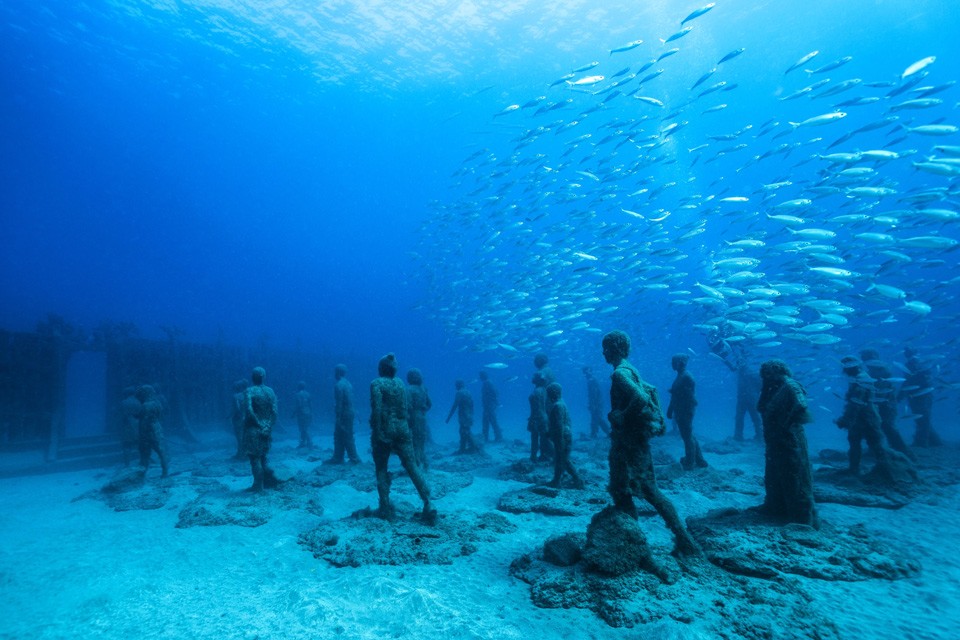
Yes, my works are intended to raise awareness about the fragility of our oceans and the consequences of environmental neglect, but they are also designed to be part of the solution. They create artificial reefs, provide habitat for marine life, and divert tourism away from damaged natural reefs so they can recover.
I want the sculptures to remind us not only of what we stand to lose, but also of nature’s extraordinary capacity for regeneration if we give it the chance. Humans must be part of the solution to addressing the current climate crisis.
That is why my installations include members of local communities, many of which are children representing the future generation inheriting the world’s protection responsibilities.
Q5. From Grenada and Mexico to the Maldives and Cannes, every underwater environment is different how does each location shape the project?
Each installation is bespoke as the location is fundamental to every project and directly influences the concept, installation site, and the engineering of each artwork. There is an unique combination of environmental conditions to take into consideration such as the surrounding marine ecosystem, local species, depth, substrate type, wave energy, and water temperature.
These factors determine not only the technical design of the sculptures but also the story being told and how each piece will evolve over time as living underwater habitats. As a result no two installations are ever the same.
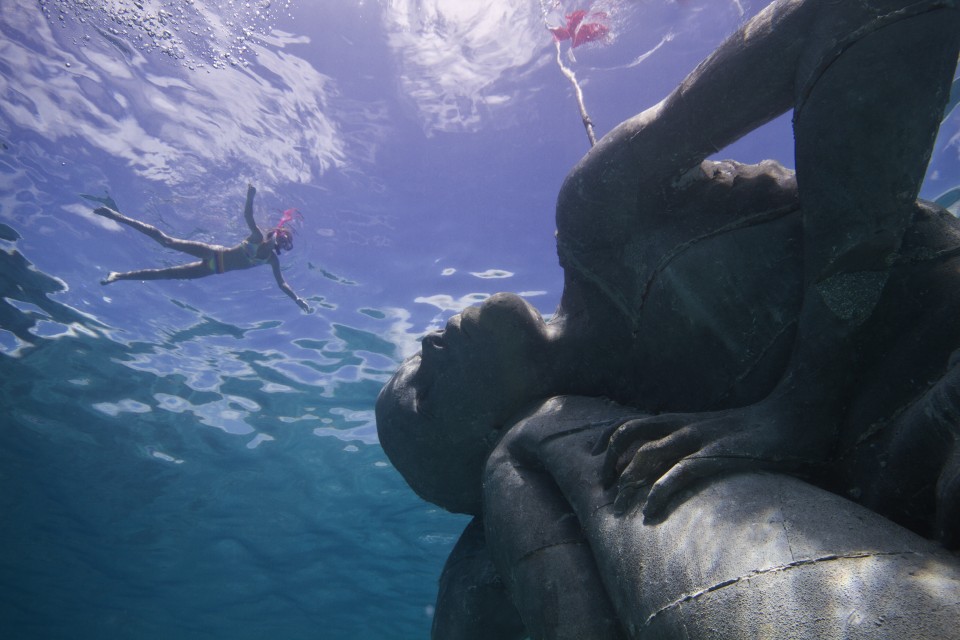
Ocean Atlas, Nassau, Bahamas, 2014, 4m tall underwater figure sculpture
Q6. Experiencing sculpture underwater feels almost surreal, what kind of emotional response do you hope people have beneath the surface?
Experiencing sculpture underwater does feel almost spiritual and at times surreal. That sense of immersion is central to the work, offering people a moment of pause and reflection. The intention is to spark a sense of wonder and a deeper awareness and appreciation of the ocean as a living system rather than an empty space. It is also about encouraging humility, a recognition of how interconnected we are with marine life and how fragile these environments can be.
Ideally, people leave with a feeling of connection rather than separation, and with a renewed respect for the ocean and its capacity to sustain and regenerate life when given the opportunity.
Q7. When National Geographic named Molinere Bay one of the Top 25 Wonders of the World, what did that recognition mean to you?
It was an honour to receive the recognition and incredibly reassuring, as it confirmed that what I had created was something truly awe inspiring. More than anything, it felt like validation that the work was resonating beyond the diving and marine world and being understood on a much wider scale.
Q8. Do you have favourite pieces that you’ve been photographing for years now? Ones where you’ve watched the entire transformation?
It is difficult to choose a favourite from my artworks, but I have had the opportunity to revisit my installations in Mexico and Grenada most often. This has allowed me to photograph them over the past twenty years and to witness many changes, both positive and challenging, as the environment shifts with the effects of climate change between each visit. I find it fascinating the way each sculpture continues to evolve over time while underwater.
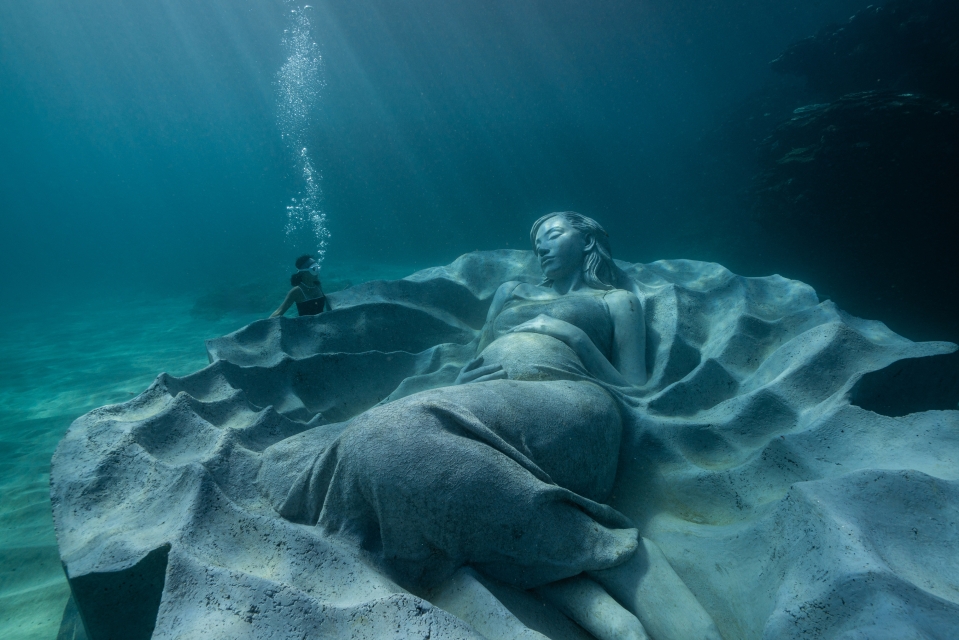
There is often an initial increase in biomass and marine life in and around the installations, as they begin to function as artificial reefs. Over time, algae tends to dominate the surface, gradually giving way to sponges and corals, which are themselves often replaced by more resilient variations as conditions change.
Each visit reveals completely different patterns and colours across the works, as the balance of marine life constantly shifts and redefines the pieces in unexpected ways.
As our conversation with Jason came to a close, we kept thinking about how unusual it is to encounter an artist whose work literally disappears into the world in order to become more alive.
Most artists spend their careers trying to preserve their work exactly as it was made. Protecting it from weather, damage, time. Jason does the opposite. He places his sculptures underwater knowing the ocean will slowly cover them, alter them, transform them into something he can never fully control again. And somehow, that surrender is exactly what makes the work so powerful.
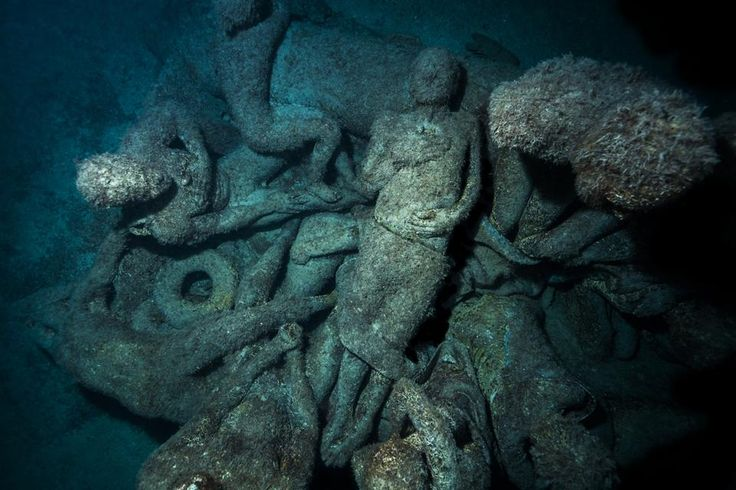
There is something in that idea that stays with you long after the conversation ends. Because it changes the entire way you think about authorship, permanence, and what art can actually do in the world. The ocean becomes part of the creative process itself. Coral settles. Algae spreads. Fish move in.
A sculpture that once looked entirely human slowly becomes part reef, part ruin, part ecosystem. The work keeps evolving long after the artist has left. And that evolution is not a loss, it is the whole point.
Especially now, when so much of the world feels centred around ownership and control, Jason’s practice is a quiet and powerful reminder that collaboration with nature can produce something far more extraordinary than domination over it.
His installations do not only ask people to think differently about the ocean they actively create habitats, protect marine ecosystems, and reconnect people to a living world many have become emotionally disconnected from.
For anyone encountering his work, whether underwater or through photographs, the experience feels bigger than simply viewing sculpture. It becomes about perspective. About suddenly understanding that the ocean is not an empty backdrop to human life, but a living world we are deeply connected to and responsible for.
And honestly, that may be one of the most meaningful things art can still do.
To follow Jason’s journey and explore more of his underwater worlds, find him through the links below.