
The Work, Wonder, and Routines That Shape an Artist’s Day
At Arts to Hearts Project, we believe the most honest thing an artist can share is not the finished work. It is everything that happened before it.
A few days ago we brought you inside the creative process of some of the artists featured in Women Artists on the Rise Edition 4. We asked them one simple question. What does your creative process look like on a typical day? And the honesty that came back stopped us in our tracks.
Early mornings and late nights. Studios that spill into kitchens and living rooms. Days built around materials and days built around research. Practices that bend around chronic pain and children and day jobs and everything else life asks for. No two answers were the same. And every single one of them felt true in a way that polished artist statements rarely do.
We shared some of those answers. But there were more sitting with us that deserved the same space. So we went back. We read through everything again. And we are bringing you another set.
Because the process behind the work is just as worth celebrating as the work itself. The hours before the first mark, the rituals nobody sees, the false starts and the moments of clarity that arrive out of nowhere. Those are the things that make an artist who they are.
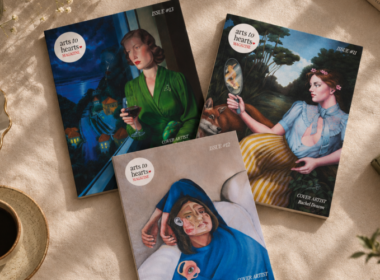
Women Artists on the Rise Edition 4 is full of artists exactly like this. And they were generous enough to let us in.
So here are more.
A walk, a sketch, a song. Whatever it takes to get back to the canvas
Not every day begins with the urge to create already in place. Some days it is there the moment you wake up. Other days it needs coaxing. It needs the right conditions, the right ritual, the right combination of small things that slowly bring you back to yourself and back to the work. The artists who sustain a long practice are rarely the ones who wait for inspiration. They are the ones who know exactly what to do on the days it does not show up on its own.
Emilie Wesche @emiliewesche.art describes her day like this:
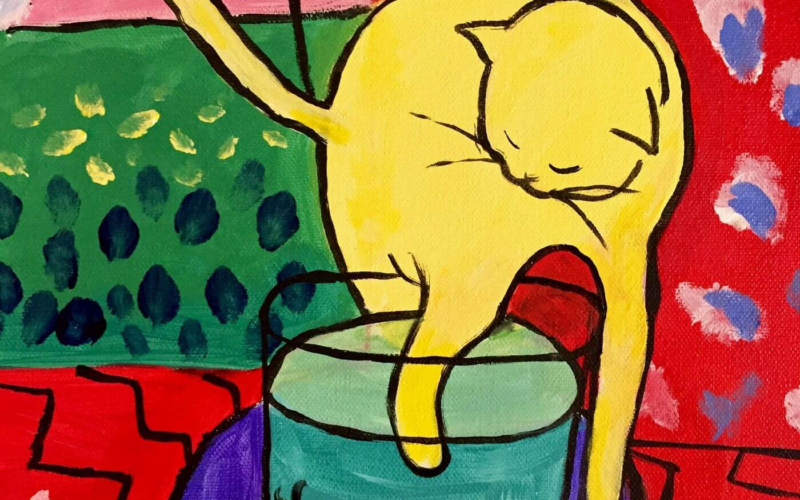
It usually starts with me looking through my sketches, art books, or writing morning pages. Some days where I feel more detached, I start with a walk, because nature is inspiring. When I get the urge to create, I turn to the canvas. I also read and use music a lot.
Emilie Wesche
What we love about this is how complete it is. Sketches for visual thinking. Morning pages for clearing the head. Walks for when the creative distance feels too wide to cross from inside. Books and music woven through all of it. Emilie does not have one way into the work. She has many. And knowing which one the day calls for is its own kind of creative intelligence.
The conversation between intuition and material is one of the oldest ones in art
Before there is a concept there is usually something felt. A tension that has not resolved. An emotion that has not found its form. A recent experience still sitting somewhere in the body, asking to be understood. And the artists who work from that place, who begin not with an idea but with an interior state and trust the process to show them what it becomes, those are often the artists whose work carries the most weight.
Shu Wang @s.w_wang gave us one of the most considered answers we received:
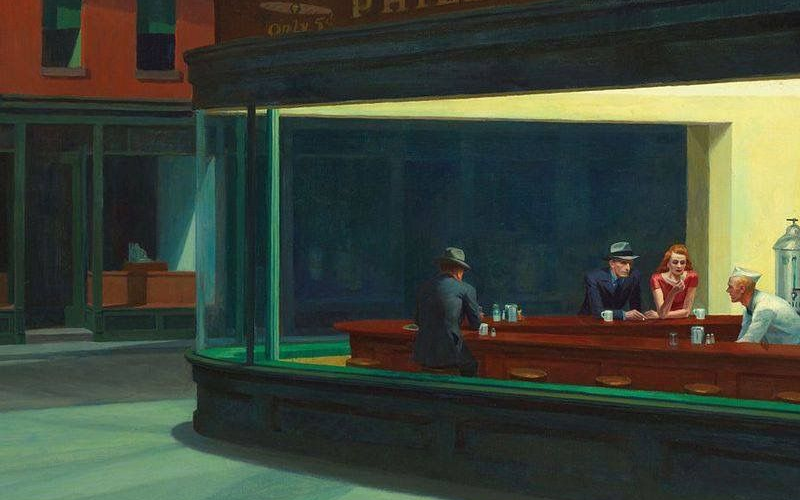
My creative process often begins with reflecting on recent emotions, tensions, or experiences. I spend time organising those feelings before thinking about materials, structures, and forms that can physically translate them. From there, the process becomes a dialogue between intuition, experimentation, and the body itself.
Shu Wang
Intuition, experimentation, and the body itself. Three things working together that no amount of planning can replicate. Shu does not arrive at the studio with the answers already in place. She arrives with the questions. And the work is the process of finding out what they are actually asking. That kind of practice requires a particular kind of patience. And a particular kind of trust. In the process, in the material, and in whatever the body already knows that the mind has not caught up with yet.
Flow is not a state you fall into. For some artists it is one you move your whole body toward
We talk about flow as if it arrives on its own. As if the right conditions simply appear and suddenly you are inside the work in a way that feels effortless and connected and completely alive. But for many artists the flow does not come from waiting. It comes from doing something deliberate to create the conditions for it. And for some, that something is movement. Not metaphorical movement. Actual physical movement. The body as the first instrument.
Ja @jafineart starts in the body. Here is how
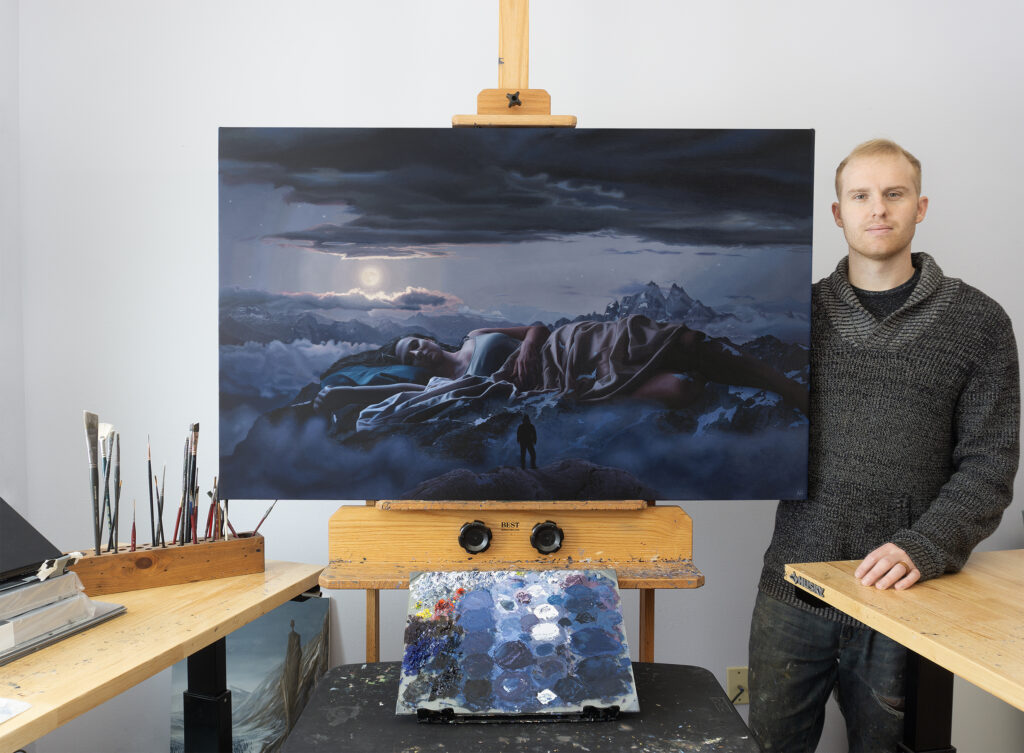
My creative process begins with movement, connecting me to what I’m feeling. From there, I tune into how different postures evoke different emotions, and that guides creation. It becomes a process of moving in and out of the body, existing in a constant flow state.
Ja
Moving in and out of the body. That phrase says something. Because it describes a relationship with the physical self that most of us spend our whole lives trying to build and rarely manage to keep. Ja has made it a key part of how she works. The movement is not a warmup. It is not preparation for the real thing. it is the creative process itself. It is where emotions surface, ideas take shape and eventually find their way onto the canvas.
What you see in the finished painting is never the whole story of how it got there
There is always more happening behind a finished work than the surface suggests. The decisions that were made and unmade. The layers that exist underneath what is visible. The chaos that had to happen before the calm could arrive. Most artists carry that invisible history in their hands without ever showing it to anyone. And most viewers never think to ask. But the process is always there. Underneath everything. Shaping the result in ways that cannot always be seen but can always be felt.
Norma Medley @medleyinart said it best:
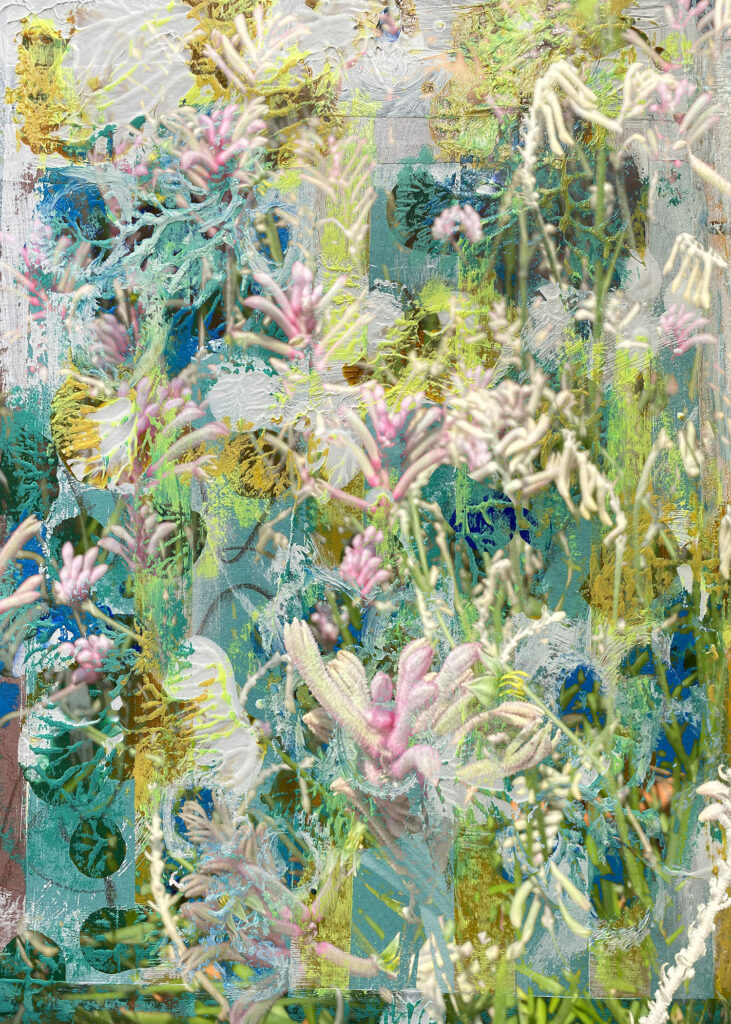
My creative process is fast though it does not reflect that in my paintings. I work on multiple paintings at once and start from messy to refinement covering the whole canvas.
Norma Medley
There is a lot of energy behind the work, but the final pieces feel calm and thoughtful. Multiple canvases are worked on at once, each one slowly moving from a mess to something more finished. There is something interesting about a process that happens so quickly but creates work that feels completely different. The energy of making stays behind. What we see is only the final result. And between the two is a whole unseen journey that Norma carries with her every time she picks up a brush.
Some artists have a studio routine. Others have fifteen minutes and learn to make them count
Not everyone gets the long uninterrupted hours. The quiet studio, the cleared schedule, the luxury of moving slowly through a piece without anything pulling at them from the other side of the door. For a lot of artists, especially those who are also caregivers, students, workers, parents, the creative practice has to fit inside a life that was not designed around it. And the ones who manage it are not doing anything magical. They are just learning, over and over again, how to use what they have.
Sophie Smolic @sophiesmolic describes her day honestly:
I don’t really have a typical day. Between motherhood and medical studies, my creative process is about staying flexible and creating whenever I can find time. It can feel chaotic and unpredictable, but it has taught me to create intuitively, efficiently, and with deep intention.
Sophie Smolic
Intuitively, efficiently, and with deep intention. Three things that sound like they belong in a calm, well-resourced practice. Sophie developed them in the middle of chaos. And we think that is actually more impressive. Because intention that survives a busy life is not fragile. It is the most durable kind there is. She did not find the perfect conditions for making art. She made art anyway. And the practice that grew from that is entirely her own.
Between motherhood and medical school. Between chronic pain and open studio doors. Between the crack of dawn and whatever time the kids finally sleep. Every artist we heard from this week found their own way in. And not one of them had a perfect setup. They just had the work and the decision to keep showing up for it.
There is no single right way to make art. These answers prove that more clearly than anything we could have said ourselves.
If you want to read more about the artists featured in Women Artists on the Rise Edition 4, you can find the book at the link below. One hundred women. One hundred practices. One hundred ways of showing up for the work.
And if you are an artist with a practice of your own, we want to see what you are making. 101 Art Book: Faces Edition is now open for submissions. A curated international collection celebrating the human face through the eyes of contemporary artists worldwide. If portraiture, figurative work, or the study of the human face is part of your practice, this is your space.