

If You’ve Ever Posted and Felt Ignored, Read This

👁 148 Views
You post a new piece of art, maybe something you’ve been working on for weeks, and you feel a spark of excitement as you hit “share.” The canvas looks perfect under the studio lights, you’ve picked a caption that feels just right, and you expect at least a few reactions. Instead, the feed goes strangely quiet. The likes trickle in slowly, the comments are nearly nonexistent, and you find yourself refreshing the screen to see if something’s broken.
That sudden silence is jarring. It feels almost personal, as if your followers collectively decided they weren’t interested anymore. In reality, nothing about your art changed, it’s the platform deciding how visible your work is. The worst part? It doesn’t tell you when or why this shift happens. You’re left guessing, wondering if your audience is bored, or worse, gone.
For many artists, this moment sparks an inner storm of doubt. You start questioning your consistency, your style, even your talent. “Did I make a mistake? Should I have posted at a different time? Is my work just not good enough?” These thoughts creep in quickly, and before you know it, you’re connecting the algorithm’s silence with your self-worth.
But here’s the truth: silence online does not equal silence in reality. Your art still speaks, your audience still exists, and the value of your work hasn’t diminished. Algorithms create artificial distance between creators and their communities, and understanding that difference is the first step to fighting back. What you’re feeling isn’t failure, it’s a system flaw.
So, no, you’re not the only one. The sudden drop in visibility isn’t a secret judgment on your talent, it’s the byproduct of an unpredictable, shifting machine. Once you see it for what it is, you can begin to separate the value of your art from the fickle rules of social media feeds. That perspective shift alone can take a weight off your shoulders.
The Algorithm Doesn’t Hate You, It’s Just Selfish
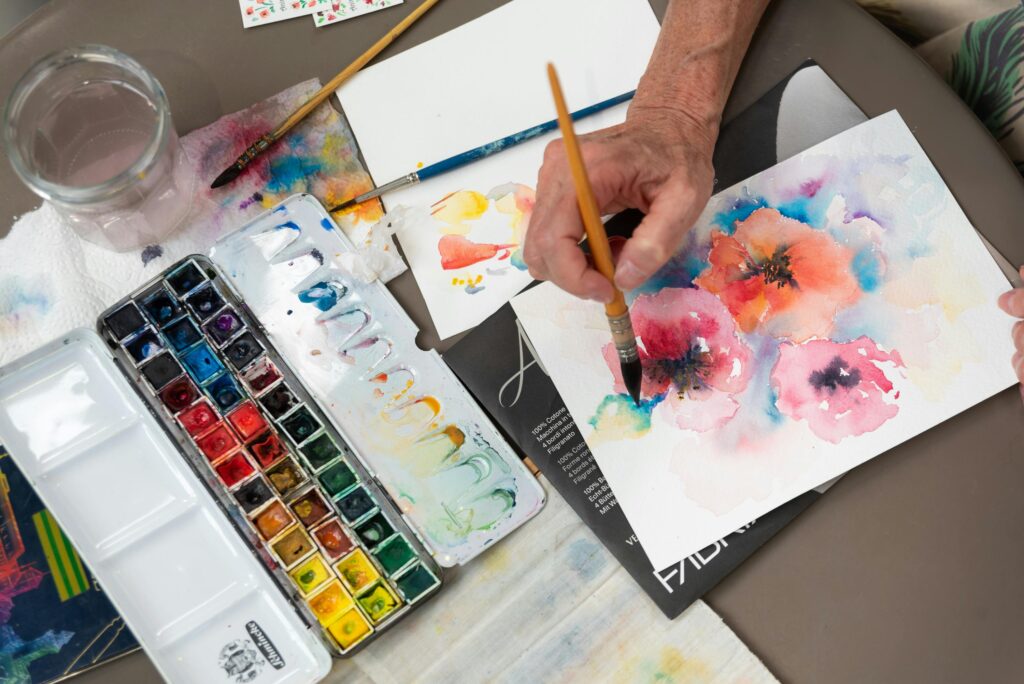
It’s tempting to think the algorithm has it out for you personally. But the truth is simpler, and somehow more frustrating, it doesn’t care about you at all. It isn’t sitting there deciding that your abstract painting is less important than someone’s breakfast photo. Instead, it’s doing what it was built to do: keep people on the platform as long as possible.
Imagine the algorithm as a party host obsessed with entertainment. It decides who gets the spotlight, not based on who has the most meaningful stories, but on who will keep the crowd buzzing. If your work doesn’t fit its definition of “engaging,” it quietly nudges you to the back of the room. That doesn’t mean your art isn’t compelling, it just means the host isn’t interested in depth, it’s interested in noise.
This explains why quick, flashy content often outperforms more thoughtful posts. A funny meme, a trending sound, or a viral dance clip checks the algorithm’s boxes faster than a carefully crafted painting process video. The system rewards what sparks instant reactions, not what creates lasting impact. For artists, that can feel unfair, because your work often asks for more than a two-second glance.
Here’s where things get dangerous. Many artists, seeing their reach drop, decide to bend their art to fit what the algorithm seems to like. They start creating shorter, flashier, more surface-level content, even if it doesn’t align with their true style. Over time, their online persona drifts further from their real practice. The art becomes less about expression and more about survival.
But here’s the reminder you need: you don’t have to play that game. The algorithm may predict today’s trends, but it doesn’t decide what lasts tomorrow. The more you contort yourself to fit its demands, the further you move from your authentic voice. And ironically, it’s that voice, the real, unfiltered one, that draws people to you in the first place.
What Changed? The Silent Shift You Probably Missed
You might be wondering, “If I didn’t change, why did my reach suddenly collapse?” The answer lies in constant, often invisible updates. Social media platforms are in a perpetual state of tweaking their algorithms, always chasing what keeps users glued to their screens. They don’t announce these changes with fanfare. Instead, they roll them out quietly, and one morning you wake up to find your numbers cut in half.
One month, reels are pushed to the top of everyone’s feed. The next, carousels take the spotlight. Suddenly, the platform prioritizes trending audio, and if you’re not using it, your post sinks before anyone sees it. By the time you notice the pattern and adjust, the rules have shifted again. It’s a treadmill that never slows down, designed to keep creators guessing.
The hardest part? Artists aren’t given a guidebook.
No one tells you that the type of content you’ve been relying on for months is now out of favor. You’re left reading between the lines of your own analytics, trying to spot trends that feel invisible. It’s like trying to play a sport where the rules change mid-game, but the referee never bothers to update you.
This cycle wears people down. Instead of focusing on the art, you end up obsessing over whether to post at 7 p.m. or 9 p.m., whether your caption is too long, or whether you should ditch your format entirely. It’s exhausting, not because you don’t care about connecting with people, but because you’re chasing something you can’t catch.
Recognizing this invisible churn is important. It helps you see that the problem isn’t that your audience abandoned you or that your art has lost its pull. The problem is that you’re navigating a system designed to keep you uncertain. And uncertainty is exactly what keeps artists feeling dependent on the algorithm, rather than confident in their own rhythm.
Why Engagement Isn’t About Your Worth
Let’s talk about the elephant in the room: when your post flops, it stings. You may not admit it out loud, but the quiet thought creeps in: “Maybe my art just isn’t good enough.” The algorithm has a way of weaponising your doubts, turning a number on a screen into evidence against your talent. It’s a cruel trick, and one most artists fall for at some point.
But here’s what needs to be clear: algorithms aren’t judges of art. They don’t know the difference between a brushstroke layered with emotion and a video of a dog wearing sunglasses. They measure clicks, likes, and seconds of attention, not depth, meaning, or resonance. To them, your years of practice and your bold, creative risks are invisible.
If you tie your sense of worth to those numbers, you’re handing over the most sacred part of your practice, your confidence, to a machine that was never designed to protect it. You’ll start second-guessing yourself, creating to please rather than creating to explore, and that’s when burnout sneaks in. Art loses its spark when it feels like a performance for someone else’s rules.
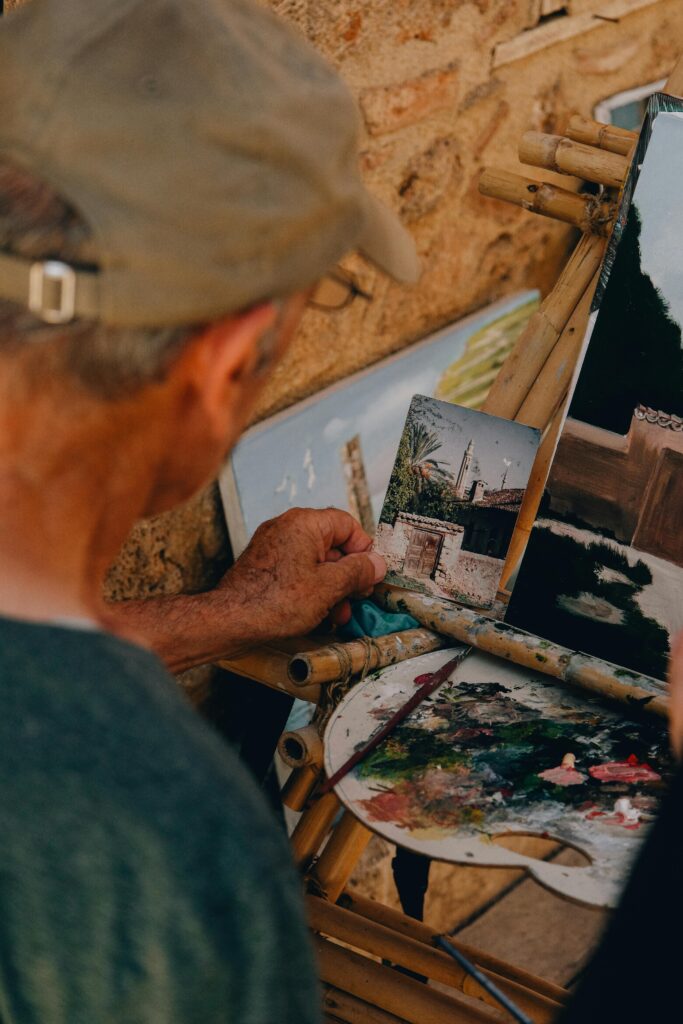
This doesn’t mean you should ignore metrics completely. They can offer useful signals about how your work is being received. But they are not the whole story. A quiet post doesn’t mean your work failed. It might mean the platform was pushing another format, or your audience simply didn’t see it. Visibility and value are not the same thing.
Next time your post underperforms, remind yourself: the silence doesn’t mean your work is meaningless. It means a flawed system decided not to show it. Algorithms don’t measure your worth, and the second you remember that, you start to reclaim your power.
The Ripple Effect on Artists Everywhere
Here’s the thing: you’re not the only one feeling invisible. Spend five minutes in any artist community and you’ll hear the same story, frustration, confusion, and discouragement over reach. Painters, illustrators, sculptors, and photographers are all noticing the same pattern. What feels personal is actually universal.
This shared struggle creates ripple effects across the art world. When artists stop being seen, they often stop sharing. They retreat, posting less often or disappearing altogether. The result? Audiences lose access to fresh, diverse perspectives, not because the art isn’t being made, but because the delivery system is hiding it away.
It doesn’t stop there. Missed visibility often leads to missed opportunities. Collectors, curators, and collaborators can’t engage with what they don’t see. For many artists, social media is more than just connection, it’s a pipeline to real-world opportunities. When that pipeline clogs, momentum slows, sometimes to a crawl.
The emotional cost is just as heavy.
Constant invisibility chips away at confidence, and the more invisible you feel, the harder it becomes to share. It’s a vicious loop: fewer posts mean fewer chances to be seen, which leads to even less confidence. Suddenly, you’re questioning not just your strategy, but your future as an artist.
Breaking that loop starts with understanding it. When you realize the silence isn’t proof of failure, but part of a bigger systemic issue, you can take the weight off your shoulders. You stop blaming yourself and start thinking about other ways to get your work in front of people who actually want to see it.
What Do You Do About It?
Here’s the question that matters most: if the algorithm isn’t working for you, how do you keep going? The answer isn’t to work twice as hard or force yourself into trends that don’t fit your art. The answer is to reframe your relationship with these platforms. Think of them as tools, not as gatekeepers. They don’t decide whether your career is valid, they just decide what shows up on a scrolling screen.
The first step is letting go of the pressure to tie your self-worth to numbers. Once you stop seeing metrics as judgment, you free yourself to experiment again. You can post without obsessing over whether something will “perform,” and instead focus on how it feels to share your work. That small shift makes a huge difference in your mental energy.
The second step is to diversify where you show up.
Relying on one platform is like building your house on sand, the foundation shifts too easily. Explore other spaces where artists and audiences connect more directly, whether that’s newsletters, artist networks, or niche communities that aren’t built around ads. These spaces may not deliver instant numbers, but they offer deeper, steadier engagement.

Third, remind yourself why you’re sharing in the first place. Chances are, it’s not just for likes. It’s because you want your work to connect with people, to spark emotion, conversation, or curiosity. Keep that “why” at the center, and you’ll start seeing posting as an extension of your practice, not a test of your popularity.
And finally, give yourself permission to ignore the noise. The algorithm will keep shifting, the rules will keep changing, and there will always be new tricks to chase. But none of that defines your value as an artist. What defines you is the work itself, and the courage it takes to keep sharing it, even when the feed falls silent.
Stop Chasing, Start Creating
The biggest trap artists fall into is chasing the algorithm like it’s some elusive prize. You start adjusting your content to match what seems to “work,” and before you know it, your studio time has turned into a constant experiment in trend-hopping. Instead of enjoying your process, you’re busy thinking, “Should I add this trending song? Should I film this vertically? Should I make it into a reel instead of a post?”
The problem is, the finish line never appears. The algorithm’s preferences change faster than you can adapt. What worked two weeks ago may already be outdated. So even when you think you’ve cracked the code, the rules rewrite themselves, leaving you back at square one. This endless loop pulls your energy away from what matters most: the art itself.
Artists often feel pressured to keep up because silence online can feel like irrelevance. If you’re not “visible,” it’s easy to believe you’re falling behind. But here’s the thing, you didn’t become an artist to keep up with algorithms. You became an artist to create work that speaks, whether or not it happens to fit neatly into a thirty-second clip.
The artists who survive this cycle are the ones who stop chasing trends and lean into their own rhythm. They post in ways that align with their art, not with the latest hack. And while that might mean slower growth, it also means steadier, more meaningful connections. Think of it as planting a garden instead of sprinting for quick wins; one lasts, the other burns out.
If you’ve been feeling drained by the chase, this is your invitation to pause. Step back, take a breath, and remember why you share in the first place. The algorithm isn’t the finish line, nor is it the prize. Your work is.
Diversify or Disappear: Building Beyond One Platform
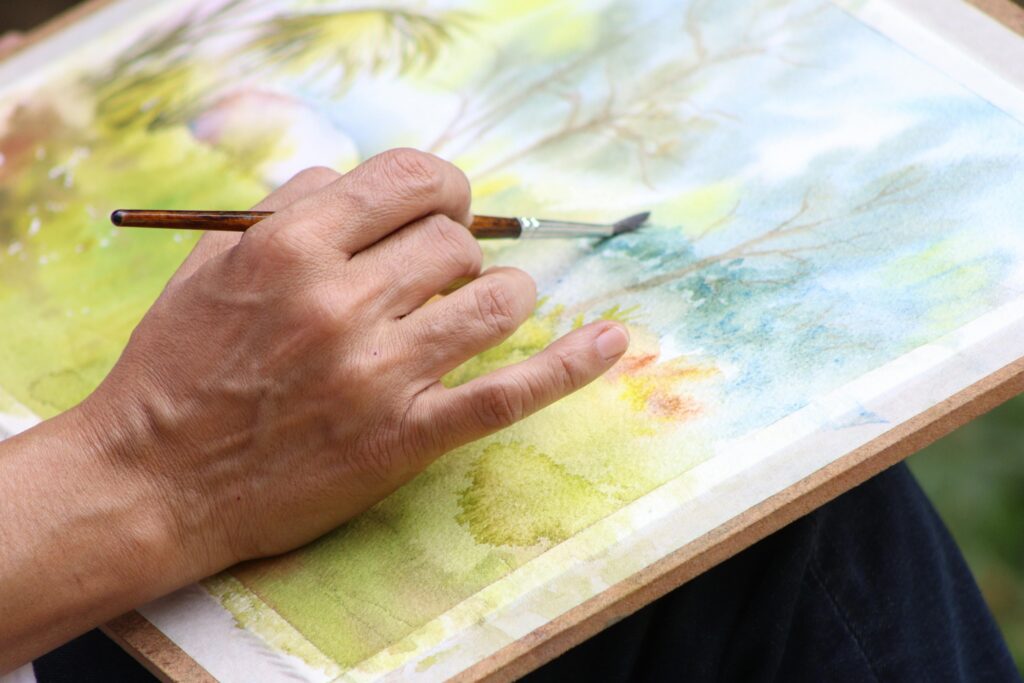
Depending on one platform to carry your art is like building your entire career on a single gallery that could close its doors tomorrow. It’s risky, and yet, many artists do it without realizing. Instagram goes quiet, and suddenly they feel invisible, even though other avenues for visibility are still open. The truth is, putting all your eggs in one algorithm-controlled basket is a dangerous gamble.
Consider this: every platform has its own lifespan.
Remember when Facebook pages were the central hub for creative work? Or when Tumblr was the go-to for artists? These spaces didn’t vanish, but their relevance shifted dramatically. If you had built your entire audience on one of those, you might have felt the crash even harder.
Diversification doesn’t have to mean spreading yourself thin. It’s about choosing a few steady, complementary channels where your art can live. An email list, for example, gives you direct access to your audience without filters. A personal website becomes your permanent gallery, unaffected by algorithm tweaks. Even offline spaces, like community shows or artist collectives, help anchor your visibility outside the social media storm.
What’s powerful about diversification is the sense of stability it brings. When one platform dips, you don’t feel like the floor has fallen out from under you. Instead, you have other places where your work still thrives. That security allows you to post on social media without panic, because your visibility isn’t completely at its mercy.
If the algorithm has left you invisible, take it as a nudge. It’s not a signal to give up, but a reminder to expand your reach. Your art deserves more than one spotlight, and you’ll feel freer knowing your audience doesn’t disappear just because one platform decides to dim the lights.
Rethinking Success: Numbers vs. Impact
Here’s a radical thought: what if success online isn’t actually about numbers? It feels counterintuitive, especially in a culture obsessed with metrics, but numbers only tell part of the story. A post with a thousand likes might look impressive, but if none of those people engage with your work beyond a double-tap, does it really move your practice forward?
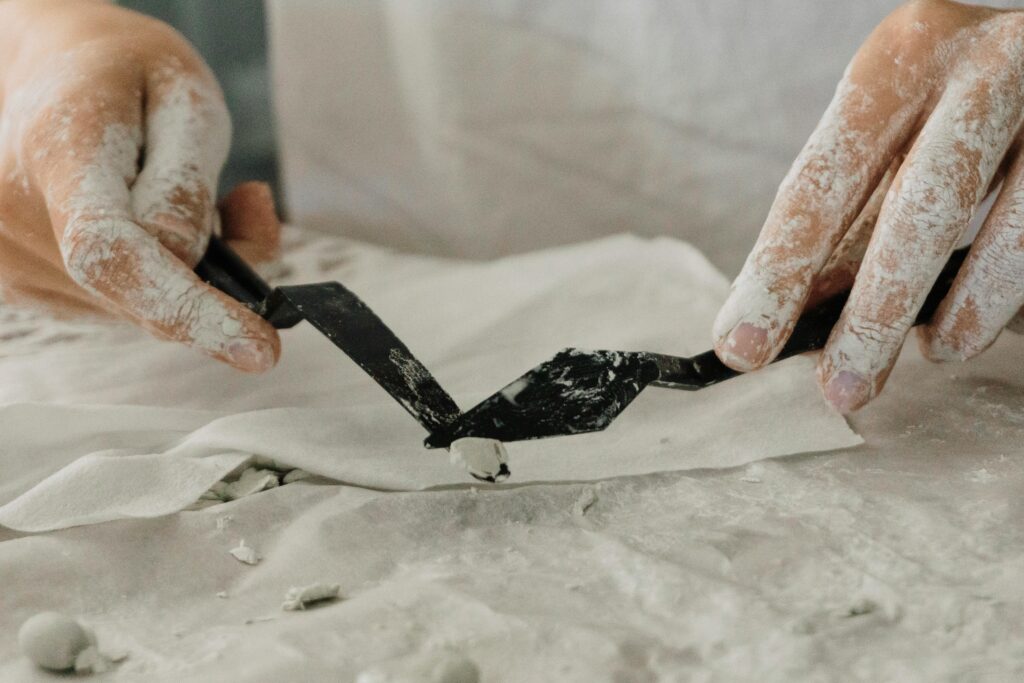
For artists, impact matters more than raw numbers.
Think about the difference between 100 strangers scrolling past your work and one curator, collector, or collaborator stopping to truly connect. That single meaningful interaction could shape your career more than a sea of passive likes ever could. The algorithm rewards volume, but your career thrives on depth.
This is where artists often get stuck. We’ve been trained to equate reach with relevance. But art has always operated differently. A single exhibition, viewed by a relatively small group, can change an artist’s trajectory forever. Success isn’t about how many people saw it, it’s about who did, and how deeply it resonated.
When you start rethinking success in this way, the algorithm loses some of its grip. Instead of obsessing over views or shares, you begin to ask: did this post reach the right people? Did it spark a conversation, an opportunity, or a connection? Those questions shift your focus back to meaningful outcomes, not vanity metrics.
So next time you catch yourself spiraling over low numbers, pause and ask yourself: who saw this, and how might it matter in ways I can’t measure? That shift is where you take back control of what success looks like, instead of letting the algorithm define it for you.
The Real Power Play: Community Over Algorithms
If there’s one antidote to algorithm fatigue, it’s community. While platforms are designed to scatter attention, community gathers it. Instead of hoping strangers stumble across your work in a noisy feed, you create spaces where people actively want to show up, connect, and support your practice. That kind of engagement runs deeper than anything an algorithm can manufacture.
Communities can take many forms. It could be a tight-knit group of fellow artists who share and amplify each other’s work. It might be a Patreon where supporters get exclusive access to your process. Or it could be something as simple as a consistent email newsletter that builds a direct line of conversation with your audience. These spaces thrive not because of algorithms, but because of relationships.
The magic of community is that it’s resilient. Algorithms can shift overnight, but genuine human connections don’t vanish when a platform updates. If someone feels personally invested in your journey, they’ll seek you out, whether through your website, your newsletter, or in-person events. That loyalty is worth infinitely more than a passing like.
Artists who focus on community often find that their visibility feels steadier, even if the numbers aren’t flashy. They stop worrying about whether their posts “perform” and instead focus on showing up authentically for the people who already care. Over time, those people become not just followers, but advocates, sharing your work, recommending you, and opening doors that no algorithm ever could.
So maybe the real crash isn’t that your art isn’t being seen. Maybe it’s that you’ve been relying on a machine to do what humans do best: connect. Build the community, nurture it, and you’ll find that visibility grows in ways no algorithm can suppress.