
Why This Artist Writes Poems Next to Her Photos


For this feature on the Arts to Hearts Project website, we sat down with German photographer and writer Ulrike Pichl, whose work turns everyday encounters with nature into quiet, fleeting impressions. In this interview, Ulrike opens up about the way light, language, and lived experience shape her photos and poems.
She shares how illness has shifted her practice toward her immediate surroundings, how pairing words with images expands her way of seeing, and why she intentionally embraces blur, smudge, and imperfection in her process.
What we learn through her journey is how much strength can be found in stillness, and how the act of paying attention—to light, to mood, to fragments of life around us—can create space for both grounding and transformation. This conversation offers an insight into Ulrike’s “sfumatographs,” as she calls them, and into the intimate relationship she has cultivated with nature as both subject and companion.
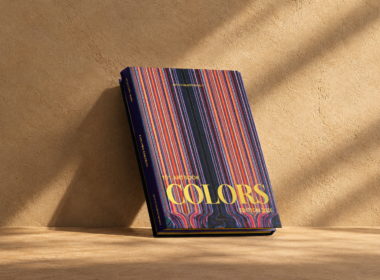
Ulrike Pichl is a featured artist in our book, “100 Emerging Artists 2025” You can explore her journey and the stories of other artists by purchasing the book here:
https://shop.artstoheartsproject.com/products/the-creative-process-book


I photograph and write. Nature is the protagonist of my work. I capture its vitality, poetry, darkness, and beauty in my photographs. Since 2019, I have been collecting moments — impressions I encounter on my daily walks in the forest, through the window, or in my garden. Many of my photographs are created in my immediate surroundings, as a chronic illness often keeps me from leaving the house. One of my series is therefore titled Out of My Window. It gathers impressions from nature, my garden, the forest outside my window, and the sky above my home. With my photographs, I explore the borderlands between the visible, association, and inner life. Shifting qualities of light create an atmosphere of poetry and dreamlike presence. The interplay between sharpness and blur — created by the use of grease — intensifies the perception of colour and makes the uniqueness of a fleeting moment all the more visible.
My aim is not to turn the viewer into a distant observer of nature — but into a part of it. I don’t want to depict a tree. I want the viewer to feel what it was like to see the tree in that moment. To sense the essence of the tree, the idea of the tree. My texts extend the photographs beyond the visible. The poems are an integral part of the work as a whole. Longing, becoming, hoping, loving, brief moments of beauty and darkness, fear, finding and losing oneself — these are the themes I explore in my writing. Each photograph is produced as a unique piece, signed directly on the image and accompanied by my text.
I often use liquids and grease on the lens. This allows me to capture the soft, flickering glow and the constant movement of nature — shapes and colours
1. You describe your work as exploring the space between what we see and what we feel. When you’re out in nature with your camera, what usually catches your attention first — the light, the mood, or something else entirely?
It is, in fact, most often the light—very frequently impressions in backlight. Sometimes I even walk back and forth at the same spot several times, to experience again the moment when I move almost blindly against the light. I love that—backlighting is an essential part of my photography.

2. You often pair your photographs with words. How does writing change the way you see an image and vice versa?
Words or fragments of sentences often come to me spontaneously when I see things. Or I translate elements like cracked bark, swaying grass, or fading plants directly onto myself—onto my life and my current state of mind. At the same time, though, writing also amplifies the feelings I have when looking at nature or during my walks, because I have learned to put very vague states into words that feel right for me. In a way, I am constantly expanding my vocabulary—(in German it is literally called a “word treasure,” which, incidentally, I find to be a wonderful expression)—through reading texts and poems by other authors. I believe that language and the ability to articulate oneself can also make things more bearable. Only for what one finds words can one also gain understanding from others.

3. You mention moments when nature has both held you and let you fall. How do these emotional undercurrents shape the way you capture the world around you?
This particular sentence comes from one of my poems, written for the image “At the Bottom”. There I write: “For the moss of your chest has long ceased to catch me.” Yet in another poem, for example, I write of nature whispering to me to let go—something that, in that moment, felt like deliverance. I often find myself inwardly in a state of “tipping,” as it has always been hard work for me to keep my mental health stable and to be able to use my body in a usual way. The fleeting, the vague, the nebulous—these are qualities I observe in myself. I exist constantly in a state of dissolving and reassembling.
I don’t want to simply depict a tree. I want the viewer to feel what it was like to see the tree in that moment.
Ulrike Pichl
4. Your photos have been described as a counterpoint to the polished, overly structured style often seen today. Is that something you’re consciously pushing against, or is it just how your work naturally unfolds?
My photographs stand entirely on their own, without any intended sense of competition with other nature photographers. It is not a deliberate contrast—my style has developed this way because I realised that sharpness in many photographs does not capture what I want to show, nor what I actually see. I also greatly enjoy experimenting with the grease I frequently use, as well as with various liquids.

My photographs appear very unspectacular at first glance. They are quiet, and they show something everyone knows, yet in a way that touches people.
Ulrike Pichl
5. You were recently included in 100 Emerging Artists for 2025 by the Arts to Hearts Project. What does recognition like this mean for someone whose work is rooted in such quiet, observational moments?
It means a great deal to me, precisely because my photographs appear very unspectacular at first glance. They are quiet, and they show something everyone knows, something one can see every day—yet in a way that touches people. I have often been told that the images have a therapeutic effect. And so, the fact that my pictures—although so unspectacular and everyday—were chosen for this book shows me that there truly is a strength to be found in stillness.

6. Nature seems to be a constant in your life both as a subject and a companion. Has your relationship with it changed over time, or does it continue to offer something new every day?
Over the years, it has sharpened my gaze and made me calmer within. It comforts me when I am not doing well, and it is a place of refuge. For me, it is a great blessing to have something in my life that costs nothing, is always present, and unfolds its strength anew each time. I can truly discover new qualities of light, new elements, new perspectives almost every day—even though I usually walk along the very same path. Yet, depending on the time of day, the season, and my own openness to nature on that day, I always encounter something new.

Ulrike Pichl’s work is about seeing nature not as something distant but as something we are part of. Her photographs and poems bring forward the shifting qualities of light, the fragile moments we often overlook, and the emotions tied to them.
From her journey, we learn that stillness carries its own strength, and that even the smallest, most familiar sights can hold endless possibilities when we allow ourselves to look closely.
To learn more about Ulrike, click the following links to visit her profile.
Arts to Hearts Project is a global media, publishing, and education company for
Artists & Creatives: An international audience will see your work of art, patrons, collectors, gallerists, and fellow artists: access exclusive publishing opportunities and over 1,000 resources to grow your career and connect with like-minded creatives worldwide. Click here to learn about our open calls.