



How to Stay Inspired in the Studio Daily

👁 107 Views
They say inspiration strikes like lightning, but any working artist knows that’s a myth. Real inspiration is less thunderbolt, more slow burn. It’s built from habits, curiosity, and the tiny choices you make on the days when nothing feels exciting.
Every artist hits that slump, the stretch of days when your paint feels dull, your ideas feel recycled, and your confidence starts whispering that maybe you’ve peaked. But the truth is, inspiration isn’t lost, it’s just buried under noise, fatigue, or too much comparison. The good news? You can dig it out again, every single day, without waiting for some cosmic spark.
Think of inspiration like a muscle. You don’t wake up every morning with it flexed; you build it through motion. Even the smallest act, like rearranging your tools or sketching something you don’t plan to finish, can shift your brain out of stuck mode. The more you move, the more the ideas start to move too.
But staying inspired daily is about staying connected to why you create in the first place. Some days, that means painting. Other days, it’s reading, walking, listening, or just staring at your palette until something stirs. Inspiration hides in pauses as much as in action.
Most artists think consistency kills creativity, but it’s actually the opposite. The structure you build for yourself becomes the soil your ideas grow in. Without it, even the best creative bursts dry up too fast to turn into anything real.
So if your studio feels a little quiet lately, maybe that’s not a sign you’ve lost your spark, but that it’s time to find new ways to feed it.
When You Can’t Paint, Prep Anyway
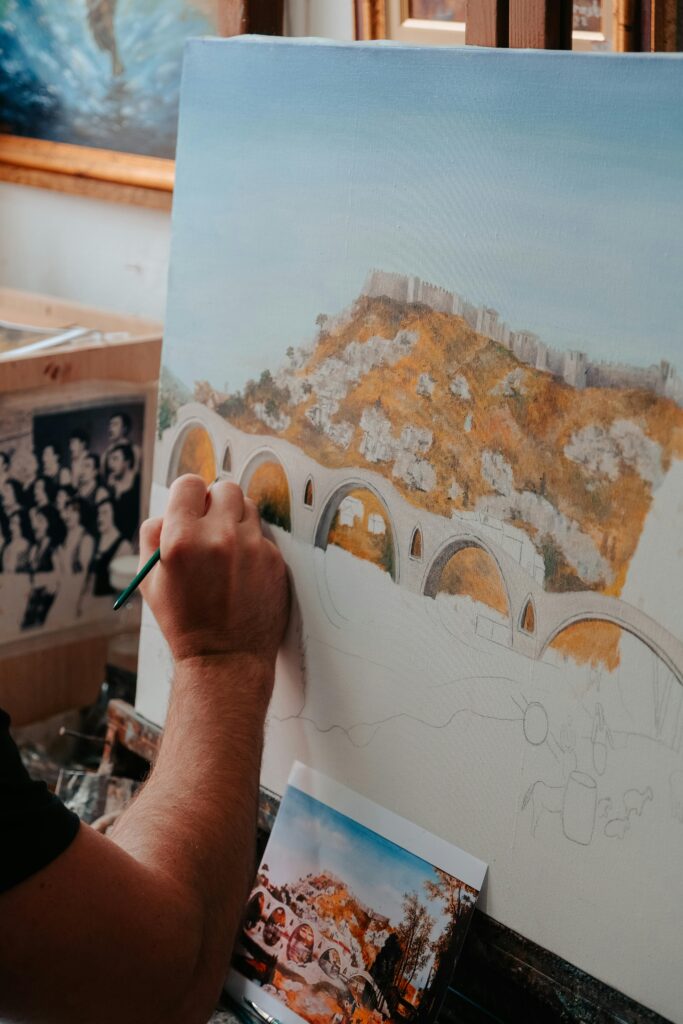
There are days when even the idea of starting feels heavy. You sit in front of the canvas, stare at your brushes, and nothing happens. That’s fine , those days aren’t wasted. On the quiet days, shift gears. Stretch new canvases, mix fresh color palettes, organize your materials, clean your tools. It sounds simple, but this kind of motion keeps your creative energy in circulation, even when your ideas need a nap.
Doing small, low-pressure tasks helps your brain reset. It’s like telling yourself, “I’m still here, still showing up,” without the pressure of brilliance. Before you know it, something as small as wiping down your table or rediscovering a forgotten sketch sparks a new direction. Inspiration often sneaks in when your hands are busy with something else.
Some of your best ideas are born in these quiet phases. When the goal shifts from “make something amazing” to “just touch the work,” you stop freezing under expectations. Art doesn’t always need you to sprint; sometimes, it just needs you to show up with a broom.
And when you walk into a clean, prepped studio the next morning, you’ll feel the difference instantly. It’s a quiet reminder that even on off days, you’re still moving forward. The setup becomes part of the art.
So, on days when the paint won’t cooperate, give yourself permission to tidy, prep, and breathe. You’re still creating , just in a different language.
Collect Sparks, Not Pressure
Every creative person needs a “spark folder.” A place where you save everything that stirs something , a color palette, a lyric, a weird shadow on the wall, a photo that makes you feel something you can’t explain. The trick? You’re not collecting for a project. You’re collecting for your future self.
When you hit a dry spell, open that folder. It’s like flipping through your own emotional memory bank. These bits of inspiration aren’t there to push you into action but to remind you what kind of visuals make your heart race. That reminder alone is often enough to reignite your rhythm.
Too often, artists chase pressure instead of sparks. They scroll other people’s work, hoping for motivation, but end up feeling behind instead. Your inspiration should feel like oxygen, not comparison. That’s why your spark folder works , it’s deeply personal.
Keep it messy. Mix screenshots, quotes, color swatches, even sounds. The less curated it is, the more it feels like a living moodboard for your creativity. It’s not about order, it’s about energy.
And here’s the best part , when you revisit it weeks or months later, you’ll start to see patterns. Those patterns are your visual language taking shape. That’s where real, sustainable inspiration begins.
Treat Routine Like a Creative Ritual
It sounds counterintuitive, but routine is one of the most underrated sources of inspiration. When you know when and where you’ll work, your brain learns to meet you there. It stops waiting for perfect conditions and starts associating that time or place with making.
Your routine doesn’t have to be strict. It can be as small as lighting the same candle before you start or playing a certain playlist that tells your mind, “It’s time.” Rituals take the friction out of beginning , and beginning is often the hardest part.
Once you’ve set the rhythm, creativity follows. You don’t have to wait for motivation to strike, because your body already knows the steps. It’s like muscle memory for your inspiration.
Some artists fear routine because they think it’ll dull their spontaneity. But in reality, structure gives chaos a home. When your creative brain feels safe, it becomes playful again. That’s when ideas start flowing naturally, not forced.
So, instead of chasing motivation, build an environment where it knows where to find you. You’re not trapping your creativity , you’re inviting it to return more often.

Change Your View (Literally)
If your studio starts feeling stale, it’s not always your art that’s stuck , sometimes, it’s your environment. Move something. Rearrange your workspace. Change your lighting. Hang up a new piece. Even taking your sketchbook outside can flip your perspective faster than scrolling through inspiration online.
Physical change wakes your senses. A new view, new light, or even a new smell can trick your brain into seeing your work differently. It’s not about decoration; it’s about stimulation. When the setting shifts, your thoughts shift too.
Ever notice how ideas hit when you’re away from your desk? That’s because movement and novelty loosen your thinking. Artists thrive on curiosity, and nothing fuels curiosity like new surroundings.
If you can, do a studio swap with another artist friend for a day. Work in their space, borrow their energy, then come back to your own with fresh eyes. You’ll notice details you missed before.
Your environment either feeds or drains your creative rhythm. So treat it like a living collaborator , one that deserves updates, rearrangements, and small surprises to keep the spark alive.
. Make Boredom Part of the Process
We’ve been taught to fear boredom, but boredom is where some of your best creative shifts begin. When you resist the urge to distract yourself , no phone, no new project, just you and the stillness , something interesting happens. Your brain starts connecting old ideas in new ways.
Artists often confuse boredom with lack of inspiration, but they’re not the same. Boredom is actually the brain’s way of asking for novelty. It’s an invitation to explore, not a dead end.
Next time you hit that lull, lean into it. Sit in the quiet. Stare at your half-finished piece without judgment. Let your thoughts wander without trying to fix them. You’ll start noticing little details you hadn’t before , color relationships, texture possibilities, emotional shifts.
That’s when the next idea usually slips in quietly. It doesn’t shout; it whispers. And you only hear it when you’re not trying so hard to fill the silence.
So instead of fighting your slow days, treat them like compost. They might not look productive, but they’re quietly nourishing your next breakthrough.
Remember Why You Started (and Keep It Visible)
Somewhere along the way, deadlines, applications, and social media can bury the reason you started making art in the first place. When that happens, inspiration starts slipping away quietly. The fix? Bring your “why” back into the room , literally.
Write it on a sticky note. Print an old photo of your first studio. Keep a quote that sums up what creating means to you. Place it where you see it every day. It’s not cheesy , it’s grounding.
When your energy dips, looking at that reminder reconnects you to something deeper than outcome or validation. It reminds you that your work isn’t about perfection or approval; it’s about curiosity, expression, and the joy of making.
We forget that inspiration isn’t something new we have to find, it’s something old we have to remember. The spark that started it all is still there , it just needs to be invited back into view.
So next time you’re staring at a blank canvas wondering what’s missing, start by remembering what brought you here. That’s the truest source of inspiration there is.
When Routine Becomes Ritual
Every artist has a rhythm, but when that rhythm turns into a ritual, something powerful happens. Instead of waiting for inspiration, you start showing up for it. Lighting a candle before painting, playing the same playlist, or even cleaning your brushes at the end of the day can all become anchors that signal, it’s time to create. These small gestures carry big meaning. They tell your brain, and your heart, that this space and time belong to your art.
The truth is, consistency breeds creativity. When you create often, even on the days it feels impossible, you start finding beauty in repetition. The paint might not always flow, but your connection to the process deepens. You begin to see the studio as less of a test and more of a conversation.
Try noticing how your body feels when you step into your studio. Maybe it’s the smell of paint, the quiet hum of focus, or the sound of your pencil hitting the page. Those familiar details are part of your ritual, and they’re what keep you coming back.
Rituals also create a sense of belonging within your own practice. They remind you that you’re not just chasing a masterpiece, you’re building a relationship with your craft. That shift in mindset can turn ordinary days into something sacred.
And yes, some days you’ll still struggle to show up. But when your creative habits are rooted in ritual, it’s easier to find your way back. The studio stops being a place of pressure and starts feeling like home.
If you’ve ever wondered how artists sustain inspiration for decades, it’s often not luck or sudden bursts of genius. It’s the quiet commitment to showing up, again and again, in the same sacred way.
If you’re ready for your studio inspiration to show up online as consistently as it does in person, the Digital Portfolio Template is your workflow upgrade. It’s designed for artists who already create but need their presentation to match that level of work. Plug in your best pieces, tweak the colours and fonts to match your mood, drop in your artist statement and bio, and voilà , your portfolio shifts from ‘just uploaded’ to ‘curated-with-intention’. When a curator or collector clicks through, they won’t just see your work , they’ll feel your studio, your voice, your rhythm.

The Power of Creative Cross-Training
When inspiration runs dry, sometimes the best thing you can do is step outside your own medium. Painters who dance, sculptors who write, photographers who garden, those cross-creative moments breathe new life into your primary practice. It’s like giving your imagination a mini-vacation, only to return refreshed and buzzing with ideas.
The trick is not to aim for perfection in that second practice, but to play. Play without expectations, without judgment, without the pressure to produce. If you’re a visual artist, try cooking something elaborate just for the sensory joy of it. If you’re a digital creator, spend a day sketching by hand. Those shifts keep your mind flexible.
Cross-training creativity also reconnects you with the why behind making. It reminds you that art, at its core, is exploration. By experiencing new textures, sounds, or motions, you open doors that your usual tools might never have revealed.
It’s no coincidence that so many great artists experimented outside their main discipline. Picasso wrote poetry, Frida Kahlo decorated her plaster corsets, and David Bowie painted between albums. They didn’t switch passions, they fed them.
So if you feel stuck, don’t force yourself to produce more. Step sideways instead. Explore something unexpected, something that feels a little foreign. Inspiration often hides in places you haven’t thought to look yet.
And when you return to your own work, you’ll notice it feels lighter, freer, and more intuitive. You’ll realize your creativity wasn’t gone, it was just waiting for you to move differently.
The Art of Doing Nothing (On Purpose)
In a culture obsessed with productivity, “doing nothing” sounds lazy, but for artists, it’s essential. The mind needs space to wander, to daydream, to connect dots without a deadline. That space is where some of your best ideas will quietly take shape.
Think about how often your ideas appear while you’re showering, walking, or staring out a window. That’s not coincidence, it’s creativity finally getting a chance to breathe. Overloading your schedule with projects leaves no room for imagination to stretch its legs.
Artists sometimes forget that rest is part of the process. Silence and stillness aren’t empty, they’re the soil ideas grow from. Without them, you end up creating from burnout, not inspiration.
So next time you feel blocked, instead of forcing output, take a step back. Do something completely unrelated to art. Let yourself be bored. True boredom can spark the most unexpected creative leaps.
There’s a reason some of the most brilliant ideas in art history began during long walks, lazy afternoons, or sleepless nights. Doing nothing is how the subconscious connects patterns your conscious mind can’t yet see.
So give yourself permission to pause. The blank space between projects isn’t wasted, it’s where your next masterpiece quietly begins to form.

Collaboration as a Creative Reboot
Sometimes, the fastest way to reignite inspiration is to stop creating alone. Collaboration introduces new voices, perspectives, and approaches that can completely shake up how you see your work. It’s not just about blending styles, it’s about borrowing each other’s courage.
Working with another artist can reveal blind spots in your own process. They might see strengths you overlook or suggest directions you’d never dare to try. Even disagreements can become fertile ground for innovation.
Collaboration also pushes you out of comfort zones. It challenges your habits, your assumptions, even your creative ego. That tension, when handled with respect, can lead to magic neither of you could make solo.
Try partnering on a small project first, a shared piece, a group show, or even an online collaboration challenge. Keep the goal loose and focused on exploration rather than outcome. The freedom to experiment will open new creative pathways.
Beyond the work itself, collaboration often restores something deeper, community. When you connect with another creative, you’re reminded that art isn’t made in a vacuum. It’s a dialogue between imaginations.
And when that shared energy hits just right, inspiration doesn’t feel like something you have to chase. It feels like something that found you both at the same time.


