


How seedpods became part of Chelsea Baker’s daily practice

👁 139 Views
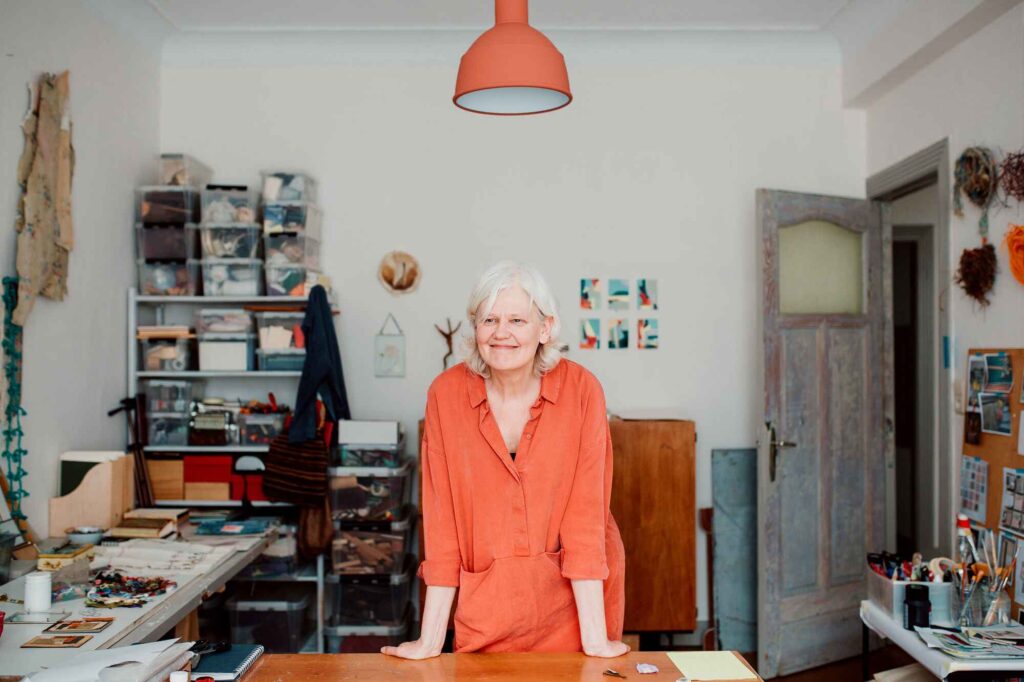
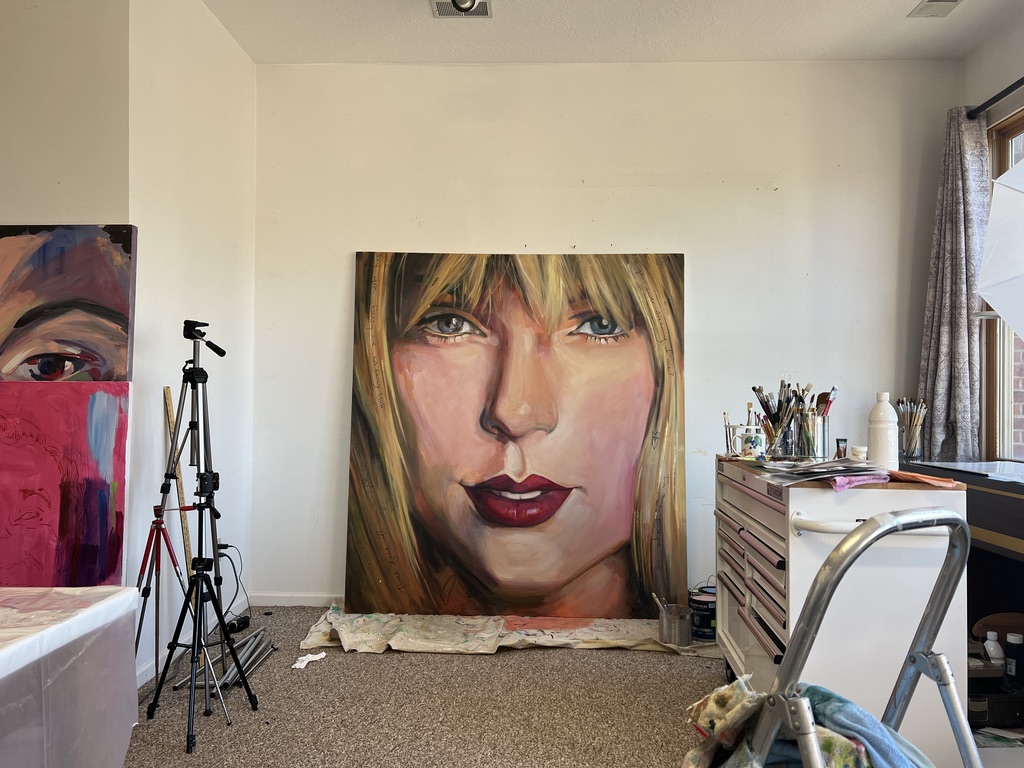
This studio visit takes us into the calm, ordinary and very real workspace of artist Chelsea Baker, known as Hello Chelsart, in Toowoomba. Her studio sits in the place she feels most at home, and you can almost imagine the smell when you walk in, a mix of earthy nature from the seedpods she collects and keeps in drawers, baskets and her much-loved apothecary cabinet.
In this interview, Chelsea talks about what her days actually look like, from picking up seedpods one by one to see which one feels right to work with, to slowly building colour on them over days or even months. She shares how her children often end up in the studio with her, painting at the table or showing her pods they’ve found, turning the space into a mix of work, family and small everyday moments.
She also opens up about what inspires her, why seedpods continue to hold her attention and how motherhood shaped the way she sees them. Chelsea explains the ideas behind her “second bloom” artworks, her love for the details most people walk past and the new directions she is exploring, including her growing interest in adding UV layers that reveal hidden patterns under light. This interview gives a clear, down to earth picture of her studio, her process and the quiet stories behind her work.
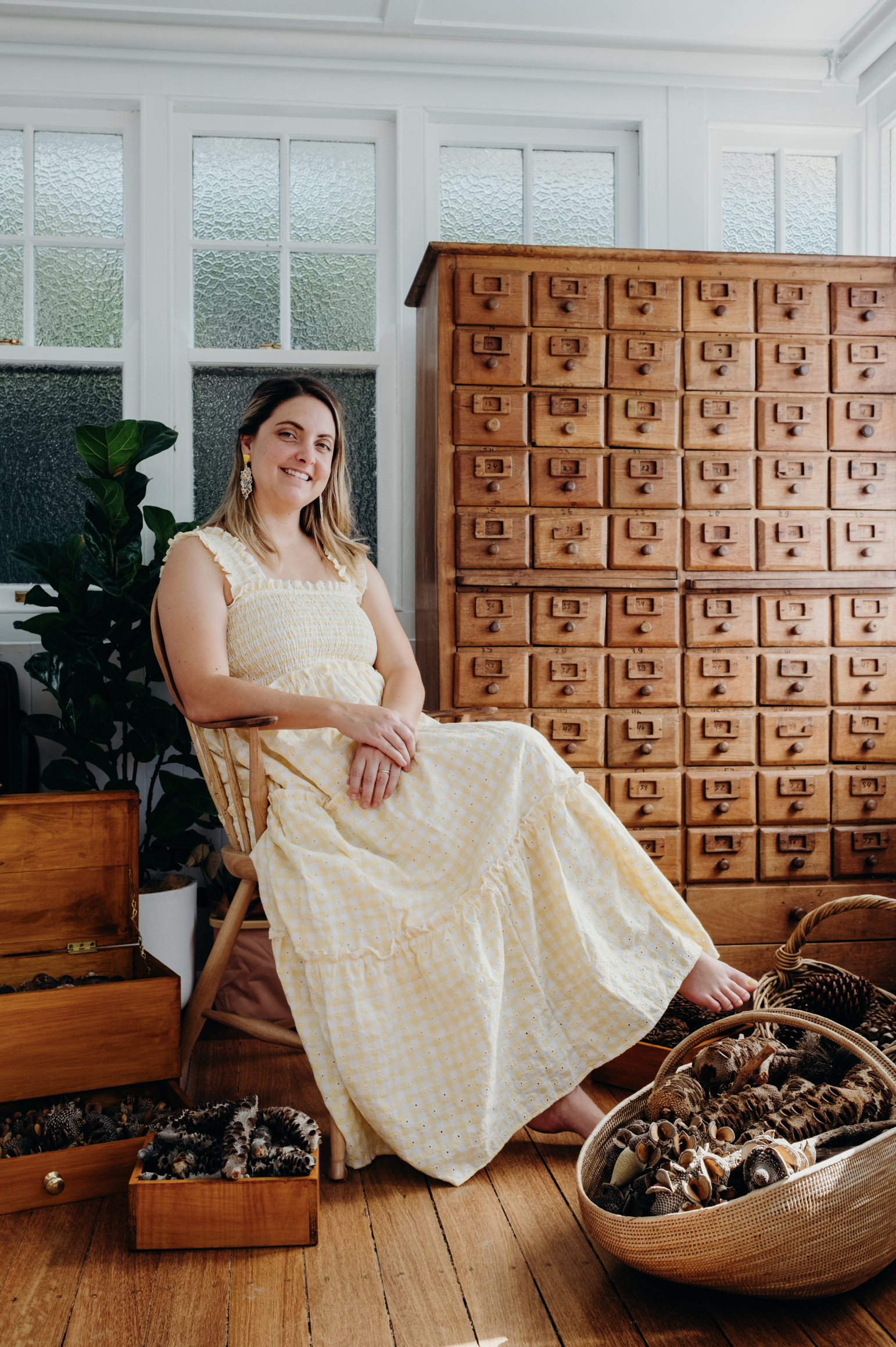
Chelsea Baker is a contemporary artist based in Toowoomba, Queensland. Working under the name Hello Chelsart, she is known for her distinctive seedpod artworks, where Australian native seedpods become both canvas and collaborator. Growing up across regional Queensland, from Townsville and Maryborough to Palm Island and the Gold Coast, Chelsea was surrounded by bushland, beaches and small-town galleries. Those early years of collecting “little treasures” from the forest floor quietly seeded a lifelong fascination with seedpods and the environments that shape them. Chelsea holds a Bachelor of Multimedia (Design), a Bachelor of Environmental Design and a Master of Architecture. Her design and architecture background informs the way she reads form, pattern and structure in nature. Instead of working on traditional canvas, she paints directly onto collected seedpods, creating what she calls their “Second Bloom”. Each piece is a one-of-a-kind response to the pod’s unique bumps, textures and life story. Her practice has grown alongside motherhood, becoming a way to reconnect with her own sense of self, play and possibility. Through workshops, exhibitions and collaborations, Chelsea invites others to slow down, notice the “overlooked” and rediscover the imaginative world held inside small, ordinary pieces of nature.
1. Can you describe your typical day in the studio and your creative process?
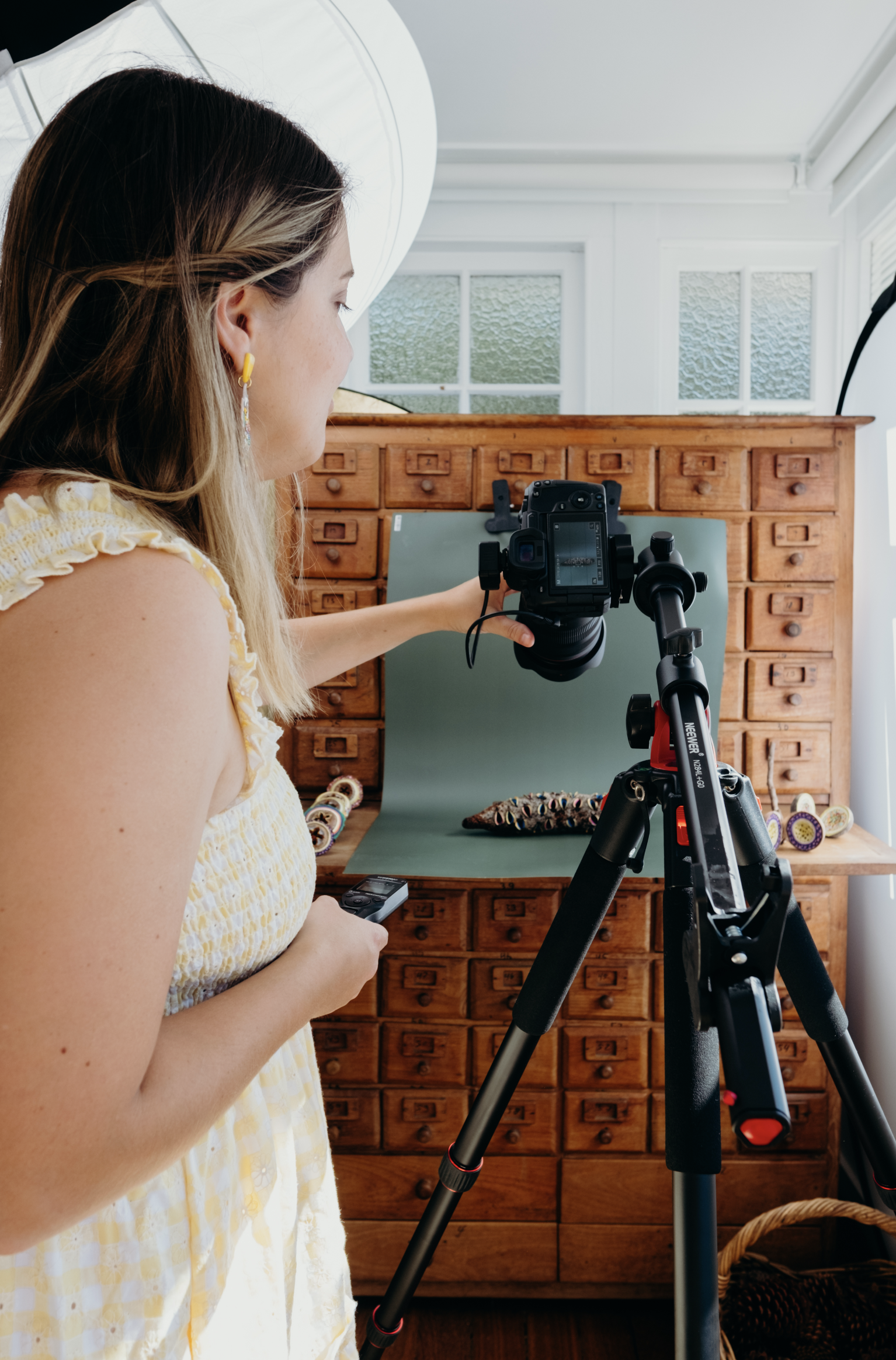
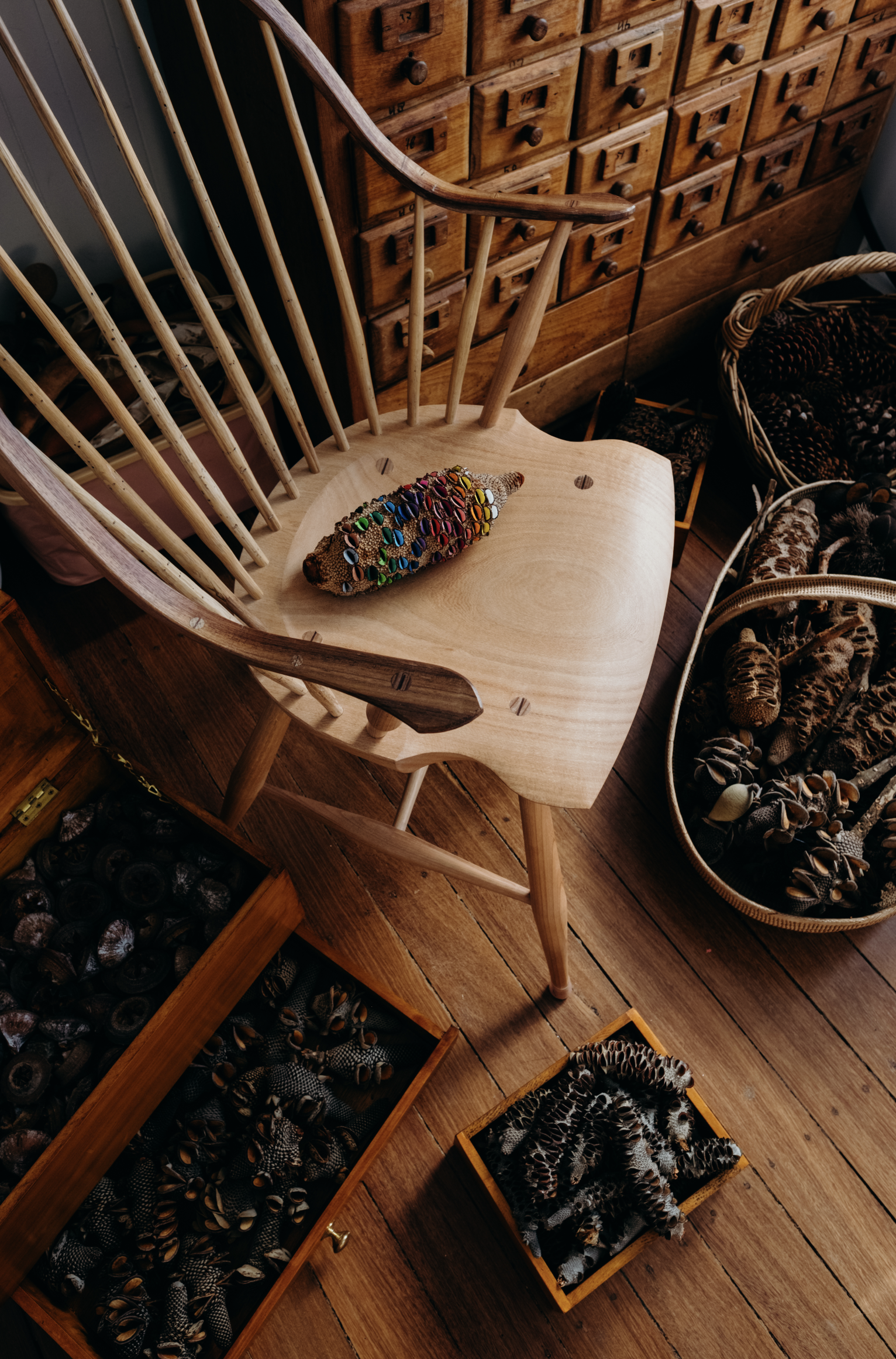
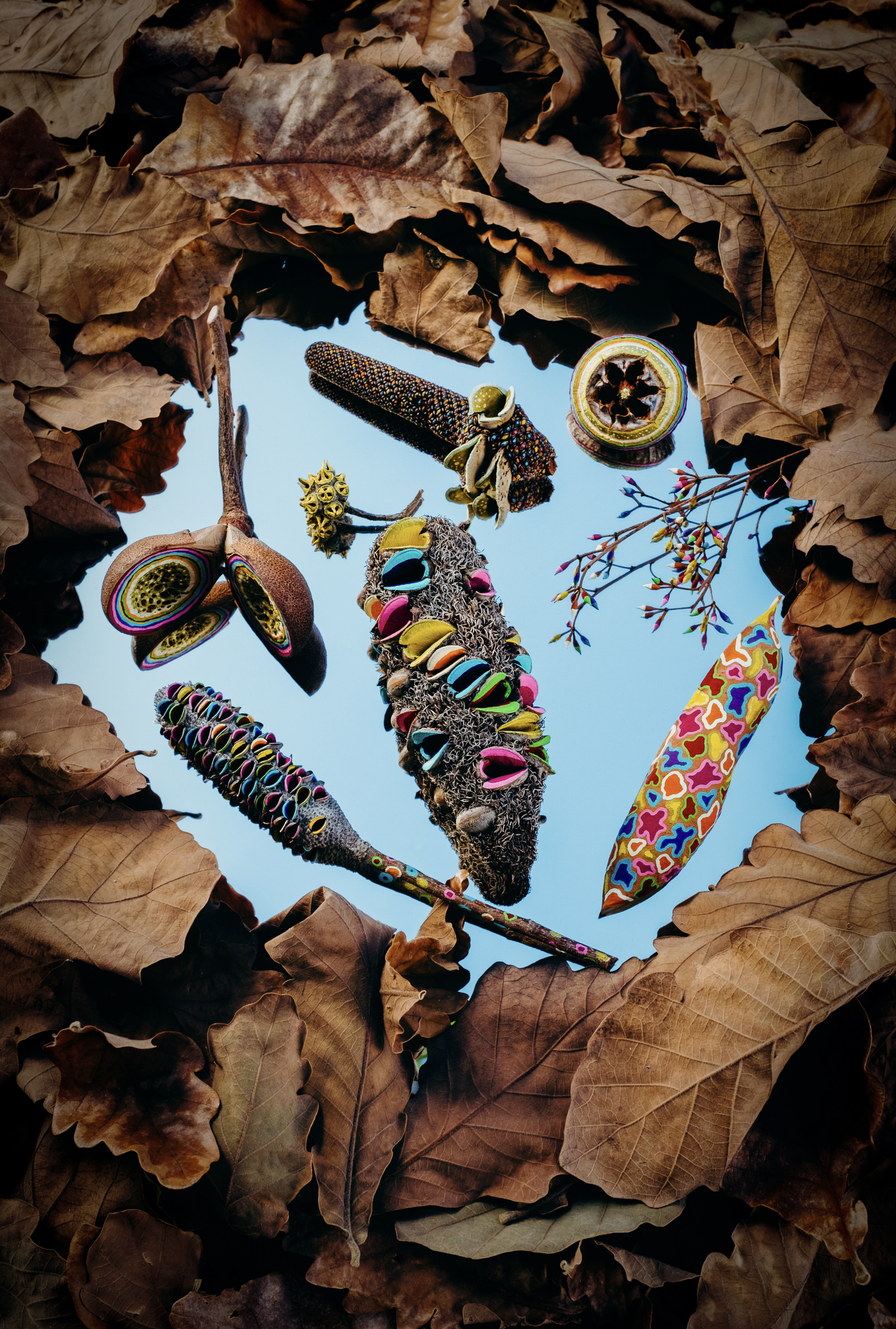
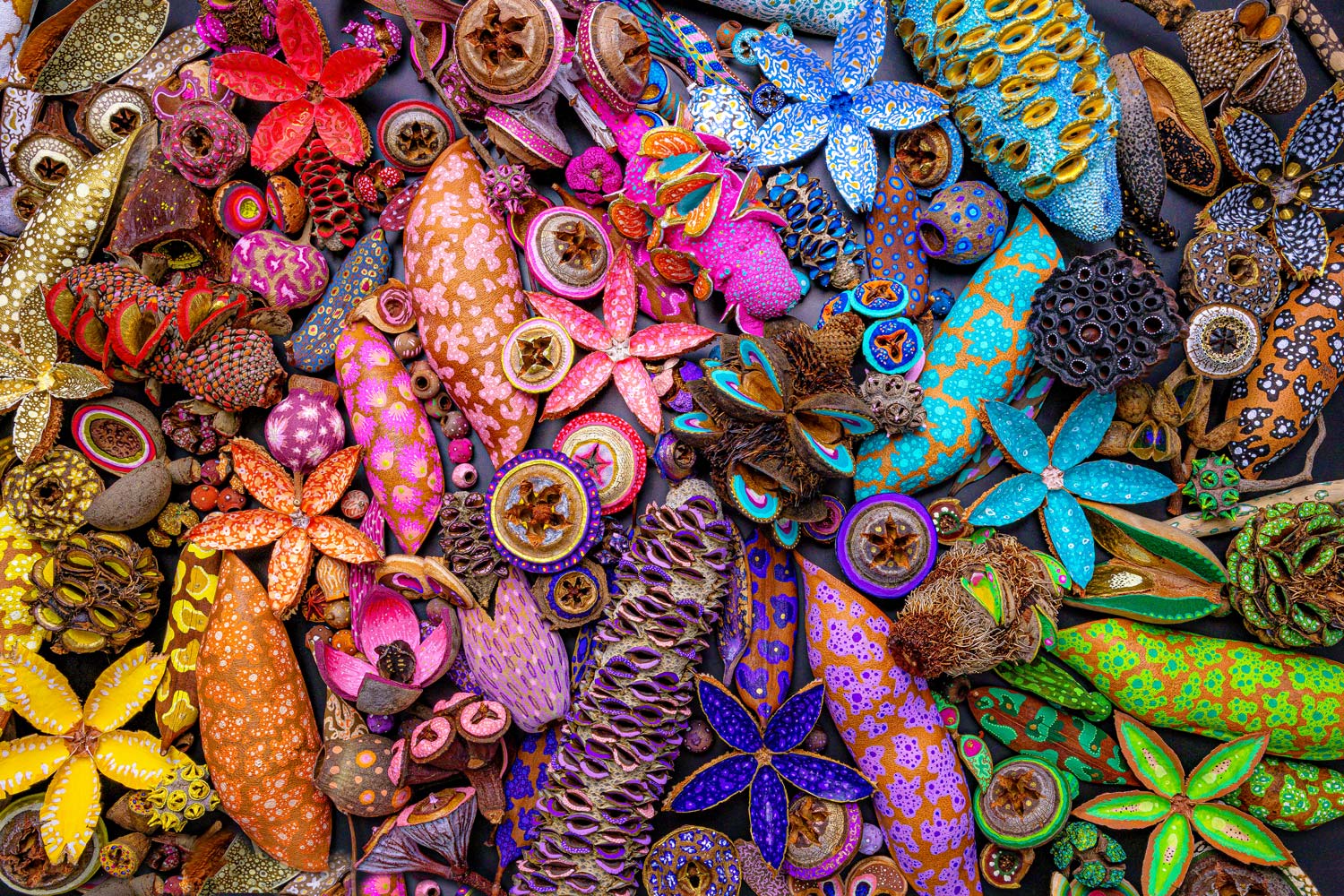
A typical studio day starts with me looking through my seedpod collection. I keep hundreds of them, all different shapes, textures and histories. I like to handle them one by one, almost like greeting old friends, and I wait to see which pod feels ready to work with. I’m drawn to the ones with quirks, scars or unusual forms. That first moment of choosing sets the direction for the entire piece. Once I’ve selected a pod, I spend time studying it. I look closely at the bumps, grooves and markings, because these details guide the design. I sketch possible patterns, but nothing is planned too tightly. The seedpod always leads. It holds its own story and I see my role as responding to it rather than imposing something on top. When I begin painting, it is a slow and layered process. I build the work over days or weeks, sometimes months, depending on the complexity of the form. I add colour in stages, letting each layer settle before moving to the next. I use bright pigments that contrast with the natural browns of the pod. This contrast creates the effect that the pod is experiencing a second bloom, still alive in its own way. Between painting sessions, I often return to my collection to look for connections or possibilities for future pieces. The rhythm of choosing, observing and painting helps me stay grounded in the practice. When a pod is finished, I shift into photographing it. I treat this as an extension of the artwork. I arrange the pod as a small sculpture, using light and composition to show its shape and personality. The photograph becomes the final chapter of its story. So my creative process is a cycle of sorting, studying, painting and photographing. It is steady and reflective. Each seedpod brings its own direction, and I follow that, letting the work grow in its own time.
2. What is the primary inspiration behind your current body of work?
The primary inspiration behind my current body of work is the idea of overlooked potential. Seedpods are usually stepped over, swept aside or noticed only in passing, yet they hold entire histories within their forms. I am drawn to the way something so ordinary can reveal extraordinary detail when you give it time and attention. Motherhood has also shaped this direction. As I moved through those early years and felt parts of myself slipping into the background, I saw a quiet parallel in the pods, which release life then fall out of view. My work is a response to that question of what remains after our first purpose seems fulfilled. For me, the answer is a second bloom, a new phase of colour, energy and possibility. Australian native landscapes play a strong role too. The textures, scars and weathering on each pod reflect the environments they come from. They remind me that nature carries its own stories, and my work is a way of honouring those stories through pattern and colour. So the inspiration is a mix of personal experience, the resilience of the natural world and the belief that beauty often lives in the places we least expect. My seedpods are a reminder of that potential and an invitation to see it more often in everyday life.
3. What is your favorite memory or incident from your studio?
My favourite studio memories are the moments when my children are creating beside me. They have grown up watching me sort through seedpods, choose colours and work slowly through each stage. Over time they have formed their own relationship with the practice. They know the names of different pods, they collect them for me and they sit at the table painting their own versions while I work on mine. There is something special about hearing their questions or seeing the way they interpret the shapes and patterns. It reminds me that creativity is not separate from everyday life. It is something that can be shared in small, ordinary moments. Some of my most meaningful pieces began while one of them was chatting away next to me or showing me a pod they thought was “the one”. Those moments anchor the studio in real life and make the work feel connected to family, not just to practice. Watching them grow up inside this environment, and knowing they see nature and art as something they can explore freely, is one of the parts I value most.
5. How would you describe a dream studio for yourself?
My dream studio would feel a bit like a library, but instead of books the walls would be lined with apothecary-style shelves filled with seedpods. Each pod would have its own small compartment, almost like a catalogue of forms, textures and stories waiting to be explored. I imagine rows of drawers and glass jars organised by species, region or patterning, creating a quiet archive of the natural world. In the centre of the room would be a large desk where I could sort, sketch and paint. The space would be simple, well lit and calm, with enough room to move between choosing pods, working on them and photographing the finished pieces.
6. What does your studio smell of right now?
Earthy nature.
7. If you get a chance to set up your studio anywhere in the world, where would it be?
No where else, I love Toowoomba its the perfect climate for me and my seedpods.
8. Can you discuss any ongoing projects or plans you have for your work?
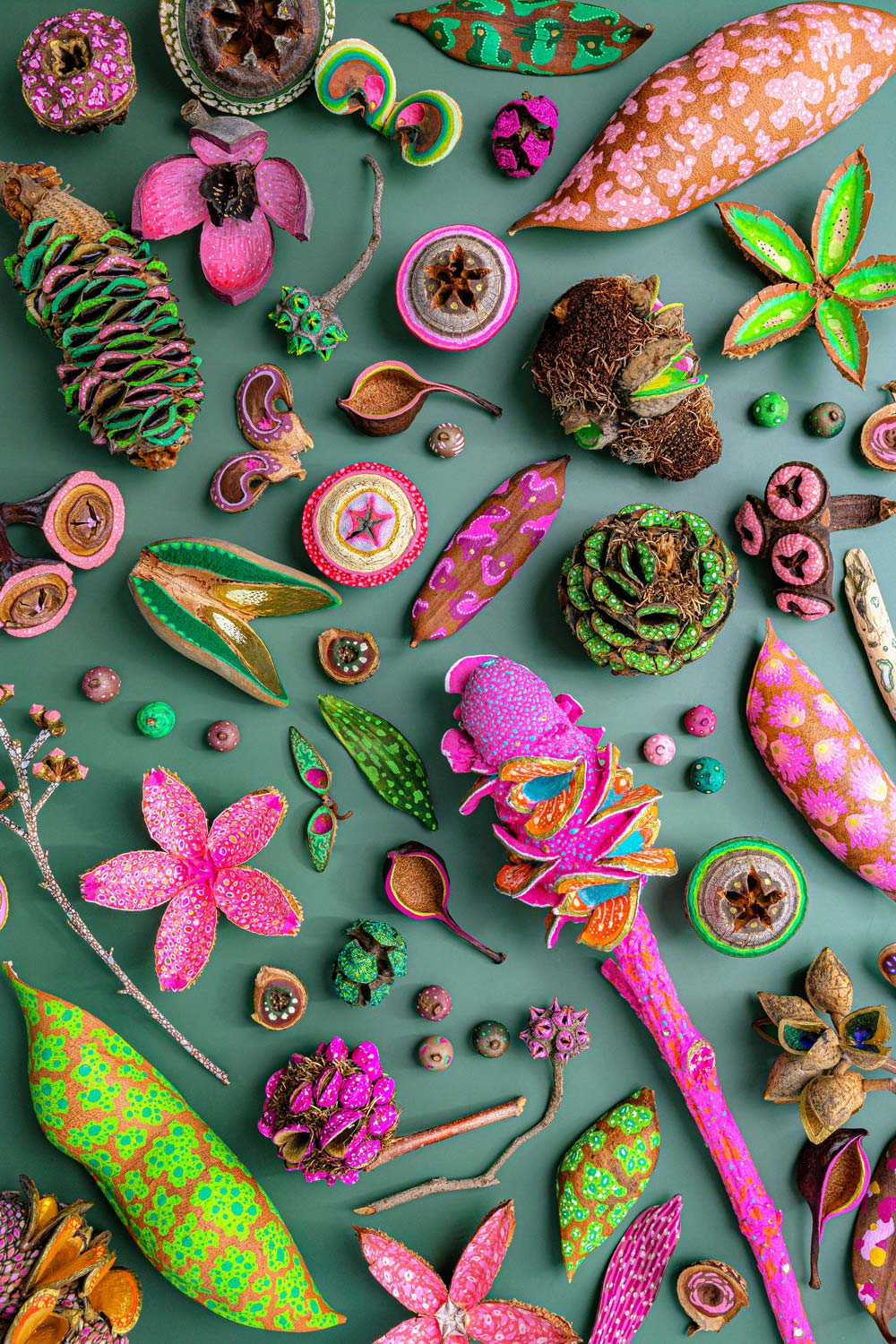
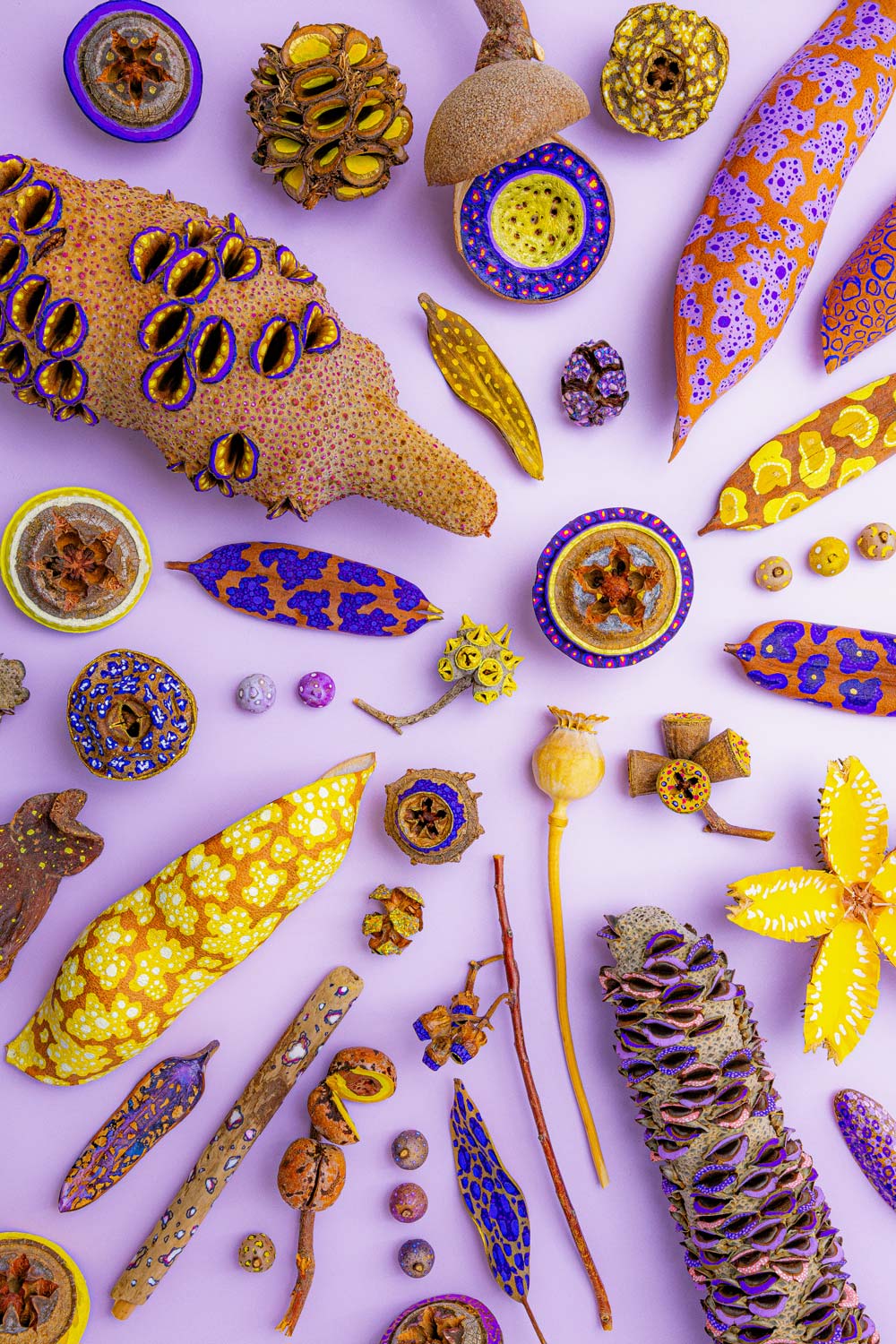
At the moment I’m continuing to build my main body of seedpod work, but I’m also expanding a project that began more quietly in the background. Over the past year I’ve been experimenting with UV paint on seedpods. Under natural light the pieces look like my usual work, but under UV they reveal a second layer of pattern and energy. It feels like a new way to express the idea of a second bloom and the hidden life held inside each pod. I’m planning to develop this further, exploring how the UV elements can interact with colour, form and photography. I’m also experimenting with ways to present these works so viewers can experience both states, the visible and the hidden.
9. How do you organise your space?
Lots of drawers, baskets and an apothecary cabinet!
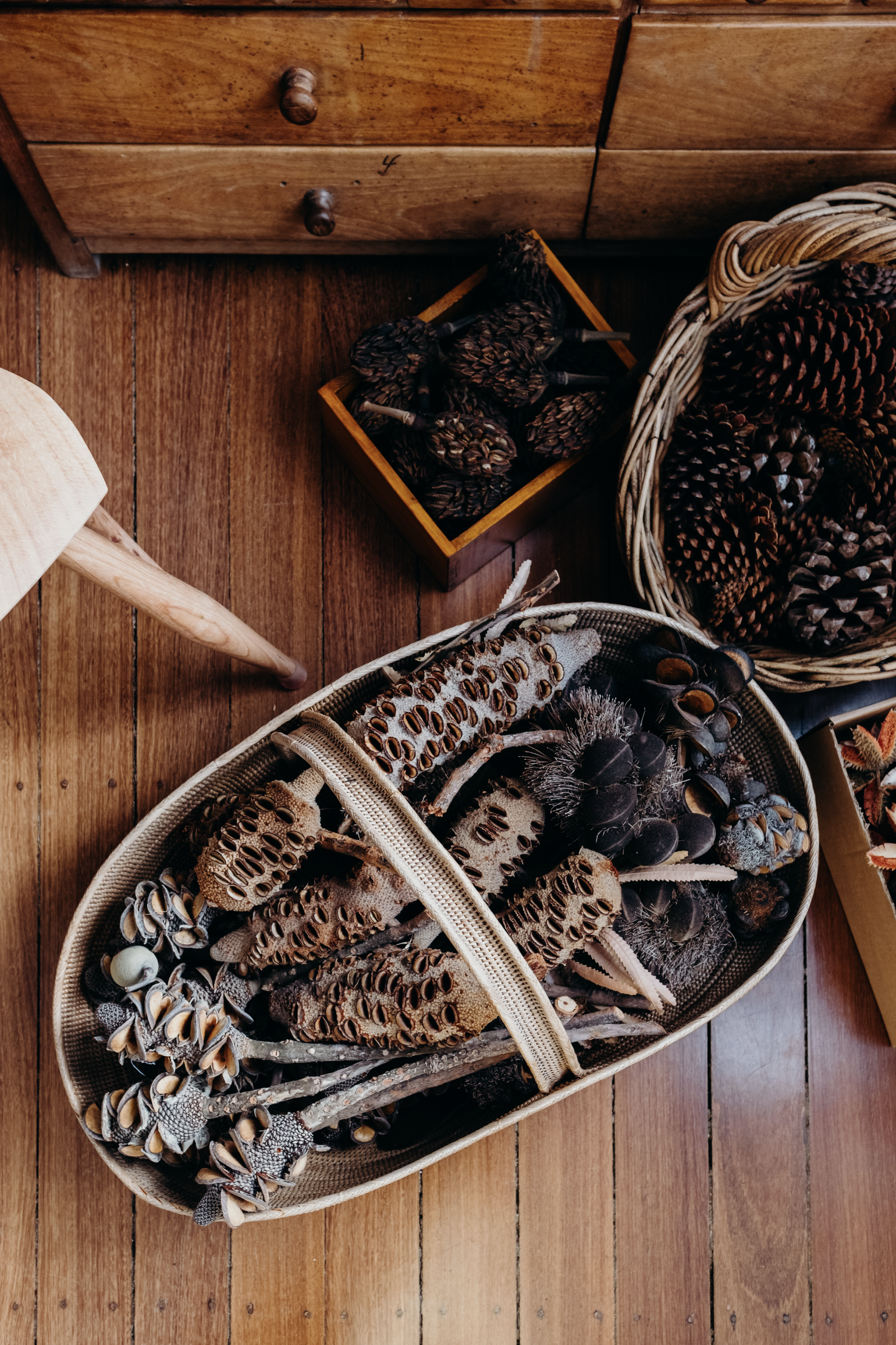
10. What is your favourite corner in the studio?
The Apothecary 🙂
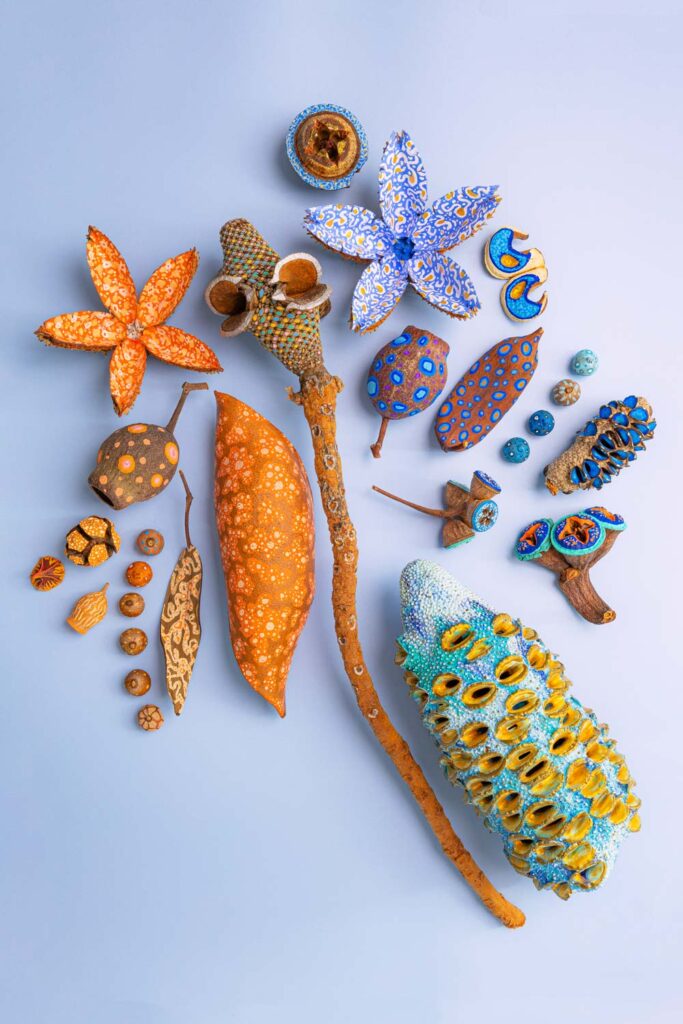
Walking out of Chelsea’s studio, even if only through this visit, you’re left with a clear sense of how the space feels. It’s quiet in a comforting way, tidy enough to work but still warm and lived in, with that gentle, earthy smell that comes from the seedpods she keeps everywhere. Spending time with her shows that creativity doesn’t always start with bold ideas. Sometimes it begins with something small you pick up without thinking, something you choose to notice instead of ignore.
We see how much patience she gives to each seedpod, how her children drift in and out of the space, and how the simple routines of walking, gathering and paying attention shape her whole practice. This studio visit leaves you with the feeling that art can grow slowly and naturally, right alongside everyday life, without needing to force anything.
Visit our website to explore the virtual studio spaces of other artists. To be featured on our website, remember to apply for this month’s call for art.
Read more about Chelsea on her Website and Instagram.
Arts to Hearts Project is a global media, publishing, and education company for
Artists & Creatives, where an international audience will see your work of art, patrons, collectors, gallerists, and fellow artists. Access exclusive publishing opportunities and over 1,000 resources to grow your career and connect with like-minded creatives worldwide. Click here to learn about our open calls.