
This Sicilian artist layers vintage aesthetics with social messages │Gabriella Ciancimino
👁 17 Views
At Arts to Hearts Project, our Women Artist Award has always been about recognising women whose work makes you look twice. Not because it is trying to be clever. But because there is more happening underneath than you expected. The kind of work that looks one way from a distance and becomes something completely different when you step closer.
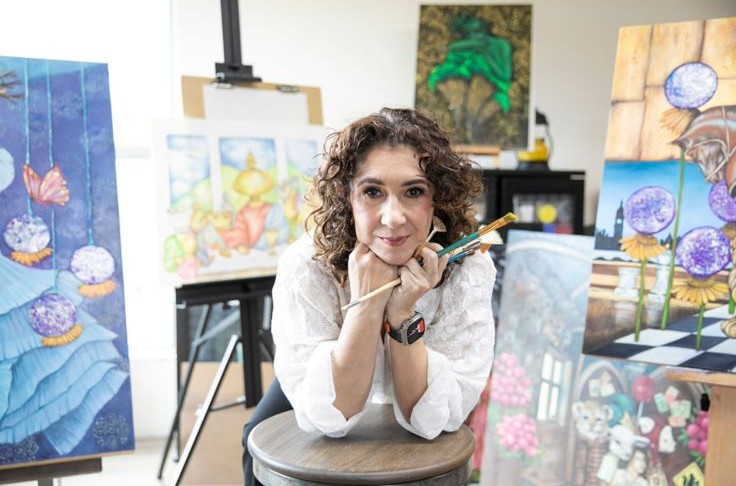
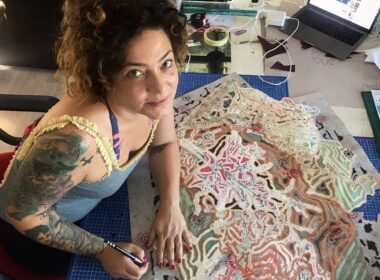
Gabriella Ciancimino’s work does exactly that. And we are honoured to have her as a selected artist for the Women Artist Award.
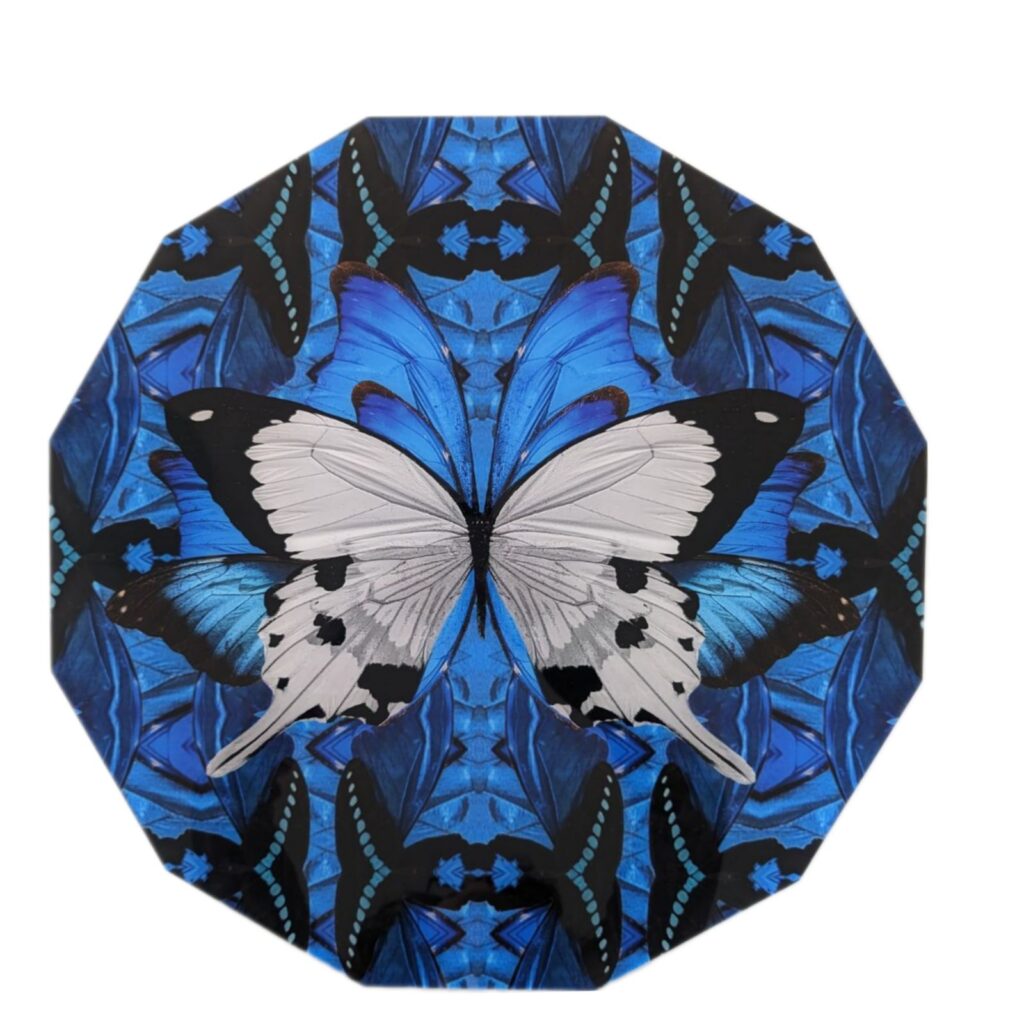
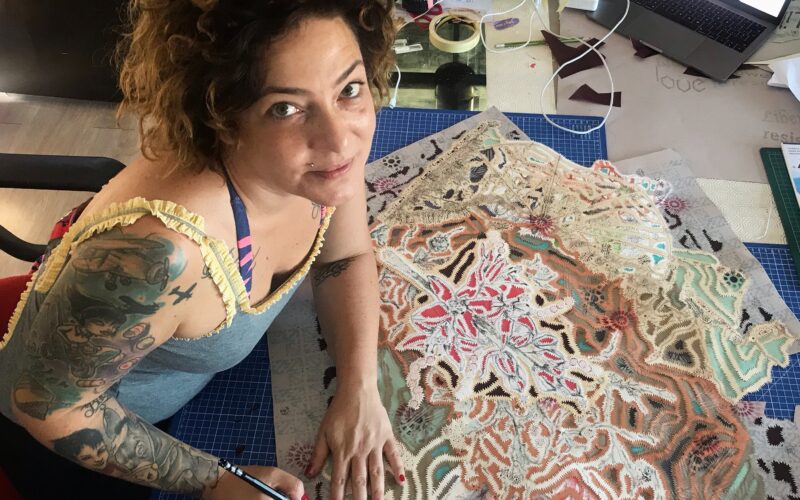
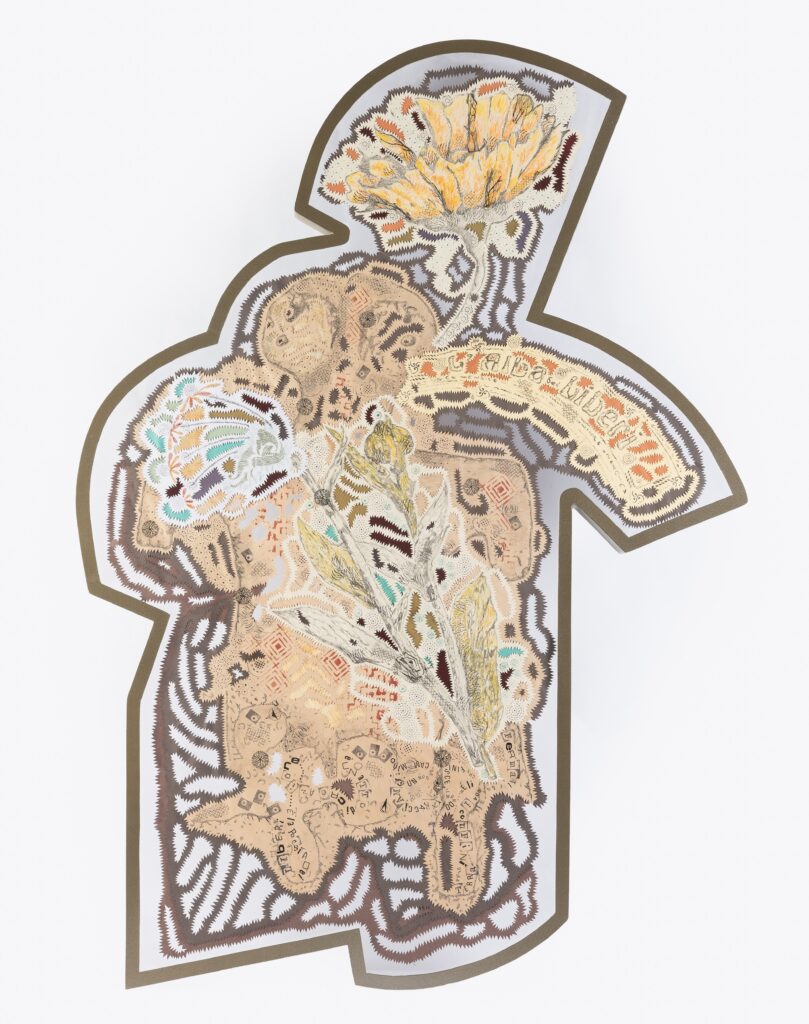
At first glance her work feels decorative. Botanical imagery, vintage patterns, bright colours, playful compositions. You might walk past it thinking it is beautiful. And it is. But if you stop and look closely you realise it is also talking about migration. About ecology. About the politics of who gets to belong somewhere and who does not. About what plants and people have in common when it comes to moving across borders and adapting to survive.
That is Gabriella. Everything she makes has two layers at least. The one you see immediately and the one that takes a minute to find. And that second layer is where the real work lives.
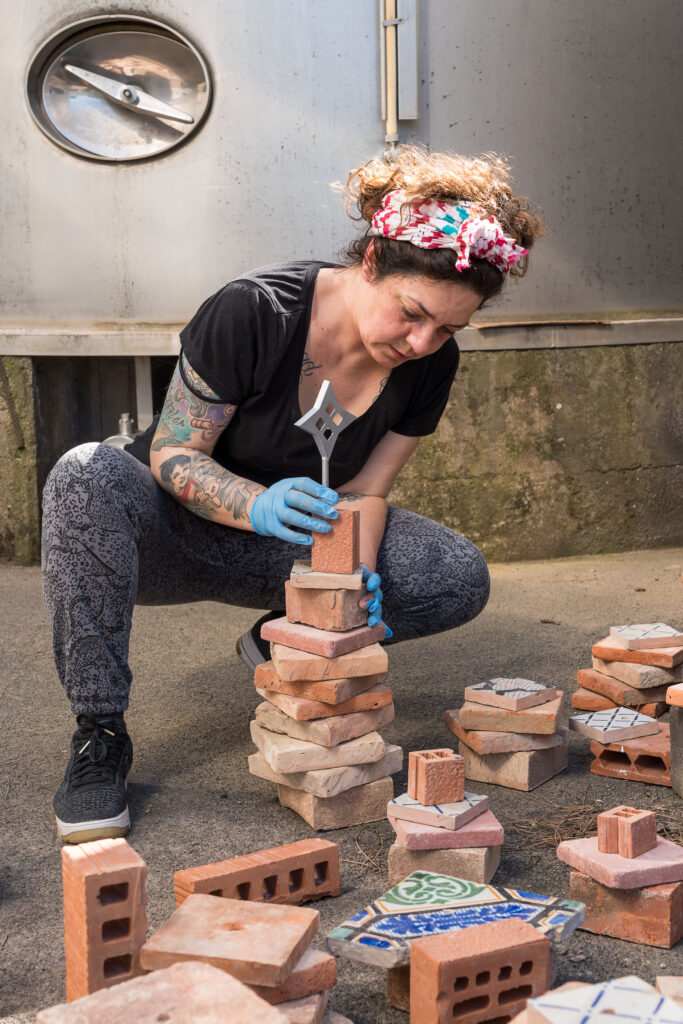
She is Sicilian. She lives in her hometown now but for years she lived as a nomad. Moving between countries, joining international residency programmes, studying migration and immigration not from a desk but by actually doing it. Before art she was a journalist engaged in political activism and libertarian thought. She studied history and philosophy. She became a bioenergetic practitioner working with quantum physics and vibrational techniques. And eventually all of these lives converged into one practice that she could not have planned if she tried.
She works across everything. Drawing, painting, installation, sculpture, video. She mixes old botanical illustrations with magazine headers and embroidery patterns and LP covers. She calls it mixing iconographies like a DJ. And that is the perfect way to describe it. She takes things from completely different worlds and puts them together until they reveal connections nobody saw before. She calls those moments everyday miracles.
She does deep research before she makes anything. Months in archives reading letters and diaries. Sitting in bistros talking to locals. Collaborating with historians and botanists and anthropologists. By the time she picks up a pen the work already holds a whole world inside it.
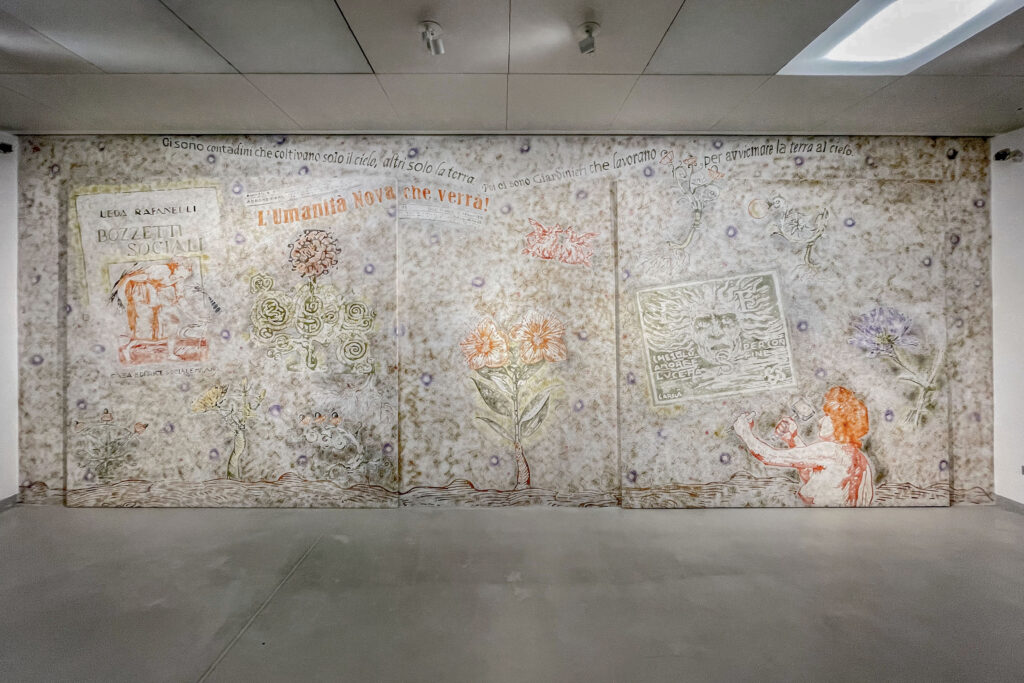
Her piece Getsemani imagined a conversation between Mary Magdalene and an Italian Futurist-era activist named Leda Rafanelli. Two women from different centuries meeting inside a garden. That work is now in the Museo del Novecento in Milan. That tells you something about where her practice sits. It is playful and serious at the same time and the art world has noticed.
Let’s hear from Gabriella about why she compares herself to a DJ, how gardens hold the history of human civilisation, what years of nomadism taught her about belonging, and why she insists that artists are not soldiers.
Q1. Could you share your background where your connection with art and nature first formed, and how your early experiences led you toward a practice centred on relational dynamics rather than purely formal concerns?
I’m a visual artist and a bioenergetic practitioner as well, in othger words a holistic facilitator of natural well-being and integrated evolution. Before approching to Art – in 2024 – I had worked as a journalist engaged in political activism rooted in libertarian thought, focused on the knowledge on humanist studies, mainly through history and philosophy. During those years, I have begun an investigation on Relational Dynamics and communication, still present in my “artistic practice”. Since that period until 2020, I chose nomadism as a lifestyle to analyze the dynamics and differences among the migration, the immigration and turism. So, I was a globetrotter participating in various international residency programmes. Describing myself as a “life seeker,” in 2016 I began her holistic training to acquire theoretical and practical knowledge of vibrational techniques based on quantum physics. Today, I live in Sicily – my hometown – focusing on a new phase of my art that combines the quantum bioenergetics techniques with the artistic practices I have been developing for over two decades. To define this integration, I has coined the term “Bioenergetic Art”, based on the hypothesis that her artworks can be conceived as devices for transforming mass consciousness within public spaces dedicated to contemporary art, which –in the present historical moment– have been reduced to trend-driven showcases rather than places capable of provoking reflection.
Q2. Your work repeatedly engages with human–plant relationships and makes connections between botanical imagery and cultural coexistence. How do you translate these observations of nature into a visual language that resonates across different cultural contexts?
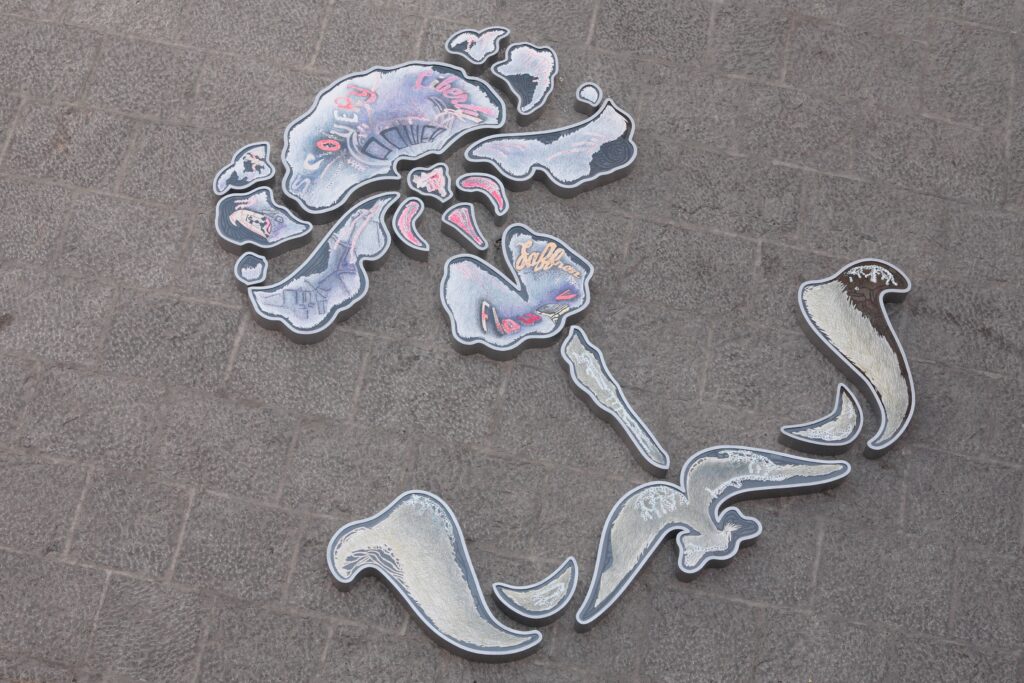
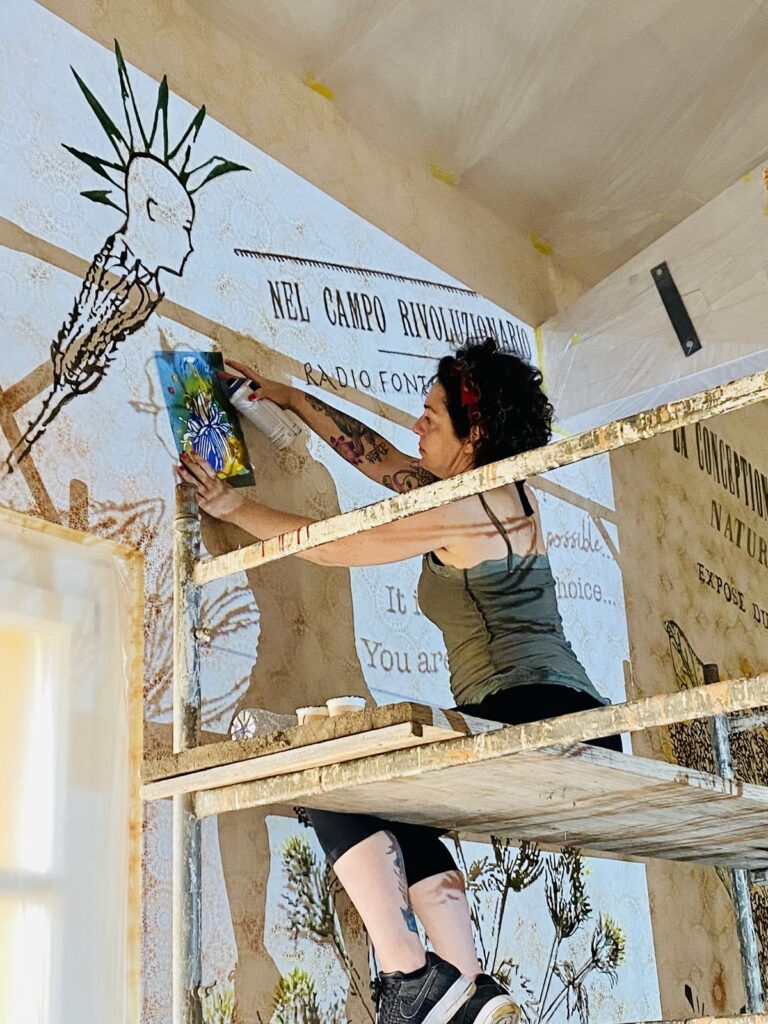
I consider my Art as a synthesis of my studies in anthropology, sociology, botany and politics combined with studies in quantum physics principles applied to day life. So, I have developed a practice through site-specific actions and collective works using diverse media – as drawing, video, installation and sculpture involving various communities in the artistic process. I analyse the relationship between humans and plants in Nature by the creation of a landscape that becomes a “place” of reflection and at the same time safeguards the historical memory and collective action. When I talk about “landscape”, I refer to the multidimentional one because of the natural phenomena have different aspects: physical, mental and emotional one, some are visible, some invisible. Starting from the assumption that I strongly believe on Art as catalyst of social change, I’m inspired to contribute with my art to the development of an ecological society inspired by the philosopher Murray Bookchin, to break the hierarchy between artist and visitor. My research focalizes on the concept of relationships transforming artworks in moments of meeting/confrontation among individuals. Indeed, my goal is involving the public in the creative process by art projects to energize some deep reflections – to me first – during the current historical moment to go beyond cultural, social, political and spiritual stereotypes as well as becoming more aware to be integrated part of the Nature and not antagonist.
Q3. In works like Getsemani, landscape becomes a collective and symbolic space. How do you approach landscape as something cultural rather than purely natural?
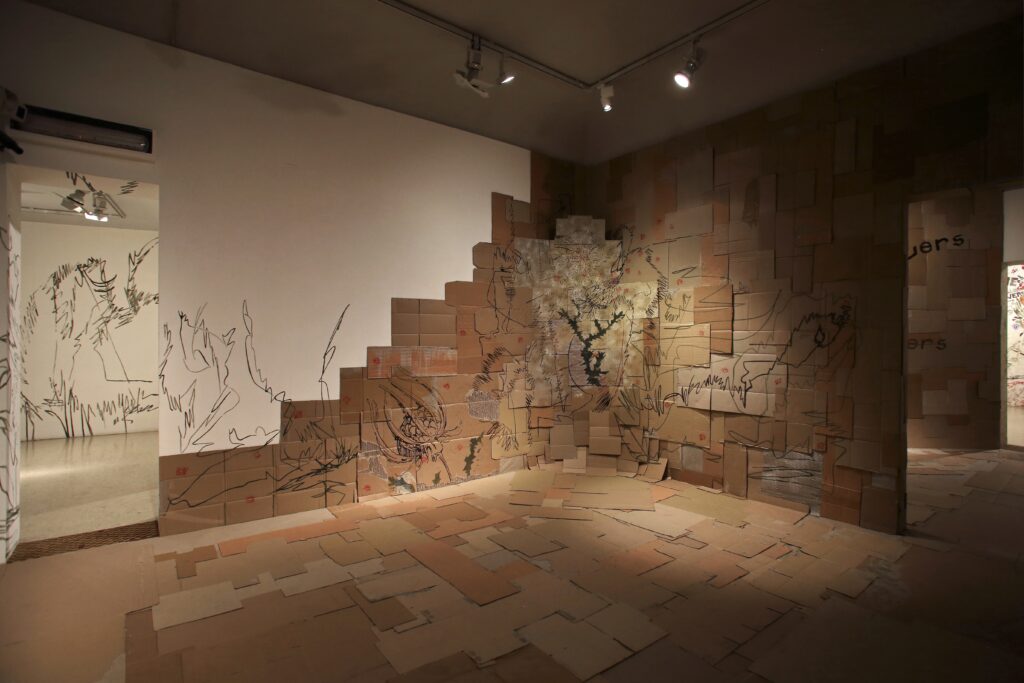
Before a formal translation, I usually “write” the project after months of research in archives that preserve collective memory. I often collaborate with historians, sociologists, anthropologists, and, of course, botanists to uncover possible connections that create new visions of the world. Indeed, my goal is connecting the physical, mental, and emotional landscapes that may seem dissonant at first glance. When I find these connections, the paradoxes occur! II call these the “everyday miracles” that later I formally translate in artworks. I have a passionate passion for the stories of human beings and plant species—especially the lesser-known ones—which I enjoy comparing by studying the dynamics of migration, adaptation, and coexistence between them. After all, great changes have depended on the movement of these elements. Therefore, the history of gardens is a narrative of human events. This is what happened with “Getesemani”, even though I cited a well-known context within which I sought the unexpected. I imagined a multidimensional dialogue between two women— Myriam di Magadala, definitely famous but very misunderstood – and the Italian writer and activist, Leda Rafanelli, who frequented the Futurist circle, in particular Carlo Carrà, also cited in my pictorial installation. Getsemani is now acquired in the collection of the Museo del Novecento in Milan which boasts a large section dedicated to the Futurists, precisely.
Q4. When you begin a new series or project, what sets the initial frame of inquiry a historical reference, a site, a community, or something observed in nature?
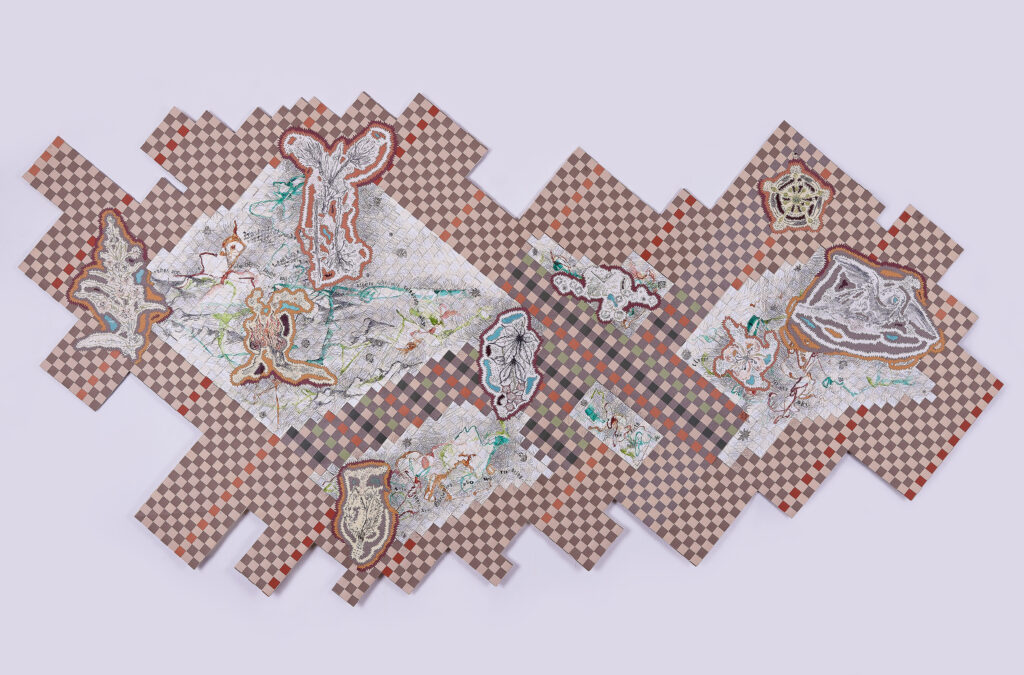
As mentioned before, I observe dissonances to find similarities. I “settle” myself in the landscape where I will be working actively engaging with local communities to understand their present dynamics and delving into their origins. I observe the flora, but also the architecture, the cuisine, the language, and even, when possible, the local dialect. I essentially conduct ethnographic research on the place. And I reconstruct a map that, once again, leads me from the past to the present to imagine the future. For example, I enjoy sitting for hours in bistros or meeting places and approaching people with kindness. I have a keen sixth sense for doing so. And day after day talking to a bartender or a gardener or a neighbour, I find myself contextualized in the landscape I’m studying.
Q5. How has working with archives or historical material influenced the way you think about drawing and pattern?
I create my iconographies after holding documents, letters, unpublished texts, articles, and diaries of almost anonymous “characters” who, through their “local” actions, have contributed to the change of global “being.” As a DJ, I make my drawing mixing the vintage botanical plates with periodical magazine headers, embroidery patterns, and book or LP covers. It depends on what caught my attention and amused me.
Q6. How important is openness of interpretation in your work, especially when dealing with cultural or ecological themes?
I always start from the assumption that the viewer is an integral part of the work—especially when working with monumental, site-specific pieces. My iconographic interweavings can appear bizarre and sometimes even merely decorative, and it is precisely the use of forms and words “familiar” to the human mind that allows the viewer a more ecological approach, even to burning social issues. And we return to the paradoxes I mentioned above. It’s clear that my poetics have strong libertarian roots. And it’s also true that, in this sense, it would be unnatural to expect my message to be unambiguous.
Q7. Your work moves across painting, drawing, and installation. How do you decide which medium best serves a particular project?
It’s always my instinct, it’s inexplicable. I have a vision, and sometimes it’s just on paper, sometimes it’s a large mural or a small sculpture and even music. I can’t say what triggers it, other than, as I said before, the joy of having fun.
Q8. Looking at your body of work overtime, what shifts in visual language or conceptual emphasis feel most significant to you?
In my very early works until 2011) I had a documentary approach. I often used making videos or photos. At a certain point, I felt the need to draw and paint. What remains as a “need” is using the words… whether slogans, poetic verses, or almost rapper-like rhymes. Related to that, what has changed over time is that while my work used to be based on other people’s quotes, today the quotes are my own.
Q9. What advice would you give to artists who want to make work that engages ecology and culture without becoming didactic?
I can advise them to be authentic, to listen to their own voice despite the deafening noises of the world. That means firt being ecological with themselves and their art. In this sense—especially when working with social issues and communities—I advise them to protect their work so it isn’t exploited. We are artists, not soldiers or social workers.
As our conversation with Gabriella came to a close, something she said landed in a way we did not expect. She said artists are not soldiers or social workers. And she said you have to protect your work so it is not exploited.
We sat with that for a long time. Because we live in a moment where artists, especially women artists, are constantly being asked to make their work serve something. A cause. A movement.
A message. And that pressure, even when it comes from a good place, can quietly eat the art alive. It can turn a practice into a platform. It can turn a painting into a talking point. It can make an artist forget that the work has to stay free before it can mean anything at all.
Gabriella knows this. Her work is deeply political. It deals with migration and ecology and cultural coexistence and displacement. But she never lets the politics take over the art. The work stays playful. It stays beautiful. It stays surprising. And that is a deliberate choice. Because she understands that the moment art becomes only a message it stops being art. And the moment it stops being art it stops being able to change anyone.
We think every woman making work about difficult subjects needs to hear that. That your first responsibility is to the work itself. That making something beautiful is not a betrayal of seriousness. That joy inside political art is not escapism, it is strategy. And that protecting your creative freedom is not selfish. It is the most important thing you can do. Because without that freedom the work has nothing to offer anyone.
Gabriella has built a practice across decades and continents that holds journalism, activism, philosophy, ecology, spirituality, and pure visual pleasure all at once. She did not ask anyone if that was allowed. She just did it. And the work speaks for itself.
Follow Gabriella Ciancimino through the links below and see what happens when a woman protects her art fiercely enough to let it be everything it needs to be.