
This Is for Everyone Who’s Ever Felt Like They Don’t Belong Anywhere I Anna Bernadskaya
👁 159 Views
At Arts to Hearts Project, nothing started from theory or distance. It started from us from our own experiences. We’re artists, writers, creators who know what it feels like when the weight sits heavy on your chest. The self-doubt that follows you into every room. The waiting that feels like holding your breath. The exhausting loop of the same questions: Does anyone see me? Does my work matter? Is there space for me to become who I’m trying to be?
Arts to Hearts was built for that feeling. It’s for artists who are stumbling, learning, failing, getting back up, and still showing up even when it feels pointless. Over the years, it’s grown into something we never imagined a global, women-led community held together by care and real support. Every single thing we do publications, resources, courses, open calls, podcasts, YouTube lessons, daily articles come from one place: the deep desire to support creatives in ways that actually feel honest, generous, and empowering. Not about competing. Not about quick fixes. Just growth. What started as a handful of us has become a community of over 150,000 artists.
But as we grew, a question grew louder too: What more can we do to actually make artists visible?
That question became this editorial space. A place built specifically to spotlight rising and evolving artists whose work carries real emotional weight, intention, and presence. We chose the name without overthinking it, because honestly, when work is made with sincerity and commitment, why shouldn’t we call it the best? Sometimes the simplest truth is enough.
We’ve shared so many incredible artists through this series. And while we were searching for the next one, we found work that made us stop scrolling and just… stare.
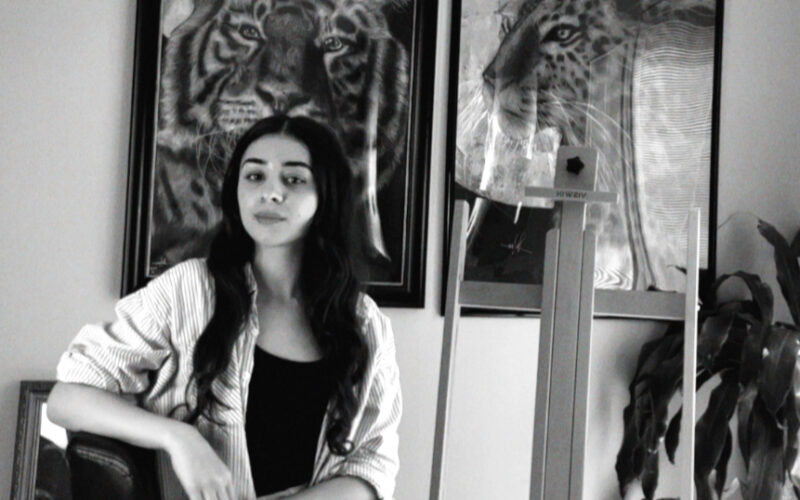
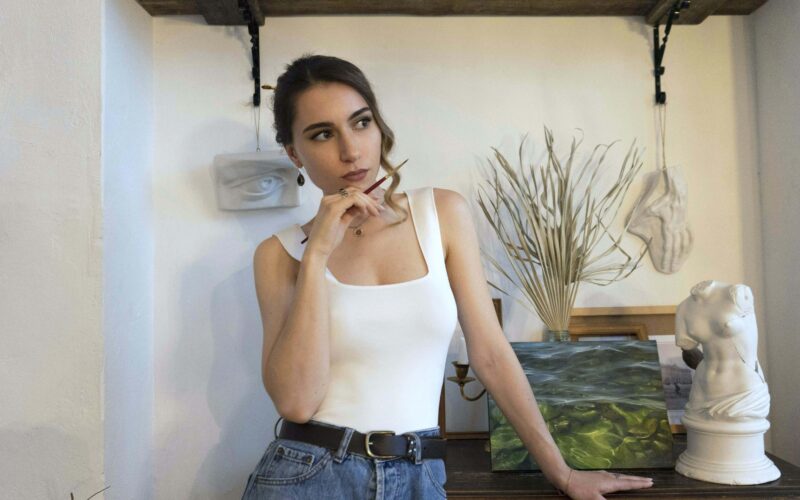
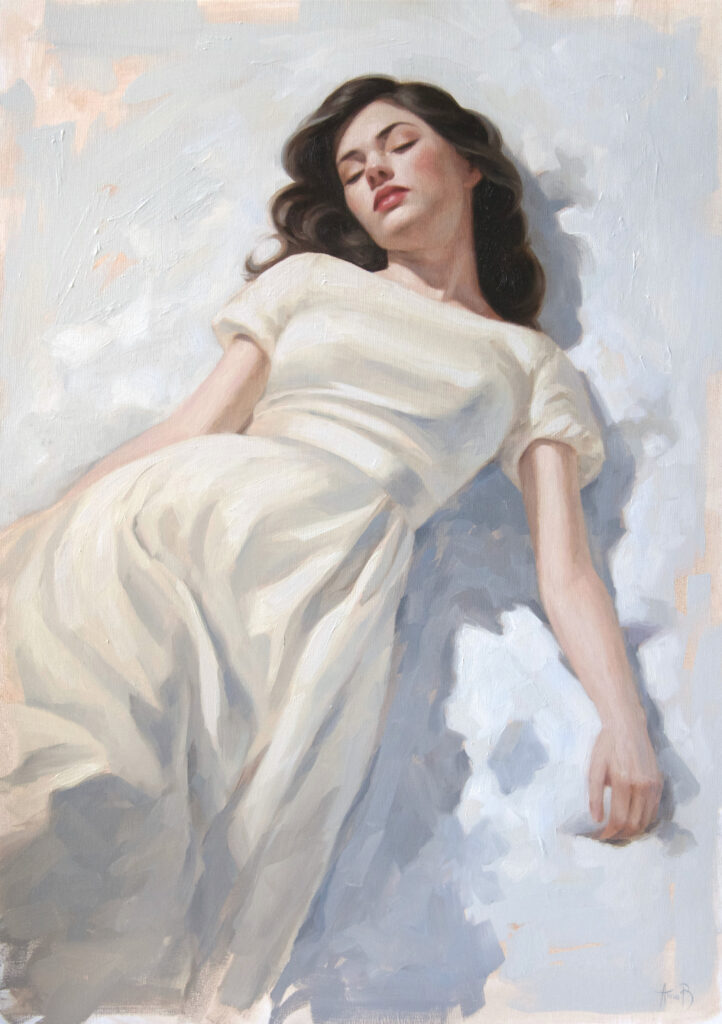
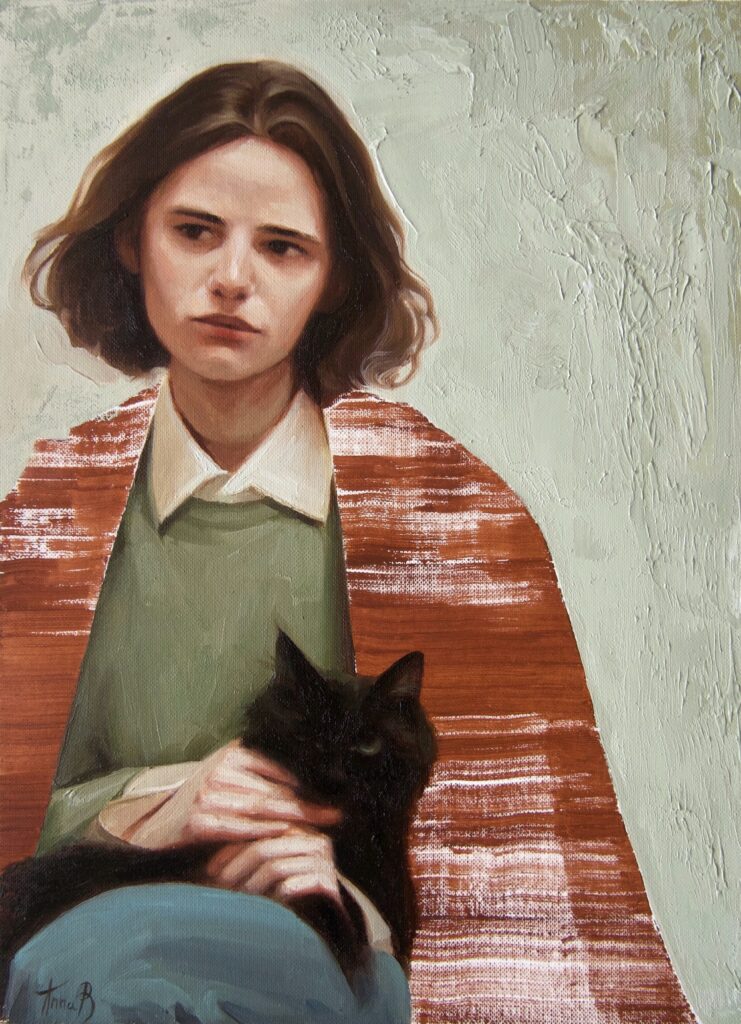
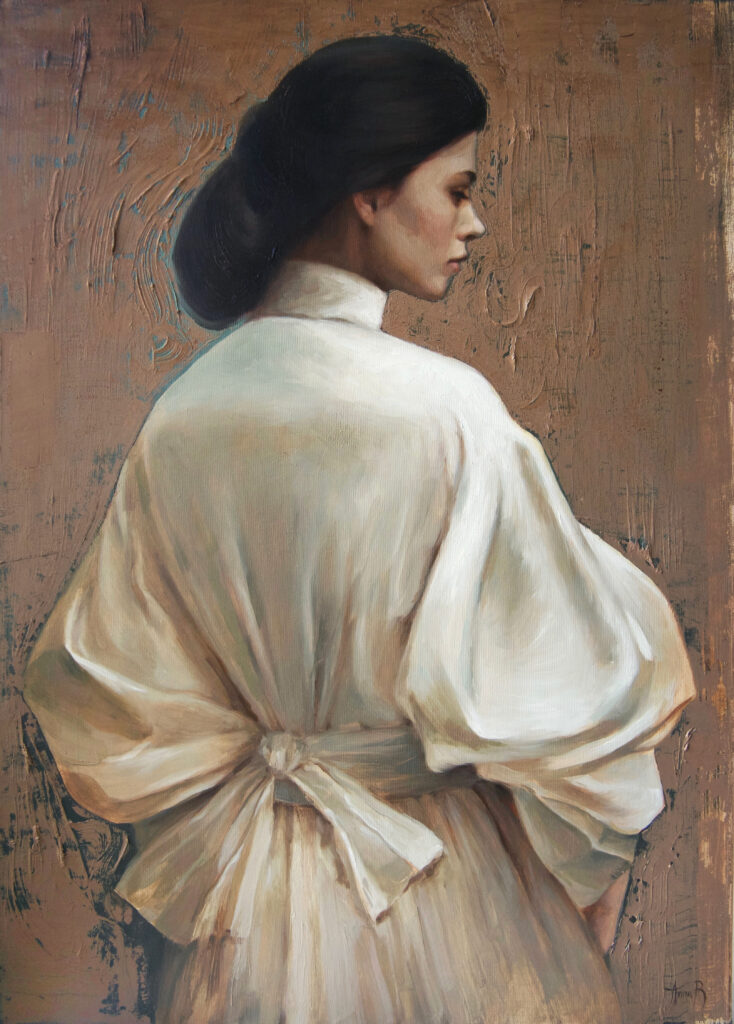
That was Anna Bernadskaya. Her work didn’t scream for attention. It didn’t perform. It just existed quietly, powerfully, humanly. She uses oil in a way that feels soft and alive, letting forms and emotions settle into the surface slowly, naturally. The faces don’t feel staged or overworked. Color does the heavy lifting, carrying the mood without explaining it. There’s a calm and patience woven through everything she makes, and that’s what stopped us. We knew immediately Anna belongs here.

When we reached out to her, it wasn’t with a pitch or a polished proposal. It was just honest admiration. When she said yes, it felt like something small but deeply meaningful. Before you hear from Anna herself, let me tell you a little about where she comes from.
Anna was born in 1996 on the Kamchatka Peninsula, in the Russian Far East. It’s remote. Wide, open land. Volcanoes. Long stretches of quiet that press into you. Growing up there shaped how she sees the world and how she works. It taught her to value space. To sit with patience. To hold back. You can still see those early years in her work today the calm compositions, the open backgrounds, the steady emotional undertone that never rushes.
Art showed up early in her life. She went to art school as a kid and dreamed of Saint Petersburg. At 17, she made it happen. She moved there and studied graphic design. Those years gave her structure, discipline, a sharp eye for composition. She learned how to build an image, how to balance elements, how to think clearly. After she graduated, she worked as a graphic designer. But something felt… missing.
She needed to slow down. She needed to work with her hands. She needed to paint. And oil painting gave her that. It’s slow. It’s demanding. It doesn’t let you rush. It doesn’t always cooperate. It asks for patience and trust—two things Anna already knew how to give. To go deeper, she studied for two years under Gennady Zubkov, whose roots trace back to Vladimir Sterligov and Kazimir Malevich. That training tightened her structure without squeezing out the emotion.
Art runs through her family, too. Her great-grandfather, Valentin Bernadsky, was a People’s Artist of the Soviet Union and one of the founders of the Crimean painting school. But Anna’s practice was never about carrying a legacy forward. It was about finding her own quiet way of seeing.
Anna’s been working as a contemporary artist since 2020. By 2021, her paintings started being collected internationally now they’re in private collections across the United States and Europe. She lives and works in Belgrade, Serbia. Over time, her colors have softened. Her light has opened up. But that calm, that restraint it’s still there. It’s the thread that holds everything together.
Her work feels close and personal without crushing you. It carries emotion without dictating what you should feel. That’s exactly why her work belongs in Best of the Art World.
Now, let’s hear from Anna in her own words.
Q1. You’ve lived in so many different places Kamchatka, Saint Petersburg, now Belgrade. Can you share how did all that moving around shape the way you see and create?
This is a very complex, yet incredibly fascinating question. If I speak about my childhood, I would divide it into two vivid periods. The first one is Kamchatka. It was a childhood surrounded by volcanoes, hills, and cold ocean winds – powerful, almost untouched nature. It was in Kamchatka that I learned to feel scale, to respect the elements, and to see beauty in contrasts. The second period consists of the summers I spent in Crimea. Every school vacation, my parents would take me to an art studio, and that was where I truly opened up. The smell of oil paints, solvents, fresh canvases, and damp brushes became part of my world. Since then, it has followed me through my teenage years and into adulthood – a quiet but steady reminder that my place is in art.
Q2. Color feels like everything in your work. How do you choose your palettes, and what are you trying to make people feel?
It’s no secret that I received my education in Saint Petersburg, at the faculty of design. It was there that seeing the world through simple, pure forms became an integral part of who I am. Moving from grey, misty Saint Petersburg to sunny, open Belgrade had a profound influence on my palette. My color combinations became lighter, softer, filled with more air and light – yet they still follow those same ideal, clear principles of composition, rooted in the emotions of the present moment. That is why the feelings in my work are always alive, recognizable, and sincere.

Q3. Many of your pieces blend tightly rendered faces or figures with more expressive, brushy or textured backgrounds. How do you approach this contrast and what does it add to the narrative of a painting?
I love the fusion of styles, eras, and time. How classical elements intertwine with textured backgrounds, and contemporary visions of form merge with academic painting – for me, it feels like magic. In my studio, I feel like an alchemist, blending different metals in search of my own gold.
Q4. You’ve moved across so many different cultures and cities. How has that shaped your sense of home and where you see yourself in your art?
I love to travel, and I feel grateful to have that opportunity. I see myself as a citizen of the world, not limited by the boundaries of a neighborhood, a city, or a country. My husband and I were looking for a place where it would be comfortable to live and create, and today that place is Belgrade. Where we will go next-no one knows-but regardless of the cultural landscape around me, I am full of ideas waiting for their moment to flow onto the canvas.
Q5. When you paint commissioned portraits, or portraits based on photos/models, how do you stay true to your own voice and vision while capturing someone else’s likeness and energy?
Even when I create commissioned portraits, I remain true to myself. I am grateful that my clients value my artistic vision and trust me to create paintings in my unique style. Unlike many artists who see commissions as routine, I cherish my clients and always approach portrait work with joy. In every photo, I see a unique emotion, a spark-and it is this spark that I transfer onto the canvas, highlighting it with colour and emphasizing it through texture.
Q6. You plan so much, concept, colours, photos but oil paint has a mind of its own. How do you balance controlling the process and just letting it happen?
Oil painting, like life, is always full of surprises – much of it never goes according to plan, and it is inherently unpredictable. I try not to argue with the process, but simply to enjoy it, adapting to the rhythm and flow of the painting itself. Of course, not everything turns out perfectly on the first attempt. Some works take years to complete, patiently waiting for their moment. You cannot force a painting or impose your will on it – if something isn’t working, it’s better to set down the brushes, brew a fragrant cup of coffee, or take a walk to the bakery, and then return to the canvas with renewed inspiration.
Q7. You mention that art is a tool for self‑discovery and expression of inner experiences. How do you see your paintings as reflections of your inner world and how conscious is that process when you begin a new work?
Each of my paintings is a fragment of my inner world at the very moment of its creation: all my emotions, feelings, joy, or struggles remain on the canvas. My works are always sincere, and perhaps that is why people intuitively sense the emotion in them, understanding it without words, descriptions, or prompts.
Q8. Do you believe art can “heal” or “transform” for the artist or the viewer? If yes: How do you hope your paintings impact those who encounter them?
I never set out to embed a grand message for humanity in my paintings. My works are, first and foremost, reflections of my own emotions, anxieties, and feelings. It may sound somewhat self-centered, but only by revealing my emotions, allowing them to flow outward, can I truly reach and touch the viewer.
Q9. Over the years, how do you feel you have evolved not only as a painter, but as a person? How does that evolution show in your art?
With each passing year, I grow stronger and deeper as an artist, discovering new techniques, methods, and tools. I see immense potential for further growth, and each new work differs from the previous one, carrying fresh experiences and new sensations.
Q10. What advice would you give to young artists who come from a design, digital or non‑traditional background but feel drawn to painting or classical mediums?
I am still at the beginning of my artistic journey, and I can offer only one piece of advice – seek inspiration in the works of artists who resonate with you, and create something of your own, something unique. Don’t be afraid to try new things and follow wherever art draws you!

As our conversation with Anna comes to an end, something settles into focus that wasn’t clear at the start. We came to her work because it felt calm, patient, honest. But talking with her, we realized it’s not just about the paintings it’s about what she’s learned by making them. And maybe, without meaning to, she’s been teaching us something we all need to hear. You can’t force what isn’t ready. Not a painting. Not yourself. Not your life.
Anna has moved across continents, switched mediums, studied under masters, worked in design, and built an international practice but none of that is what makes her work powerful. What makes it powerful is that she’s learned to stop fighting. To walk away when something resists. To trust that if a painting needs three years, it needs three years. To believe that honesty even selfish, unfiltered honesty connects deeper than any planned message ever could.
She doesn’t paint to impress you. She paints to survive herself. And somehow, that makes all the difference.
Listening to her talk about oil paint like it’s a living thing that can’t be argued with, about making coffee when the work won’t cooperate, about moving cities to find the right light it all points to the same truth: life is unpredictable, art is unpredictable, and the only way through is to stay present and trust the process.
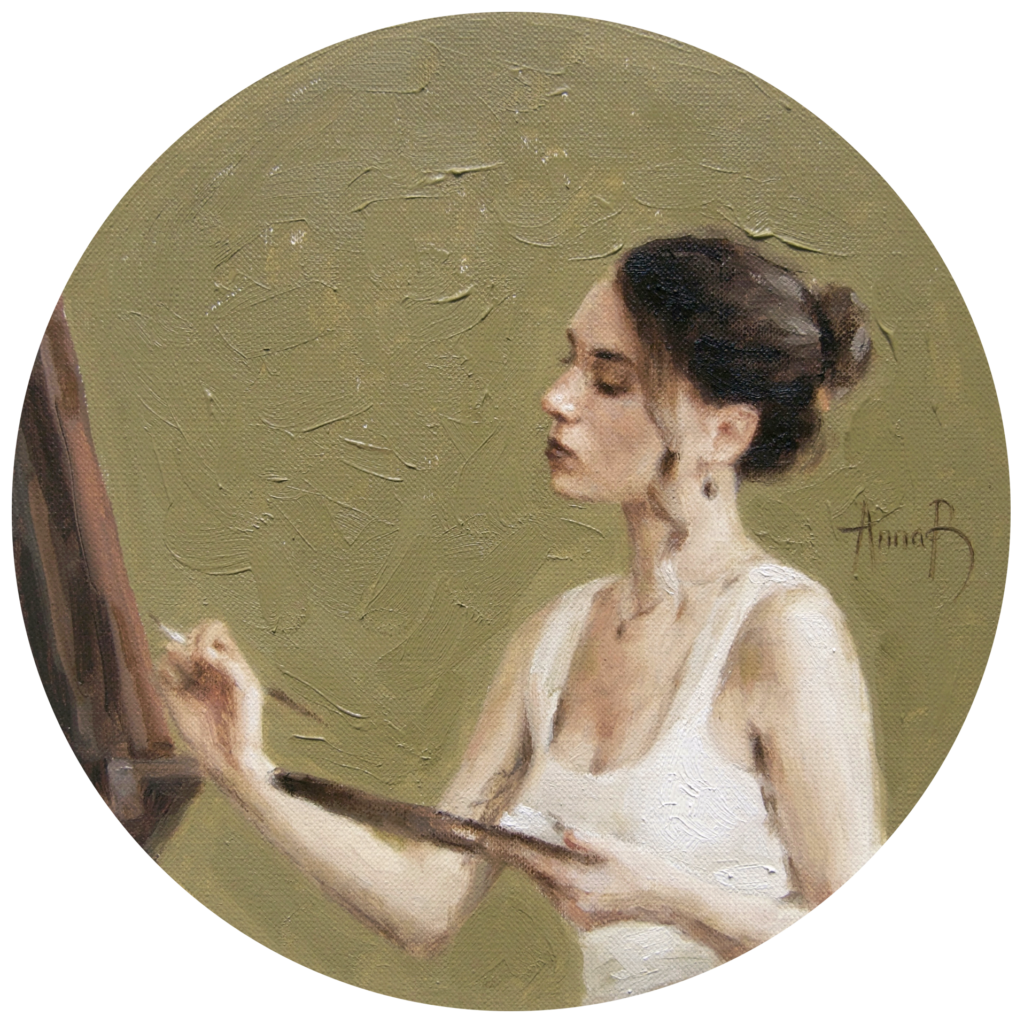
Anna calls herself an alchemist, mixing classical training with contemporary instinct, trying to find her own gold. But what she’s really doing is showing us that you don’t need permission to evolve. You don’t need a perfect plan. You don’t need to have it all figured out. You just need to keep showing up, keep feeling, keep pouring what’s inside you onto the canvas and trust that it means something, even if you can’t name it yet.
As we close this conversation, we’re left with a feeling more than a lesson. A reminder, maybe. That art and life doesn’t have to be controlled to be beautiful. It just has to be honest. And Anna Bernadskaya’s work is proof that when you stop performing and start feeling, people don’t just look at your art.
They live with it. They return to it. They see themselves in it. And that’s the whole point, isn’t it?
Follow Anna Bernadskaya’s journey and spend time with her work, it reveals itself slowly, and stays with you long after.