
She Sewed Barbie Clothes As A Child With No Idea Those Tiny Stitches Were Building Her Entire Future I Sila Gur
👁 462 Views
At Arts to Hearts Project, we spend a lot of time asking ourselves what it actually means when we say an artist is “the best.” Not the most awarded. But the best at what they do so committed to their craft, so thoughtful about their process, that their work becomes undeniable.
For our Best of the Art World editorial, we don’t just look at finished pieces. We look at how artists think. How they solve problems. How they arrived at the work they’re making now. And more importantly what they were doing before they found the medium that made everything click.
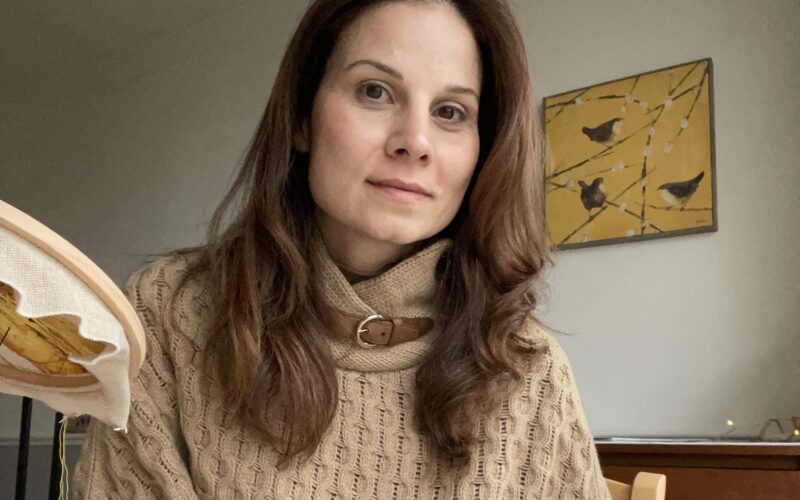
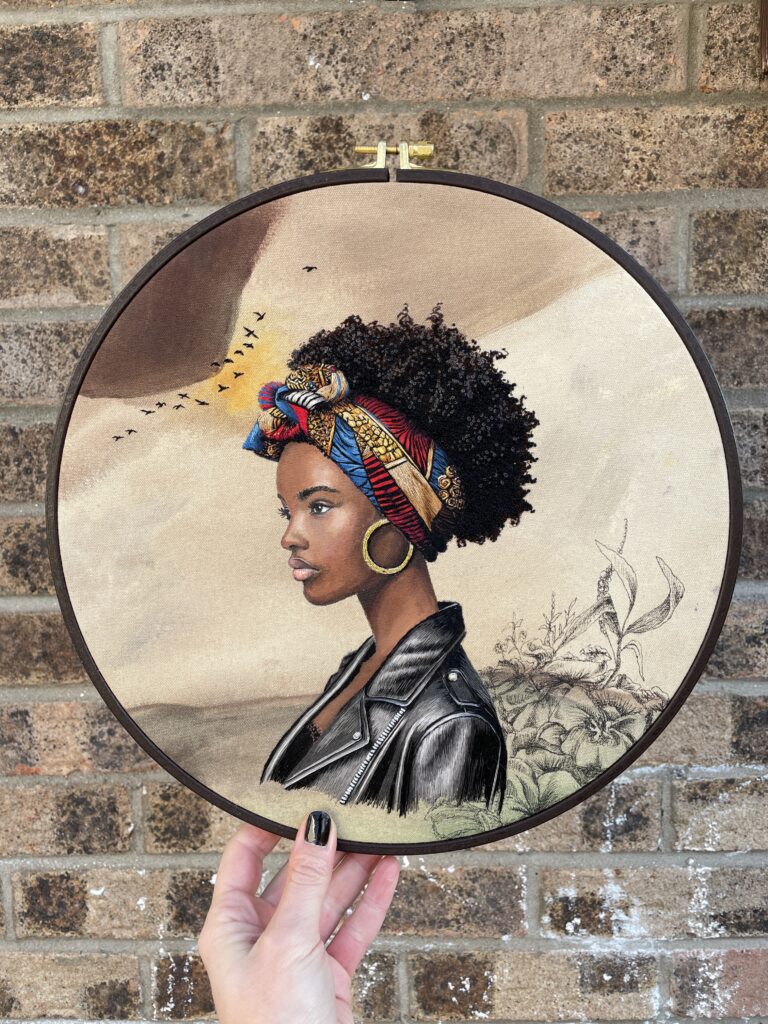
That’s why we reached out to Sila Gur. When we first saw her embroidery work, we didn’t immediately know why it stopped us. The technical skill was obvious; hyperrealist portraits stitched with such density they look like paintings. But that wasn’t it. Plenty of artists have technical skill. What stopped us was something harder to name: the work felt accumulated. Like it carried years of learning we couldn’t see. Like every stitch held more than just thread.
We started researching. And the more we learned about Sila’s background, the more we understood why her work feels that way. Because it does carry years of learning. Decades, actually. And none of it was wasted.
She went to Fine Arts high school. Studied Fashion and Textile Design at university in Istanbul. Worked in the fashion industry as a designer. Went to New York to study Fashion Styling. And through all of it—years of fashion, textiles, design work—she never stopped painting. Acrylics remained a constant part of her creative life.
None of it felt connected at the time. Drawing trained her eye. Fashion taught her structure and movement. Textiles grounded her work in materiality. Painting taught her how to observe light and shadow. But they were separate pursuits. Different chapters of a creative life that didn’t seem to have a through line.
Then in 2018, after moving to Scotland with her family, she came across modern embroidery artists on Pinterest. The work challenged everything she thought embroidery was—it felt fresh, contemporary, nothing like traditional needlework. She felt an immediate urge to try it herself. From the very first piece, something clicked.
Suddenly, all those seemingly separate disciplines weren’t separate anymore. Embroidery brought together everything she’d been working with for years: line, texture, fabric, the human figure. Drawing, fashion, textiles, painting—they all found a home in this one medium. And that convergence, that moment when decades of learning suddenly made sense together, that’s what we see in her work now.
We believe Sila belongs in Best of the Art World not just because her embroidery is technically exceptional though it is. We believe she belongs here because her work demonstrates something essential about artistic development: nothing you learn is wasted. Skills accumulate quietly, often without obvious purpose, until the right medium appears and everything you’ve been building suddenly has a place to live.
She doesn’t follow rigid stitch formulas. She works intuitively, using fluid mark-making to shape form and movement. Thread becomes her paint. The needle becomes her tool. The surface becomes space where she can draw, layer, refine. Her subjects reveal careful thought too. She often shows figures from behind backs, shoulders, quiet postures instead of faces. That choice isn’t arbitrary. When there’s no face, viewers don’t focus on who the person is. They focus on how the piece makes them feel. People see their mum, their daughter, their wife, their sister. The absence of identity creates space for projection, for personal connection, for viewers to step into the work rather than just observe it.
She started working on a small-scale embroidery is time-consuming, especially the way she works, so beginning small felt natural. Over time, as confidence grew, pieces grew bigger. She introduced acrylic painting alongside embroidery, giving herself freedom to work on larger surfaces while keeping stitched areas detailed and intimate. The work continues evolving. Future pieces will probably be much larger.
Let’s get to know Sila through our conversation with her, as she shares what it feels like when years of learning finally come together in one medium that truly makes sense
Q1. Could you share your background, where you grew up, how your early creative interests developed, and the moment when you realised that embroidery would become your artistic language?
I’ve always been drawn to fashion, drawing, and making things by hand. It may sound cliché, but my earliest creative experiments were sewing clothes for my Barbie dolls. That was my first experience of working with fabric and form. I grew up in Turkey, where I later attended a Fine Arts high school, and from there I went on to study Fashion and Textile Design at university in Istanbul. After graduating, I worked in the fashion industry as a designer. Then I went to New York to study Fashion Styling. Throughout all of this, I never stopped painting; acrylics remained a constant part of my creative life. Looking back, all of these disciplines supported one another, drawing trained my eye, fashion taught me structure and movement, and textiles grounded my work in materiality. I discovered embroidery in 2018, after moving to Scotland with my family. I came across the work of a few modern embroidery artists on Pinterest, and I was struck by how fresh and contemporary it felt. It challenged my perception of what embroidery could be, and I felt an immediate urge to try it for myself. From the very first piece, something clicked. Embroidery brought together everything I had been working with for years: line, texture, fabric, and the human figure. And since then it has become my primary artistic language.
Q2. You describe needlework as painting with thread, how did that metaphor first form in your mind, and how does thinking of thread as a “brush” shape your approach to composition and mark-making?
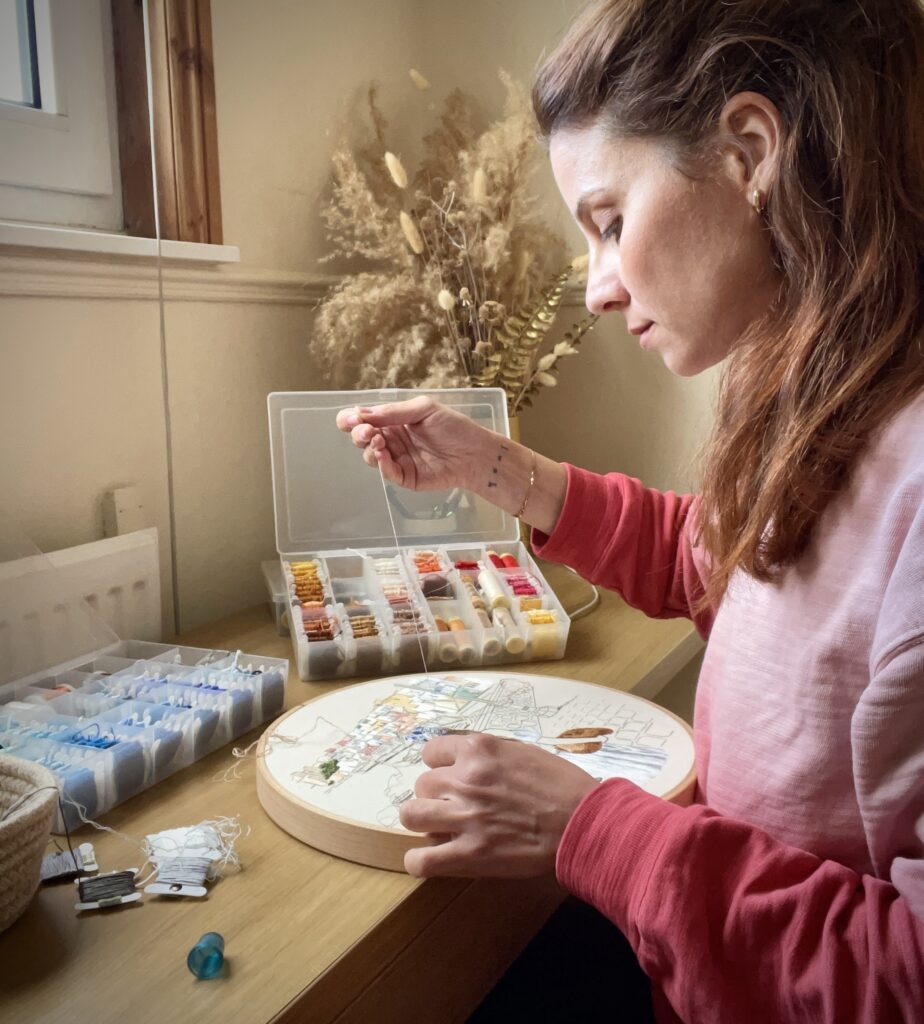
I often describe my work as painting with thread because the word embroidery doesn’t fully capture what I do. My approach is highly detailed and layered, and I use the needle and thread in a way that’s closer to drawing or painting than traditional needlework. I build images by repeating stitches over and over, carefully observing light, shadow and depth. Whether I’m stitching hair, clothing or fabric folds, my focus is on creating volume and realism, making the subject feel alive rather than flat or decorative. The goal is never a two-dimensional surface, but something with depth and presence. Thinking of thread as a brush allows me to work freely rather than technically. I don’t follow rigid stitch formulas; instead, I use intuitive, fluid mark-making to shape form and movement. In that sense, thread becomes my paint, the needle becomes my tool for mark-making, and the surface turns into a space where I can draw, layer and refine…stitch by stitch.
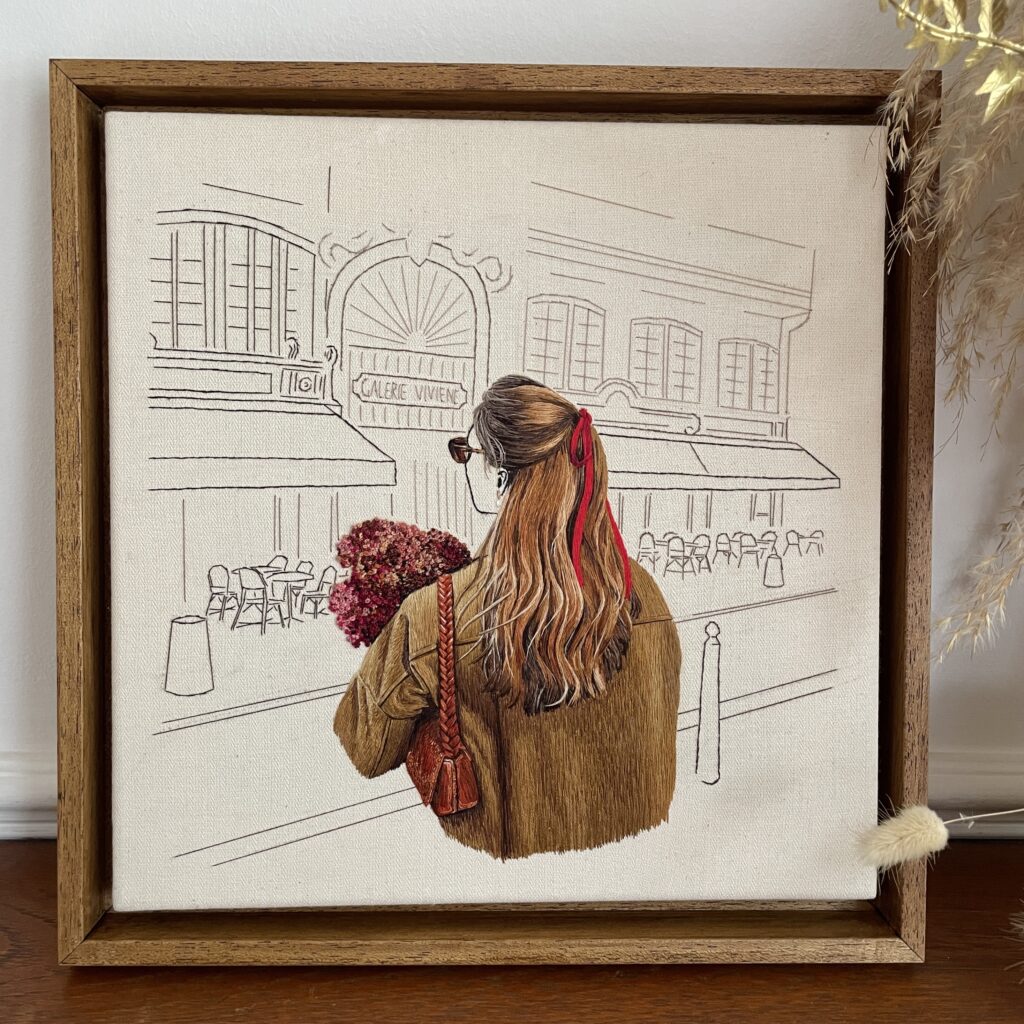
Q3. Many of your works focus on backs, shoulders, or quiet postures rather than faces. What draws you to these angles of the body, and what kind of attention do they ask from the viewer?
I often choose to show my figures from the back because it creates a stronger connection with the viewer. When there’s no face, people don’t focus on who the person is, they focus on how the piece makes them feel.
One of the nicest things for me is when someone tells me, “That looks like my mum,” “my daughter,” “my wife,” or “my sister.” Those moments are incredibly meaningful.
I also love the sense of mystery that comes with seeing someone from behind. You’re standing where they are, looking at the world from their angle. It feels quieter and more personal. For me, that perspective allows the viewer to step into the work rather than just look at it.
Q4. The scale of your hoops varies, yet the intimacy remains consistent. How do you maintain that sense of closeness even as the format changes?
I started working with embroidery on a much smaller scale. It’s a very time-consuming medium, especially the way I work, so beginning small felt natural. Over time, as I became more confident, the pieces slowly grew bigger and bigger. At that point, I began introducing acrylic painting into my work. Combining acrylic with embroidery gives me more freedom. It allows me to work on larger surfaces while still keeping embroidery at the centre of the piece. The stitched areas remain very detailed and intimate, even when the overall scale expands. I see this as an ongoing process, and I’m quite sure the work will continue to grow in size. In the future, people will probably see much larger pieces from me.
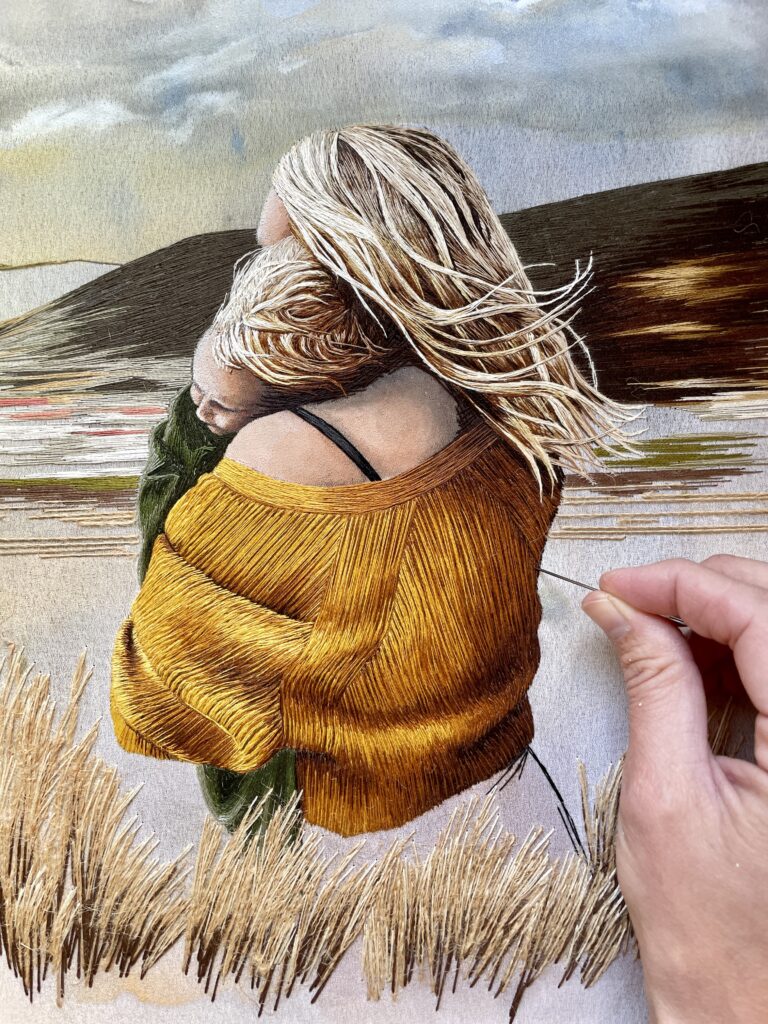
Q5. Your work often rewards close viewing rather than immediate impact. How important is slowness, both in making and looking to the way these pieces’ function?
Slowness is central to my practice. Embroidery itself demands time, repetition, and patience, and I embrace that fully. I think the work carries that pace within it. I hope the viewer feels invited to pause, to look closely, and to spend time with the piece. In a fast visual culture, that quiet exchange feels meaningful.
Q6. Some of your most popular pieces feature clothing or fashion details with surprising emotional depth. In your view, what does fashion express about the human subject beyond mere style?
For me, fashion has never been just about clothes or fabric. What we wear says so much about who we are, our personality, our confidence, our ambitions, and even where we feel we are going in life. Style becomes a kind of visual language, a way people express their identity without words. That’s why textiles, fabric, folds and texture fascinate me so deeply. Clothing feels incredibly human; it carries movement, emotion and personal stories. I’m especially inspired by street style, because it feels honest and unfiltered, people dressing for themselves rather than for trends. I want to capture those moments and tell people’s stories to others through my work.
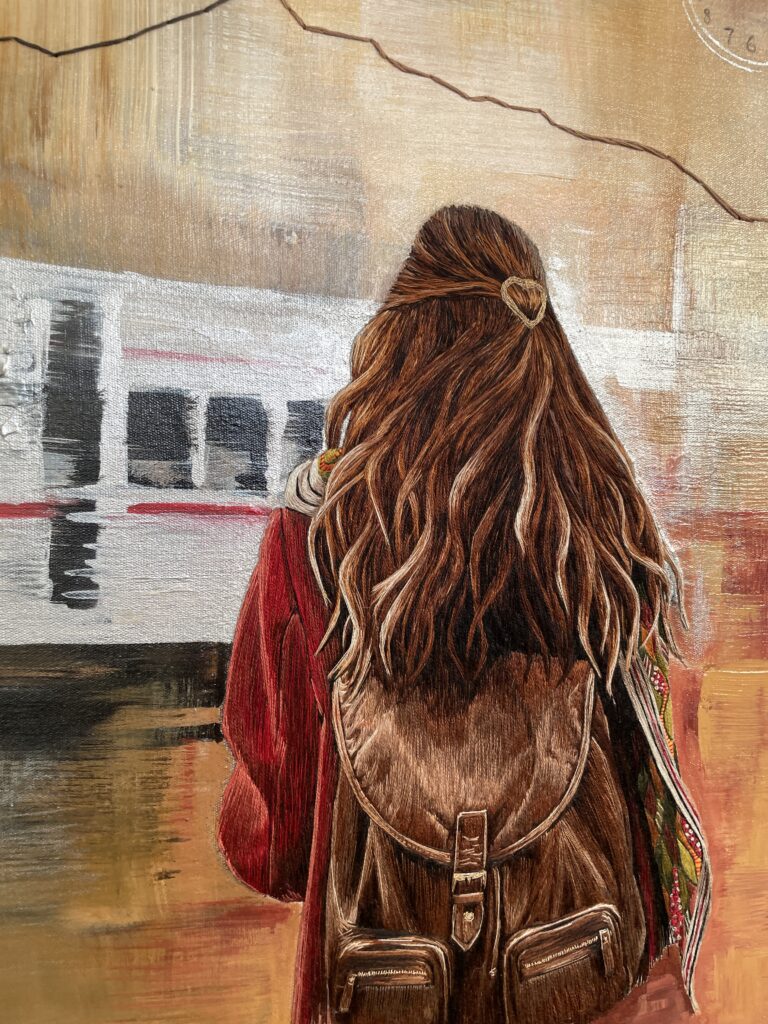
Q7. When a piece is nearly finished, what kinds of adjustments matter most stitch direction, colour temperature, spacing and which do you deliberately leave unresolved?
Stitch direction and colour temperature matter the most in the final stages. Small adjustments there can completely change the mood of a piece. I often leave areas slightly unresolved (especially backgrounds) because perfection can flatten emotion. I like allowing the work to breathe.
Q8. What advice would you give to artists working with tactile, time-intensive materials about trusting subtlety in a culture that often Favors instant visual payoff?
Creativity isn’t something consistent. There will be times when you feel stuck, or when you’re simply not happy with what you’re making and that’s completely normal. Instead of forcing it, I think it’s important to change something. Try a different material, a different surface, or even the same medium used in a new way. Small shifts can open up new ideas. What I’ve learned is that constantly comparing yourself to other artists, or following their steps too closely, is one of the worst things you can do for your creativity. That’s not inspiration, it usually just takes the joy out of making. Your real friends are the materials themselves. Play with them, experiment, make mistakes, and allow your own voice to grow naturally. Working slowly is also part of this process. Some mediums take time, and that slowness can be a real strength rather than a limitation. Not everything needs to have an instant impact. Subtle, quiet work often creates a deeper and longer-lasting connection.
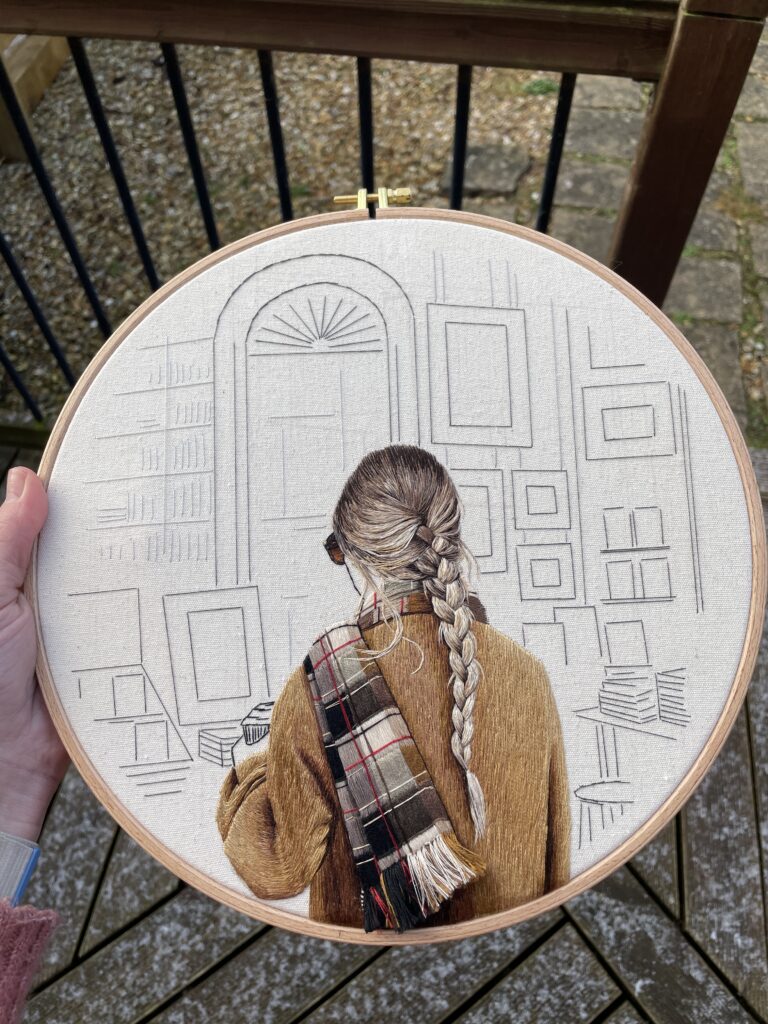
As our conversation drew to an end with Sila, I found myself thinking about all the artists who feel like they’re still searching. Still piecing together unrelated skills. Still wondering when everything they’re learning will finally make sense.
Sila’s story is the answer to that wondering.
She spent years accumulating skills that didn’t seem connected. Sewing Barbie clothes as a child. Studying fashion design. Learning textiles. Working as a designer. Painting with acrylics. None of it pointed toward embroidery. None of it seemed like preparation for what she’d eventually create.
But here’s what her work proves: everything was preparation. Those Barbie clothes taught her how fabric moves, how tiny details matter, how to work with her hands at a scale that demands precision. Fashion school trained her eye for structure, drape, the way clothing holds and reveals the body. Textiles grounded her in materiality—understanding fiber, weight, texture at a tactile level. Painting taught her to see light and shadow, to build volume, to observe depth.
When she discovered embroidery in 2018, she wasn’t starting from scratch. She was finally finding the medium that could hold everything she’d been quietly building for decades. And that convergence that moment when separate skills suddenly become one cohesive practice that’s what makes her work feel so fully realized.
What strikes me most is how she redefined the medium for herself. She doesn’t call it embroidery in the traditional sense. She calls it painting with thread. Because that’s what it is using the needle like a brush, building images stitch by stitch, working intuitively rather than following rigid formulas. She brought everything she knew from other disciplines and applied it to embroidery without rules holding her back. That freedom came from not being trained in the medium. She approached it fresh, with decades of other knowledge informing her choices.
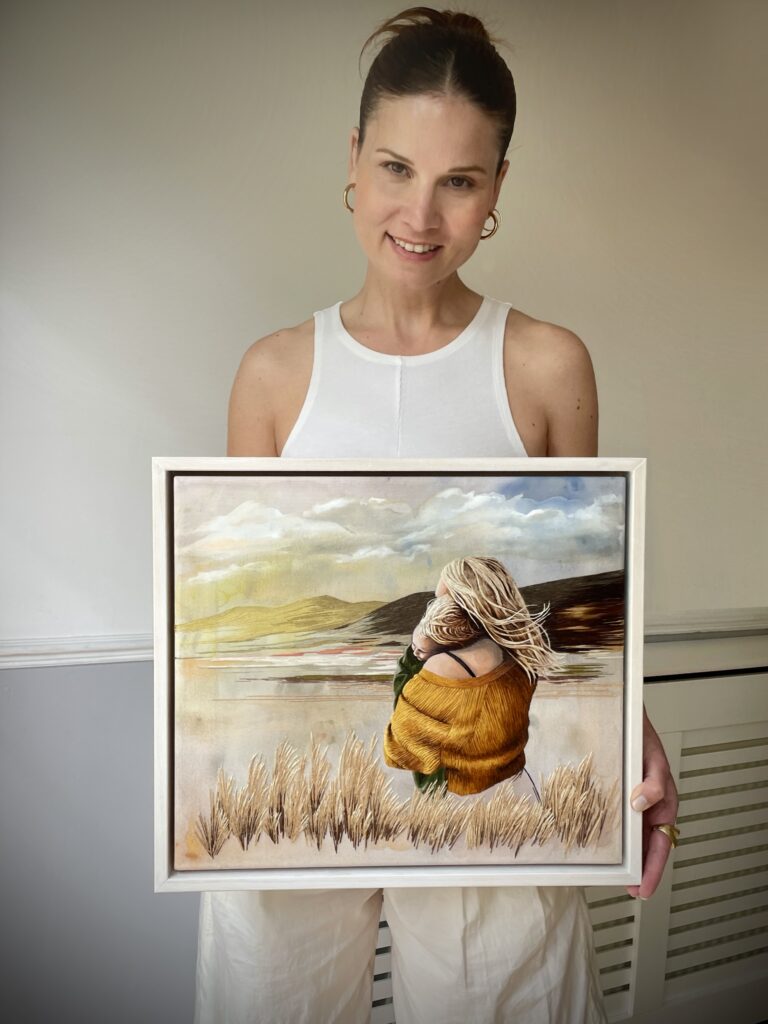
The slowness of her practice matters too. In a culture demanding instant impact, instant gratification, instant visual payoff, Sila’s work asks you to stop. To look closely. To spend time. Embroidery demands patience from the maker, and the work carries that pace within it. It rewards attention. And in doing so, it creates a different kind of exchange one based on quiet observation rather than quick consumption.
Here’s what Sila’s journey reveals: if you’re learning things that feel disconnected right now, keep learning. Skills don’t need to make sense immediately. They accumulate. They inform each other in ways you can’t predict. And eventually, if you stay curious, if you keep following what interests you, those skills will converge into something only you can make.
The small creative acts matter. Sewing doll clothes matters. Studying something tangential to your current work matters. Learning a medium you might not use for years matters. Everything you’re doing now is building a foundation you can’t see yet. Trust that accumulation. Trust that nothing is wasted.
And if you’re still searching for the medium that makes everything, click, keep searching. Sila didn’t find embroidery until 2018. She’d been creating for decades before that moment. But when the right medium appeared, everything she’d learned suddenly had a home. Your medium is out there too. And when you find it, all those years of seemingly disconnected learning will finally make sense.
Follow Sila Gur through the links below to see embroidery that feels like painting and years of experience brought together in thread.