



5 Things You Didn’t Know You Could Collect as an Art Lover
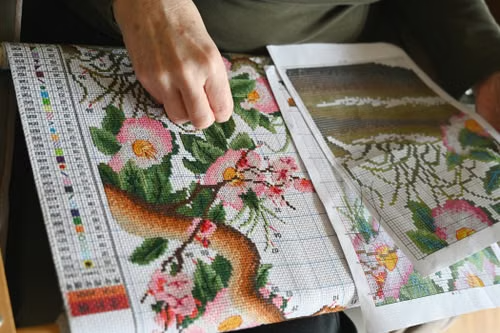
When someone mentions an art collection, what comes to mind? Perhaps a beautiful gallery wall filled with paintings, a collection of framed prints, or a room displaying works by celebrated artists. But the world of art collecting is much bigger than that.
Some collectors have spent years searching for extraordinary photographs. Others have filled their homes with handmade ceramics, rare books, intricate textiles, and sculptures. For them, collecting is not simply about owning beautiful things. It is about discovering stories, appreciating craftsmanship, preserving creative traditions, and finding something that speaks to them.
The wonderful thing about art collecting is that there is no single way to do it. You don’t need a mansion filled with paintings or an enormous budget to begin. Sometimes, the most interesting collections start with something unexpected.
If you have ever thought about starting an art collection but weren’t sure where to begin, here are five art forms worth exploring beyond the traditional canvas.
1. Art Photography: Collecting Moments That Last Forever
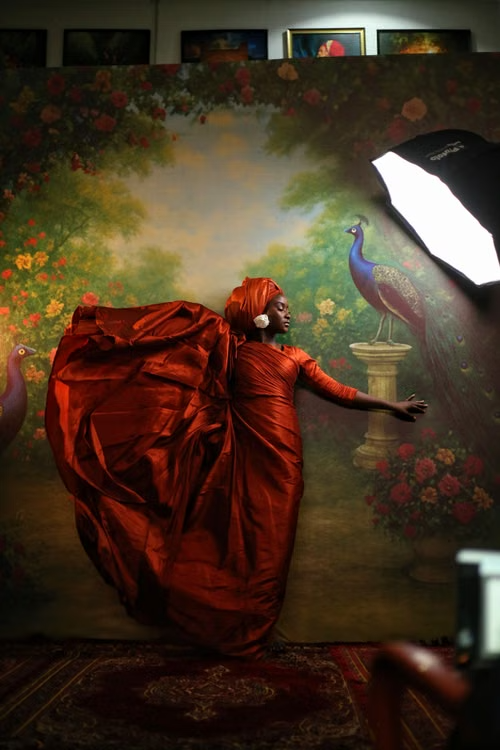
A photograph might capture a fleeting expression, an ordinary street, or a moment that would otherwise disappear. Yet, in the hands of a talented photographer, it can become something much more enduring.
Fine art photography has developed into an important collecting category, with collectors seeking everything from vintage black-and-white prints to contemporary experimental photography. And some of the world’s most fascinating photography collections belong to people you might not immediately associate with the art world.
Take Sir Elton John, for example. The musician began collecting photographs in 1991, and his collection, built alongside his husband David Furnish, now contains more than 7,000 fine art photographs. It includes works by celebrated photographers such as Irving Penn, Nan Goldin, Herb Ritts, Robert Mapplethorpe, and Robert Frank.
In 2024, London’s Victoria and Albert Museum presented Fragile Beauty: Photographs from the Sir Elton John and David Furnish Collection. The exhibition featured more than 300 photographs selected from their extensive collection, offering visitors an opportunity to experience images that had previously been displayed in private spaces.
What makes photography particularly interesting to collect is its variety. You might be drawn to documentary photography, portraits, architecture, fashion, or landscapes. Each photograph offers a different way of seeing the world.
Where to start: Explore limited-edition photographic prints by emerging photographers, vintage photographs, or contemporary portraiture. Before purchasing, pay attention to the edition size, print quality, condition, and whether the work comes with appropriate documentation.
2. Textiles: The Beauty of Art Woven Into Everyday Life
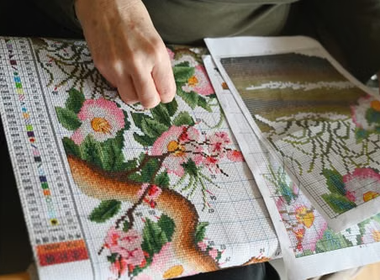
Some of the most extraordinary works of art are not displayed in frames. They are woven, embroidered, dyed, and stitched by hand.
Textile art has an incredibly rich history across cultures. From Persian carpets and intricate Indian embroideries to Japanese kimono and contemporary woven installations, textiles bring together colour, pattern, material, and storytelling in ways that deserve much more attention from collectors.
One fascinating figure in this world was American collector George Hewitt Myers. His interest in textiles began with carpets he purchased while studying at Yale. What started as an interest in decorating his surroundings gradually developed into a serious passion for understanding the artistic and cultural significance of woven objects.
In 1925, Myers founded The Textile Museum in Washington, D.C., initially with a collection of 275 rugs and 60 related textiles. Today, the museum’s collection, housed at George Washington University, includes more than 21,000 examples of handmade textile art from five continents and spanning five millennia.
Myers believed textiles deserved to be appreciated as an independent form of fine art, rather than simply as decorative objects. His collecting journey helped establish a space where these remarkable works could be studied, preserved, and enjoyed.
And that is what makes textile collecting so special. A handmade textile can carry the traditions of an entire community, reveal the skills of generations of craftspeople, and preserve techniques that might otherwise be lost.
Where to start: Look into handwoven rugs, embroidered wall hangings, vintage fabrics, contemporary fibre art, and handmade tapestries. You can also explore work by contemporary textile artists who combine traditional techniques with modern artistic ideas.
3. Ceramics: Collecting Art You Can Hold
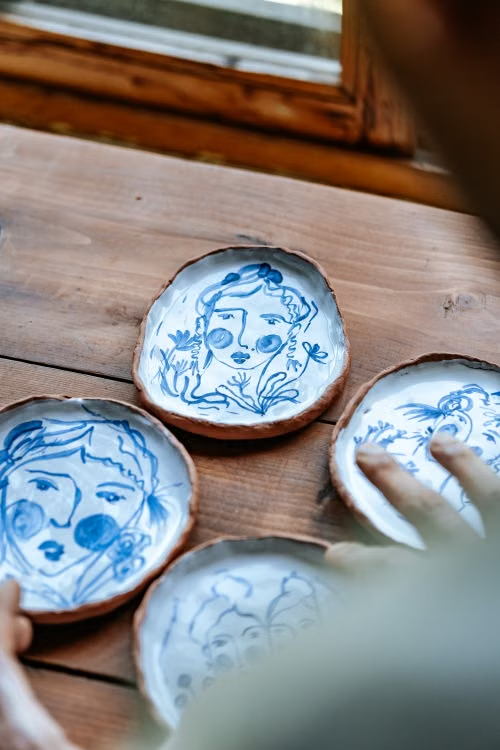
There is something wonderfully personal about ceramic art. A handmade bowl, an unusual sculptural vase, or a beautifully glazed vessel can transform an everyday object into something worth keeping for generations.
Unlike mass-produced homeware, collectible ceramics often reveal the individual artist’s touch. The marks left by the hands, the irregularities in the shape, and the unexpected combinations of glaze and texture are all part of what makes each piece interesting.
One important figure in this field is Helen W. Drutt English, an American curator, art dealer, and collector whose work helped establish contemporary craft as an important part of the art world.
Drutt opened her Philadelphia gallery in 1973 and became known for her commitment to contemporary craft, particularly ceramics and artist-made jewellery. Through exhibitions, research, and her relationships with artists, she helped bring greater recognition to creative work that was often overlooked in traditional discussions of fine art.
Her collecting and curatorial interests demonstrate how much artistic expression can exist in objects that are also functional.
Ceramic collecting can take many forms. Some people prefer delicate porcelain, while others are drawn to expressive stoneware, experimental sculptures, or pieces that challenge the traditional idea of what pottery should look like.
Where to start: Explore contemporary ceramic artists, independent pottery studios, handmade tableware, and small sculptural pieces. Local craft fairs and artist studios are wonderful places to discover work and learn directly from the people who make it.
4. Artist Books: When a Book Becomes a Work of Art
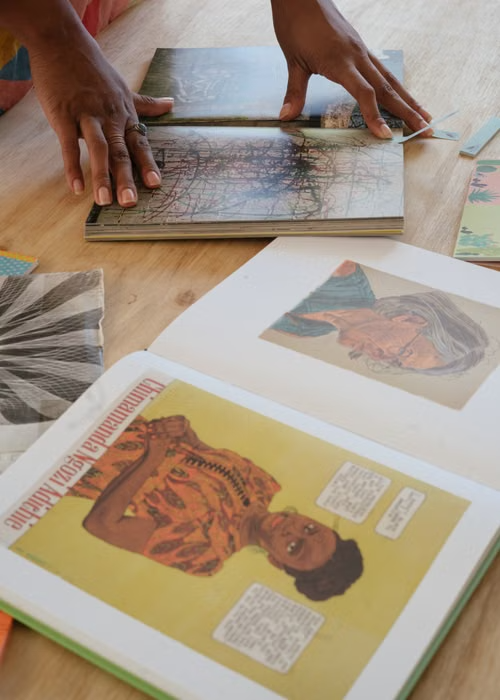
Most of us think of books as something to read. But what if the book itself were the artwork?
Artist books are creative works in which the book’s structure, pages, materials, typography, illustrations, and even the way it is handled become part of the artistic experience. Some look like traditional books, while others unfold into unusual shapes, feature experimental printing, or challenge the very idea of what a book can be.
One of the most remarkable collections in this field was built by Ruth and Marvin Sackner, an American couple who began collecting concrete and visual poetry in 1979.
Over the years, they assembled an extraordinary archive containing more than 75,000 items, including artist books, drawings, manuscripts, letters, print portfolios, and other experimental works. Their collection explored the relationship between language and visual art, bringing together works influenced by movements such as Dada, Surrealism, Futurism, and the Bauhaus.
The majority of the Sackner Archive was donated to the University of Iowa Libraries beginning in 2019, making this remarkable collection available as an important research resource.
What makes artist books so fascinating is that they invite you to interact with art differently. You can turn its pages, unfold it, discover hidden details, and experience the artist’s ideas in a sequence rather than through a single image.
Where to start: Look for handmade artist books, limited-edition illustrated books, experimental zines, photographic books, and publications created by independent artists. Small art book fairs and independent publishers are excellent places to discover them. Visit our Shop to explore a range of different art books and contemporary artists.
5. Sculpture: Collecting Art in Three Dimensions
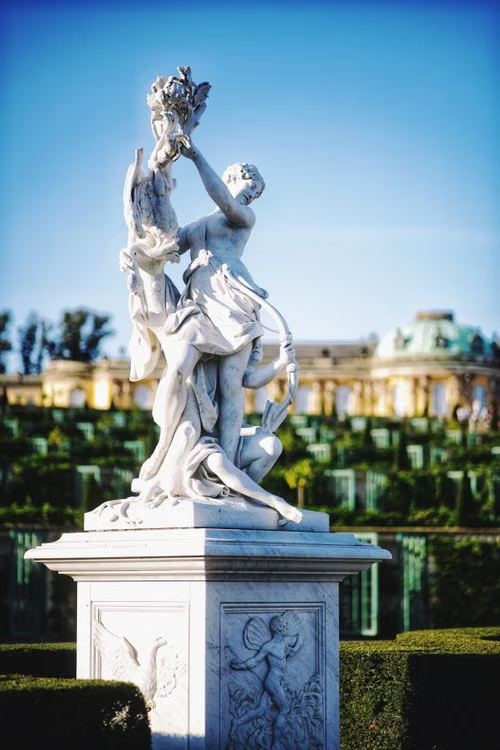
Paintings invite us to look, but sculptures invite us to look from every angle. They occupy space, interact with their surroundings, and often change how we experience the room they are placed in.
From small bronze figures and abstract ceramic forms to large-scale contemporary installations, sculpture offers collectors an entirely different relationship with art.
One of the most influential collectors in modern art history was Peggy Guggenheim. Although her collection included many paintings, she also developed a remarkable collection of modern sculpture, acquiring works by artists such as Constantin Brancusi, Jean Arp, Alberto Giacometti, and Henry Moore.
Her passion for collecting began in the late 1930s and continued throughout her life. She also supported artists through her New York gallery, Art of This Century, which became an important space for modern and Surrealist art.
Today, the Peggy Guggenheim Collection in Venice allows visitors to explore many of the works she assembled, including sculptures that demonstrate the extraordinary range of modern artistic expression.
Sculpture is an especially interesting category because it does not have to be monumental or expensive. A small bronze, a handmade wooden figure, or an experimental ceramic sculpture can be just as meaningful to a personal collection as a large installation.
Where to start: Explore contemporary sculptors, small bronze editions, handmade wooden objects, ceramic sculptures, and independent sculpture exhibitions. Pay attention to the materials, dimensions, edition numbers, and the artist’s background when considering a purchase.
Start Collecting What You Love
The beauty of art collecting is that it doesn’t have to follow a particular formula. You don’t need to begin with famous artists, expensive purchases, or a perfectly curated collection. You can start with a photograph that reminds you of somewhere special, a handmade ceramic piece that makes you smile, or a little artist book that you simply cannot stop looking through.
The collectors we’ve explored here remind us that art can take so many different forms, and that meaningful collections are often built through curiosity, patience, and a genuine appreciation for the work.
So, the next time you find yourself thinking about starting an art collection, look beyond the paintings. There might be something extraordinary waiting to be discovered in a photograph, a woven textile, a ceramic vessel, or a book you never expected to become a work of art.