

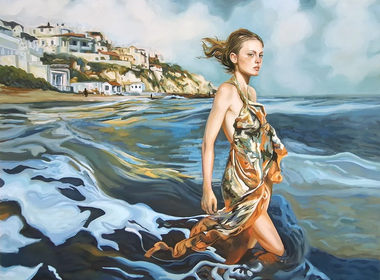

Nicole Debono Turns Family Memories into Figurative Paintings Full of Hidden Meaning
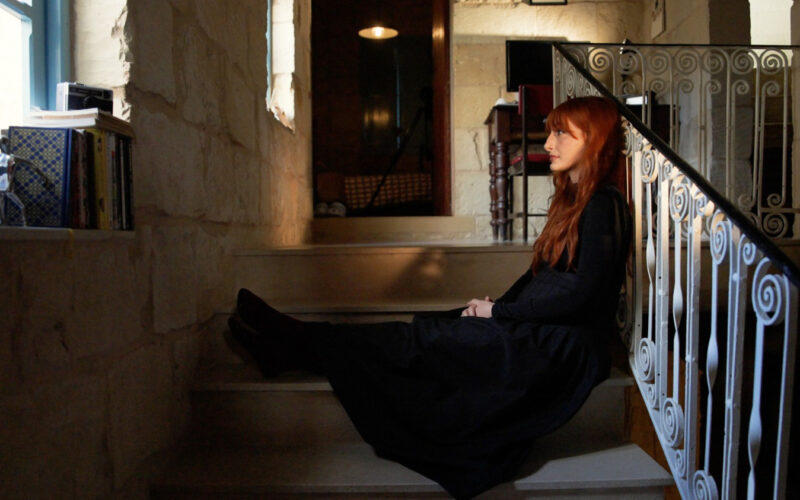
At Arts to Hearts Project, we’ve spent years creating meaningful opportunities for artists, and our new presence on Artsy, one of the world’s leading platforms for discovering and collecting art, marks an exciting step forward, placing our artists before collectors, curators, and galleries worldwide.
Our Artsy Exhibition, Small Works, celebrates one simple but powerful idea: that art has never depended on size, and that the most intimate pieces can hold just as much emotion, story, and depth as the largest.
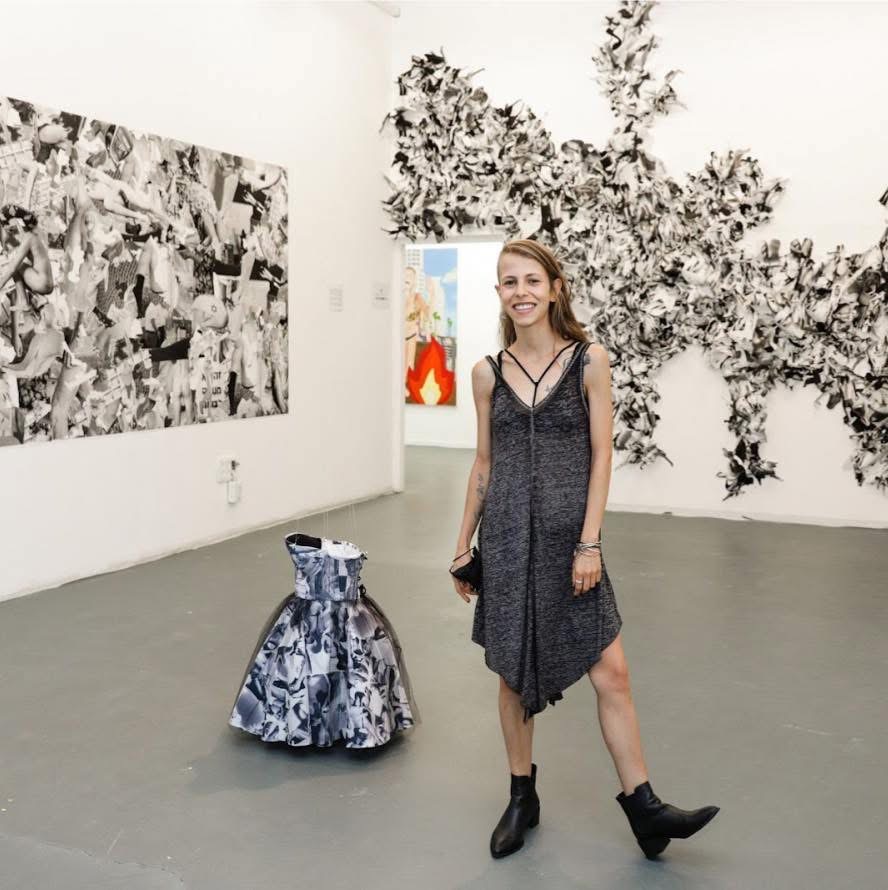
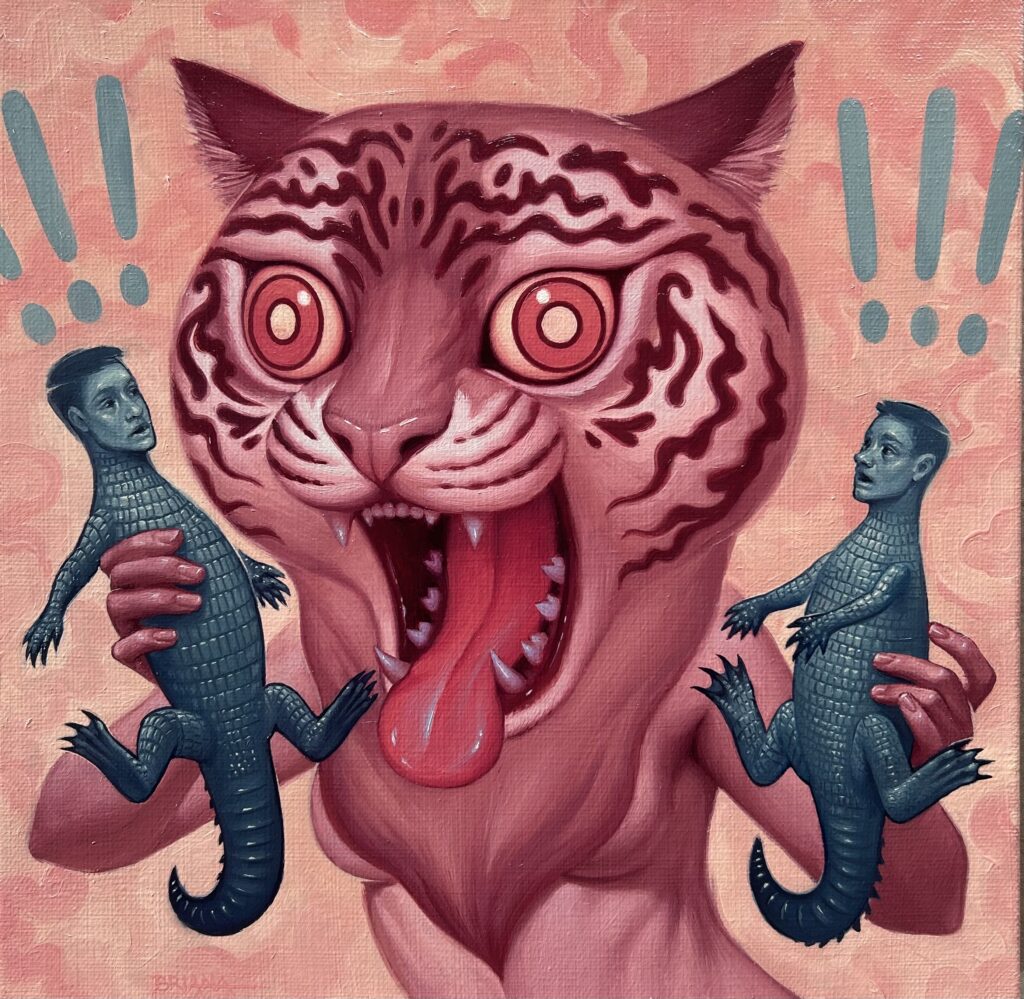
Among the artists featured is Nicole Debono, whose quietly charged, deeply personal paintings show exactly how much a small frame can hold.
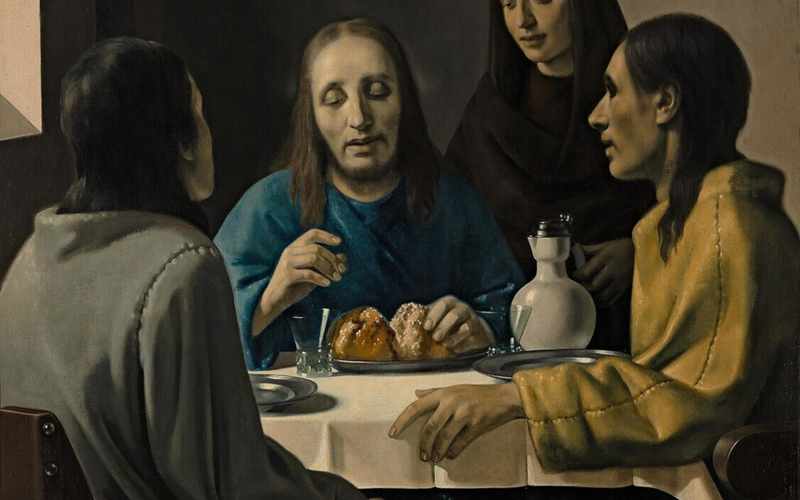
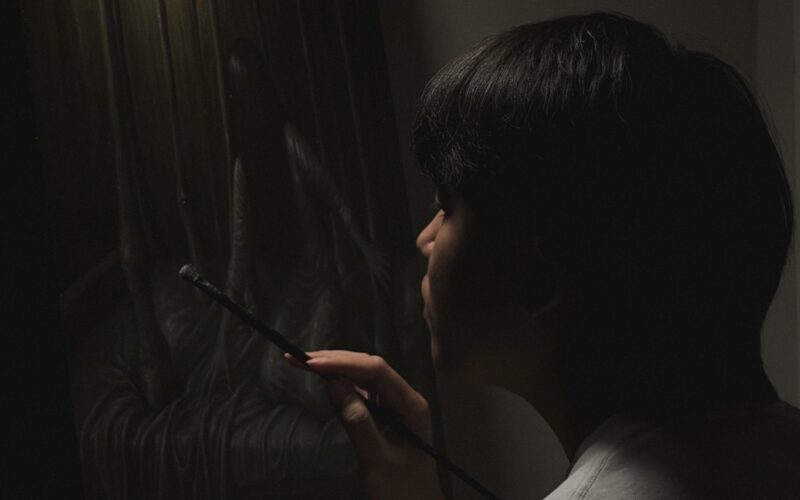
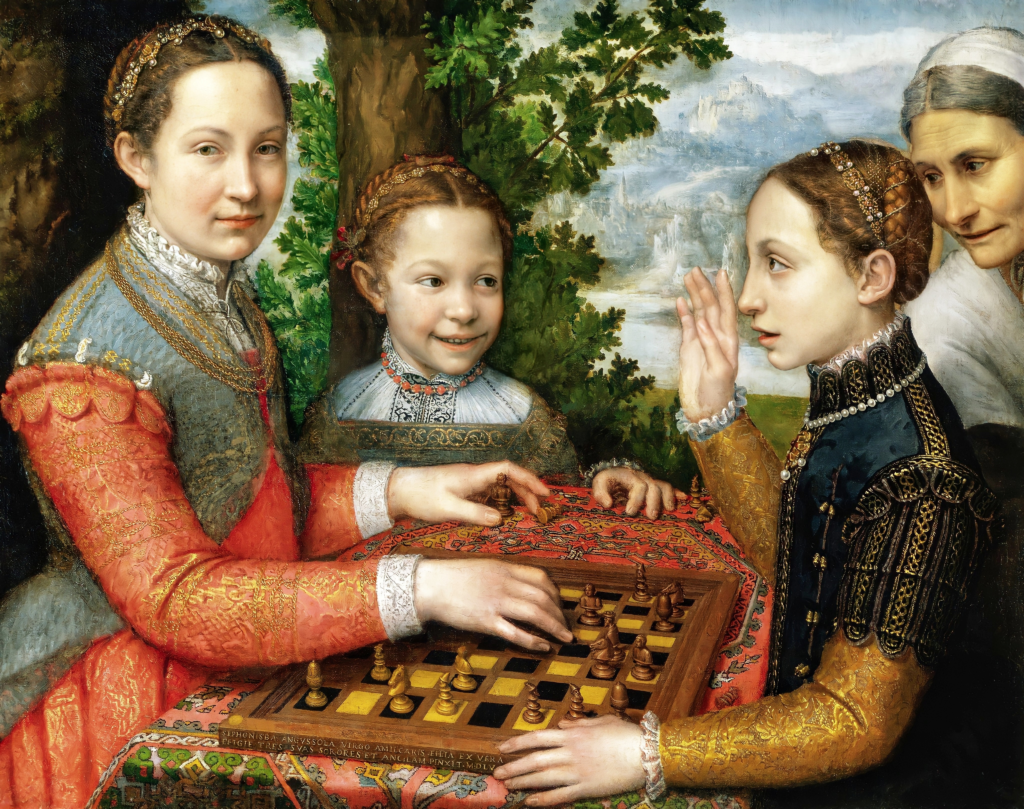
Nicole is a Maltese visual artist who works in oil, and her paintings live inside the home, but never as a simple backdrop. For Nicole, the domestic interior is where we first inherit everything, our habits, our roles, the silences we grow up inside, the ways we learn to love and be loved, and her paintings return, again and again, to that quiet idea of inheritance: what we carry from home, family, and country, long after we’ve left the room.
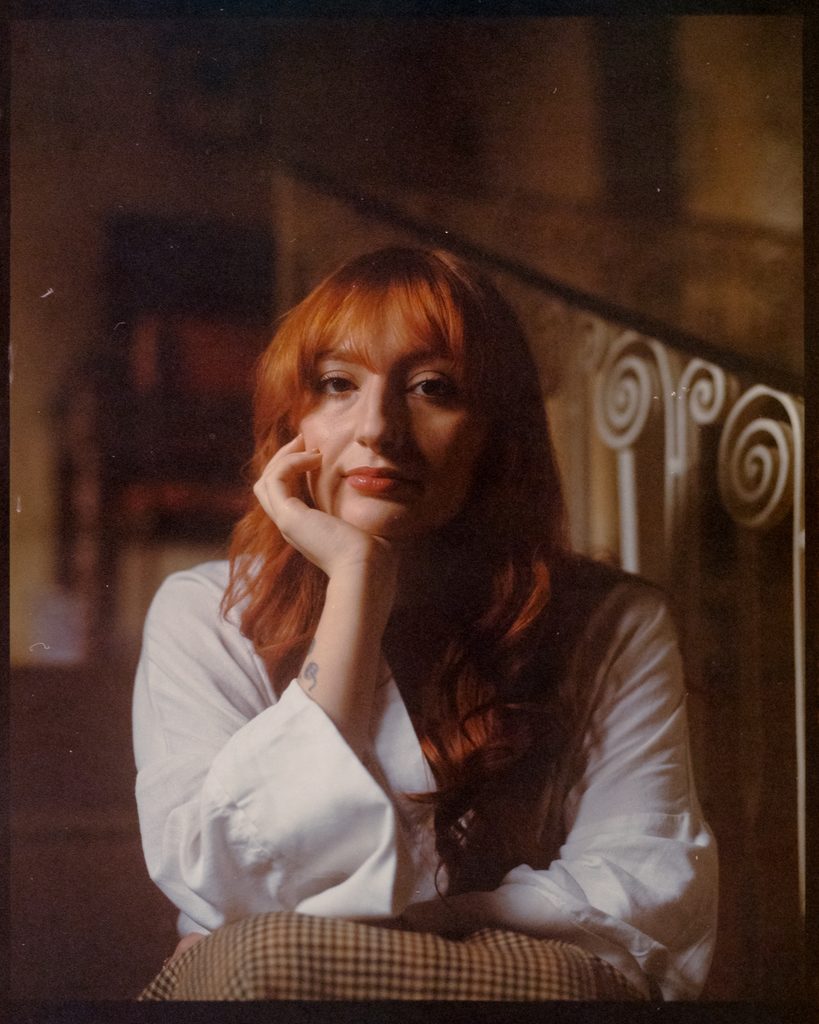
What makes her interiors so haunting is that they’re not quite real. She builds her rooms from scattered moments and memories, so that a single painting shows a memory not as it happened, but as it feels, familiar and strange all at once, holding emotions too tangled to name out loud.
She’s fascinated not just by what we remember, but by what we quietly edit, soften, or misread, forever drawn to the slipperiness of memory, and to reclaiming, on her own terms, the stories that were once written for her.
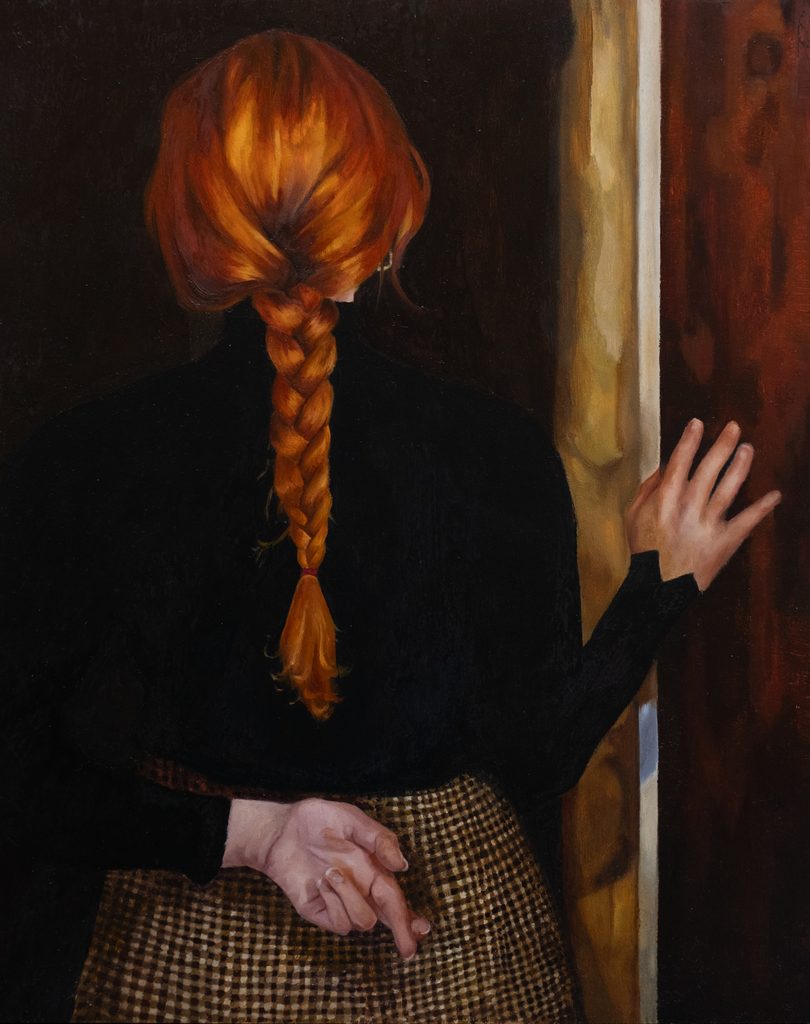
Look closely, and you’ll notice how much she chooses to hide. Her compositions are often tightly cropped, holding your eye on the things we usually rush past, a hand gripping the edge of a table, fingers crossed out of sight. Faces are frequently withheld, and in that withholding, feeling rises to the surface all the more powerfully; relationships emerge through posture, distance, and gesture alone.
Ordinary objects carry whole histories that never announce themselves, a single everyday thing, left at the very edge of a painting, can quietly change the meaning of everything around it. For Nicole, what she leaves just outside the frame is every bit as powerful as what she lets in.
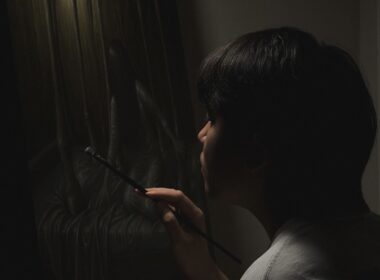
There’s a tender, personal thread running through all of it. For a long time, Nicole had no space of her own and painted in her bedroom, until, after years of quietly working toward it, she finally made a studio wholly hers, a space whose only purpose is to create.
Having found Virginia Woolf’s A Room of One’s Own at exactly the right moment in her life, she knows intimately what that space means, and honouring it has become part of the work itself. Beyond the studio, she’s a passionate advocate for artists, believing deeply that the conditions we give artists today shape everything the next generation will inherit.
Now let’s hear from Nicole about the inheritances we carry from home, why she paints memory as it feels rather than as it was, the quiet power of what she leaves out of the frame, and what finally having a room of her own has meant to her.
Q1. Nicole, You describe domestic spaces as psychologically charged. How do familiar interiors help you explore deeper emotions and experiences?
The home is where we first inherit things: habits, roles, silences, and ways of caring for one another.
My work keeps returning to what we take from home, community, and country, and the domestic interior is where that inheritance shows itself most clearly.
I assemble rooms from different moments or times, so that a painting can show a memory as it feels. That makes familiar spaces slightly strange, and lets them carry emotions that are hard to name directly. I look to painters of psychologically charged interiors, from Gwen John and Vilhelm Hammershøi to Olga Boznańska.
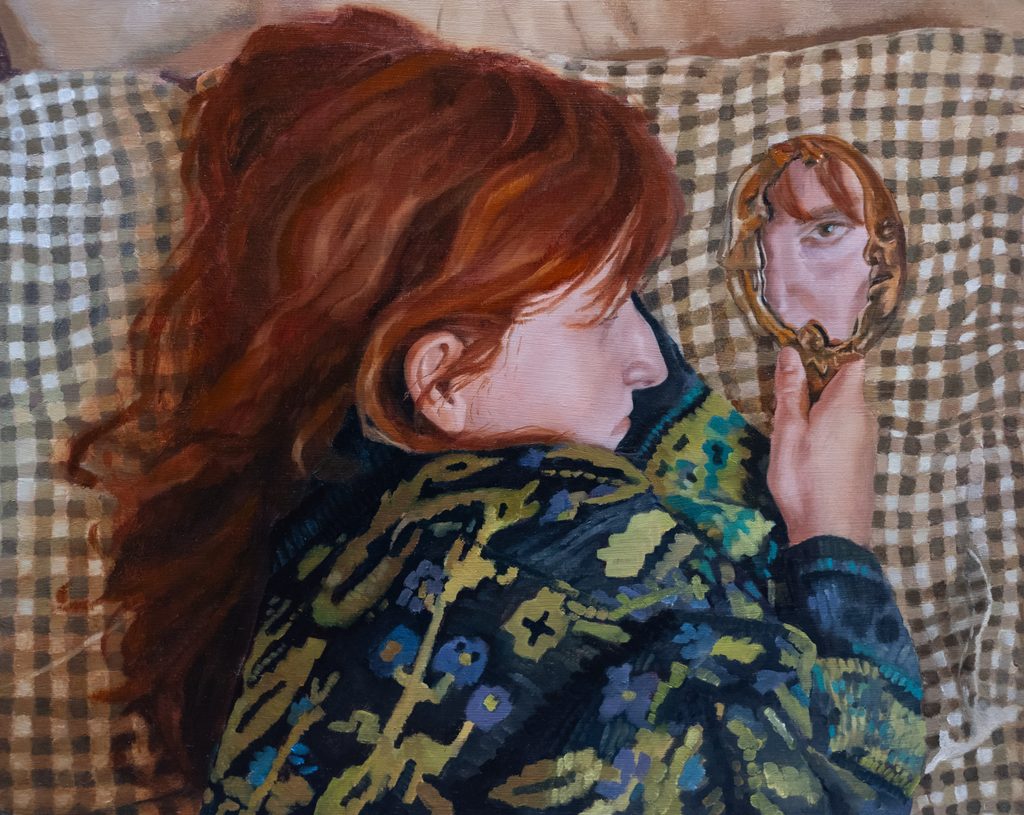
Q2. Your paintings often feature closely cropped female figures. How does this framing shape the stories and emotions within your compositions?
Some of my figures are women, and a few paintings deal with women’s lives, though most of the work is about what is handed down. I crop closely in response to how images circulate in our advertising age, and also against it.
The crop slows the eye towards what is usually overlooked: a grip on the edge of a table, fingers crossed out of sight. With faces withheld, relationships emerge through posture, distance, and gesture. Choosing what enters the frame, and what stays out, is also where my agency lies.
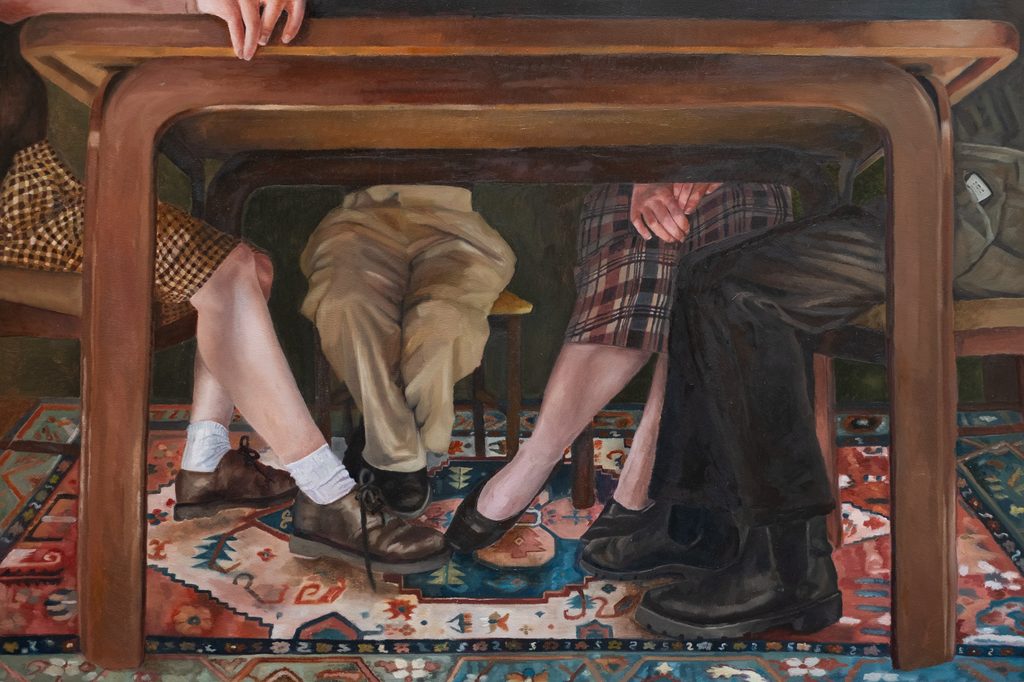
Q3. Memory plays a central role in your work. What draws you to the ways we remember, reinterpret, or sometimes misread our past?
My solo exhibition, ‘Visions Are Seldom What They Seem’, began from the instability of memory. I was trying to reconstruct what cannot be reliably retrieved, and to reclaim, on my own terms, narratives that were written for me. My images often come from childhood photographs, my own and those of people close to me, and from my diaries. As a child I believed Sorolla’s ‘Mother’, which I first saw in my baby book, was a painting of my mother next to me in bed.
That was an early lesson in how memory attaches itself to resemblance and need, and in how much an image can come to mean. In the title painting, a figure rests one hand against the wall while the other crosses its fingers out of sight. The image asserts and memory revises, and what is visible is rarely the whole of what is meant.
Q4. Everyday objects often carry personal histories in your paintings. How do you decide when an object should take on a symbolic meaning?
I rarely decide in advance.
My starting point is often a word, a song, or a poem that brings images to mind, and I understand their meaning later; at other times it is biographical. It is both intuitive and instinctive.
In ‘Family Jewels’, a family gathering seen from beneath the table, an old Nokia phone sits in the father figure’s pocket. It was through a phone like this that I discovered my father had been living a double life. I left it at the edge of notice, so that it shifts the meaning of the whole composition without explaining itself. Other motifs come from researching symbolism, like the string game in ‘Cat’s Cradle (Choice)’ and ‘Cat’s Cradle (Consequence)’, where a red thread passes between two pairs of hands and becomes a question about inheritance.
Q5. Your exhibition explores the idea of having “a room of one’s own.” What has having a space of your own meant for your practice?
For a long time I had no space of my own to work in, and painted in my bedroom. I came across Virginia Woolf’s ‘A Room of One’s Own’ by chance in a very particular time in my life, and it validated me and my experience. What she wrote later became very literal: I made the whole of ‘Visions Are Seldom What They Seem’ in my new studio, which came from the financial freedom I spent years building.
My current space is very small, but it is the first studio that is wholly mine, a space whose sole purpose is creating, and it has a sense of permanence. I saw potential in one corner of it and made it into a nook myself, later filling it with my own books and postcards. That corner became the subject of ‘Weights and Measures’. I
I have kept museum postcards from a young age, as a way of keeping the paintings I have seen in person. Now artist friends send me their own, many with notes on the back, and they hang on a string in the studio. A room of my own means time to spend long, meditative hours with what I want to keep. For me, honouring the space to create is part of the theme itself.
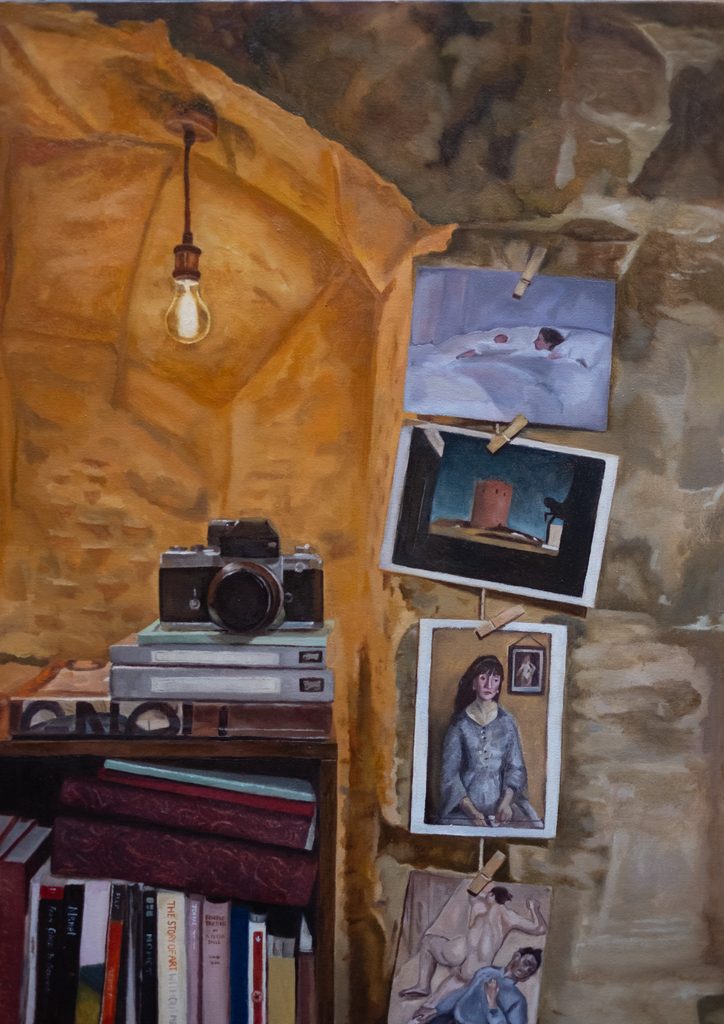
Q6. You are also involved in arts advocacy through MEIA. How do you see artists shaping conversations beyond the studio?
I am General Secretary of MEIA, the Malta Entertainment Industry and Arts Association. We advocate for better conditions within the creative sector, such as fair pay, artists’ rights, and the spaces for creative production that Malta still lacks, amongst many other things.
My own lived experience as an artist has been shaped by the policy I am exposed to. Artists need to be in those rooms, because we know first-hand what precarious work and the lack of space do to a practice.
My painting is about what communities pass down, and advocacy is one way of shaping what the next generation of artists inherits from us.
Q7. Looking back at your practice, is there a particular body of work that helped you discover something new about your artistic direction?
My last body of work, ‘Visions Are Seldom What They Seem’, partly because of how it came about: after years of painting in my bedroom, it was the first body of work I made in a studio of my own. Seeing twenty-nine works together showed me the subject I keep returning to: what memory keeps, what is inherited, and what stays hidden.
It also showed me how much of the work is yearning, and helped me understand my positioning better. An early sense of scarcity made me want to keep things, and painting became how I do it.
Q8. You have built connections with artists through collectives and collaborations. What advice would you give emerging artists finding their own voice?
Find your peers, even if they are far away. Much of what I have learnt came from writing to other artists, showing with them, and visiting their studios as they visit mine. I am part of the Cane-Yo Collective, artists I know mainly online, and our conversations and critique runs on Telegram. We have since met in person a few times and I’ve visited some of their studios, and exhibited together in London, Berlin, Paris, and other locations too.
Pay attention to what you keep returning to and don’t dismiss your subjects of interest, because you may only understand their significance later. And keep writing about your work, even privately: I keep diaries and a Substack beside my paintings, and putting painting into words helps me see what it is doing.
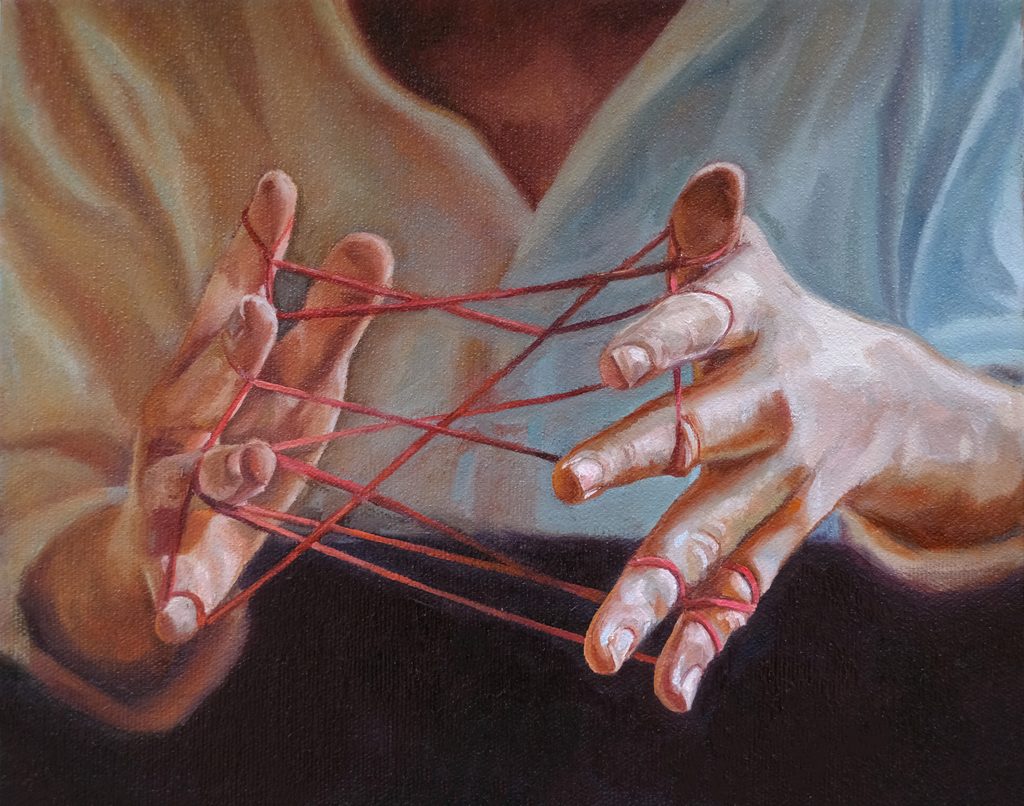
By the time we finished speaking with Nicole, we kept circling back to one idea: how easily the art world confuses size with significance, as if the loudest, largest work must also be the one that matters most.
Her paintings gently prove otherwise. They are small, close, and quietly held back, made from the fleeting details the rest of us hurry past, and yet they carry a weight their dimensions never let on. At a time when so much of art, and the market around it, chases scale, spectacle, and the instant hit, Nicole does the opposite. She hands you something that only opens up if you’re willing to pause, move closer, and really look. In a hurried world, that’s a rare and generous thing to ask of someone.
And it’s a quiet reminder that the deepest moments, in art as in life, tend to be the understated ones, the gesture held back, the object half out of view, the feeling just beyond words, the kind that only surface for those paying close enough attention.
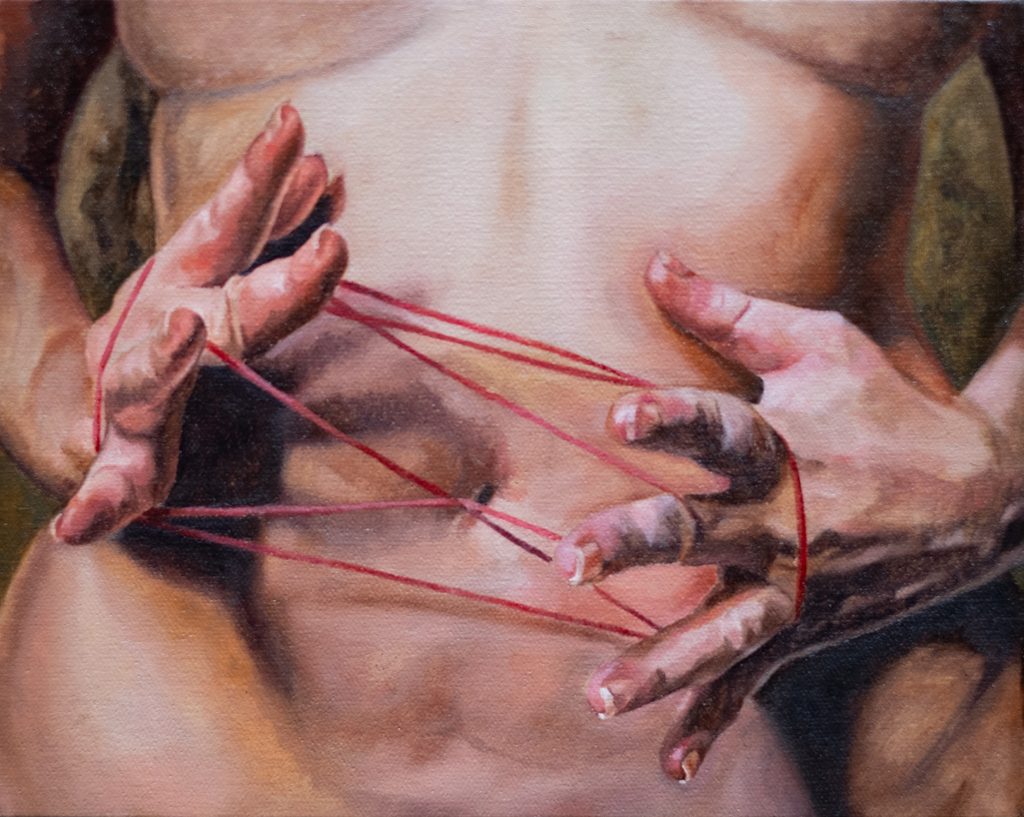
What she chooses to paint feels quietly defiant, too. Where the art world so often celebrates the bold gesture and the grand theme, Nicole looks inward, to the home, the family, the memory, the small dramas that play out in ordinary rooms.
These are the subjects art has long brushed aside as minor or domestic, and she gives them exactly the seriousness and tenderness they’ve always deserved. In her hands, the intimate stops feeling small, and starts to feel like some of the richest ground an artist could ever explore.
And for the people who collect and live with her work, it brings a rare sense of depth, closeness, and quiet mystery into a room. These are small, carefully made paintings that hold their secrets, where a cropped hand or a half-glimpsed object carries a whole story, patiently waiting to be found. The longer you sit with them, the more they give. To own one is to keep a small, charged world nearby, a little room of memory and meaning that keeps unfolding, softly, for as long as you keep looking.
Follow Nicole Debono through the links below and see her work for yourself.
Good news, the deadline has been extended, so there is still time to enter Artist of the Year 2026. The new closing date is 22nd November 2026 and this is your chance to get in.
One artist will take the title of Artist of the Year, along with a $500 cash prize, a trophy, and a dedicated four-page feature. But the opportunity reaches far beyond a single winner: 100 artists will be brought together in a beautifully crafted hardcover collectible book, selected alongside our Guest Curator, Jennifer Rizzo, a lasting home for their work and a snapshot of the art being made today.
Whatever you create, whatever it explores, however long you’ve been at it, and wherever in the world you are, none of it limits you here. All that matters is the work, and the ideas behind it.
If you missed the first deadline, this is your second chance, so don’t let it pass. Submit your work before 22nd November, 2026 and claim your place in this year’s edition.