






When Women Painted Women: 7 Masterpieces
For centuries, women have been among the most enduring subjects in art. They have appeared as saints and queens, mothers and muses, goddesses and lovers. Their faces filled canvases across museums and galleries, yet the stories they told were often shaped by someone else’s gaze.
Then, women began painting women.
Something quietly revolutionary happened. The focus shifted from perfection to personality, from symbolism to lived experience, from being looked at to being truly seen. These artists painted women not as ideals to admire, but as individuals with complex inner lives, capable of joy, grief, resilience, ambition, tenderness, and contradiction. Their works captured the emotions that often go unseen, revealing stories that felt deeply personal yet strikingly universal.
The seven paintings in this collection span more than four centuries, from the Renaissance to the twentieth century, but they are connected by a shared purpose. Whether it’s Frida Kahlo confronting her fractured identity, Mary Cassatt finding extraordinary beauty in an everyday act of care, or Tamara de Lempicka redefining what modern femininity could look like, each artwork offers a perspective that only its creator could have brought to life.
These aren’t simply some of the most celebrated paintings by women artists. They are reminders that art changes when new voices are allowed to tell their own stories. Each canvas invites us to step into a woman’s world, not as an observer searching for beauty, but as someone willing to listen.
So, before you admire the colors, the brushstrokes, or the composition, take a moment to meet the women behind them. Their paintings don’t just deserve a place in art history, they continue to shape the way we understand identity, motherhood, solitude, strength, and what it truly means to be seen.
The Two Fridas by Frida Kahlo: A Portrait of Identity, Love, and Heartbreak
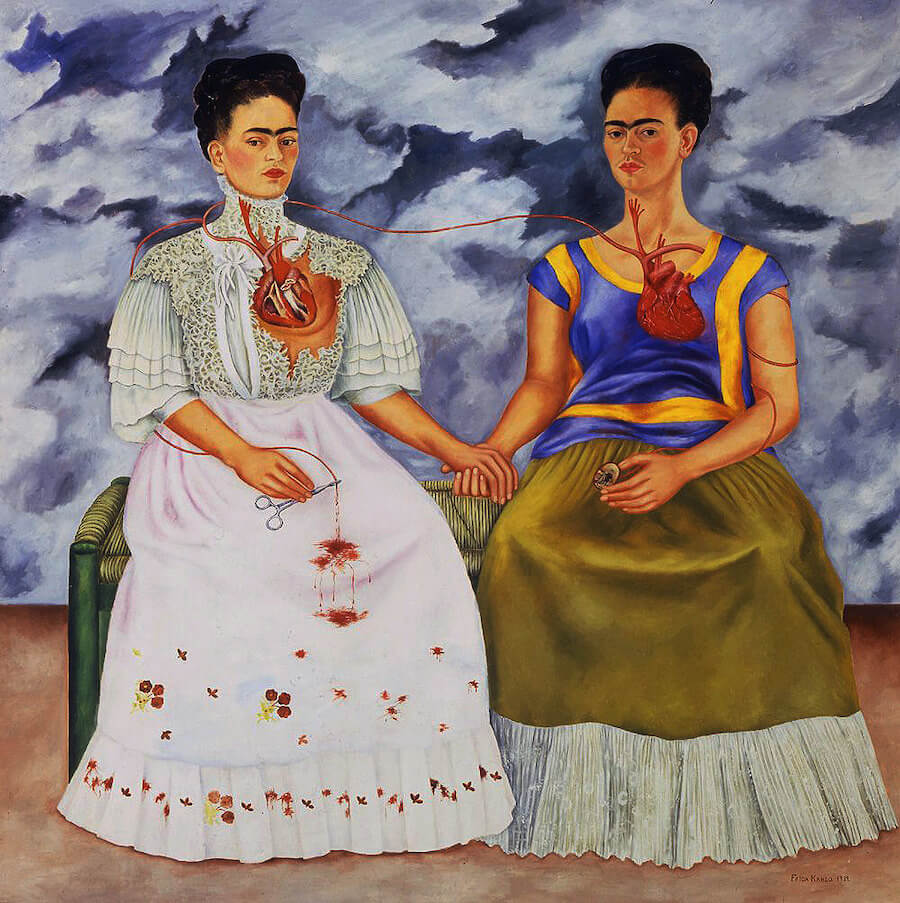
Some paintings capture a moment. Others capture a lifetime of emotions all at once. The Two Fridas is one of those rare works.
At first glance, you see two women sitting side by side, their hands gently intertwined. They share the same face, yet they couldn’t feel more different. One wears a traditional Tehuana dress with an exposed, whole heart. The other, dressed in a European-style white gown, holds a pair of surgical forceps as blood slowly stains her skirt from a severed artery. Between them, a single vein connects their hearts, suggesting that despite their differences, they remain inseparable.
Created in 1939, shortly after Frida Kahlo’s divorce from Mexican muralist Diego Rivera, The Two Fridas is widely regarded as one of her most personal and emotionally revealing paintings. Rather than presenting a polished self-portrait, Kahlo painted the emotional fracture she was living through. It is often interpreted as two versions of herself: one deeply rooted in her Mexican heritage and the other shaped by European influences; one loved and accepted, the other wounded and struggling to survive.
What makes this painting so unforgettable is its emotional honesty. At a time when women in art were often idealized as muses, symbols, or objects of beauty, Kahlo turned the canvas inward. She made herself both the artist and the subject, allowing vulnerability, pain, resilience, and identity to exist in the same frame. Instead of hiding emotional scars, she painted them with startling clarity.
The symbolism throughout the work invites viewers to look beyond the surface. The exposed hearts aren’t simply anatomical details, they become visual metaphors for love, loss, and endurance. The stormy sky behind the figures echoes the emotional turbulence within, while the joined hands quietly suggest that healing begins by accepting every version of ourselves, even the ones marked by heartbreak.
More than eight decades later, The Two Fridas continues to resonate because its questions remain universal. Who are we when relationships end? How do we reconcile the different identities we carry? Can strength and vulnerability exist together? Kahlo doesn’t offer easy answers. Instead, she reminds us that our contradictions are not weaknesses, they are part of what makes us whole.
Perhaps that’s why The Two Fridas still feels so deeply human. It isn’t simply a portrait of one woman after heartbreak; it’s a portrait of anyone who has ever tried to hold themselves together while quietly learning how to become whole again.
Mary Magdalene by Artemisia Gentileschi: Reclaiming One of History’s Most Misunderstood Women

Few women in Western art have been painted as often, or as narrowly, as Mary Magdalene. For centuries, she appeared as either a repentant sinner or an object of beauty, her story filtered almost entirely through the eyes of male artists. But when Artemisia Gentileschi picked up her brush, she painted something remarkably different: not a symbol, but a woman.
Created during the early seventeenth century, Mary Magdalene reflects Gentileschi’s extraordinary ability to bring emotional depth to biblical figures. Draped in luminous golden fabric, Mary looks upward with a quiet intensity, one hand resting against her chest as if caught in a deeply personal moment of reflection. The dramatic lighting, influenced by Caravaggio, illuminates her face and figure while the dark background draws every bit of attention to her expression rather than her appearance.
Artemisia Gentileschi knew what it meant to have her life defined by the judgments of others. One of the few professional women painters of the Baroque era, she overcame immense personal hardship and persistent barriers to build an artistic career that rivaled many of her male contemporaries. Her lived experiences gave her a rare sensitivity toward the women she painted, allowing them to exist with complexity, dignity, and emotional truth.
What makes Mary Magdalene so compelling is its refusal to rely on familiar stereotypes. Instead of portraying her through the lens of guilt or temptation, Gentileschi presents a woman immersed in her own thoughts. There is vulnerability here, but also resilience. Her upward gaze feels less like a plea for forgiveness and more like an expression of hope, contemplation, or inner transformation. The painting invites viewers to consider Mary not for the labels history assigned to her, but for the humanity that lies beneath them.
That shift in perspective was quietly revolutionary. At a time when women were often reduced to moral lessons or decorative figures, Gentileschi insisted on portraying them as individuals with emotional lives of their own. She didn’t simply illustrate a biblical story; she restored agency to one of its most misunderstood women.
More than four hundred years later, Mary Magdalene continues to resonate because it reminds us how powerful it is when women reclaim stories that have long been told about them. Through Artemisia Gentileschi’s eyes, Mary Magdalene becomes more than a religious figure, she becomes a portrait of resilience, introspection, and the enduring strength found in being seen with compassion rather than judgment.
The Child’s Bath by Mary Cassatt: Finding Beauty in Everyday Acts of Care
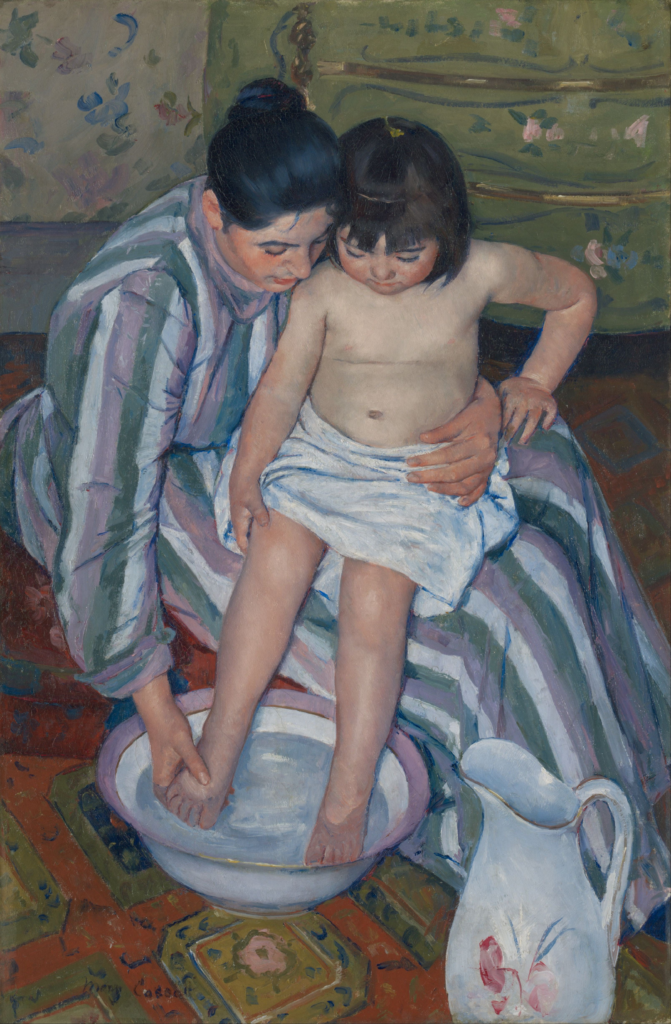
Some of the most extraordinary moments in life are also the quietest. A parent washing a child’s feet. A reassuring hand wrapped around a tiny arm. A shared silence that says more than words ever could. In The Child’s Bath, Mary Cassatt transforms one of these ordinary moments into something timeless, reminding us that love is often found in the smallest gestures.
Painted in 1893, The Child’s Bath is considered one of Cassatt’s greatest masterpieces and a defining work of Impressionism. Rather than depicting grand historical events or glamorous portraits, Cassatt turned her attention to domestic life, a subject often overlooked by the art world of her time. Here, a woman gently supports a young child while washing their feet in a basin of water. The figures are absorbed in the task at hand, creating an intimate world that feels untouched by the distractions beyond the frame.
Mary Cassatt was one of the few American artists closely associated with the French Impressionists, yet she forged a distinctly personal path. Throughout her career, she focused on the emotional bonds between women and children, not to idealize motherhood but to honor the tenderness, patience, and quiet labor that shape everyday life. Her paintings gave lasting significance to experiences that had long been dismissed as too ordinary to deserve artistic attention.
What makes The Child’s Bath so moving is its remarkable sense of closeness. Cassatt places the viewer almost within the scene, looking down as though witnessing a private family ritual. The carefully balanced composition, inspired in part by Japanese woodblock prints, draws the eye through patterned fabrics, gentle curves, and intertwined limbs before settling on the simple act of washing. Every detail works together to emphasize trust, protection, and care.
Unlike many nineteenth-century paintings of mothers and children, this work doesn’t rely on sentimentality or perfection. The figures are focused on one another rather than the viewer, making the moment feel authentic instead of staged. There is no performance here, only presence. Cassatt reminds us that caregiving is not defined by dramatic acts of sacrifice but by countless quiet moments that often pass unnoticed.
More than a century later, The Child’s Bath continues to resonate because it celebrates a universal truth: love is built through repetition, patience, and attention. In elevating an everyday ritual into a work of profound beauty, Mary Cassatt challenged the idea that only heroic subjects belonged in great art. Instead, she showed that the simple act of caring for another person can be just as worthy of remembrance.
In a world that often celebrates the spectacular, The Child’s Bath gently asks us to slow down and recognize the quiet moments that shape our lives. It is not simply a painting about motherhood, it is a portrait of human connection, painted with empathy, grace, and extraordinary tenderness.
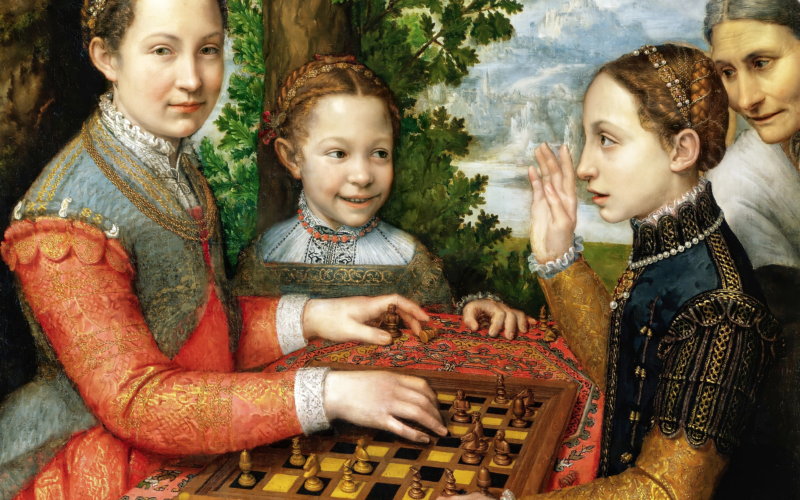
The Chess Game by Sofonisba Anguissola: Celebrating Girlhood, Intelligence, and Joy
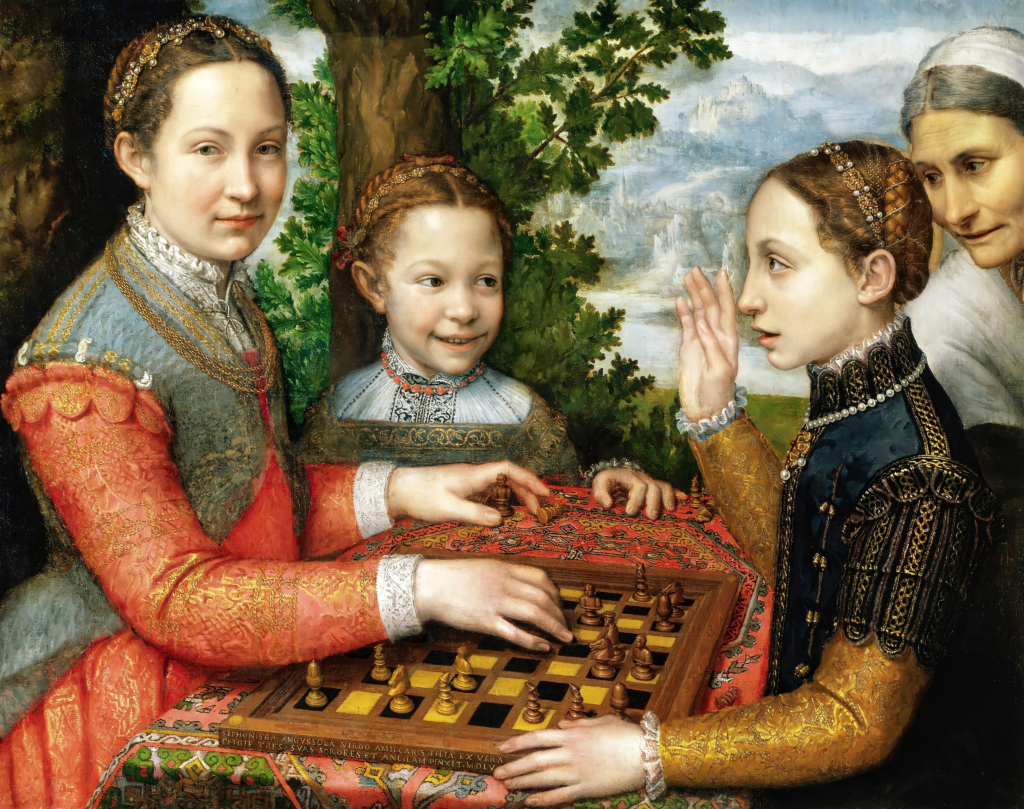
Long before women were welcomed into the great academies of Europe, Sofonisba Anguissola was quietly rewriting what women could accomplish as artists. In The Chess Game, she offers something that was remarkably rare for the Renaissance: a portrait of girls not as passive beauties or noble brides-to-be, but as curious, confident, and delightfully alive.
Painted in 1555, The Chess Game depicts three of Anguissola’s younger sisters gathered around a chessboard while an older maid watches over them. One sister has just made a winning move and smiles with unmistakable satisfaction, while another looks on with a mix of concentration and surprise. Their youngest sibling gazes outward with an expression that feels both playful and inviting, drawing viewers into the scene as though they’ve interrupted a lively afternoon at home.
Sofonisba Anguissola was one of the first internationally celebrated women artists of the Renaissance, earning recognition in an era when women were largely excluded from formal artistic training. Unable to study anatomy or paint the grand historical subjects reserved for male artists, she turned to the people she knew best, her family. Rather than seeing this limitation as a setback, Anguissola transformed it into an opportunity, creating portraits filled with warmth, personality, and psychological depth.
What makes The Chess Game so extraordinary is how naturally it celebrates the minds of young women. During the Renaissance, chess was associated with education, strategy, and intellectual discipline. By placing her sisters at the center of the game, Anguissola quietly challenged expectations about what girls could be. They are not ornamental figures posed for admiration; they are thinkers, competitors, and individuals with distinct personalities. Their expressions, gestures, and interactions feel so genuine that the painting almost resembles a candid photograph centuries before photography existed.
The work also reveals Anguissola’s remarkable ability to capture family life with tenderness and authenticity. The elegant clothing reflects the family’s noble status, yet it never overshadows the emotional heart of the painting. Instead, our attention remains on the subtle exchanges between the sisters, the victorious smile, the thoughtful glance, the quiet encouragement of the maid. These details make the scene feel surprisingly familiar, reminding us that sibling rivalry, shared laughter, and moments of pride are experiences that transcend time.
More than 450 years after it was painted, The Chess Game continues to resonate because it presents a vision of girlhood that feels refreshingly modern. Intelligence is celebrated, curiosity is encouraged, and joy is allowed to exist without apology. In a period when women were rarely given space to define themselves, Anguissola painted young girls exactly as they were: bright, capable, expressive, and wonderfully human.
Today, The Chess Game stands as more than a beautifully executed Renaissance portrait. It is a quiet but powerful reminder that changing the way women are represented in art doesn’t always require grand gestures. Sometimes, all it takes is showing girls exactly as they deserve to be seen, with confidence, dignity, and the freedom to simply be themselves.
Nancy and Olivia by Alice Neel: An Honest Portrait of Motherhood Without Illusion
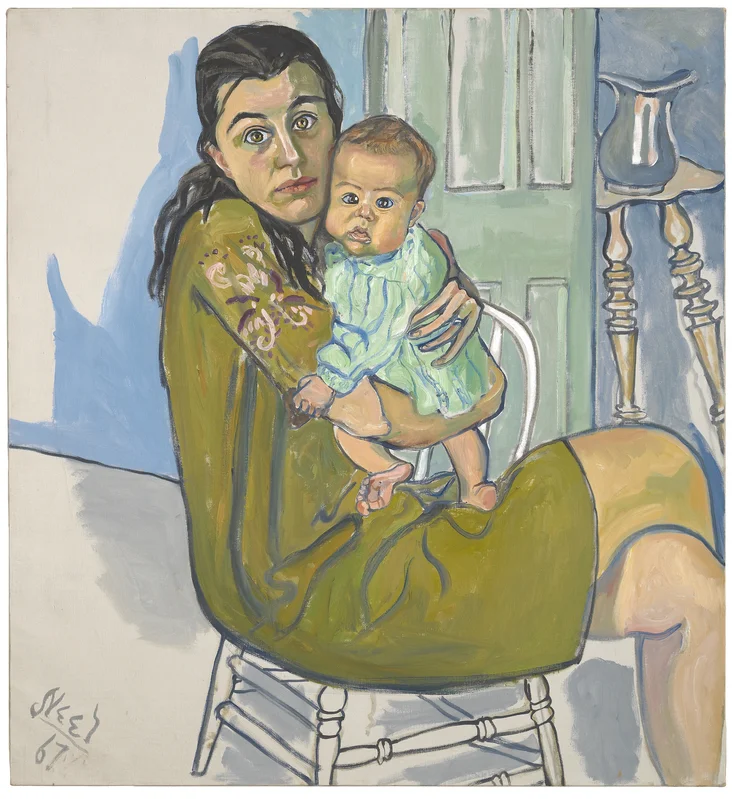
Motherhood has inspired artists for centuries, but it has often been painted through a lens of perfection. Mothers appear serene, children sit quietly in their arms, and every detail feels carefully composed to reflect an ideal rather than a lived experience. Alice Neel chose a different path. In Nancy and Olivia, she reminds us that motherhood is not about perfection, it is about presence, vulnerability, and the beautifully imperfect reality of caring for another human being.
Painted in 1967, Nancy and Olivia portrays Nancy, a close friend of Neel’s, seated with her young daughter Olivia. At first glance, the composition feels intimate and familiar. Yet the longer you look, the more you notice the emotional complexity beneath the surface. Nancy doesn’t wear the polished expression often associated with traditional portraits of mothers. Instead, she appears thoughtful, slightly weary, and completely absorbed in the quiet responsibility of holding her child. Olivia, nestled securely against her, brings warmth and spontaneity to the scene, creating a relationship that feels deeply authentic rather than staged.
Alice Neel built her career by painting people as they truly were, not as society expected them to appear. Working throughout much of the twentieth century, she became known for her psychologically rich portraits that embraced individuality, imperfection, and emotional honesty. Friends, family members, activists, artists, children, and neighbors all became subjects of her work, each portrayed with empathy and remarkable insight. Neel believed that a portrait should reveal something deeper than physical likeness, it should tell the story of a person’s inner life.
That philosophy is beautifully evident in Nancy and Olivia. Rather than idealizing motherhood, Neel captures its emotional weight alongside its tenderness. The mother’s protective embrace communicates love, but her expression also hints at exhaustion, reflection, and the countless unseen responsibilities that accompany raising a child. There is no attempt to disguise these realities. Instead, Neel allows strength and vulnerability to exist together, creating a portrait that feels profoundly human.
The painting also challenges traditional ideas about what makes a family portrait beautiful. Loose, expressive brushstrokes and bold colors replace polished realism, directing the viewer’s attention toward emotion rather than flawless technique. Every line and gesture feels alive, reflecting the unpredictability of real relationships. It is this honesty that makes the painting so compelling, inviting viewers to recognize their own experiences within its quiet intimacy.
Today, Nancy and Olivia continue to resonate because it reflects a truth that many people still long to see represented: love does not have to look perfect to be extraordinary. By painting motherhood with compassion instead of idealization, Alice Neel expanded the visual language of family portraiture, making room for complexity, fatigue, resilience, and unconditional affection.
More than a portrait of a mother and child, Nancy and Olivia is a celebration of authentic human connection. It reminds us that some of life’s most meaningful relationships are not defined by flawless moments but by the quiet, everyday acts of showing up for one another, again and again.
Girl Reading at the Window by Gwen John: The Quiet Strength of Solitude
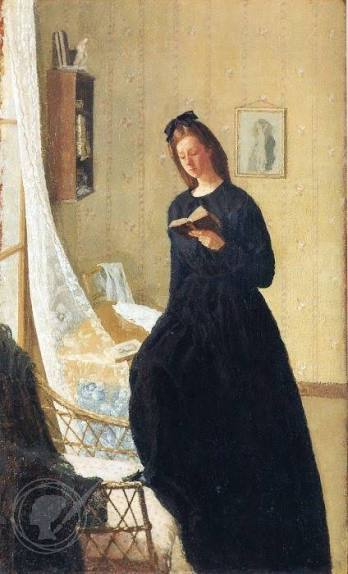
Not every powerful painting tells a dramatic story. Some simply invite us into a quiet moment and ask us to stay a little longer. Girl Reading at the Window is one of those rare works. There is no grand gesture, no elaborate symbolism, no obvious narrative, only a young woman lost in the pages of a book, bathed in soft light. Yet within that stillness lies a profound celebration of solitude, curiosity, and the rich inner world of women.
Painted in the early twentieth century, Girl Reading at the Window reflects Gwen John’s gift for finding beauty in life’s most unassuming moments. The young woman sits beside a window, absorbed in her reading, seemingly unaware of the viewer’s presence. Natural light gently fills the room, illuminating her figure while the muted palette and sparse surroundings create an atmosphere of remarkable calm. Rather than drawing attention to herself, she exists entirely within her own thoughts, making the scene feel intimate, almost sacred.
Gwen John spent much of her career pursuing a deeply personal artistic vision, often choosing quiet interiors and solitary figures over grand historical scenes. While many of her contemporaries sought recognition through bold statements and ambitious compositions, John embraced restraint. Her paintings reveal an extraordinary sensitivity to mood, proving that silence can be just as expressive as spectacle. Though her work was sometimes overshadowed by that of her brother, the painter Augustus John, Gwen developed a distinctive voice that continues to resonate for its emotional depth and understated elegance.
What makes Girl Reading at the Window so compelling is the way it presents solitude not as loneliness but as a source of strength. Throughout art history, women alone were often portrayed as waiting, grieving, or longing for someone beyond the frame. John’s reader, however, needs no such narrative. She is fully engaged with her own world, her attention devoted to learning, imagining, or simply enjoying a moment of uninterrupted peace. The painting quietly affirms that a woman’s inner life is worthy of attention in its own right.
The composition reinforces this sense of quiet independence. The soft light from the window doesn’t merely illuminate the room, it becomes a gentle metaphor for reflection and discovery. The uncluttered setting allows every subtle detail to matter: the relaxed posture, the bowed head, the stillness that surrounds her. Rather than asking viewers to admire the subject, John encourages us to share in her silence, reminding us that contemplation can be a powerful act in itself.
More than a century later, Girl Reading at the Window feels strikingly relevant. In a world filled with constant notifications, endless scrolling, and relentless demands for attention, the painting offers something increasingly rare: permission to slow down. It reminds us that reading, reflecting, and spending time alone are not escapes from life but meaningful ways of engaging with it.
Girl Reading at the Window is ultimately more than a portrait of a woman with a book. It is a quiet tribute to the value of an inner life. Through Gwen John’s gentle brushwork and thoughtful composition, we are reminded that some of the most transformative moments happen not in crowded rooms or dramatic events, but in the peaceful space where a person is simply alone with their thoughts.
Portrait of Madame M. by Tamara de Lempicka: Defining the Modern Woman with Style and Confidence
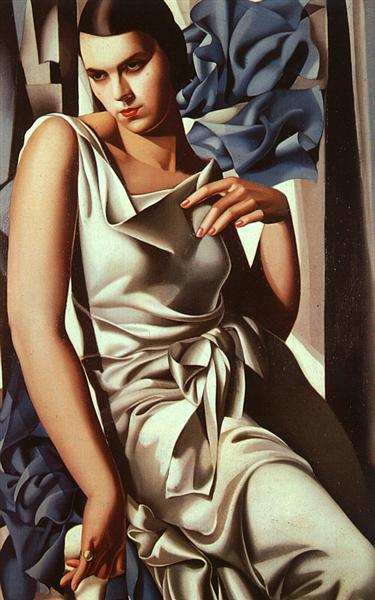
There are portraits that simply capture a person’s appearance, and then there are portraits that capture the spirit of an era. Portrait of Madame M. by Tamara de Lempicka does exactly that. With its striking elegance, sculptural forms, and unmistakable confidence, the painting introduces us to a woman who doesn’t ask to be admired, she expects to be seen on her own terms.
Painted during the height of the Art Deco movement, Portrait of Madame M. reflects the glamour and optimism of the 1920s and 1930s, a period when ideas about modern womanhood were rapidly evolving. Madame M. is depicted with impeccable poise, her sharply defined features and sophisticated attire embodying both refinement and independence. Every element of the composition, from the clean geometric lines to the luminous textures, contributes to an image of strength wrapped in elegance.
Tamara de Lempicka became one of the defining artists of the Art Deco era, celebrated for portraits that blended classical influences with a distinctly modern sensibility. Living in Paris during a time of immense cultural change, she painted aristocrats, performers, intellectuals, and socialites, creating images that reflected a new generation of women who embraced ambition, freedom, and self-expression. Her signature style, bold, polished, and unmistakably glamorous, challenged traditional ideas of femininity by replacing fragility with confidence.
What makes Portrait of Madame M. particularly compelling is its commanding presence. Madame M. does not appear as an accessory within an elaborate setting or as an idealized beauty created for someone else’s gaze. Instead, she occupies the canvas with quiet authority. Her direct posture, composed expression, and confident demeanor suggest a woman who is entirely comfortable with herself. Even in stillness, she radiates determination, intelligence, and self-possession.
Lempicka’s technical mastery further strengthens this impression. Her smooth, almost sculptural treatment of the figure gives the painting a sense of permanence, while the crisp contrasts of light and shadow create a polished elegance that became synonymous with Art Deco. Yet beneath the luxurious surfaces lies something more meaningful: a portrait of a woman defining herself rather than being defined by others.
That perspective was remarkably progressive for its time. As women gained greater social and professional independence during the early twentieth century, Lempicka’s portraits reflected these changing realities. Her subjects were not passive figures waiting to be admired, they were individuals with agency, ambition, and unmistakable presence. Through her work, femininity became something powerful, sophisticated, and unapologetically modern.
Today, Portrait of Madame M. continues to captivate audiences because its message feels as relevant as ever. Confidence never goes out of style, and neither does the courage to embrace one’s individuality. More than a beautifully executed portrait, the painting celebrates the idea that elegance and strength can coexist, proving that women need not choose between grace and power.
As the final work in this collection, Portrait of Madame M. offers a fitting conclusion to the remarkable journey these seven paintings have taken us on. From Frida Kahlo’s exploration of identity to Tamara de Lempicka’s vision of unapologetic confidence, these artists transformed the way women were represented in art. They painted women not as ideals to aspire to, but as complex, resilient, intelligent, and deeply human individuals whose stories continue to inspire us today.
For centuries, women appeared in paintings as queens, saints, muses, mothers, and myths. Their faces filled galleries, but their voices were often absent. These stories were largely imagined through someone else’s perspective, shaped by ideals that didn’t always reflect the realities of women’s lives.
The seven paintings in this collection tell a different story.
From the fractured identity explored in Frida Kahlo’s The Two Fridas to the quiet resilience of Artemisia Gentileschi’s Mary Magdalene, from the everyday tenderness of Mary Cassatt’s The Child’s Bath to the spirited intelligence captured in Sofonisba Anguissola’s The Chess Game, each artwork reminds us what changed when women became the ones holding the brush. Alice Neel’s Nancy and Olivia embraced the complexities of motherhood without romanticizing them, Gwen John’s Girl Reading at the Window celebrated the richness of a woman’s inner world, and Tamara de Lempicka’s Portrait of Madame M. introduced a vision of modern femininity defined by confidence and self-possession.
Together, these paintings span more than four centuries, yet they share something remarkable. They refuse to reduce women to symbols or stereotypes. Instead, they reveal women as people, complex, thoughtful, resilient, joyful, uncertain, ambitious, and deeply human. Whether through moments of heartbreak, quiet reflection, familial love, or unapologetic confidence, these artists painted experiences that continue to resonate long after the paint dried.
Perhaps that’s why these works still feel so relevant today. They remind us that representation isn’t simply about who appears in a painting; it’s about who gets to tell the story. When women painted women, they expanded the possibilities of art itself, replacing idealized images with honest ones and creating space for emotions, perspectives, and lives that had too often been overlooked.
As we continue discovering and celebrating women artists across generations, these masterpieces invite us to look beyond technique and beauty alone. They encourage us to see the courage behind every brushstroke and the lived experiences behind every canvas. In doing so, they remind us that some of the most powerful works of art are not those that tell us who women should be, but those that allow women to define themselves.
Which painting by a woman artist would you add to this list?
Curious how great artists found their creative voice? Take a look at 7 Childhood Artworks by the World’s Greatest Artists and discover the early works that hint at the brilliance to come.