
The Art Business — Part 06: How to Apply for Art Grants and Residencies
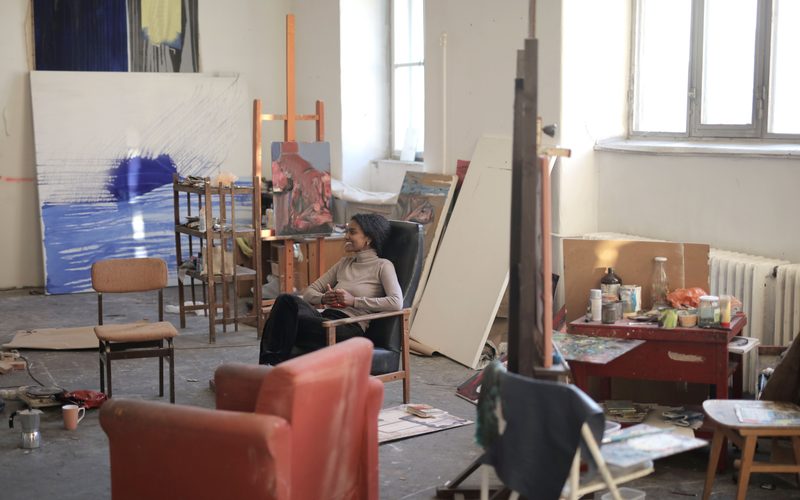
There is a particular kind of freedom that comes with having the time, space and resources to focus on your art. For many artists, that freedom can feel difficult to find.
There are studio costs to cover, materials to buy, exhibitions to prepare for, projects that need funding and ideas that require more time than a busy working life allows. Sometimes an artist does not need another opportunity to sell their work. They need a few uninterrupted weeks to research. They need access to a studio, new equipment, travel support, mentorship, or simply enough financial breathing room to make the work they have been thinking about for months.
This is where grants and residencies can become important. A grant can provide financial support for an artist, project or period of research. A residency can offer dedicated time and space, sometimes alongside accommodation, a stipend, equipment, mentorship, professional development or opportunities to connect with other artists.
They can open doors, but getting one is rarely as simple as filling out a form and attaching a few images. A strong application begins much earlier.
It begins with finding the right opportunity, understanding what the organization is actually looking for, and being able to explain your practice and your proposed project clearly.
Start With The Right Opportunity
Before you begin writing, spend time finding opportunities that genuinely fit your practice. This sounds obvious, but it can save artists an enormous amount of time.
Not every grant is designed for individual artists. Some are only open to nonprofit organizations, collectives, specific disciplines, particular geographic areas, or artists at a certain career stage. Some residencies may be intended for emerging artists, while others require several years of professional experience. Some are built around a particular location, medium, theme or research area.
Read the eligibility requirements before you start preparing anything. For example, the National Endowment for the Arts’ current Grants for Arts Projects program is primarily designed for eligible U.S. organizations rather than individual artists, which means an individual artist searching for funding needs to look beyond that particular program.
Residency requirements can be equally specific. The Joan Mitchell Center’s 2027 Artist-in-Residence program, for instance, has particular geographic and career-related eligibility requirements, alongside expectations around professional practice and participation.
The lesson is simple: Do not begin with the application. Begin with the opportunity.
Ask yourself:
- Am I eligible?
- Does the opportunity accept my medium or discipline?
- Is it for individuals, collectives or organizations?
- Does the location matter?
- Does my career stage fit?
- What exactly does the opportunity provide?
- What will I be expected to do in return?
- Is there an application fee?
- Are travel, accommodation and materials covered?
- What is the deadline and, importantly, which time zone does it use?
A residency that sounds exciting but does not fit your circumstances may not be worth spending three days applying to.
Understand What The Opportunity Is Offering
The word “residency” can mean very different things depending on the organization. One might offer accommodation and a private studio. Another might offer only a workspace. Another could provide a stipend, mentorship, public programming or access to specialist equipment.
The same applies to grants. Some provide project funding. Others support research, professional development, travel, production, education or a particular community initiative.
Read the details carefully. Do not assume that “funding” means unrestricted money you can spend however you want. Many grants have eligible and ineligible expenses, reporting requirements or specific project periods.
The NEA, for example, provides detailed information about eligible activities, costs, budgets, review criteria and reporting requirements in its grant guidelines. It also recommends that applicants familiarize themselves with award-management requirements before applying.
For artists, this is more than administrative reading. It helps you understand what kind of project the funder actually wants to support.
Write About The Work You Are Actually Doing
Your artist statement should help someone understand your practice without making them work too hard. You do not need to fill it with complicated language to make your work sound serious. Explain what you make. Explain what interests you. Explain the questions, experiences, materials or ideas that shape the work. And explain how the current project fits into that larger practice.
Residency programs frequently ask artists to describe their current practice as well as what they hope to develop during the residency. ACRE, for example, specifically advises applicants to be detailed and avoid generic responses when describing their practice and how they would benefit from the residency.
Try to tell the reader what your work is actually about:
What materials do you use? What kinds of images or subjects return again and again? What have you been investigating recently? What has changed in your work over the last year? The goal is not to sound impressive. The goal is to make the reader understand you.
Your Project Proposal Should Have A Clear Direction
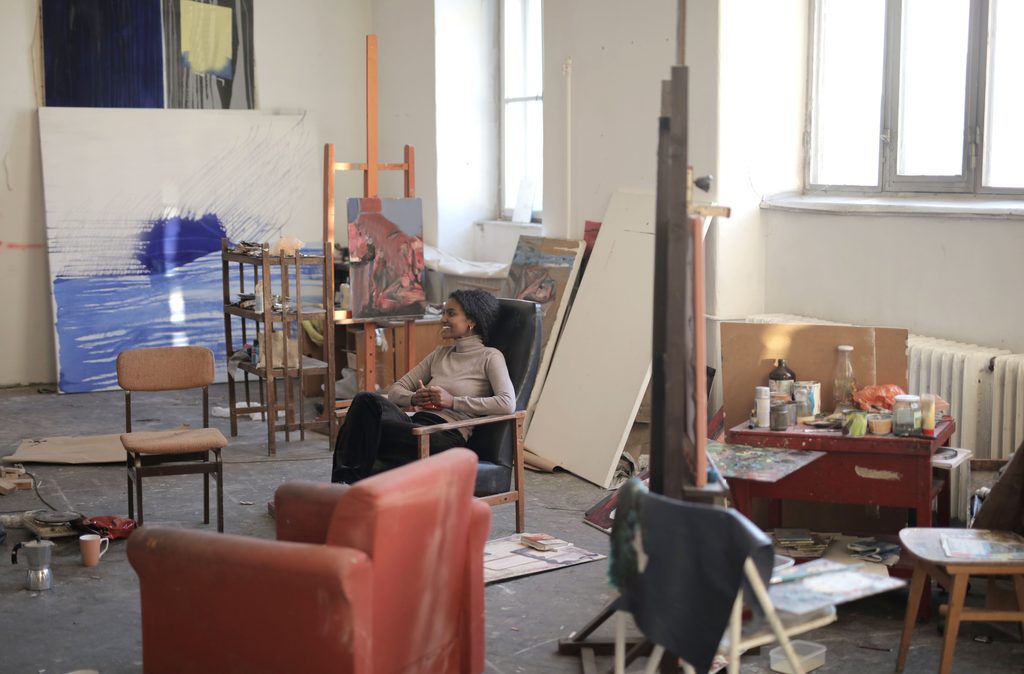
For many grants and residencies, the project proposal is where the application becomes specific. This is where you move from “this is who I am as an artist” to “this is what I want to do.”
A good proposal does not necessarily need to describe a perfectly finished artwork. Especially in a residency, some of the value lies in experimentation and discovery. Instead, explain the direction of your research or making.
What do you want to investigate? Why now? What would you like to experiment with? What materials or processes might you use? What would you need? What could the residency environment make possible that your current situation does not?
For example, a proposal might explain that an artist wants to develop a series of paintings based on local architecture, spend several weeks researching archival photographs, experiment with a larger scale, or explore a new material that requires specialist equipment.
The project can evolve. But the reader should understand why you need the opportunity. Banff Centre’s visual arts residency application, for example, asks applicants to describe the conceptual framework of their proposed project, how they would execute it, the mediums involved and any technical or support requirements.
That gives you a useful way to think about your own proposal: What do I want to make, why do I want to make it, and what does this particular opportunity make possible?
Your Artist Portfolio Makes A Lot of Difference
Your portfolio is often the part of the application that speaks before you do. And more is not always better. A selection panel does not need to see every artwork you have ever made. They need to see enough of your strongest, most relevant work to understand your practice.
Yaddo, for example, explicitly advises applicants to submit recent finished work that represents the project they wish to pursue and states that the work sample carries the most weight in its application. That should change how you select your images. Do not automatically choose your ten most recent works.
Choose the works that communicate something. Think about whether the selection shows:
- A consistent artistic voice
- Strong technical ability
- Your current direction
- Relevant experience with the proposed project
- Range where useful, without making the portfolio feel disconnected
- Work that is properly documented
If you are applying for a residency to develop a body of experimental sculpture, a portfolio dominated by unrelated digital illustrations may make it harder for the panel to understand why you are a good fit. Your portfolio should create a clear thread.
Photograph Your Work Properly
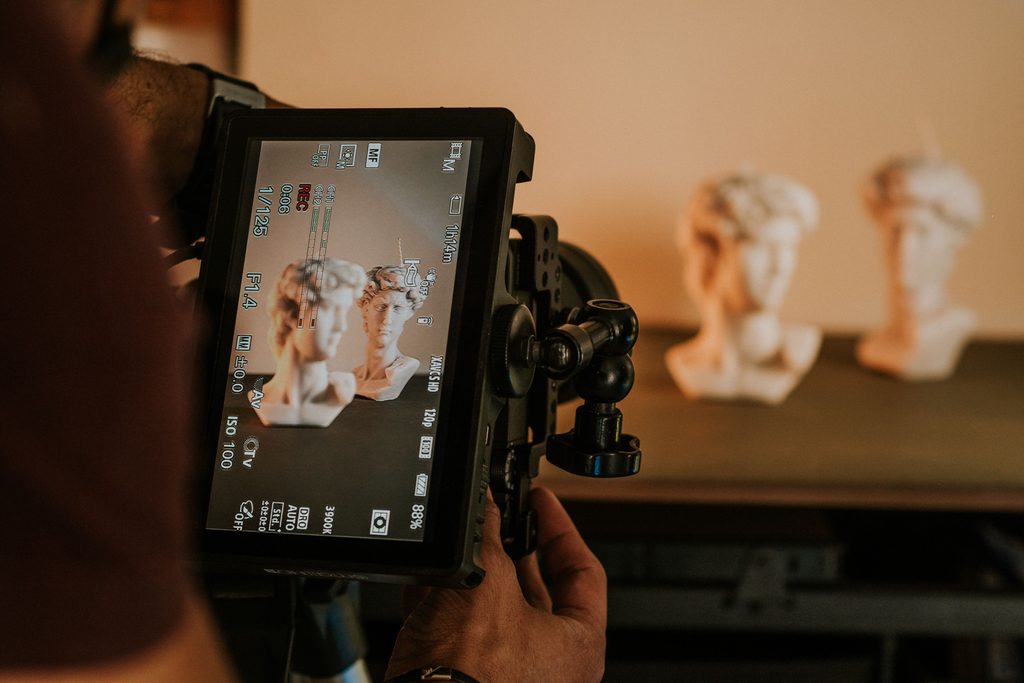
You can have an excellent body of work and still weaken your application with poor documentation. Take clear, well-lit photographs.
Make sure the artwork is straight and properly framed within the image. Avoid distracting backgrounds. If installation views are important, include them where requested. For three-dimensional work, show enough angles to communicate the object.
And caption everything clearly. At minimum, captions often include the title, year, medium and dimensions, although you should always follow the specific application’s requirements. For video, performance or time-based work, pay attention to the exact instructions. Some applications request a particular duration or excerpt.
ACRE, for example, asks applicants submitting time-based work to identify relevant timecodes and provide concise contextual information such as title, year, duration and medium. The portfolio is not the place to make reviewers guess what they are looking at.
Make Your CV Work For You
Your CV does not need to prove that you have already had a huge international career. It needs to accurately show where you are in your career. Include relevant exhibitions, residencies, publications, awards, education, collections, commissions, talks and other professional activity where applicable.
Keep it readable. And do not exaggerate. If you are early in your career, that is okay. A concise CV that clearly communicates an emerging practice is much stronger than one padded with irrelevant information. Different programs have different expectations. The Finnish Cultural Foundation’s residency guidelines, for example, request a CV of no more than three pages alongside a portfolio.
Always follow the opportunity’s own requirements rather than assuming every residency wants the same format.
Budget Like An Artist, Not A Dreamer
For grants, the budget is not an afterthought. It is part of your argument. If you are asking for funding to create a new body of work, explain what the money will actually support.
Materials. Studio costs. Equipment. Fabrication. Travel. Research. Artist fees. Installation. Documentation. Shipping. Whatever is relevant to the project and allowed under the grant. The numbers should make sense alongside the proposal.
If your project describes a large-scale installation but your budget only includes the cost of paint, the panel may naturally have questions. Likewise, do not inflate your budget simply because the fund allows you to request a certain amount.
The National Endowment for the Arts provides applicants with a project budget template and specifically encourages applicants to prepare their budget in advance. A clear budget tells the reviewer that you understand what the project requires.
Explain Why This Place, Not Just Any Place
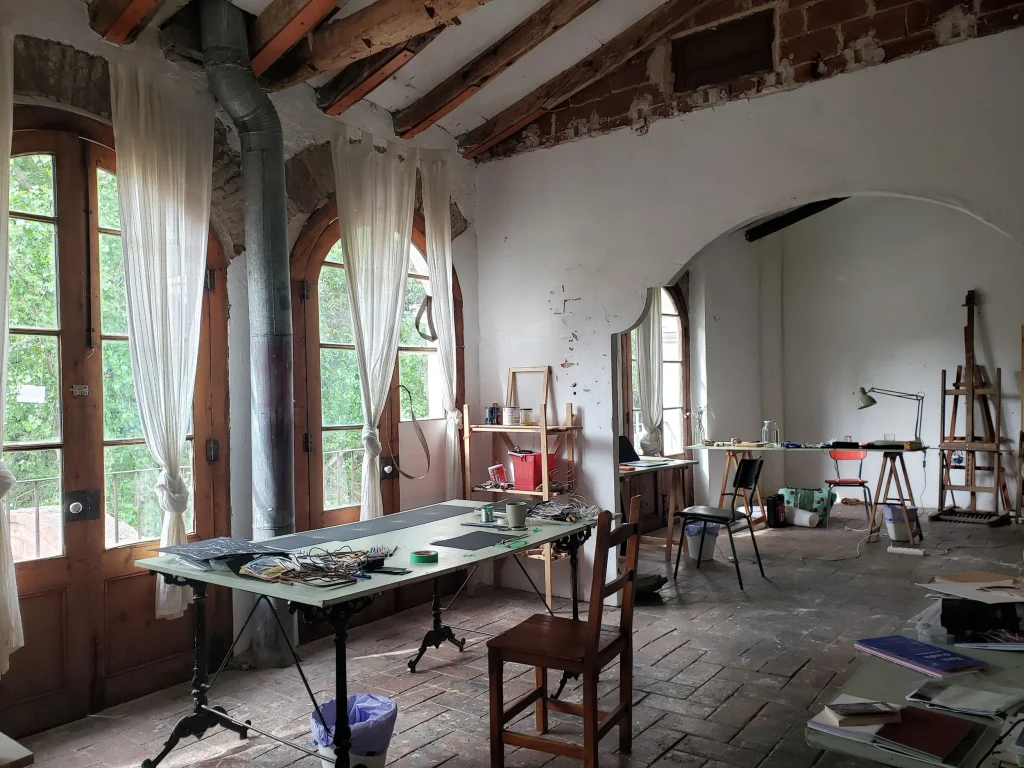
This is especially important for residencies. A residency is not simply a free studio in another city. Every place has its own context, community, resources and possibilities. If the residency is located somewhere with a particular cultural, historical or environmental context, think about how that connects with your practice.
Do not write:
I have always dreamed of visiting this beautiful place.
Write about what the place offers your work. The Saudi Art Residency program, for example, asks applicants to explain their motivation for choosing the residency and how it could help their career, alongside a clear project description and information about their practice. The residency should feel like part of the project, not simply the destination.
Keep A Master Application Folder
One of the best things an artist can do is prepare before the perfect opportunity appears.
Create a folder containing:
- Artist statement
- Short biography
- Long biography
- CV
- Portfolio PDF
- High-resolution artwork images
- Artwork captions
- Project proposal template
- Budget template
- References
- Links to exhibitions and publications
- Professional photograph
Then keep updating it. This does not mean copying the same application every time. It means you are not starting from an empty document at 11:47 p.m. on deadline day. You can then spend your energy tailoring the application rather than searching for the correct version of your CV.
Do Not Let Rejection Become A Verdict
You will probably be rejected. Most artists applying for competitive grants and residencies will experience this more than once. A rejection does not necessarily tell you that the work was not strong.
There may have been hundreds of applications for a handful of places. The panel may have been looking for a particular medium, project, career stage, geographic connection or combination of artists. Some programs are designed to build a particular cohort, so selection can depend on how applicants fit together.
The British Council’s Arts Residency Grants Programme in Pakistan and the UK, for example, has received hundreds of applications for a comparatively small number of residency places across its cycles.
So apply again. But do not simply send the exact same application. If feedback is available, use it. If you have made new work, update the portfolio. If your project has changed, rewrite the proposal. If your practice has developed, let the application show that development. Every application can become part of the process of understanding your own practice more clearly.
Make The Application Sound Like You
Perhaps the most important thing is also the easiest to forget. The person reading your application wants to understand the artist behind the documents. Do not turn your writing into a collection of impressive-sounding sentences that you would never say yourself.
You do not need to sound academic if you are not an academic artist. You do not need to use complicated language to prove that your work is thoughtful. You need to be clear. Tell them what you are doing, why it matters to your practice, what you want to explore next and why their particular opportunity could help you do it.
The strongest application is not necessarily the one with the biggest vocabulary. It is the one where the connection between artist, work, opportunity and next step feels clear.
Give Your Practice Room To Grow
Grants and residencies are not only about getting money or adding another line to a CV. At their best, they give artists something that can be surprisingly difficult to find: room. Room to experiment. Room to fail. Room to research an idea that may not immediately become a finished artwork.
Room to meet other artists, learn a new process, enter a different environment or spend uninterrupted time with your own practice. That is why it is worth applying even when the opportunity feels slightly beyond where you are now.
Read the requirements carefully. Prepare your materials. Choose opportunities thoughtfully. Give yourself enough time to make the application genuinely yours. And then send it. You may not be selected every time.
But with each application, you are doing something valuable beyond chasing an opportunity. You are learning to articulate what you make, where your practice is going and what kind of support would help you get there. Sometimes, that clarity becomes the beginning of the next chapter long before the acceptance email arrives.
Editor’s Note:
Last 2 weeks to apply to our open call for the latest 101 Art Book: Texture Edition, with Rachel Burke as our Guest Curator. If you have been thinking about submitting, now is the time.