
I Think We’ve Forgotten Looking at Art
The last painting I looked at was about three inches tall. It sat on my phone between a video of someone icing a cake and an ad for running shoes.
I gave it maybe two seconds, liked it, and kept moving. I could not tell you the scale of it, the color underneath, or whether the paint was thick or thin.
This is not an admission of guilt. It’s a description of the normal condition. For most people who love art, including the ones who work in it, the screen is where art actually lives now. The gallery is like an occasional high school field trip.
My argument on looking at art is that the world has stopped giving art its time, attention, and patience, and that we’ve hidden this loss from ourselves by getting very good at knowing things about art instead. The problem is, we can know the artist’s biography, medium, price, exhibition history, and inspiration and still not be really looking at art.
Art Now Arrives The Size Of A Thumbnail
Think about the container a painting reaches you in. A small rectangle, cropped to fit a square or a portrait frame, sitting under a caption and above a comment section, with a like count already attached and something else waiting one flick away.
Now, when you are trying looking at art, every element in that frame is asking for a share of your attention, and the painting is the slowest thing in it. Words are easier than really looking into the depth of art, so the caption usually wins. Usually because, in captions, someone does the understanding for you. Numbers are easier than words, so the like count often wins before the caption. If we like an art and it has less engagement, we start to second-guess our choice.
The crux of the matter is that art now arrives pre-judged. Before you have decided anything for yourself, you can see how many people approved and what they said about it. That is a strange way to meet a painting.
I want to be careful here, because reproductions are not the enemy. Photographs of paintings have existed for well over a century, and they have been genuinely useful to students, artists, and anyone who will never fly to Madrid. What changed is that the reproduction stopped being a reminder of an encounter and became the encounter itself.
We Stopped Getting Swallowed By Paintings
The first thing a screen takes away is size.
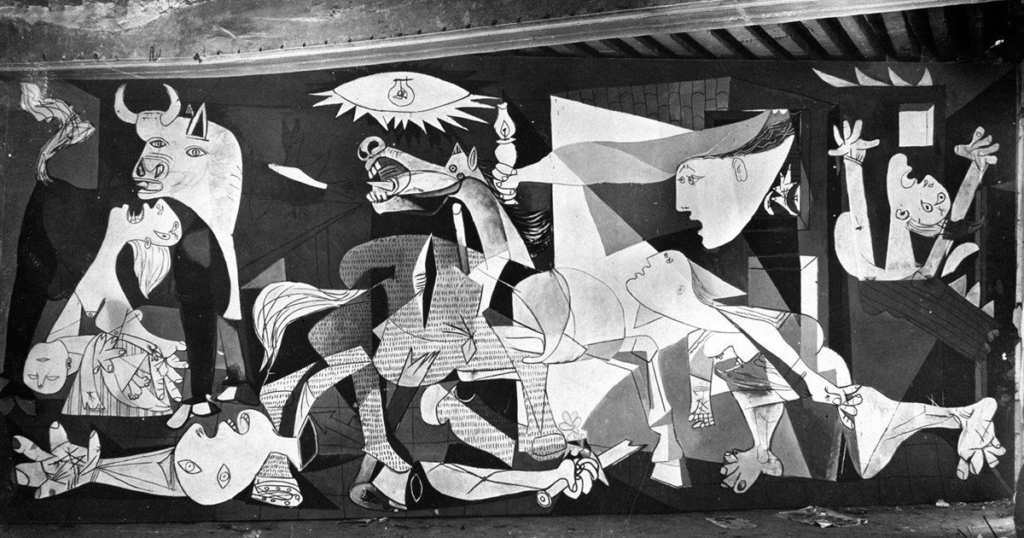
Picasso’s Guernica is eleven feet tall and over twenty-five feet across. Standing in front of it at the Reina Sofía, you cannot hold the whole thing in your vision at once. You have to turn your head. Your body gets pulled into the transaction because you’re forced to choose what to look at and then keep choosing. On a phone, it becomes the same size as a photo of somebody’s lunch, and every one of those choices gets made for you by the cropping.
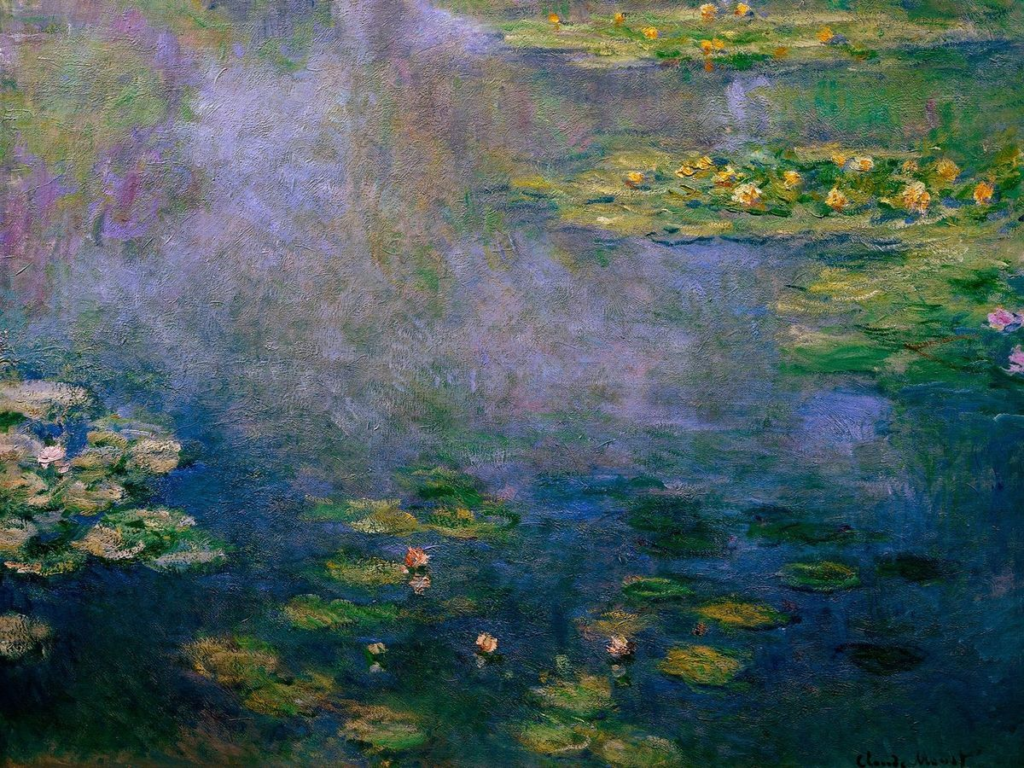
Monet went further. He gave eight water lily compositions to the French state and then spent years working with the architect Camille Lefèvre on the rooms that would hold them. Two oval rooms, laid out to form the shape of an infinity symbol, lit from above by daylight so the paintings shift as clouds pass. He specified the order of the panels and the spacing between them. The idea was that a visitor would stand inside the work rather than in front of it, with no clear beginning and no obvious place to stop.
You cannot reproduce that looking at art on our phones.
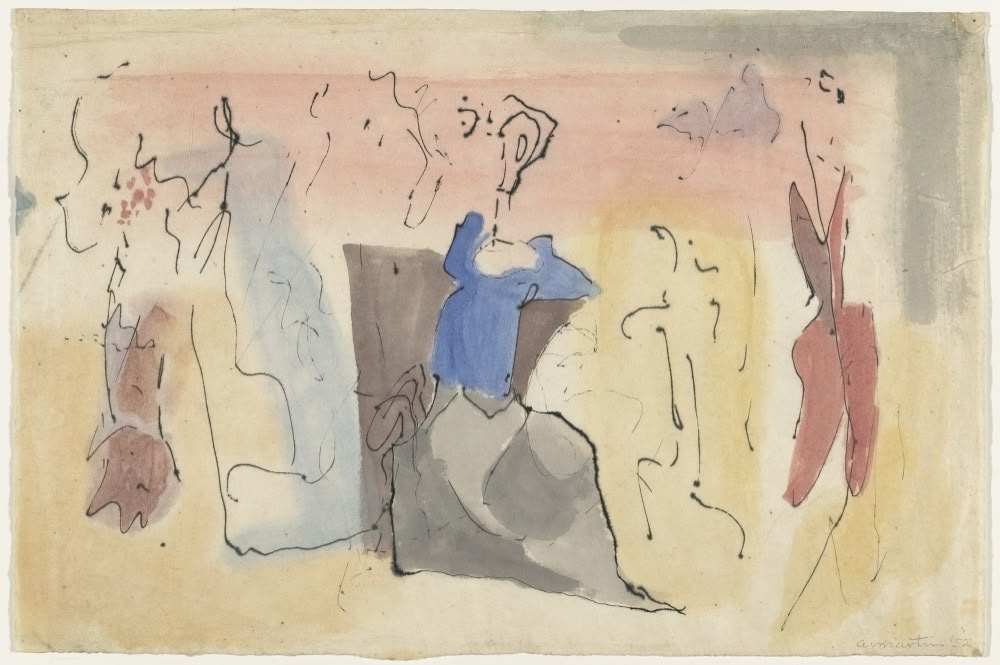
Agnes Martin barely survives photography at all. Up close, you see a pencil line drawn by a human hand, wobbling slightly as it crosses the canvas. Step back, and the grid dissolves into a field of pale color. Both facts disappear on a screen, and what’s left looks like an empty square, which is why people who have only seen Martin online tend to think she’s a joke.
Being swallowed by a painting requires a room, a body, and time. We have kept the image and quietly discarded the other three.
Knowing About Art Is Not The Same As Looking At Art
As I was saying in the beginning, you can know an artist’s birth year, training, medium, gallery representation, auction record, exhibition history, and the biographical crisis that supposedly explains the late work. You can know every bit of that and still never have looked at the painting for ten unbroken seconds.
This confusion frustrates me more than any other because it hides so well. Art knowledge is countable, shareable, and useful at parties. Art experience is none of those things. It’s private, slow, and almost impossible to describe without sounding foolish. So we default to the version we can perform for other people.
I watch it happen in galleries constantly. A visitor stops, reads the wall text, nods, and says something completely accurate about the artist’s influences and the period. Every word of it is correct. She has not been looking at art. The label did the looking, and she did the summarizing, and both of them walked away satisfied.
I don’t blame curators for this. Information is a generous impulse. But information that arrives before the work will always get there first in the mind, and it settles the question before the eye has had a chance to ask one.
Read More: Do We Misunderstand Contemporary Art, or Simply Dismiss It?
Art knowledge is not a substitute for art experience. It is a very convincing costume worn by people who have run out of patience, and most of us are wearing it.
We Decide What Art Is Worth By Looking At The Artist First
This part is uncomfortable.
We look at the artist before we are looking at art. Follower count, gallery name, residency list, who reposted it, which fair it showed at, and which collector bought the last one. Only after all of that do we let ourselves have a reaction to the painting.
The order is what matters. Social proof arrives first and quietly sets a ceiling on the response. A canvas posted by an account with two hundred followers gets read as student work, slightly awkward, and trying too hard. The same canvas posted by a well-known account becomes deliberate, restrained, and confident. The paint did not change. The frame around it did.
Collectors do this. Galleries do it because a name is far easier to sell than a surface. Artists do it to each other constantly, usually while insisting they don’t.
Read More: How to Start Collecting Art
I understand why. There is an enormous volume of art and almost no time, and reputation is a shortcut that works often enough to feel reasonable. But the cost is that we have handed the first judgment to somebody else. By the time we finally look at art, we are mostly confirming a verdict that was reached before we arrived.
Maybe We Should Be Looking At Art Less Widely And More Slowly
The art historian Jennifer Roberts asks her students to sit with a single work for three hours. She ran the exercise on herself with Copley’s A Boy with a Flying Squirrel, painted in 1765. Nine minutes passed before she noticed that the shape of the boy’s ear repeats the ruff of fur along the squirrel’s belly. Forty-five minutes before, she saw that the folds in the background curtain copy the shapes of the boy’s ear and eye.
Nothing there was hidden. It had been sitting in the open since 1765, available to anyone willing to stand still. Nine minutes is longer than most people now spend in an entire gallery room.
So my guess is that the number of works we see has very little to do with how much art gives back. Standing in front of one painting twice would do more for most of us than another exhibition, another fair, another saved folder of images we will never open again.
The art is not going anywhere. Copley’s boy has been holding that squirrel for more than two hundred and fifty years, and he will keep holding it. Whatever we’ve lost is on our side of the frame.
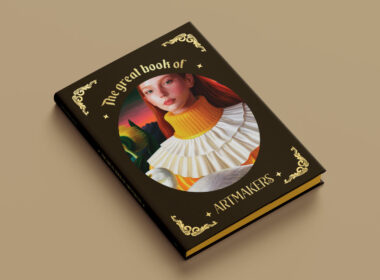
Postscript: A printed book is one of the last places art gets a full page to itself, with no caption underneath and no comment section below it. The 101 Art Book: Portrait Edition holds work from 101 artists, one page each.