
The Latest in the Art World: Museums, Masterpieces, and a Market in Motion
The art world is moving through a moment of change, where looking back at history is becoming inseparable from rethinking how it is preserved, presented, and experienced. This week brings major announcements from some of the world’s most important cultural institutions, from the Uffizi’s ambitious transformation in Florence and the Prado’s imaginative use of AI to reinterpret Old Master paintings, to new exhibitions bringing Fernando Botero and Yoshitomo Nara back into focus. At the same time, the conservation of Correggio’s fragile masterpiece offers a reminder of the painstaking work required to protect art for future generations, while a $450 million collection headed to Sotheby’s puts the spotlight firmly on the market. And as museums face growing questions around institutional independence, the role of cultural institutions themselves is increasingly part of the conversation.
Fernando Botero’s First London Solo Show in Over a Decade Opens This October
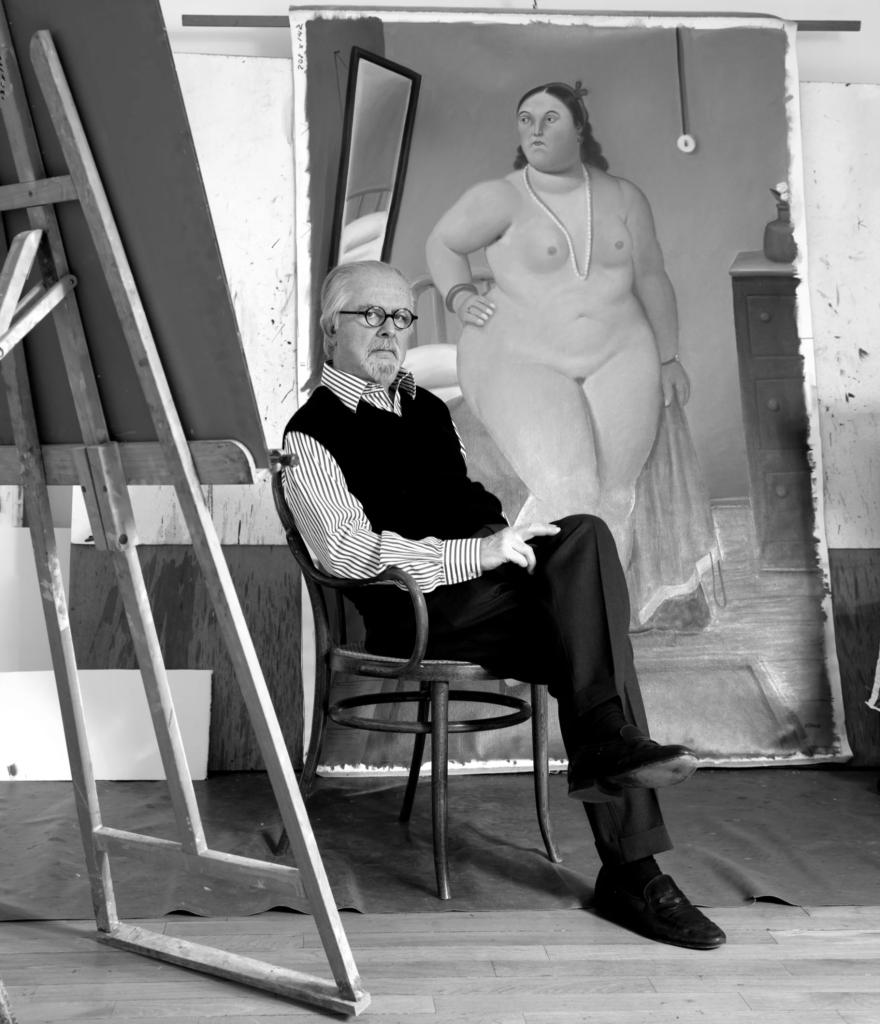
Fernando Botero is returning to London this fall with his first solo exhibition in the city since 2015. Opening at Opera Gallery on October 12, “Fernando Botero: In Praise of an Amplified World” will bring together paintings, drawings, and sculptures spanning nearly six decades of the Colombian artist’s career, coinciding with the opening of Frieze London.
Rather than treating Botero’s distinctive figures as caricatures, the exhibition focuses on volume and proportion as the foundation of his visual language. Works from the mid-1960s through the final year of his life will explore how the artist transformed familiar people, objects, and scenes through an exaggerated sense of physical presence.
The exhibition also traces Botero’s deep engagement with art history. His early years as a copyist at Madrid’s Museo del Prado, where he studied and sold copies of works by Diego Velázquez and Francisco Goya, became an important foundation for his practice. The exhibition highlights this ongoing dialogue with European masters including Piero della Francesca and Pablo Picasso.
The presentation comes amid renewed interest in Botero’s work following his death in 2023. His auction market reached a high in 2024, with total sales reportedly reaching $53.8 million and his 1979 painting The Musicians setting a $5.1 million auction record at Christie’s.
Following its London presentation, the exhibition will offer another opportunity to reconsider the ideas behind Botero’s instantly recognisable style—and the role of proportion, volume, and art history in shaping it.
The Prado Reimagines Old Masterpieces Under the Light of a Solar Eclipse
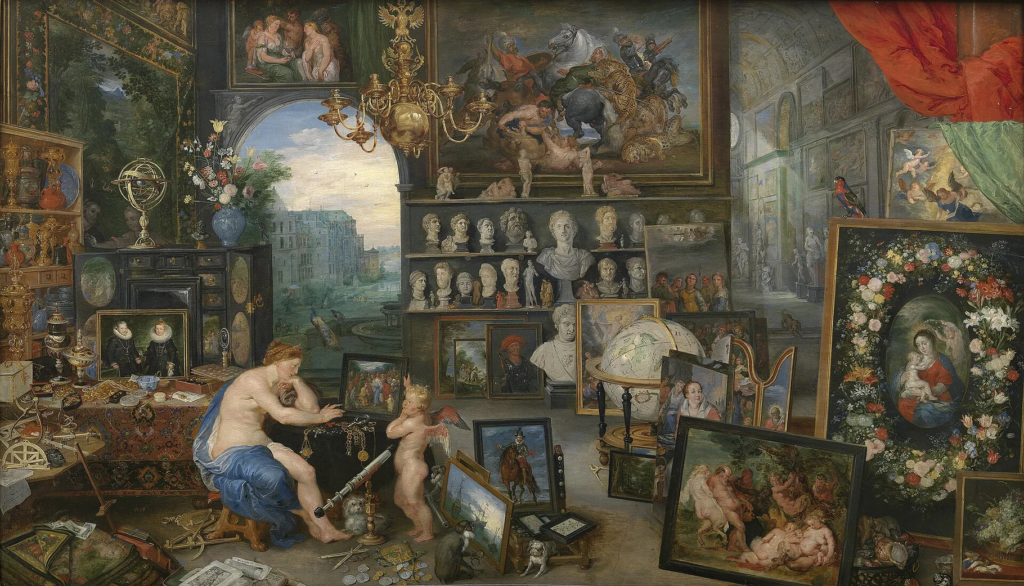
The Museo Nacional del Prado in Madrid has turned to AI to imagine how some of its most celebrated paintings might appear during a solar eclipse. Titled “The Prado by the Light of the Eclipse,” the one-minute video digitally transforms 11 works from the museum’s collection, including Diego Velázquez’s Las Meninas, Francisco Goya’s El Quitasol, and Peter Paul Rubens and Jan Brueghel the Elder’s The Sense of Sight.
Created to coincide with Spain’s total solar eclipse on August 12, the video gradually casts the paintings into darkness, altering their light, shadows, and reflections while keeping their original compositions intact. The project was produced by Madrid-based studio AMB Piensa using AI video-generation tools alongside traditional animation and manual adjustments.
The Prado has positioned the experiment as both a creative exploration and a form of cultural outreach. By manipulating the lighting of familiar works, the project draws attention to the artists’ original treatment of light and shadow, qualities particularly evident in paintings such as Las Meninas and Goya’s El Quitasol.
The project also connects the eclipse to a much longer relationship between astronomy and art. From religious depictions of eclipses to Howard Russell Butler’s early 20th-century paintings of solar events, artists have long attempted to capture the fleeting transformation of light caused by the phenomenon. The Prado’s experiment brings that tradition into the digital age, offering a new way to experience paintings that have already been studied for centuries.
Uffizi Galleries Announce a $57 Million Transformation
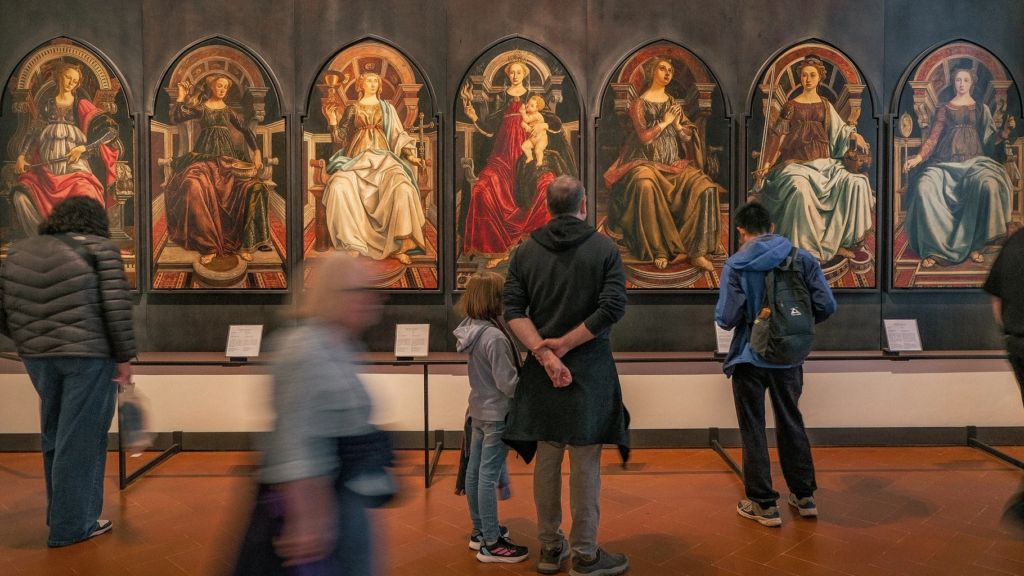
The Uffizi Galleries in Florence are set for a major transformation, with the institution announcing a two-year, €50 million ($57 million) program spanning the Uffizi Gallery, Palazzo Pitti, and Boboli Gardens. The ambitious plan includes around 40 projects aimed at improving conservation, accessibility, exhibition spaces, and the way the collections are presented to visitors.
Rather than closing during the works, the museums will be renovated in stages so that visitors can continue to experience the collections. At the Uffizi, galleries are being reorganized chronologically and geographically, while some of the museum’s most celebrated works will receive more dedicated spaces. A redesigned Botticelli gallery has already offered a preview of the approach, with The Birth of Venus and La Primavera now displayed opposite one another in specially sealed cases designed to improve conservation and viewing conditions.
The wider transformation includes a new introductory space exploring the history of the Uffizi collection, improved lighting at Palazzo Pitti, new air-handling systems, and accessibility upgrades. At Palazzo Pitti, an unused 1,000-square-meter top-floor space will become new exhibition galleries, while restoration work in the Boboli Gardens will focus on landmarks including the 17th-century amphitheatre and Fountain of Neptune.
The investment comes as the Uffizi continues to balance the preservation of centuries-old buildings and masterpieces with the demands of millions of visitors. With works by Botticelli, Leonardo da Vinci, Michelangelo, Raphael, Titian, and Caravaggio across the complex, the project represents an effort to modernize one of Italy’s most important cultural institutions without losing sight of its historic character.
Yoshitomo Nara to Hold Two-Gallery New York Exhibition This Fall
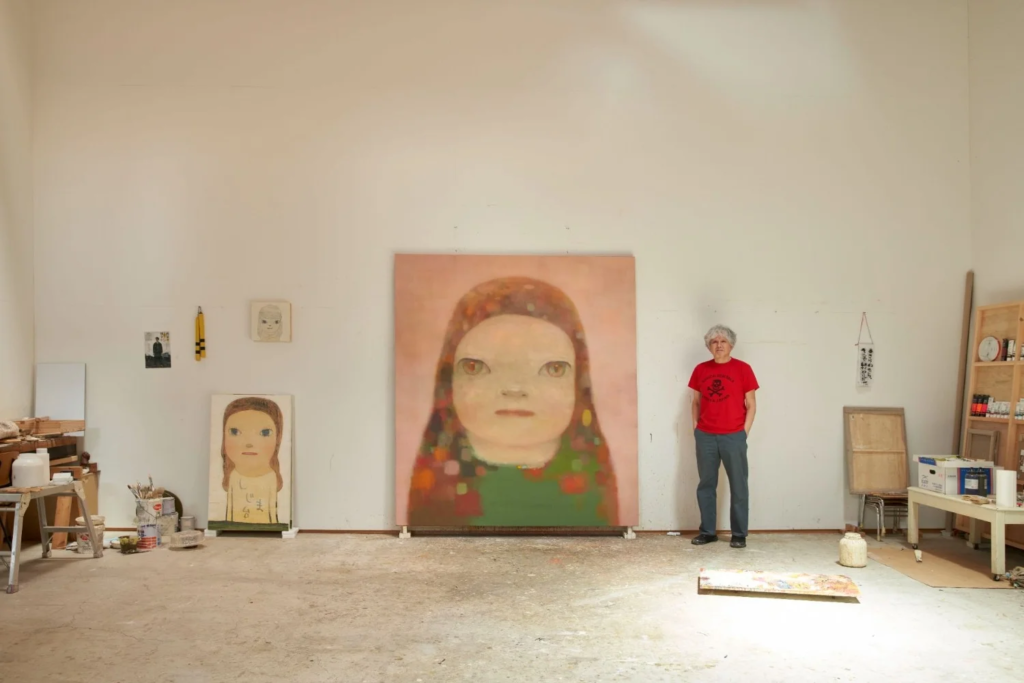
Yoshitomo Nara will return to New York this fall with a major solo exhibition spanning both of David Zwirner’s Chelsea locations. Opening in October, the presentation will mark Nara’s first solo show with the gallery since it began representing him last year and his first major New York exhibition in nearly a decade.
The exhibition will bring together new paintings and drawings, recent sculptures, and early works selected by Nara, tracing four decades of his practice. His familiar large-headed, wide-eyed figures—often associated with childhood, vulnerability, and punk culture—will appear alongside works that reveal new directions in his approach to color, materials, and form.
At the gallery’s West 20th Street location, new paintings feature a more muted palette and increasingly diffuse brushwork. Other works introduce a new process in which figures are drawn in colored pencil before being developed with translucent acrylic washes. Large monochrome drawings made with industrial oil-based paint sticks will further demonstrate the range of Nara’s drawing practice, while works from the 1980s provide an early point of comparison.
The second gallery on West 19th Street will feature 13 monumental bronze heads from 2024. Enlarged tenfold from palm-sized clay prototypes and finished in white urethane, the sculptures recall the snow “monsters” Nara encountered during childhood winters in rural northern Japan.
Together, the two-gallery presentation offers a broad look at an artist whose visual language has evolved considerably since the 1980s while retaining its emotional directness. With works spanning Nara’s early career to his newest experiments, the exhibition places his enduring imagery in conversation with the changes that have shaped his practice over four decades.
ICOM Defends the Smithsonian Amid Political Pressure
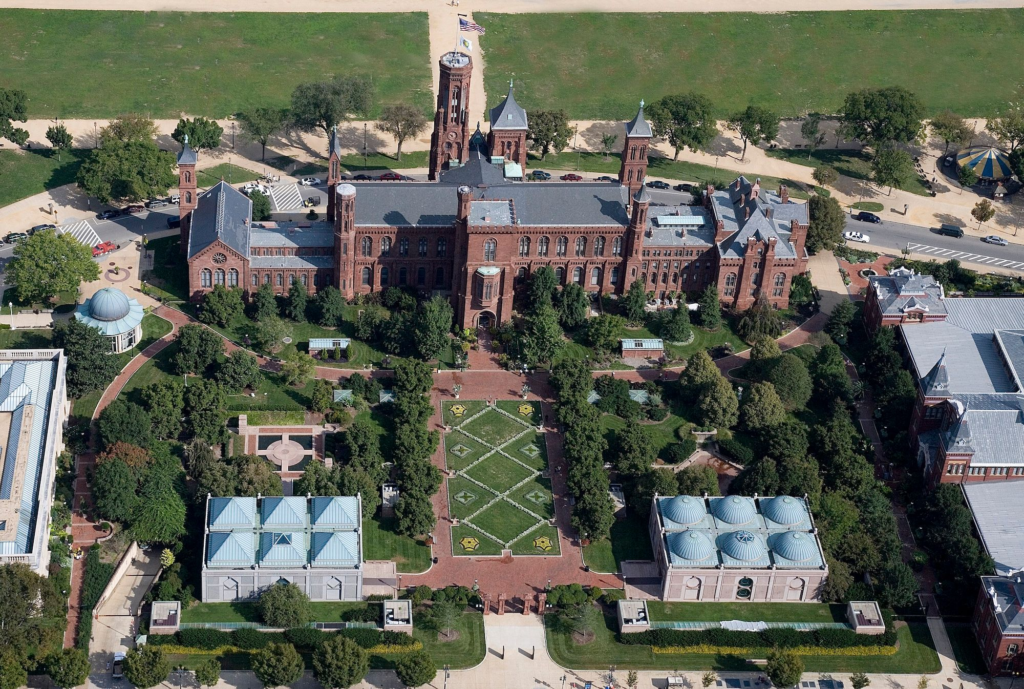
The U.S. branch of the International Council of Museums (ICOM-US) has issued a public statement supporting the Smithsonian Institution as political scrutiny of the museum network continues under the Trump administration. The statement emphasizes the responsibility of museums to preserve evidence, engage with complex histories, and maintain public trust.
ICOM-US expressed concern over recent congressional hearings and actions involving the Smithsonian, including criticism of the National Museum of American History and its exhibitions. The statement comes after President Donald Trump ordered signage to be installed outside the museum warning visitors of alleged political bias in its presentation of American history.
The international museum body’s intervention follows a broader conversation about the independence of cultural institutions in the United States. In July, the American Alliance of Museums similarly defended the Smithsonian and argued that attempts to politicize how museums present history, art, science, and culture threaten their institutional integrity and independence.
ICOM’s statement also comes shortly after the organization adopted a new Code of Ethics for Museums, its first major update in more than two decades. The revised code places greater emphasis on institutional independence, making the organization’s support for the Smithsonian particularly significant.
At the center of the debate is a broader question about what museums are expected to do when presenting difficult or contested histories. For ICOM-US, their role extends beyond preserving objects: museums provide spaces where evidence can be examined, different perspectives can be encountered, and conversations about the past can remain open.
Correggio’s Madonna of Saint Sebastian Undergoes Major Conservation
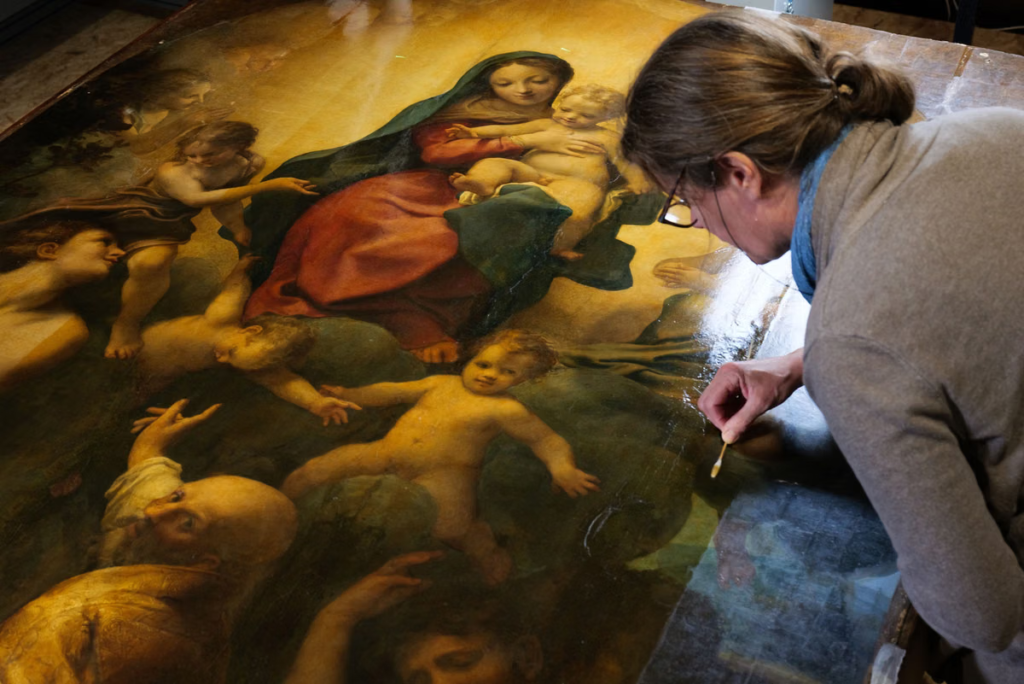
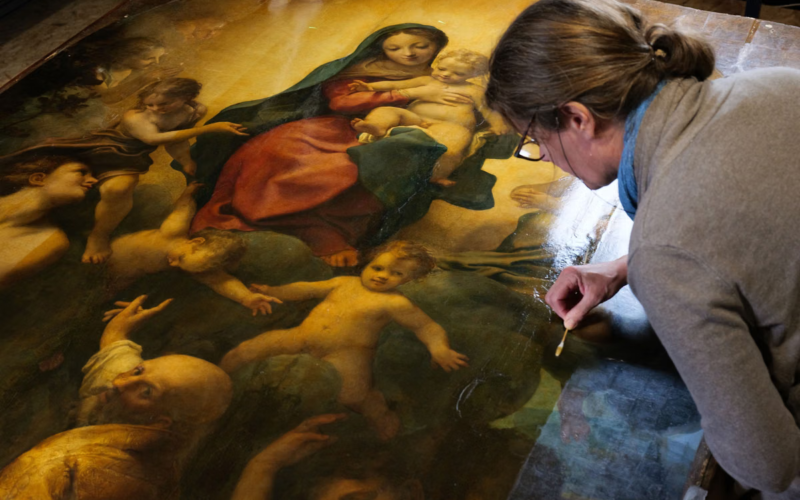
The conservation of Correggio’s Madonna of Saint Sebastian, painted around 1524 for the Confraternity of Saint Sebastian in Modena, is offering visitors a closer look at both the painting and the challenges of preserving an Old Master work. The panel had already suffered damage while in the possession of the brotherhood, and its condition continued to deteriorate over the centuries.
One of the most visible problems is the painting’s distinctive washboard-like surface, caused by the unsuitable wooden boards used as its support. As the boards warped outward, the layers of paint began to lift and losses appeared, particularly along the joins.
Previous attempts to stabilise the work included adding secondary support systems to its reverse, while interventions to the painted surface gradually obscured parts of Correggio’s original work. The current conservation project is therefore examining both the painting’s condition and the artist’s technique before undertaking a comprehensive treatment of the paint layers and wooden support.
Because of the painting’s fragility, it cannot be transported from the gallery. Instead, the restoration is taking place inside a temporary public conservation studio, allowing visitors to observe the process as it unfolds. The project aims to recover the richness of colour and detail that has been hidden over time, giving Correggio’s celebrated work a chance at its own rinascita, a rebirth.
Sotheby’s Lands $450 Million Blaquier Collection of Impressionist and Post-Impressionist Masterworks
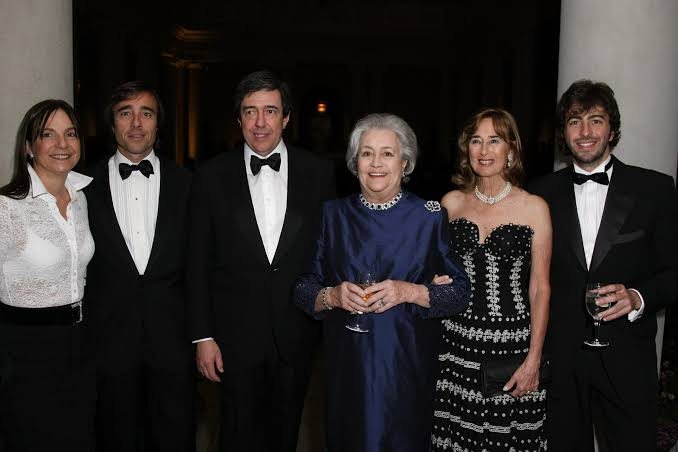
Sotheby’s has secured a major tranche of works from the collection of Argentine collectors Nelly Arrieta de Blaquier and Carlos Pedro Blaquier, with the group reportedly valued at around $450 million. The collection is expected to bring some of the biggest names of Impressionism and Post-Impressionism to the upcoming auction season, including Vincent van Gogh, Paul Cézanne, Edgar Degas, Camille Pissarro, and Pierre-Auguste Renoir.
Among the potential highlights is Van Gogh’s Châtaignier en fleurs roses et blanches (Chestnut Tree in Pink and White Blossom) (1890), which could command between $150 million and $200 million, according to sources familiar with the works. A Cézanne harlequin painting could also exceed $120 million. Other significant works include Degas’s Avant la Course (1893), Pissarro’s Paris street scene, and Renoir’s En canot (ou Jeune fille à la barque) (1877), each reportedly expected to sell for more than $25 million.
The collection has a complicated recent history. Several Blaquier works were exported to Luxembourg in 2023, prompting a fine from Argentine authorities over improper export procedures. The matter was resolved in July when the proposed penalty was waived. It remains unclear whether two Monet paintings previously associated with that shipment will be included in Sotheby’s sale.
The Blaquier family’s collection has already generated significant auction activity, including Van Gogh’s Zouave, which reportedly sold privately for around $190 million, and two Signac paintings that fetched a combined $5.8 million at Christie’s last year. Sotheby’s victory in securing the broader collection signals the intensity of competition between the major auction houses for exceptional private holdings, and could make the Blaquier works some of the most closely watched lots of the coming season.
Taken together, this week’s stories reveal an art world caught between preservation and reinvention. Museums are investing in new spaces and new ways of engaging audiences, technology is opening unexpected possibilities for experiencing familiar masterpieces, and artists continue to find new contexts in which their work can be seen. Meanwhile, major collections are reshaping the market, conservation is bringing damaged works back into view, and the debate around museum independence reminds us that these institutions do far more than house objects, they help shape how we understand history itself.
From the quiet restoration of a Renaissance masterpiece to multimillion-dollar transformations and collections, the week’s news shows that the art world is not standing still. It is continually finding new ways to preserve what came before while asking what comes next.
And if you’re in the mood to keep exploring the quieter, stranger corners of art history, take a look at our piece on The Strange Beauty of Cats in Art, a closer look at why these enigmatic creatures have appeared in artists’ work for centuries.