



In her figurative oils, Lesa Shaw paints women of colour with confidence & grace

Every year at Arts to Hearts Project, putting together our 100 Emerging Artists of 2026 is the kind of work that reminds us why we do what we do. Because emerging is not another word for beginner.
It is a word for artists who are right in the thick of becoming. Artists whose work is alive and unsettled and still figuring itself out on the canvas. And there is something genuinely thrilling about meeting an artist in that exact window when the pieces are finally starting to fall into place. Lesa Shaw is one of those artists. And the window is open for her right now.
Before you get into her interview, let us tell you a little about Lesa, and why we believe she earned her place in this book.
Based in Texas, Lesa Shaw is a self-taught painter and high school art teacher whose life quietly finds its way into her work. Being self-taught meant no one handed her a rulebook or a fixed way of seeing. She built her creative language slowly, through curiosity, experimentation, and learning to trust what felt honest in her hands.
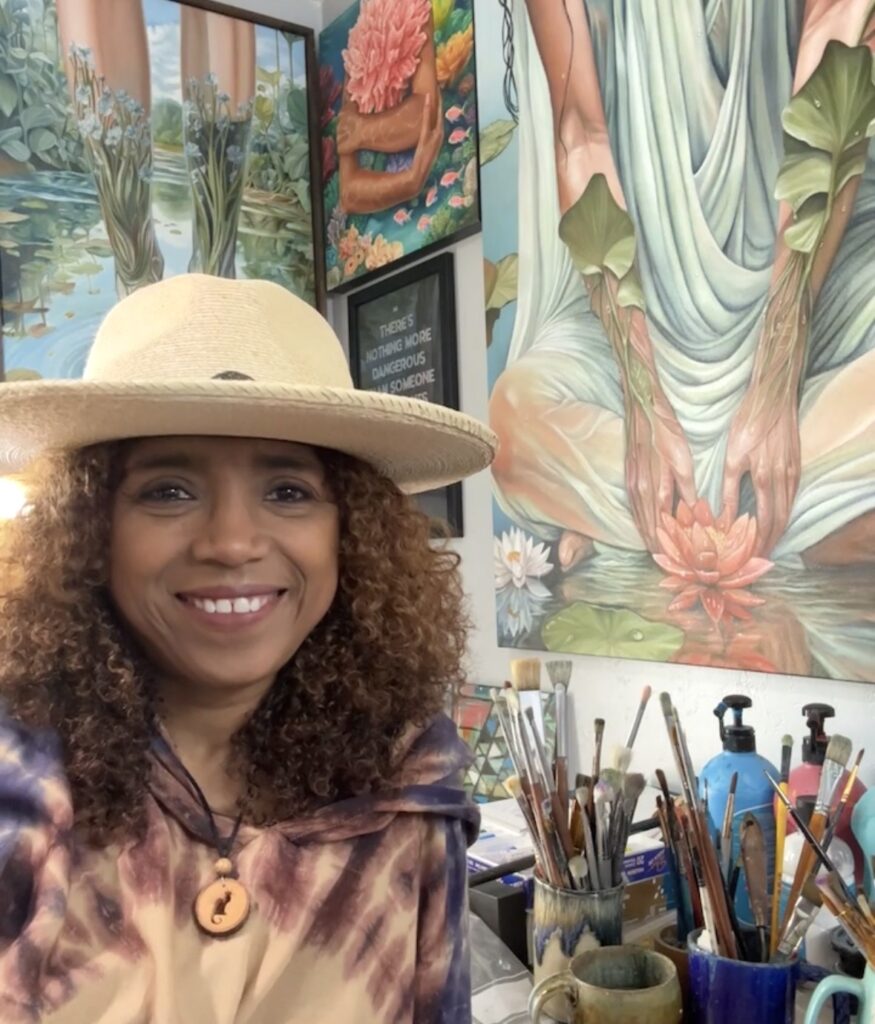
She works across oils, acrylics, and alcohol inks, and that range is not a small thing. Each medium pulls a different rhythm out of her. Oils slow her down and let her layer feeling on top of feeling. Acrylics give her urgency. Alcohol inks are almost spontaneous, the kind of medium that paints itself a little.
Watching her move between them feels like watching someone who refuses to be boxed in by one way of making. She listens to what the material is asking for, and she answers.
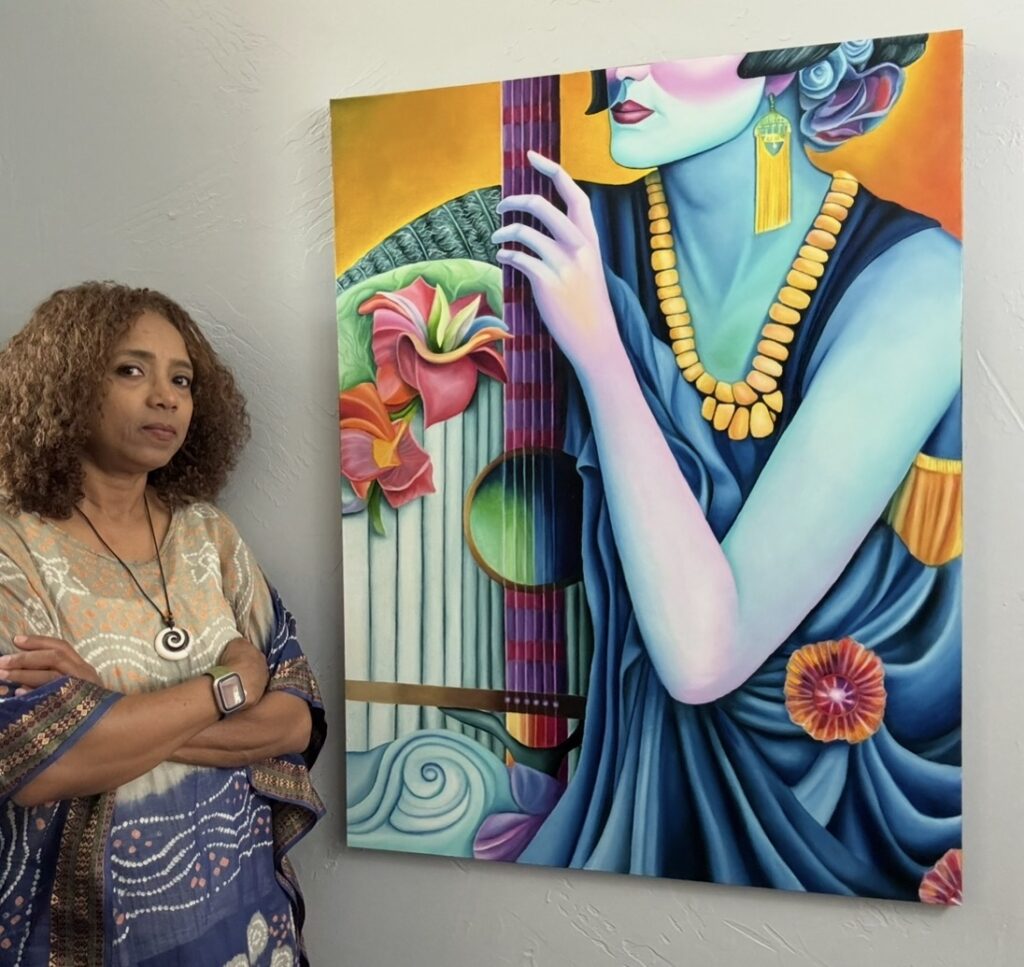
What first drew us to her work were her portraits of women of colour surrounded by lush, organic florals. The flowers never felt decorative. They carried ideas of growth, change, tenderness, and becoming. Her paintings felt vibrant and emotionally open, filled with colour that seemed to breathe across the canvas.
But what moved us most was where her work went next.
Over time, something in her paintings became quieter. The boldness did not disappear, it turned inward. Her figures began to feel more reflective, more still, as though they were caught in private moments of self-recognition. The colour remains, but it no longer demands attention. Instead, it lingers softly beneath the surface, holding emotion rather than announcing it.
That shift feels deeply honest to us. She did not abandon the artist she once was. She allowed that artist to evolve. And that is exactly the kind of journey this book hopes to hold space for.
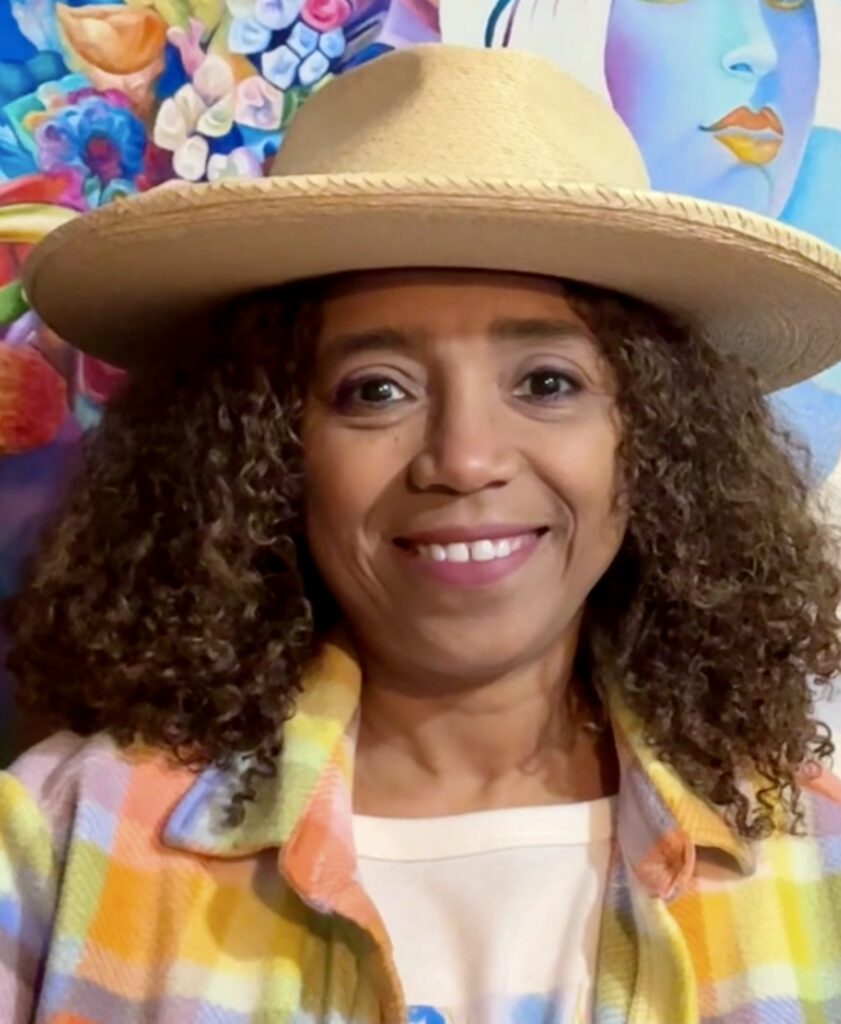
There is also something beautiful about how far back this story goes. As a child, Lesa used to draw paper dolls, long before she imagined herself as an artist. Hearing her connect those early drawings to the women she paints today felt unexpectedly moving, like the beginning and present version of herself quietly reaching toward one another.
Her relationship with colour began early too. She remembers receiving blending pencils as a child and becoming fascinated by the way colours could melt into one another and create something entirely new. That sense of wonder still exists in her work today, only now it feels deeper, softer, and more layered with experience.
Here’s our conversation with Lesa Shaw about teaching, stillness, colour, and the long journey from drawing paper dolls as a child to painting women in moments of quiet reflection today.
Q1. Could you share how your journey as a self-taught artist led you to the vibrant figurative and semi-abstract work you create today?
My journey as a self‑taught artist began with curiosity and intuition — learning through experimentation rather than formal instruction. In my earlier 2023 works, I explored vibrant figurative and semi‑abstract forms as a way to understand rhythm, identity, and emotional presence. Those pieces taught me how color and movement could express individuality and confidence.
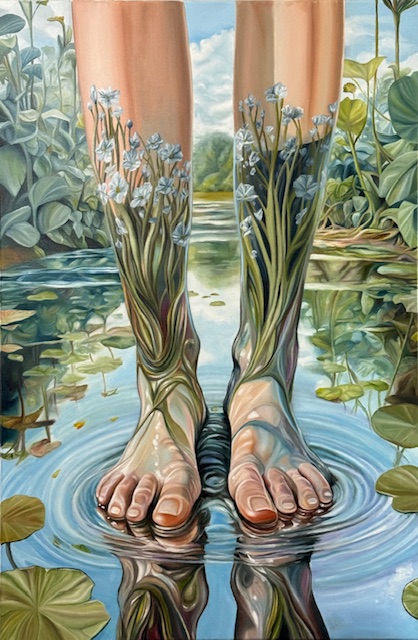
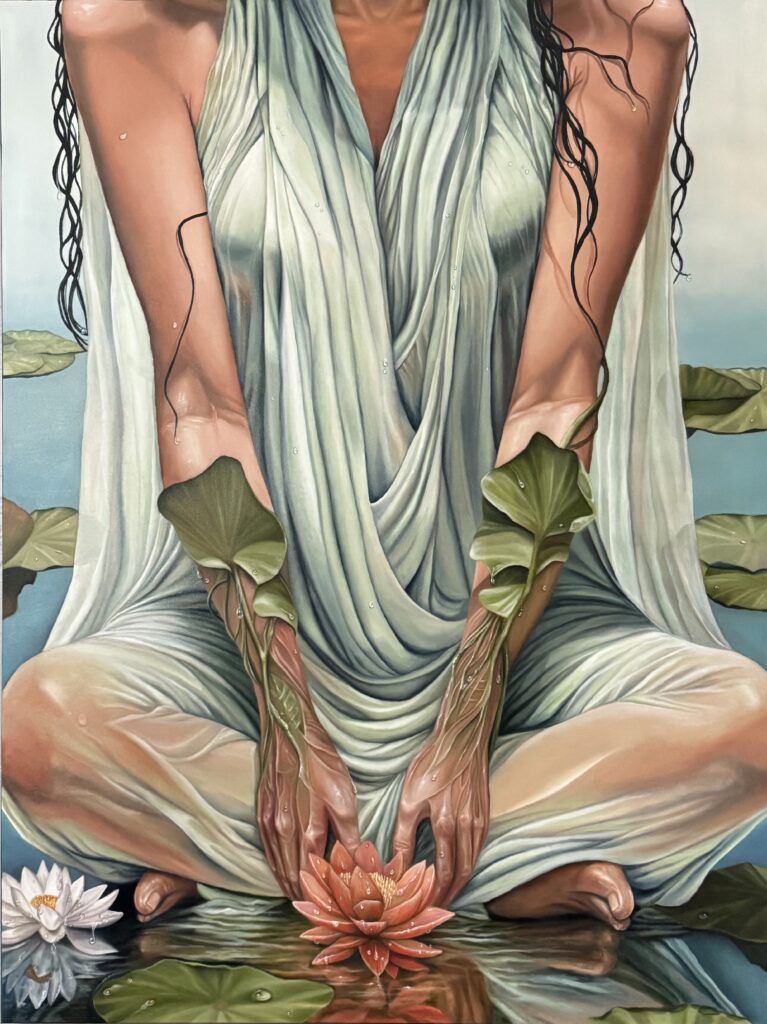
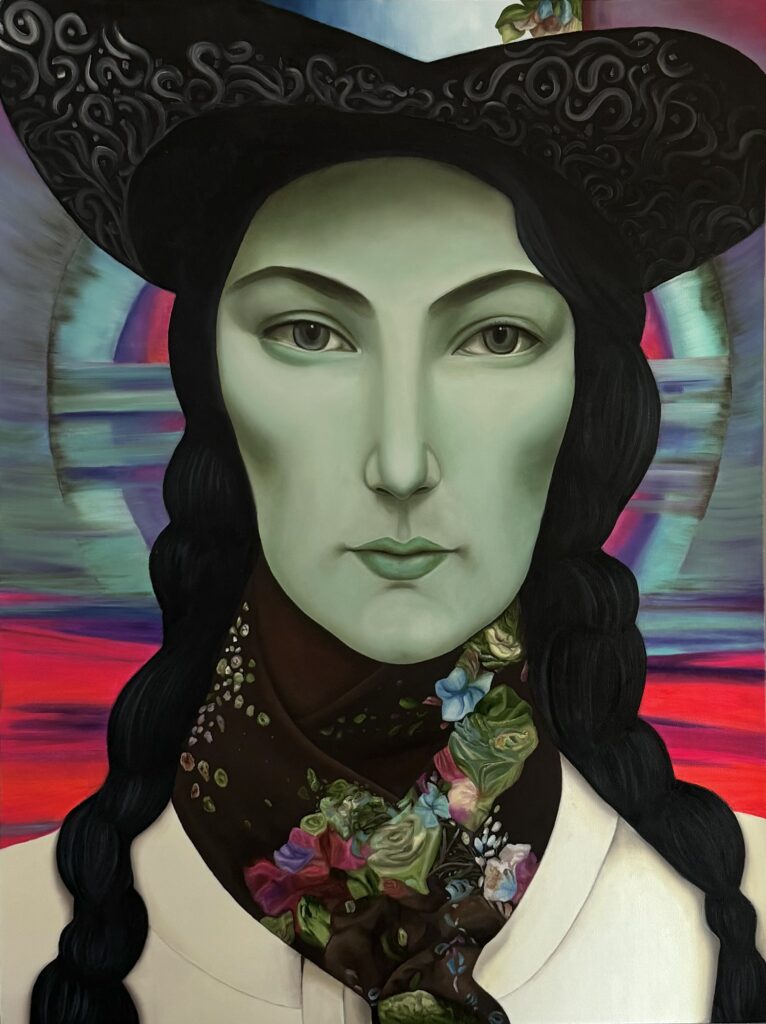
Over time, my practice evolved toward a quieter, more atmospheric space. I became drawn to the emotional stillness beneath expression the breath between moments. That shift led to my current Bare to Pause collection, where the vibrancy is internal rather than chromatic. The figures are distilled, suspended, and reflective, capturing transformation in its most subtle form. Being self‑taught allowed me to follow intuition without boundaries, and that freedom continues to guide the way I explore depth, silence, and emotional resonance in my work today.
Q2. How has your experience as a high school art teacher shaped the way you think about creativity and creative growth?
Teaching has deepened my understanding of creativity as something fluid and alive rather than fixed. Working with high‑school artists reminds me daily that growth happens in the space between curiosity and uncertainty the same space I inhabit in my studio.
Guiding students through their own discoveries has taught me to value process over perfection.
Lesa Shaw
That perspective has carried into my current Bare to Pause collection, where I explore stillness, breath, and transformation. The classroom keeps me connected to the raw beginnings of creativity, while my practice allows me to translate that energy into atmosphere and emotional depth. Both roles feed each other teaching keeps my work honest, and painting keeps my teaching human.
Q3. Your “Women of Colour” series celebrates individuality and empowerment through vibrant colour and organic forms what first inspired you to explore this theme?
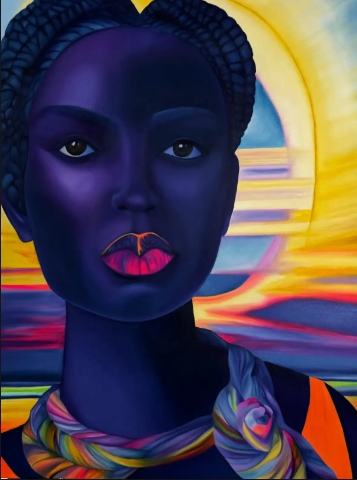
The Women of Color series began as a response to individuality and confidence I was inspired by women who inhabit their beauty and truth without hesitation. I used unconventional color to express diversity and the freedom to be seen differently, and the biomorphic florals became metaphors for the change’s women undergo growth, shedding, renewal, and the fluid nature of becoming. The rich palette was intentional, a way to show their power and presence.
Over time, that exploration of empowerment and transformation evolved into a quieter, more internal language. I became drawn to the emotional atmosphere surrounding a figure the breath, the pause, the suspended moment before change.
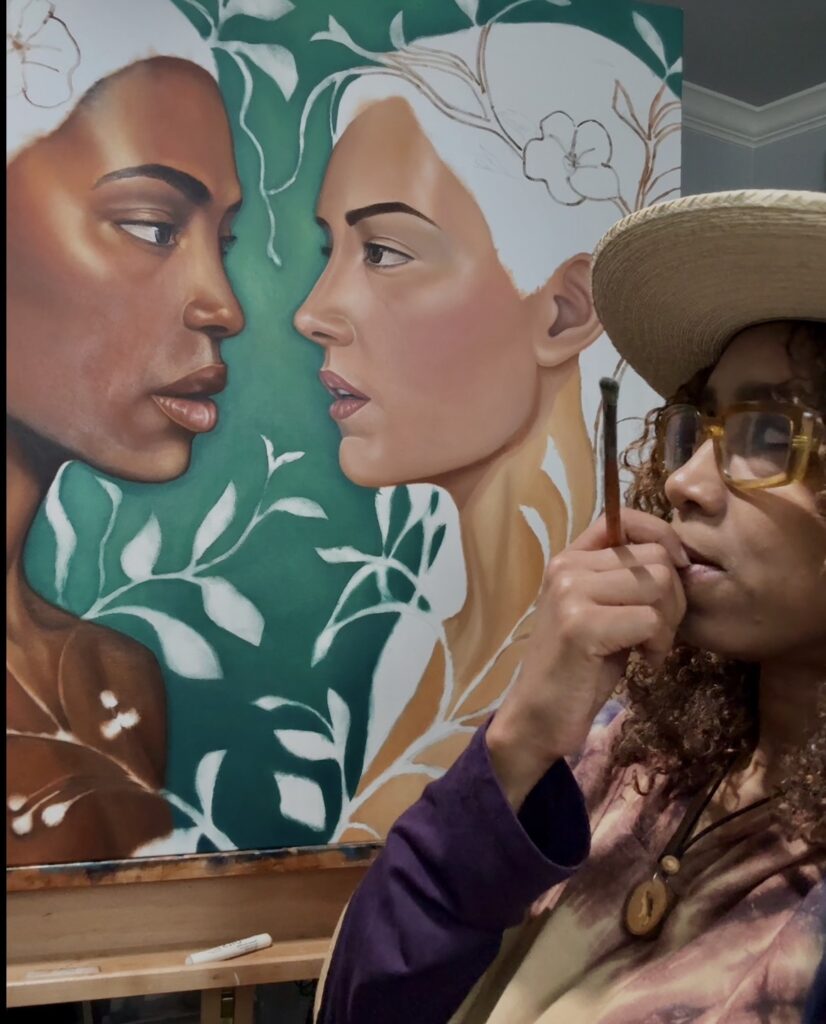
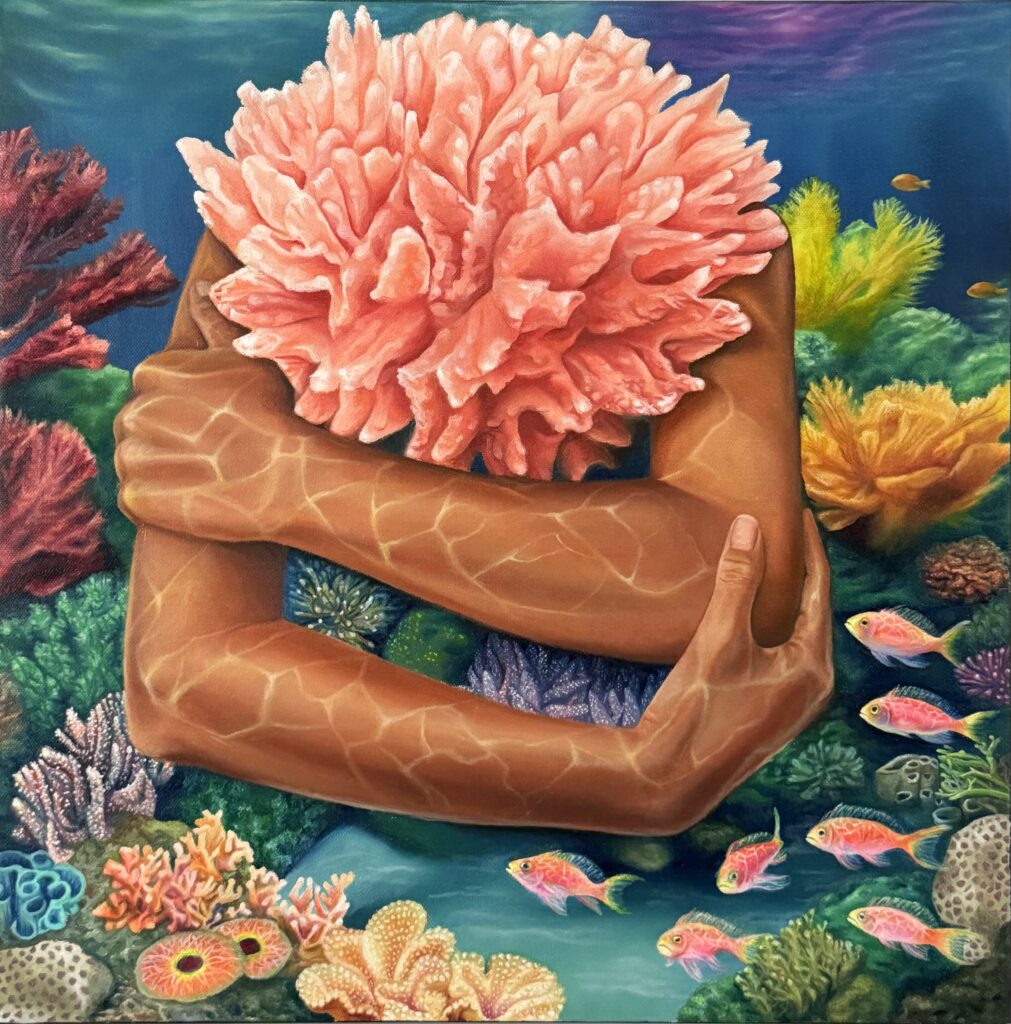
That shift led to my current Bare to Pause collection, where vibrancy softens into stillness and the focus turns inward. This evolution continues in my new piece Self Seeing Self, where two figures meet in quiet recognition. It reflects the essence of the collection transformation through stillness, and the beauty of seeing oneself reflected in another.
Q4. You’re known for your “vibrant use of colour” and creating work with “an abundance of colour.” When did you fall in love with bold, intense colour?
I fell in love with color as a child. I drew constantly, and when I received a gifted set of smooth, blending color pencils, I became fascinated with how colors could merge to create lifelike figures. That early discovery shaped the way I understood emotion through color. In my earlier work, that love showed up boldly — rich, unconventional palettes and vibrant women whose presence was amplified through color. It was my way of expressing diversity, individuality, and power.
Today, in my Bare to Pause collection, my relationship with color has shifted into something quieter and more atmospheric. The intensity is still there, but it moves through stillness and emotional space rather than saturation. This is simply the direction I’m exploring right now; bold color remains part of my vocabulary, and I may return to it in future bodies of work.
Q5. You’ve said, “each piece tells a story and invites the viewer to interpret it in their own way.” What kinds of stories are you telling?
My work tells stories of transformation —the internal kind that happens in silence. Each piece explores the tension between presence and change, between what is seen and what is felt. In my earlier paintings, the story was external: individuality, confidence, and empowerment.
Now, in Bare to Pause, the narrative turns inward. The figures inhabit moments of reflection, breath, and emotional suspension. They invite viewers to pause with them — to recognize themselves in that stillness. The story is no longer about being seen; it’s about seeing oneself.
Q6. You started with paper dolls as a child. Do you see a connection between those early paper figures and the women you paint now?
As a child, I drew paper‑doll figures as a way of understanding the world around me. Like many children, I recreated what I observed, but drawing became my way of processing stories, relationships, and the emotional dynamics I saw in everyday life. Those early figures were my first attempts at capturing presence and identity.
Looking back, I can see the connection. The women I paint now are an extension of that same impulse to explore how people exist, feel, and transform. The difference is that my language has matured. What began as simple paper figures has evolved into women who hold emotional depth, atmosphere, and quiet introspection. The instinct is the same: to translate lived experience into a figure that tells a story.
Q7. Your portraits feel emotionally expressive rather than purely representational, what do you hope viewers connect with beyond the figure itself?
I want viewers to connect with the emotional resonance beneath the surface — the quiet strength, vulnerability, and transformation that live within each figure. My portraits aren’t just about representation; they’re about presence.
Even as my work has become more atmospheric, the women remain central especially women of color, whose individuality and power continue to shape my visual language. I hope viewers feel that energy beyond the surface the shared humanity, the stillness, and the recognition of self that transcends identity yet honours it. The emotion is what binds it all together.
Q8. You’ve mentioned artists like Georgia O’Keeffe and Kandinsky as influences, how have they shaped your approach to color, rhythm, and composition?
O’Keeffe’s work resonates with me for the way she observed so closely — how she could take something familiar and, through attention, reveal its quiet strength. I admire her ability to translate what she saw into something distilled and essential. Kandinsky inspires me in a different way.
His use of color and movement shows how emotion can flow across a composition, how rhythm can guide the eye and create a feeling without relying on realism. They are among the many artists whose approaches I find inspiring.
I appreciate how each of them translated their inner world into visual language, and I carry that same intention into my own work — especially in the women of color I paint, where presence, rhythm, and emotional movement come together in a way that feels true to my voice.
Q9. You work across oils, acrylics, and alcohol inks. How does changing mediums influence the way you approach a piece creatively?
Each medium invites a different rhythm. Oils allow me to slow down — to layer, blend, and build atmosphere. Acrylics bring immediacy and energy, while alcohol inks feel spontaneous and fluid, almost like they paint themselves.
Shifting between them keeps me open; it reminds me that creativity isn’t fixed. Each material asks a different question, and I respond through intuition rather than formula. That flexibility helps me stay connected to emotion rather than technique.
Q10. What feels most meaningful to you today: technical growth, emotional connection with viewers, or continuing to evolve creatively?
Emotional connection feels most meaningful to me right now. Technical growth is always part of the process, but what stays with me is when someone feels seen through a piece — when they recognize something familiar in the stillness or color. That exchange of emotion is what keeps me evolving creatively. It’s not about mastery; it’s about resonance — creating work that breathes and meets people where they are.
Q11. What advice would you give to artists who are still trying to develop a visual language that feels personal and authentic to them?
Spend time noticing what moves you — not what’s trending or expected. Authentic language grows from observation and honesty. Experiment freely, but pay attention to what feels natural in your hands and heart. The more you trust your instincts, the clearer your voice becomes. It’s less about finding a style and more about allowing your truth to surface through repetition, curiosity, and courage.
As our conversation with Lesa came to a close, what stayed with us was not one particular answer, but the artist underneath all of it.
There is a quiet courage in where she is right now. At some point, most artists find something that works, a style or voice people respond to, and naturally, there is comfort in staying there. But sometimes the work begins asking for something else. Something slower, quieter, less certain. And that is where the real risk begins. Lesa chose to follow that quieter direction.
What makes her current work so compelling is that it does not feel like she abandoned the artist she once was. It feels like she allowed that artist to evolve. The women are still there. The colour is still there. The emotional depth is still there too. B
ut now everything feels more restrained, more reflective. The paintings no longer ask to be seen loudly. They invite you to sit with them longer. That kind of quiet is not easy to paint. It has to be earned. And her work earns it.
We also kept thinking about how naturally her life as a teacher flows into her studio practice. Both seem rooted in the same thing, patience, observation, and trust in growth. There is no sense of rushing toward a finished version of herself. Instead, her work feels honest about becoming.
That may be the most meaningful thing about where she is right now. She is not repeating what already works simply because it is familiar. She is letting the work lead her somewhere new, even before all the answers are clear. That willingness to shift, to deepen rather than repeat, is what makes this moment in her practice feel important.
The earlier paintings already have their admirers and their collectors. The newer direction is still unfolding, still finding the people who will love it first. For anyone who collects with an eye on where an artist is heading rather than just where they have been, this is the kind of window that does not stay open for long. The in-between is where the most meaningful collecting tends to happen, and Lesa is sitting right in the middle of it.
She is not chasing a style. She is following a feeling. And in a creative landscape where it is easy to mistake consistency for vision, an artist quietly choosing depth is exactly the kind of artist worth watching, worth collecting, and worth celebrating in a book like this.
Follow her work through the links below. This is the kind of practice that rewards the people who pay attention early.