
How selling greeting cards in a vintage shop gave Xue Wang the confidence to dream bigger

At Arts to Hearts Project, we have always had a deep appreciation for the kind of creativity that moves between worlds between East and West, between fashion and fine art, between what is shown on the surface and what quietly lives underneath it.
Our Best of the Art World editorial was built to celebrate exactly those artists the ones whose practice carries the full weight of a life genuinely and curiously lived.
And when we came across Xue Wang’s work, we did what we always do when something stops us completely. We sent it around to each other. Because there is a particular kind of art that makes you want to immediately show it to someone else not to explain it, just to say, look at this. Do you feel that too? Xue’s work does exactly that.
She grew up in northern China, and the way she talks about that childhood tells you everything about the kind of artist she was going to become. It was not a dramatic upbringing in any obvious sense. What she remembers most is quiet. Vastness. The physical weight of long cold winters and summers that arrived suddenly with heat and noise.
The textures of old buildings. Faded colours on walls. The way light moved through dust. Small things, repetitive things the kind of details that settle into a person long before they have any idea those details will one day shape everything they make.
Before painting there was fashion. She loved it , the energy, the collaboration, the movement of it all. And then she found the canvas. And something shifted in a way she has never looked back from.
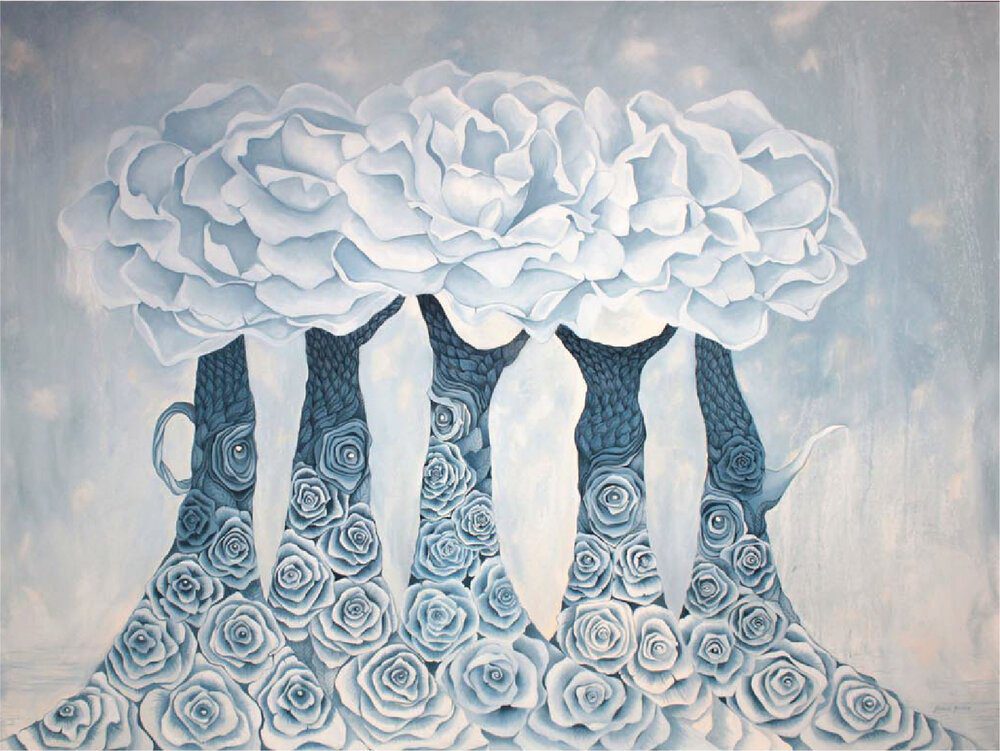
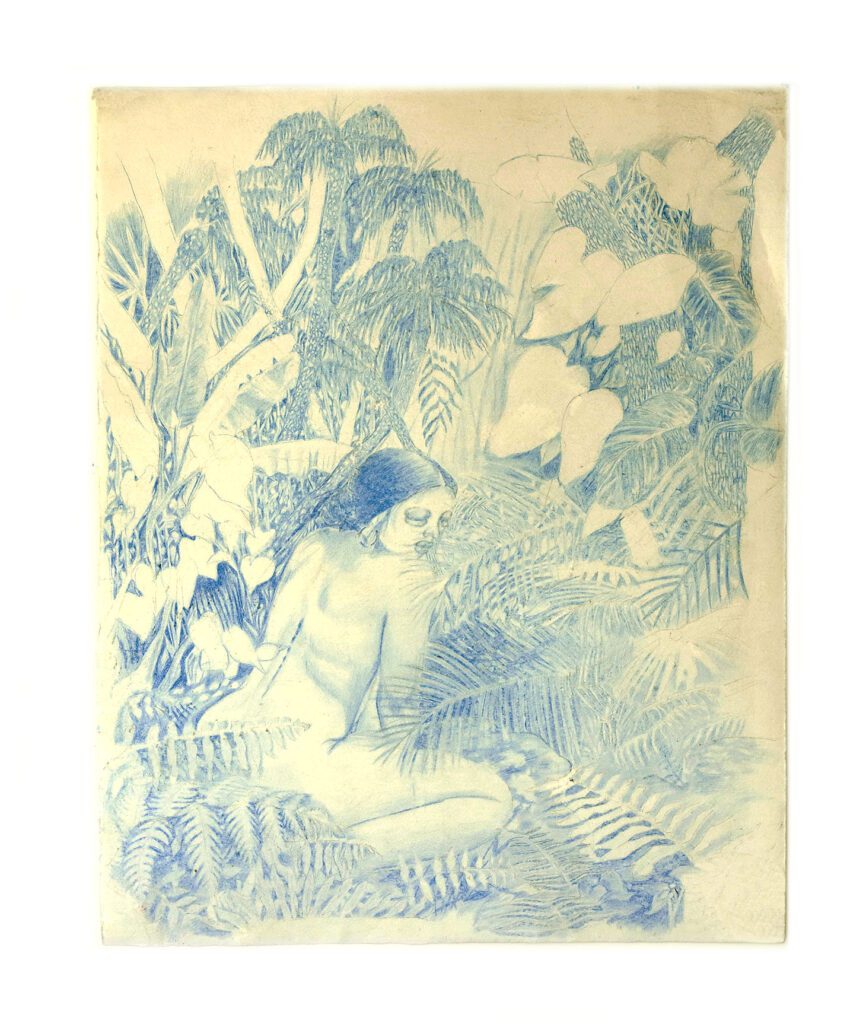
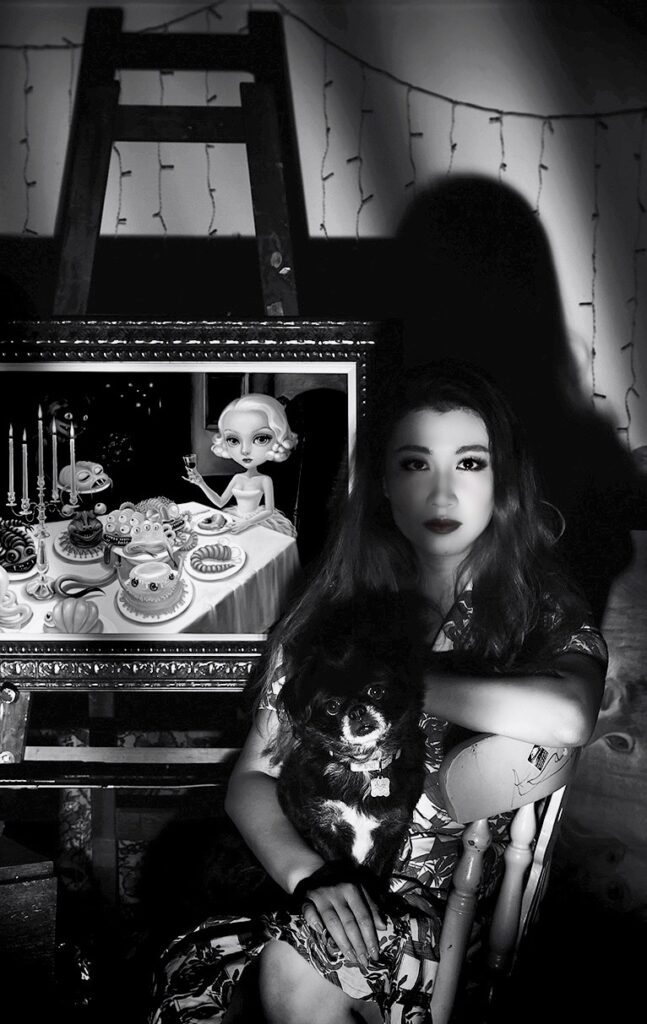
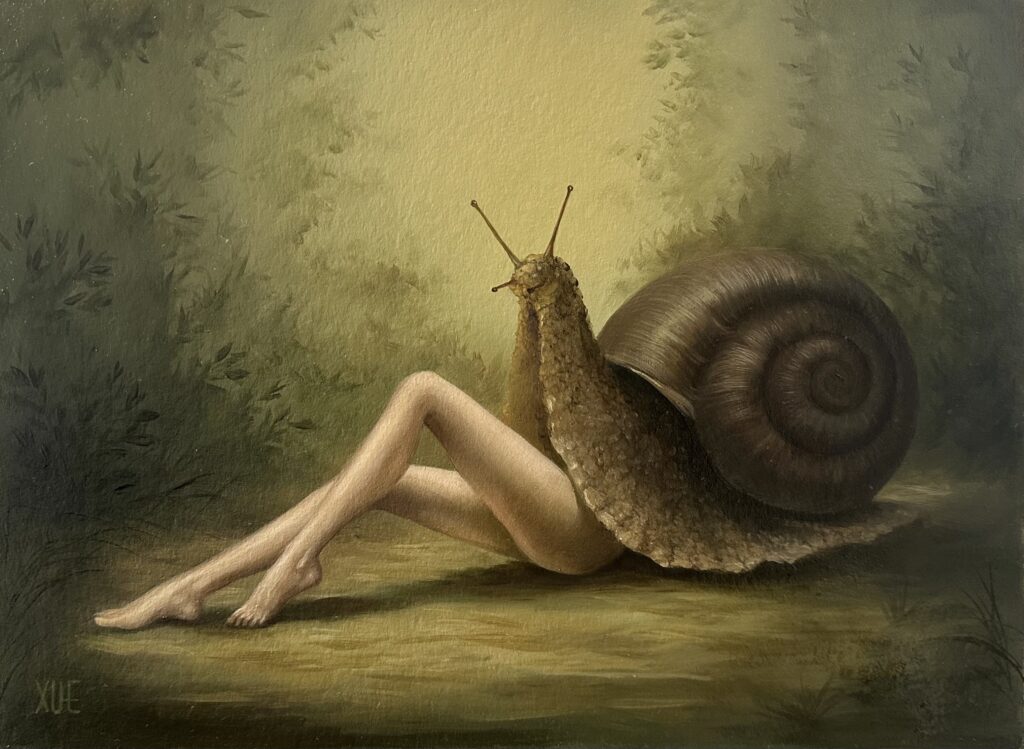
Her paintings feature elegant, composed women surrounded by things that should not quite be there. That is about as much as we want to tell you before you read her own words. Because the way she describes what is actually happening in those paintings — what those women are, what those strange elements mean, and where all of it is really coming from — is something we think you should discover for yourself.
What we will say is this, Xue is one of those artists who is genuinely difficult to forget. There is a specificity to her vision, a quiet intelligence to the way she builds tension and beauty in the same breath, that feels completely and unmistakably hers. We feel lucky to have found her. And we feel even luckier to be introducing her to you.
Now let’s hear from Xue herself, about the quiet vastness she grew up in, the two worlds she has moved between, and the sting hidden in the sweetness. All of it, in her own words.
Q1. Someone is discovering your work for the first time, how would you introduce yourself to them in your own words, beyond a formal bio?
For me, painting is a way of working through things I don’t fully understand yet: feelings, memories, small moments that are hard to explain but somehow stay with you. I’m not really trying to give clear answers. It’s more about creating a space where something clicks, even if you can’t put it into words. If something here feels a bit familiar, or slightly off, or makes you pause for a second. That’s kind of where the work starts for me.
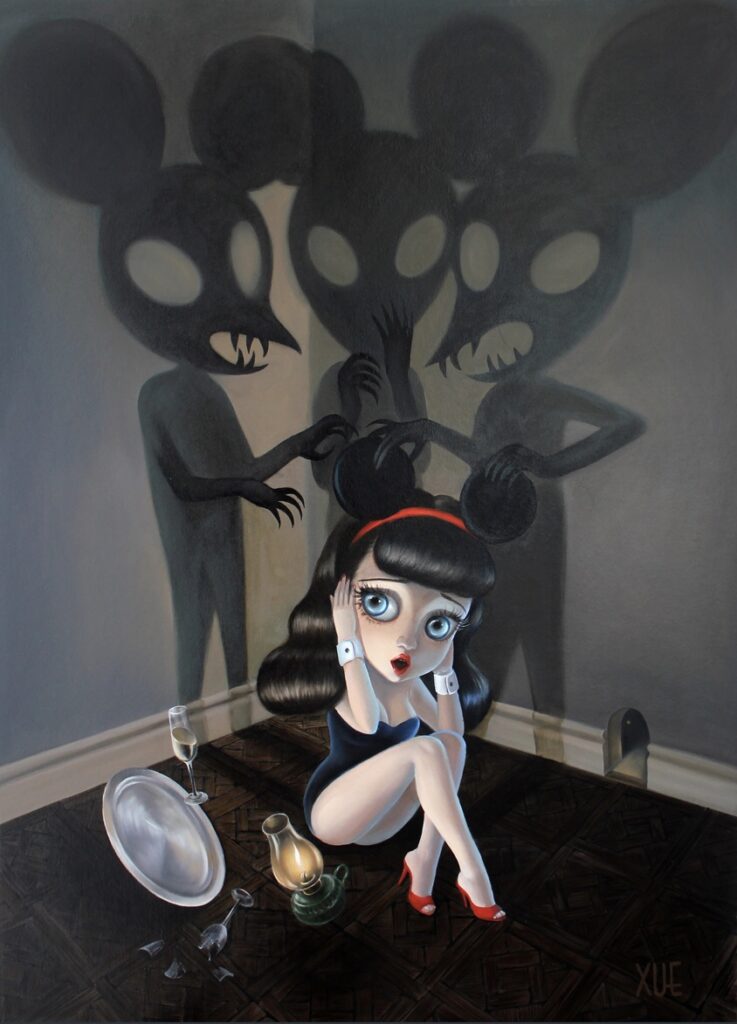
Q2. You grew up in northern China, born in the year of the monkey, what parts of that world quietly stayed with you and later found their way into your paintings?
Yeah, the year of the monkey probably explains a few things already: curiosity is how I move through the world. I grew up in northern China, and what I remember most is a kind of quiet vastness. The seasons were very physical. You could really feel time passing through your body. Winters were long and extremely cold, everything slowed down, and summer would come in with noise, heat, and life.
That rhythm stays with you. A lot of what shaped me wasn’t anything dramatic, it was small, repetitive things. The textures of old buildings, faded colors on walls, the way light looked through dust or smoke, everyday conversations happening in the background. There’s a kind of restraint in that environment. People are generally taught to value humility and moderation.
Emotions aren’t always expressed directly, so you learn to pay attention to what sits underneath the surface.
At the same time, the training system for art in China is very intense. The entrance exams for art colleges are tough. Even if you want to study design, you still have to draw and paint to a really high standard just to get in. So from quite early on, there’s this mix of observation and discipline. You’re constantly looking, measuring, practicing.
I think the quiet observation and strict training both became part of me before I even realised it. And now when I paint, I feel like I’m still working between them, trying to hold onto something subtle and instinctive, but also shaped by that early discipline.
Q3. Fashion was your first world before painting, what did the canvas give you that fashion and runway spaces couldn’t?
Fashion was really my first language. It’s fast, collaborative, and very outward-facing. You’re always thinking about movement, the body, the moment something is seen. I loved that energy. Painting gave me almost the opposite. It’s slower, more solitary, and in a way, more direct. It feels like a more immediate way of being creative.
There’s less distance between the thought, the feeling, and the final work. I don’t have to translate an idea through so many layers. On a canvas, I’m not thinking about function or wearability, or how something will be received right away. I can follow something instinctively and let it stay unresolved if it needs to.
I think what I realised is that I’d been missing that kind of closeness to the work. In fashion, everything eventually has to make sense in a practical way. With painting, it doesn’t. It can stay open, ambiguous, even contradictory. That directness, that freedom, is what really pulled me in and why I stayed.
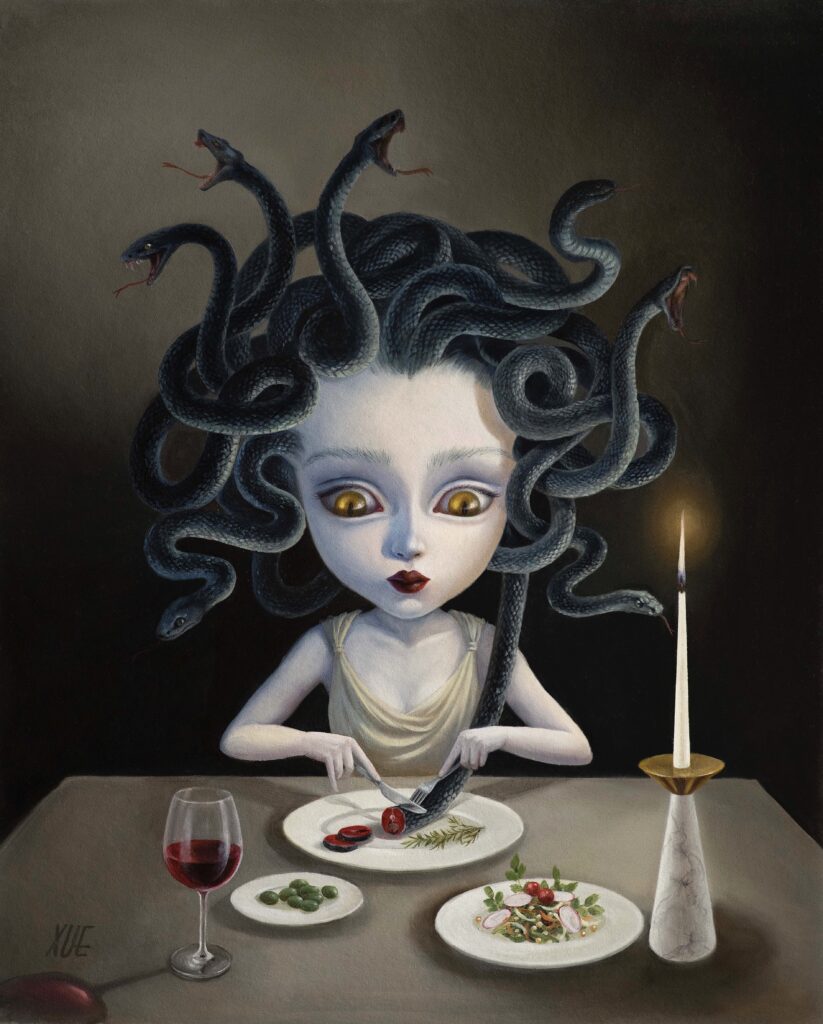
Q4. You’ve described your paintings as sweet on the surface but quietly unsettling underneath, how do you balance beauty with that sense of tension or sting?
Yeah, I like that tension when something looks soft or inviting at first, and then something slightly off starts to come through. I don’t try to force the ‘edge’ too much. If it’s too obvious, it loses that feeling.
A detail that interrupts the harmony just enough. If the image is all sweetness, it becomes decorative. If it’s all tension, it closes off. So I’m always adjusting, pulling it one way, then the other. Until it feels a bit unstable but still holds together. The unsettling part is usually quiet. It’s not something you see immediately, it’s something you feel a second later when you’re still looking. That delay is important to me, that’s where the ‘sting’ sits.
Q5. Your women often appear elegant and composed, yet surrounded by unexpected or strange elements, what kind of relationship exists between them and those unfamiliar worlds?
I think on the surface they can read as very composed, very controlled. But for me, the girls in my paintings aren’t just ‘women’ as a category, they’re more like stand-ins for people in general. They represent a kind of human state, not just something specifically female. At the same time, I’m just naturally drawn to painting the female form.
It gives me more to experiment with: the hair, the colours, the different styles, and especially the dresses. The dress can play a big role in the painting, both in setting the colour mood and helping me solve the composition. The things around them, the slightly strange or out of place elements feel like extensions of an inner world. Emotions, thoughts, tensions that aren’t always visible, but are always there.
I’m interested in that relationship between what we show on the outside and what’s happening underneath. So it’s not really about interaction in a literal sense. It’s more subtle than that. The figures and these elements exist in the same space, but not always in harmony. There’s a kind of quiet negotiation happening between control and vulnerability, calm and unease. I think that’s where the work sits for me in that in-between state, where everything looks composed, but something deeper is slightly shifting.
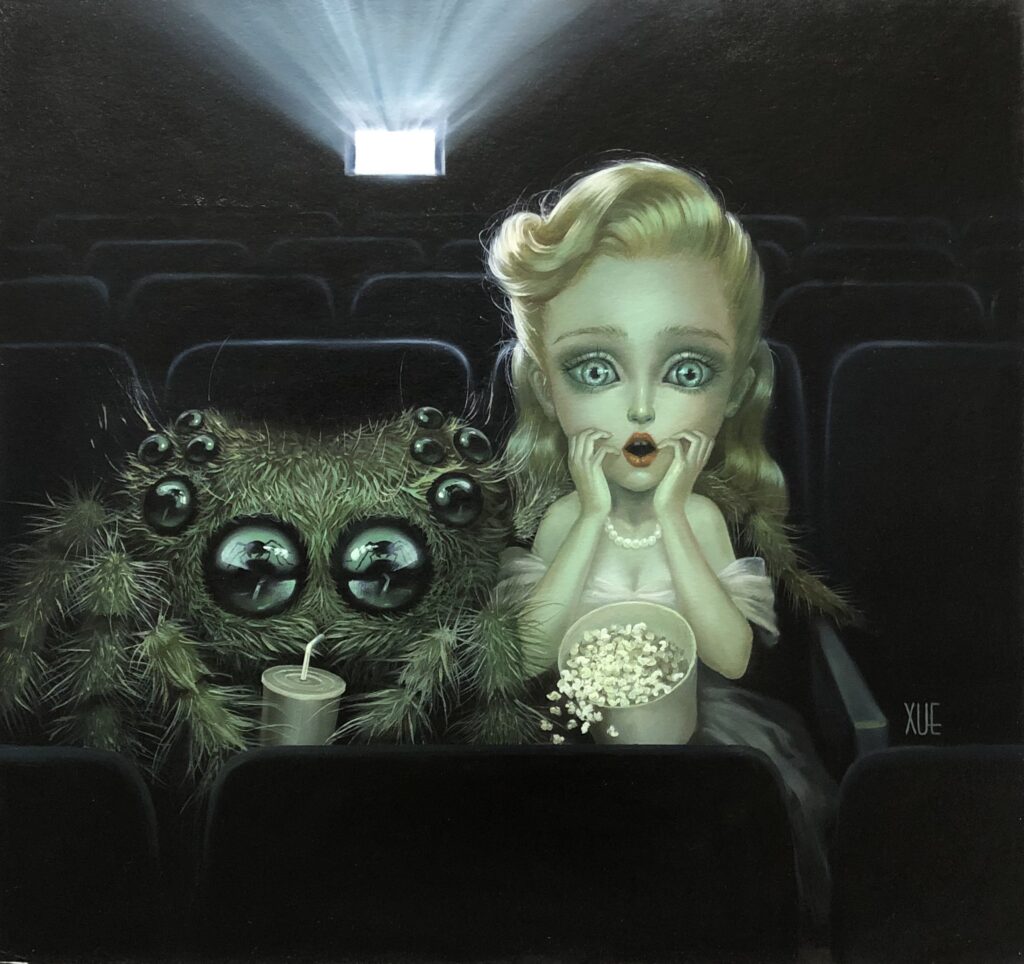
Q6. Gasping, giggling, hiding under a jumper, all three are apparently valid responses to your work. Which one are you actually painting toward?
Honestly, not towards any one reaction. It’s more about what I’m feeling at that time. Painting can take you into a certain state. It’s almost like you’re building a world and then slowly getting pulled into it yourself.
A bit like an actor in a film, where you start to live inside that role. When I was working on the alien series for my exhibition, I genuinely started feeling a bit alien myself while painting it. I think that’s how the work happens, I just fall into whatever feeling or world I’m in at the time, instead of trying to direct how viewers should react to it. Just have fun with it.
Q7. Has a viewer ever interpreted one of your paintings in a way that surprised you, yet still felt completely true once you heard it?
Yeah! And too many times, actually. People often see things in my paintings that I never consciously put there, but when they say it, it still feels completely true. I think it’s because the work is quite open.
People bring their own experiences and ways of seeing into it, so what they notice often reflects their own view of the world. I really like that part of it. It makes the painting feel less fixed, like it’s not just mine anymore, it becomes something that can keep shifting depending on who’s looking.
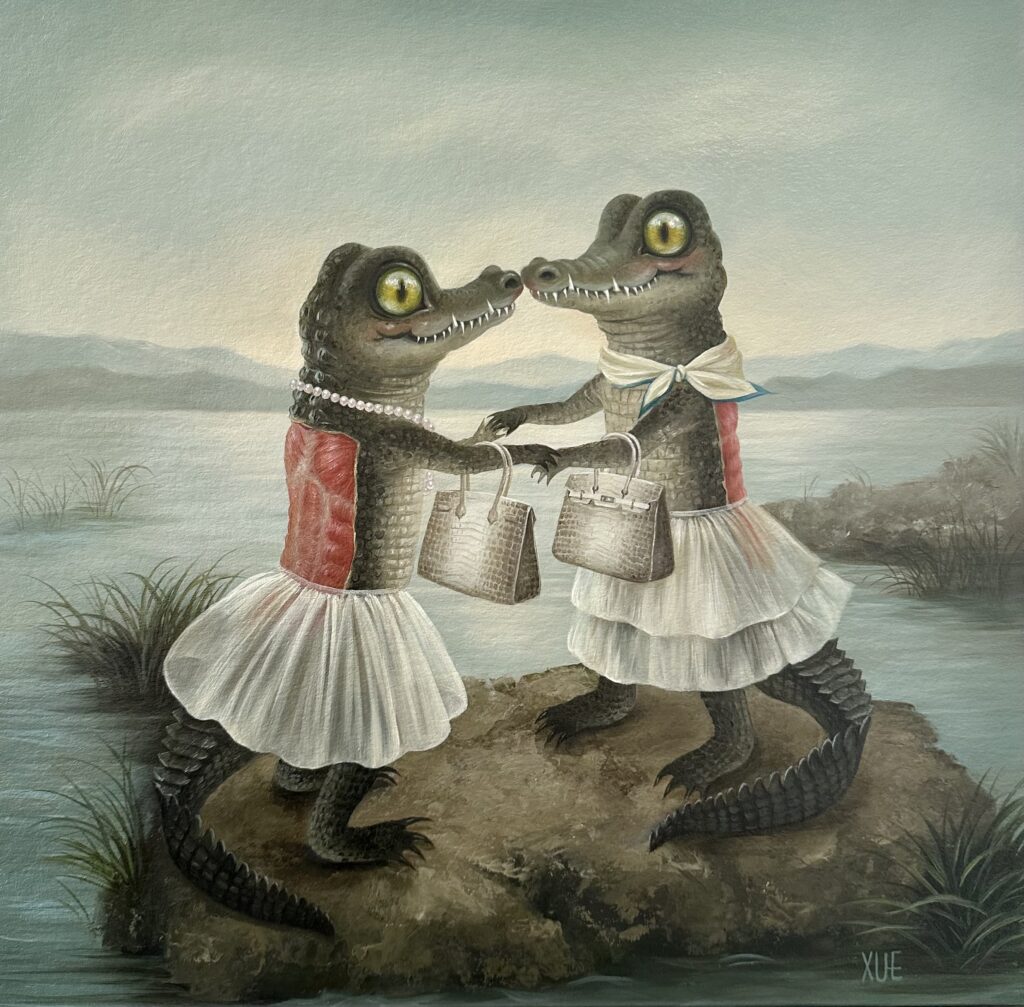
Q8. Looking back on your career, was there a particular painting or exhibition that became a turning point in how people began connecting with your work?
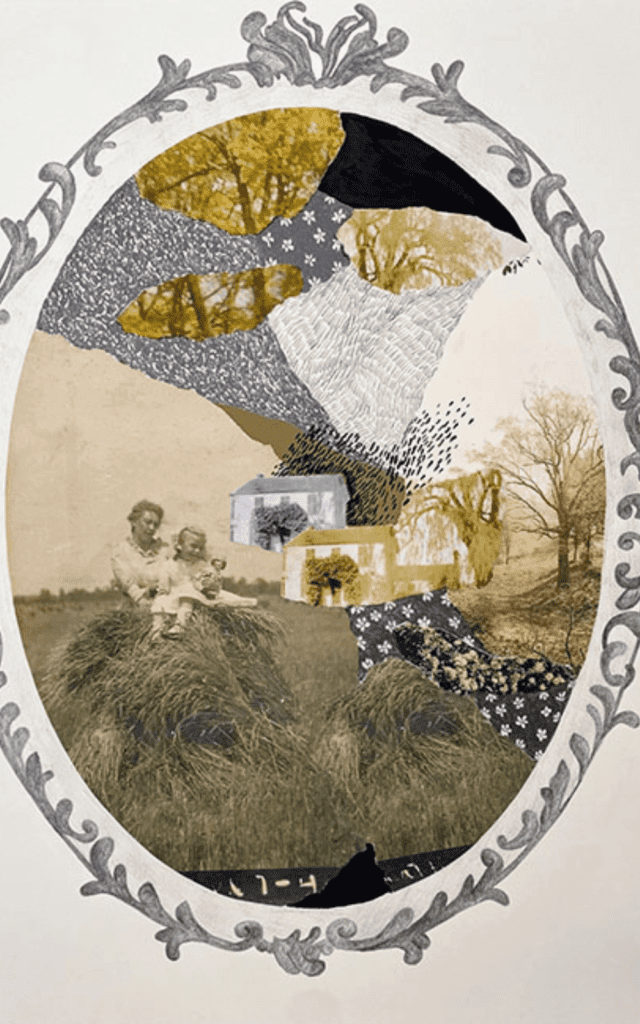
Every painting plays a big part in my career. I really appreciate every collector who gives my work a welcoming home. Just before I set out as a full-time painter, I did a series of illustrations and turned them into greeting cards to tryout the market.
I was selling them at a vintage antique shop down on The Cut in Southwark, and seeing people actually pick them up, buying them, and leave really lovely comments. It was quite a small moment, but it really boosted my confidence. It made me feel like there was a connection with people, and that maybe I could take the work further.
Q9. What would you say to an artist whose world is strange and specific and deeply personal who isn’t sure yet whether anyone else will want to live inside it?
I’d say that’s probably a good sign. If the world feels specific and personal, it usually means it’s coming from somewhere real and that’s what people connect to, even if it’s not immediate. You don’t need everyone to enter it. The right people will recognise something in it, even if they can’t fully explain why.
And sometimes the more honest and particular the work is, the more space it actually gives others to find themselves in it. So I think it’s less about asking whether others will want to live inside it, and more about building it as truthfully as you can. The rest tends to follow.
As our conversation with Xue drew to a close, one thing stayed with us more than anything else. She said that if the work feels specific and personal, that is probably a good sign. That the more honest and particular something is, the more space it actually gives others to find themselves inside it. You do not need everyone to enter it. The right people will recognise something in it, even if they cannot explain why.
That is such a simple thing to say. And such a difficult thing to actually trust.
Because the pressure on artists today is relentless to be more accessible, more universal, more immediately legible, more everything all at once. And Xue has quietly done the opposite.
She has gone further into her own specific world, her own specific tensions, her own particular way of holding sweetness and unease in the same image and in doing so, she has found an audience that feels the work in a way that goes far deeper than anything broad or palatable ever could. That takes courage. The quiet, daily kind that nobody really talks about.
And you feel that courage in the paintings themselves. There is a quality to work made from such an honest and specific place that simply cannot be manufactured a presence, a tension held just right, a surface that looks composed while something underneath is always gently shifting.
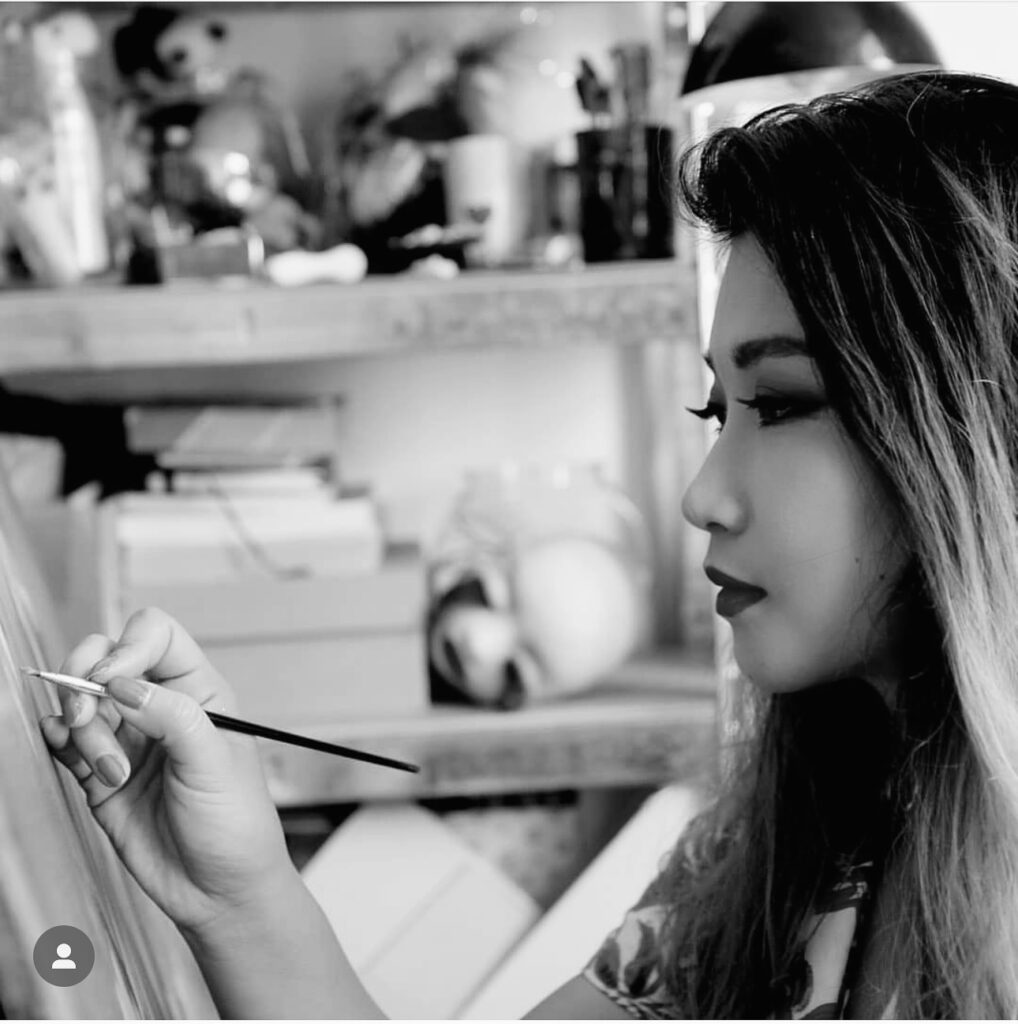
For those who want their walls to hold something that grows with them rather than fades into the background work that catches you differently on a hard day than it does on a good one Xue’s paintings are exactly that. They were built to be felt more than explained. And that feeling deepens the longer they are in your life.
We think about that a lot. Especially in a world that keeps asking artists to make things easier, louder, more instant. Xue is a quiet reminder that the most enduring work has never been any of those things. It has always been honest. It has always been patient. And it has always trusted that the right people will find their way to it.
Xue Wang is exactly the kind of artist this editorial exists for. And we have a feeling this is only the beginning of a very long and very beautiful body of work.
Follow Xue Wang through the links below and let her work find its moment with you.