
This artist makes leftover palette paint into spontaneous abstract work ┃ Kathryn Hunsche
👁 28 Views
At Arts to Hearts Project, our 101 Artbook Landscape Edition is full of artists who moved us. But every now and then there is an artist whose story gets to you before you even look at the paintings.
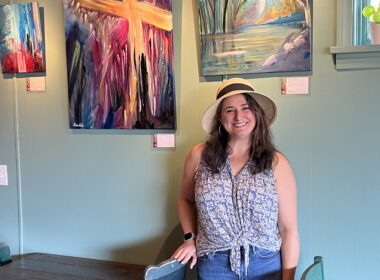
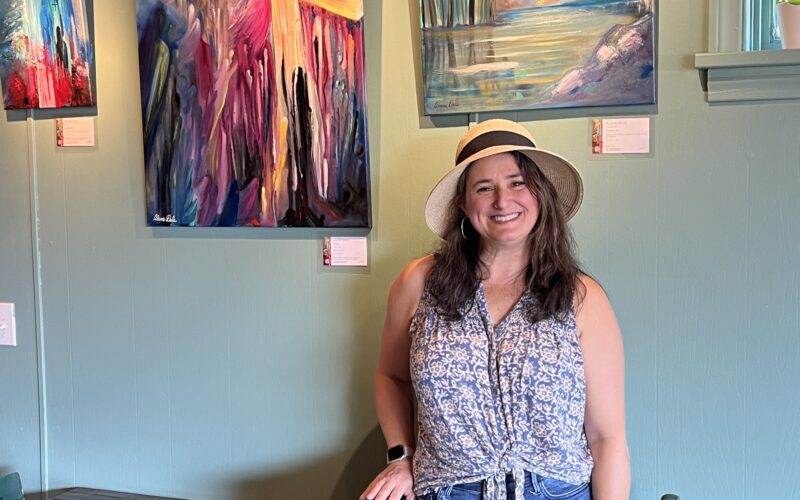
Kathryn Hunsche signs her work Alana Dale. That is not a studio name. It is her father’s name. Alan Dale. He died when she was twenty-five. He was one of the biggest supporters of her art. After he passed she stopped painting for years. Just stopped. And when she finally picked up a brush again she wanted him there with her somehow. So she took his name and made it hers. Alana Dale. Every painting she finishes, that is the name on it. She says she loves seeing it there. She thinks it would make him smile.
We wanted to start with that because it tells you who Kathryn is before anything else does.
She is one of our selected artists in the 101 Artbook Landscape Edition. And spending time with her work you understand quickly that nothing she makes is casual. Even her most spontaneous paintings carry something personal underneath them.
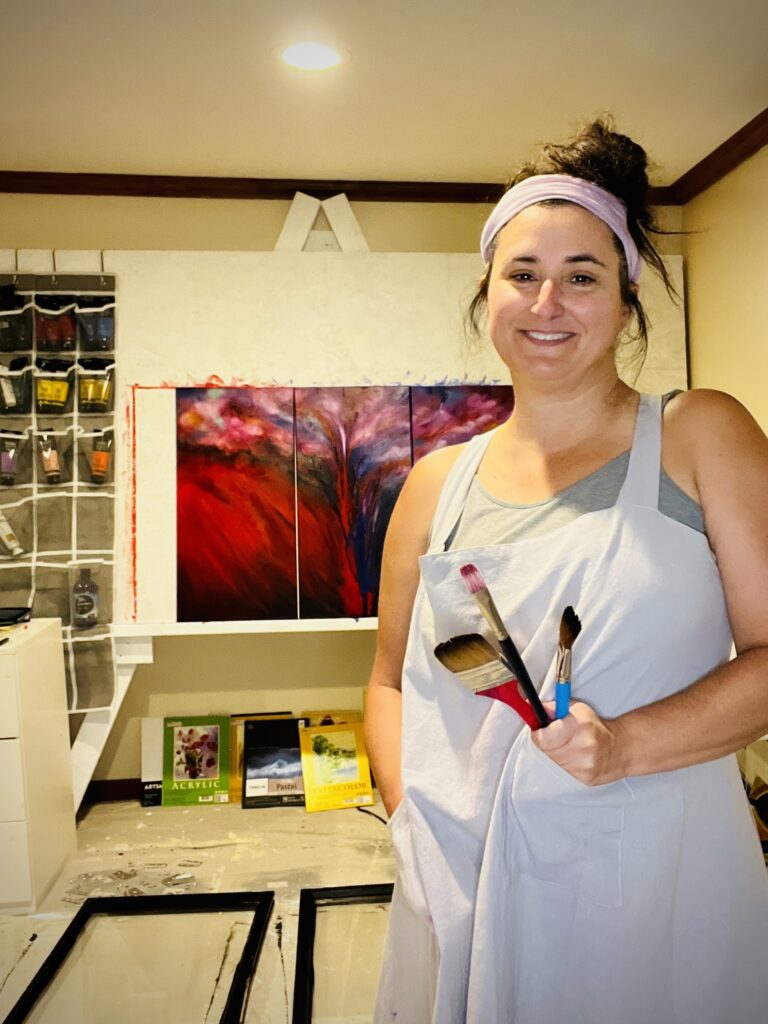
She has been making art since she was a kid. Learned the basics young. And her first teacher did something that stuck with her for life. He drew scribbles on paper and asked her to find what was hiding inside them. Simple exercise but it built the way she sees everything. She still looks at chaos and finds meaning in it.
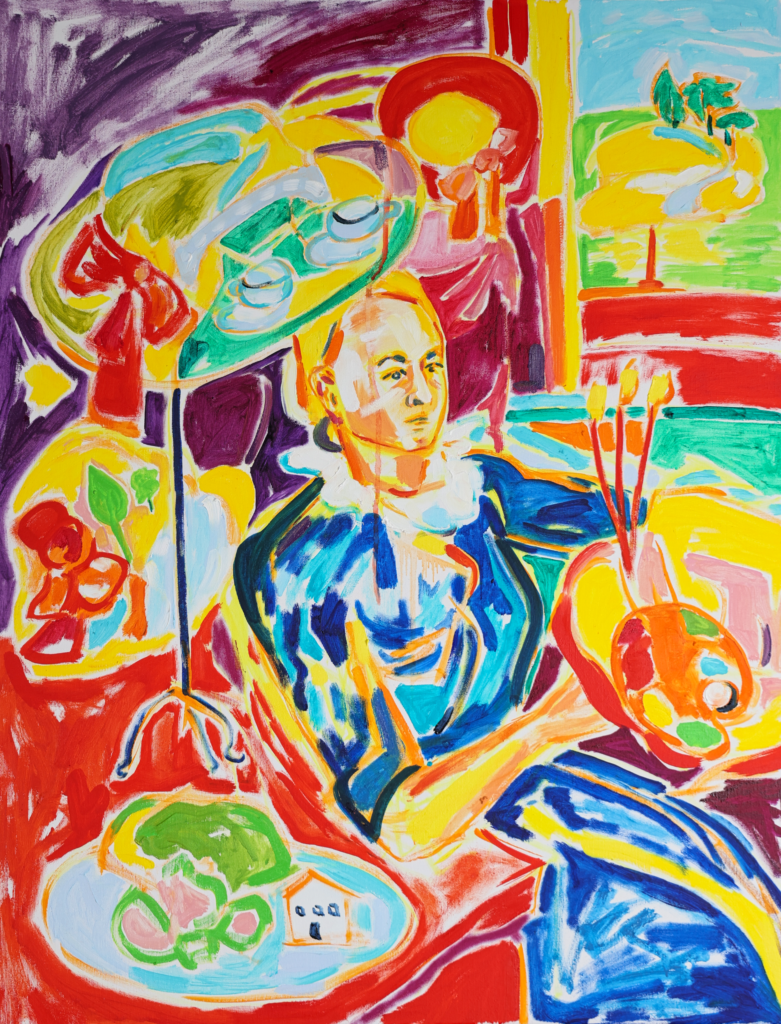
She works across acrylics, oils, watercolours, pastels. Does not overthink materials. Whatever is nearby when the feeling hits, that is what she uses. And some of her freest work came from leftover paint on the palette after finishing a different painting. No plan. No pressure. Just her hands and whatever wanted to come through.
Her work moves between representational and abstract and lately she has been bringing both together on the same canvas. She says it feels more like her than anything she has done before. There is also a quiet faith in how she works. A gentleness with light. A refusal to let darker tones take over what is bright. She means that about painting and about life.
She is loosening up right now. Choosing joy over perfectionism. Choosing to enjoy making again instead of stressing about outcomes. And the work is responding. Getting freer. Getting brighter. Getting closer to who she actually is.
Let’s get to know Kathryn more through our conversation with her about joy, chaos, leftover paint, and why perfectionism had to go.
Q1. Starting art lessons at a young age clearly left a mark. How did growing up and those early experiences with art lead to the varied styles and approaches you work with now?
My very first art teacher taught me how to paint with acrylics and with oils. He also focused on the basics of drawing and perspective. One of my favorite exercises that may have led to my enjoyment of abstract painting was when he would draw a scribble on paper and have me use my imagination to turn it into a drawing of something other than a scribble.
Q2. You work comfortably between acrylics, oils, watercolours, and pastels, how do you decide which medium best serves a particular idea or emotion?
I think ideas and emotions can be expressed in any single medium or by combining them. I don’t believe the medium itself is what brings the image to life, or gives it emotion; it is the actual emotion of the artist. It is very spontaneous.For example, I could be feeling inspired by a tree I see and I want to paint it with oil but I only have a pastel or pencil nearby. A drawing of a tree could end up having just as much emotion as the oil painting because it was done at a time I was truly feeling inspired. So, I suppose the answer would be — whatever is available in the moment of inspiration. My go to is Acrylic or Oil. But if I don’t have that with me I might doddle an idea and later paint it.
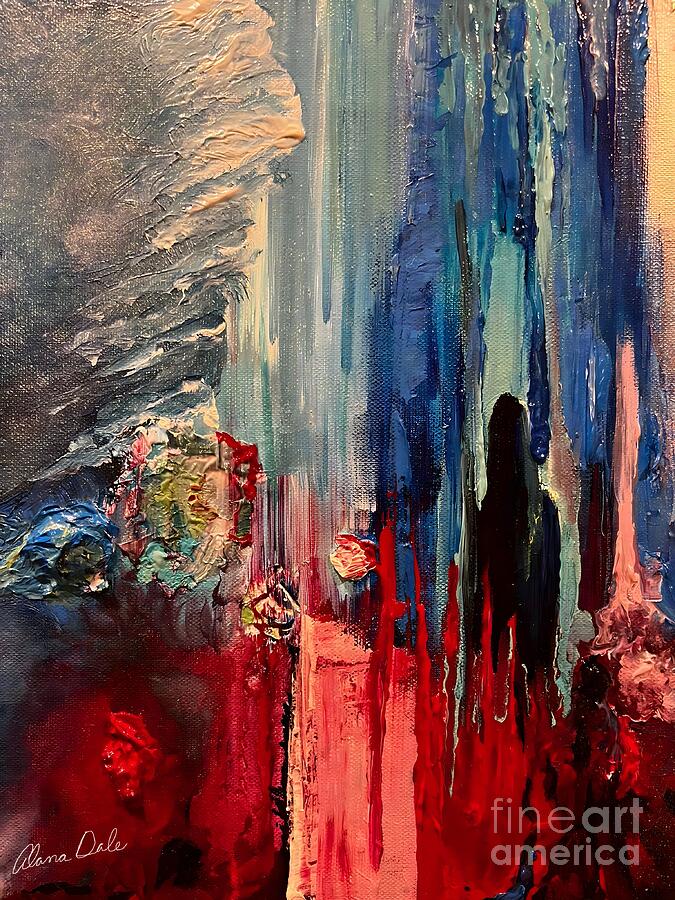
Q3. With abstract works like Wooded Solitude or Galaxy Mountains, how do texture and layered paint guide your compositional rhythm?
I wouldn’t say the texture or paint layering itself is what guides my composition in these abstract paintings. I like to think of it as more free than that. Both Wooded Solitude and Galaxy Mountains were made from the leftover paint of non-abstract paintings I had completed at the time. It was a freeing feeling to just use up all of the paint on the palate and maybe add one or two more colors to create something that is spontaneous. I enjoy shutting my mind off and seeing what transpires when I put this color here and that color there and move my brush and see what feels right. I tend to overthink things and these types of paintings take me away from that need for thoughtful compositions.
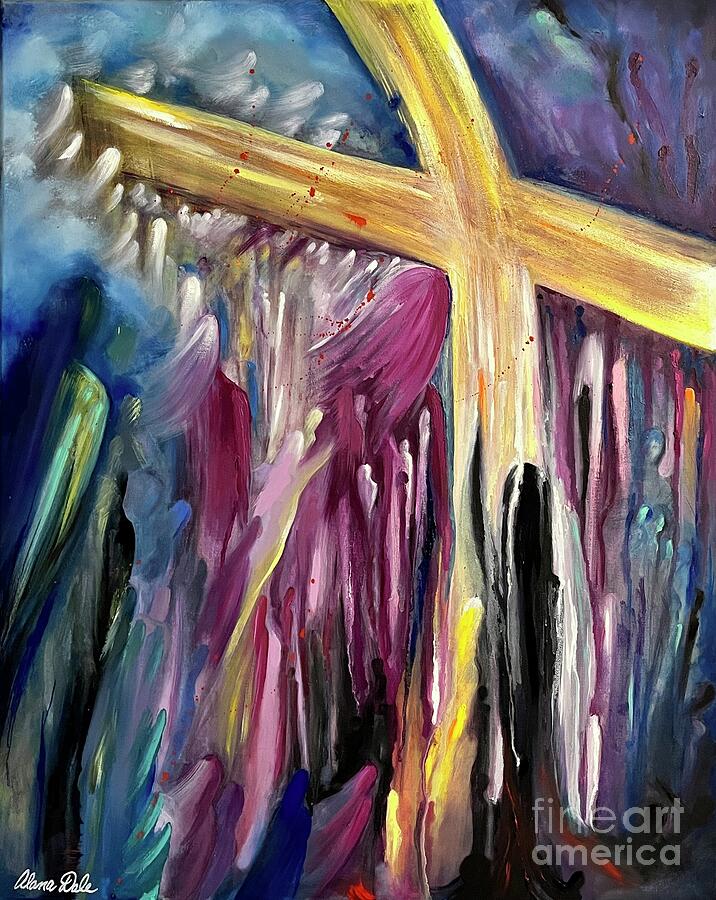
Q4. When you work from imagination or memory rather than direct reference, how does intuition shape your color and form choices?
I think it takes confidence in yourself and vulnerability to paint from imagination or memory. You have to be confident that you know what a thing looks like and even if your rendering of it isn’t like the true thing, you still have a sense of it and you can trust yourself to express it on canvas in a way that represents that thing. Even if you choose to use blue to paint the bark on a tree when there aren’t really trees with blue bark that I know of, you are using your creativity and freedom to get that thing on canvas that’s in your head. The intuition part is just saying to yourself, “I think a tree with blue bark would look cool here in the middle of these woods.”
Q5. Your pieces sometimes blend representational subjects with abstract expression what pulls you toward that hybrid space?
I have two sides to me. I can be a very messy and forgetful person, but I also enjoy order and organization. Representation feels more structured and organized and abstract feels messy and doesn’t require a lot of memory, so putting the two together feels like a good way to express who I am. It also illustrates how God made everything — there is order in his creation down to every detail, but there is so much we don’t understand in life that can be messy and chaotic but there is beauty in the order and the chaos. We were made with that type of freedom. In answering this question I am realizing that this is possibly my favorite way to paint.
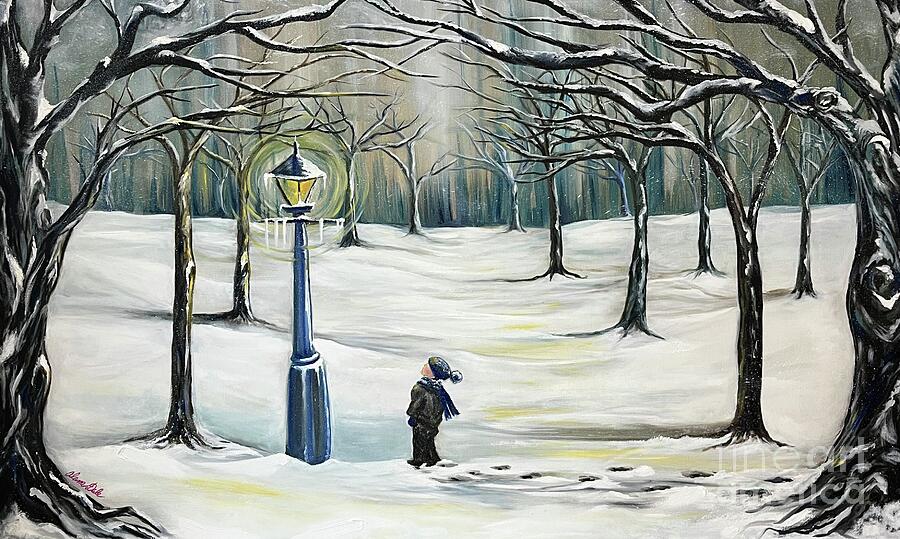
Q6. Many of your compositions draw the viewer into an emotional or contemplative space. How do you think about eye movement, focal points, and pacing when laying out a work?
As far as pacing goes, I don’t think about it much. I start out fast and just want to get some color down, but then I might take a long time to get the right colors in the background. I don’t like to return to the background once its down, but sometimes I will. I want to have light somewhere behind my focal point. I try to protect that area of a painting once its done so I don’t lose the lightness behind the focal point. I think that’s a good parallel to our own emotions and how we contemplate life. We want to protect what is good. We don’t let the things all around us that might drag us down come in, we protect what is good. I want the viewers eye to be drawn to the light or the goodness of God since that is the source of my talent and whole reason I paint.
Q7, Many of your works are printed on items like totes, mugs, and puzzles in addition to traditional prints. How does thinking about these objects influence how you compose images or consider scale?
I don’t specifically design my art to go on anything other than canvas or prints and I prefer it that way, but if one of my paintings would translate well on a tote, or mug then I might make it available on such things. I am beginning to gravitate from putting my art on anything too crazy because I don’t want it to become too commercial, but if someone wants a cool abstract 1000 piece puzzle, I see no harm in offering that. I kind of want one myself since I love puzzles!
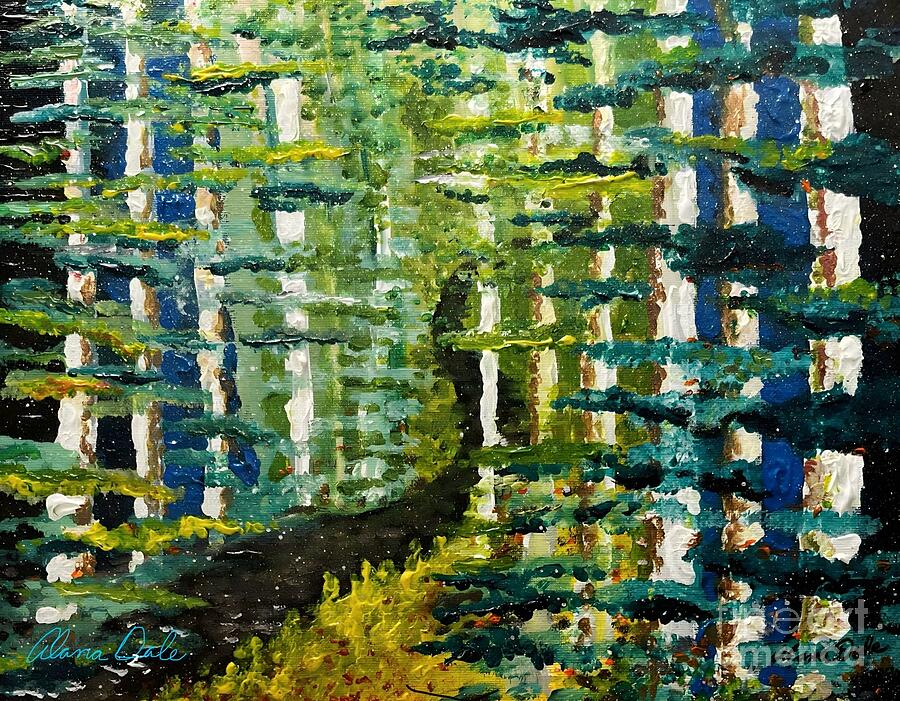
Q8. When viewers bring their own interpretations to titles like Dreamer or Summer Bliss, does that expand how you think about the work?
This is such a good question! Absolutely! It’s so true that beauty is in the eye of the beholder so when my husband sees “Summer Bliss”, while I may think, “Golden Dreams” We are both right — but guess who’s interpretation won? I named it “Summer Bliss” because I loved that it gave my husband that feeling. It shows me that my art can give a feeling to someone that is completely different from what I felt in creating it and still be as meaningful. It excites me to see what people will think and feel when they look at my work
Q9. Looking back at your work over the past few years, what shifts in theme, technique, or approach feel most significant to you?
I’m definitely shifting more toward abstract representational. It’s significant because I am finding a lot more freedom in what I am doing and letting go of perfectionism. When I overthink, I lose the joy of creating.
Q10. What advice would you give to emerging artists who want to explore multiple styles and mediums while maintaining a cohesive personal voice?1 response
Your voice is yours! Your choice of medium should never hinder your ability to express yourself but when you experiment with a new medium, be patient with yourself until you learn how to create what you like in that medium. If you don’t love it, mix it with something else. If it just never feels right you can learn from the experience that although you may think Charcoal is a cool medium, you just don’t enjoy working with it as your main thing. Just enjoy the process of trying new things. Your voice comes out from what’s in your heart, and your life experiences not from medium itself.
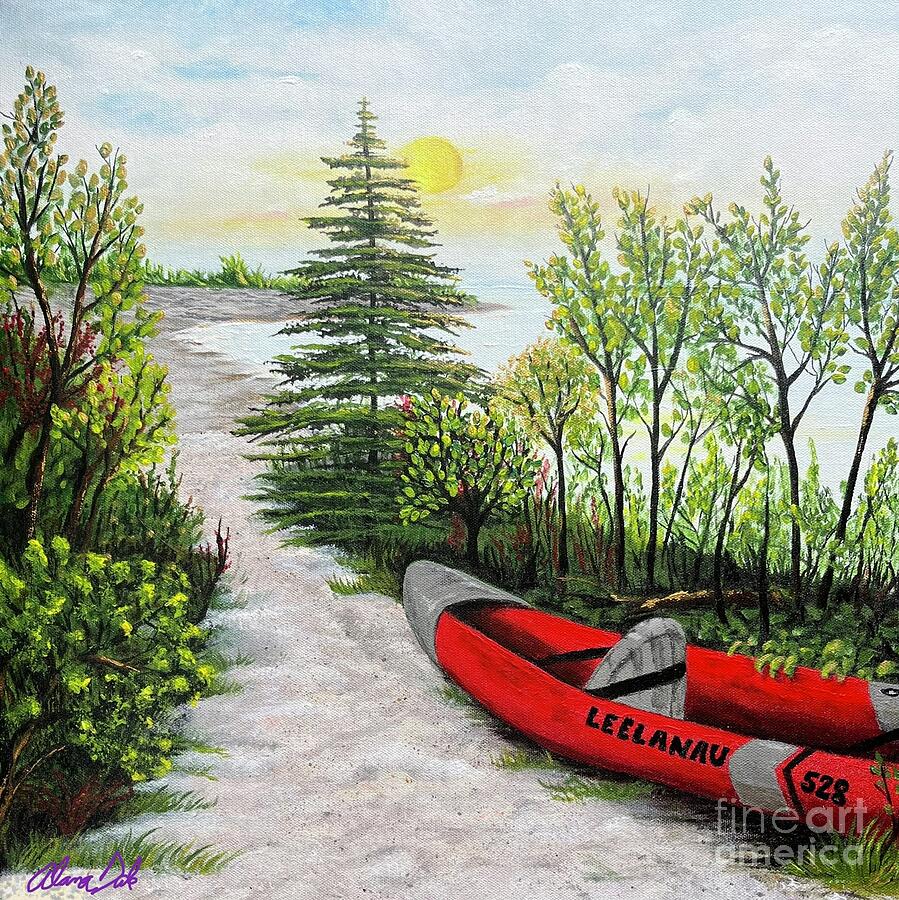
As our conversation with Kathryn came to a close, we kept coming back to one thing. How much of the best art happens when you stop trying to make the best art.
That sounds like a contradiction. But Kathryn is living proof of it. Her most alive paintings came from leftover paint. No plan. No pressure. No inner voice saying this has to be good. Just her hands and some colour and whatever wanted to happen. And what happened was better than what she could have planned. Every time.
We think about that a lot. How perfectionism disguises itself as caring about quality when really it is just fear wearing a nicer outfit. Fear that it will not be good enough. Fear that people will judge it. Fear that if you let go of control the whole thing will fall apart. Kathryn has been living inside that fear for years like most of us have.
And she is walking away from it now. Not because she stopped caring about her work. Because she realised that the caring was killing the joy. And without joy the work was losing the one thing that made it worth making in the first place. Its aliveness.
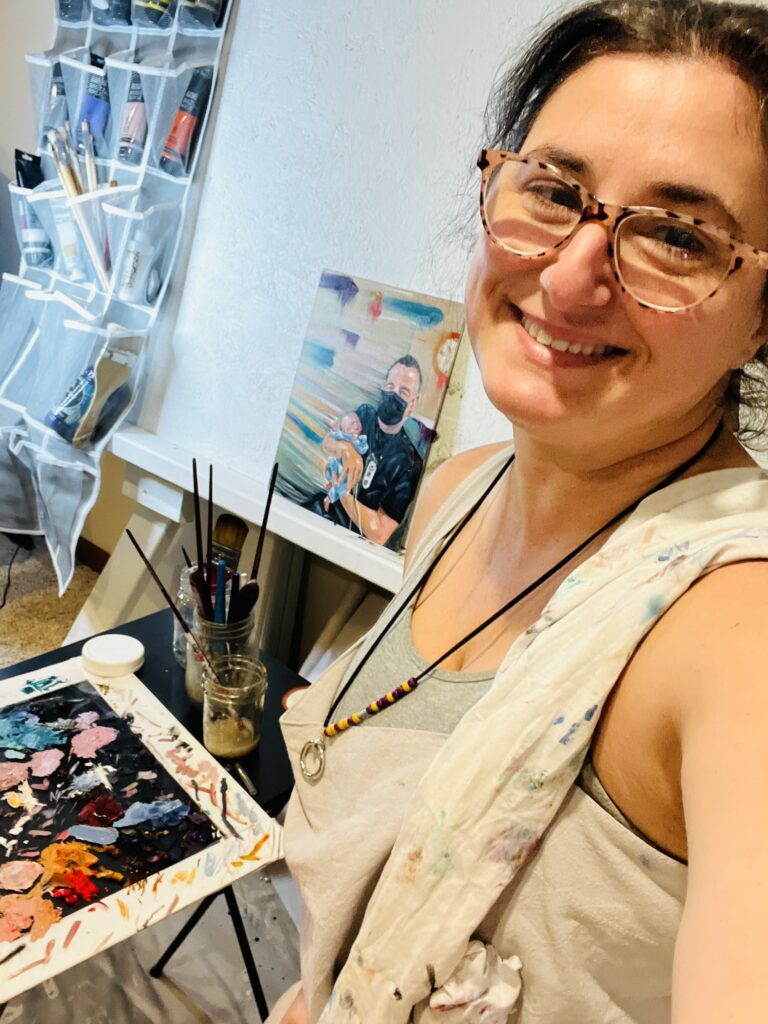
We also cannot let go of that scribble exercise. A teacher draws a mess on paper and asks a child to find something inside it. That is it. That is the whole lesson. And that lesson is still running her practice all these years later. Look at the chaos. Do not be afraid of it. Something is in there. You just have to stay with it long enough to see it.
Is that not what making art is? Is that not what life is? Looking at the mess in front of you and trusting that it has something worth finding inside it if you just keep looking?
And her two sides. The one that loves order and the one that loves mess. We think every artist carries both of those people inside them. And most of us spend our whole lives thinking we have to pick one. Be the disciplined artist or be the wild one. Be the planner or be the improviser. Kathryn stopped picking. She let both of them onto the same canvas. And the work became more her than it has ever been.
For anyone looking for art that brings genuine warmth into a space, Kathryn’s paintings do exactly that. They were made by someone who was present and feeling something real in the moment she made them. That energy does not leave the painting. It stays. It meets you in the morning. It sits with you while you have your coffee. It makes the room feel a little lighter every day. That is the kind of art that does not need to impress you. It just needs to be near you. And it does its work quietly from there.
Follow Kathryn Hunsche through the links below and see what happens when an artist stops trying to be perfect and starts being free.