
This Royal Worcester artist brings porcelain’s reverence to canvas flowers︱Giorann Henshaw
At Arts to Hearts Project, we love finding artists whose creative life started somewhere unexpected. Not in art school. Not in a studio. But in a factory. On a production line. Painting someone else’s designs on someone else’s schedule.
The kind of beginning that most people would not think of as artistic at all. But sometimes that is exactly where the most disciplined and grounded practices come from.
Giorann Henshaw started her creative life at seventeen. She was accepted into the Royal Worcester Porcelain School in the UK. She learned to paint on chine and porcelain. She learned mould-making and sculpture.
And when she finished the foundation course, she was offered a place on the factory floor. The enamelling section. Painting dinnerware, thimbles, children’s birthday mugs, Dorothy Doughty Bird Plates. Set colours. Set outlines. Piece work. Four years of it.
We are proud to have her as one of our selected artists in the 101 Artbook Landscape Edition.
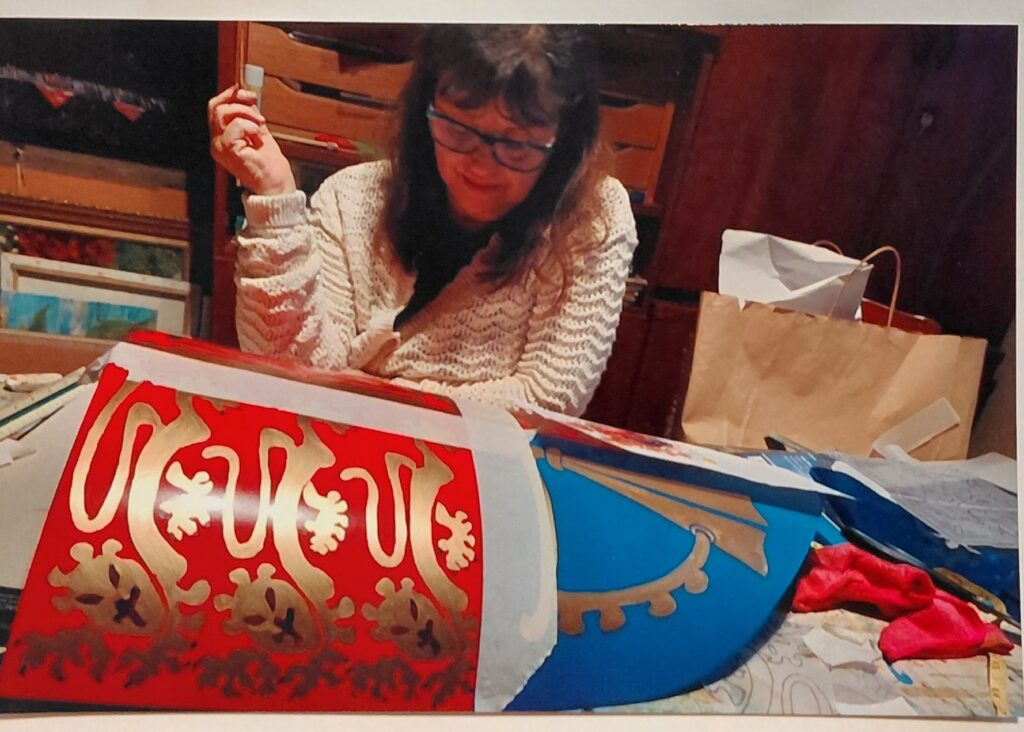
Most people would hear that story and think okay so she was a factory painter. But that misses what those years actually gave her. Because porcelain does not forgive you the way canvas does. You cannot paint over a mistake. You work in soft layers building tone between firings.
Every mark has to be considered. Every brushstroke has to be right because there is no going back. That kind of discipline gets into your hands. It gets into your eye. It becomes the way you see a surface before you even touch it. And when Giorann eventually moved to canvas and started painting her own work on her own terms all of that training came with her.
She went on to earn a BA Honours in Fine Art and History of Art through the Open University. She has exhibited at galleries in London, at the Brick Lane Gallery, at venues in Alcaidesa, and participated digitally in Zurich, Cannes, and Malaga. But what draws us to her work is not the CV. It is the feel of it.
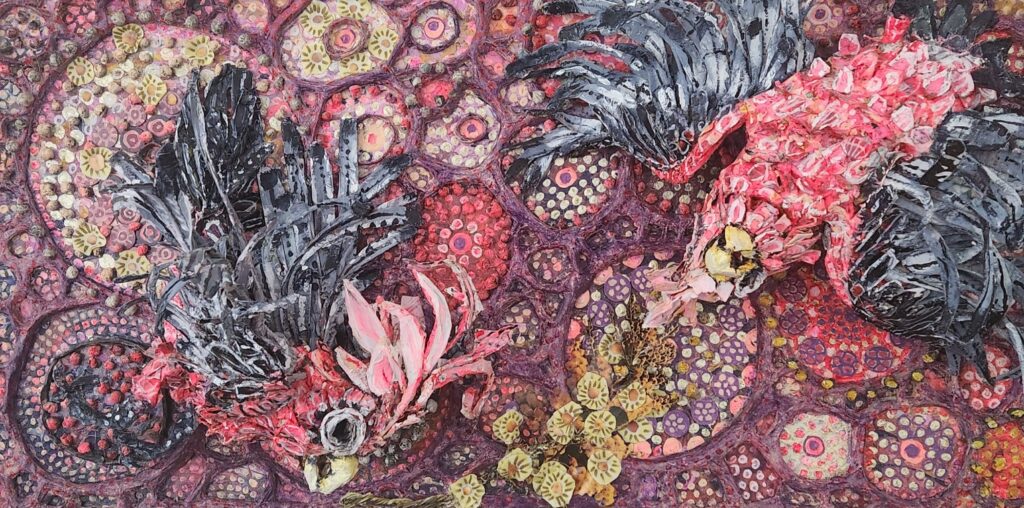
She works across ceramics, fabric, watercolours, acrylics, and oils. Her paintings move between portraits, landscapes, florals, and more recently she has been exploring synthetic metal leaf on canvas with acrylics. And there is something about her metal leaf work that catches you.
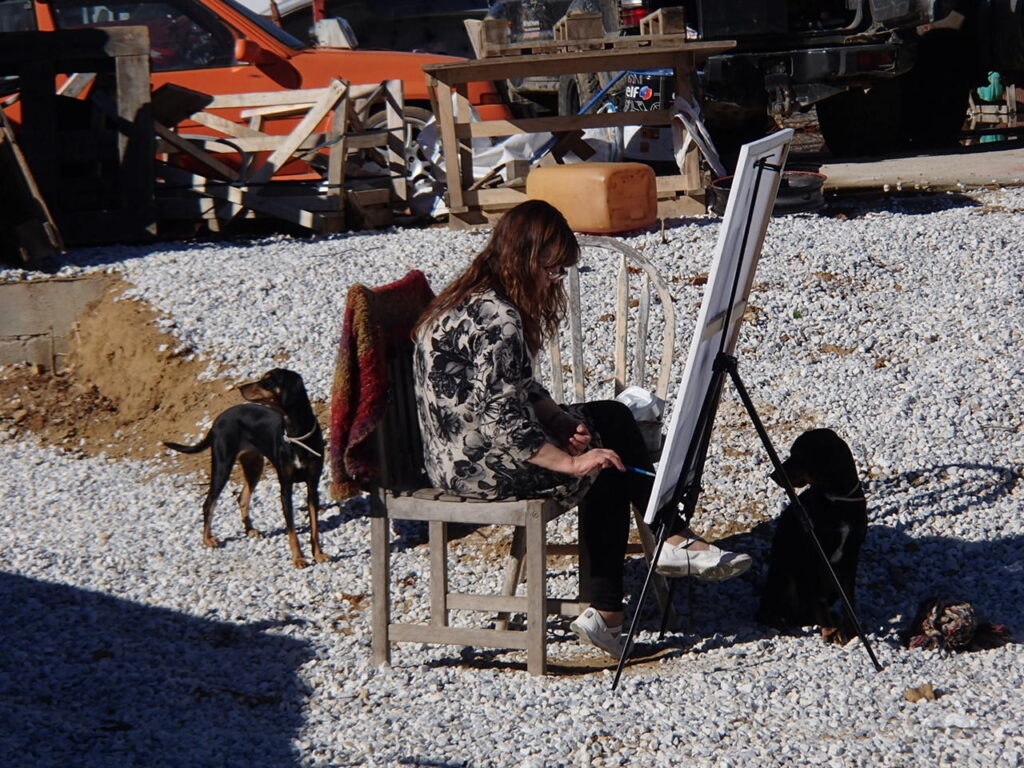
The reflective surface underneath bright acrylic colours gives the painting a glow that feels almost lit from within. Her piece Moonlit Shores uses silver leaf to capture the way her hometown shores look under moonlight. That is not someone trying a trendy technique. That is someone who found the exact material that does what she needed it to do.
She paints based on mood. Whatever energy the day gives her, that is what decides the medium and the subject. Some days it is watercolour, which she says feels closest to porcelain painting. Some days it is acrylics where the work can be bolder and messier and there is room to push and change and take paint off the surface.
She calls herself a conservative artist but we think she is being modest. There is an emotional range across her body of work that tells you this is someone who has been paying attention to the world around her for a very long time and finding different ways to respond to it.
Let’s hear from Giorann about what four years on a porcelain factory floor taught her about painting, how mood decides her medium, what silver leaf does to moonlight on canvas, and why she believes an artist never stops being a student.
Q1. You began formal art training at 17 with the Royal Worcester Porcelain School, how did early experience painting on porcelain and learning mould-making influence your relationship to material, surface, and craft?
At 17 years I was accepted at the Royal Worcester Porcelain in the UK on a one year foundation course. I entered the school where I was taught to paint on china and porcelain, make moulds and sculpture. On completion I was offered a place at the factory floor on the enameling section painting dinner ware, thimbles, children’s birthday mugs and Dorothy Doughty Bird Plates. I achieved a BA Honors in Fine Art and History of Art through the Open University. I have had three exhibitions of my paintings at Biancas Restaurant, at Alcaidesa Golf Club and a joint Exhibition at the Fine Arts Gallery. Two years ago, I participated in a joint Exhibition at the Brick Lane Gallery London. I also participated digitally in Zurich, Cannes and Malaga.
Q2. Your practice spans portrait, landscape, and decorative work on canvas and porcelain. How do you choose between materials and formats for a given idea?
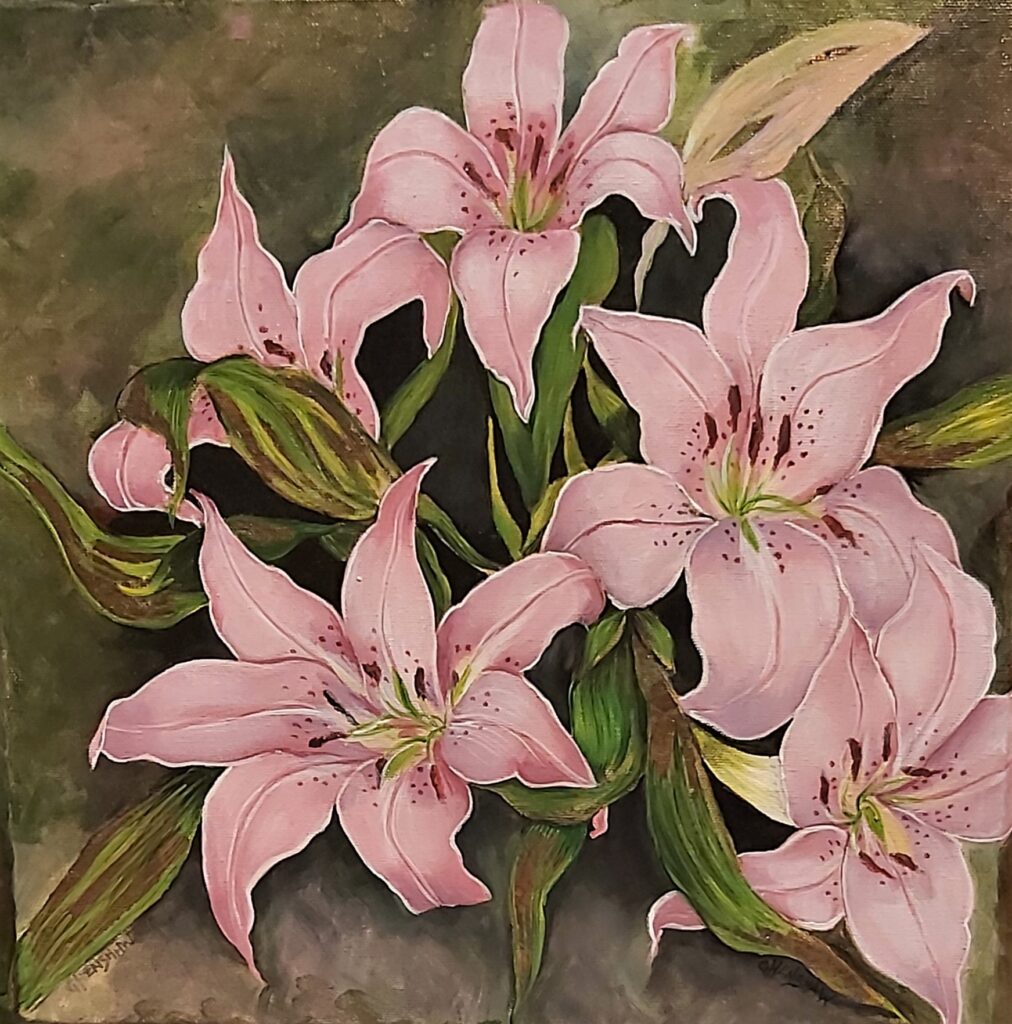
I like to explore in different mediums. Ceramics, Fabric, Water colours, Acrylics and oils. I am quite a conservative artist I think my training in porcelain painting made me love to paint flowers and stylistic landscapes. I am influenced by my moods and paint with different mediums according to the energy I derive from the day. My newest paintings are all exploring with synthetic metal leaf using acrylics on canvas. I love the reflective properties which the metal leaf gives to backgrounds alongside the use of the bright colours that acrylics. I try to re-energize and investigate its consistency interpreting the pictorial form into a more contemporary approach.
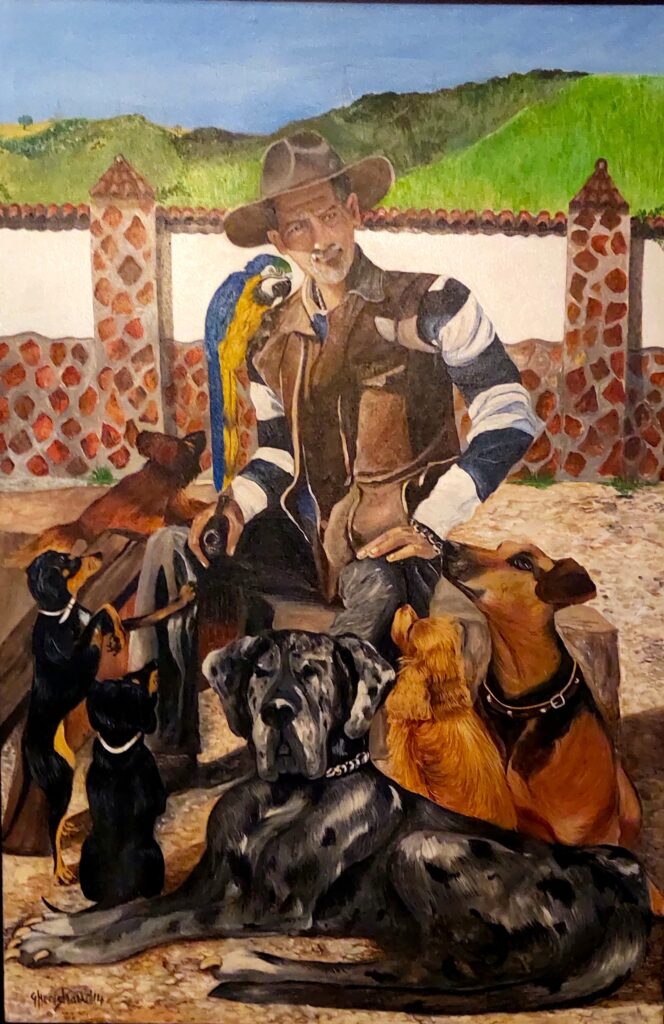
Q3. What does it feel like to see your work placed alongside other artists in mixed exhibitions and how does that influence how you think about your own voice?
I have mostly exhibited in mixed exhibitions. It gives the viewer a wide variety of choices in looking at different styles and mediums from different artists. I have always felt proud of my work along side other artists as I feel confident of my own style and achievement.
Q4. Painting on china or canvas demands different technical approaches. What specific qualities of porcelain surfaces do you see carrying meaning that canvas doesn’t?
Porcelain painting is very much like watercolour painting, it is a very soft medium where the artist works with different layers to achieve the right tones between firings. I use very similar methods when working in watercolours. Canvas work is completely different as the properties of acrylic or oils are more dynamic and have room for mistakes where one can paint over or even take off paint from the composition.
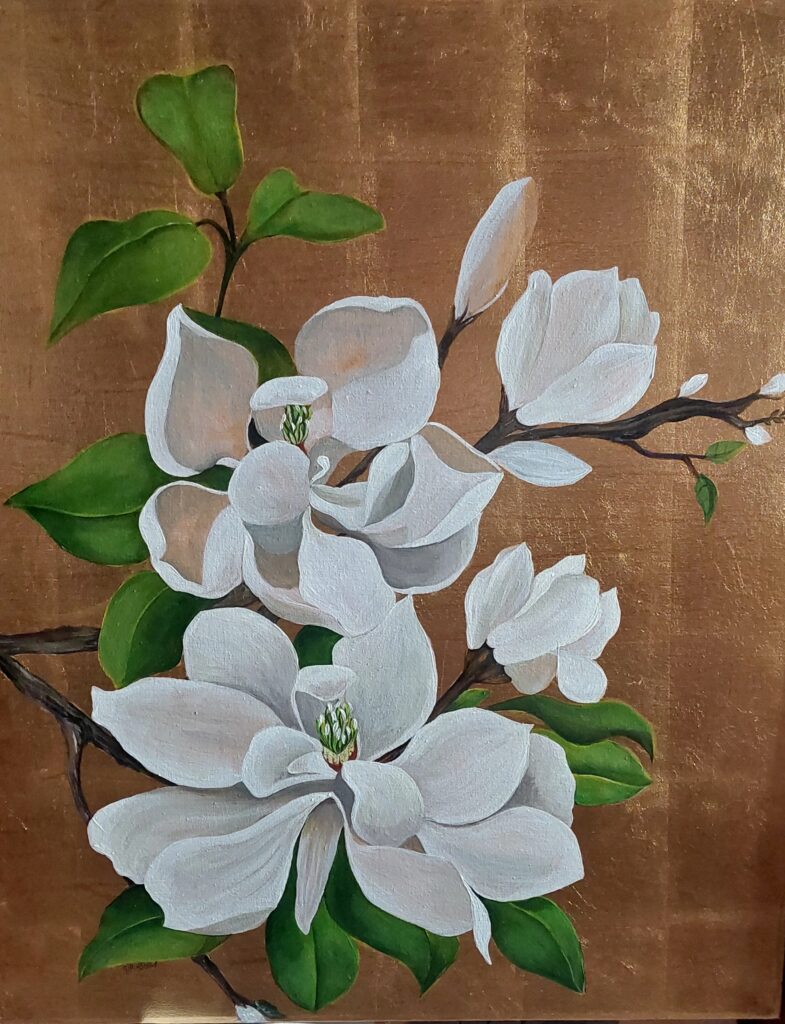
Q5. You’ve mentioned that training has made you love painting flowers and stylistic landscapes. How does mood or season shape what you choose to paint?
.I am influenced by my moods and paint with different mediums according to the energy I derive from the day. Being an emotional artist my feelings are mirrored in the composition and medium I choose, thus I have a varied amount of paintings that show different approaches to the world around me.
Q6. After four years on the factory floor working on form and decoration, how did that blend of commercial and creative practice shape your artistic identity once you moved into fine art?
Factory painting was a very different way of applying my artistic form. I had a set of colours and outlines to go by and most of it was piece work. Commercially once I started on my own it was completely different. I was free to create and sell my own designs. I have carried on with China painting, but I also sell my paintings and exhibit every year. Porcelain painting gave me a different perspective to painting on canvas. I apply some of it and it makes for a very creative composition.
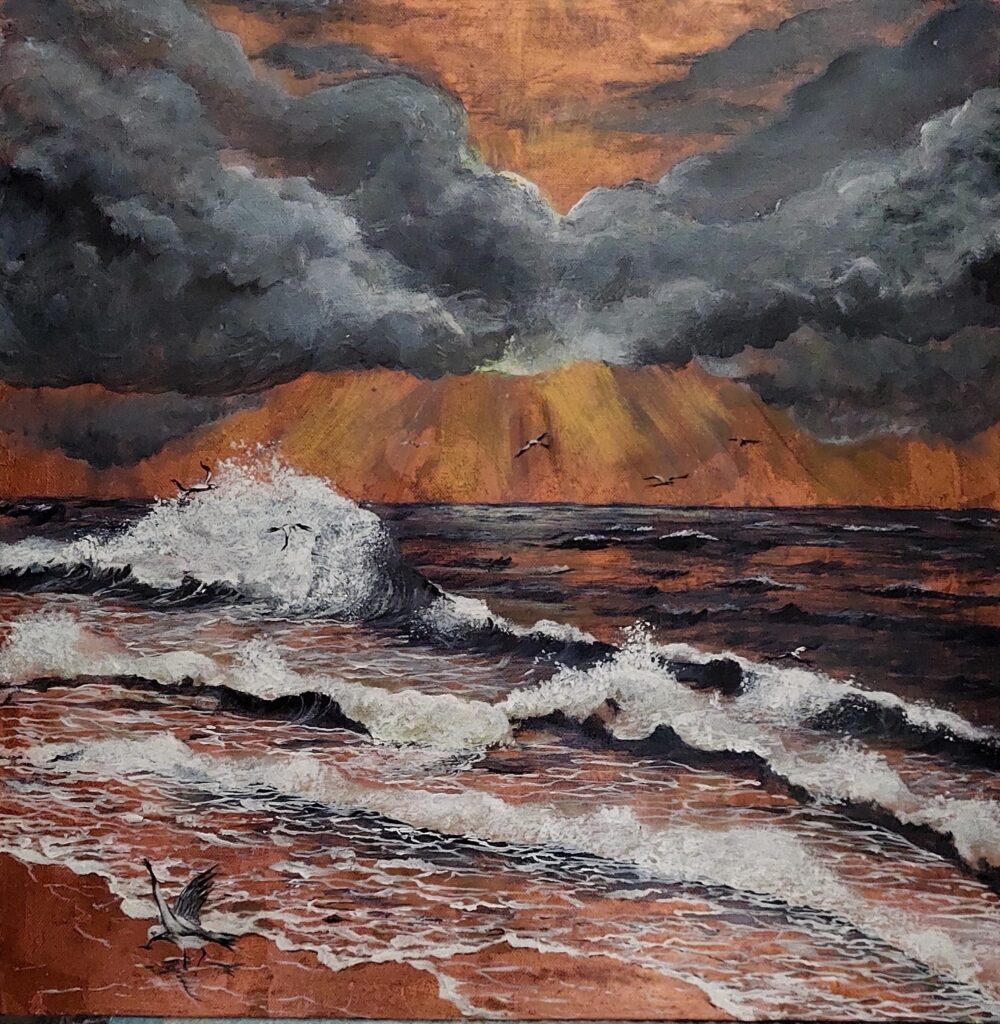
Q7.Some of your pieces known locally include works like Moonlit Shores. What draws you to particular environments or atmospheres?
Moonlit Shores is a mixed media painting. I applied synthetic silver leaf on canvas and used acrylics and gloss medium for effect. I wanted to show how the beautiful shores of my hometown reflected under the moonlight and silver leaf was the perfect medium to depict this scenario.
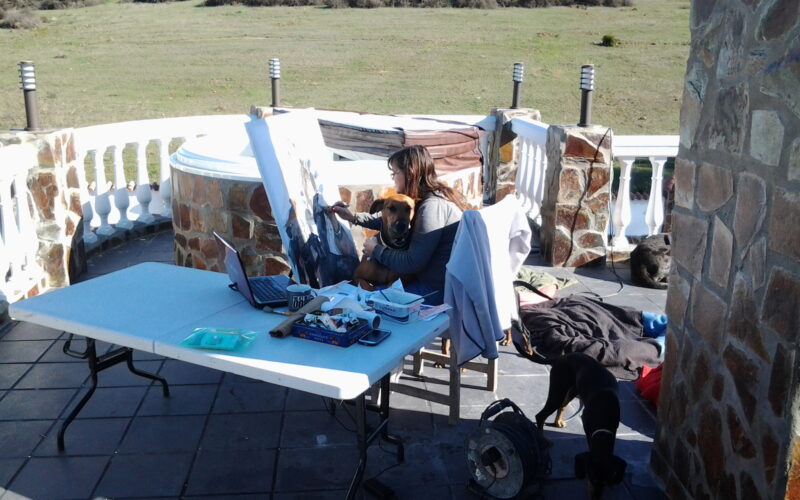
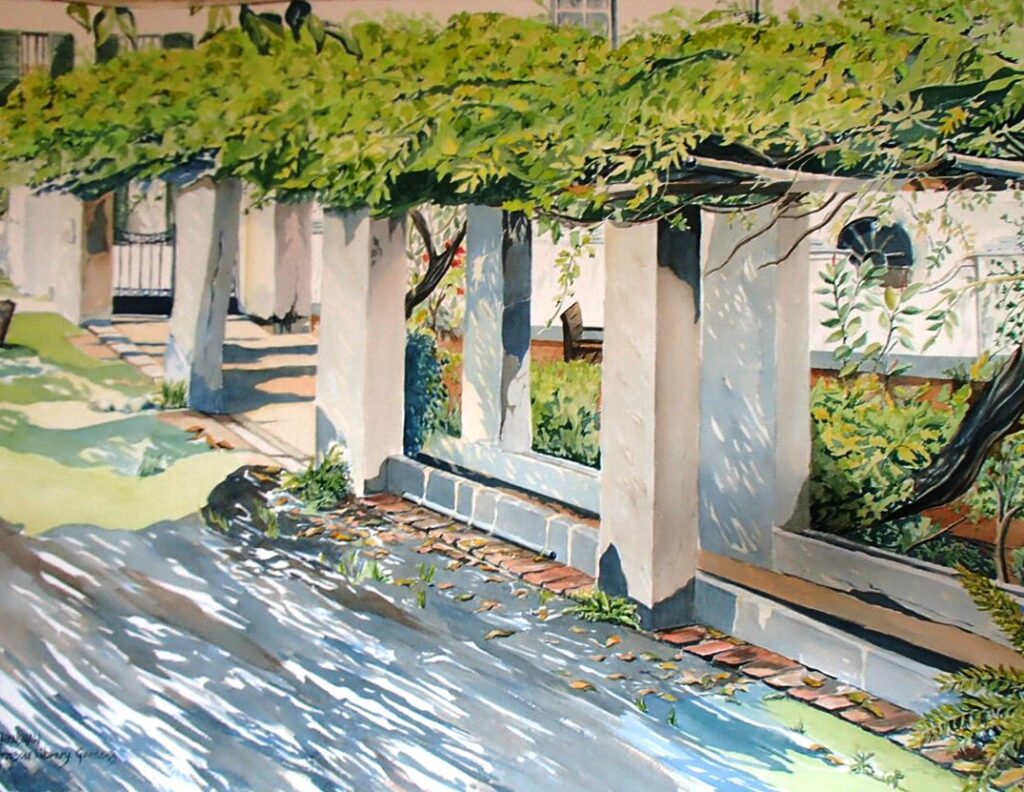
Q8.Outdoor summer painting excursions are part of your teaching. How does plein air practice influence your decision-making in the studio?
Plein air is a very useful and more practical way of documenting colours tones and shapes. It is less retrained which shows in the paintings when completed. Some plein air is done going multiple times to the same place and the same time of day, at times the composition changes as one sees different things and different shapes etc. Working in the studio is more regulated and has not got the same effect.
Q9. What do you hope viewers feel when they see your work that differs from how you feel while making it?
I hope the viewer senses the atmosphere and emotions that I felt when I was painting the composition. That is the reward of an artist that we can reflect who and what we are on our works.
Q10. What is the most important lesson you’ve learned about sustaining creativity over many years of practice and teaching?
The most important lesson is that we are always learning, we never stop learning and finding and expressing in different ways and methods of creating. Teaching has taught me that we the teachers also learn from our students as they are also their own creative self and will have other ideas to seeing the world with their own eyes. One has to keep an open mind.
Q11. What advice would you give emerging artists about navigating both the craft side of painting and the business of showing/selling work?1 response
Create what feels right what is in your hearts to produce, always keeping in mind what sells and what is trending. The customer changes through time their likes and what is in fashion. Keep an open mind but never forget what is in your heart and feels right. An artist can combine both and be successful.
As our conversation with Giorann came to a close, we kept thinking about hands. About what they carry. About how the place where they first learned to hold a brush stays with them for life.
Giorann’s hands were trained on porcelain. A surface that does not forgive. A surface that demands you mean every single mark you make because you cannot take it back. And now decades later those same hands paint on canvas with acrylics and oils and metal leaf and watercolours and every medium she touches still carries that original discipline. That care. That respect for the surface. You do not have to know her story to feel it in the work. But once you do know it you cannot unfeel it.
We think about that a lot. How the things we learn first stay the longest. How the boring years, the factory years, the years where nobody calls you an artist, those are sometimes the years that build everything. Giorann did not skip those years. She lived inside them. And they made her.
What also stayed with us is how she works with mood. No rigid plans. No forcing herself into a medium that does not match where she is that day. She trusts the morning. She trusts her own energy. And the result is a body of work that has real emotional range because it was made by a real person living a real life, not performing consistency for the sake of a brand.
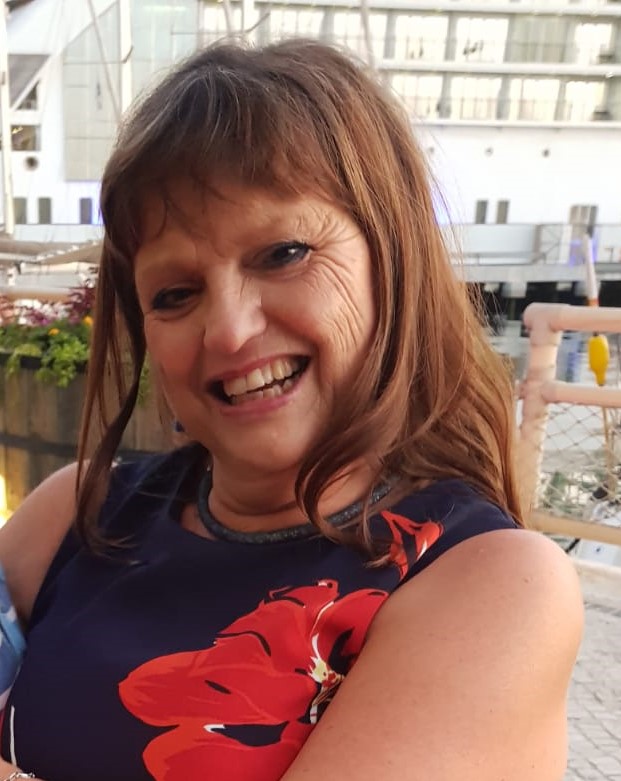
She has been teaching for years and she said something that we have not stopped thinking about. That we never stop learning. That her students teach her just as much as she teaches them. After decades of making work most artists start to feel like they know enough. Giorann still walks in like there is something new to find. And there always is.
For anyone looking to collect or invest in work that holds real substance, Giorann is an artist worth paying attention to. Her technical foundation is rare. Trained at one of the most respected porcelain schools in the UK, refined through years of hands-on factory discipline, and then developed further through a Fine Art degree and decades of exhibiting internationally.
That is not a hobby painter. That is a career built on craft and care and a relationship with materials that most artists simply do not have. Her work holds value because it holds truth. Every painting she makes carries the weight of a practice that started when she was seventeen and has not stopped growing since. If you are looking for work that rewards close looking, that reveals its depth the longer you live with it, Giorann’s paintings are the kind that get better with time. Just like the artist who made them.
Follow Giorann Henshaw through the links below and see what happens when an artist carries a porcelain factory’s discipline into a canvas painter’s freedom.