
What If Sustainable Art Practice Looks Nothing Like What We’ve Been Told? Cher van Schouwen
At Arts to Hearts Project, we’ve spent years asking one question: what happens when you give artists a theme and let them show you how they see it?
Through our 101 Artbook series, we’ve featured over 808 artists across eight thematic editions. Each book is centered around a single theme, and with every open call, we’re reminded how differently one word can be interpreted, felt, and translated by each artist. That diversity of perspective is the foundation of the series and the reason it continues to grow.
After Floral, Animal, Nature, Abstract, and Portrait, Landscape felt like the right choice for our sixth edition because it’s never just about a place. It’s about memory, displacement, and belonging. It’s about the light you grew up under and the horizon that shaped how you see the world. Some landscapes make you feel small in the best way. Others make you feel held. Some remind you of home. Others remind you that you’re still searching for it.
We knew we’d see deserts, oceans, mountains, coastlines. What we didn’t expect was how personal each one would feel. These weren’t postcards. They were emotional maps places that shaped the people who painted them, or places the artists created because they needed to feel grounded again.
Among the selected artists in this edition, one pulled us in immediately. Not because her landscapes were the most dramatic or technically flawless, but because they felt alive. Like the light wasn’t just painted, it was remembered. Like the land wasn’t just depicted it was felt.
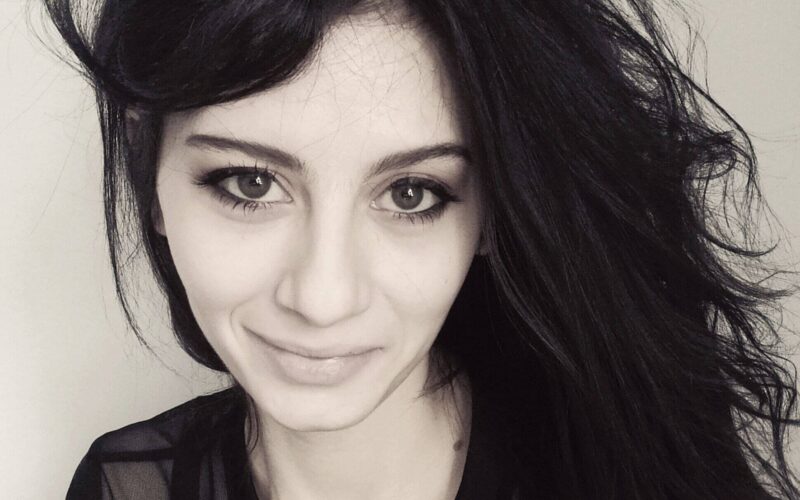
Her name is Cher van Schouwen, and honestly, she surprised herself with this work.
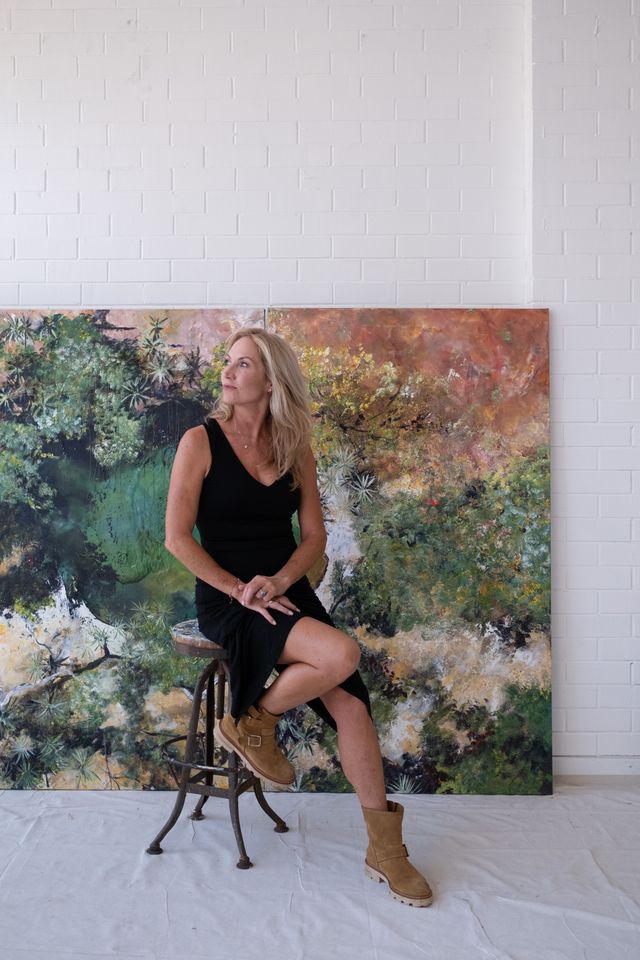
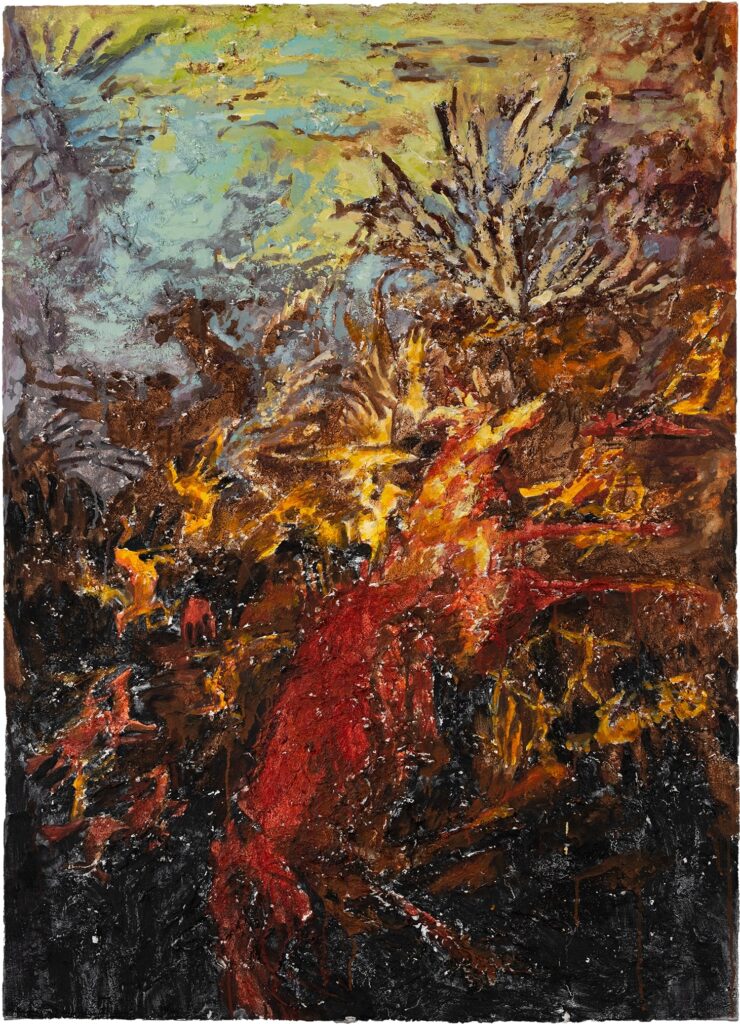
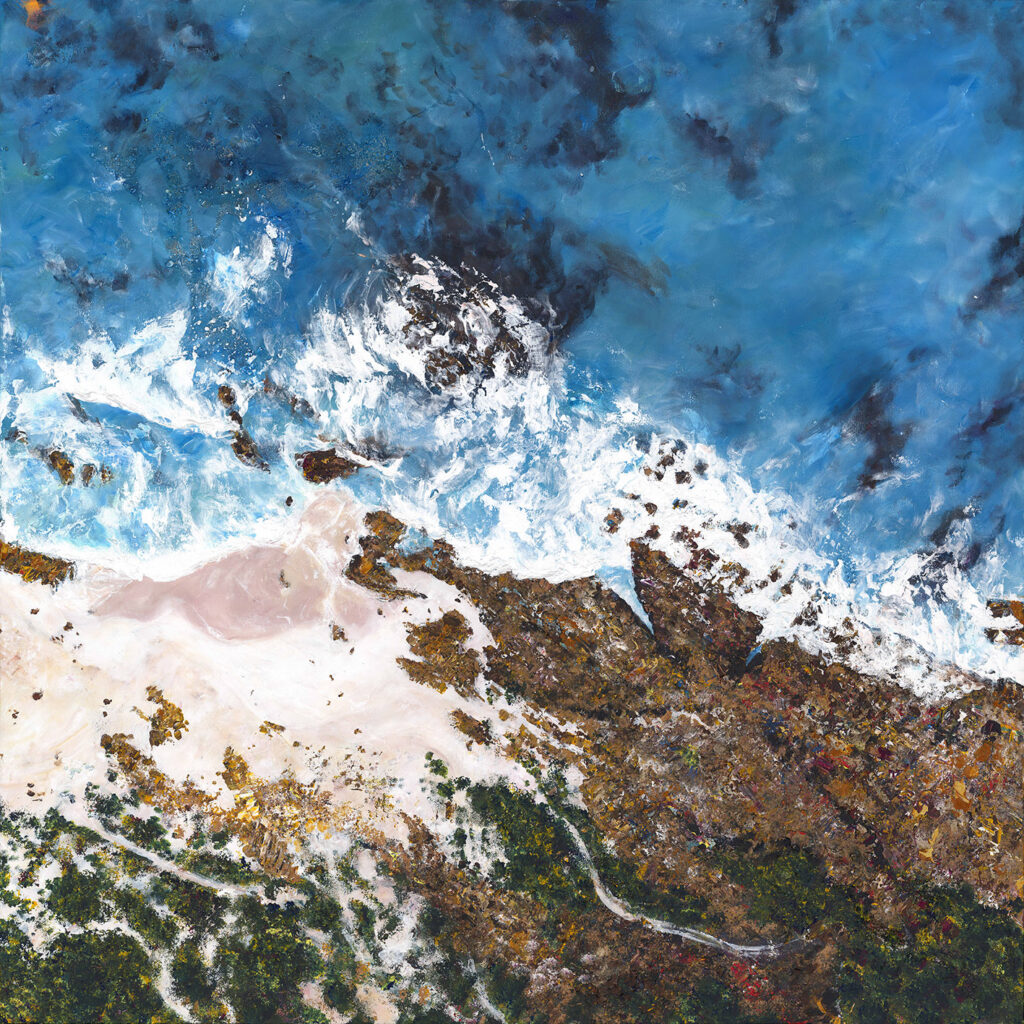
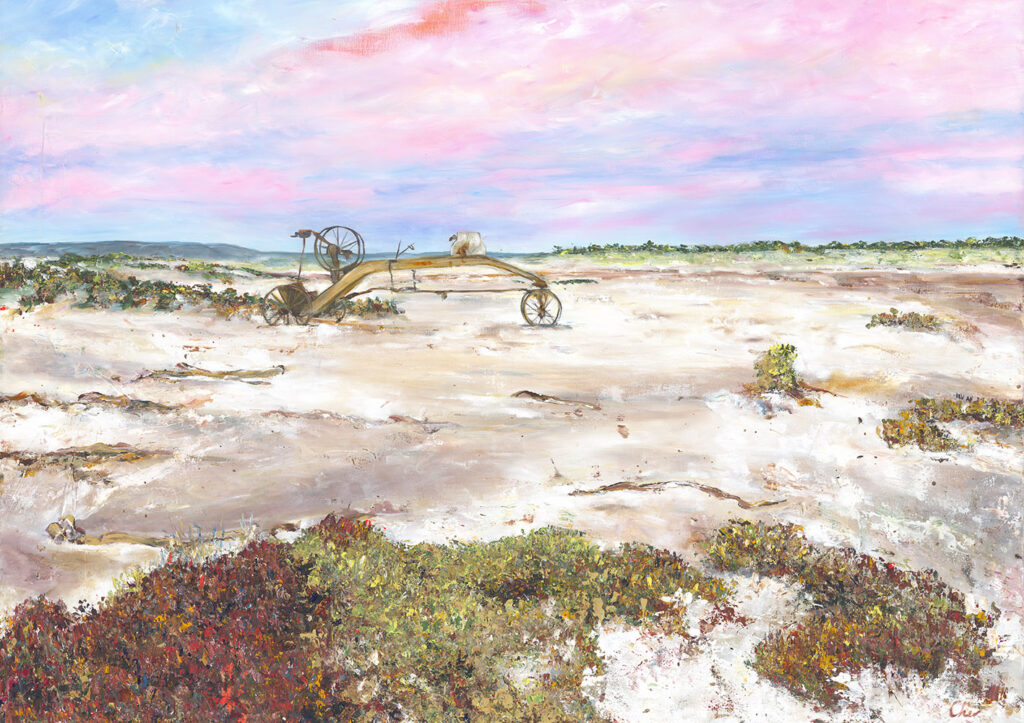
For most of Cher’s career, landscapes weren’t her focus. She’s a painter, yes but her work has always been bold, textured, energetic, full of rhythm and movement. And then, during her most recent exhibition Emergence, something unexpected happened. Cher felt drawn to landscapes in a way she never had before. The Australian outback its vastness, its rusted relics, its soft yet powerful light gave her a new language. She painted not just what she saw, but what she felt: belonging, being held, finding home in the land itself.
That shift didn’t come out of nowhere. It came from a lifetime of rhythm.
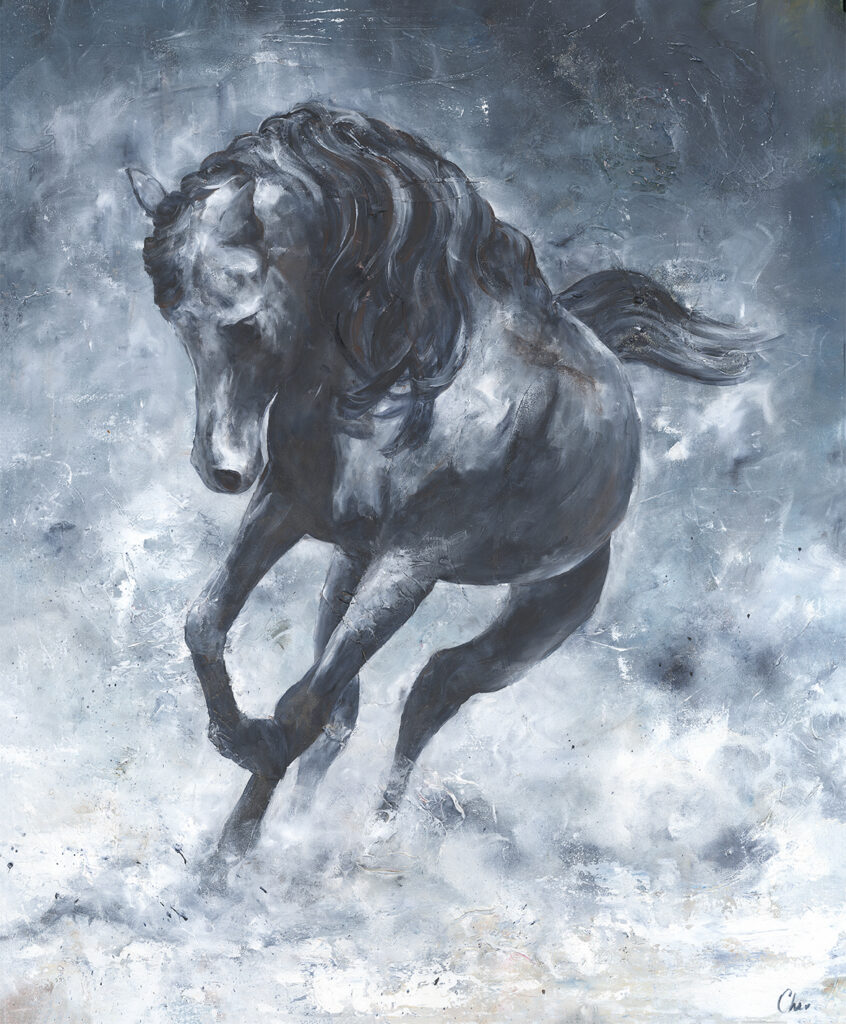
Cher was born in the heart of Zululand, South Africa, surrounded by song, dance, and movement. As a baby, she was carried on backs while people worked and sang. Those rhythms became part of her before she even had words for them. At six, she started formal dance training grounding, balance, awareness. All of those lives in her painting now. When she works, it’s physical.
Before focusing on painting full-time, Cher worked as an interior designer and studied journalism. Both taught her how to see what’s needed in the moment, how to trust instinct, how to think about how others will experience what you’re creating. That awareness shaped how she composes, how she chooses colour, how she structures a canvas. It’s intuition informed by years of practice.
She’s been teaching art in Perth for over 15 years now. She started by teaching her own children, then their friends, then their parents. That evolved into her first Creative Collective, Studio 124, a space where people felt safe to discover themselves through art. Teaching sharpened her own practice. It made her articulate what used to come instinctively, and that brought clarity and depth to her work. Her students inspire her. Her family supports her. The ocean near her home feeds her creativity every single day.
She’s had sell-out exhibitions since she was eighteen. But her relationship with success has changed. It’s not about milestones anymore. It’s about loving the entire process—the works that sell quickly and the ones that take longer to find their home. She trusts that each piece will land where it’s meant to. What sustains her now is gratitude, alignment, community, and the freedom to keep taking creative risks.
Her work has been collected around the world, and she’s thought a lot about what that means. She believes that while art might be read differently across cultures, the emotional core is universal. We all want to be seen, heard, loved. We all want to feel like we’re enough. Her paintings travel like seeds of hope carrying energy, memory, intention quietly connecting people who may never meet.
Now, let’s hear from Cher, about how rhythm lives in her body and her work, why she hides dragonflies and handwritten hearts in her compositions, how Australian landscapes caught her by surprise, and what keeps her creative energy alive year after year.
Q1. Can you share your background and early life in art, where your creative instinct first emerged, and how it evolved into your current practice?
My creative instinct emerged early and instinctively I was always creating, from drawing in the sand to arranging flowers, moving naturally between dance, song, fashion, and design. Art was simply how I understood and expressed myself in the world. Throughout my life, art has been a constant source of grounding and healing. From art therapy after the loss of my brother to studying under legendary artists and holding a sell-out exhibition at eighteen, creativity has given me belonging and purpose. Painting is now my primary practice, alongside teaching and leading workshops internationally. Creating safe spaces where others can discover themselves through art is central to what I do and why I continue to create.
Q2. Your work is described as bold, energetic, and deeply textured. How do you think about movement and rhythm in your painting process?
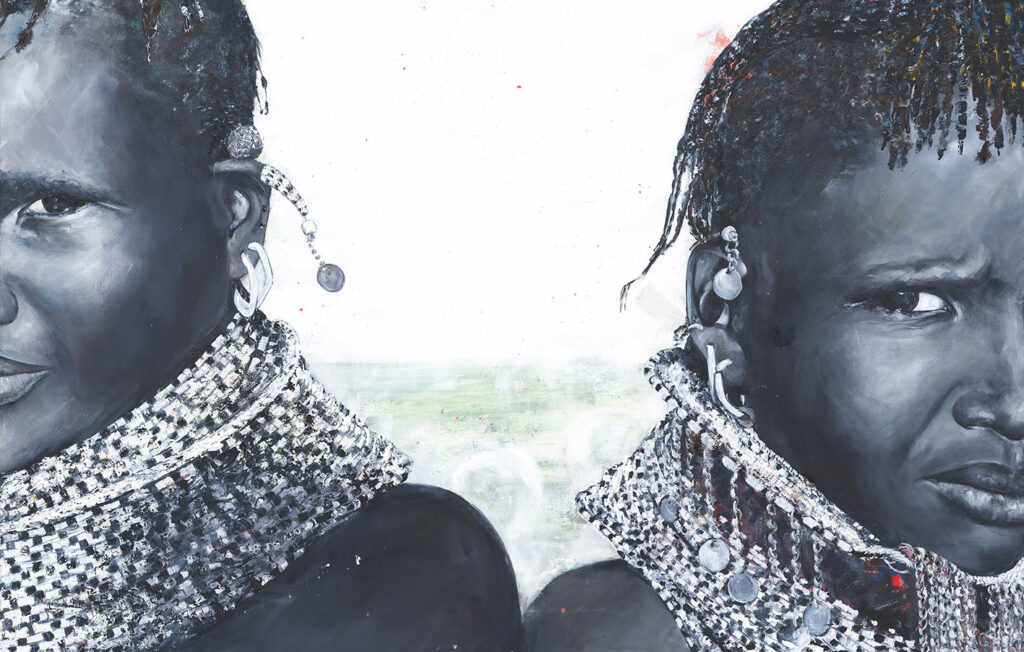
Movement and rhythm are embedded in my work because they are embedded within me. I was born in the heart of Zululand, South Africa, and much of my early life was spent immersed in the natural rhythms of the local community—carried on backs as babies while people sang, worked, and danced. Those rhythms became instinctive. Formal dance training from the age of six taught me grounding, balance, and personal awareness, all of which are deeply felt in my painting.
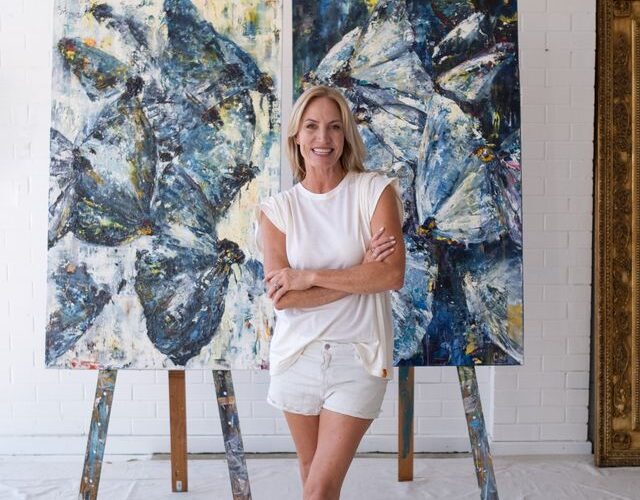
When I paint, it feels as though I am conducting on canvas. The process is physical and intuitive layering, responding, listening
Cher van Schouwen
I search for balance and tension, trusting when to paint and when to stop. Movement emerges through trust in an internal rhythm and voice that guides each brushstroke, allowing energy and texture to settle naturally into each work.
Q3. Many of your canvases incorporate hidden little moments (like dragonflies or handwritten elements). What inspires you to embed these “discoveries” within your compositions?
Those hidden moments come from my natural playfulness and my love of the small, often overlooked details of everyday life. I laugh easily, notice humour and beauty in the tiniest of things, and that sense of lightness naturally finds its way into my work. Sometimes a canvas simply calls for something extra an element to be discovered rather than immediately seen. Whether it’s a butterfly or a hand drawn heart, these details add intimacy and individuality to the painting. They create a quiet dialogue with the viewer, inviting closer looking and adding a personal, almost secret layer to the work.
Q4. Teaching art in Perth for over 15 years has connected you with many students. How has working with others shaped your own practice and perspectives on creativity?
Teaching in Perth for the past fifteen years has deeply shaped my practice and perspective on creativity. Arriving new to Australia 18 years ago, I began teaching my own children, then their friends, then their parents, which naturally evolved into my first Creative Collective, Studio 124—a welcoming space where people felt supported and safe to create. Working with others has been incredibly enriching. Guiding students through their creative processes has built lasting friendships and taught me so much about the Australian spirit—its humility, history, and humour. Teaching has also sharpened my own work, as learning to articulate what once came instinctively has brought greater clarity and depth to my practice.
Q5. You worked as an interior designer and studied journalism before focusing on painting, how do those earlier careers inform the way you compose, colour and structure your canvases?
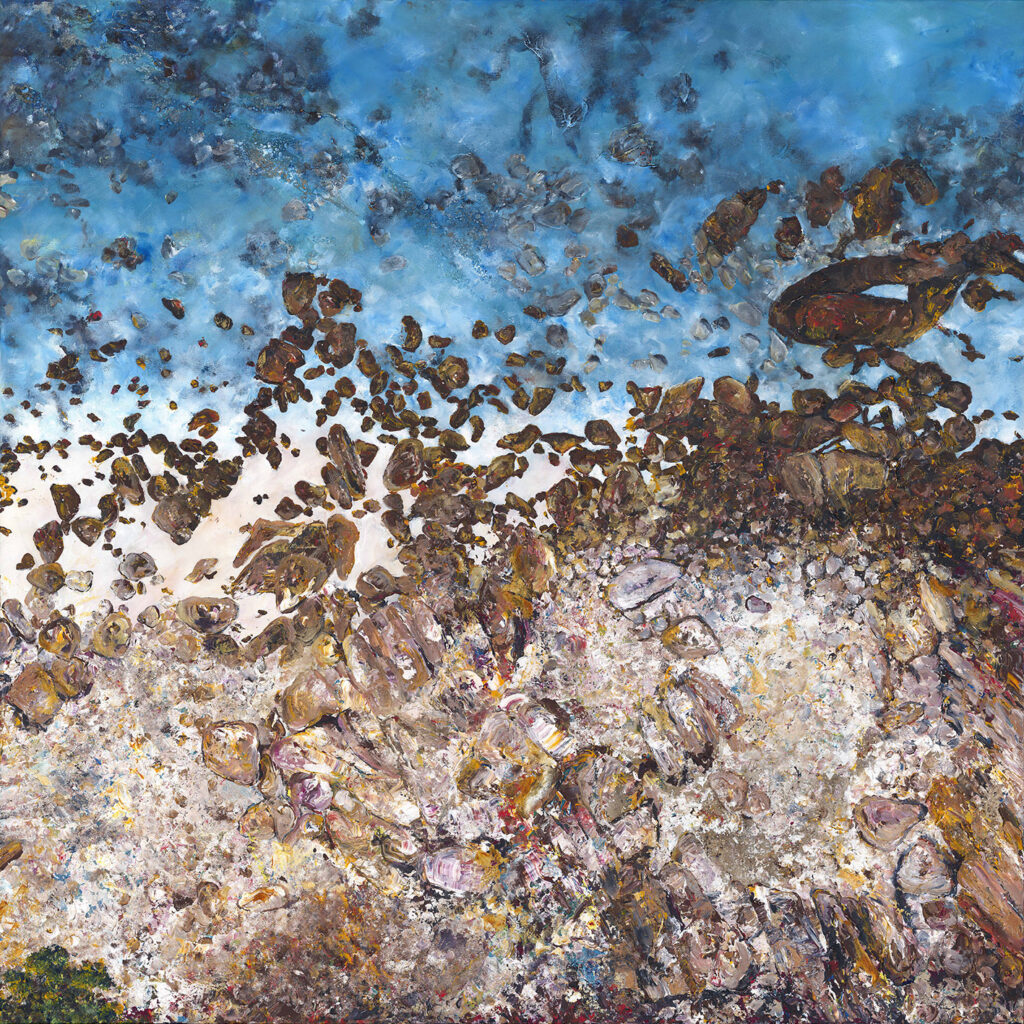
My earlier careers in interior design and journalism continue to inform my painting in very natural ways. Both are art forms and disciplined practices that rely on seeing what is needed in the moment, trusting instinct, and considering how others will experience the work. An eye for colour, balance, structure, and appropriate form is essential across all three. That awareness carries into every stage of my painting process—from choosing the canvas size and subject to selecting the sand, texture, and colour that form the foundation of a piece. It’s a balance of structure and intuition. The process feels like an exciting free fall, guided by experience, instinct, and a deep trust in what the work is asking to become.
Q6. You’ve experienced both sell-out shows in your teens and decades of mature practice, what has changed in your relationship to success and artistic risk over time?
My relationship with success and artistic risk has softened and deepened over time. Early on, sell-out exhibitions felt like milestones; now they feel like byproducts of something more meaningful. What has remained constant is the incredible encouragement and support of my family and friends—an essential foundation that gives me the bravery to truly live as an artist. Success is no longer measured by outcomes alone, but by loving the entire process—the highs and lows, the works that sell quickly and the ones that stay longer but are no less loved. I trust that each piece finds its home in time. Trusting the process, being kind to myself and others, and nurturing community has become central. That collective support is the wind beneath my wings and what allows me to continue taking creative risks with confidence and love.
Q7. Landscapes from Australia have appeared in “Emergence.” How does place impact your visual vocabulary, especially in terms of light, colour and emotional resonance?
Australian landscapes have quietly but profoundly expanded my visual vocabulary in my most recent exhibition ‘Emergence’. It was the first time I felt deeply drawn—almost unexpectedly—to painting landscapes, and the experience surprised me. The inspiration came through the landscape photography and passion of Narelle Hughes, whose work reveals a perfect balance between masculine and feminine elements: water and sky, rocks and salt lakes, fragility and strength. The vastness of the Australian outback, with its rusted relics and open horizons, offered a new emotional and visual language. The light in the desert carries something dreamlike—soft yet powerful—and it resonates deeply with me. That light, and the space it inhabits, evokes a feeling of being held, of belonging. In painting these landscapes, I found a sense of home and love embedded within the land itself. What an honour to collaborate, thank you Narelle
Q8. As someone whose work has been collected worldwide, how do you think about the cultural variability of how art is read, felt or interpreted by different audiences?
Having my work collected around the world has reinforced my belief that, while art may be read and interpreted differently across cultures, the emotional core is shared. At our essence, we all want the same things—to be seen, heard, loved, and to know that we are enough. There is a universal longing for belonging and for connection to something larger than ourselves. When paintings travel across the globe, they feel like seeds of hope. They carry energy, memory, and intention, quietly connecting people who may never meet. In that way, art—like music and dance—transcends language and cultural difference. It reminds us of what we share, gently binding us together, weaving its magic through feeling rather than explanation.
Q9. Considering the challenges of balancing family, teaching, exhibitions and your own studio time, what practices help you sustain creative energy year after year?
Sustaining my creative energy has come from the life I’ve built around my practice, allowing the work to unfold naturally in the studio. I’m incredibly lucky to have a supportive, loving family and to live by the ocean, surrounded by nature, light and a warm, safe community that inspires positivity. That environment feeds my work every day and keeps the process exciting. Teaching plays a big role as well — my students continually inspire me and keep my curiosity alive. I’ve found a rhythm that truly works for me, balancing studio time with daily Pilates and yoga, meaningful relationships, travel and genuine downtime. Leading art retreats brings fresh perspectives and renewed inspiration. Ultimately, gratitude and alignment — being able to do what I love within such a nourishing space — are what sustain my creativity each year.
Q10. What advice would you give to emerging artists who are dealing their own voice and vision in a world full of trends, technology and shifting attention?
I would encourage emerging artists to love who they are and give themselves permission to begin and to discover what that looks like for them. Finding your voice isn’t about chasing trends — it’s more like riding a wave. Art chooses you, and your role is to trust that current, stay true to yourself and enjoy the ride, even when the work isn’t always understood or accepted. Scary stuff! Art exists in relationship with the world, so it’s important to stay aware of your community and what’s happening around you, but always interpret it through your own unique lens. Both my children are artists, and sharing this journey with them has deepened my belief in authenticity. As I begin my BA in Art Therapy, I’m even more inspired to help people find their voice. There will always be a place for art — it feeds us, connects us and brings us home.
As we concluded our conversation with Cher, one thing became clear: she doesn’t create in spite of life she creates because of it.
What I admire most is her willingness to be surprised. For years, landscapes weren’t her focus. Then the Australian outback called to her during Emergence its light, its vastness, its balance between fragility and strength. She followed that pull without needing to justify it. She painted not what she planned, but what the work asked to become. That’s trust. That’s what it looks like to let art choose you instead of forcing your way through it.
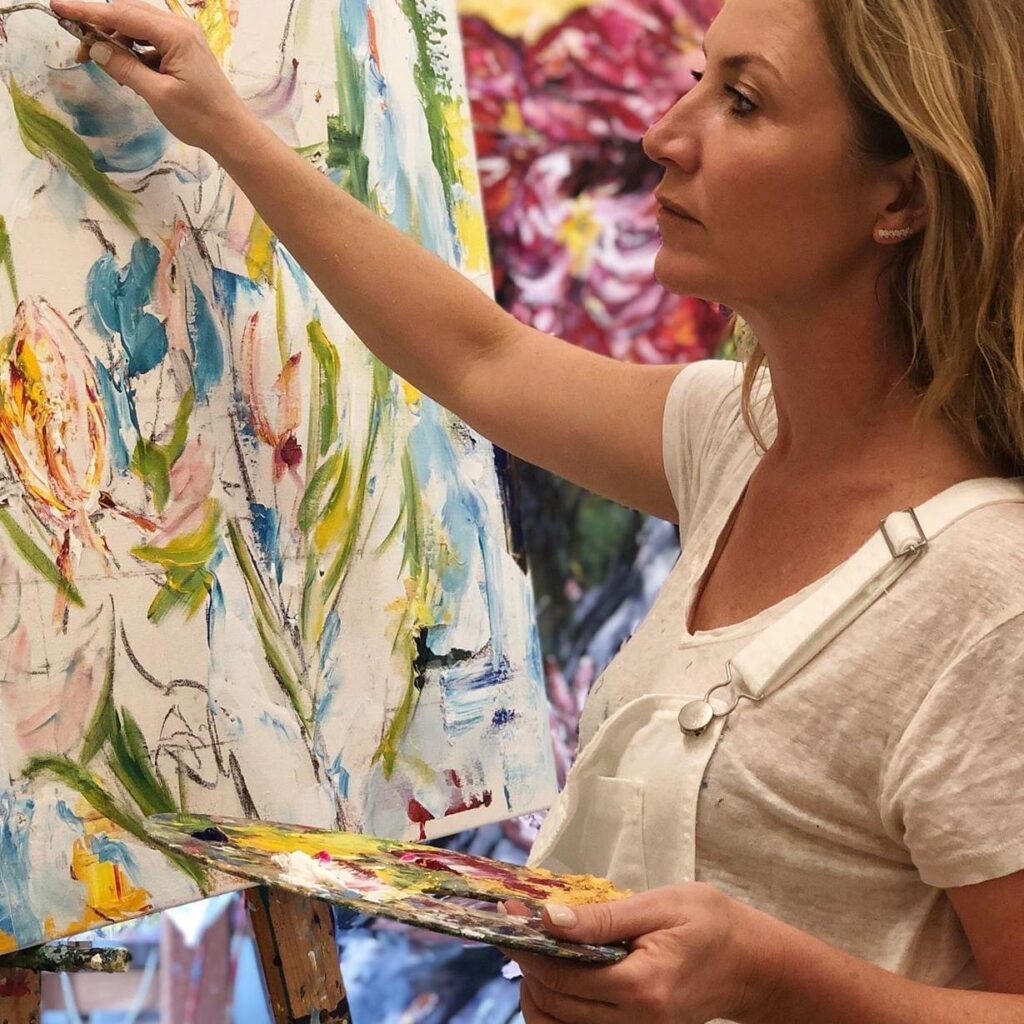
She’s built a life that sustains her practice instead of draining it. Teaching for 15 years sharpened her work and built community. Her students inspire her. Her family supports her. The ocean feeds her daily. She’s found alignment between creating, teaching, traveling, and living and that’s rare. She’s proof that you don’t have to sacrifice everything to make meaningful work. You just have to build a rhythm that actually holds you.
Her work travels worldwide now, and she sees it as seeds of hope carrying energy and intention to people who may never meet but share the same longing: to be seen, heard, loved, reminded they’re enough. That’s the universal truth beneath every cultural difference. That’s what connects us.
Follow Cher van Schouwenon through the links below to see her work and process.