
She Paints Women Who Haven’t Given Up, Even After Life Tried I Turlitu

At Arts to Hearts Project, we believe the most powerful art isn’t about perfection. It’s about honesty. It’s about artists who make work that feels necessary like they had to create it to survive something, understand something, or remember who they are beneath everything else.
We spend weeks looking through portfolios for our Best of the Art World series. And honestly, most of what we see is beautiful. Technically accomplished. Worthy of praise. But it doesn’t make us feel anything that lasts beyond the moment we close the browser.
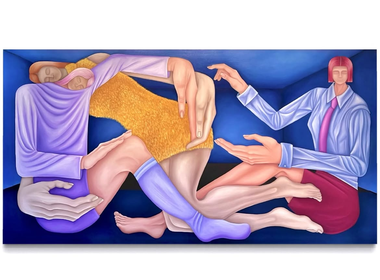
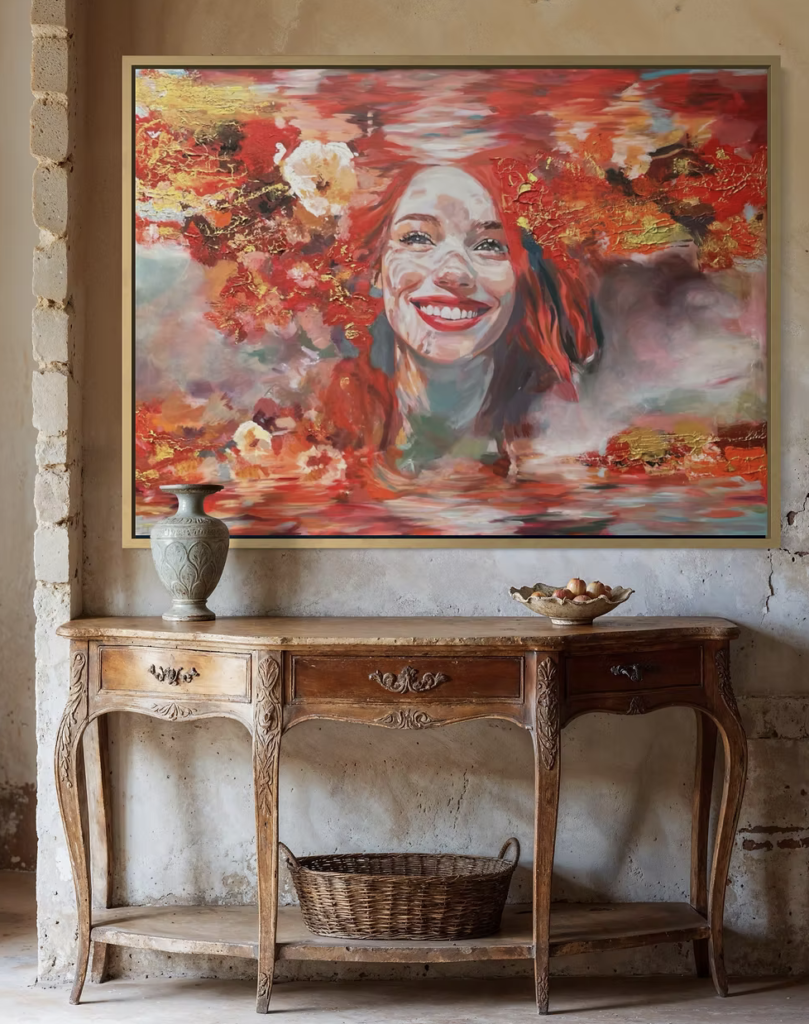
Then we saw Turlitu’s work. And we couldn’t look away. Her paintings show women smiling. But these aren’t easy smiles. These women are standing in storms, carrying weight, caught in circumstances that look impossible. And yet, they smile. Not because everything’s fine. Not because they’re pretending. But because somewhere inside that difficulty, they found a tiny space of power. And they’re using it.
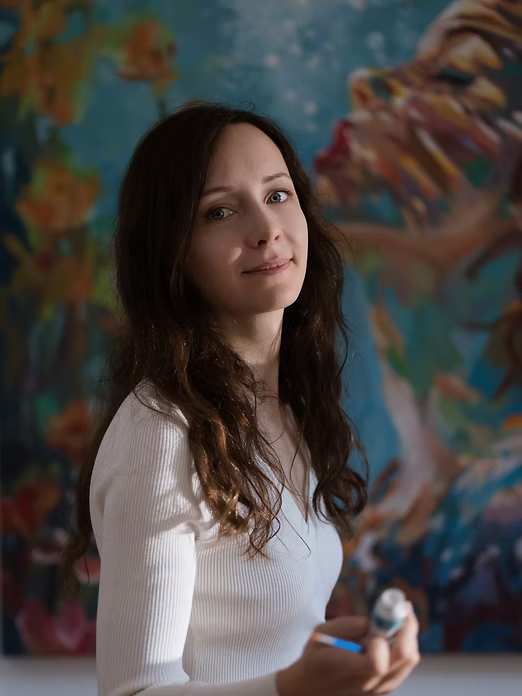
That image, that exact moment of choosing agency in the middle of hardship, stopped us completely. We had to know more. So, we reached out. And to our surprise, she agreed. We researched her more to prepare for the interview, and the more we learned, the more certain we felt about featuring her.
Our very reason to feature Turlitu in Best of the Art World is because her work refuses to simplify what resilience actually is. Most art about overcoming hardship tells you one story: either “just choose happiness” or “you’re drowning with no way out.” Turlitu’s paintings don’t do either. They show the complicated truth you can be trapped AND have power. You can be struggling AND glowing. Life can be hard AND you can still find that small space where change begins.
Before we get into her interview, I think a little story about her also deserves to be known.
Because her story matters too. So, Sylvia Aka Turlitu never set out to become a full-time artist. It just happened. She studied landscape architecture because she was fascinated by how colour and form interact emotionally. That same curiosity lives in her paintings now. The medium shifted, but the questions stayed. She paints women mostly fictional ones, emotional archetypes rather than specific individuals. Even when she takes commissions, likeness isn’t the goal.

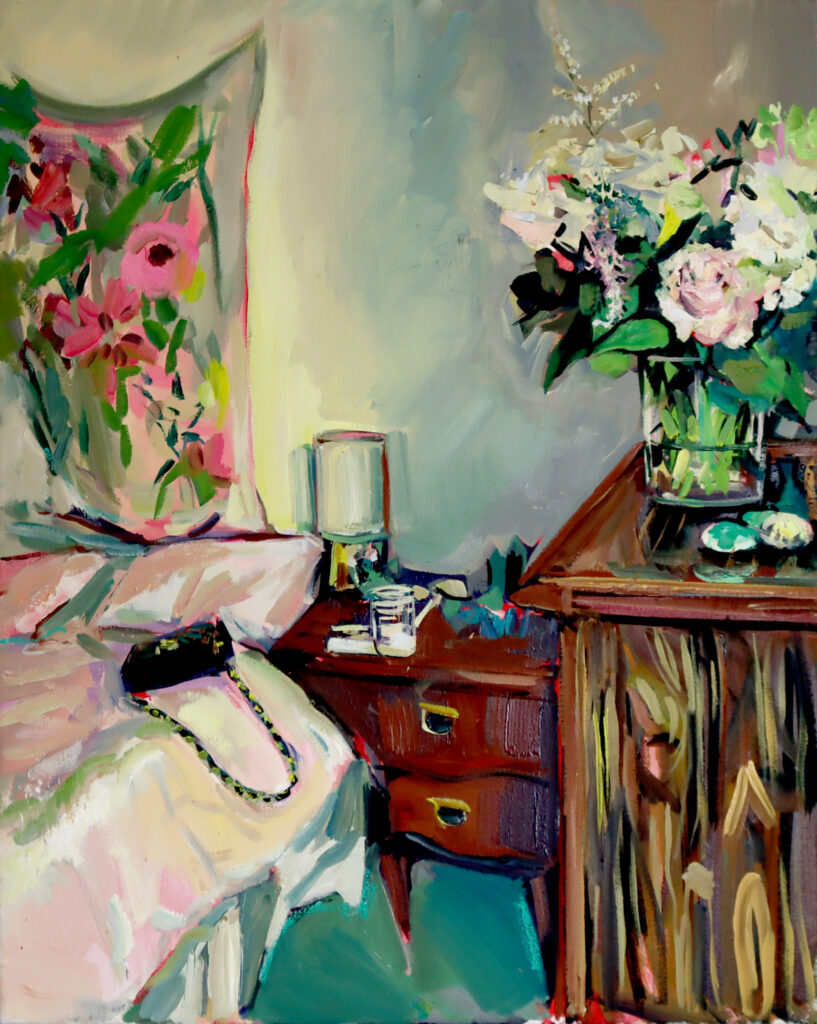
Her color choices tell you everything about her philosophy. Bold. Saturated. Full of intensity. She’s drawn to them naturally because they express vitality, joy, aliveness not fragility. Think about that. Most artists painting struggle lean into darkness, muted palettes, visual weight. Turlitu refuses. Her women glow. They’re vibrant. Because resilience isn’t about surviving in shades of gray it’s about staying bright even when circumstances try to dim you.
Her work holds something most art about resilience misses: the messy, complicated truth. Life places obstacles we didn’t choose. Hardship is real. And within that reality, we still have tiny spaces of power. Her paintings don’t lie about the difficulty. But they also don’t lie about the possibility. They make you feel uplifted first lightness, joy, relief. If you look longer, you might recognize your own struggles in those faces. But you’ll also recognize strength, warmth, the reminder that you’re not completely powerless. Turlitu’s work feels close and honest without crushing you. It carries hope without lying about hardship. That’s exactly why her work belongs in Best of the Art World.
Now, let’s hear from Turlitu about how she thinks about that smile, why she works so intuitively with bold color, and what’s shifting in her new work.
Q1. Can you share your background and how you came to art full-time? What led you from studying landscape architecture to creating emotional portrait paintings?
I never planned to become a full-time artist it simply happened. I’ve always made art, assuming it would be something I’d do seriously much later in life. I studied landscape architecture, and what fascinated me most was design itself: colour, form, and how they interact emotionally. That same curiosity lives on in my paintings today. The medium changed, but the questions stayed the same.

Q2, Many of your portraits are of women smiling through difficult or “stormy” circumstances. What does a smile mean to you in your work? Is it resilience, a choice, or something else?
The smile in my work is not just a choice. I don’t believe we are always free to decide how we feel or what we carry — many people are caught in circumstances they didn’t choose. But I do believe we always have a small part of agency. The smile stands for that inner space where resilience begins — a reminder that we are not completely at the mercy of the world, and that change often starts the moment we realize we can take our life back into our own hands.
Q3. How do light, colour temperature, and contrast contribute to mood in your portraits of women? Are there colour combinations you return to when you want to convey hope, joy, or healing?
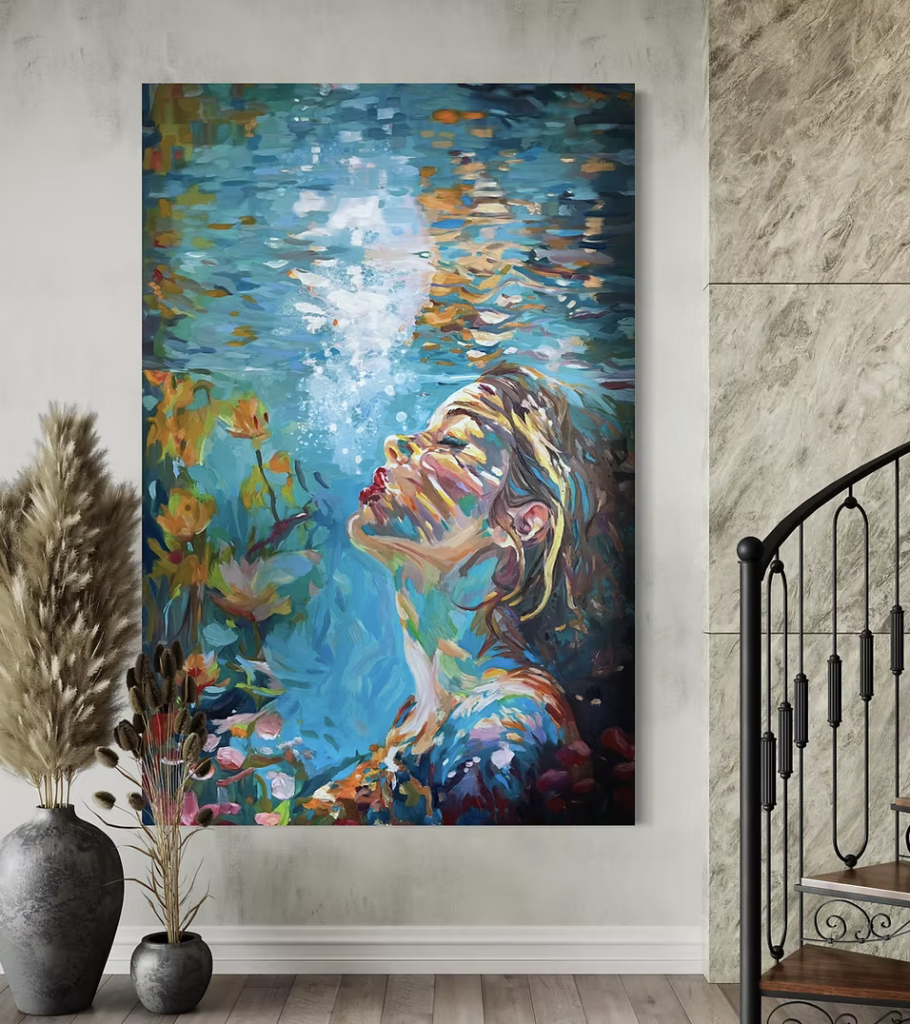
Colour in my work is entirely intuitive. I work on a painting until it feels right to me — there is no formula or calculated system behind it, only emotion. That said, I’m naturally drawn to bold, highly saturated colours. They carry vitality and intensity, and for me they express joy, hope, and a sense of aliveness rather than fragility.
Q4. How do you choose which women to portray? Are they from your own life, or imagined characters? What do you hope to communicate through the gaze, posture, or expression?
The women in my paintings are mostly fictional. They are not portraits of specific individuals, but emotional archetypes. Occasionally, I create commissioned works for real people, but even then the focus is not likeness — it’s the inner state. Through gaze, posture, and expression, I want to communicate presence, strength, and a quiet confidence that goes beyond the individual figure.
Q6. When viewers engage with your work, what do you hope they feel first? Do you want them to see themselves, to recognize struggle, or to feel uplifted?
I hope they feel uplifted first — a sense of lightness, joy, or relief. Because that is what defines me. Life placed many obstacles and hardships in my path, but I learned to step over each one and grow stronger along the way. If viewers recognize parts of themselves or their own struggles, that’s meaningful. Above all, I want my work to remind them of strength, warmth, and the possibility that life can change when we realize we are not powerless.
Q7. In your journey, what has been an unexpected lesson one that changed how you make or think about art, maybe a mistake you’re grateful for?
I don’t overthink art — I never really have. I never tried to be a “classical artist” or to perform a role outwardly. I’m simply Turlitu. It makes me happy that my work resonates with people, but the greatest joy is knowing that its positive message truly reaches them.
Q8. How do you balance precision (from your digital start) with the more unpredictable, expressive qualities that come from oil/acrylic layers? Do you ever find tension between those two?
I don’t experience it as tension. The digital layer gives me structure and calm — a quiet starting point. The oil and acrylic layers are where the painting becomes alive. Precision and unpredictability don’t compete in my process; they support each other. One holds the space, the other brings emotion.
Q9. Looking forward, are there new directions you want to explore maybe different materials, formats, collaborations, or subject matters?
I’m interested in giving the backgrounds more space and allowing the portraits to become quieter and more reduced. The message remains just as strong, but less explicit. By stripping things back, I want to increase tension and depth creating work that feels more subtle, layered, and emotionally resonant. My next painting will be the first piece of this new series. The smiling woman appears twice once as a large, direct portrait, and once subtly hidden within a wide, expansive composition. This contrast allows the image to breathe and creates a different kind of tension, inviting the viewer to look more slowly and discover what’s beneath the surface.

As our conversation with Turlitu comes to an end, something settles into focus that wasn’t clear at the start. We came to her work because of that smile the women glowing in storms. But talking with her, we realized the smile isn’t the point. The point is what she’s learned by painting it. And maybe, without meaning to, she’s been teaching us something we all need to hear: you can’t force what isn’t ready. Not a painting. Not yourself. Not your life.
Turlitu works entirely by intuition. She doesn’t calculate. She doesn’t follow formulas. She works until something feels right, and if it doesn’t feel right, she walks away. Come back later. Try again. That approach that trusts in the process over the product runs counter to everything we’re taught about productivity and output. But listening to her talk about it, you realize maybe that’s exactly why her work feels so honest.
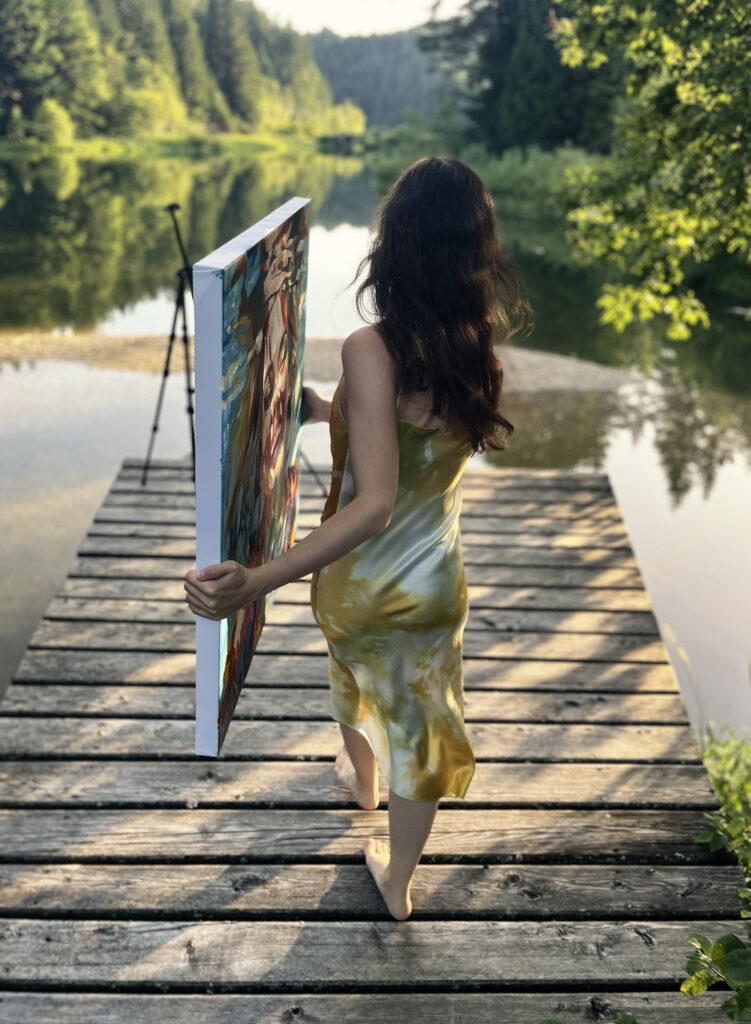
She doesn’t paint to impress you. She paints to survive herself. And somehow, that makes all the difference. And maybe that’s what her work is really showing us. Not “how to be resilient” but “what resilience actually requires”: the ability to hold contradictions. To be trapped and free at once. To glow while struggling. To trust that both truths can exist without one cancelling the other.
What fascinated me about her evolution stripping things back, giving space, building tension through subtraction is that it’s the opposite of what most artists do when they mature. Most add more. More detail. More complexity. More layers. Turlitu’s removing. Trusting that less can hold more.
Here’s what I realized after this conversation: Turlitu isn’t teaching us how to paint resilience. She’s showing us what it looks like when someone stops performing it. When they stop trying to convince anyone including themselves that they’ve got it figured out. When they just show up, work until it feels right, walk away when it doesn’t, and trust that honesty will reach whoever needs to see it.
Her work doesn’t offer solutions. It offers company. It says: I’m in the storm too. I’m carrying weight too. And I’m smiling anyway not because I’m fine, but because I found that tiny space where I’m not completely powerless. And I’m using it.
That’s not inspiration. That’s recognition. And sometimes, recognition is more powerful than any lesson.
Follow Turlitu through the links below. Her work won’t tell you what to do or how to feel. But it might remind you of something you already know and forgot.