
What does it look like to return to art after putting others first

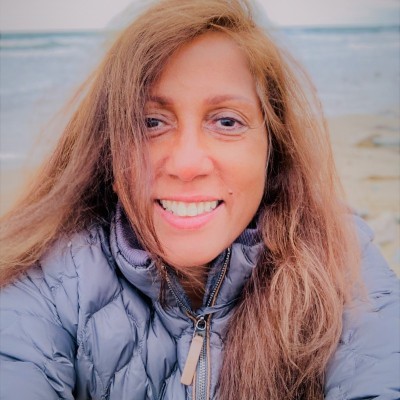
This interview invites readers into the world of Miriam Habibe, a Wales-based artist whose practice has grown from a long journey through heritage, parenthood, and a return to making after many years away. In our conversation, she talks about how weaving, digital tools and her spiritual background sit side by side in her process, not as separate elements but as things that naturally shape each other while she works.
Miriam shares how discovering SAORI weaving changed the pace and attitude of her studio life. Letting go of strict outcomes and trusting small decisions in the moment has helped her approach both materials and daily life with a lighter hold. She speaks about stepping back into creativity after raising a family and building a different career, and how the first encounter with a SAORI loom made the path forward feel clear again.
We also talk about her ongoing use of AI, which she approaches much as she would any other material. She enjoys the unexpected turns it brings and the way it expands what she can try, especially when blending digital and handmade elements. As someone who has shown work in Wales, London and abroad, she notices how people respond differently depending on where the work is shown, yet some reactions stay steady wherever she goes.
Throughout the interview, themes of memory and change run quietly underneath her words. She describes them not as fixed ideas but as things that continue to shift as she makes new work and learns from past experiences. By the end, we gain a sense of how her practice moves forward: through curiosity, attention and a willingness to let each step lead to the next.
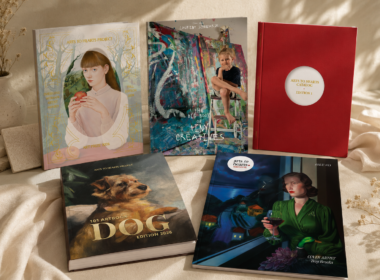
Miriam Habibe is a featured artist in our book, “Art and Woman 2025” You can explore her journey and the stories of other artists by purchasing the book here:
https://shop.artstoheartsproject.com/products/art-and-woman-edition-
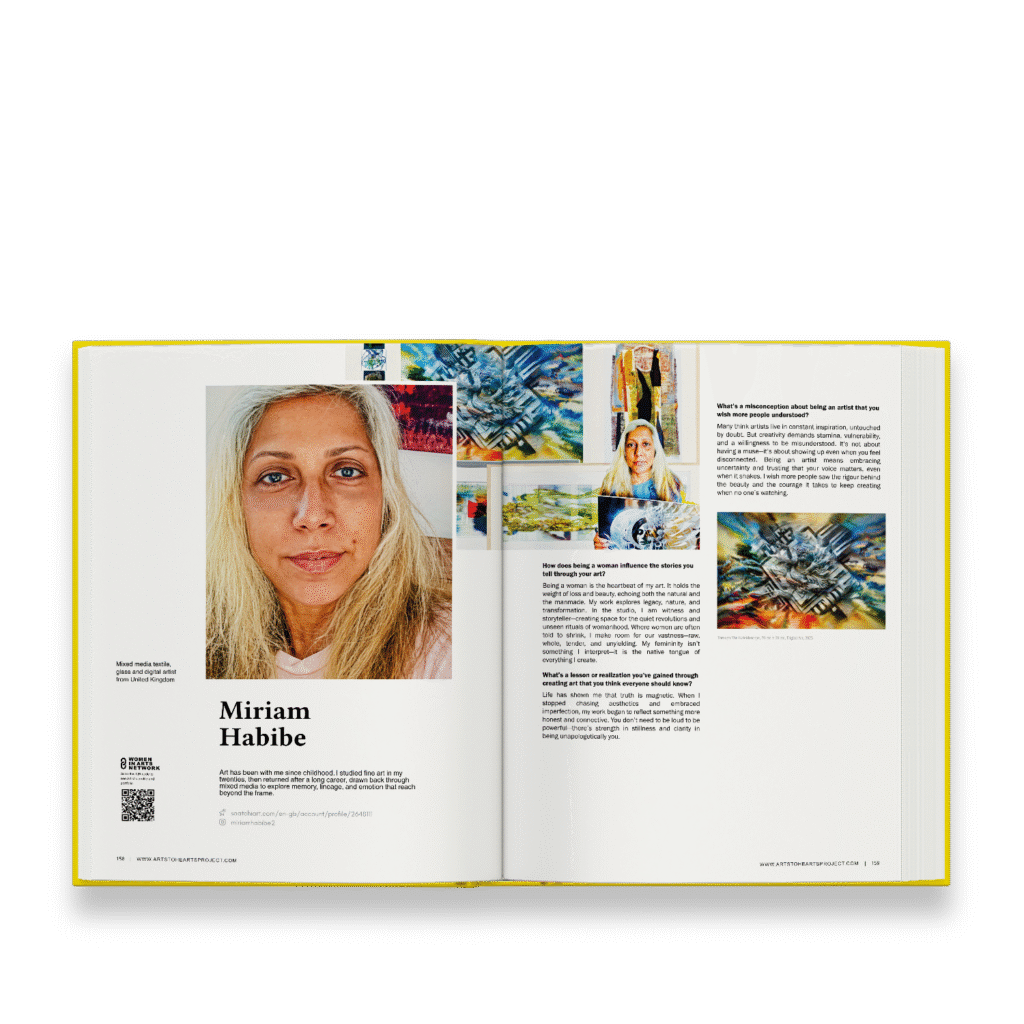
Miriam Habibe is an emerging Welsh-based artist of BAME South Asian heritage whose creative journey embodies resilience, identity, and self-discovery. After years devoted to parenthood and a full-time career, she has returned to her artistic roots, crafting deeply ex-pressive works that bridge tradition and modern experimentation. Drawing inspiration from craft forms like weaving, she merges abstraction and mixed media techniques, forging an artistic voice that is uniquely hers. A defining aspect of Miriam’s practice is the Japanese SAORI weaving philosophy, which celebrates intuitive creativity and unfiltered self-expression.
This approach aligns with her personal journey and her longstanding practice of Japanese Buddhism, reinforcing the connection between inner transformation and artistic exploration. Miriam’s materials range from fibres, painted glass, and digital media, reflecting her belief in the dialogue between the external world and personal experience. Her work has garnered recognition in esteemed exhibitions, including Boomer Gallery’s Identity, Between Dreams and Nightmares and the international Threads of Connection, as well as Art from the Unseen in Beaumaris Town Hall and the Aberlleiniog Sculpture Trail (2023). She showcased her work at Manchester Art Fair (2024) and was featured in Abstracted magazine and an exhibition that same year.
Miriam’s presence in the contemporary art landscape was further cemented through inclusion in 101 Contemporary Artists & More…/ VOL9 and exhibitions with CasildArt Gallery in London (2024/2025), where she connected with American collectors. Miriam has been selected by an International Juried Open Call, hosted by the Arts To Hearts Project, for inclusion in a published book, “Art and Woman 2025.” Miriam was selected as one of just 25 finalists to win the Boomer Art Prize 2025 and was featured in Collect Arts for her work, which was included in the 72nd special edition of The Sea of Emotions. Miriam holds a 2.1 Honours degree in Time-Based Media/Fine Art from Preston Polytechnic (1988) and is a featured member of Art North Wales. Through her work, she continues to weave together personal truth and universal narratives, embracing art as both an expressive outlet and a means of connection.

1. Your work brings together craft, digital media, and spirituality in a really fluid way. How does that balance play out when you’re creating something new?
When I start making something new, I don’t really separate craft, digital tools, and spirituality—they all come together naturally. Craft is where I feel grounded. It’s slow, hands-on, and connects me to my roots. Digital media lets me give those handmade things new life—maybe through video, sound, or code. It’s like opening a door to other worlds. Spirituality is the thread that runs through everything. It’s not always obvious, but it’s there—in the rhythm of making, in the quiet moments, in the feeling that I’m part of something bigger. Sometimes I begin with a prayer or a poem, and that turns into a pattern or a digital piece. Other times I’m working with my hands, and I feel called to bring it into a digital space. I don’t plan the balance—it’s more about listening and letting each part guide the next. For me, it’s a kind of sacred process in which the physical and the spiritual meet and speak to each other.
When I begin something new, I let craft, digital tools and spirituality blend rather than separating them.
Miriam Habibe
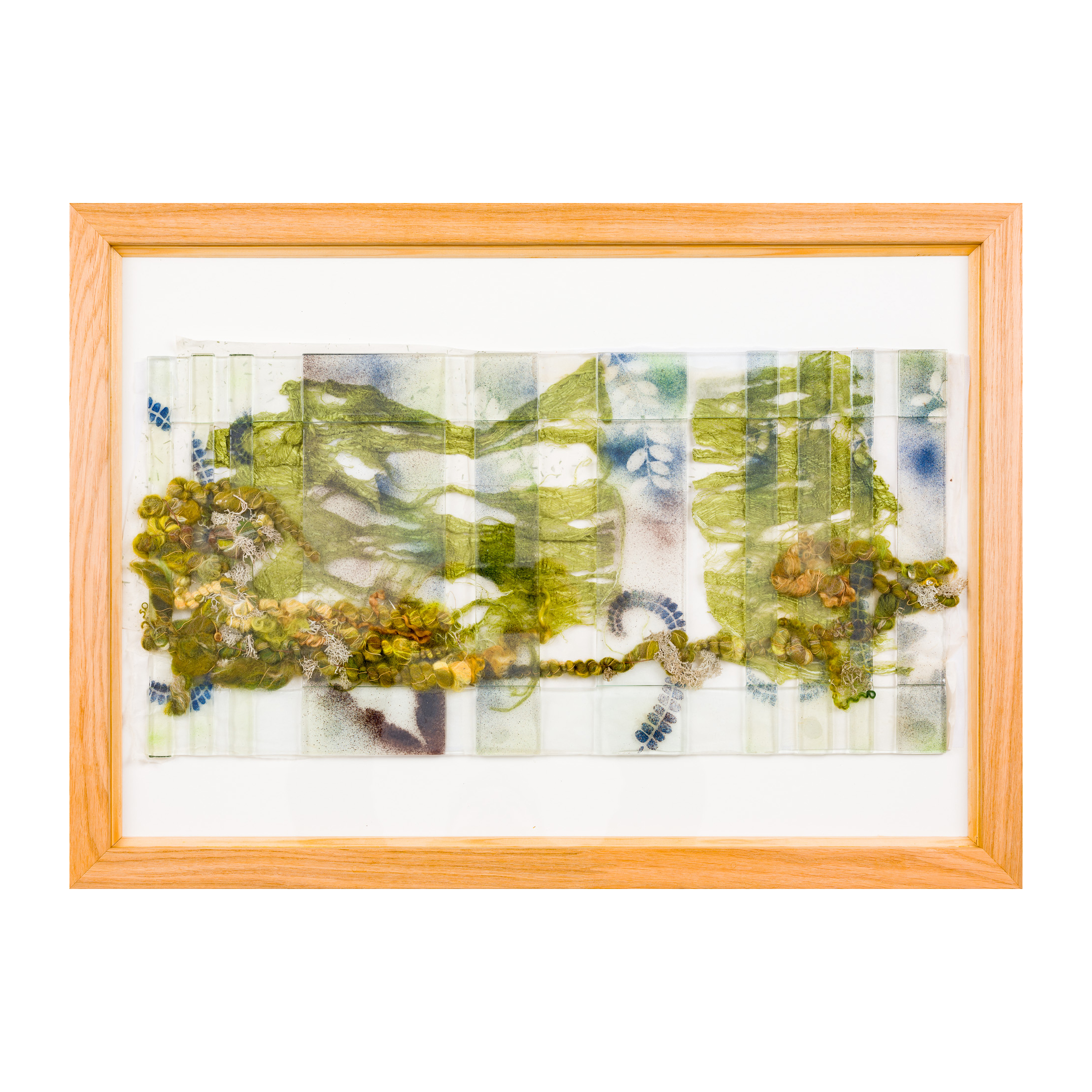
2. The SAORI weaving philosophy celebrates freedom and intuition. How has that way of thinking changed how you approach making things, both in the studio and in life?
SAORI weaving taught me to let go. To stop trying to control every thread, every outcome. It’s about trusting your hands, your heart, and the moment. That way of thinking has changed everything for me—not just how I make things, but how I live. In the studio, I don’t worry about perfection anymore. I follow the rhythm, let the colours speak, let the mistakes stay. They’re part of the story. Outside the studio, I’ve learned to listen more—to myself, to others, to the quiet. SAORI reminds me that beauty isn’t in the plan—it’s in the flow, the feeling, the freedom to be exactly where you are.
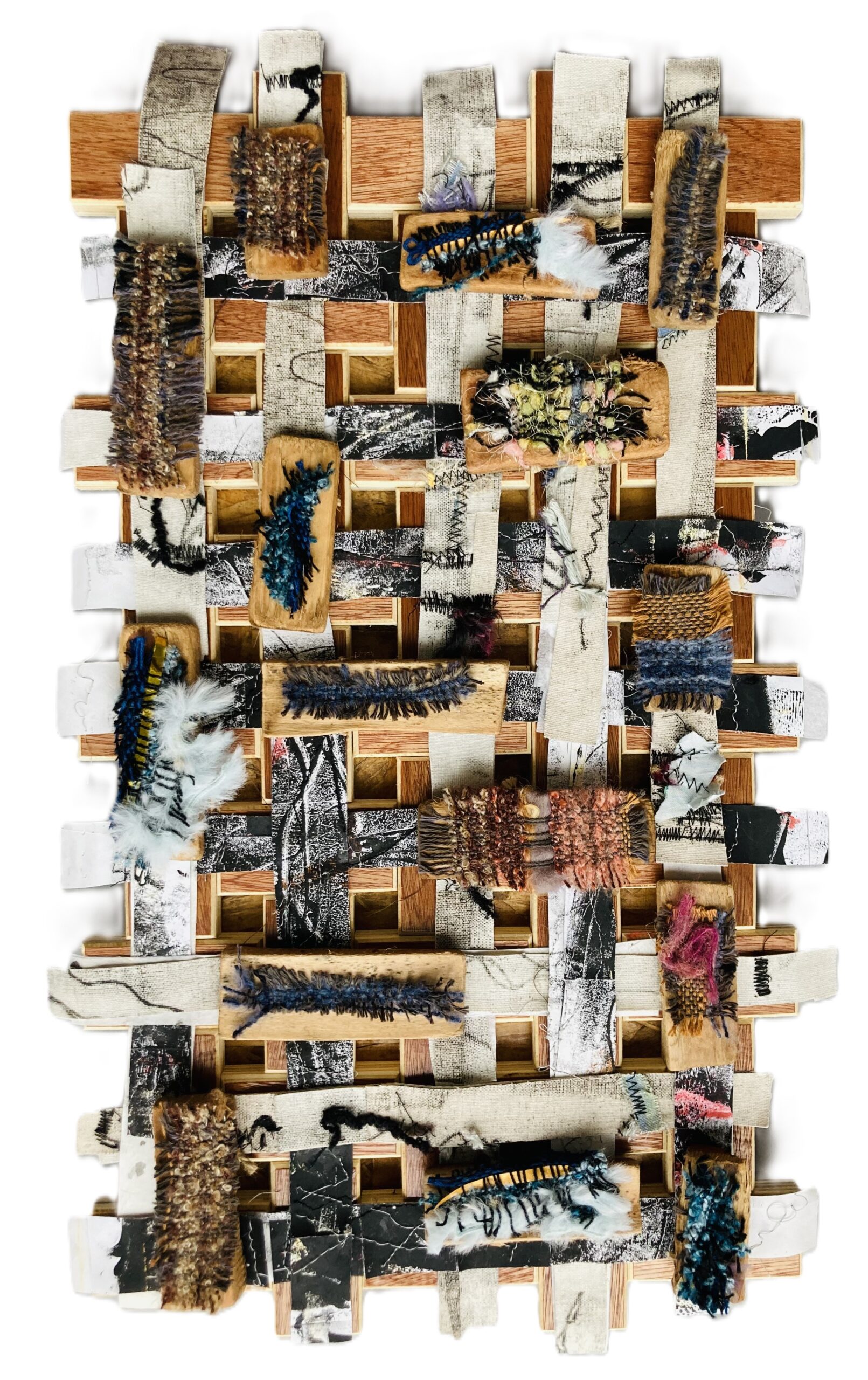
3. After spending years focused on family and a different career path, what was it like to step back into your creative practice? Was there a moment that made it feel possible again?
Stepping into a SAORI studio was the return. That first moment at the loom—no rules, no patterns, just colour and feeling—was like breathing again. It wasn’t about going back to something old; it was about arriving somewhere new, where I could create without fear or structure. After that, it became about pushing boundaries. I started exploring different materials—paper, natural and found objects, digital textures—and letting them speak to each other. I wasn’t trying to make something perfect. I was trying to feel something true. SAORI gave me permission to follow intuition, and from there, everything opened up. The studio became a space of play, of resonance, of remembering how to listen with my hands.
4. You often collaborate with AI as part of your process. What draws you to that exchange, and how has it changed the way you see your own work?
Working with AI feels like opening a window into another kind of intuition—one that’s fast, strange, and beautifully unpredictable. I’m drawn to that exchange because it mirrors the way I work with materials: I don’t always know where it’s going, but I trust the process. With AI, I can feed it fragments—text, images, sounds—and it gives me something unexpected in return. That surprise is part of the magic. It’s changed how I see my own work by making me more fluid. I used to think of my practice as rooted in the handmade, the tactile. Now I see it as a conversation—between me, the materials, the machine, and something else I can’t quite name. AI doesn’t replace my voice; it stretches it. It lets me remix, reframe, and reimagine in ways I couldn’t before. And that’s deeply exciting.
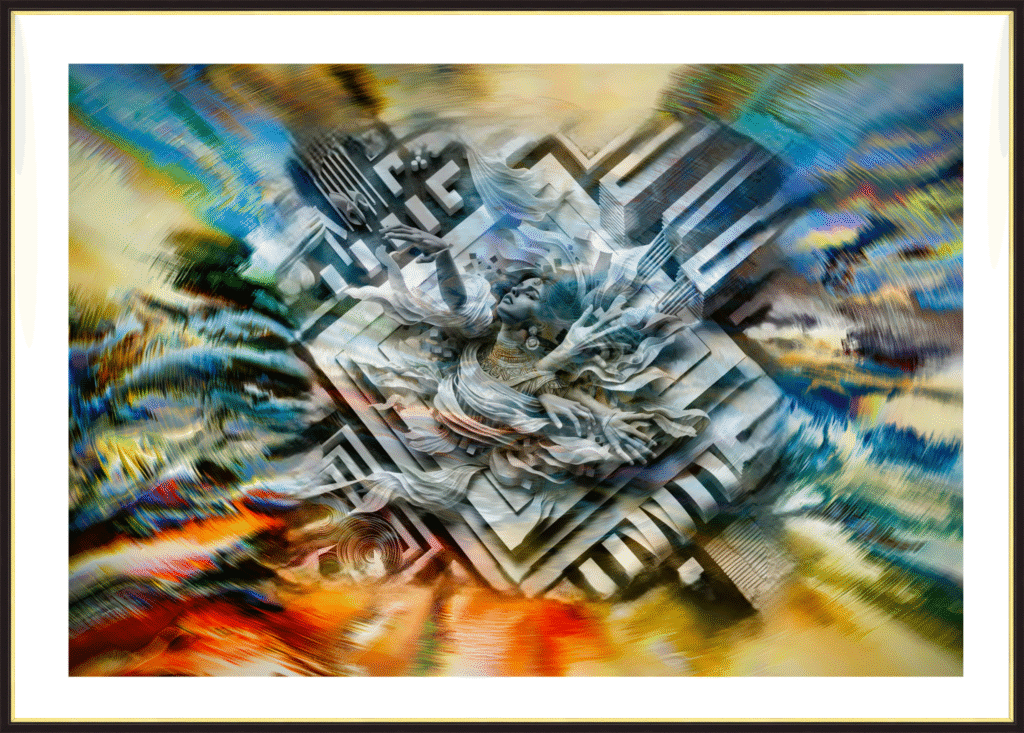
SAORI weaving taught me to let go of control and trust the rhythm of making, both in the studio and in life.
Miriam Habibe
5. You’ve shown your work in so many different settings—from local exhibitions in Wales to galleries in London and abroad. Do reactions differ depending on where you show, or do certain responses feel universal?
Some reactions definitely shift depending on where the work is shown. In Wales, there’s often a deep emotional response—people connect to the textures, and the land references. It feels very rooted, very personal. In London or abroad, the conversations tend to open up around technique, hybridity, and the digital layers. People are curious about the mix—how craft and code, spirit and software, come together. But there are responses that feel universal too. The sense of care, of presence, of something being made slowly and with intention—that seems to resonate everywhere. The materials change, the settings shift, but that feeling—that quiet recognition—stays.
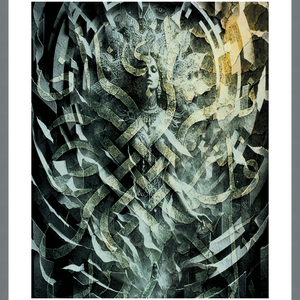
6. Transformation and memory seem to run through much of what you create. What keeps those ideas alive for you, and how have they shifted over time?
Transformation and memory are like twin threads in my practice—they’re always present, constantly evolving. What keeps them alive is the act of making itself. Every time I sit down to weave, write, or build something, I’m in dialogue with what came before—my own experiences, ancestral knowledge, materials that carry their own histories. I don’t try to preserve memory in a fixed way; I let it shift, distort, reappear in new forms. That’s where transformation happens. Transformation used to mean change; now it means expansion. It’s about letting memory breathe, letting it become something else, something shared. That shift has opened up new ways of working—collaborating with AI, layering digital and physical materials, and inviting others into the process. It’s no longer just about what I remember—it’s about what we can remember together.
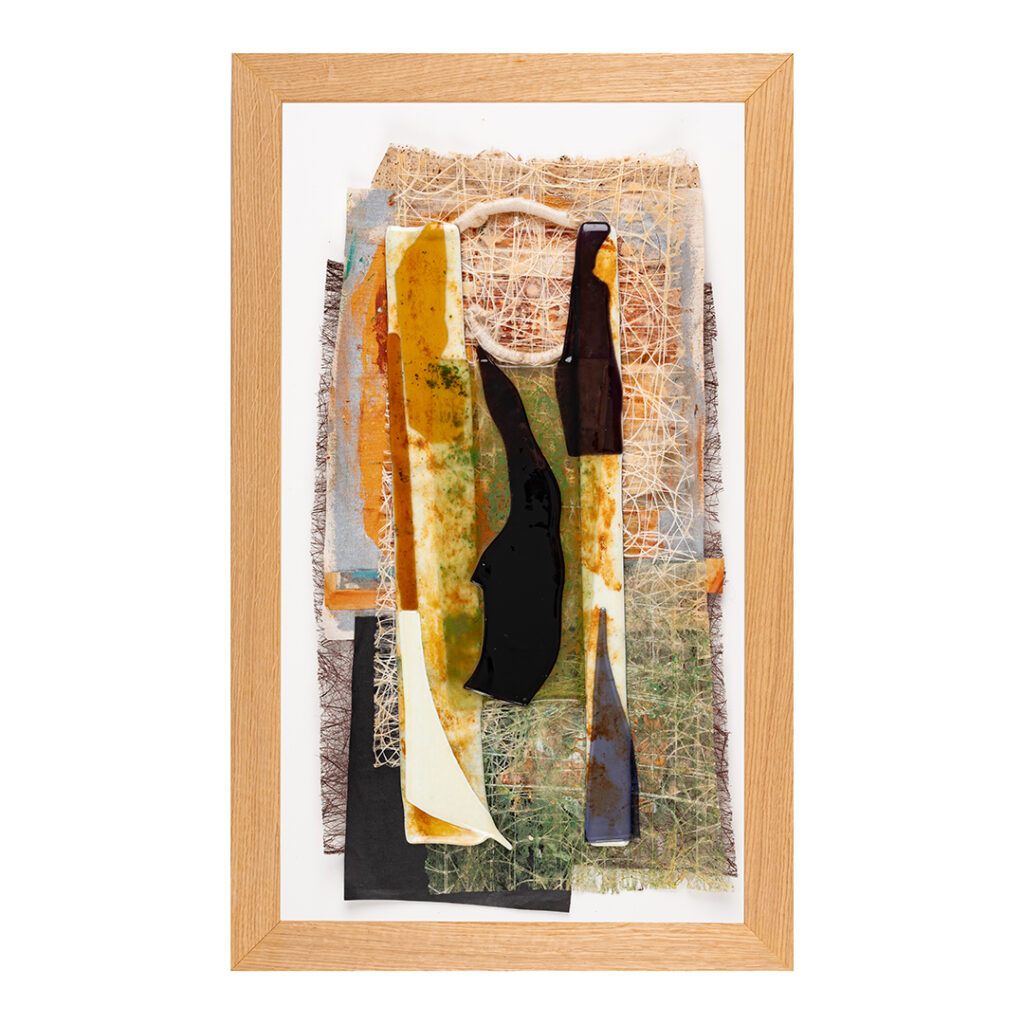
Miriam Habibe’s work grows from a mix of weaving, digital experimentation and a steady spiritual practice that shapes how she approaches each piece. Her materials hold traces of her background, her curiosity and the changes she has moved through over the years. From stepping away from creativity to raising a family, to later finding her way back through SAORI weaving, her path shows how making can shift with time rather than follow a fixed pattern.
Speaking with her, it becomes clear that her work is shaped by listening, exploring and allowing each stage to unfold without rushing. What we learn from her journey is that returning to creativity is never too late, and that paying attention to small moments can lead to meaningful work.
To learn more about Miriam, click the following links to visit her profile.
Arts to Hearts Project is a global media, publishing, and education company for
Artists & Creatives. where an international audience will see your work of art patrons, collectors, gallerists, and fellow artists. Access exclusive publishing opportunities and over 1,000 resources to grow your career and connect with like-minded creatives worldwide. Click here to learn about our open calls.