
These Artists Prove Why Cubism Is Still One of Art’s Most Powerful Mediums

Cubism began as a rebellion, a way of breaking the world apart to see it more clearly. What started as an artistic experiment over a century ago has become a lasting language of perception, one that continues to shape how artists think, feel, and create today. In Cubism, the world isn’t shattered, it’s expanded. A single face can hold many angles, a still life can hum with unseen motion, a landscape can unfold in layers of memory and time.
Cubism asks us to question how we see. It invites us to look beyond the surface to notice what happens when emotion meets structure, when intuition meets analysis, when the familiar becomes newly complex. For many contemporary artists, Cubism isn’t just about deconstruction; it’s about connection. It’s about finding beauty in the in-between, in the fragments that make up the whole.
Through their work, today’s Cubist artists explore how shape, perspective, and abstraction can tell deeply human stories. Their paintings and sculptures speak of movement, rhythm, and reflection of the ways we piece together meaning in a world that rarely stands still.
At the Arts to Hearts Project, we’re drawn to this kind of storytelling. To the artists who use cubism not as a rulebook but as a pathway one that leads to connection, curiosity, and deeper understanding. In this article, we’ll introduce you to some remarkable creators who are redefining cubism for our time, transforming disassembled forms into expressions of presence, emotion, and meaning. Their work reminds us that art is not just about what we see, but about how we see and how we learn to rebuild the world, piece by piece, through imagination and heart.
Jason Chambers @jasonchambersart
For Jason Chambers, Cubism is less about breaking form and more about finding truth within it. His paintings unfold through intersecting lines, fractured planes, and restrained palettes that invite reflection rather than demand attention. Born in Augusta, Georgia, Jason began his creative life through illustration and portraiture, but it was abstraction that ultimately gave him language a way to translate feeling into form. What began as an experiment in geometry became something more intimate: a process of understanding, of balancing chaos with calm. He often describes his style as a blend of Cubism and Abstract Expressionism, yet what defines it most is honesty. Working mostly in pen and ink, Jason allows shapes to appear without a plan, following rhythm and instinct instead of rigid design. The marks seem spontaneous, but they carry intent. The spaces between them hum with quiet tension, as if every angle holds a thought, every shadow hides a memory.
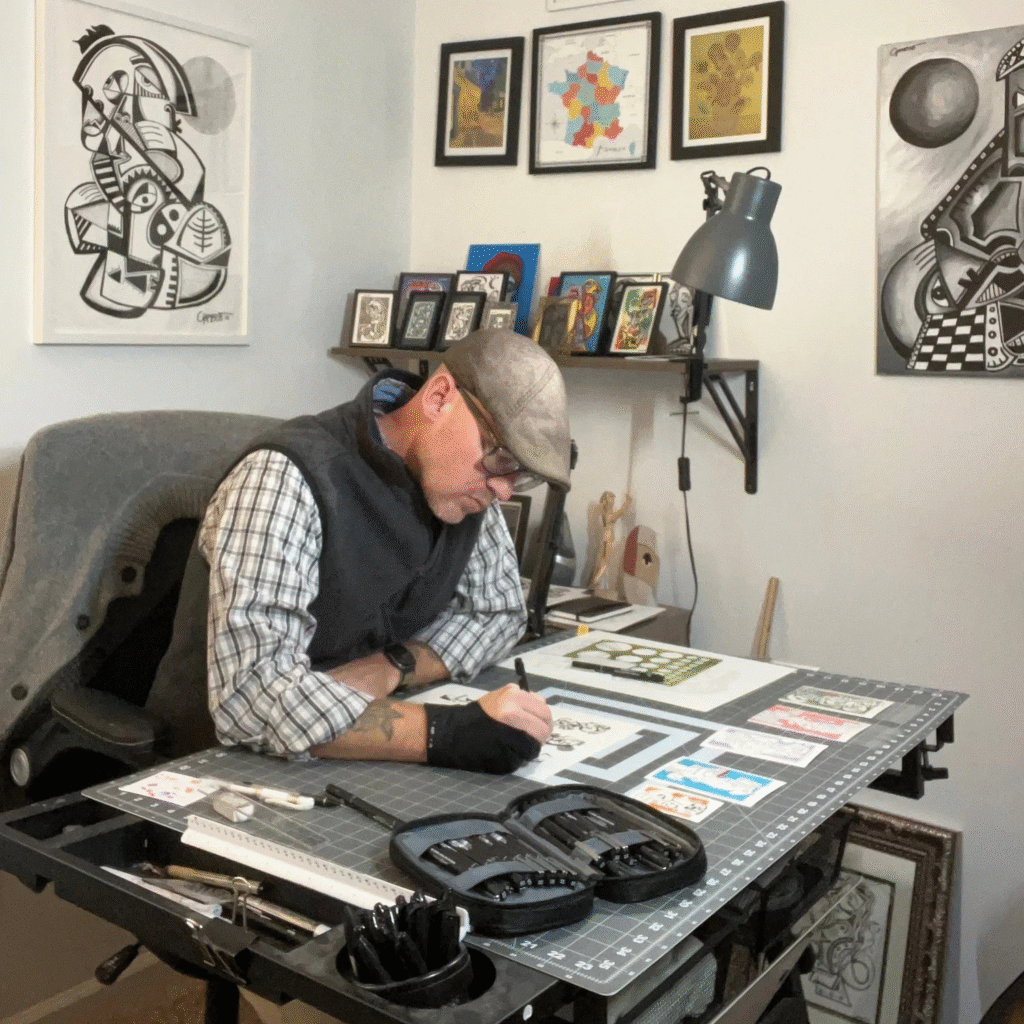
His monochrome approach removes distraction, guiding the viewer to the essence of structure itself, how balance, depth, and rhythm can reveal what words can’t. Jason’s art lives in the in-between: where control meets emotion, and logic gives way to intuition. Each piece feels like a slow, deliberate, and deeply human. His work doesn’t shout; it listens. It offers a place to pause, to question, to feel. “I create art not just as a need to express myself, but as a way to deal with life,” he says, and that truth is evident in every line. In his hands, Cubism becomes a mirror for experience not a puzzle to solve, but a space to inhabit. Through his quiet precision and unspoken depth, Jason Chambers reminds us that abstraction isn’t distance; it’s connection, patiently drawn one line at a time.
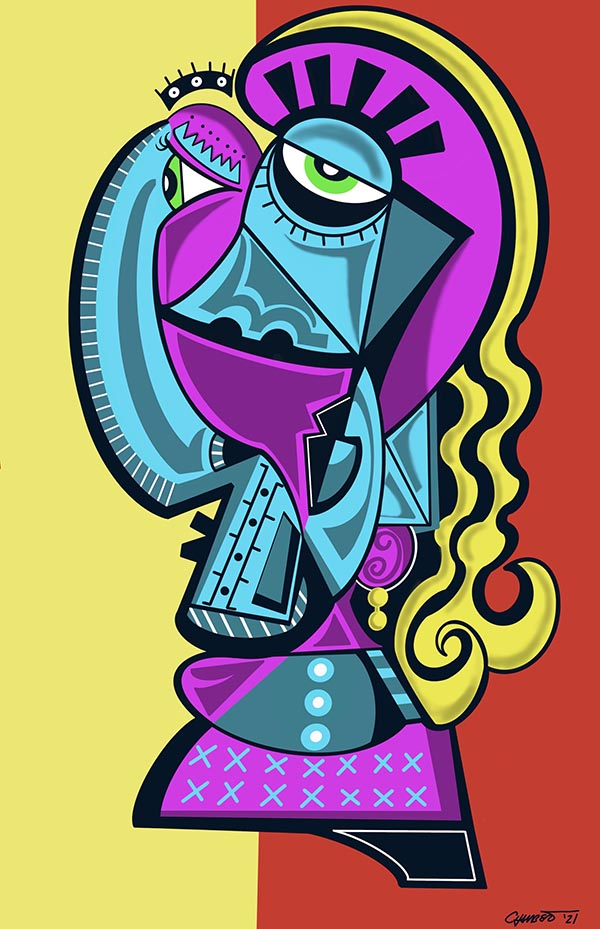
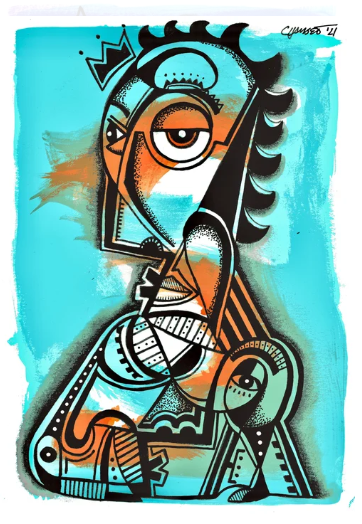
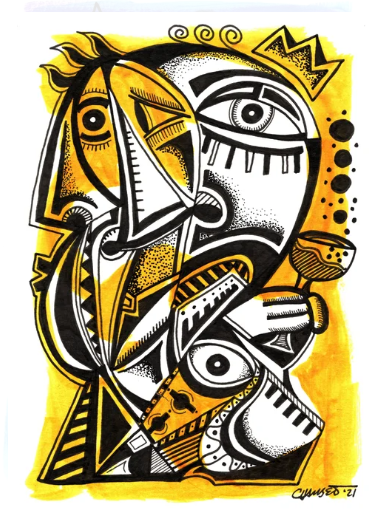
Johnny Camacho @ultrathinkers
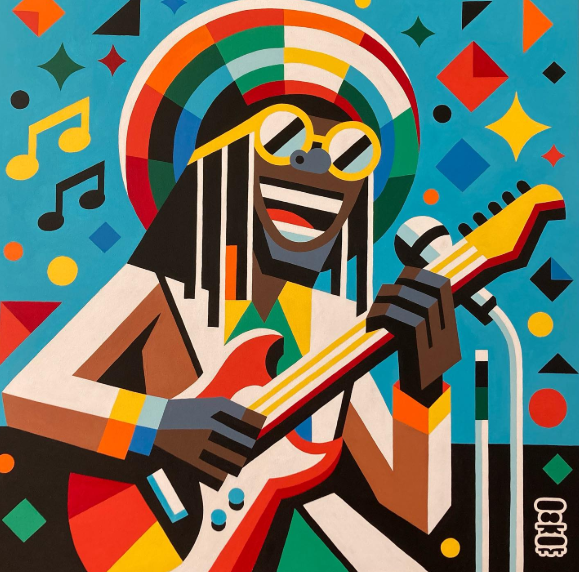
Johnny Camacho sees Cubism not as an art-historical relic, but as a living beat that pulses through his portraits and abstractions. Working under the moniker “Ultrathinkers,” he merges colour and line in works that feel amplified where memory, rhythm and identity collide. His creative roots trace back to the Bronx, New York, where the textures of urban life street culture, graffiti, sound formed his early visual vocabulary. From there, he found in Cubism a way to reconcile the fragmented energy of his environment with the emotional core of his memories. In his portraits and abstractions, you’ll sense the influence of fractured planes, overlapping perspectives and hurried strokes; yet the feeling is far from cold; it’s visceral, charged, human. His style draws deeply from Cubist tradition, intersecting viewpoints, shattered forms, simultaneity but he reframes all this through a modern lens: the grid becomes a verse; the breakdown becomes a groove.
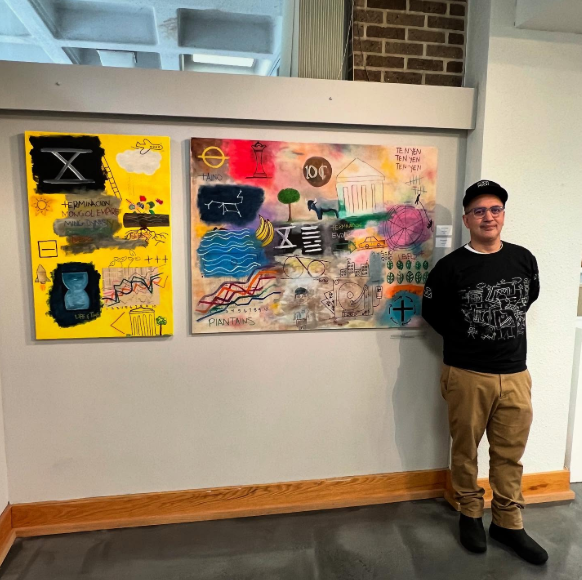
What makes his practice stand out is how he fuses abstraction with story. You’ll find crisp geometry alongside graffiti-like gestures, portraits of folks next door with the boldness of stage lights. The collage pieces reference layering of experience childhood in the boroughs, rhythms of hip-hop, urban colour fields all brought into the structural space of Cubism. It’s not a cold analysis, but a warm pulse. There’s no demand to decipher a hidden code; instead, there’s an invitation to feel, to listen visually. His planes and angles ask: what happens when you see yourself from multiple sides at once? What happens when you channel the city, the rhythm, the identity, into shape and colour? His pieces become walls to dwell in, not puzzles to solve. Each piece he creates is like a track in a mixtape of identity: layered, broken, reassembled and in that reassembly, we find something whole.
Matti Pietari Järvinen @mattipietar.art
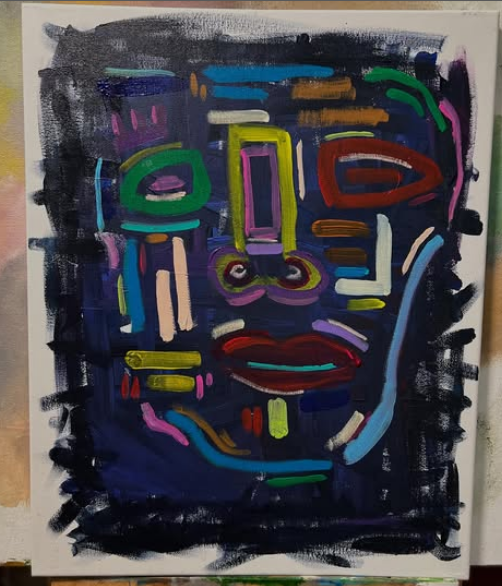
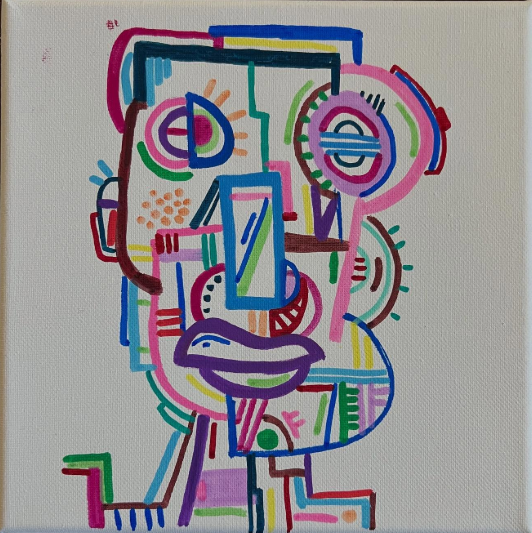
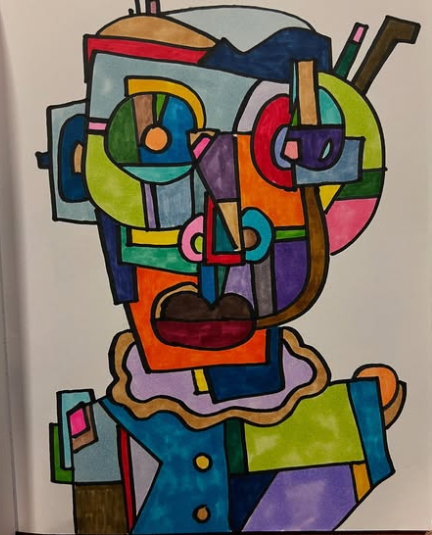
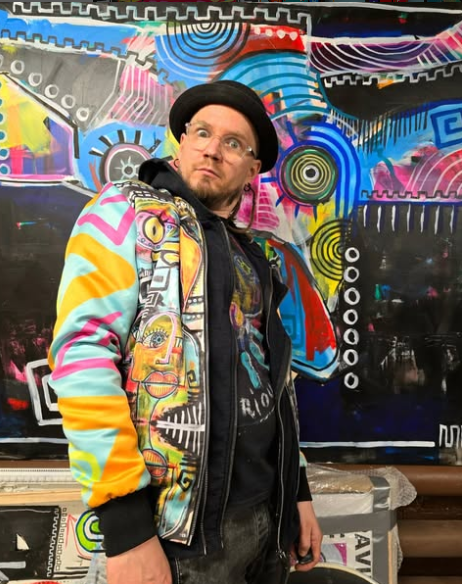
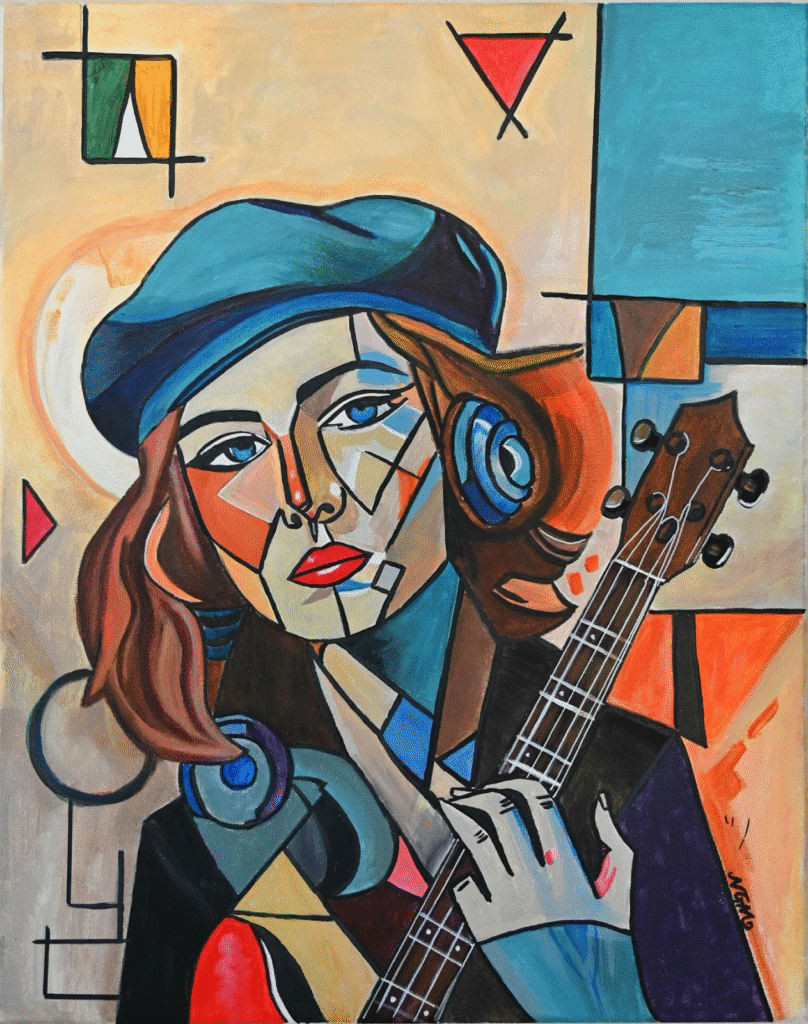
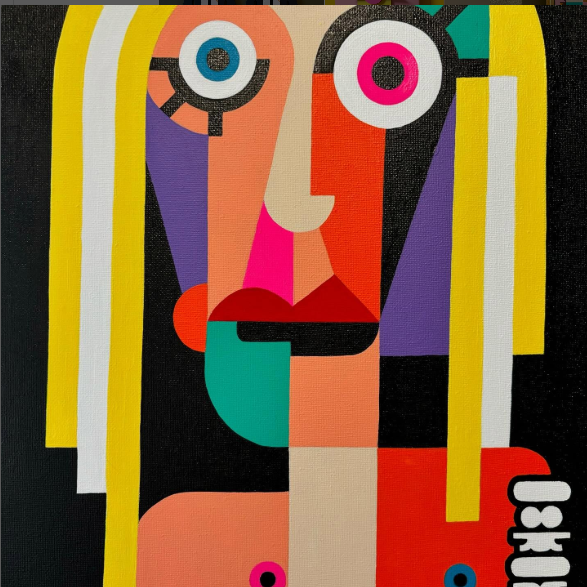
Matti Pietari Järvinen sees the human face as a living canvas of colour and Cubism where identity is mapped not in likeness but in life. Born in Finland in 1984 into an artistic family, he began his self-driven art journey in earnest around 2017, drawn to “primitive arts like African masks and American Indian totems,” influences that now echo through his bold, Cubist portraits. In Järvinen’s work, vibrant palettes, rhythmic lines, and fractured planes come together in dynamic harmony faces that splinter and re-form, revealing emotion through structure. His approach moves beyond representation; each composition feels spontaneous yet intentionally composed, a visual rhythm where feeling, colour, and form intertwine. Immersed in creativity from an early age, he now translates both daily life and inner states into vivid pigment and charged energy.
What sets his work apart is how he merges figuration and abstraction seamlessly. While the facial features anchor the viewer, the surrounding geometry invites reflection. His rectangles, arcs and angled lines act like architectural scaffolding for feeling grounding the human in the structural, the organic in the angular. Shapes don’t just break; they become parts of a continuum. His process feels immediate yet considered. Matti’s art doesn’t shout, he doesn’t shout geometry. Instead, he invites you into a space of presence. Where other works might divide and dissect form, his encourage coexistence: face and frame, emotion and edge, colour and plane. The result is deeply human, quietly dynamic, and wholly present. Through his evolving practice, Matti Pietari Järvinen reminds us that geometry can be more than formula it can be a home. A place where identity, structure, colour and feeling converge. His paintings ask us not simply to look, but to inhabit the intersection of shape and soul.
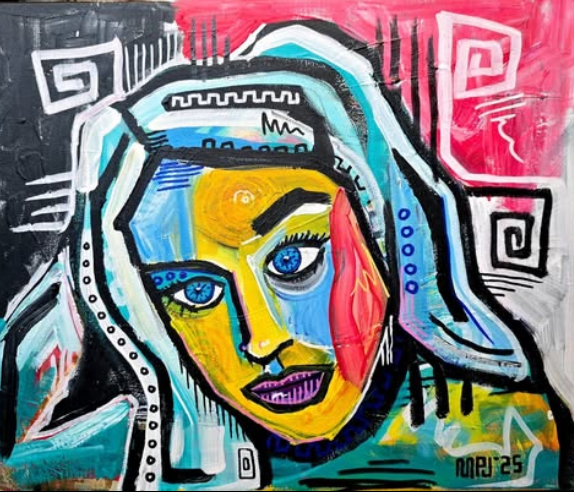
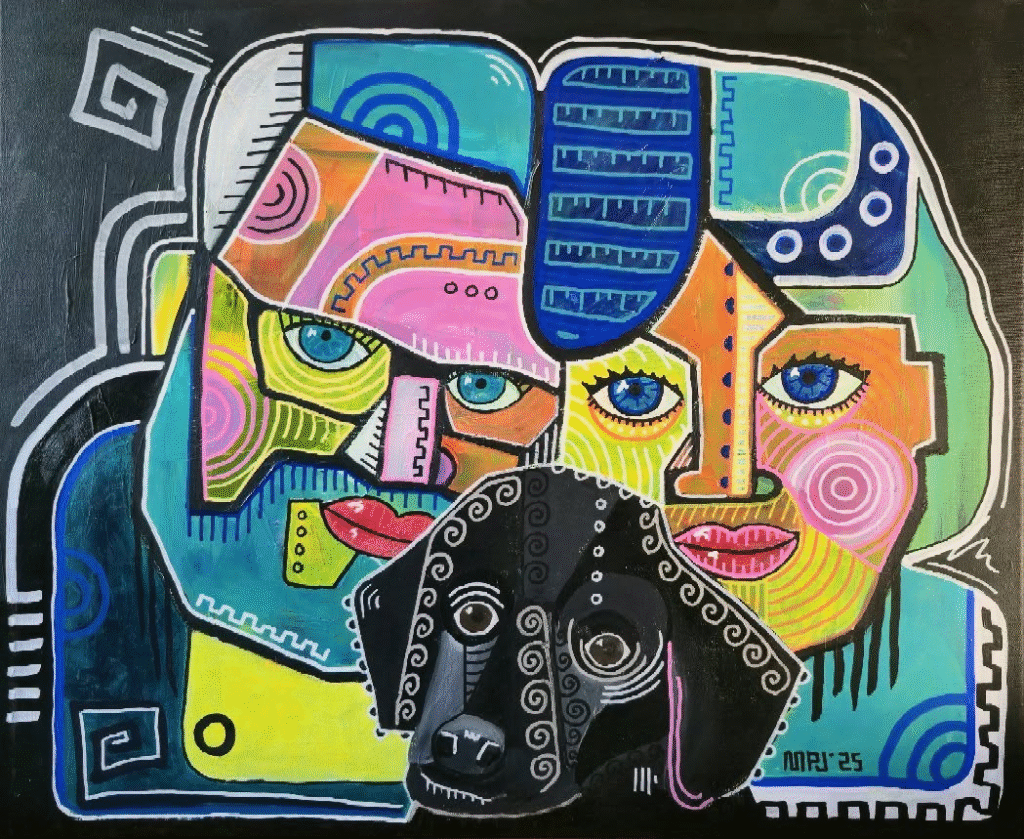
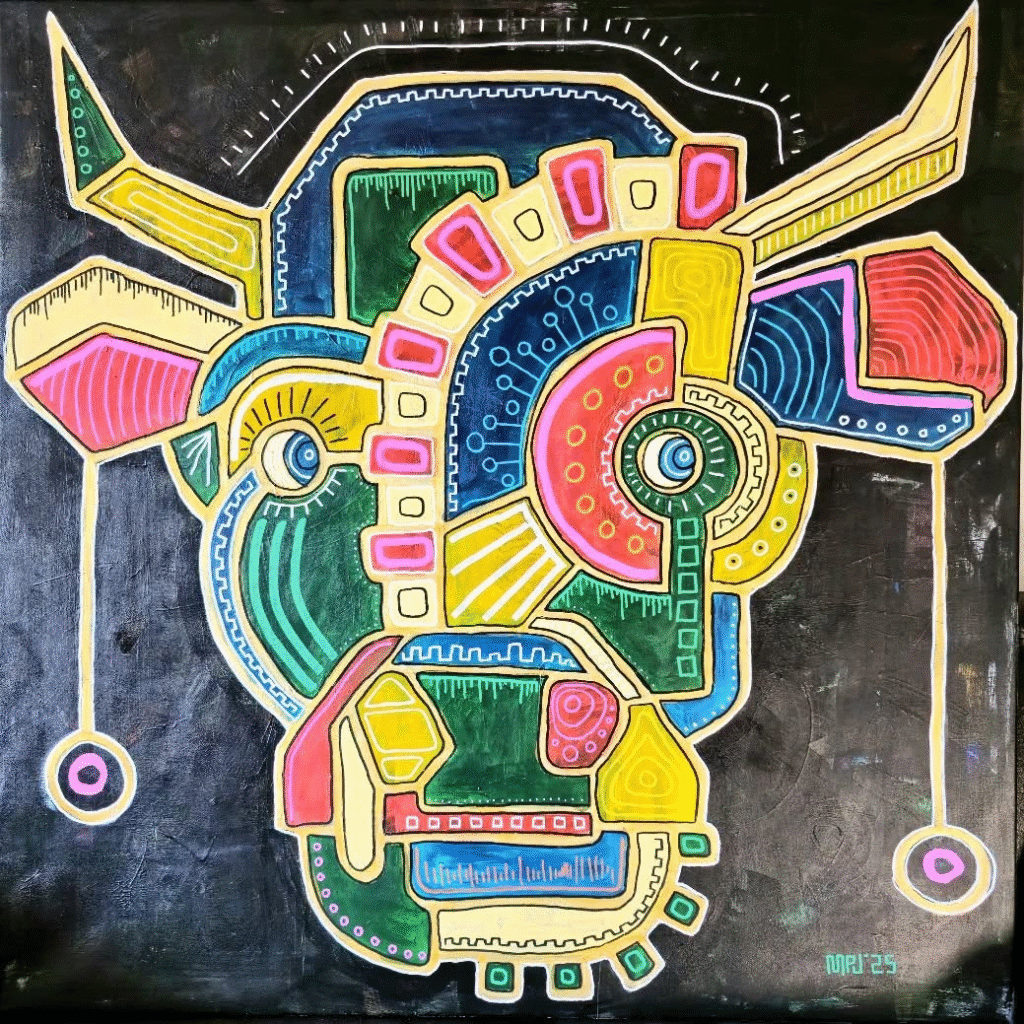
Nigam Sedhai @dr_evolve
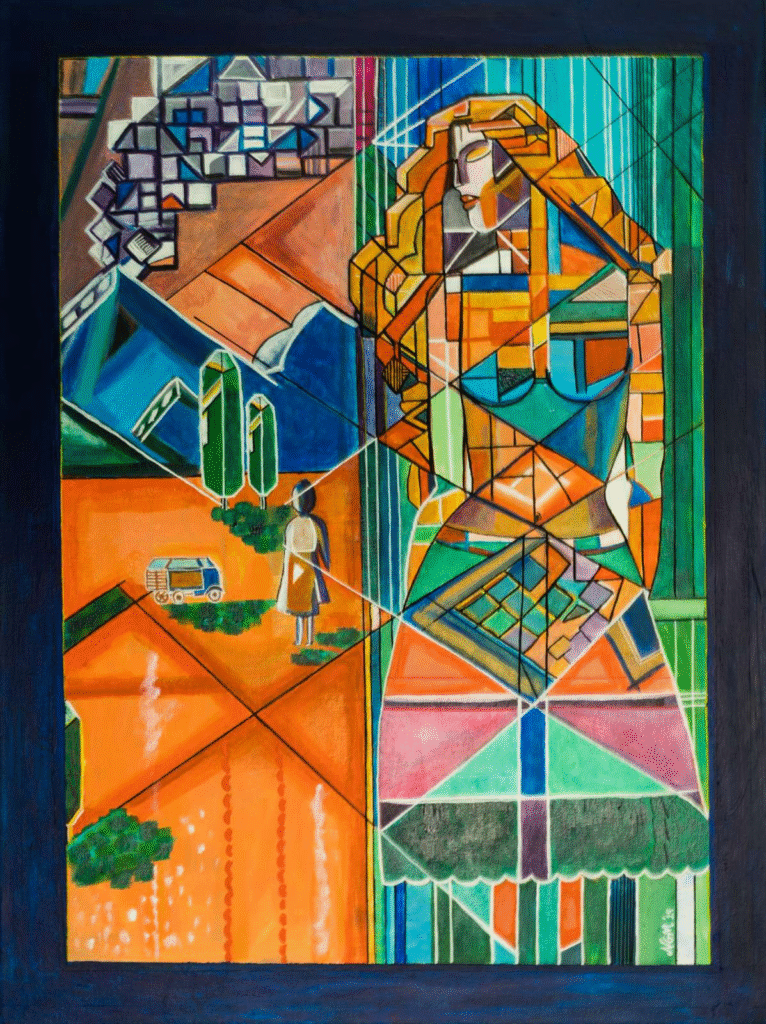
Nigam Sedhai’s canvases rattle the quiet corners of memory and rebuild them in a new form; her art emerges from identity, culture and the sub-text of lived experience. Based in the Dallas–Fort Worth area, the self-taught Nepal-born artist describes her work as a blend of geometric lines, surrealism, realism and Cubism, each piece rooted in her heritage and emotional journey. Art entered Nigam’s life as a safe space, a place where she could process and rebuild. Over the years, that practice evolved into something deeper: a way to understand the human experience through form. Her style carries the language of Cubism but speaks it gently. Angular lines, overlapping planes, and layered colour harmonies give structure to her inner world. The compositions might feel abstract at first glance, yet each intersection of shape and shadow holds intention. She disassembles not to distance, but to reveal; her work reminds us that breaking something apart can be an act of care.
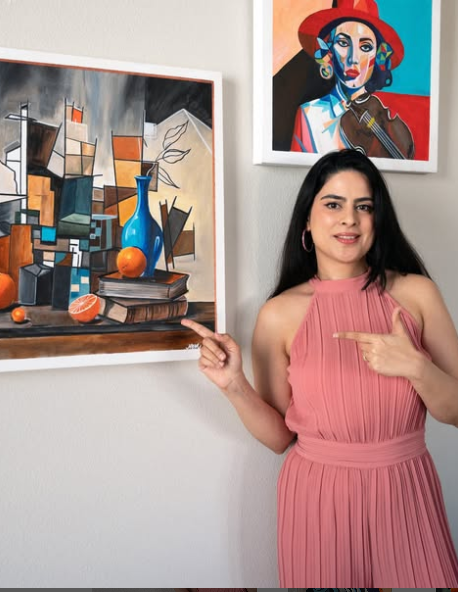
What anchors Nigam’s paintings is the warmth beneath the structure. You can sense her roots, her movement across cultures, her dialogue between precision and emotion. Colour becomes a heartbeat vivid, grounded, sincere. Acrylics stretch across her canvases in soft tension, the geometric rhythm balanced by feeling. The result is art that hums quietly with recognition: the sense that identity is both ordered and fluid, that we are all made of many pieces learning to coexist. Her paintings invite you closer not to analyse, but to feel. Within the layered geometry lies empathy, within abstraction, understanding. Nigam’s take on Cubism isn’t about intellect or theory; it’s about truth, tenderness, and transformation. Through her work, she shows how fragmentation can heal, how form can carry feeling, and how art, at its best, helps us see ourselves whole, complex, and deeply human.
Nokat @nokatworks
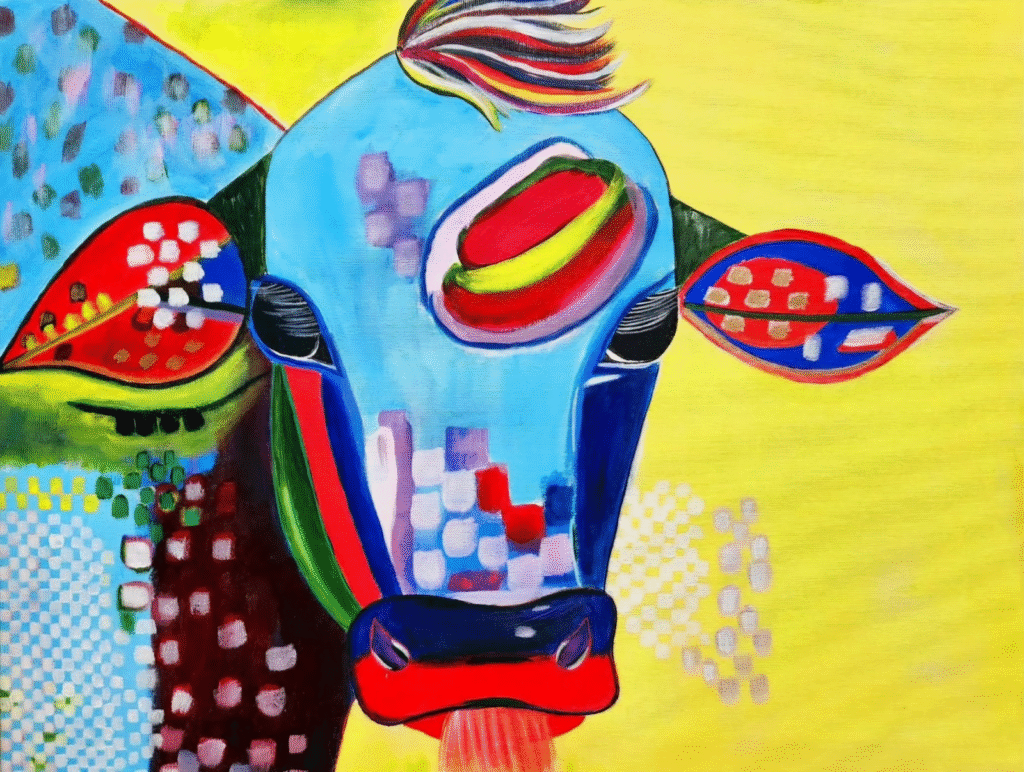
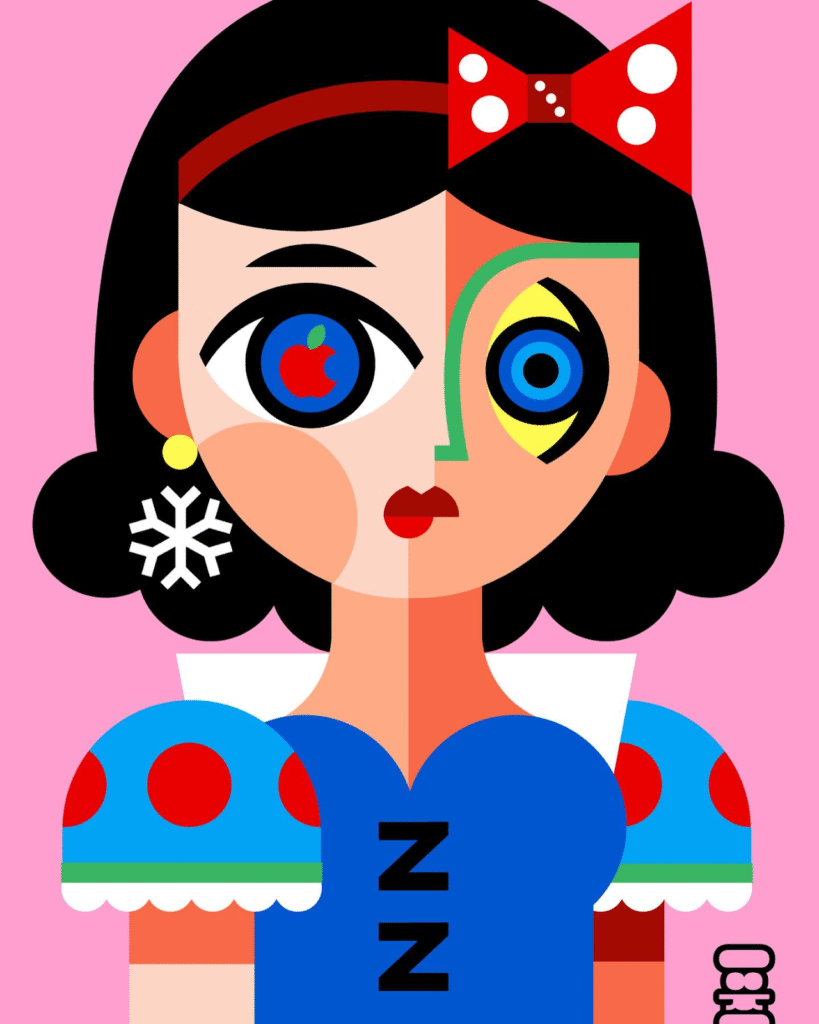
For many artists, their work begins with inspiration but for Nokat, it’s a re-imagining: the transformation of familiar icons into something entirely new. Based in Montpeyroux, France, the multidisciplinary artist moves fluidly between painting and sculpture, building forms that echo both the playfulness of Pop Art and the structure of Cubism. Her work reimagines what it means to see, to rebuild, to question. Each piece begins with something familiar: a toy, a symbol, a cultural icon and transforms it into a study of shape and meaning. Born into a world saturated with symbols, she learned to bend them, tilt them, fracture them just enough to make us look again. Her practice moves easily between painting, sculpture, design and 3D experimentation. Wood, plexiglass, repurposed objects, even eco-materials become her collaborators. In her hands, a block of colour becomes a fragment of identity, a geometric line becomes a pulse, and a familiar face becomes a prism. She doesn’t shy away from brightness or boldness; she uses them like a musician uses rhythm, creating a beat you recognize before you understand it.
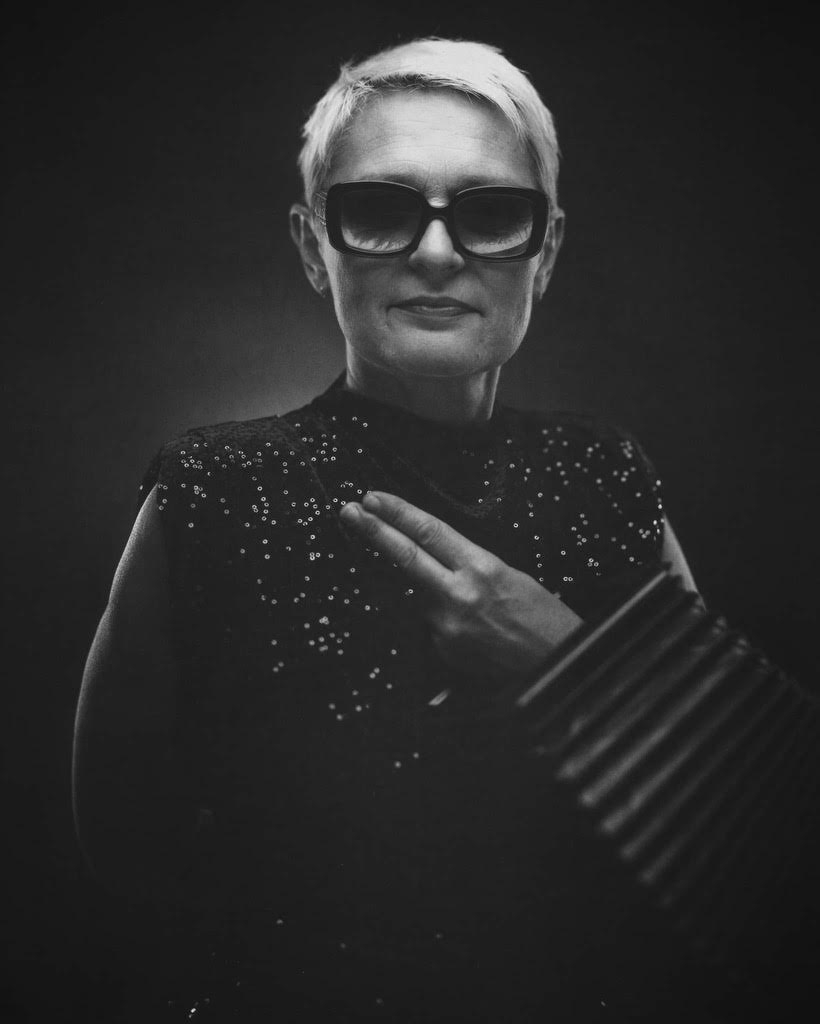
Her commitment extends beyond the studio walls. A significant part of her practice is dedicated to animal advocacy. She has worked with an animal-law attorney and is developing a series with a cell-biology laboratory committed to research without animal testing. For her, creation is not separate from responsibility; each piece carries a line of care, a whisper of the world she wants to help rebuild. Across France and Italy, her exhibitions have introduced audiences to this blend of graphic clarity and emotional density. She collaborates with brands and makers Adobe, Lefranc Bourgeois, Clairefontaine, knife artisans from Thiers, winemakers seeking a visual identity all of them drawn to the way she handles imagery with both precision and wit. What stays with you after encountering her work isn’t just the colour or the geometry, but the sensation that something ordinary has been re-wired. Her canvases and sculptures remind you that symbols aren’t fixed; they’re living things, shaped by who we are and what we choose to see. Nokat reshapes them with a kind of playful seriousness, asking us to step closer, to stay open, to let meaning shift in the light.
Cubism has always been about seeing the world in a new way, about noticing what lies between the lines, where edges meet and moments overlap. In the hands of these artists, that idea feels intimate and human. Their shapes hold emotion, their shifting angles echo memory, and their colours carry the quiet weight of experience. Each of them shows that breaking form isn’t about taking things apart, it’s about finding what’s real within them. It’s a way to look closer, to understand more deeply, to see with empathy.
As the lines cross and colours blend, their paintings invite us to slow down and look again. To see that nothing, no person, no feeling, no moment is ever one-sided. We are layered beings, always changing, always becoming.
At the Arts to Hearts Project, we celebrate those who take structure and fill it with soul artists who turn geometry into emotion and composition into story. Through their work, we’re reminded that Cubism isn’t just about art; it’s about life itself complex, imperfect, endlessly beautiful. And when we bring those pieces together with care, we don’t just create images.
We create meaning. We create connections. We create new ways to see.