
Why This Artist Thinks “Perfect” Is the Most Boring Word in Art I Susanne Kirsch

Radiant in gesture and instinctive in colour, the work of Susanne Kirsch unfolds like a quiet revelation. Her paintings breathe in layers, each one carrying the residue of thought, movement, and emotion, yet still leaving space for the viewer to wander. Born in Frankfurt and now rooted in Rodenbach, her artistic voice took shape not through a single moment of awakening but through a slow, determined attunement to colour, space, and the invisible architecture of abstraction.
This week, in our Best of the Art World series, we’re honoured to share Susanne’s story, one that began with a serendipitous conversation at an exhibition an encounter that nudged her toward the art academy in Kolbermoor to study “colour painting” with Jerry Zeniuk and Ingrid Floss. There, she discovered how space could be built through hue alone, and how abstraction could create depth without relying on the literal. Her early palette lived in monochrome black, white, Gray until colour gradually revealed its own inner logic to her. With each revelation, her canvases grew larger, freer, and bolder.
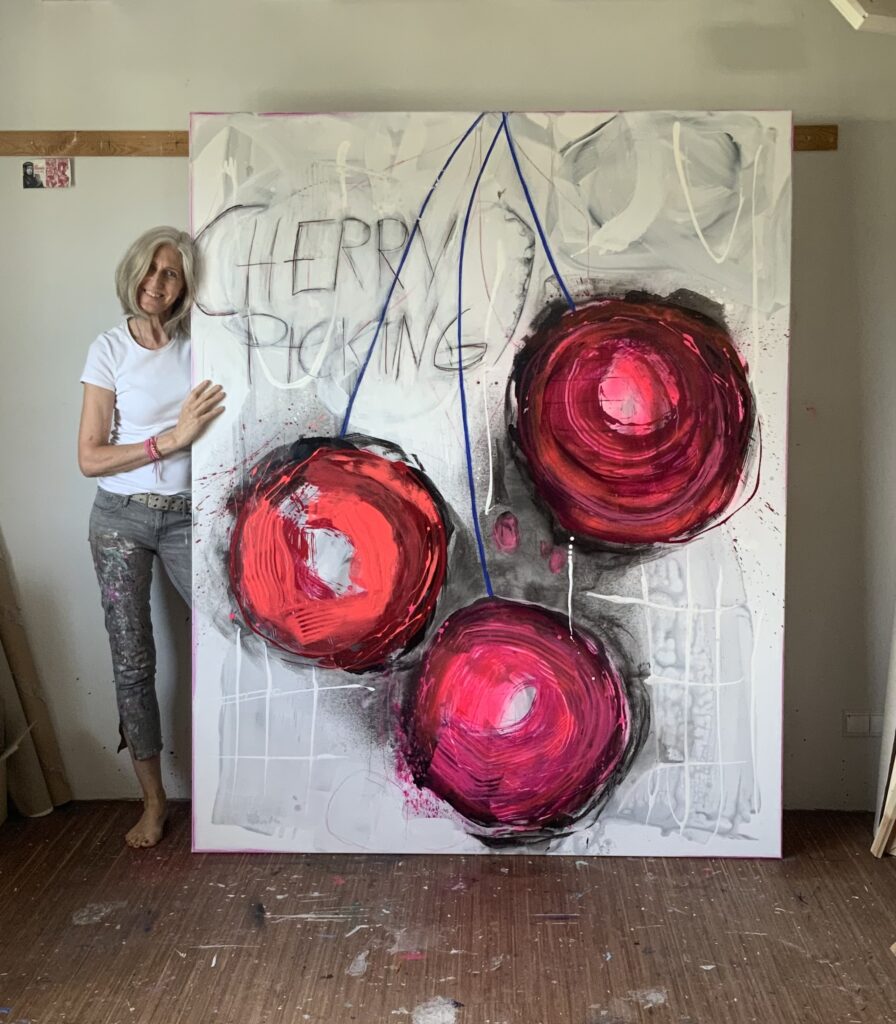
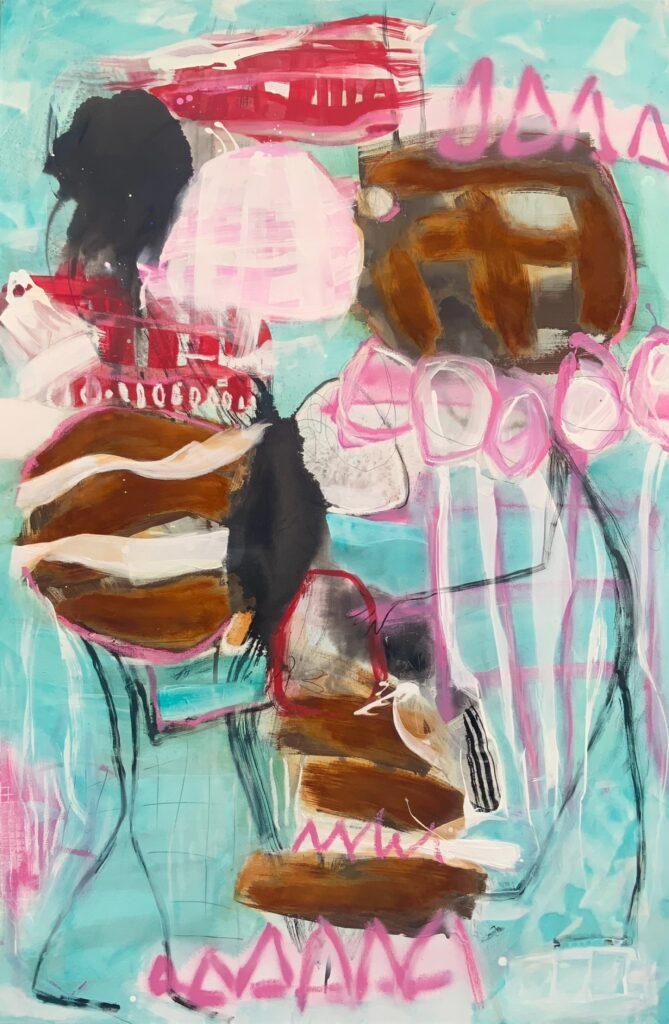
Today, Susanne’s canvases hum with restrained energy. Charcoal strokes meet liquid pigment, graphite meets water pulled by a squeegee, and beneath every new layer, fragments of earlier decisions remain visible, like memories that refuse to disappear. She paints to evoke possibility, to remind viewers that what seems unreachable often reveals itself the moment we dare to step beyond habit. Imperfection is not an obstacle for her; it is the pulse of the real world, the raw truth behind every facade. Her fascination with what lies beneath behind old doors, under weathered surfaces, within the unspoken forms the emotional backbone of her art.
In our conversation with her, we enter this world of hidden rooms and quiet depths, where colour becomes space and the imperfect becomes luminous.
Can you share your background and how your journey from Frankfurt to Rodenbach has shaped you as an artist and influenced your sense of colour, space, and abstraction?
At an exhibition, I got talking to an artist who was studying with Hermann Nitsch at the time. I was so interested in this that I applied to study “colour painting” with Jerry Zeniuk and Ingrid Floss at the art academy in Kolbermoor that same month. During my studies, I gradually developed an understanding of colour (initially blacker and whiter and Gray) and learned how to create space through colour. I was very impressed by how abstraction can create depth through colour placement alone, using soft and sharp edges. Gradually, my work became freer, bolder, and larger in format. Today, I can say that these studies have had a profound influence on my work and laid the foundation for my development.
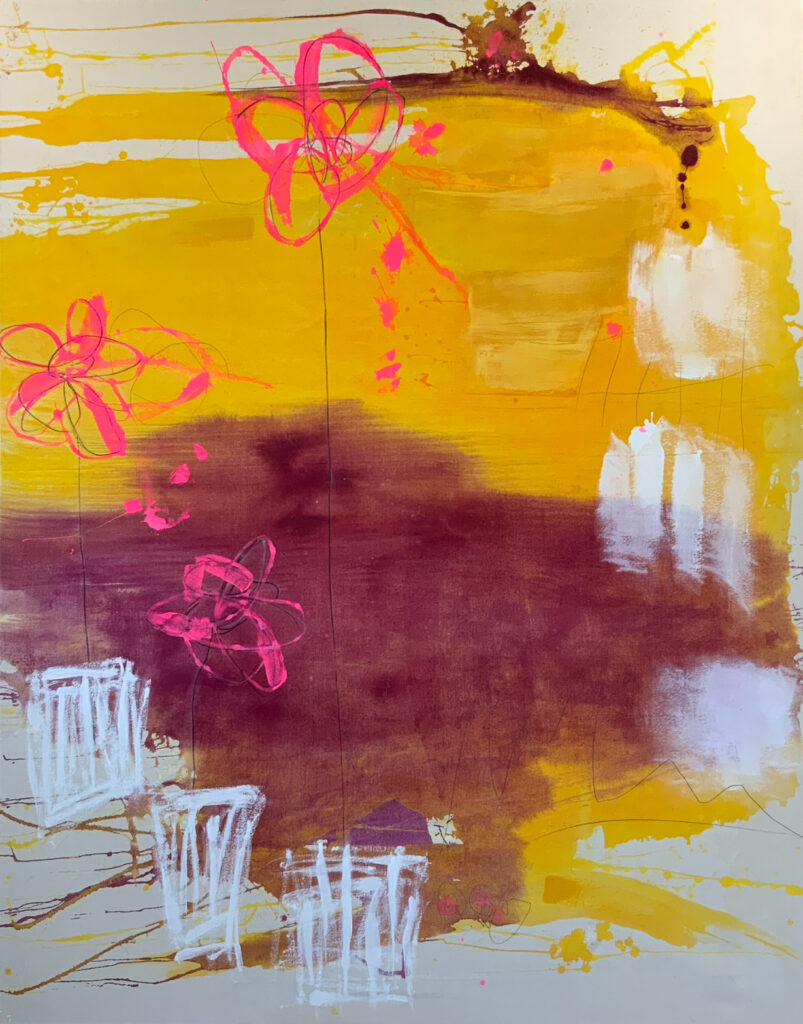
Your works often engage in multilayered compositions that suggest spatial depth through colour interplay. How do you build these layers in what order, with what intention?
The multiple layers alone, with the lower layers still partially visible, create a depth that is further enhanced by the colour scheme and composition. The intention behind this is always to create a lively work that you can immerse yourself in and linger over. I usually start a new work with my own specially developed technique. I begin with charcoal or graphite strokes and then use my water squeegee. Once everything has dried, sometimes even while still wet, I begin building up the layers of colour. I work primarily with liquid paint.
You mention wanting to give viewers the feeling of making the impossible possible. How do you see this ‘impossible,’ and how do you hope people connect with your work?
I would like to encourage viewers of my art, course participants, and people who are interested in my work to embrace new things, try them out, and think outside the box with the statement “Make the impossible possible.” Things often seem impossible, but if you embrace them and don’t stick to old patterns, wonderful things can happen.
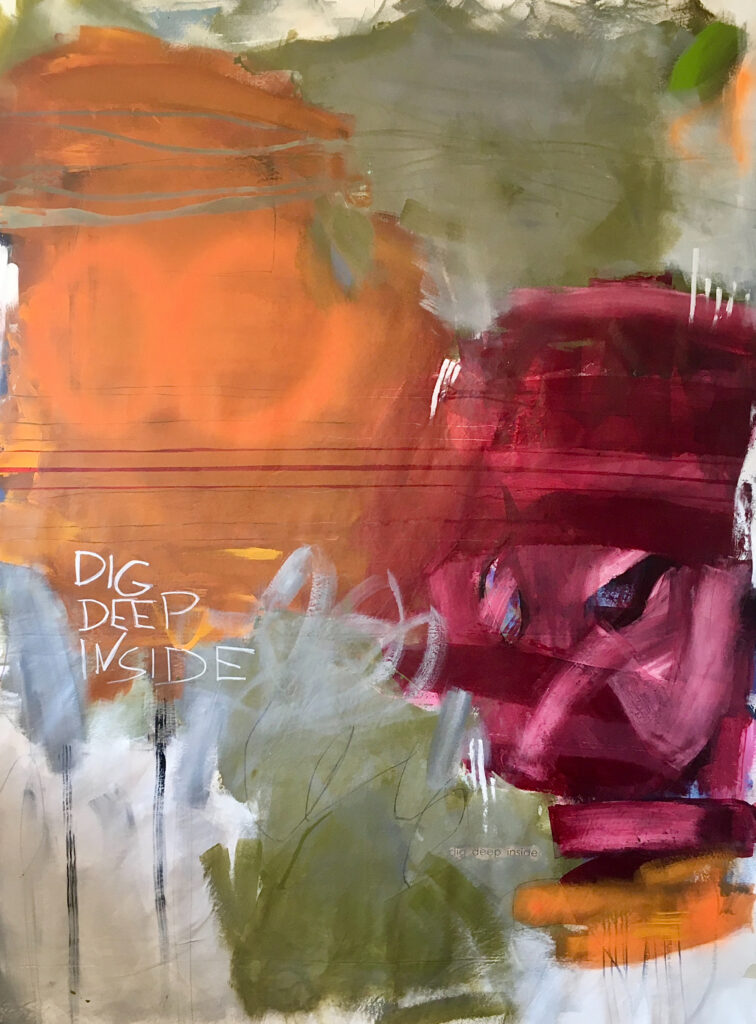
In Behind the Facade, you explore imperfection and what lies beneath surfaces. What draws you to the tension between visible facades and hidden layers in life and in work?
Actually, my painting always deals with imperfection. For me, perfection means presenting the imperfect as perfectly as possible. Nothing in our world is perfect. I paint how I perceive my environment; that feels real to me. For example, I like old doors and imagining what might be hidden behind them; I love lost places. The visible is so obvious. I find what you can’t see at first glance, what you find and discover by chance, much more interesting.
In balancing ongoing studio work, exhibitions, lectures, and perhaps sales or commissions, what are the key challenges you’ve encountered and how have you learned to manage them?
I think the biggest challenge is probably organizing all these circumstances. When everything happens at once, I work night shifts to get everything done and temporarily reduce the amount of time I spend in the studio. That does happen sometimes, but it’s not the norm. I think you inevitably learn to deal with it over time.
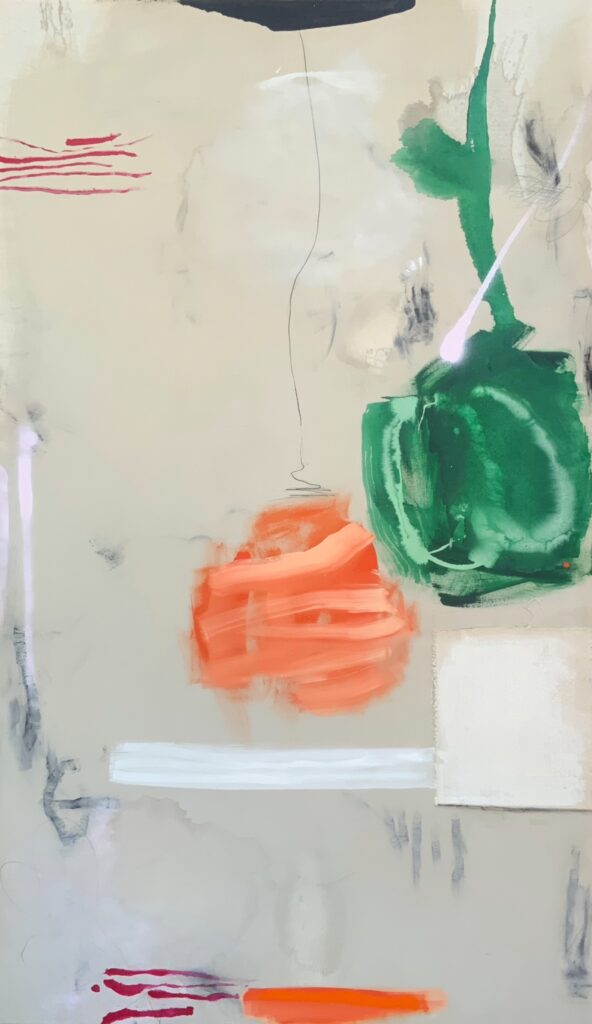
Creative blocks or doubt may come to any artist. What strategies (mental, physical, environmental) help you through those phases?
Yes, that’s right. Of course, I’ve also had to deal with creative blocks and doubts. I think that happens when I’m too stressed. Creativity needs space and courage. It is negatively affected by pressure, perfectionism, and routine without curiosity. So I look for islands in my everyday life. Long walks with the dog in the woods, music, a good book, meeting up with friends, and of course traveling.
Do you work with sketches, colour studies, or digital mock-ups before beginning a piece or is your process more emergent and responsive?
I do work with sketches and colour studies – yes, but rather rarely. My process is mainly spontaneous and reactive. I start something with an idea and a colour concept. But in the process, everything usually turns out differently. I work very quickly with wild, dynamic brushstrokes. It’s not something that can be planned very well anyway. Actually, I don’t want to plan but rather get involved and feel free while I’m working.
Looking back, what would you tell your younger self about the challenges and joys of pursuing an independent creative path?
I would say to myself … get started, don’t wait for the perfect moment, jump off the edge of the pool, dare to do what’s important to you, you won’t regret it.
What advice would you give to artists who are starting out now in terms of mindset, practice, or navigating the art world?
I would tell them … find out as much as you can about this profession. Don’t make art to please others, but to say something through it. Work hard, but enjoy what you do. There will be good times and bad times, but overcome the bad times. Resistance is part of it, so be patient.
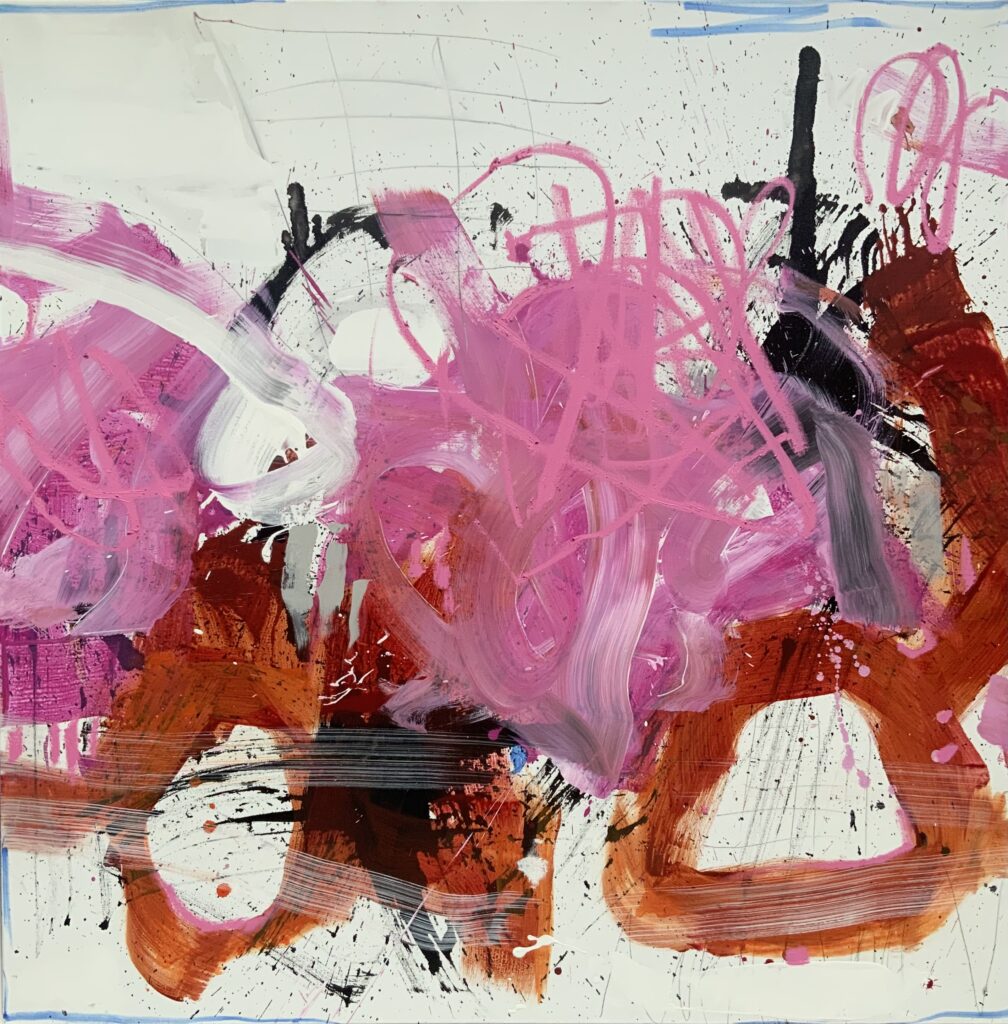
As our conversation with Susanne Kirsch comes to a close, one truth lingers: her art is not about control, but surrender. Through colour, gesture, and rhythm, she captures the delicate balance between chaos and calm, imperfection and beauty. Each canvas feels alive — a reminder that the most profound work often emerges when we allow intuition to lead.
Susanne’s journey from Frankfurt to Rodenbach, from discipline to freedom, mirrors the evolution of an artist unafraid to reinvent herself again and again. Her work teaches us to embrace uncertainty, to find poetry in imperfection, and to keep reaching for what feels just beyond reach to, as she says, “make the impossible possible.”
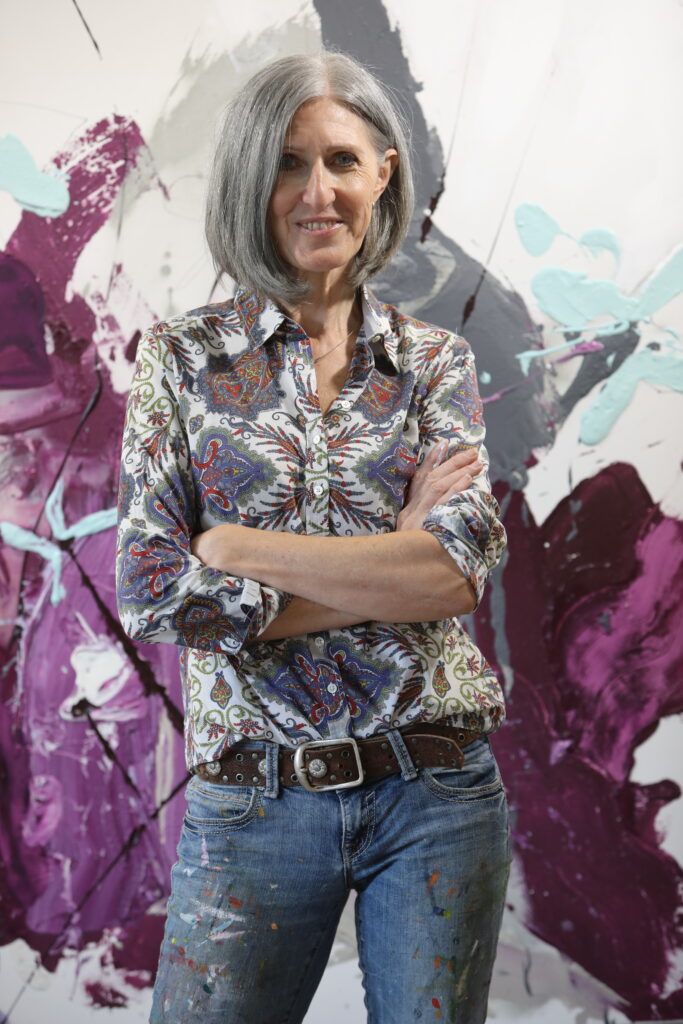
Follow Susanne Kirsch to witness an artist whose bold abstraction, layered emotion, and fearless experimentation continue to expand what painting and courage can mean.