
Why This Artist Believes Perfection Kills Creativity I Victor Schegin

Raw, visceral, and unflinchingly honest Victor Schegin’s paintings strike with an immediacy that demands attention. His canvases pulse with movement, abstraction, and weightless figures, capturing emotions that feel both universal and profoundly personal. Every brushstroke carries the energy of his earliest experiments, the intensity of solitude, and a fearless pursuit of truth through creation.
This week, for our Best of Art World series, we’re honoured to share Victor’s journey, a story that begins on the streets of Paris, where, as a teenager, he discovered graffiti: a medium that taught him the power of immediacy, raw expression, and fearless experimentation. Sketchbooks and classrooms came later; the city walls were his first canvas, where destruction and creation coexisted, shaping the bold, existential gestures that still resonate in his work today.
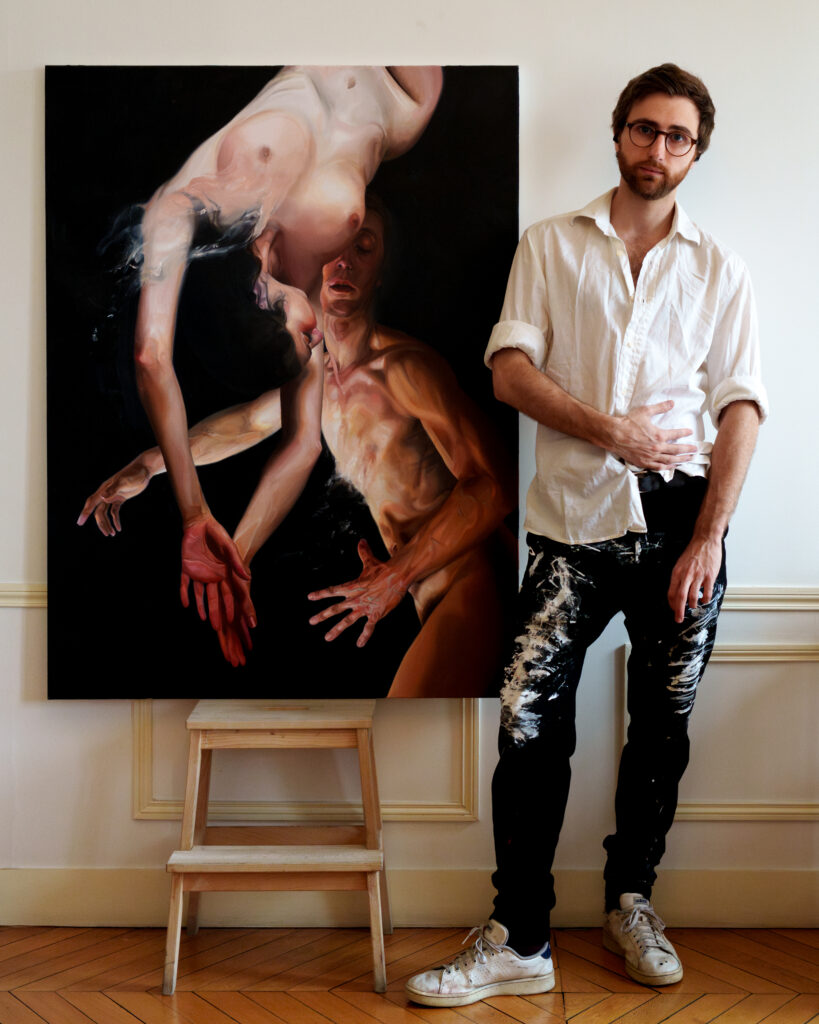
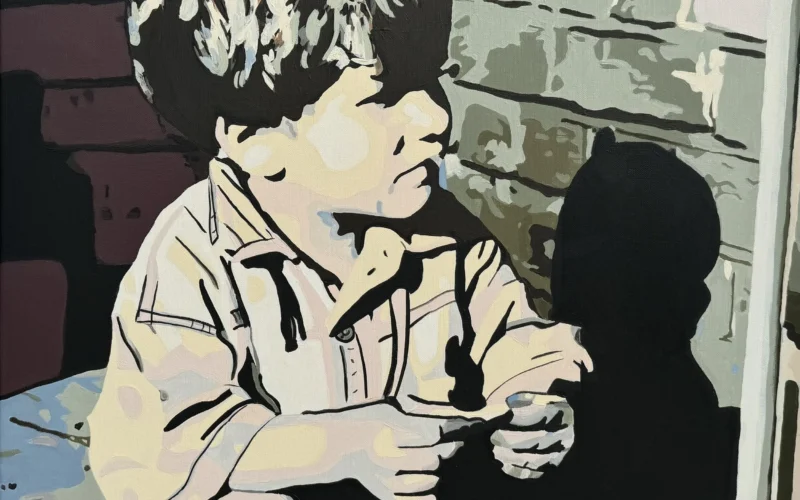
Victor’s paintings explore the internal landscapes of the human experience. His figures float untethered, shadowless, within abstract spaces that invite viewers into psychological and emotional realms. Through expressive abstraction, risk, and accident, he captures impermanence, longing, hope, and the quiet intensity of solitude. Exhibiting across Europe from Paris to Madrid, Stockholm, and the Netherlands, he’s witnessed how these universal themes transcend language and culture, affirming that emotional honesty knows no borders.
Unlike work confined by perfection or prestige, Victor’s art is alive, intimate, and collaborative. It begins in solitude, in the studio’s stillness, but comes fully to life in the minds and hearts of those who encounter it. His paintings are like ghosts summoned yet free, carrying stories that are at once personal and shared, ephemeral yet enduring.
Let’s step into Victor Schegin’s world, tracing his path from the rebellious streets of Paris to a studio practice where freedom, vulnerability, and raw human emotion converge with every stroke.
1. Can you share a little about your background where you grew up, your earliest memories of art, and how your early experiences with graffiti and street art as a teenager gave you the raw energy and freedom that still resonates in your paintings today?
I believe I discovered I was an artist through destruction, before I ever truly created anything. My real entry point into painting wasn’t a classroom in Paris, where I grew up, but the streets. At 15, I found graffiti, and that experience was fundamental because of its immediacy and raw expression. That visceral quality is something I constantly try to carry with me in the studio. My existentialist subjects and the sometimes violent, abstract marks in my work are a direct echo of those beginnings – an attempt to capture a feeling through a raw, unfiltered mark.
2. You often use expressive abstraction in your paintings. Can you share a time when adding abstraction changed a painting that felt too literal what did you lose, and what new feeling or meaning did you gain?
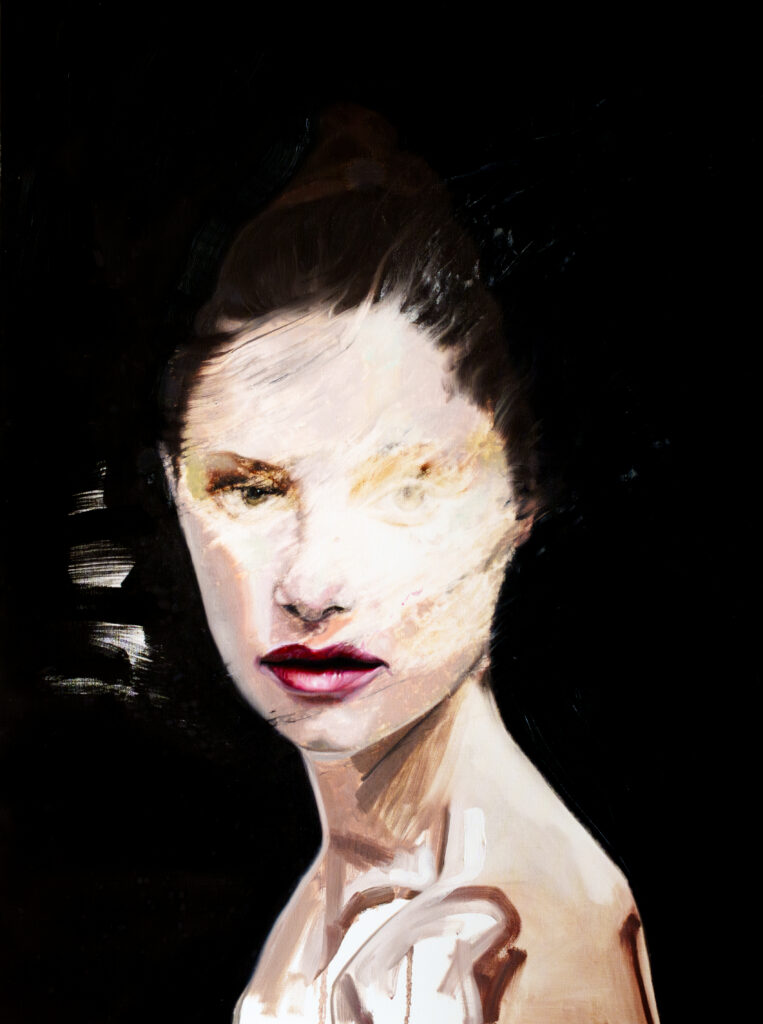
I never truly know how a painting will turn out, and that’s the exciting part. I provoke accidents; sometimes they don’t work, so I put the piece aside and try again later. Sometimes violence is what perfectly completes and unravels the beauty of a piece. This method gives me the freedom to play, the chance to be surprised by my own work, and makes the whole process meaningful.
3. How does vulnerability manifest in your process, not only in subject matter, but in the risks, you take with materials, composition, or exposing parts of yourself through your art?
I believe vulnerability manifests in two ways for me. First, painting is a rather lonely activity, but it paradoxically opens a door out of that solitude. By painting universal themes like impermanence, death, longing, and love, I feel I can break out of my own isolation and connect with others on a deeper level. It initiates a dialogue. The second form of vulnerability is in the process itself. Risk is a fundamental part of my work. When I provoke an accident on the canvas, I expose the painting to failure to being worse than it was. It’s an act of abandoning control to let the painting do its thing, and sometimes, the entire piece is lost in the process. That risk is where the real honesty lies.
4. You’ve exhibited in Paris, Madrid, Sweden, and the Netherlands. How have these different places and cultures influenced how people connect with your themes of solitude, vulnerability, and hope and has it changed the way you approach your work?
Because my core themes are universal, the emotional connection is there whether I’m in Madrid or Stockholm. People connect to the feelings of solitude or tragedy everywhere. That said, the language people use to talk about the work can differ. In Paris, the conversation might lean toward the technical, while in Madrid, I felt a deep connection to the romantic element in the work. It reinforces my belief that good art should provoke a strong reaction: love or dislike, but never indifference. These experiences haven’t changed what I paint, but they’ve confirmed that these internal struggles are a shared human language.
5. Many of your figures appear weightless, shadowless, or not anchored to a fixed ground. What do you hope these visual choices communicate about identity, memory, or the internal states of people?
That’s a very precise observation. I don’t see my figures as existing in a physical room; I see them existing in a psychological space, like emotional landscapes. By untethering them from a realistic setting, I hope to communicate that these are portraits of internal states. This also contributes to the ethereal and dreamlike atmosphere I like to build with paint.
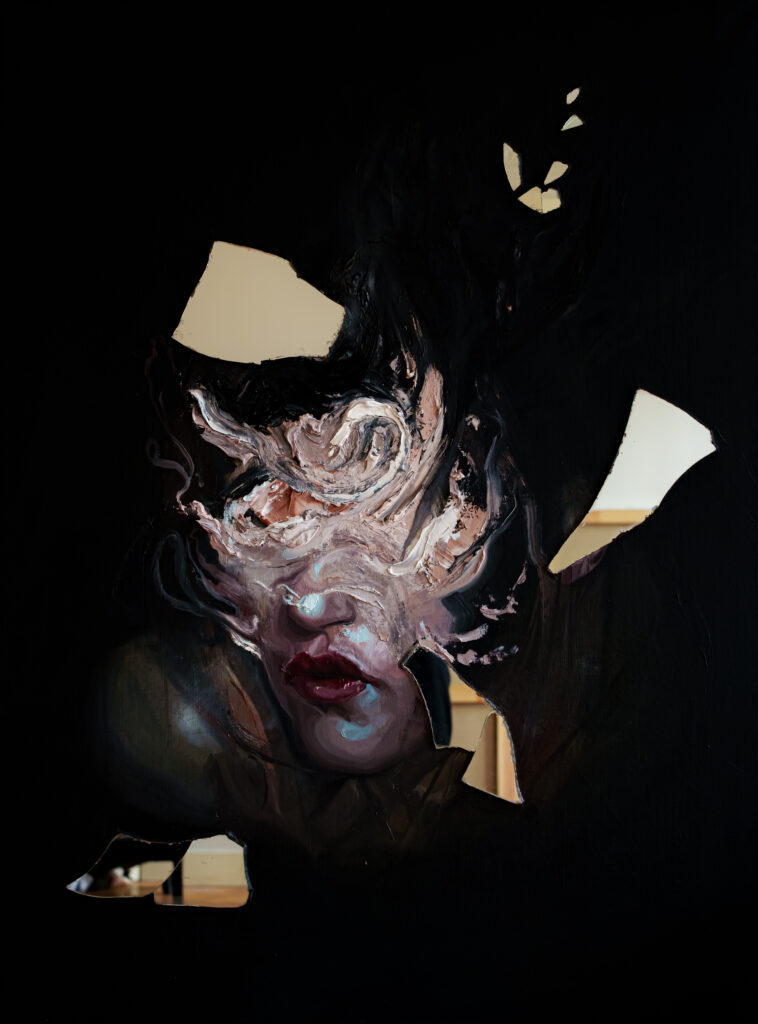
6. How does your sense of isolation or solitude influence not just what you paint, but where and when you paint? Is there a place or time that consistently nurtures your deeper work?
I like being in sync with the outside world. I work during the daytime, when the city vibrates, and this way I treat my painting practice like a regular job. This routine is important to me, perhaps because I’ve often felt different, like I didn’t quite ‘belong’. Since I was young, I’ve always built worlds of my own, with words or brushes. So while the romantic idea of painting in isolation at night is tempting, my process is more about finding a balance: staying connected to the rhythm of the world outside while exploring the solitary landscapes within.
7. Your paintings mix detailed areas with places that feel open or unfinished. How do you decide where to leave that space or mystery, and what do you think it adds to the feeling of the piece?
The decision is purely intuitive. The rendered parts—a hand, soft lips—act as an anchor to reality for the viewer. But the open, abstract spaces are an invitation for their own emotions to enter the painting. I believe paintings say more by not showing everything; that mystery brings tension and reinforces the emotional quality. It’s about breaking conventional rules to follow something more imperfectly human, where the piece is only truly completed in the mind of the person looking at it.
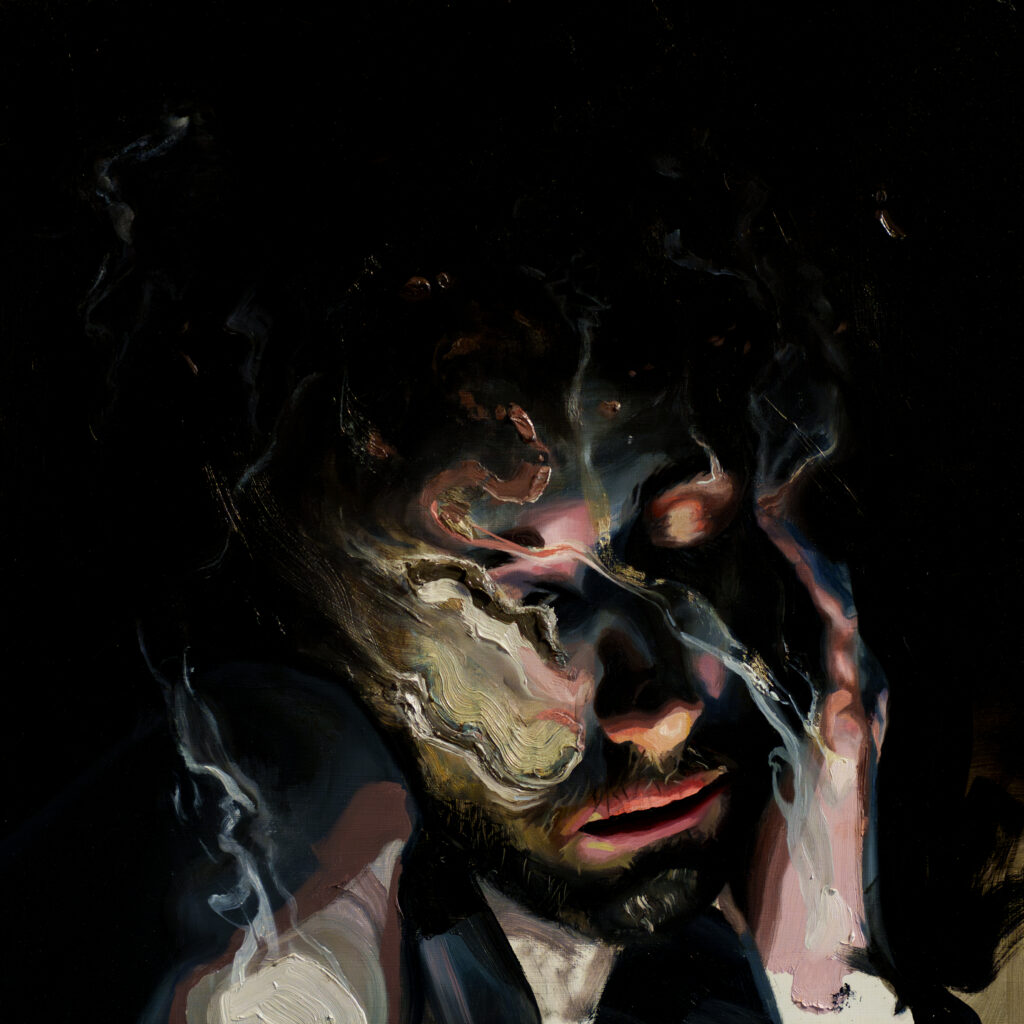
8. When you stand back and look at your work, do you see it as a mirror of your own inner world, or as something outside yourself, belonging more to the viewer once it’s created?
It’s more complicated than that. When I paint it’s a very intimate moment. I’m unavailable and fully committed in a personal moment that requires presence and listening to my inner voice. I choose the subjects because they resonate with me, but I rarely see paintings like a reflection of myself. Not fully. I can see I’ve been there though.
I’m often attached to the works I’m currently painting but, once a painting is finished, it no longer belongs to me. It becomes something else, something independent. And I move on, I don’t need it anymore, and it doesn’t need me any longer. Unless it cries for help and I come back to rework it. Works that stay in the studio too long can do that, cry for help. I like my paintings to live their own lives when they leave for a collector’s home, to know they are being looked at by someone other than me, that someone else is bringing them to life through their gaze.
Paintings should be like ghosts you summon them, but they live on in other people’s minds
9. When viewers interpret your work in ways you never expected, do you find that unsettling or exciting? Has someone’s interpretation ever changed how you saw your own piece?
It’s exciting. It’s proof the painting is alive, carrying a soul of its own, independent of my original intention. It shows that the space for contemplation I try to create is actually working. Once, someone told me a piece felt exactly like a melancholic piece of classical music I had never heard. When I listened to it, it completely changed how I saw my own painting. It was a gift—the viewer gave me back a new layer of meaning to my own work.
Art is very subjective, but it brings people together. It’s one of the only things we have left in this world that is “pure” in essence and elevates the human spirit and heart, free from any rules.
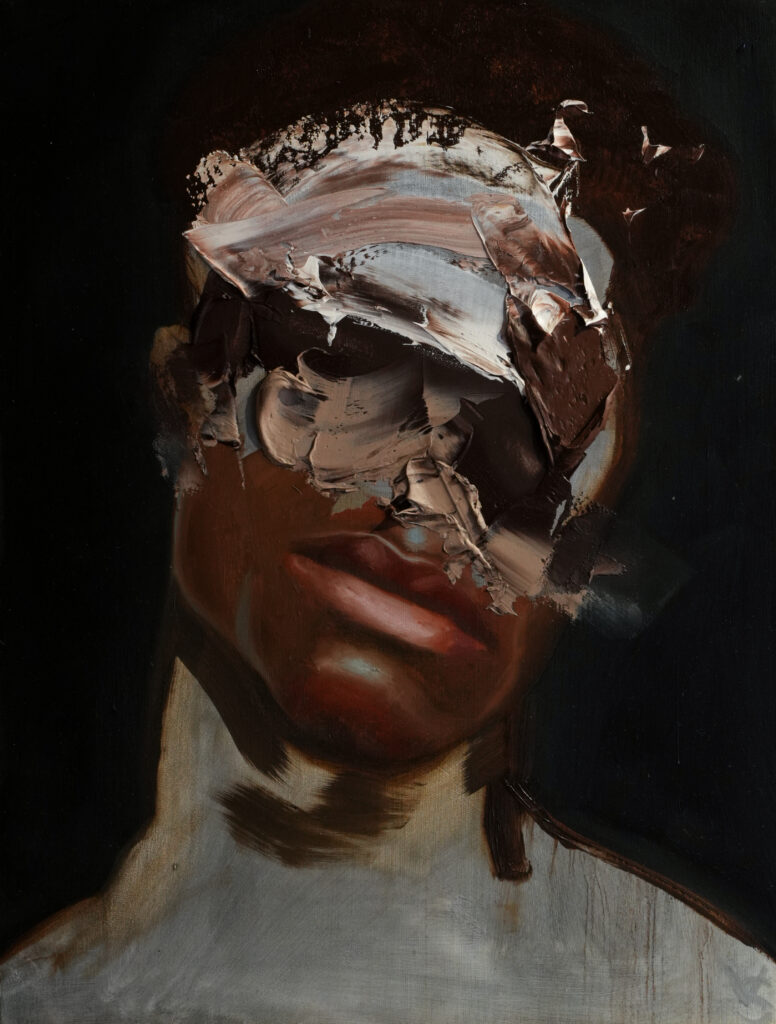
10. If you could give one piece of advice to younger artists about creating work that is honest, vulnerable, and deeply personal what would it be?
The fear of ruining a “good” artwork is the biggest enemy of creating a great one. Be bold, and don’t obsess over finding your style. It’s a process that will always evolve though along the way you might discover the common thread that connects it all.
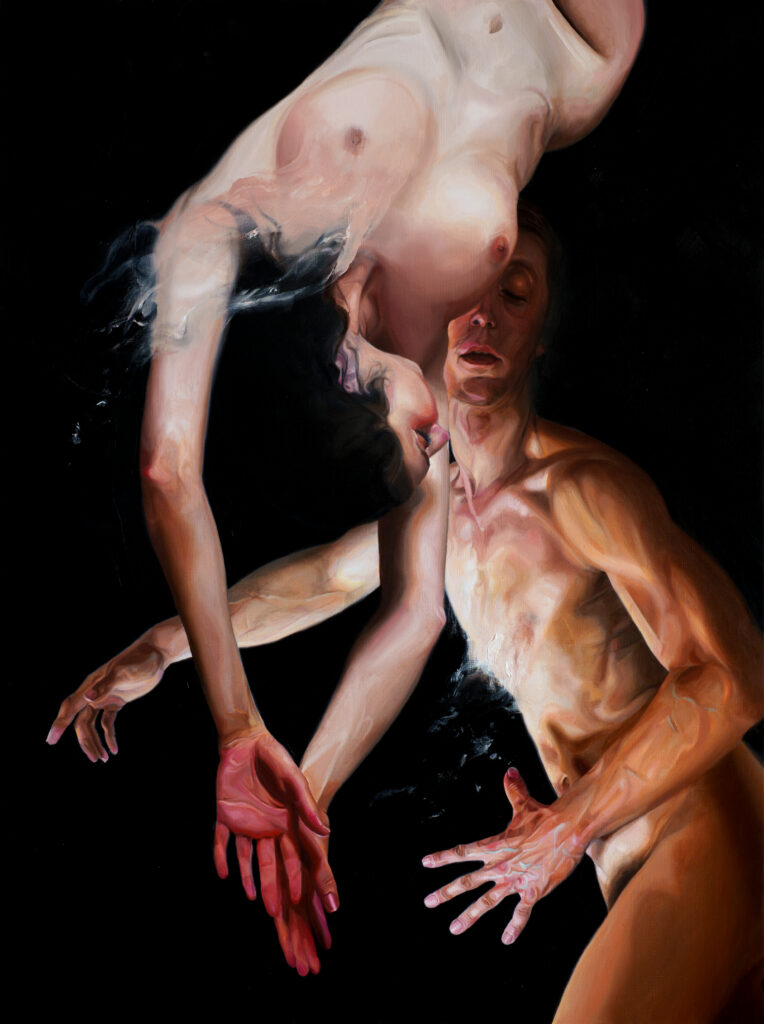
As our conversation drew to an end, Victor said something that stayed with us:
“The fear of ruining a good artwork is the biggest enemy of creating a great one.”
It’s more than advice for painters; it’s a philosophy for living. A reminder that honesty begins where control ends, that beauty often hides in the accidents we try to avoid.
Because in risking, we discover truth. In letting go, we find meaning. And in creating, we allow ourselves to be seen unguarded, imperfect, alive.
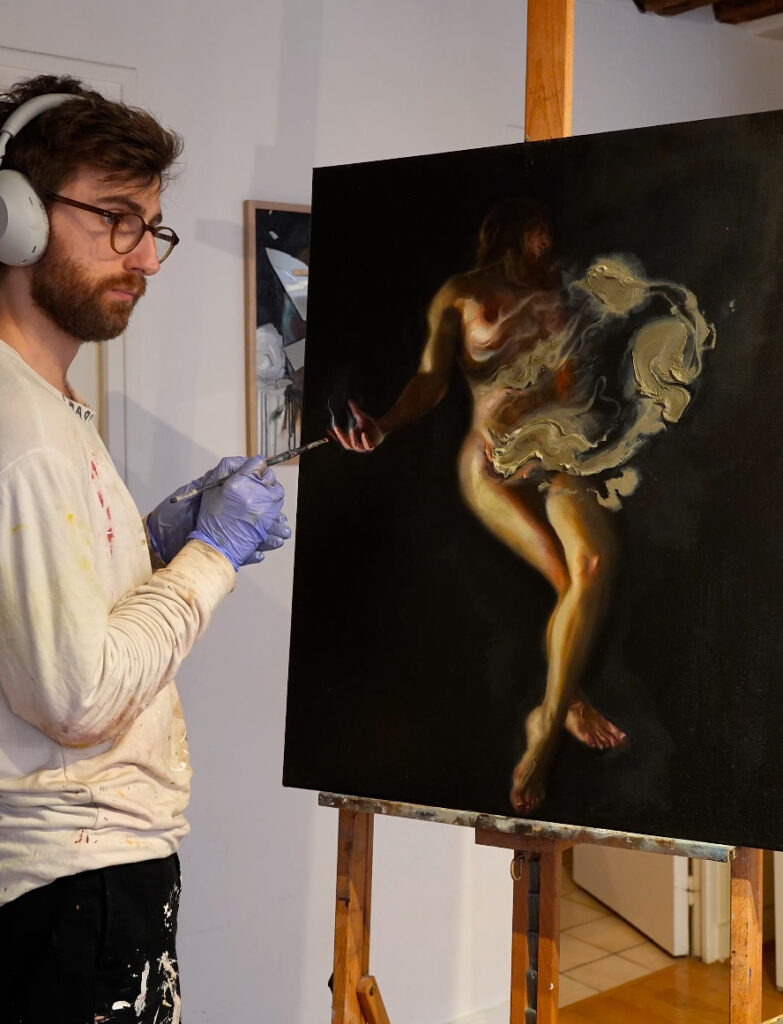
That is what Victor Schegin’s work invites us to do: to look beyond surface and certainty, to stand before the rawness of our own humanity. His paintings are not just images, but mirrors reflecting the fragile, restless beauty of being alive.
Follow Victor Schegin to witness how raw emotion, fearless experimentation, and the beauty of imperfection continue to shape a world where art lives beyond the canvas.