

Watch & Listen to this podcast Episode.
In this episode, host Charuka talks with artist and community builder Diana Weymar about how creativity and social awareness come together in her work. The two dive into how something as simple as stitching can hold space for protest, memory, and emotion. Charuka opens up about what it’s like to live through such uncertain times, where social media can feel both noisy and heavy, and where artists are often told to stay out of politics. She also shares how losing her mother made her see the world and her creative practice differently.
Diana talks about how her Tiny Pricks Project began with stitching quotes during the Trump years and how it later grew into something much broader, weaving together voices from writers, actors, and nature. She explains how she decides what to stitch, how she manages online reactions, and how she balances quick responses with thoughtful pauses. The conversation touches on how small acts can speak to significant issues, why real-life exhibitions matter, and how fragile our online archives can be.
The key takeaways from this episode are that creativity can be a steady way to process the world around us, that silence can be just as meaningful as speaking out, and that collaboration can connect people across time and distance. Most of all, it shows how something as small as a stitched handkerchief can hold a story much larger than itself.
This set effectively summarizes and segments the detailed content of the interview into easily navigable chapters for viewers.
00:00 Returning to Solo Episodes
00:57 Reflecting on the Year
02:54 Business Growth and Challenges
05:46 Community and Artist Support
09:03 Future Aspirations and Podcast Evolution
Charuka (00:01.27)
Hi Deanna, welcome to the podcast.
Diana Weymar (00:03.31)
Hello, how are you?
Charuka (00:06.07)
Very well, very well. I have been researching about your work and you’ve been talking about things that a lot of us want to talk about.
afraid, too controversial, too political, too many words to say. So I want to start, you know, I want to start this from there is because, you know, a lot of times in, in, in world like today, where you’re talking about aesthetic story, everything, a very important part of being an artist is, you know, being able to say and
you know, stand up for something that we truly believe in. And I feel like you have a lot of things to say and you have a very sharp and exciting way to do that. So what do you have to say about that?
Diana Weymar (01:02.754)
I don’t know, my heart just sank when you said that because I…
Diana Weymar (01:11.086)
I feel like I feel a lot of things. Well, look, it’s hard to generalize. And I’ve been working in this medium for over a decade now, and a lot has happened. I should backtrack by saying I’m an American citizen, Canadian permanent resident. So I’m talking to you from Canada. We just had Thanksgiving yesterday. And my parents left the United States in 1970 for aesthetic, personal, and political reasons.
Charuka (01:16.631)
Yeah.
Charuka (01:26.719)
Okay.
Charuka (01:31.079)
wonderful.
Diana Weymar (01:40.654)
They were not supportive of the war in Vietnam. So I’ve grown up in two countries and I have lived in each of the countries half of my life. And there’s so much to say right now. There is so much.
Charuka (01:40.704)
Okay.
Diana Weymar (02:02.958)
to feel and to follow. So over the last decade since I started this project, Trump has been elected president twice. I can, you I’m not, you know, those are my politics. And I, you know, have protested his presidency in a variety of ways. And it’s not to say that I don’t want to engage with his supporters. I would be happy to. My projects, all my projects have been public.
Charuka (02:11.57)
Absolutely.
Charuka (02:17.248)
Yeah.
Diana Weymar (02:31.872)
and open to anyone who wants to participate. Having said that, it’s very self-selecting when you’re protesting. So I actually feel like I’m not doing a good job of expressing everything that I would like to express because the stage is so large and when you’re an activist,
It’s tempting to kind of spread yourself out and to log in about all sorts of things. And that’s been very hard. Trump was very easy. Trump was easy and I was not silent. And it was a traditional textile-based craftivist protest that was so exciting.
because it felt like there was something to channel directly. Nuance was, you know, gone. Yes, shocked, more than surprised, just shocked on a daily basis. And I look back in the two and half years when I don’t think I missed a single day of stitching a Trump quote. And then I was joined by thousands of people in the projects over 5,000 pieces. And it just, it was so big.
Charuka (03:35.808)
Hmm, you felt passionately.
Charuka (03:45.772)
Hmm.
Charuka (03:53.504)
Yeah.
Diana Weymar (03:58.784)
So when you say I’m sort of touching on things that are happening, I look back somewhat nostalgically to the first Trump presidency. I said to my husband yesterday, Trump could win the Nobel Peace Prize. And this is just, I want a ceasefire, I want peace, want a two-state solution, all these things, that Trump would actually…
Charuka (04:14.162)
Charuka (04:19.509)
Yeah.
Diana Weymar (04:25.39)
pull this off is a very, we’re in a much more complicated period of time, because you want something, but you don’t want the way it’s coming. And before we just didn’t want something and it was so, every fiber of our being just felt how wrong it was. So all of that is to say is that you’re very kind to say that I’m maybe touching on things. For me, I don’t know that I am. It’s just such a nuanced, complicated life.
Charuka (04:28.395)
possible.
Charuka (04:52.127)
I love what you’re doing in that way. I think in today’s time, you know, I see the geopolitical situation in across the world and you all know it’s not, it’s not been the best. And I think the freedom of speech specifically for creative people, you know, a lot of time we run into, you know, artists are playing to very dichotomous situation. Artists are always reminded,
This isn’t your area of, you shouldn’t get into politics. this isn’t about you. you stick to your lane. Worse is if we really see, we’ve all seen, the creative people are one of the most, they have always been at the forefront at any revolution, at any kind of, you know, any kind of factors of revolt, whatever, politically. And I think it’s also because
as creatives, it’s not an agenda. Often it is something that we deeply passionately, like there’s no, like we make art, there’s no other way. Like it bothers you and then you project that energy into something and create something out of it. And I think in the last few years we’ve really seen it, I’ve seen it in India, US, in so many different parts of the world, we’re seeing it. Like, you know, it becomes a way, a tool for all of us.
to say something. And as much as that’s also true, another layer to it is like, you in today’s time, it’s not only in the US, but in so many different parts of the world now, that using that voice in whatever medium has become harder. It’s become, you know, under more scrutiny, artists are also, you know, it’s, I think the times have changed. in times like today,
to be political, not for an agenda, but because you have an opinion and you care. think also it shows that we care, like we really care about something and we want to say something about it. But then I feel like artists are very creative. I love how you’ve come. And I read one of your quotes and you were like, even though you’re making the statement, you’re really not making the statement. You’re just repeating statements.
Charuka (07:18.868)
But when you stitch them together, they are saying, like, we all can make our own interpretations to what. And there are also constant reminders, rereading, rewriting of what is being said, what is being done. And it’s going to go into the history. And we can’t really undo them. It’s going to be here for us. But tell me something. Were you always like, is this your first creative political project? Like, you’ve gone into it? Or have this been something that has always
Diana Weymar (07:19.999)
Mm-hmm.
Charuka (07:48.969)
peaked your interest or bothered you.
Diana Weymar (07:54.478)
well, mean, as I was sort of, my childhood was political in a way, but of course that was my childhood, not a choice I made. No, I have not always been involved in political art or community-based art. This was sort of a perfect storm.
I was working in textile and what I would call memory textiles before the Trump presidency. I was playing around with creating material records out of pre-existing fabrics. So part of my studio practice is I buy floss, but I don’t, I keep my projects.
very simple so that anyone can participate. So there’s no financial barrier to participating. Everyone has textiles, as it turns out, kicking around or can find them easily. And so I was already playing around in that medium. I was very interested in how we felt when we saw something stitched into textile versus reading it on our phones or reading it in a book form or even seeing a photo. So how to create an object out of a, you know,
Charuka (08:47.984)
Yeah.
Diana Weymar (09:06.998)
a tangible three-dimensional object out of text. And my background before art was creative writing and film. So I already was interested in words and interested in visual.
Charuka (09:10.706)
Hmm.
Diana Weymar (09:22.597)
ways of communicating and connecting. And everything just came together at a certain moment for me in 2018, 2019. And I can apply some sort of retroactive intentionality to Tiny Pricks Project and say, this is what I planned, but that’s just not how it happened. Nobody wakes up in the morning and says, I’m gonna invite the world to stitch Trump quotes with me for two and a half years, unless…
Charuka (09:41.852)
Yeah, anything.
Charuka (09:45.831)
Yeah.
Diana Weymar (09:50.05)
They’re crazy like me. But it just sort of, happened quickly. And, but the pieces all make sense to me. So what makes sense to me is I grew up in the wilderness without electricity and indoor plumbing. So I’m very comfortable making things. I’m very comfortable with keeping things simple. So that’s sort of, you know, that’s, think part of why I work in this medium. I, social media was just.
Charuka (09:58.759)
Yeah.
Diana Weymar (10:17.804)
really becoming, I think, a platform for artists. And so I, as a parent of four living in British Columbia, could reach people all over the world suddenly without an agent, without a gallery. So that happened. And then the Trump presidency happened. And I don’t think that we can underestimate the value of a common
Charuka (10:29.157)
Yeah.
Charuka (10:33.03)
Yeah.
Diana Weymar (10:46.862)
a common motivator. Now we lost that, you you can’t keep protesting at that level for over a decade or on and you can’t. The second presidency is so different than the first. Yes, because now you would be protesting, you know, half of the country and who we are because everyone knew who he was when he was reelected. And the reason I keep circling back to the political situation in the US is that
Charuka (10:54.491)
Yeah.
Charuka (10:59.964)
than the first.
Diana Weymar (11:15.53)
My first reaction to the first presidency was to protest in this sort of very full throated, very literal way by saying, if you see these words and you see them again, as you said, you know, in 10 years from now, surely you’ll know what you’re protesting. Now I focus a lot more on a different kind of protest, which is, think, is making things quieter. And that’s certainly just the period I’m in right now.
Charuka (11:22.3)
Yeah.
Charuka (11:40.455)
Hmm.
Diana Weymar (11:43.532)
the next election cycle comes around and we’ll see who’s running and I may ramp right back up to where I was before. Who knows what will happen? Who knows? I mean, if you look in the last decade, this project has gone through, you know, two Trump presidencies, you know, things changing for, I mean, I just can’t even, know, for women, for minority, who knew that like all this could actually happen?
Charuka (11:47.118)
Who knows what happened, yeah.
Charuka (12:04.356)
Yeah, and who knew there was a second?
Who knew? Yeah.
Diana Weymar (12:13.344)
And here we are, a pandemic, all the different things that have happened in last decade. But I want to say that I switched after he was out of office to a different kind of language almost entirely that I considered also a protest, which is that I looked to other artists, writers. I looked to the people who, and to nature, to music, and to poets. And I just looked.
Charuka (12:17.051)
Yeah.
Diana Weymar (12:42.38)
I just had to re-nourish myself and I figured if I was looking for that after two and a half years of everyday stitching, know, language coming out of that demonstration, surely other people would be too because you can’t keep yourself on high alert indefinitely because if you’re on high alert indefinitely, then there’s no longer a high alert. It’s a permanent state of being. And so I had to go back and return.
Charuka (12:52.261)
Yeah.
Diana Weymar (13:11.956)
to the things that made me feel inspired and feel better. But I consider that equally political. I consider that if you look at my page today, it’s going to be a couple pieces about Diane Keaton. There’s not going to be so many Trump quotes, but every single post to me is about what is happening politically. And if you feel this way, yes. And like you, I’m…
Charuka (13:31.632)
people who, yeah, in the world, yeah.
Diana Weymar (13:38.464)
sorry for the loss of your mother, like you, lost a parent. And that also shifted everything, how I saw everything for a long time through this heavy filter of grief, which turns out, protesting the Trump presidency is a kind of form of grief because you’re definitely protesting some of the things that we thought we could take for granted that we wouldn’t lose. And once you’re-
Charuka (13:43.14)
Yeah.
Charuka (13:54.959)
Yeah.
Charuka (14:02.905)
Yeah, now we don’t think. Yeah, yeah. And it’s I don’t think it’s
Diana Weymar (14:05.966)
No, no we don’t. Now it’s all, it’s all.
Charuka (14:11.526)
Sorry, go ahead.
Diana Weymar (14:13.902)
No, I was just going to say now it’s all unstable and it is all up for grabs, I think, in some ways.
Charuka (14:20.294)
I think, know, it’s not only with what’s happening in the US, but I think globally, if you look at it, and I think even since COVID, like on the world level, there’s so much that has happened and happened right in front of our eyes. And you know, no one thing particularly, I feel like, is like everything is connected. Like, you know, what we see, how…
the Gaza war, what’s happened with Russia, what’s also happened here in India with US, like the whole situation. And I really like why you also had Jeans, coats also embroidered and Dianne. Because it also shows, while we’re talking about politics, it’s also just not about politics, like I said.
when I was looking at your work, so I could, like you said, I could see the transition, haywire, while I was low below, there was a lot of Trump. But while I was, the more recent I saw Jean Coroll, I saw Tian, and then I, of course there was Trump, but then it was also like a, like a constant yank and yank, like both things. was, while we were also looking at things that we were maybe not,
Diana Weymar (15:41.56)
Mm-hmm. Mm-hmm.
Charuka (15:47.414)
incoherent with, but there were also things that brought more light in the world. Sometimes, like you said, you need the light more than anything else. While, you know, if you’ve taken a lot of soda in your body, you would need to detox. So like, know, you know, when you indigest something that’s troubling you, you want to take something that settles it down. And even with the world situation, like we can look at so many things that are going wrong. But then to move forward, we also have to
continually find people that give us hope, find people who, you know, show us there could be a future that we look forward to. And I think it also gives us courage. And I feel like I could see that in your recent mixture where it was more of a mixture of different kind of voices. I think as an artist, when I look at it, it also shows
what you respond to and what I respond to. Like, you know, you’re the one who’s picking those codes and I’m the one who’s viewing those codes. So it’s also what kind of people are you responding to? Some can be in agony and some can be in admiration. And when I’m as a viewer looking at those, you’re also it’s an activism because we are being connected on either agony or admiration for somebody.
Diana Weymar (16:52.29)
Mm-hmm. Mm-hmm.
Diana Weymar (17:11.278)
Mm-hmm. Yeah, I agree with all of that. I think I have a pretty direct relationship with what is happening. So I’m either sort of ignoring it or I’m stitching it. It’s a curating all the time. But the absence of something on my feed can be
Charuka (17:31.767)
Okay.
Diana Weymar (17:39.948)
can be very upsetting to people if I don’t stitch about something. And people message me and ask me to stitch things all the time because, they’re helping me, and that’s always been true, because sometimes you can’t track everything, and because people have followed my work long enough that they know what kind of thing I’m going to stitch, and so they wait to see if I’m to stitch it.
Charuka (17:43.86)
wow.
Charuka (17:55.342)
Yeah.
Charuka (18:05.167)
But that’s also true, they send you. read that. But people would also stitch themselves and send you.
Diana Weymar (18:08.952)
Yes.
Diana Weymar (18:12.972)
Yes, so there are different ways people interact with my work. One is they follow it, they share it, they send me textiles. People send me, you know, I call blank textiles, which is extremely helpful because I don’t have to go out and buy, you know, beautiful hankies. Yeah, and it’s so fun and they’re so happy because they don’t know what to do with them otherwise and what better way to
Charuka (18:32.459)
and bye, thanks.
Diana Weymar (18:42.2)
get rid of something to really sort of upcycle it so that it appears as artwork on a feed and then somebody somewhere buys the piece and this textile has a whole new life of its own. And then people do stitch pieces and contribute them to the project. So I used to post every piece that was contributed and now I, people can still send me pieces. don’t, I post them more in sort of clumps.
Charuka (18:54.241)
Live.
Diana Weymar (19:12.076)
because the feed is different daily or I’m curating it. Yeah. But it’s all to say that there’s sort of lots of different relationships. And then there are people, I’m sorry, who don’t like what I do or don’t or object to a quote. And I always…
Charuka (19:14.84)
So yeah.
Charuka (19:26.338)
Yeah, because they’re not looking at art because then this is also separated. Like it’s not separated. Like, you know, somebody is looking at it. It’s just not art now. It’s politics also. And in a like, you know, we know the situation like I’m also thinking, were you also afraid? Sometimes are you afraid to putting things out there? Does sometimes when there are supporters, there’s also hate. Do you also deal with that?
Diana Weymar (19:53.614)
I’m more afraid of hurting someone or of being ignorant or too reactive than I am of getting sort of hate. I’m more concerned about causing people pain in, know, of not being aware of all the nuances. You know, I have posted…
quotes by people and then had people contact me and say, know, that writer just said this or did that, or, you know, I really think you should know. And I don’t object. And I don’t know about hate necessarily so much as I think the hardest messages I’ve gotten are from people who’ve been disappointed in me.
and especially after Hamas’s terrorist attack on October 7th, and then the just devastating destruction of Gaza. And there are a lot of people who like, I followed you for years, now you’ve said that basically I don’t know how you could say what you’ve just said and how I could support you. And honestly, sometimes it was the same. It was one quote, and both sides.
Charuka (20:39.789)
Hmm.
Diana Weymar (21:05.45)
either messaged me and said, thank you for supporting us or said, I’m unfollowing you because what you’ve said is ignorant. So all I’m concerned about is being responsible for the platform. And what I also really object to, and I will block people if they do this, is people attacking each other in the comments.
Charuka (21:28.989)
each other. Yeah.
Diana Weymar (21:30.506)
I do feel like I have some responsibility for the forum. I can’t spend all day reacting to comments, but if you’re just on there to make someone feel bad, yes, then I block people. And that took me a little while to get to that point where I felt like…
Charuka (21:40.162)
put someone down. Yeah.
Diana Weymar (21:49.454)
I had the right to do that, but someone sort of described it to me as, you know, your account is like a restaurant. It’s your restaurant. So if somebody’s bothering your customer, you ask them to leave. figure out, you know, you have to bear some responsibility. So, um.
Charuka (21:55.521)
Yeah.
Diana Weymar (22:06.386)
You know, if you choose to be in this arena, know, it’s open. It’s open to the public and the public is, has, you know, people have lot of feelings. I’m more concerned about feelings than I am about, yeah, being at the receiving end of hate.
Charuka (22:18.626)
What are your feelings while you’re these? I mean, know, act of stitching in itself is a slow steady process. It’s something like, I don’t know how you stitch, but do you have something else going in the background or something and you’re multitasking or you sit with it and like, how are you feeling? Because it’s also not something like you’re not
Diana Weymar (22:23.563)
Bye, see ya.
Diana Weymar (22:32.035)
Mm-hmm.
Charuka (22:47.317)
Like as an artist, when we’re also painting something, we’re continually absorbing it. So you’re also talking about something which is very much real. It’s not in your mind. It’s not like it’s a statement. It means something in real life it could have or it may already have had an impact. So what’s your creative process of looking at it?
Diana Weymar (23:09.25)
So I stitch as much as I can because I can’t wait to post pieces and because there’s so much happening all the time.
And I often listen to podcasts. So I listened to your last one with Emily, which I thought was really interesting. I multitask that way. listened to the variety of political podcasts I listened to. I like to sit outside and be in the sunlight or be in nature. I like to
Charuka (23:32.481)
Diana Weymar (23:52.114)
use it as time to think, but you’re right. It’s not, I’m not playing with my imagination so much as once I know what I’m going to say, I just can’t wait to stitch it and share it because usually, you know, I know that right now when I do these pieces that I, you know, come from things I love, I can’t wait to sort of share this thing that I love. And
Charuka (24:06.987)
teachers.
Charuka (24:21.478)
Love or hate both, isn’t it? It could be either. I’m saying it could be love or hate both.
Diana Weymar (24:24.366)
Beg your pardon? Yes. Yes. Yes. The hate is sort of like the protest is just like it’s thrusting out. You can get it out and then move on. In that time that takes the stitch in, I’ve expended the energy. So my work is much more like a, it’s like taking a, like I…
Charuka (24:33.618)
Yeah.
Yeah. You know? Yeah.
Diana Weymar (24:49.836)
I’ve been doing a series of exercise, you know, going to the gym in the morning for classes at my gym that’s having a challenge. now I just, I can’t imagine my morning without it. I love it so much. the same is true of stitching. It’s just how I process things. And it’s pretty fast. can, I basically speed stitch unless I’m doing a commission and it’s a special piece. There are other kinds of pieces that I do that are different. But what I’m talking about really now is the content for Instagram that is.
Charuka (24:58.932)
without it.
Diana Weymar (25:19.022)
Time is one of the factors in my work. It’s how quickly did you hear it?
Charuka (25:22.768)
really how contextually and how it can come in.
Diana Weymar (25:26.434)
Yeah, yeah, yeah. And also then, how far back am I going in the file drawer to pull out some quote or memory? And I think it’s no mistake that a lot of the pieces that I do now are when someone has died. And it’s become a kind of warning process. And I can see that.
Charuka (25:44.946)
Yeah.
Diana Weymar (25:51.2)
too because and it’s not just me if you go on your feed before you’ve heard the news of a public figure dying you’re going to yeah you’re going to see and that’s not always been true that has not been true that is a a socialized behavior and you know that we have come to to use social media for our collective grieving
Charuka (25:56.784)
You’ll see people’s clips.
Charuka (26:14.706)
Yeah. But you know what, maybe in today’s time, it’s just not grieving. also, it starts from caring. And I think in a world like today, social media is really confusing. It’s, it’s a lot of noise. And it’s also a lot of algorithm and people, it becomes a trend if somebody goes and suddenly, you know, you wouldn’t see that person as much. But the moment somebody is gone,
Diana Weymar (26:17.197)
Yes.
Charuka (26:41.427)
they become content and everything they’ve been. One, a lot of people who are consuming probably care because that’s the reason they’re looking at it. But a lot of time, there’s view farming. It’s very twisted where we live now in the times that we are. Because it’s also like, even if we talk about politics, and I was reading this article where
what’s happening in Gaza, it’s also led to a different way. There’s a whole army of the Gaza content creators who are creating the before and after or the after or how they are living in the war time. it’s to think of it like,
I’m just thinking myself as I like hearing myself as I’m seeing this because like, you know, we’re living in a time where people are going through so much pain and then they are using that also as a way to communicate with others and showing them and all of us who sitting all parts of the world, we’re looking at it. But there’s also very little difference that we’re making honestly. So like, you know how like it’s become much more
So much more than what, just as I don’t know what I’m trying to say here, but I feel like it’s with social media, get, there’s so many different angles to it. Like there’s so much going on that we often get confused ourselves and try to say something.
Diana Weymar (28:38.25)
Yeah, well that’s that is definitely really important to think about. I, you know, I think that
I’ve stepped out of certain spaces and I, well, first of all, there’s certain, like I had to find my own comfort level with reposting other people’s content because that’s another area of social media that is very tricky, which is that things get passed on and the original source is lost.
Charuka (29:13.222)
Yeah.
Diana Weymar (29:18.08)
And so where does something come from? And I thought I was pretty obvious about what my work was, but I did talk to someone who said, you know, I thought for years that all your pieces were, you know, created digitally. And I was just so surprised. Yes, but you know, the thing is that…
Charuka (29:18.323)
Yeah.
Yeah.
Charuka (29:35.771)
Really?
Diana Weymar (29:44.462)
you really have to resist the temptation to talk about things that you don’t know about. Like to resist talking about things you don’t know about and to say you don’t know and to say that you’re in a space and to leave space for the people who do know. I don’t think everyone has to log in on everything. I just don’t think that’s the healthiest way.
Charuka (29:52.604)
No, no.
Charuka (30:10.403)
Absolutely.
Diana Weymar (30:13.376)
for us to behave and I don’t think we’re listening that well when we do that. I understand it feels very performative and I understand that there’s a lot of pressure to generate content. But if it becomes about my identity, my ego, what people expect of me, then I think I get a little bit lost. I think that’s probably not.
Charuka (30:29.137)
content.
Charuka (30:40.541)
Yeah, I have a question here. I have a question here. Like, you know, like even in while you’re it does it impact you like, like any other picture like, you know, we know, if I’m poor, let’s say I’m posting a picture of me, I know I will get this much reach. But if I’m posting a picture of my painting, it may not necessarily like this. Or if it’s a painting and me, then I know what is going to happen. Like, you know, we’ve, we’ve all been on social media so far that we know.
Diana Weymar (30:43.649)
Yeah, okay, go ahead. Yeah.
Charuka (31:10.31)
Now it also impacts our thinking process. It impacts how we’re responding to things. Now you’re also responding in a way as an artist, choosing the kind of content you want to respond to. the role of social media and let’s say if you’ve picked up a quote, does it impact your choices? What I’m trying to ask.
catch yourself thinking, this might be too controversial or this may feel too easy or like, you’re, you’re as an artist because you know, with social media, the feedback is so instant and so fast and quick that, and it can sometimes it can also impact a decision of, it something that I am as an artist responding or because of
how quickly the feedback comes in and I’m in a loop with my audience. Is it that the baggage of that that impacts you? So I’m just trying to understand how does that play in your work?
Diana Weymar (32:21.334)
Well, I often think about what my first instinct is because, you know, like other
creative people or other people, I have a feeling about something immediately. So I think of something and I’m thinking about it as I’m walking or in my exercise class. And I think, you know, what is the piece that I’m going to, like, what do I feel when I hear this news? What do I think? And then I think about the piece and that comes to me very quickly. And then I think about posting it and my husband and children seeing it. And they, you know, they are my most trustworthy built-in
Charuka (32:47.246)
Yeah.
Diana Weymar (33:02.64)
audience because they don’t hesitate to tell me what they think but it’s always coming from a place of love. So if I’m going to post something I think about honestly those are five other people, I four kids, you know what they’re going to say about it because they’re adults they’re not kids anymore they’re 13 to 21.
Charuka (33:10.48)
Yeah.
Charuka (33:15.184)
Yeah.
Charuka (33:23.76)
Yeah.
Diana Weymar (33:28.874)
And so they are living in the world in a very exciting way. They have interests. They’re living in different places. They’re telling me what they think about things. And social media is a space that we are all in, and they know well. it’s not like, did you read that book? No, I didn’t read that book. They know a lot of the stuff that I’m posting about. So my first sort of…
Charuka (33:46.168)
I’ll show you,
Diana Weymar (33:57.262)
criteria is after I have an impulse is, is it something I feel comfortable talking to my family about? Because if I can talk to them, if I can explain the piece to them or defend it and why yesterday did I just stitch a piece that said peace? Like why didn’t I, you know, what did I think by that? If I can tell in my head, you know, respond to that conversation with them, then I feel.
Charuka (34:02.372)
Yeah, then you can…
Charuka (34:11.482)
Yeah.
Charuka (34:20.016)
Hmm.
Diana Weymar (34:21.974)
like the rest I can sort of handle. I just think it’s, you that’s why we, I think we have creative communities. You know, I can’t speak for all of Instagram, you know, all my followers and all of Instagram. So that’s sort of what I use, but I, want to say, like, I feel like I often fall short of my own expectations of myself and what I think I really want to say, but I’ve also learned to say,
Charuka (34:30.746)
Yeah. Yeah.
Diana Weymar (34:51.414)
and probably this for my kids, to say less and leave space for other people. Peace can mean many different things. To me, it sounds like a kind of idealistic, nostalgic word. What could that possibly look like?
Charuka (34:55.226)
Hmm, spoiler. Yeah.
Charuka (35:07.598)
Yeah, exhaustion to me it can mean, yeah, I mean, when I hear it, I feel like exhaustion sometimes like you’re so sometimes I feel like when I feel what’s happening in the world and I feel like, like peace, like for God’s sake, can we all have some peace because I feel like since COVID like not only in my own personal life, but I feel like in the world, it feels like it’s on fire.
Diana Weymar (35:25.292)
Yeah.
Diana Weymar (35:33.548)
Yeah. I think if I take something really big that’s happening and I can make it really small, like in one piece, one literally one five by five handkerchief, you know, one small object that is not, you know, is a humble object. That’s great. And if I can take something that’s really small and make it much bigger because it gets reshared and it goes viral and it’s amplified.
Charuka (35:56.729)
Hmm, much bigger.
Diana Weymar (36:01.774)
I’m interested in that tension between big and small and how we see things and what we take for a bigger. You’ve said before, when we started talking, that a lot of it is how other people are going to react to this. I don’t know, and I post, and then I do what I call babysitting for a post. I’ll babysit for it for about 20 minutes, which means I check it to make sure it has the
Charuka (36:06.746)
next one.
Charuka (36:28.27)
It’s fine.
Diana Weymar (36:29.824)
Yeah, it hasn’t attracted some bot or it hasn’t, you I mean, there’s things I’ve learned not to do. Like I don’t use the hashtag NRA because I don’t want a bunch of pro gun lobbyists. Like, I don’t know. There’s things you learn, but you don’t know quite because you are releasing something very quickly and it has the ability to very quickly. So I babysit for, for about 20 minutes and then I just, I don’t look at it for quite a while. And then hours later, I’ll go back and check. And if there are a lot of comments,
Charuka (36:32.686)
Yeah.
Charuka (36:41.935)
Yeah.
Charuka (36:47.343)
Yeah.
Hmm.
Charuka (36:55.439)
Yeah.
Diana Weymar (36:59.438)
I try to respond to those. Like, for example, I did a Molly Jong fast quote that she wrote about a book about how to lose your mother, about her mother’s dementia. And she wrote in her book, you can’t pre grieve a parent. And I just thought this was such a interesting quote. So I stitched this quote and I attributed it to her and it got a lot of traction because, and I didn’t think it would, but.
Charuka (37:14.81)
Yeah.
Diana Weymar (37:29.238)
I thought it was more of a quiet meditative quote that just makes you sort of sit back and think, like, can you actually pre-grieve the loss of a parent or can you not? But people had very strong opinions. They were like, I am, you know, my parent has dementia and I am grieving right now. Two other people were like, I’ve lost a parent and I absolutely agree because the world now is so different that what I thought I was doing before was pre-grief, but not the absolute.
Charuka (37:54.17)
to refer.
Yeah, big abs.
Diana Weymar (37:59.766)
the absolute, right? And so that’s an example of a quote where the engagement, I felt I needed to say something when people, I felt compelled to respond. And that’s the engagement piece that is like, it’s like you step off the
Charuka (38:01.679)
Yeah.
Diana Weymar (38:26.294)
you step off the platform and you go into the audience sort of like you, don’t know, but it’s.
Charuka (38:31.275)
It’s also, think, is it also because I think it’s also very universal, mutually shared emotion. think we all have experienced or have to feel or whatever. don’t even want to put it in a box. I think we all have very, different experiences. But it’s also still grieving is something any kind of grief.
Diana Weymar (38:54.691)
Mm-hmm.
Charuka (38:58.647)
I feel like I’ve experienced loss of a mother, but I’ve also experienced loss of my dogs and animals that I dearly love. And I think that’s been a grieving process. And I’ve seen people who’ve also lost family, also lost in a very different way. they’ve grieved. This is something we all universally experience in a grieving process. think we all are afraid of losing people that we love.
Aging parents and people you love, looking at them is never easy. And I think universally we are all afraid. I think after COVID, we’re all very afraid. We don’t take it for granted. I think the person I was before COVID, I never thought, never in this world, that I would lose a mother. My mom wouldn’t be here. You think that this will never happen to you or your family or your parents until it does.
You now, once you’ve seen this, I don’t take life, death, as for granted as I used to before COVID, because now I know how fragile that is. like, know, it’s, we think it’s not like we have it, we take it for granted. But I think after COVID and everything that’s been happening in the world now,
It’s given us a reminder in these five years that it’s not like it’s here today and it may not be here tomorrow. Like it’s true for all of us.
Diana Weymar (40:37.802)
Yeah, well, there’s a lot of anticipatory anxiety, anticipatory fear, and pre-grieving, I think, too. And then you’re right. There’s a line you cross, and you’re in the other world. You’re in another world.
Charuka (40:53.686)
Hmm.
Diana Weymar (41:02.836)
I think that you’re right that the reason that quote I think generated so much engagement is that it is something that’s different for everyone. So everyone had an interpretation of that concept. And when we agree, there’s less engagement to some degree because we all agree. So there we go. And I think the reason that quote and that concept, because it has touched everyone now, I mean, because we’ve had.
Charuka (41:13.196)
Yeah. Yeah.
Diana Weymar (41:32.322)
these, yeah, this common event. Now we experienced the event differently and it impacted people differently, but it was something, I think we all, I mean, I guess there people who think it doesn’t exist, but that was a something that changed all of us. And we already sort of,
Charuka (41:40.333)
Yeah.
Charuka (41:49.312)
Yeah.
Charuka (41:53.823)
No.
Diana Weymar (42:02.766)
the things are moving so quickly that this medium of sort of stitching, when I go back and look at the pieces that were created during the pandemic, boy does it seem like a long time ago even. it is, the concept of it is so immediate, but the language coming out of it was so specific and…
Charuka (42:16.319)
Yeah.
Diana Weymar (42:27.732)
You know, I traveled recently and there people coughing in my flight. So I put on a mask and I thought even that smell of the mask and the feel of the mask was something that I had forgotten. But then once I put it on and it came back immediately, that kind of I breathe, that feeling of closing off of being half of your face. And all of that came back to me immediately. And maybe that’s sort of what
Charuka (42:37.986)
Yeah, we have.
Charuka (42:42.932)
Yeah. Yeah.
Yeah.
Diana Weymar (42:58.296)
this textile medium, the stitching medium, because there is language. And as you said earlier, so wisely, it is not an imaginative process that I’m going through. I’m not making something up. It’s all around us.
Charuka (43:13.239)
But it’s also, I think it’s both things. I think we all have our ways. When I think of what you’re doing, I can also think of it like, when you have a conversation with someone, let’s say a WhatsApp chat, and that somebody said something to you, and it could either be something that you really like, someone you love, and let’s somebody said, I don’t know, mean, a lot of times I go over my mom’s chat, and when I’m missing her, I just want to be reminded, I just go over, look at,
Diana Weymar (43:24.034)
Mm.
Mm-hmm.
Charuka (43:41.535)
our conversation, our last conversations, and I’m obsessively again and again and again and again, just thinking about it. And when I’m also thinking about it and looking at it, I’m just not looking at the words. I’m looking at moments I’ve spent with her, the regrets I have, things I’ve missed, conversations I wanted to have, a conversation I’m willing to have. Like, even though it’s just I’m looking at something that you’re saying, I’m reading.
But then in my mind, there’s a whole new, a whole different scenario of imagination and possibilities of what I’ve missed, what I wanted, or what I’m feeling. it may not be like, you know, I, when I look at your work, I think I look at it like that, like, you know, a message that somebody sent and sometimes somebody’s heard you and you reread it, reread it, and you feel like, my God, does this, is it, does it only sound, is it my mind?
Am I making it sound that bad or is it really bad? How did somebody say that to me? Or how did I respond to it? And while we’re reading it, it’s just not what we’re reading. It’s also the things that are going in my mind. How do I respond to it? Or I did this with this person and then even then, you know, like that’s how I look at your work while you’re talking.
Diana Weymar (44:44.323)
Mm.
Diana Weymar (45:03.574)
Yeah, that…
That makes a lot of sense to me. And I think that’s how I sort of look at it too. I mean, it’s kind of a funny thing, but I have in my studio stacks and stacks of handkerchiefs. And I can flip through them and not know what to do with them. But while I’m flipping through them, some part of me is just recording them. And then I’ll hear a quote, and I will be somewhere else driving in the car. And I know which text I’ll be using. And as soon as I know what text I’ll be using, and this is a metaphor
Charuka (45:22.422)
Tooths in.
Charuka (45:29.493)
Yeah.
Diana Weymar (45:35.338)
for our lives, right? But as soon as I know what textile to use, the rest is just craft. It’s just sit down, do it, post, prep and photograph and post it. And that is sort of the flow. And so I think a lot about you want in your life to have somewhere this stack of, you
Charuka (45:36.266)
Yeah.
Charuka (45:47.134)
Yeah.
Charuka (45:53.278)
Yeah.
Charuka (46:01.224)
Yeah.
Diana Weymar (46:01.484)
tools and skills and experiences or whatever it is so that you can marry this new thing that’s happening and you can put these things together and create this thing that just and it teaches you patience. You’re waiting. You don’t know what is going to happen with particular textile just like you don’t know what’s going to happen tomorrow. And so you have to trust this process. And when you know, know, and that is the most satisfying.
Charuka (46:10.409)
Yeah.
Charuka (46:16.597)
Yeah.
Charuka (46:20.511)
Yeah.
Charuka (46:29.203)
Yeah, yeah, yeah, yeah, yeah, yeah.
Diana Weymar (46:31.214)
You know, and we all have this in different ways, you know, and you’re right, you can relook and revisit and every time you revisit it, you see the quote differently because you’re in a different place. And yet there’s something tangible there, just like your WhatsApp conversations with your mother. That’s the reading. The reading is, you know, a creative process. It’s not static.
Charuka (46:40.788)
Yeah.
Charuka (46:52.105)
Yeah.
Charuka (46:57.215)
Yeah, I love that. You know, it’s also like you’re also documenting the time that you’re in. But like any other artists, very vocally, you’re also documenting who you are. Like if, you know, your grandchildren tomorrow or, you know, people who admire your work or some, you know, when they will look at your work, those stack and stack today, one at a time may not mean anything. But tomorrow, they may add a lot more context to the world we live in, lived in, not we live in.
but also who you were and what you stood for and what you believed in. It’s like, you know, it’s if you look at it, like as artists, we play such a small and such a big role. It’s such a personal thing because it talks about you. Every word that you stitch also is a part of yourself. You stitch into those words. But then also when combined together, when you’re responding to a real life event, we’re all
Diana Weymar (47:28.149)
You
Charuka (47:55.645)
It’s also, stage by stage, you’re also etching the current in our history. When somebody is going to study the time that we lived in, everything come together is going to set so much for them.
Diana Weymar (48:10.27)
It is definitely a daily practice. So therefore, you’re literally connected to the passage of time and to habit. mean, you may be wondering, maybe after this call, I’ll ask my kids. I’m not sure. Now I wonder, do they actually follow it every day anymore? Or is it just like that thing that mom does? But I do think about the fact that it will hopefully now, this is a whole other topic.
Charuka (48:23.239)
Yeah.
Diana Weymar (48:39.394)
All of our social media content can disappear tomorrow. There’s nothing we can do about it. You don’t own your account. we think about it something like the books I have in the bookshelf here in my studio, that I own those books. And it’s not true. Somebody could just pull those books off the shelf and they disappear forever. So I don’t know what will be around forever. But I am definitely leaving something behind. I’m leaving a trail. And that’s…
Charuka (48:43.023)
Absolutely.
Charuka (48:54.206)
But.
Diana Weymar (49:08.494)
And I don’t think I’m leaving it for myself. don’t imagine that I will. I I mean, it’s over 7,000 posts. that’s… I mean, and we haven’t even touched on the physical collection, which is, you know, to say that my work is my account, but it is also a physical collection. is totally different experience to see the actual object not reduced to a tiny…
Charuka (49:11.409)
Yeah.
Charuka (49:17.428)
lot of work
Charuka (49:30.024)
Yeah.
Charuka (49:34.333)
Yeah.
Yeah. We are feed.
Diana Weymar (49:38.306)
no box, but yeah, it’s sort of, so having shows, you know, in person is also important because it is much closer to the body.
Charuka (49:42.748)
Yeah.
Charuka (49:48.761)
Absolutely. Yeah, and then it also sets a, you know, when people send you, it’s also it’s inclusivity from all parts of the world. It reflects about every clothes, you know, every piece of a cloth tells a story, where it came from, the kind of whether it’s been how worn out and how comfortable it’s been. So like if you if you pull things together, there’s like as artists, as people who, you know,
Diana Weymar (50:06.478)
Mm.
Charuka (50:18.223)
If you go deeper, there’s so much more to it than just textile and coats. I think it becomes such a bigger perspective. it’s like you said, it’s kind of a movement that so many people get to be a part of and hopefully bring a change.
Diana Weymar (50:37.838)
Hopefully. I think it’s a bit like the piece. Piece is like chain, sure. Yeah, mean process. This staying present process. Yeah.
Charuka (50:42.877)
Yeah, basic change.
Charuka (50:48.275)
Yeah, yeah, yeah, I love that. Thank you so much, Diana. It was really nice speaking to you. We thought we’ll keep it under 30, but we’re already close to an hour, so I won’t keep you back for too long. Where can people find you and support you if you want to know more about the project and support you and have this conversation further?
Diana Weymar (50:57.443)
My pleasure.
Diana Weymar (51:03.0)
Yeah.
Diana Weymar (51:16.302)
Well, I have a book out that came out a year ago called Crafting a Better World, and it’s a collection of creative interventions and examples of creative solutions to people’s, you know, issues from their personal lives to climate change, climate crisis. But what it really is, it’s like a bunch of my favorite people that I got to put in a book, which is
So gratifying and so exciting. So that’s crafting a better world. And then everything I post is on the Instagram tiny pricks project. I mean, I have a website, I’m on other platforms, but that’s really where I keep it pretty simple because it’s just don’t work well for me. yep.
Charuka (51:54.195)
You’re most. Yeah. Perfect. So we’ll make sure if you want to learn more about Diana’s work, you can go follow Diana on the mentioned Instagram. The link is in this article. It’s also in the description for this episode. So thank you so much, everybody who tuned in. And thank you, Diana. I will see you soon.
Diana Weymar (52:23.651)
It’s so nice to meet you. Thank you
Charuka (52:25.821)
Thank you.
.
About the Guest(s):
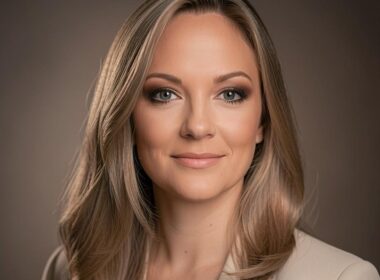
Diana Weymar is an artist and activist. She grew up in the wilderness of Northern British Columbia, studied creative writing at Princeton University, and worked in film in New York City.
She has worked on projects with Build Peace (in Nicosia, Bogota, Zurich, and Belfast), the Arts Council of Princeton, the Nantucket Atheneum, the W.E.B. Du Bois Center at UMass Amherst, the University of Puget Sound, The Zen Hospice Project (San Francisco), the Peddie School, Open Arts Space (Damascus, Syria), Trans Tipping Point Project (Victoria, BC), New York Textile Month, Textile Arts Center (Brooklyn, NY), The Wing (NYC and SF), and Alison Cornyn’s Incorrigibles project, as well as Syrian journalist and activist Mansour Omari. She is a judge / presenter for All Stitched Up at the University of Puget Sound. She has also curated exhibitions at the Princeton, NJ headquarters of Fortune 500 company, NRG Energy, and exhibits for the Arts Council of Princeton.
Diana is the creator and curator of Interwoven Stories and The Tiny Pricks Project, both of which are open for public participation. Her work has been exhibited and collected in the United States and Canada.

Episode Summary
In this engaging conversation, Diana Weymar discusses her artistic journey, the impact of political climates on her work, and the role of artists in society. She reflects on her experiences with the Tiny Pricks Project, a platform for political expression through textile art, and the challenges of navigating social media as an artist. The discussion delves into themes of grief, community, and the responsibility artists have in addressing contemporary issues. Diana emphasises the importance of personal expression in art and the legacy it leaves behind.
Key Takeaways
- Diana Weymar’s work is deeply influenced by her experiences growing up in two countries.
- The political climate significantly impacts artists and their work.
- Art can serve as a tool for activism and social change.
- Navigating social media is a complex challenge for artists today.
- Grief can be a powerful motivator in artistic expression.
- Artists have a responsibility to engage with their audience thoughtfully.
- The creative process involves both personal and political elements.
- Community involvement is crucial in projects like Tiny Pricks Project.
- Art can document the passage of time and societal changes.
- Legacy is an important consideration for artists in their work.
Notable Quotes:
“You can’t keep yourself on high alert indefinitely because if you are, it’s no longer a high alert—it just becomes a permanent state of being.”
“I’m more afraid of hurting someone or being ignorant than I am of getting hate.”
“If I can explain a piece to my family and feel okay about that conversation, then I can post it for the world.”
“When I take something really big and make it really small, like one stitched handkerchief, that’s where the work feels right.”
“You have to trust the process. You don’t know what’s coming next, but when you know, you know—and that moment makes it worth it.”
Charuka Arora is the founder of the Arts to Hearts Project and Host of the Arts to Hearts Podcast. She is also an acclaimed Indian artist known for her contemporary embellished paintings. Her unique blend of gouache, collage, embroidery, painting, and drawing explores the intersection of art, culture, heritage, and womanhood. Through her work, she tells stories of female strength and encapsulates them in pieces that can be treasured for generations.
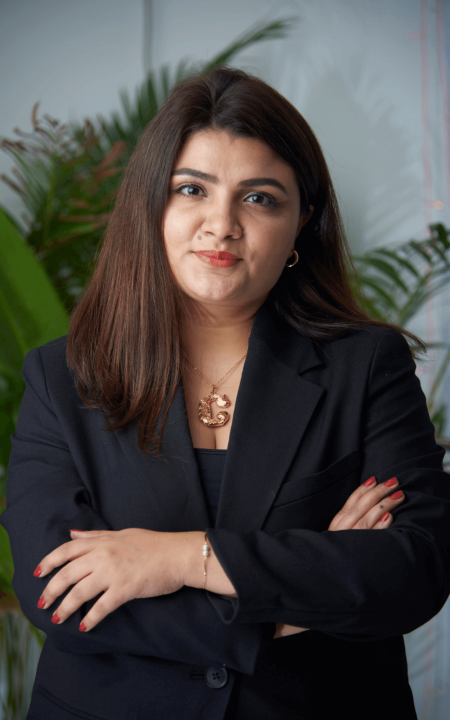
Charuka’s work draws inspiration from Hindu mythology, recognizing women as vessels of Shakti, the cosmic energy. She beautifully portrays powerful goddesses like Durga Maa riding a tiger or lion, symbolizing their unlimited power to protect virtue and combat evil.
Through her art, Charuka invites us into the world of women, showcasing their beauty, strength, and resilience. Her creations not only exhibit exceptional talent but also serve as an inspiration and a symbol of hope for those challenging societal norms.
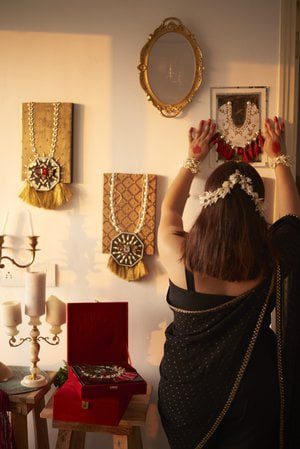
Arts to Hearts Podcast is a show delving into the lives and passions of renowned artists. From running creative businesses and studio art practices to cultivating a successful mindset, Charuka Arora engages in heartfelt conversations with her guests. Experience your personal happy hour with your favorite artists right in your studio.
Through candid discussions, Charuka and her guests reveal the joys and challenges of a vibrant creative life, both within and beyond our studios. Get ready to be inspired and uplifted as you tune in.
Charuka sat down with Diana Weymar for a wide-ranging talk about making work that speaks to the world we live in. From the first hello, they leaned into the messy mix of art, public life, and the push and pull of saying what matters.

From memory textiles to a global stitch
Diana grew up between the United States and Canada, in a family that left the U.S. in 1970 for aesthetic, personal, and political reasons. Long before headlines entered her studio, she was making what she calls memory textiles, turning old fabrics into material records. Then came the Trump years. She started stitching Trump quotes daily, and invited others to do the same. The Tiny Pricks Project swelled to thousands of pieces because it was simple to join, affordable to try, and very clear about its aim. Looking back, she says that period felt direct in a way that is harder to find now.
If I can explain a piece to my family and feel okay about that conversation, then I can post it for the world.
Diana Weymar- Arts to Hearts podcast s05e15

When the protest gets complicated and quiet
Today, the stage feels bigger and less clear. You might want peace or a two-state future, but not the way it gets there. During and after the pandemic, and amid wars and shifting politics, Diana moved toward a different kind of post. She stitches lines from writers, poets, musicians, actors, and nature. To her, that is still a stance. After years of daily outrage stitching, she needed language that steadies. The grief of losing a parent ran through this part of the talk. Both she and Charuka described how loss changes how you read everything else, and how social media has become a place where people gather around a life, a line, or a memory when someone dies.
“I’m more afraid of hurting someone or being ignorant than I am of getting hate.
Diana Weymar- Arts to Hearts podcast s05e15

Choosing what to stitch and living with the comments
Diana worries less about hate than about causing harm through haste or half-knowledge. The Gaza war made this plain. The same post could prompt thanks from one person and an unfollow from another. She tries to be careful with reposts to avoid losing sources, steps in when comments turn into attacks, and accepts that her absence can upset people who expect her to cover every significant event. Her posting test is simple. If she can explain a piece to her husband and four kids and feel comfortable with the conversation, she shares it. Process-wise, she speed stitches while listening to podcasts, babysits a post for twenty minutes to catch junk or bad faith replies, then lets it go. One example they dug into was a Molly Jong Fast line about whether you can pre-grieve a parent. The thread filled with stories that landed on both sides, showing how a short sentence on cloth can hold many readings.
You can’t keep yourself on high alert indefinitely because if you are, it’s no longer a high alert—it just becomes a permanent state of being.
Diana Weymar- Arts to Hearts podcast s05e15

The small square, the big world, and the people who join in
Diana likes the scale game. A five-by-five handkerchief can hold a giant topic, and a small quote can grow as people share it. Followers send her blank textiles, stitch their own contributions, and pass along lines they hope to see in thread. She now posts community pieces in groups while keeping a daily flow on her feed. Seeing the actual textiles matters too. Shows bring the work back to bodies and rooms. She is also blunt about how fragile our feeds are. We do not own them, and they can vanish, which is why the physical collection and books matter. In the studio, she keeps stacks of handkerchiefs. Most days, she flips through them without a plan. Then a line meets a fabric, and the decision is made. After that, it is craft, care, a photo, and a post.
When I take something really big and make it really small, like one stitched handkerchief, that’s where the work feels right.
Diana Weymar- Arts to Hearts podcast s05e15

Where to follow and what to read next
If you want more, look for Crafting a Better World, Diana’s book that gathers creative interventions across personal life and the climate crisis. For the ongoing stream, head to the Tiny Pricks Project on Instagram. That is where the quotes keep landing in the thread, one square at a time, as the news keeps moving.
As the conversation wrapped up, Charuka and Diana left listeners with a lot to think about. Diana’s way of talking about art shows you that creating doesn’t always have to be loud to matter. Sometimes it’s about showing up every day, paying attention, and letting small actions speak for themselves. Her stitching has become a way to process everything happening around her — a mix of protest, care, and quiet reflection.
If this episode made you stop and think, see more of Diana’s work on Instagram at the Tiny Pricks Project. Each stitched quote feels like a moment in time, captured with care and curiosity. You can also read her book Crafting a Better World to learn more about how people everywhere are finding creative ways to respond to the world they live in.
Keep listening to the Arts to Hearts Project podcast for more honest and thoughtful conversations with artists who are shaping how we see and talk about our times.
Click here to read more about the Arts to Hearts Podcast and its episodes.
Listen to this & other episodes on
How Artist Sarah Fishbein Turns 1950s Romance Comics into Modern Paintings
Inside Susie Sprinkel’s Art Stories Woven with Fabric and Thread
How The Restless Creative Anita Clipston Turns Trauma into Art
Inside Radhika Gupta-Buckley’s Creative Journey with Indian Roots