
Why Is It So Hard To Trust Intuition in Art? I Fabian Kindermann

At Arts to Hearts Project, we believe that art begins where words fall short where emotions, tensions, and fragments of the inner world find form in colour, texture, and rhythm.
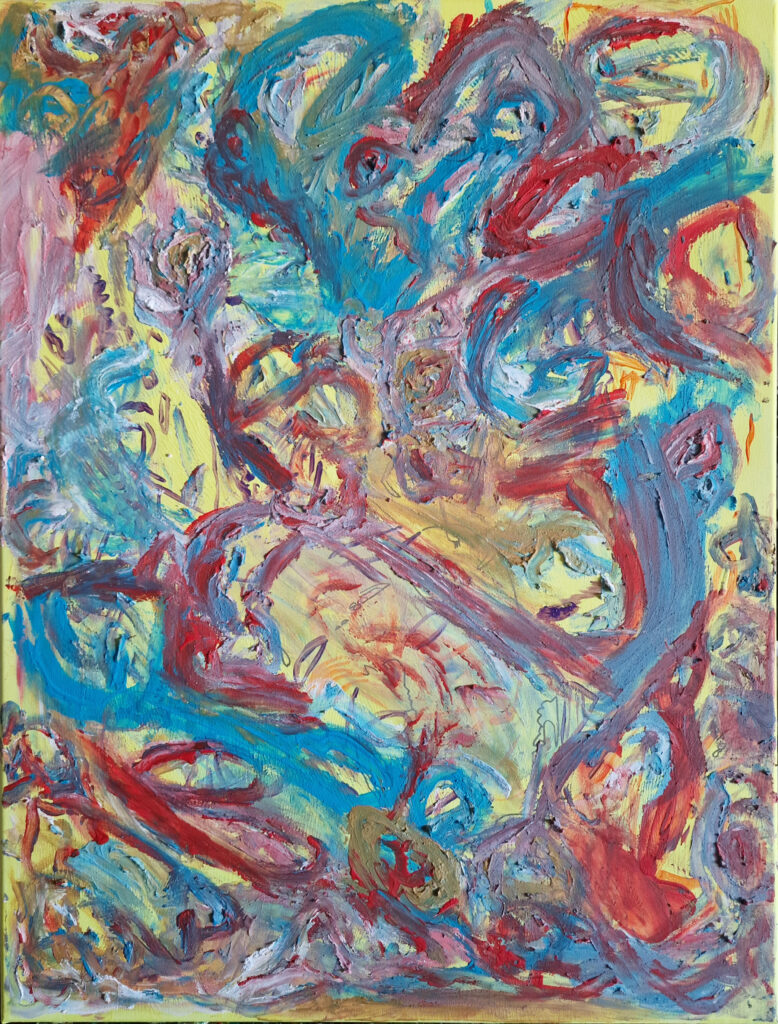
This month, we turn our spotlight to Fabian Kindermann whose practice is as raw as it is revealing. His work moves between chaos and calm, balance and rupture paintings that seem to breathe with their own pulse. Each canvas becomes a psychological map, born not from rigid plans but from intuition, risk, and surrender.
For Fabian, painting is more than creation it is transformation. Restlessness becomes rhythm. Anxiety becomes depth. Silence becomes presence. In every brushstroke and handprint, there is a story of letting go, of listening to what the work itself demands, and of finding beauty in the unexpected.
In this interview, Fabian opens up about trusting intuition, taking risks, and allowing mistakes to become part of the process. His journey is a reminder that art doesn’t always need to be perfect it just needs to be honest.
Let’s get into his interview and know more about him, his art, and his journey.
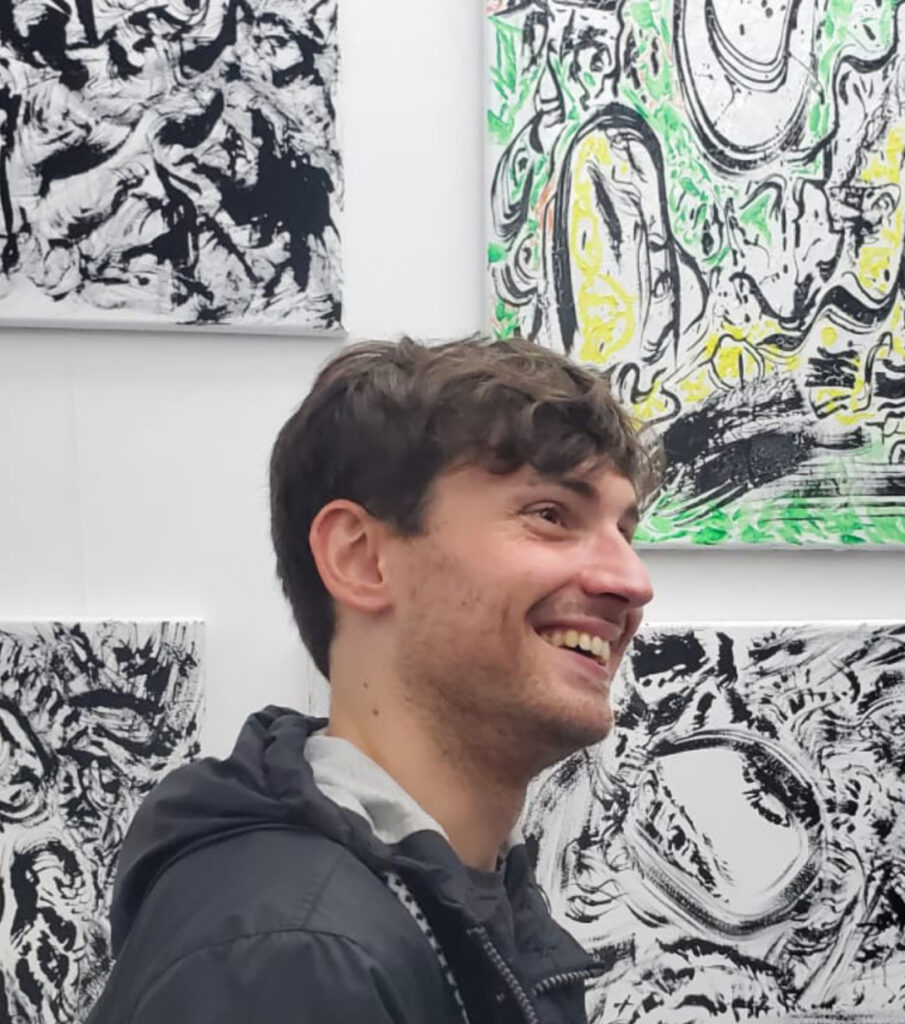
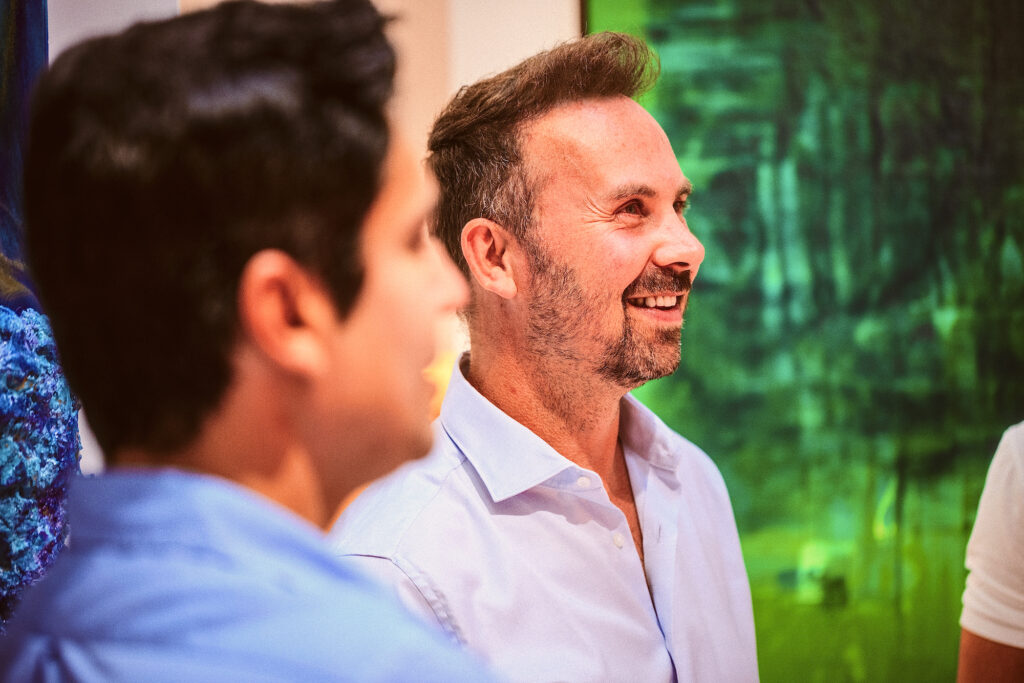
Fabian Kindermann
I started painting at the end of 2021, with no formal training just a need to try something new. At first, it was simply a way to balance my busy professional life, but very quickly, it became something I couldn’t live without. I realized my best work came when I stopped overthinking and just followed my instincts.
Coming from a background in business and real estate management, I was used to structure and planning. Painting gave me the opposite a space to slow down, to trust my feelings, and to let the subconscious speak. Abstract and intuitive painting became my way of expressing emotions that I couldn’t put into words.
When I paint, I work through tension, restlessness, or deep focus. The act of painting transforms those feelings anxiety becomes rhythm, emptiness becomes layers. A painting feels finished when it stops letting me work on it, when I sense that adding anything more would break its balance.
Over time, my work has changed. It used to be very raw and full of energy, but now I focus on building layers and textures slowly, letting faces and shapes appear naturally in the process.
For me, art is about making the invisible visible. It’s about allowing surprise, curiosity, and even imperfection to be part of the process. Each painting is a snapshot of how I was feeling, a way to connect with myself and hopefully with others who see it.
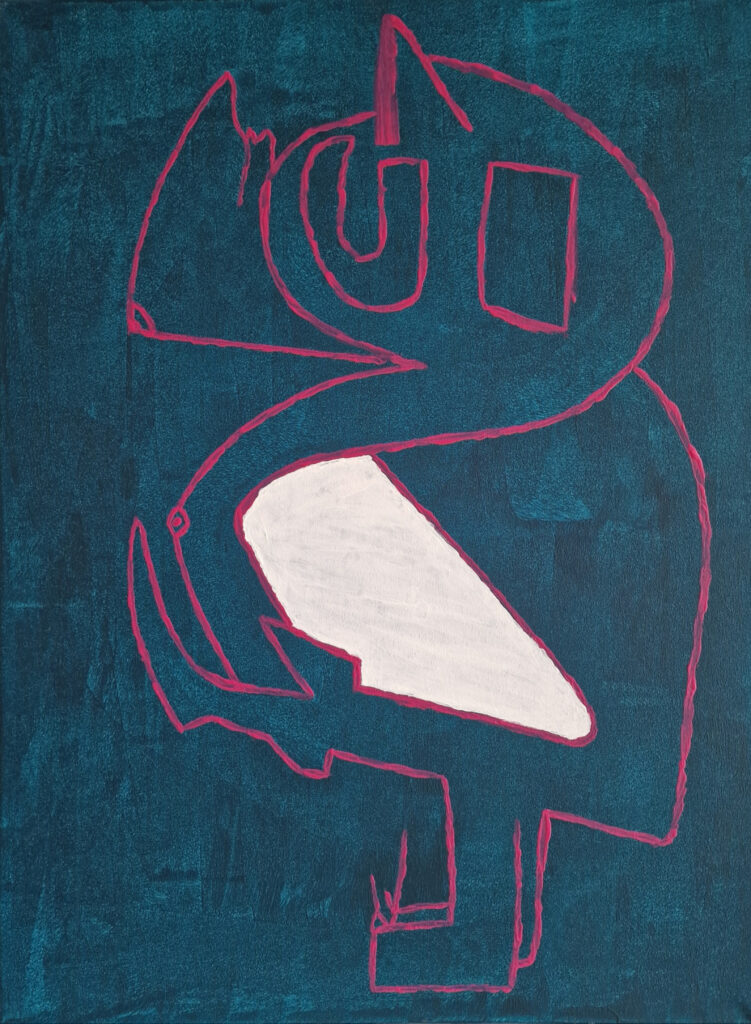
1. Your work oscillates between chaos and rhythm, presence and absence, surface and depth. How do you decide when a piece has found the right balance and is finished?
A work feels finished when it begins to resist me. At some point, I sense that adding more would break its fragile balance. Often, a single gesture—sometimes a handprint, sometimes a fragment of color locks the painting in place. It’s less a rational decision than a moment of recognition, when the work tells me it’s complete.
Q2. In your self-organised solo exhibition in Vienna, The Unconscious Loves Surprises, what story did you want visitors to walk away with? Why did you choose to self-organise this show?
The exhibition was about making the invisible visible—the way faces, symbols, and fragments appear when you least expect them. I wanted visitors to experience surprise, curiosity, even unease, as if the works were alive and shifting. I chose to self-organise because it gave me complete freedom: no filters, no compromises, just a raw dialogue between the paintings and the audience.
Q3. Many artists talk about an emotional or psychological state when working what feelings or inner landscapes guide your intuitive painting
I often paint in states of tension, restlessness, or deep focus. The act of painting transforms these states—turning anxiety into rhythm, emptiness into layers. My inner landscapes are fragmented, sometimes chaotic, but painting gives them coherence. In this way, each work becomes a form of psychological cartography.
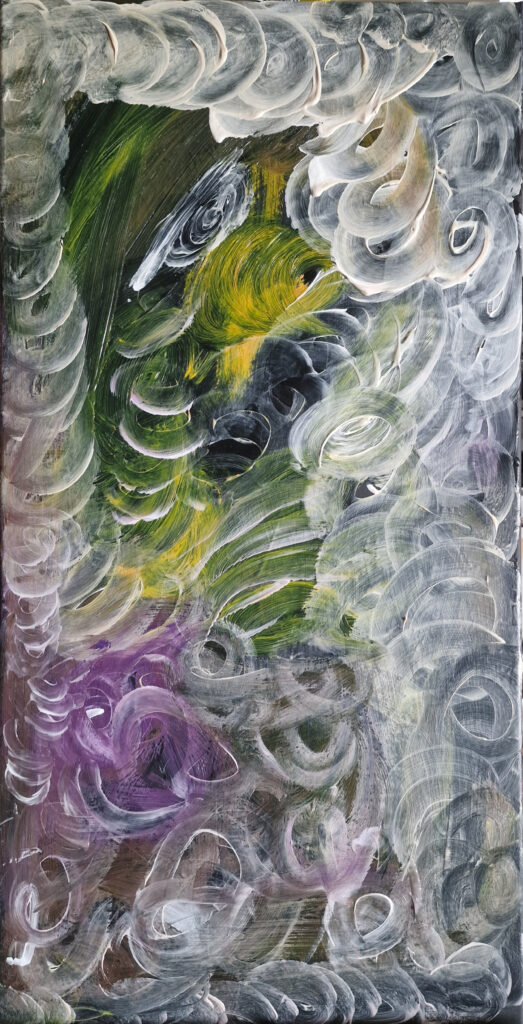
Q4. As someone working with abstract and intuitive expression, have there been shifts in your process or vision over time? What evolution have you noticed in your approach?”
Yes—early on, my works were very raw, gestural, almost explosions of energy. Over time, I’ve embraced layering and texture, allowing paintings to build slowly, sometimes over weeks. I’ve also begun to consciously integrate pareidolia, letting hidden figures emerge as part of the process. The evolution has been toward more depth and complexity, while keeping spontaneity alive.
Q5. Your series Chronogramme appears in your recent presentation. What defines a “Chronogramme” for you, and how does this series differ from your standalone works?
A Chronogramme is a psychological timestamp—one painting per day, capturing the unconscious in that specific moment. Unlike my larger standalone works, which can unfold over weeks, Chronogramme paintings are immediate, raw, and less filtered. Together, they form a diary of inner states, almost like an atlas of the unconscious.
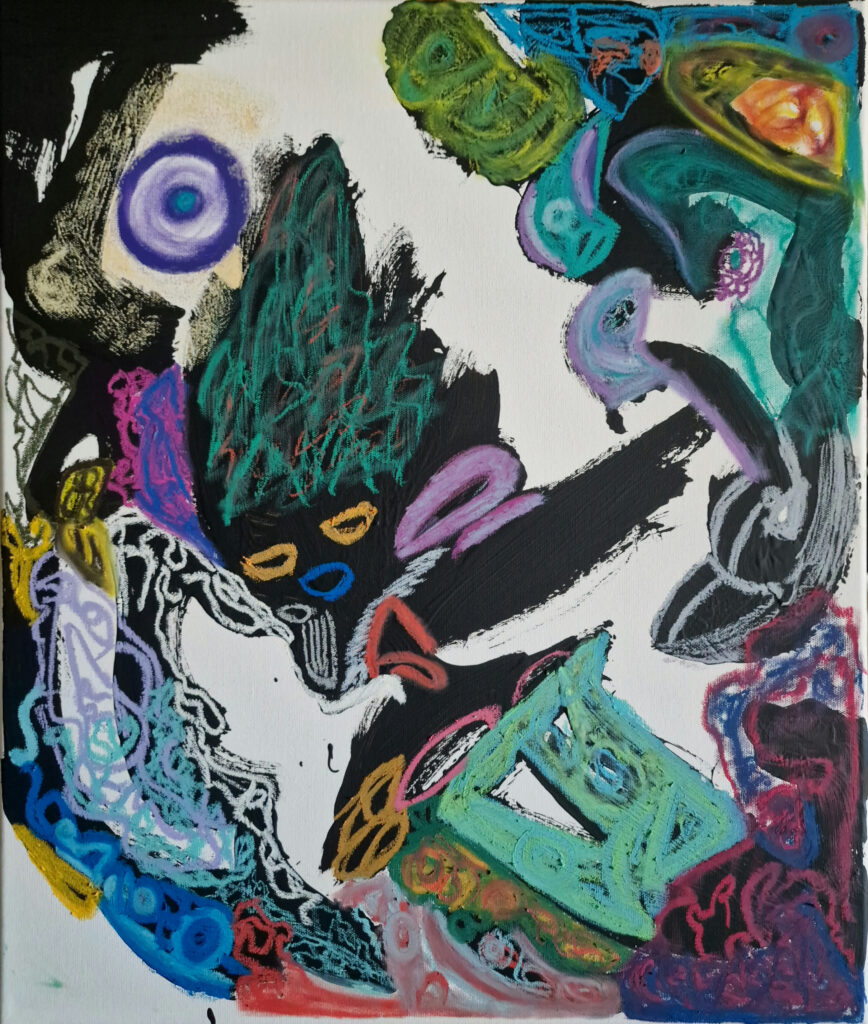
Q6.Can you share an example of a painting where an unexpected detail shifted the direction or feeling of the piece?
Yes—often, a small, unplanned mark changes everything. In one painting, a fragment suddenly resembled a face with an open mouth. That single detail shifted the entire work into a dialogue with figures and voices. I hadn’t planned it, but the painting demanded that I follow its lead.
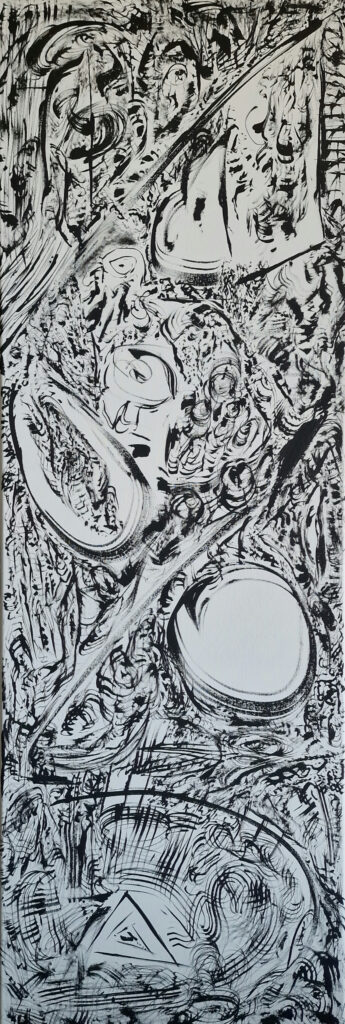
Q7. Looking back, which risk in the studio most changed your practice and what did you learn from the failure or breakthrough that followed?
One risk was painting directly with my hands on the canvas. At first it felt almost destructive, but it opened a new sense of physicality. The failure was losing control; the breakthrough was discovering textures and forms that brushes could never create. It taught me to trust the body itself as an instrument of painting.
Q8. What advice would you give to emerging artists who are still searching for their voice both in their art and in how they share it with the world?
Don’t chase trends. Your voice is already there—it reveals itself when you allow mistakes, intuition, and vulnerability into the work. Share honestly, even if it feels raw or unfinished. Authenticity will always speak louder than perfection.
Q9. Congratulations on being featured as an Art Star by The Arts to Hearts Project! What does a recognition like this mean to you personally, and how do you feel it supports or impacts your growth as an artist?
It means a lot—it tells me that the raw, instinctive approach I trust is being seen and valued. Recognition brings visibility, but more importantly, it creates dialogue. It connects me with a larger community of artists and curators, supporting both growth and the courage to keep experimenting.
Fabian’s journey is a reminder that art doesn’t always begin with a plan, sometimes it begins with a quiet moment of curiosity and the courage to trust yourself. His paintings are more than abstract forms; they are reflections of his inner world, turning tension into rhythm and silence into colour.
Through his work, Fabian invites us to pause, to look closer, and to find meaning in the unexpected. Each piece holds a piece of emotion, a trace of a day, a snapshot of the subconscious offering viewers not just something to see, but something to feel.
As he continues to explore layering, texture, and the beauty of intuitive creation, Fabian shows us that art is a living process, one that evolves as we do. His canvases are not just finished works, but conversations, moments of connection, and reminders that even in chaos, there is always balanced to be found.
Follow Fabian’s journey and step into his world through the link below.