
Watch & Listen to this podcast Episode.
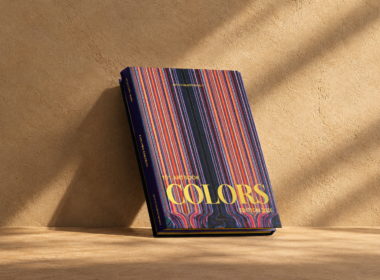
In this episode of the Arts to Hearts Project podcast, host Charuka Arora introduces us to Polish painter Monika Marcheska, the artist whose artwork shines on the cover of our new book, The Power of She.
Charuka begins by sharing the story behind Monika’s sparkling cover and why it felt like the perfect fit, before moving into a warm and honest conversation about what it means to dedicate your life to painting. Monika opens up about her creative journey, including her studies in art, her work on the film Loving Vincent, and her eventual decision to pursue painting full-time.
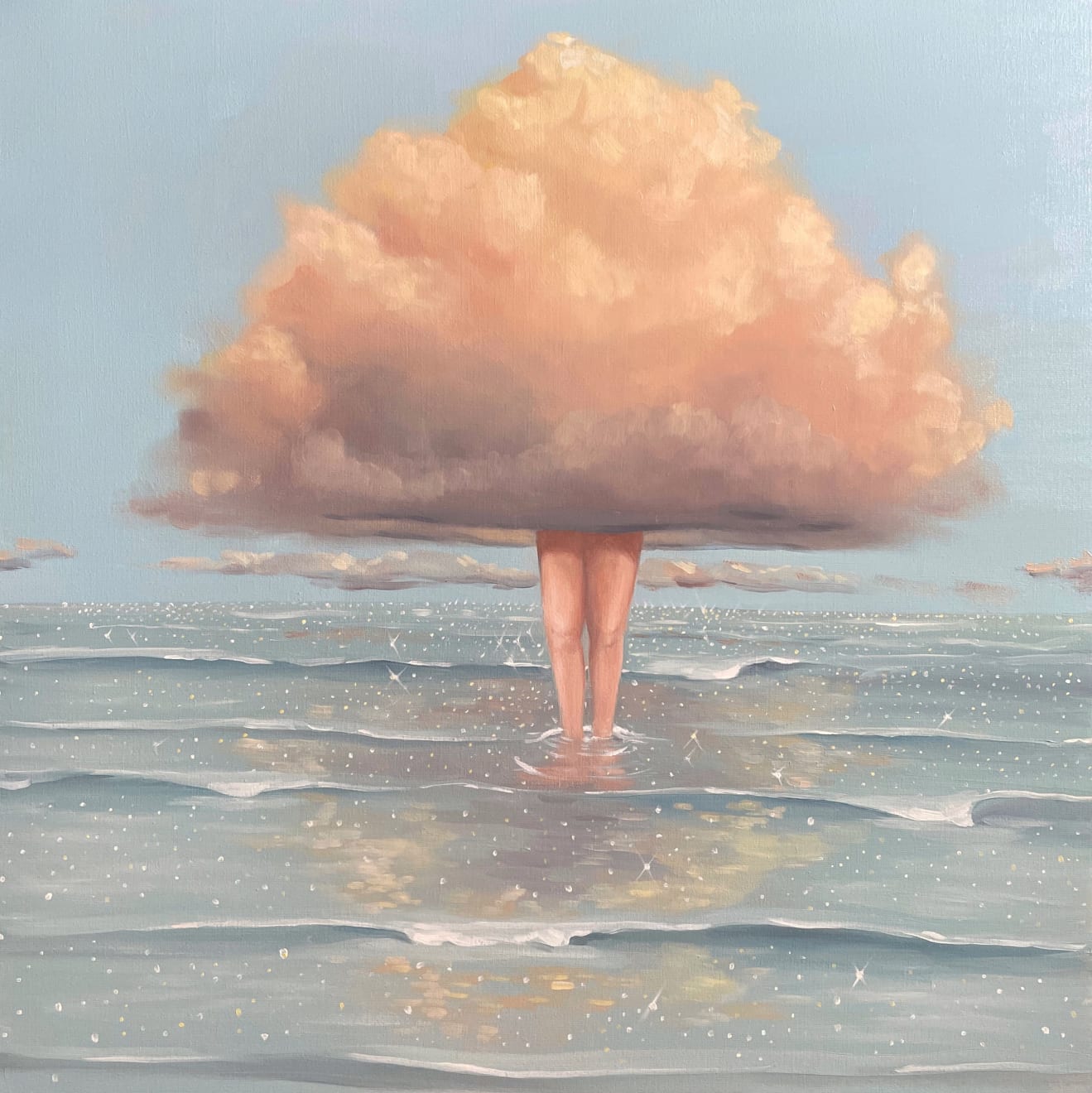
She talks about the stories and emotions behind her cover works, “Happy Tears” and “After a Swim,” her love of sea imagery, and the way curiosity leads her process. At the same time, she doesn’t shy away from the challenges many artists face, such as burnout, the constant pressure of social media, and the guilt of feeling like she isn’t doing enough. Through it all, Monika shares gentle reminders about the importance of patience, following what excites you, and allowing each painting to teach you something new.
This conversation is equal parts inspiring and practical, offering takeaways that any creative person can apply to their own journey.
This set effectively summarizes and segments the detailed content of the interview into easily navigable chapters for viewers.
Chapters
00:00 Introduction and Artistic Journey
02:46 Inspiration Behind the Art
05:22 Exploring Themes and Personal Connection
08:26 The Influence of Environment on Art
11:24 Finding Authenticity in Artistic Expression
14:23 Challenges and Struggles as an Artist
17:10 Navigating Social Media as an Artist
20:08 Skills for Artistic Growth
22:56 Defining Success as an Artist
25:46 Conclusion and Future Aspirations
Charuka (00:00.089)
com.
Sorry again, Marchesca.
Monika (00:04.923)
Marcheska.
Charuka (00:09.578)
Marhas… Marhaska.
Monika (00:12.056)
Yeah, yeah, yeah, more or less, yes. It sounds very good,
Charuka (00:14.443)
Okay, it’s it’s it may be I don’t know. So I will just please forgive me if I you know. Okay, welcome to the podcast Monica I’m very very happy to have you.
Monika (00:20.621)
No, it’s fine, it’s fine.
Monika (00:27.446)
Hi. I’m sorry, I just stress because you’re recording now. Hi. Hi, everyone.
Charuka (00:35.162)
Let me see. Yeah. Okay. So welcome. Welcome. We’re very excited. It’s been a few hidden there, but we’re here. I’m very excited to bring you on the podcast because this isn’t something only about chatting, but you’re also even special because we have you on the cover of The Power of She, a publication we’ve recently released. And to be very honest, I say this often, but
Truly, this is one of my favorite books. The cover is so stunning. It’s a glitter, star case paper with your work on front and back. And it looks absolutely gorgeous, absolutely gorgeous. So big, congratulations on being on the cover. Thank you for sharing your work with us. We are so, so grateful. And to be able to share this with the world is an honor.
Monika (01:21.177)
Thank you.
Monika (01:27.823)
Thank you so much. I mean, I should thank you because you just need to be on the cover. So thank you so much.
Charuka (01:36.566)
Okay, Manika, tell us a little bit about yourself and then we’ll talk about your work, etc. But take us through your journey of being an artist. How did you land up being an artist? Where are you joining us from right now also?
Monika (01:50.671)
I think I was an artist for my life actually, because since I remember I was always like, you don’t hear me?
Charuka (02:01.302)
Yeah, I can hear you.
Monika (02:02.857)
Okay, I’m sorry. So yeah, so I’m an artist that saved for all my life. All of this, I felt like an artist. Yeah, but then like, you know, I just went to Academy, finished Academy of Fine Arts in Krakow and then I started working as an animator. was a part of the movie Loving Vincent and I was a painter there, an animator.
But I still like working on my own pieces. I don’t know, it’s just like, I just paint all my life. Then I quit my job because I decided to like be proper painter because you know, I need to paint more. If I want to be like, you know, artist, like 100 % artist, I need to paint more and I need to…
time for that so I can’t work. So I quit my job, which was a bit of a mistake at the beginning. I was a supervisor in a movie studio. was working with animators. So let’s say I may not teach them the fixed word. I tried to correct their mistakes in animation.
Charuka (03:08.577)
What kind of job were you into?
Charuka (03:18.486)
Okay.
Monika (03:29.839)
in painting animation. But yeah, I’m too old for that, I think. I decided just to focus on my own career. And then I met, not in person, I Adele from Artisztal Gallery and I’m here right now after that.
Charuka (03:55.821)
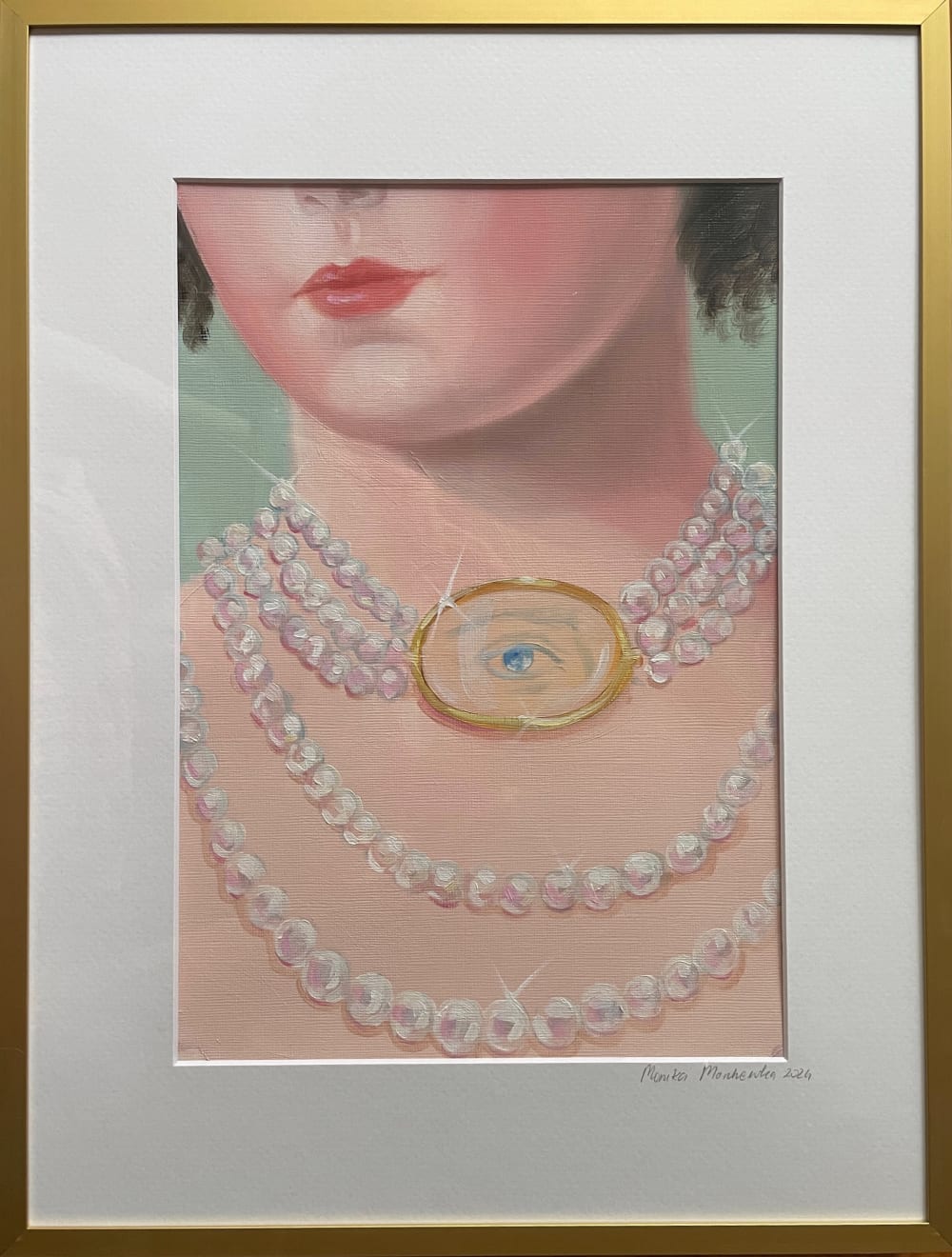
Tell me something, what is that really inspires you? You know, what we have on the cover is a gorgeous face of a woman with a big droplet of tear and there’s another real whole world in it. And then on the back we have a very, very fascinating work, which is again a face of a woman with a hand on the cheek and
This one feels very sensual and like there’s like this charisma and the first one on the cover that feels like there’s almost pain in it. So can you talk about why these women are you often interested in painting portraits, women faces, particularly about these pieces? What do you want to share with us?
Monika (04:53.901)
Actually, what inspires me is like a very hard question actually, because I can’t say that everything inspires me. But I think I have lots of questions to myself. And I have like, I’m very curious how the painting would look at the end. So this is my inspiration, just curiosity.
Charuka (05:22.517)
Okay.
Monika (05:23.533)
But most of the time I’m just thinking how can I put my state of mind into the painting or maybe my memories or my dreams, how it would look on canvas. And this question is enough for me and then I just try to put my thoughts on in those pieces.
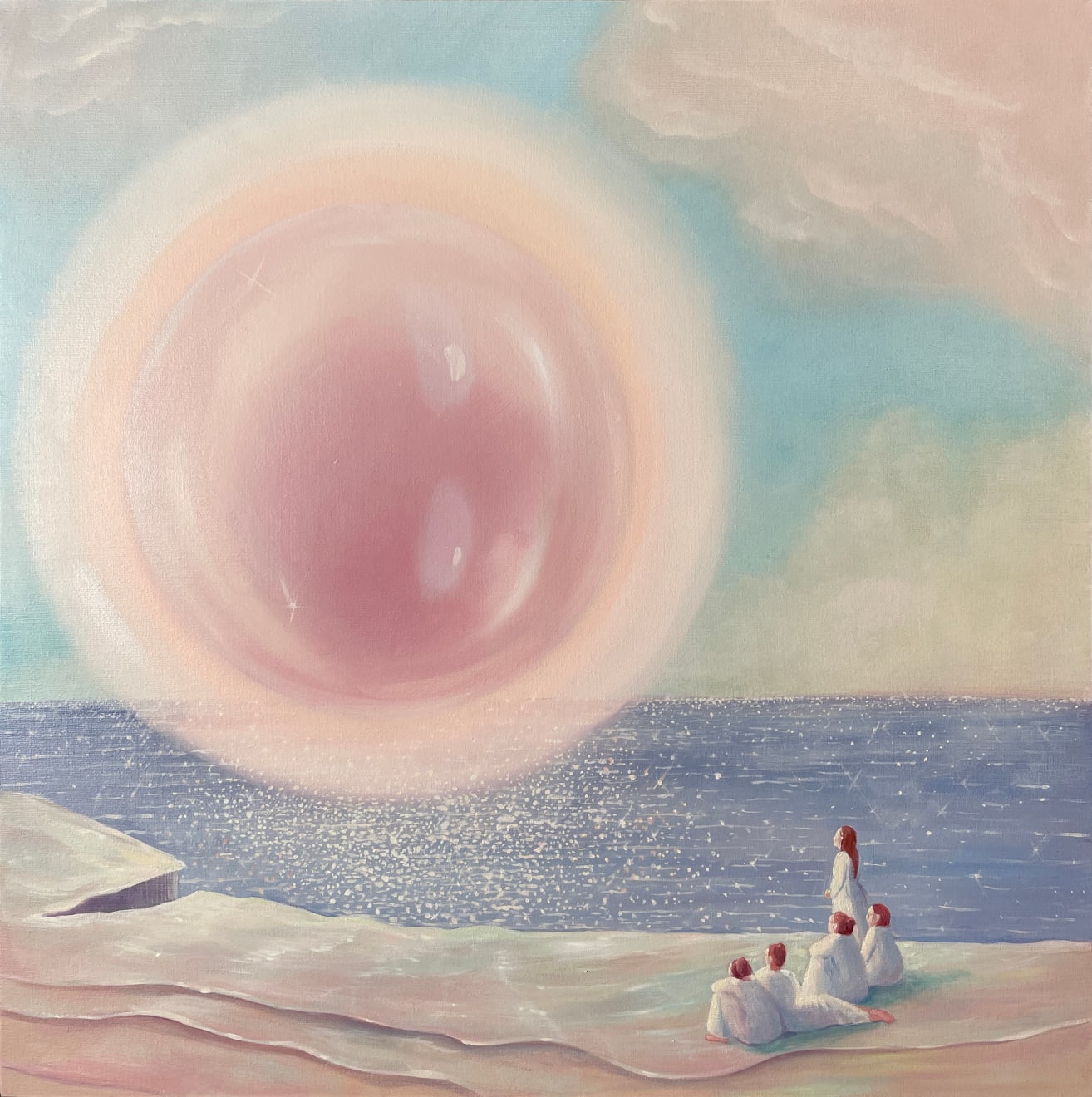
And yeah, and I try not to be very straight in this. I would like to use metaphors. It’s more interesting for me because at the very beginning, you have just beautiful face and beautiful landscape of the seaside. But when you look deeper in that, you can see that this is something more than just beautiful face and sparkles. And this is my…
Charuka (06:15.276)
Yeah.
Monika (06:19.681)
This is what inspires me just to make this kind of dialogue with the audience, with myself actually, because I don’t know how the painting will end. Yeah, so let’s say connection dialogues and curiosity is my inspiration in general.
Charuka (06:39.293)
Let’s say what was going about, can you give us some behind the scenes, some context to what these pieces mean to you? What was the thought behind it? Were you trying to say something? Anything around that.
Monika (06:51.009)
with those two paintings on the covers. Yeah, so the back cover with the hands. The title is Happy Tears. And for me, when you look at this painting, you see that her tears actually turn up to the hands, and these hands comfort her. you know, tears, every tear, I think, more or
most of the tears are good, even if you are crying because you are sad, after this cry you are going to be lighter. And of course happy tears, like every happy tear is good when you cry from happiness. Yeah, and the first one is like the memories. What’s the title?
Charuka (07:28.382)
Feel better. Yeah.
Monika (07:47.85)
After a swim, yes. After the long swim, it’s like after the very long journey, you have like splash on your face. So you’re like tired of your journey in general. And it’s like memories, what you’ve been through, which is, yes, you’re very tired after this whole trip, but it was worth it. yeah, that’s the painting.
Charuka (07:48.051)
I don’t remember.
Charuka (08:00.028)
Yeah.
Charuka (08:05.948)
Did ya?
Charuka (08:15.339)
What’s your obsession with sea and this mystical? have this like, you have a very specific style. have this pastel. I also see that style also transforms back, like behind you in the background, like this really pastel pink, flows, water, ocean, those sparkling, like there’s also mermaids and like the sea creatures, there’s seashells. What’s your world within this? Why are you here?
Monika (08:38.635)
Hmm.
Monika (08:45.324)
most of all, because I live on the seaside right now and before that I was living.
Charuka (08:50.601)
Would you fascinate that that’s how it translates?
Monika (08:54.858)
Excuse me what?
Charuka (08:56.819)
Do you fascinate about these things like, know, like a life at the sea or like,
Monika (08:59.299)
Hey
Monika (09:03.409)
Yeah, yeah, yeah, yeah, because I was raised in the mountains, like I’m that back there because that way in Poland, we have mountains. And then I moved to the exact opposite side of the country, is the sea. And it’s always fascinated me. I live here for 10 years now. And every time when I go to the seaside, I’m like fascinated. When I see this blue line, I’m like, my God.
I’m here and I can’t believe it. I don’t know, it’s like… Actually, I don’t know, every time when I’m there, it’s something beautiful going on. Even if the water is flat, it’s still beautiful. When it’s like sparking water everywhere, it’s also beautiful. And it’s very mysterious. You don’t know what’s in the depths, you know. And of course, all those stories when I was a child, like…
Little Mermaid, whatever. I remember how I felt when I was a kid watching Little Mermaid and I think I’m very old right now and I still feel the same feeling when I look at the sea. Yeah, I think it’s still in me, know, that this little girl who was watching stories about under the sea, fairy tales.
Charuka (10:14.514)
I’m going to.
Charuka (10:26.078)
Hmm.
Charuka (10:29.747)
So the thought that all the stories you would tell yourself as a child, that those have started to translate in your work as images and figures and colors.
Monika (10:39.839)
Yeah, yeah, yeah. This is amazing because before that I was painting quite dark paintings. And when I started working with Artista Gallery, I freed myself and I started to pink, blue, you know, you saw my work. And it’s like I was free like this little mermaid.
And I could paint whatever I want. And I was like, okay, so let’s go back to the little Monica and let’s paint what she wanted to paint when she was a kid and when she was at school. And all professors told her, no, need to use brown colors and sad topics. Yeah. So now I can paint whatever I want. It’s like very free.
Charuka (11:28.231)
Yeah. But what was your journey like arriving at this point where your work feels very authentic to you? It feels cohesive, but it does not feel forced. How has you, I think a lot of artists specifically struggle and it’s not only in the beginning, but often time and again, we keep coming back to the idea that, is this really what I want to paint or what I want to share or want to create?
How have you figured your style over the years?
Monika (12:05.54)
That’s a very hard question actually. Listen, I think you just need to paint. Just, yeah, that’s a very simple answer for that. Every work that you are doing is good. And that’s the answer for that. Every work is a journey. So you have to go through everything. Through bad painting, I mean bad paintings. Every painting is good, like I said.
Because you learn on every piece you are working, you are learning something. And I remember when I was trying to paint something absolutely different, like three years ago, I was trying to paint very dark, mystic painting. And I just, I don’t know how I did it, but I just tried to do the sparkles, you know, on the water. And I was like, this is amazing. Now I have to do another one with the sparkles.
Okay, okay, okay. So now I know how to paint sparkles. Let’s add some more things. And that’s the whole point. Like I said, curiosity and maybe brave. Like just try to be a kid for a moment and just like explore what you want to say, how you want to say. I mean, I paint lots of paintings that I destroy or like repaint.
And after that, you know, bad painting, I have like, know, ideas for another one. just paint. I know it’s not that very smart sentence, but yeah, it’s just paint, whatever.
Charuka (13:53.959)
Okay, let’s talk about what you’ve struggled the most yourself as an artist with that you would want to share, you know, if some it could help someone else. What’s your what’s been your biggest struggle while navigating your career as an artist yourself?
Monika (14:08.743)
I think the most struggle is that I’m not doing enough and I should paint more, which is not true. mean, there are moments when you are not able to paint more. You have to rest. You have to like watch movies. Maybe you have to watch Little Mermaid. Maybe you have to watch very smart movies. whatever. You have to read books or you have to do just nothing. Because, you know, you can…
Charuka (14:15.697)
Yeah.
Charuka (14:34.149)
You have to live life.
Monika (14:35.689)
Yeah, yes, exactly. Because maybe there are a few weeks when you are doing, let’s say, nothing. And after that, can paint like five paintings because your battery are full right now. So yeah, I struggle with this feeling, this guilty feeling of guilt that I’m not painting enough. And so I have to struggle with this and telling myself, Monika, you can rest today.
So every morning is like a battle between me and myself. Yeah, so basically I struggle with myself most of the time.
Charuka (15:17.934)
Okay, how does, can you take us to some, one of the most challenging projects you’ve created that has really pushed you as an artist?
Monika (15:31.688)
You have very good questions.
Monika (15:40.776)
Last year I have like five, three exhibitions and it was like, I was exhausted after that, like physically I was exhausted and also mentally and I’ve learned that I shouldn’t do that much projects in one year, let’s say. Yeah, and I have like, after that I felt…
quite bad because I felt empty after this because I paint like 20 paintings. Yeah, but after that I like have like a few months with, you know, feeling bad because I wasn’t painting. And now I’m doing actually, like let’s say I touched new project right now. No, not project, new topics.
Charuka (16:36.484)
Hmm.
Monika (16:39.378)
So it was challenging for me because I was working physically. But also after that, I started to looking for something new and fresh for me. yeah, so basically three exhibition in one year was my biggest challenge.
Charuka (16:56.892)
That was… Tell me something, how’s your relationship with social media as an artist? Does that drain you out, support you? What is it like?
Monika (17:13.703)
I think… another good question. Listen, it’s amazing because of social media I’m here. I’m talking with you. Yeah, I found Artistella Gallery and she found me. So yeah, it was amazing. I love social media. But on the other hand, I compare myself too much with other artists.
Charuka (17:25.708)
Yeah, we found it.
Monika (17:42.415)
Of course, they are doing more, you know, classic story because you see like the results that you don’t see how they struggle. So, yeah. But I think now I just I don’t know how I did it, but I’m using Instagram a bit less than I used to use. Yeah. And I feel much better, actually. Yeah, with this.
Charuka (18:03.832)
Okay.
Do it.
But is there any kind of guilt because a lot of us, there’s this constant trap that we often see like as much Instagram is available and important today, like, you we found you, we find a lot of artists by Instagram, we reach out to them. But it’s also a juggle because to be able to keep up with the rules, because today artists are not only expected to become artists, they’re also expected to create content.
Monika (18:20.123)
Mm-hmm.
Monika (18:35.59)
Mm.
Charuka (18:37.103)
some content creators and creating. think it also a lot of times being an artist myself, feel like it takes away the privacy, the sacredness, like, you know, just being by yourself, just creating, not worrying about if you have to document it or not. Do you have to photograph it? And feeling tossed between that you’re, you know, some days I feel like maybe you’re, making the work, but maybe I’m not because I’m not sharing it on Instagram because
Monika (18:48.464)
Mm.
Monika (18:51.782)
Mmm.
Monika (19:05.126)
Mm-hmm.
Charuka (19:05.144)
That’s how the cycle has been like now that, you lot of that validation comes from that. Am I posting enough? Are people looking enough? And that’s also become important because that’s where people are looking. Do you fall into this trap?
Monika (19:14.821)
Yeah.
Monika (19:19.846)
Yes, of course. I mean, yeah, it was like that, for sure. And exactly what you said, was my every day I felt like this. The worst part is when you show your work and you have like, like five likes and it’s like, okay, so it’s good or not.
Charuka (19:39.588)
Yeah, and the Instagram algorithm has been disastrous of late. Like, you know, we’ve built a whole community completely organically. And our reach has been compromised to the core. And it really hurts because it feels like, you know, you put so much of effort, so much of, you know, heart and soul into it, somebody just completely discards it and it’s completely gone because who’s looking now? Yet everybody’s looking, but nobody’s looking.
Monika (19:50.714)
Mm.
Monika (20:09.093)
Yeah, exactly. And also, everything is like, I mean, not everything, but most of the time, it’s like an accident. You you’re posting something, you’re like, okay, I will just post and it’s like going to be like viral. you’re playing some kind of game, but you don’t know the rules. And it’s like exhausting because it’s like gambling, know, one day it’s fine, one day it’s like
Charuka (20:30.03)
Yeah.
Monika (20:38.319)
terrible. So I think that, I don’t know, there is no cure for that. You just have to like maybe change your phone to Nokia 3310 or something like that because Instagram is a great tool, but you you just need to be careful with this. Or maybe you should like delete all the creators or something.
leave your friends and family and don’t look at artists. Actually it helped me because I create another account for my studio and I have like, yeah, so I don’t have painters there. I just look at people who are making some like crafts and stuff like that and it’s actually helped me because I’m not a crafty person and…
Charuka (21:17.354)
Charuka (21:29.678)
Yeah.
Monika (21:33.25)
I just watch it, watch it and I’m like, that’s amazing. And that’s it. I don’t have to compare myself with anyone. So maybe this is the solution. Just create another account with absolutely different things.
Charuka (21:39.395)
Yeah.
Yeah.
Charuka (21:45.407)
Yeah, No, that’s a good suggestion. Okay. What do you think is one of the most important skill sets one needs to have as an artist to be able to keep growing, to grow in their careers, to get started?
Monika (22:02.7)
I think we’ll start again with the gig.
Charuka (22:05.867)
I think what you think is one of the most important skill sets that today artists need to have in order to find success, be able to know, share their work, grow their careers.
Monika (22:18.564)
I think the most important skill is the patience. mean, everyone can be nervous right now, literally everyone. So if you just continue to do that, on one point it’s gonna be fine, I think, because you never know what’s to happen.
Charuka (22:23.689)
Hahaha.
Charuka (22:29.815)
Yeah. Yeah.
Monika (22:44.429)
Yeah, patience is like very important because you have to have patience to draw, paint, whatever. You have to have patience for that and patience for doing this every day or maybe every, you know, when you have maybe more than that. Yeah. And that’s it for me, for me, because, you know, I can say that I have skills of, you know, I can mix colors. I can paint that and this, but I can’t paint.
Like, I don’t know how to paint horse. Maybe I know, but I never painted horse. But you know, it doesn’t mean that I’m not a good artist. And someone who are painting horse are not like here right now with you, let’s say, you know. But you know, you just have to be patient and do what you are doing best. And at one point you’re going to reach whatever you want.
Charuka (23:19.891)
Yeah. Wonderful. Okay, last question. Okay. Okay.
Monika (23:45.892)
Hmm.
Charuka (23:49.555)
Where do you think, what is your aspiration? Let me frame it right. As an artist, I want to make it something that it’s a good goodbye. What do you think is your, what are you seeking as an artist? What is your success parameter? What does…
Monika (23:58.851)
I’m scared already.
Monika (24:08.067)
Mm.
Charuka (24:17.952)
success looked like to you if you say, no, know, this is exactly why I chose to be an artist. What does that look like for you?
Monika (24:26.851)
Oh my god, you’re like a therapist, I can’t. Oh.
Monika (24:34.084)
To be honest, I think I am a very successful person, painting, woman, whatever. I have literally everything what I wanted. I quit my job and I don’t have to work for anyone. I can paint whatever I want. I have studio, I have great brushes and very expensive tubes of paint. I have only two. But they were expensive.
Charuka (24:39.233)
Yeah.
Monika (25:05.517)
So basically I have everything what I always wanted to have. This is my dream come true. But of course you can have more. Yeah. So excuse me what?
Charuka (25:10.306)
you’ve made a dream come true. Yeah. But there’s also lot to be grateful for.
I am saying there is still, you know, it is good to be grateful.
Monika (25:21.473)
Yeah, yeah, yeah.
Yeah, think, I asked this kind of question to myself sometimes, like what I want more and I think maybe I would, I wish one day I could be on those great art fairs, know, maybe that’s the thing. Because there is like out of reach for me right now. So maybe if I…
get that kind of at first one day like in Miami or something. I don’t know, it sounds like but everything is possible. If I need to be patient, know, yes, yeah, so maybe that’s the goal but I think I’m quite happy person right now.
Charuka (26:04.445)
Every possible. Yeah. Yeah. Yeah.
Charuka (26:13.6)
Very nice. How does it feel to have something you’ve painted on the cover of a book and then that’s going to people in different parts of the world? How does that feeling feel like?
Monika (26:30.37)
It sounds surreal. I don’t believe you that it’s happening. I mean, you saw the book. I haven’t. And I think this is like, I can’t believe in this, really. And when I saw the picture of the spark, a sparkling cover, was like, well, I, it was, I can’t.
Charuka (26:47.937)
Oh, you have to hold it in your hand, I’m telling you. I have it with me. I thought by now you should have had it. international logistics is beyond us. But it’s one of the best. think your work spoke so well. I just feel like it’s just the cover will blow you up. I mean, it’s just so stunning. The work is so stunning.
Monika (26:51.841)
Yeah.
Monika (26:58.847)
Yeah, exactly. Yeah.
Monika (27:11.572)
Charuka (27:14.665)
it like the sparkle adds such a good layer to the whole painting and I’m sure like you know when you hold it make sure you send a video or image share with us
Monika (27:22.375)
Yeah, of course. Yes, yes, Yeah, because everything what’s happening in my career is going, is happening like out of my space, you know, like this book. I mean, it’s going to be in my head one day, but everything is like somewhere else. So I don’t, it’s like, Monica, who did that? I don’t know. So yeah, I’m really happy, but still I can’t believe in this. I mean, for me it’s like…
you’re joking that my paintings are on the cover and everyone can have it. yeah, it’s amazing, overwhelming, but still sounds surreal really.
Charuka (28:01.185)
Thank you so much, Monica. It was really nice talking to you. Thank you for sharing your work. Thank you for being on the cover, sharing your art with the world. And we’re very grateful. It’s a very special edition because it focuses on a lot of women having an artist, your story, your work on the cover has only added more value to the perspective. So thank you so much. I really appreciate this.
Monika (28:05.237)
Thank you.
Monika (28:20.31)
Hmm.
Monika (28:28.95)
Thank you.
Charuka (28:30.024)
Before I let you go, where can people find your support?
Monika (28:34.721)
where people can watch, I’m sorry.
Charuka (28:38.174)
find you and support you. Where can people find you on Instagram, websites.
Monika (28:45.171)
I’m sorry, can find me, yes?
Charuka (28:48.244)
Where can people find you and support you? Like how can people find you online?
Monika (28:52.309)
How? I’m sorry. Just, I mean, just I don’t know, just be there. I don’t know. I felt very supported already. just that’s enough for me. I mean, of course it could be more like shares, whatever, but I think I’m quite, you know, I feel very loved by people and
Yeah, I feel good with all my Instagram followers right now. So just keep doing what you are doing right now.
Charuka (29:31.327)
Perfect. Thank you so much. I’ll see you soon.
Monika (29:34.571)
Thank you so much. And I’m sorry for my headphones there. That was quite strange.
Charuka (29:39.697)
No, no, no problem.
.
About the Guest(s):
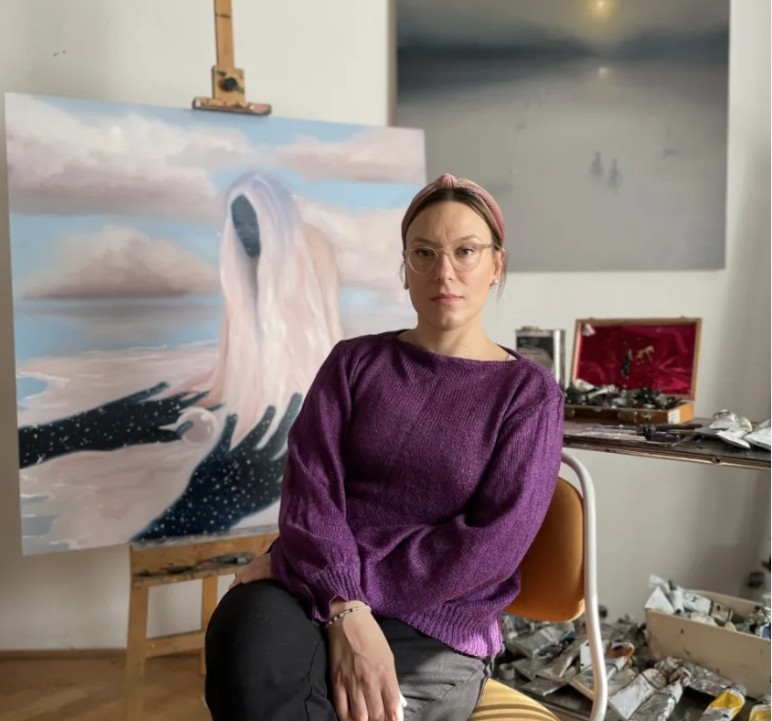
Monika Marchewka (b.1988) is a Polish artist living and working in Gdynia, Poland. In 2013, she obtained her degree in painting at the Jan Matejko Academy of Fine Arts in Krakow, Poland. After graduation, Monika started working as an animator in the world’s first fully painted film, ‘Loving Vincent’, and later ‘The Peasants’ (BreakThru films production company). Since leaving BreakThru films, she has been painting full-time.
Since 2022, she has been represented by Artistellar Gallery in London and has been exhibiting worldwide. Marchewka’s figurative paintings are surreal, dreamy, almost magical, yet somewhat haunted. Coming from a seaside city in Poland, the artist’s work is deeply connected to nature, particularly the sea. The imagery exudes a distinctly feminine feel, which represents Marchewka’s self-observation and research of womanhood in general. She captures the essence of longing, comfort, and apprehension through her surrealist compositions, articulating fear of the unknown and nostalgia for the familiar. Her recurring female characters are on a journey through dreamy settings towards something tangible, superior, or spiritual.

Episode Summary:
In this engaging conversation, artist Monika shares her journey from a lifelong passion for art to becoming a recognised painter. She discusses her inspirations, the themes in her work, and the challenges she faces as an artist, including the impact of social media on her creativity. Monika emphasises the importance of curiosity, patience, and authenticity in her artistic process, while also reflecting on her aspirations and the surreal experience of having her work featured on the cover of a publication.
Key Takeaways
- Monika has felt like an artist her entire life.
- Curiosity drives her inspiration and artistic process.
- Every painting is a journey of learning and growth.
- Struggles with self-doubt are common among artists.
- Social media can be both a blessing and a curse for artists.
- Patience is essential for artistic development and success.
- Monika feels grateful for her current artistic achievements.
- She emphasizes the importance of rest and self-care for creativity.
- Authenticity in art comes from embracing one’s true self.
- Monika’s work reflects her deep connection to the sea and childhood memories.
Notable Quotes:
“Curiosity is my inspiration.”
“You just need to paint.”
“Patience is very important.”
Charuka Arora is the founder of the Arts to Hearts Project and Host of the Arts to Hearts Podcast. She is also an acclaimed Indian artist known for her contemporary embellished paintings. Her unique blend of gouache, collage, embroidery, painting, and drawing explores the intersection of art, culture, heritage, and womanhood. Through her work, she tells stories of female strength and encapsulates them in pieces that can be treasured for generations.

Charuka’s work draws inspiration from Hindu mythology, recognizing women as vessels of Shakti, the cosmic energy. She beautifully portrays powerful goddesses like Durga Maa riding a tiger or lion, symbolizing their unlimited power to protect virtue and combat evil.
Through her art, Charuka invites us into the world of women, showcasing their beauty, strength, and resilience. Her creations not only exhibit exceptional talent but also serve as an inspiration and a symbol of hope for those challenging societal norms.
Arts to Hearts Podcast is a show delving into the lives and passions of renowned artists. From running creative businesses and studio art practices to cultivating a successful mindset, Charuka Arora engages in heartfelt conversations with her guests. Experience your personal happy hour with your favorite artists right in your studio.
Through candid discussions, Charuka and her guests reveal the joys and challenges of a vibrant creative life, both within and beyond our studios. Get ready to be inspired and uplifted as you tune in.
Monika Marchewka (b.1988) is a Polish artist living and working in Gdynia, Poland. In 2013, she obtained her degree in painting at the Jan Matejko Academy of Fine Arts in Krakow, Poland. After graduation, Monika started working as an animator in the world’s first fully painted film, ‘Loving Vincent’, and later ‘The Peasants’ (BreakThru films production company). Since leaving BreakThru films, she has been painting full-time.
Since 2022, she has been represented by Artistellar Gallery in London and has been exhibiting worldwide. Marchewka’s figurative paintings are surreal, dreamy, almost magical, yet somewhat haunted. Coming from a seaside city in Poland, the artist’s work is deeply connected to nature, particularly the sea. The imagery exudes a distinctly feminine feel, which represents Marchewka’s self-observation and research of womanhood in general. She captures the essence of longing, comfort, and apprehension through her surrealist compositions, articulating fear of the unknown and nostalgia for the familiar. Her recurring female characters are on a journey through dreamy settings towards something tangible, superior, or spiritual.
In this episode of the Arts to Hearts Project podcast, host Charuka sits down with Monika Marcheska, the Polish painter whose work graces the cover of The Power of She. What follows is an open conversation about her creative journey, her connection with the sea, the challenges of being a painter today, and what success looks like for her.
Finding the Path from Animation to Painting
Monika shares that she has always felt like an artist. After completing her studies at the Academy of Fine Arts in Krakow, she worked as an animator, including as a painter for the film Loving Vincent. But soon she realised she needed to make space for her own work. She left her studio job to focus entirely on painting, a decision that wasn’t easy at first but eventually gave her the freedom she was looking for.
Women, Faces, and Stories on Canvas
The podcast highlights Monika’s paintings featured on the cover and back of The Power of She. Charuka describes them—one shows a woman’s face with a tear holding a world within it, the other shows a woman comforted by hands while tears fall. Monika explains that she is drawn to curiosity, dialogue, and metaphors in her work. She wants her paintings to be more than just a beautiful image at first glance, encouraging viewers to look deeper and find another layer of meaning.
Her piece Happy Tears (the back cover) shows tears transforming into comforting hands, symbolising how tears, whether from sadness or joy, lighten us afterwards. The front cover painting, After a Swim, captures the exhaustion and beauty of finishing a long journey—tired yet fulfilled.
Inspiration in the Sea and Childhood Stories
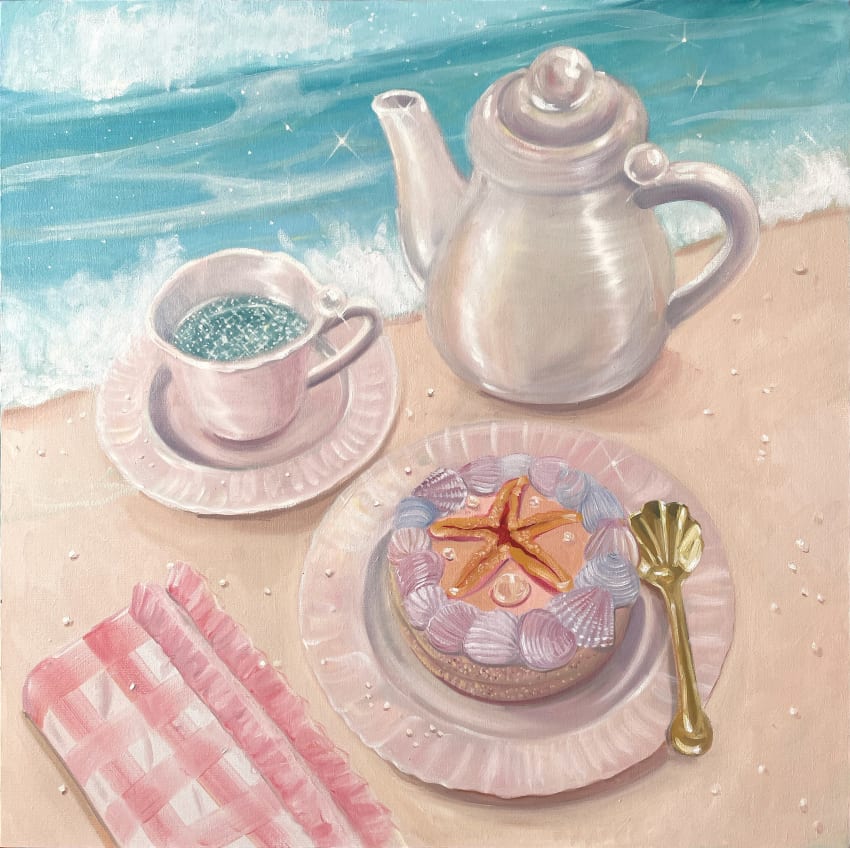
Though Monika grew up in the mountains of Poland, she now lives by the sea, which has become a central theme in her work. She describes her fascination with its endless beauty and mystery—the calm surface, the sparkling waves, and the unknown depths. Childhood memories of fairy tales like The Little Mermaid still linger, shaping the dreamlike and watery worlds in her paintings. Moving away from darker themes, she now feels freer to explore pastel tones, flowing forms, and images that recall the little girl who once longed to paint without restriction.
The most important skill is patience. You just have to keep going, keep painting, even through the so-called bad paintings, because every piece teaches you something. At one point you’re going to reach whatever you want.
Monika Marcheska- Arts to Hearts podcast s05e08
The Journey of Style and Curiosity
When asked about finding her style, Monika admits there is no precise formula. Her advice is simple: paint. Each painting, even the ones she considers unsuccessful, leads her somewhere new. Experimenting with techniques—such as learning to capture sparkles on water—opens up fresh directions. For her, curiosity is the driving force, and the willingness to explore is more important than producing something perfect.
Struggles with Guilt and Rest
Monika opens up about the most significant challenge she faces: the feeling that she’s not painting enough. She describes the guilt that comes with stepping away from work, even though she knows rest is necessary. Watching films, reading, or even doing nothing are ways to recharge, often leading to bursts of productivity afterwards. Her struggle, she says, is mainly with herself—learning to accept that rest is part of the process.
The Demands of Exhibitions
One of the most demanding periods for Monika was when she had three exhibitions in one year. She produced around 20 paintings during that time, leaving her physically and mentally drained. Afterwards, she experienced a low period where she couldn’t paint. The experience taught her not to overextend and to allow more space for fresh ideas to emerge.
Love and Frustration with Social Media
Like many artists, Monika has a mixed relationship with Instagram. On the one hand, it brought her opportunities, such as working with Artistella Gallery and connecting with new audiences. On the other hand, she struggles with constant comparison and the pressure of algorithms. She acknowledges how draining it can be to measure worth in likes and reach. One solution that has helped her is creating a second account where she follows craftspeople instead of other painters, which allows her to enjoy content without comparison.
Most of the time I’m just thinking how can I put my state of mind into the painting, or maybe my memories or dreams, and see how it would look on canvas. I don’t know how the painting will end — that curiosity and dialogue is my inspiration.
Monika Marcheska- Arts to Hearts podcast s05e08
What Success Looks Like
For Monika, success is already present in her life. She left her job, has a studio, paints freely, and owns the materials she once dreamed of. Holding expensive tubes of paint and being able to dedicate her life to painting is already her dream come true. Still, she hopes one day to see her work at major art fairs, perhaps in places like Miami. But for now, she feels grateful and happy with where she is.
To be honest, I think I am a very successful person already. I quit my job, I don’t have to work for anyone, I can paint whatever I want. I have my studio, my brushes, my paints. This is my dream come true.
Monika Marcheska- Arts to Hearts podcast s05e08
Seeing Her Work on the Cover
When asked how it feels to have her paintings on the cover of The Power of She, Monika says it feels surreal. She hasn’t yet held the book in her hands, but seeing photos of the sparkling cover left her amazed. To her, it still feels unbelievable that her paintings are travelling the world this way.
Charuka ends the conversation by thanking Monika for sharing her journey and art. For Monika, support already comes from the community around her, and she feels loved and encouraged by those who follow her work. She leaves the listeners with a sense that while big goals may still be ahead, the true success lies in living each day as a painter and continuing to be curious.
Want to explore more of Monika’s work and follow her journey? Head over to her Instagram and check out her website. If you enjoyed this conversation, these are the best places to stay connected and show your support!
Click here to read more about the Arts to Hearts Podcast and its episodes.
Listen to this & other episodes on
How Artist Sarah Fishbein Turns 1950s Romance Comics into Modern Paintings
Inside Susie Sprinkel’s Art Stories Woven with Fabric and Thread
How The Restless Creative Anita Clipston Turns Trauma into Art
Inside Radhika Gupta-Buckley’s Creative Journey with Indian Roots