

101 Art Book: Faces Edition – Open Call | Inside the Theme: What a Face Carries
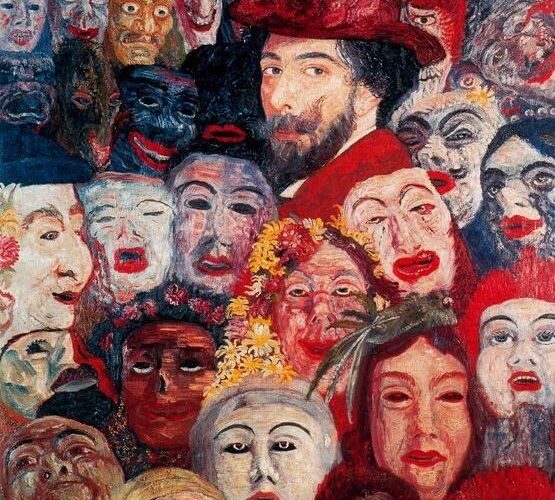
There are very few things we encounter as often as a face.
We see our own in the mirror each morning. We recognize familiar faces before we register names. We search for expressions in the faces of people we love, trying to understand what they are feeling before they say a word. And even when we meet a stranger, we instinctively look at their face for clues about who they might be.
A face is familiar, intimate, and strangely revealing. It can tell us something about a person in an instant, while also leaving an enormous amount unsaid.
That is what makes Faces such a rich subject for artists. A face is never simply a physical feature to be reproduced. It can become a place where identity, emotion, memory, performance, culture, and experience all meet.
Throughout art history, artists have returned to the face again and again because it offers an almost endless number of ways to ask one fundamental question: Who are we, and how do we show ourselves to the world?
A Face as Identity
Before we know someone’s story, we often know their face. Our faces are among the first things associated with our sense of identity. They are how we recognize ourselves and how other people recognize us. A portrait can therefore feel like much more than an image of a person. It can become an exploration of individuality, belonging, age, culture, relationships, and the many things that make someone who they are.
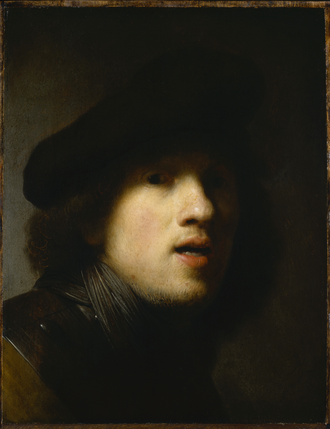
by Rembrandt
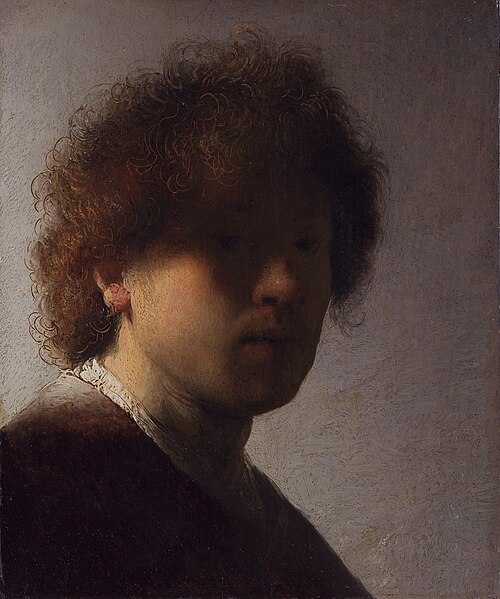
by Rembrandt
This is part of what made portraiture so significant throughout art history. From the intensely observed portraits of Rembrandt, who returned repeatedly to his own face across different stages of his life, to Frida Kahlo’s deeply personal self-portraits, the face has often been used as a way of examining identity rather than simply recording appearance.
Kahlo’s face became inseparable from the stories she wanted to tell about herself. Her self-portraits brought together physical experience, heritage, relationships, pain, symbolism, and personal mythology. The face in her paintings was recognizably hers, but it was also a doorway into everything she wanted the viewer to understand about the person behind it.
And identity does not have to be fixed.
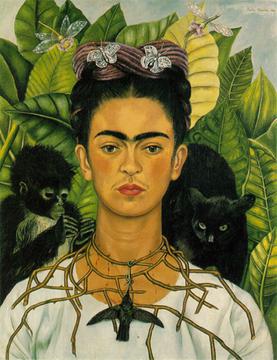
by Frida Kahlo
We all move through different versions of ourselves. The face we present to family may not be exactly the same face we present to colleagues, friends, strangers, or the world online. We change with age, circumstances, relationships, and experience. Sometimes an artist can capture that transformation simply by changing the way a face is represented.
Perhaps that is why portraiture can feel so personal. We are not only looking at someone’s features. We are looking for the person within them.
The Face and Emotion
If identity is what a face can tell us about who someone is, emotion is often what it seems to tell us about how they feel. A smile, a frown, widened eyes, a tightened jaw, a lowered gaze. Sometimes an entire emotional state can appear in a fraction of a second, before we have consciously decided what we are seeing.
The face is one of the first places emotion appears almost subconsciously. But there is an interesting contradiction here: the face can reveal emotion, and it can also conceal it.
We have all learned, to some degree, how to control our expressions. We smile when we are nervous. We tell someone we are fine while our face says something else. We hold back tears. We keep our expressions neutral when we would rather reveal exactly what we are thinking.
There is even a name for one particularly controlled expression: the poker face.
The idea of the poker face is fascinating because it turns the face into an exercise in concealment. The goal is to give nothing away. No excitement, disappointment, nervousness, or anticipation. The face becomes deliberately unreadable.
Actors take this contradiction even further. An actor may have to communicate grief without personally experiencing grief in that moment, or joy without actually feeling joyful. Their face becomes a tool for constructing emotion. A performer can spend an entire scene portraying a feeling that belongs to a fictional character, asking the audience to believe what the face appears to be telling them.
In that sense, the face can become a canvas for emotions we are not actually feeling. And this creates one of the most interesting tensions within the theme: What happens when the face tells the truth, and what happens when it tells a lie?
An artist can explore both. A portrait might capture an unguarded moment, freezing an emotion that would otherwise disappear almost instantly. Another work might deliberately distort, conceal, or neutralize the face, asking us to question what the subject is really feeling.
The expression may be obvious. Or it may be impossible to read. Both can tell us something.
When the Face Becomes a Mask
The idea of the face as a mask has fascinated artists, performers, and writers for centuries.
We use masks literally in theatre, ritual, celebration, performance, and transformation. But we also use them metaphorically every day. The version of ourselves we present to the world can be carefully constructed.
This is where Faces can move beyond traditional portraiture.
A covered face can suggest protection. A painted face can suggest transformation. Makeup can create another identity. A costume can allow someone to become someone else. A distorted face can challenge our assumptions about what identity is supposed to look like.
A face can be recognizable and unfamiliar at the same time. It can reveal and conceal. It can belong to a person, a character, an alter ego, or an imagined version of ourselves. The mask, then, is not necessarily the opposite of the face. Sometimes, it tells us something about the face underneath.
What a Face Carries
And then there is everything that a face carries. A face does not exist in isolation. It carries traces of a life.
There are the visible things: age, expression, scars, wrinkles, features inherited from family, changes caused by time. But there are also invisible things that artists attempt to capture through representation: memory, grief, love, exhaustion, confidence, uncertainty, belonging, loneliness, joy. This is perhaps why faces can feel so emotionally powerful in art. We instinctively look for a story.
The French writer Marcel Proust famously explored the relationship between memory and perception throughout his work, and faces often function in literature in much the same way: as triggers for memories, associations, and emotions that exist beyond the immediate image.
A face can remind us of someone we have lost. A stranger’s expression can suddenly feel familiar. An old photograph can make an entire period of someone’s life feel present again. Artists have long understood this.
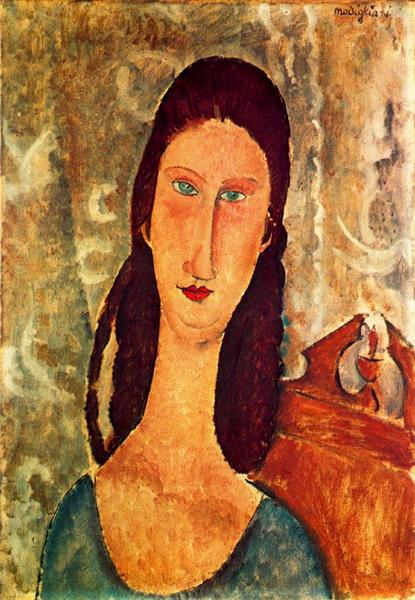
Look at Amedeo Modigliani’s elongated faces and distinctive eyes. His portraits do not simply reproduce the people who sat before him; they create an atmosphere around them. Look at Cindy Sherman’s photographs, where faces and identities become part of a larger investigation into constructed personas and representation. Look at Man Ray’s photographic experiments, where the human face can become mysterious, surreal, and almost object-like.

1980, Cindy Sherman
Different artists have approached the face in radically different ways, but the question underneath remains remarkably consistent: What can a face tell us about a person? And perhaps equally importantly: What can it make us imagine? Because a face does not always give us answers. Sometimes it gives us questions.
A Face as a Record of Its Time
Faces can also tell us something about the world around them. Every portrait is, in some way, a record of its time. Clothing, hairstyles, beauty standards, cultural references, technology, social roles, and even the ways people choose to present themselves can become part of an image.
That makes faces especially interesting when we think about the decade we are living through now. What do our faces look like in an age of filters, selfies, video calls, cosmetic procedures, digital avatars, and carefully curated online identities? How has technology changed the way we see ourselves and one another?
We live in a time when a person can have dozens of versions of their own face circulating online, each one selected, edited, filtered, or transformed.
And yet, despite all these technologies, the fundamental human instinct remains the same. We still look at faces. We still search them for emotion. We still recognize ourselves in them. We still try to understand the people looking back at us.
That is what makes Faces such a powerful subject for contemporary art. It is not only about what a person looks like. It is about how people are seen, how they see themselves, and how they choose to be seen.
A face can be an identity. It can be an emotion. It can be a performance. It can be a memory. It can be a mask. And sometimes, it can be all of these things at once.
Perhaps that is why the human face has remained one of art’s most enduring subjects. There is always something more to discover in it. A different expression. A different angle. A different story.
Every face carries something. The question is what you see when you look at it.
Now, it is your turn to show us what Faces means through your vision.
Who Can Apply?
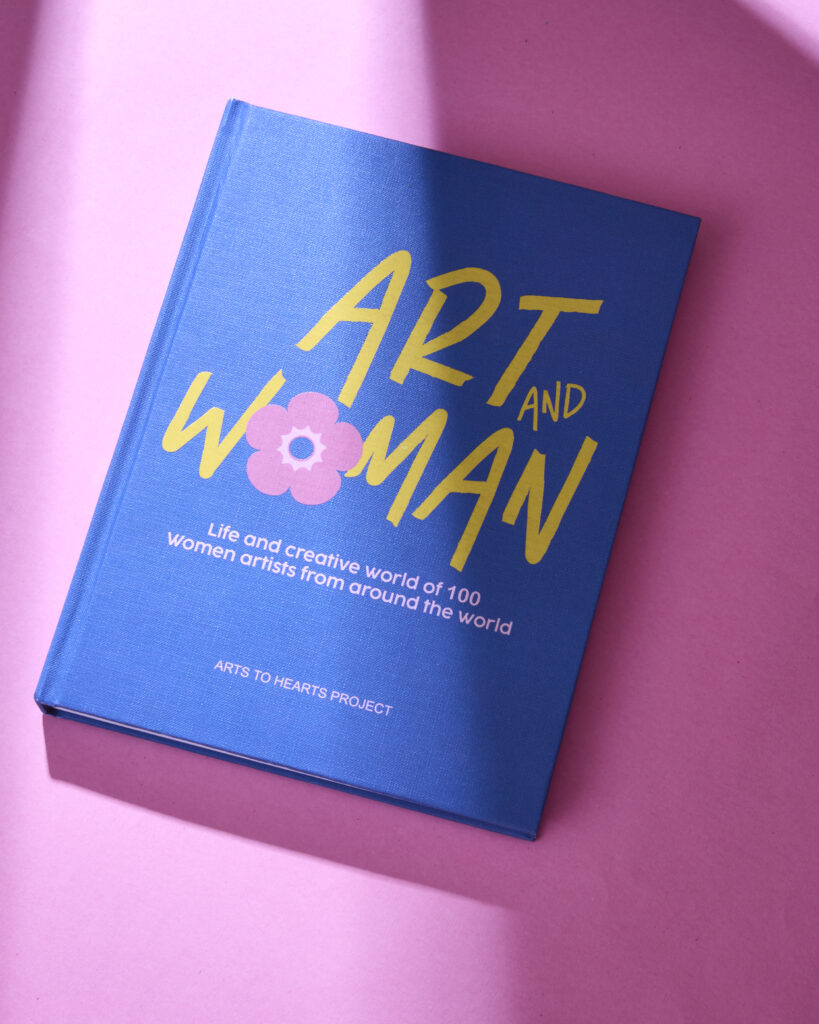
The 101 Art Book: Face Edition is open internationally to artists aged 18 and above, at every career stage. Whether you are emerging, mid-career, or established, you can apply. All visual art disciplines are welcome, from painting and photography to sculpture, textiles, digital art, collage, mixed media, installation, and experimental practices. Artists may submit multiple artworks for consideration; if selected, one to three works will be featured in the book.
What’s In It for Artists?
Being selected means becoming one of 101 artists featured in an international publication, with a 2-page editorial feature in Arts to Hearts Magazine, a Digital Certificate of Recognition, and the opportunity to purchase the book at an exclusive artist price with complimentary international shipping.
There is also recognition for exceptional work: one artist will receive the Face Edition Award, including a $500 USD cash award, a 4-page magazine feature, custom glass trophy, and Certificate of Excellence. Two additional artists will receive Jury Recognition Awards with a 4-page feature, trophy, and Certificate of Excellence. And every artist who applies receives a Certificate of Participation and personalized jury feedback.
The Clock Is Ticking!
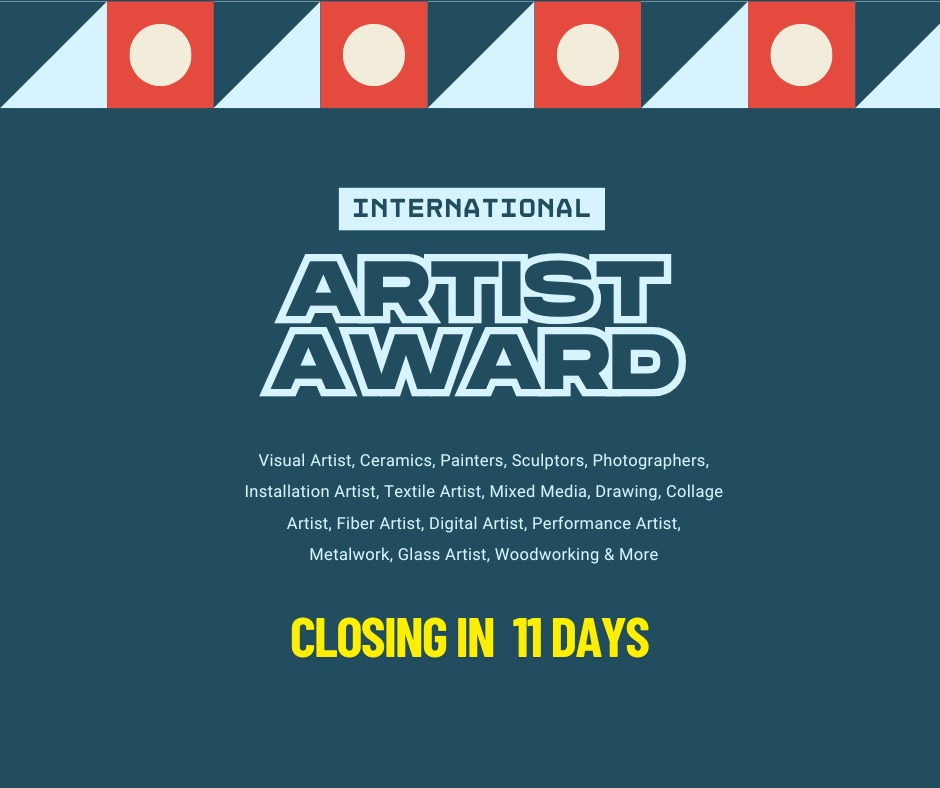
Applications for the 101 Art Book: Face Edition are open until September 10, 2026. Once submissions close, eligible entries will go to the jury, with results announced within three weeks of the deadline. If the deadline is extended, the review timeline will begin after the extended submission period closes.
If Faces has given you an idea, this is the time to bring it to life and share your interpretation with the jury.