




10 Things Visitors Want to Find on Your Artist Website

Imagine discovering an artist whose work instantly captivates you. You click on their website, eager to learn more, only to find yourself searching for basic information. Is this artwork available? Who is the artist? How can you get in touch? After a few minutes of clicking through confusing menus and hidden pages, you give up and move on.
Now, imagine that visitor was a collector ready to buy, a curator looking for new talent, or a journalist hoping to feature your work. They didn’t leave because your art wasn’t memorable. They left because your website made it difficult to find what they needed.
Every visitor arrives with a question, whether they’re discovering you through Instagram, a recommendation, or an exhibition. The best artist websites quietly answer those questions before people even have to ask them. They feel intuitive, welcoming, and effortless to explore.
A great artist website isn’t about having the flashiest design or the most pages. It’s about creating a space where your work can shine and your visitors can easily connect with it. Here are ten things people genuinely hope to find when they land on your artist website.
The Essentials Every Visitor Expects
1. Your Best Work, Front and Center
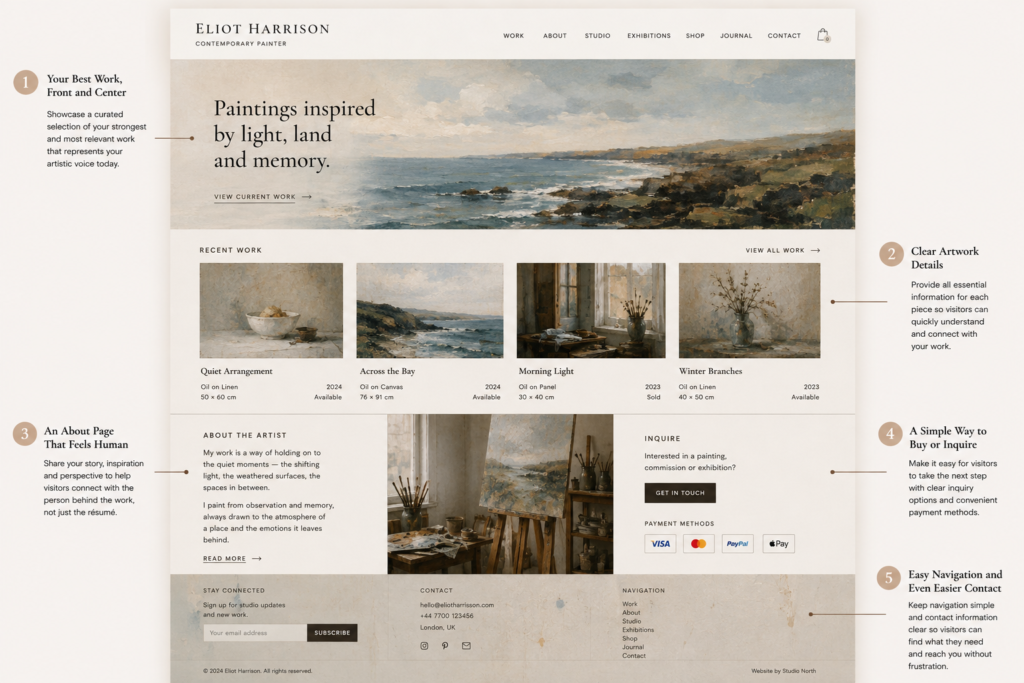
When someone visits your website, they’re often forming an opinion about your work within the first few moments. That’s why your homepage and portfolio should showcase the pieces that best represent your artistic voice today, not everything you’ve ever created. While it can be tempting to include every painting, drawing, or experiment, a carefully curated selection is far more memorable than an overwhelming archive.
Think of your website as a thoughtfully curated exhibition rather than a storage space. Every piece should strengthen the story you’re telling about your practice and leave visitors wanting to see more. As your style evolves, don’t be afraid to update your portfolio by replacing older works that no longer reflect your current direction. A smaller collection of exceptional pieces often builds more confidence than dozens of artworks competing for attention.
2. Clear Artwork Details
A beautiful artwork naturally draws people in, but it’s the details that often determine whether they stay interested. Whether your visitor is a collector considering a purchase, a curator researching your practice, or a journalist looking to feature your work, they shouldn’t have to guess the basics. Every artwork should be accompanied by clear information, including its title, medium, dimensions, year of creation, and availability whenever possible.
Providing these details not only answers practical questions but also demonstrates professionalism and respect for your visitors’ time. If a piece has already sold, say so. If it’s available, make that clear. If prints or commissions are offered, include that information where relevant. The less uncertainty visitors encounter, the easier it becomes for them to appreciate your work and take the next step with confidence.
3. An About Page That Feels Human
Your “About” page is one of the most visited sections of your website, yet it’s often reduced to a list of degrees, exhibitions, and career milestones. While those achievements certainly matter, they don’t tell visitors who you are. Collectors, curators, and galleries aren’t just interested in your résumé. They want to understand the person behind the work and the perspective that shapes it.
Instead of creating a page that reads like a timeline of where you studied, worked, or exhibited, share the story that only you can tell. What first drew you to your medium? What themes continue to inspire your practice? What questions are you exploring through your work? You don’t need to reveal every detail of your life, but giving visitors a glimpse into your creative journey helps build a genuine connection. Long after they leave your website, they’re more likely to remember the artist whose story resonated with them, not just the list of accomplishments.
4. A Simple Way to Buy or Inquire
Finding an artwork you love should be the beginning of the experience, not the point where things become confusing. Once a visitor decides they’re interested, the next step should feel effortless. Whether you’re selling original works, accepting commissions, or inviting exhibition inquiries, make it clear how people can reach you and what they should do next. A simple inquiry button, a dedicated contact form, or clear purchasing instructions can make all the difference.
It’s equally important to make the buying process as convenient as possible. If you sell directly through your website, offer multiple payment options rather than relying on a single card or payment method. The more accessible your checkout experience is, the more people you’re able to accommodate. It’s surprisingly common for someone to add an artwork to their cart, encounter a payment option that doesn’t work for them, and leave without completing the purchase. A smooth, flexible buying experience removes unnecessary barriers and gives interested collectors fewer reasons to walk away.
5. Easy Navigation and Even Easier Contact
No matter how much someone loves your work, they shouldn’t have to search for a way to reach you. Whether a collector wants to inquire about a painting, a gallery is considering you for an exhibition, or a journalist hopes to request an interview, your contact information should always be easy to find. Avoid hiding your email address several pages deep or relying solely on a contact form that may go unanswered.
Include a dedicated contact page, display your preferred email address clearly, and, where appropriate, link to your professional social media accounts. At the same time, keep your website navigation clean and intuitive so visitors can move effortlessly between your portfolio, about page, and contact information. The easier it is for people to connect with you, the more likely they are to take that first step instead of leaving your website and forgetting to come back.
Once these essentials are in place, there’s another layer that can make your website even more memorable. These aren’t always the first things artists think to include, yet they’re often what collectors, galleries, curators, and editors quietly notice. They build trust, reveal professionalism, and make your website feel less like a digital portfolio and more like a genuine reflection of your artistic practice.
The open call is now live for our newest edition of 101 Art Book: Faces. Submit your work for a chance to be featured in this special international edition celebrating the many ways artists interpret the human face.
The Details Artists Often Overlook
6. A Sense of Your Personality
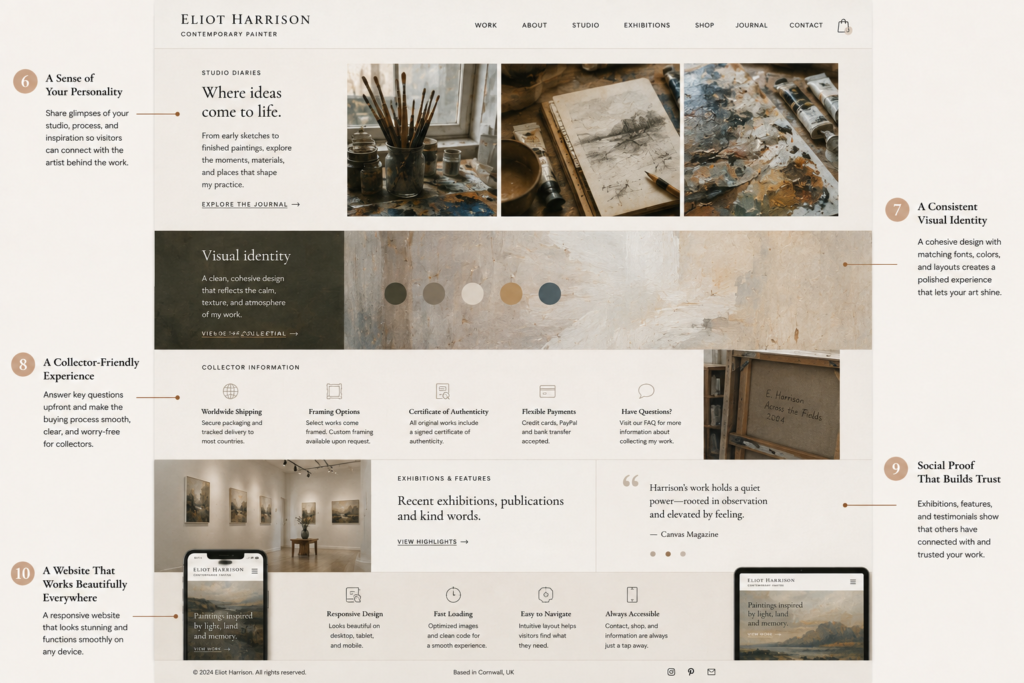
Your website shouldn’t feel like it could belong to any artist. Beyond showcasing your work, it should give visitors a sense of who you are and what your creative world feels like. That doesn’t mean sharing every detail of your personal life, but small touches can make a lasting difference. A glimpse into your studio, photographs of your creative process, a few words about what inspires you, or even the story behind a recent series can help visitors connect with the person behind the art.
This sense of personality is often what makes an artist memorable. Collectors and galleries aren’t only investing in individual pieces; they’re investing in a creative practice and the story that surrounds it. When your website feels authentic and unmistakably yours, visitors are far more likely to remember your work long after they’ve closed the page.
7. A Consistent Visual Identity
Your website is an extension of your artistic practice, so its design should feel just as intentional as the work it presents. When fonts, colours, layouts, and imagery all work together, they create a cohesive experience that allows your art to take centre stage. On the other hand, inconsistent styling, mismatched colours, or cluttered pages can distract visitors and make even exceptional artwork feel less polished.
Consistency doesn’t require an elaborate or expensive website. In many cases, a simple, well-organised design is far more effective than one filled with unnecessary effects or competing visual elements. Aim for a look that reflects your artistic voice while remaining clean, easy to navigate, and visually balanced. When every page feels connected, your website becomes more memorable and reinforces a strong, professional identity.
8. A Collector-Friendly Experience
Collectors appreciate beautiful artwork, but they also appreciate clarity. Once someone is seriously considering a purchase, practical questions naturally follow. Do you ship internationally? Is the artwork framed or unframed? Will it come with a certificate of authenticity? How long will delivery take? Answering these questions upfront creates a smoother experience and gives buyers greater confidence in their decision.
A dedicated FAQ section or clear purchasing information can prevent unnecessary back-and-forth while showing that you’ve thoughtfully considered the collector’s experience. If you accept commissions, explain your process. If you offer framing, mention the available options. Pair this with flexible payment methods whenever possible, and you’ve removed many of the common barriers that can prevent an interested visitor from becoming a collector. The easier and more transparent the process feels, the more likely people are to move forward with confidence.
9. Social Proof That Builds Trust
As much as people connect with your work, they also look for signs that others have connected with it too. A thoughtfully presented selection of exhibitions, publications, awards, artist features, or collector testimonials helps reinforce your credibility without feeling boastful. It tells visitors that your work has been seen, appreciated, and trusted by others within the art community.
You don’t need an extensive list of accomplishments to make an impact. Even a few meaningful highlights can go a long way in building confidence, especially for first-time collectors or galleries discovering your work for the first time. If you’ve been featured in a publication, exhibited your work, or received kind feedback from collectors, don’t be afraid to include it. These moments help tell the story of your artistic journey while giving visitors another reason to trust your practice.
10. A Website That Works Beautifully Everywhere
Your website may look stunning on your laptop, but many visitors will discover it on a phone after clicking a link from Instagram, an email, or a Google search. If pages load slowly, images don’t display properly, or buttons become difficult to tap, people are far more likely to leave before exploring your work.
Take time to view your website on different devices, browsers, and screen sizes to make sure the experience feels just as seamless everywhere. Text should be easy to read, images should load clearly, and every page should function as intended without visitors needing to zoom in or search for hidden buttons. A website that performs well across both desktop and mobile shows attention to detail and ensures your work can be appreciated no matter how people choose to discover it.
Make It Easy for People to Say Yes
A great artist website doesn’t convince people to love your work, your art does that on its own. What your website can do is remove the small obstacles that stand between curiosity and connection. It helps visitors find the information they need, understand your practice, and feel confident enough to take the next step, whether that’s making a purchase, reaching out about an opportunity, or simply remembering your name long after they’ve closed the tab.
You don’t have to redesign everything overnight. Start by looking at your website through the eyes of someone visiting for the very first time. Is anything difficult to find? Is there a question left unanswered? Even a few thoughtful improvements can make your website feel more welcoming, more professional, and more effective.
If you haven’t created an artist website yet, or you’re not sure where to begin, here’s a guide that might help you get started: How to Make an Artist Website in 2026. It walks you through the process, from choosing the right platform to building a website that truly reflects your creative practice.