

Inside the Hospital of Emotions: An Immersive Art Experience
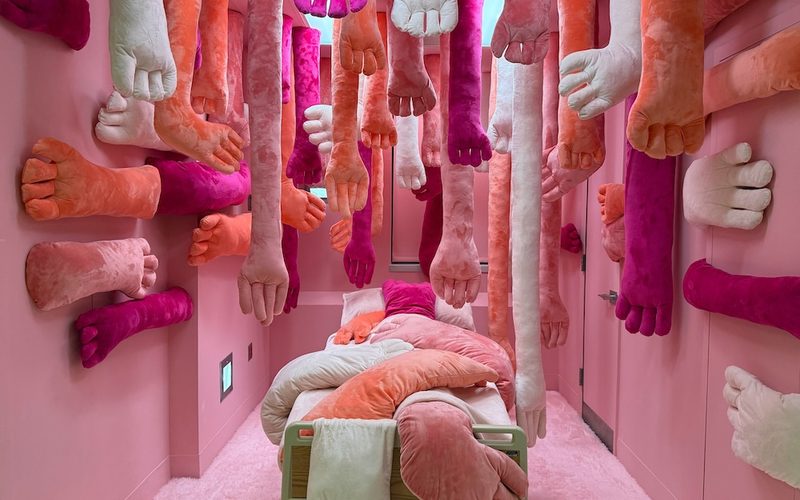
What if, instead of going to a hospital to treat the body, you could walk into one and spend a few hours caring for everything you carry inside?
In Los Angeles, an old hospital building has been given a completely unexpected second life. Its corridors, patient rooms, operating rooms, nurses’ stations, and other clinical spaces have been transformed into an immersive art experience exploring something we all have, but rarely know how to put into words: our emotions.
Welcome to the Hospital of Emotions.
Set inside the former St. Vincent Medical Center at 2131 W 3rd Street in Los Angeles, this temporary exhibition brings together more than 70 artists across four floors and more than 80 hospital rooms. Instead of presenting art on the familiar white walls of a gallery, the exhibition asks artists to transform entire spaces into emotional worlds. Joy, love, fear, anger, hope, sadness, gratitude, resilience, and other deeply human experiences become the subjects of these rooms.
And perhaps that is what makes this exhibition especially interesting for anyone thinking about artist wellness. Because sometimes we don’t need another reminder to be productive, create more, post more, sell more, or turn our creativity into something useful. Sometimes we simply need a place to feel.
About the Project: A Hospital for the Heart
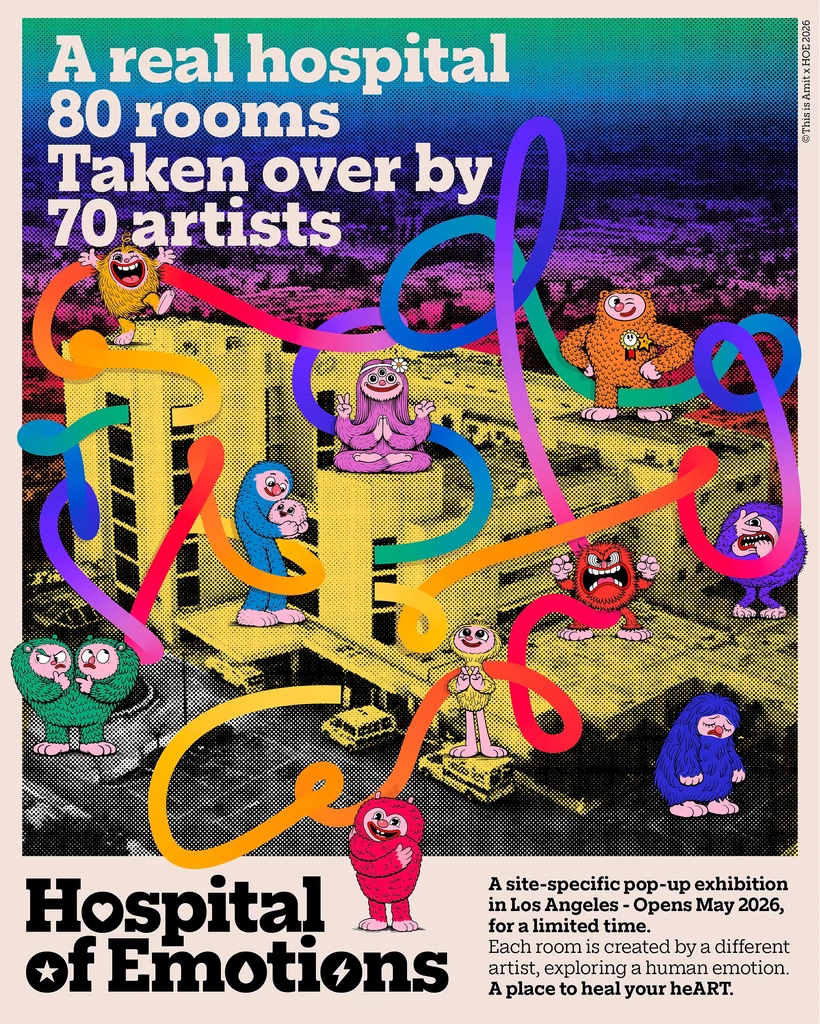
Hospital of Emotions is presented by the curatorial and creative team behind House of Art and Dreams, together with ROYVA Group and the St. Vincent Behavioral Health Campus.
The idea is wonderfully simple: take a former hospital and allow artists to turn it into a living museum of human emotion. But the simplicity of the idea is exactly what gives it so much room to breathe.
Hospitals are places where some of our biggest and most vulnerable experiences happen. They are associated with fear, uncertainty, waiting, relief, loss, recovery, birth, exhaustion, hope, and care. They are places where people are often reminded just how fragile and precious life can be. Hospital of Emotions takes that existing emotional history and places contemporary art inside it.
The building isn’t simply being used as a venue. The building becomes part of the artwork.
Artists work with the existing architecture and, in many cases, the traces of what the building once was. Patient rooms remain patient rooms. Corridors remain corridors. Medical spaces become unexpected canvases. Walls, floors, ceilings, furniture, and hospital fixtures are incorporated into immersive environments.
There is something beautiful about that transformation. A space once designed around physical care becomes a place where visitors are invited to think about emotional care.
The project also gives emerging and established artists the opportunity to work side by side, with creators coming from fields including visual art, installation, architecture, illustration, street art, design, and set design.
And for artists, being given an entire room rather than a single wall changes the possibilities completely.
When Every Room Has a Feeling
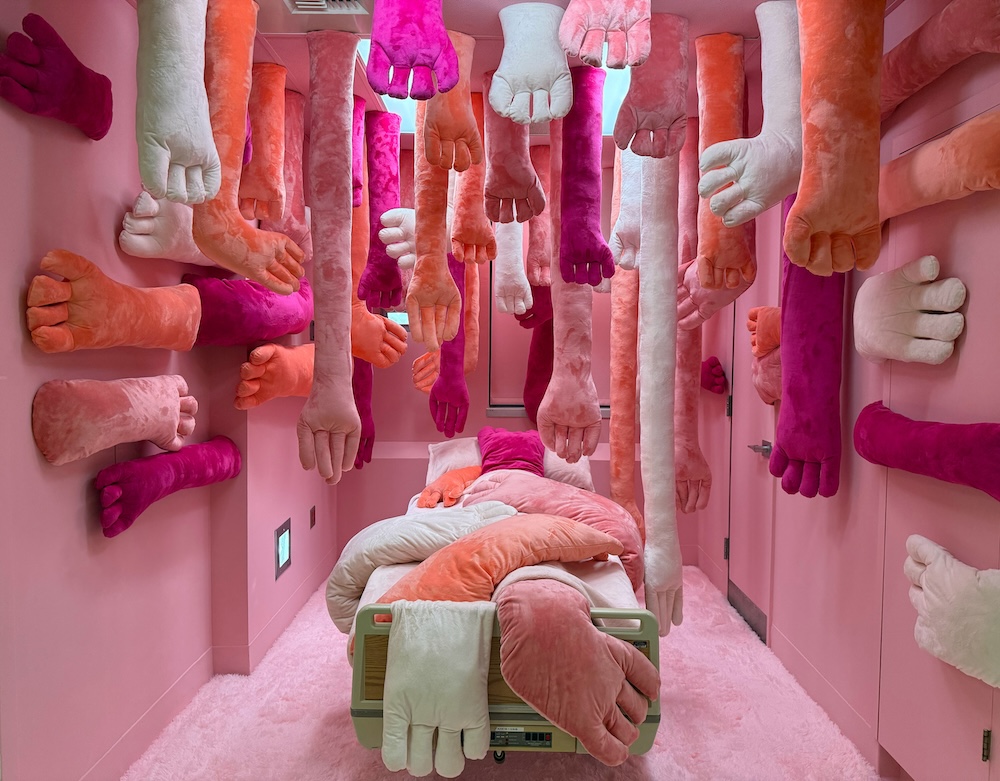
Hospital of Emotions is divided into different emotional “departments,” including Joy, Love, Fear, Anger, Hope, Sadness, Gratitude, and Resilience.
It is a clever way of organizing an exhibition that could otherwise feel overwhelming. You aren’t simply walking through a collection of installations. You are moving through different parts of being human.
One room might make you laugh. Another might make you uncomfortable. Another might remind you of something you’ve forgotten. You might walk into one expecting something playful and discover something unexpectedly tender instead.
There is no single correct way to experience it. And that feels particularly important. We often talk about emotions as if they should be sorted neatly: happiness is good, sadness is bad, anger should be controlled, fear should be overcome.
But real life doesn’t work that way. We can feel hopeful and exhausted at the same time. We can be grateful while grieving. We can love someone and still be angry with them. We can be afraid and still move forward. Art has always had a way of making those contradictions feel less strange. Hospital of Emotions gives those contradictions physical rooms.
The Hospital Rooms Become the Art
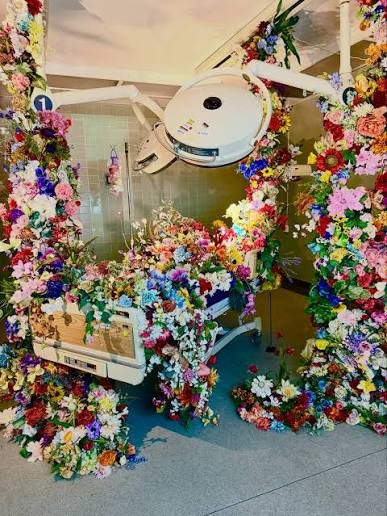
One of the most fascinating parts of the exhibition is the relationship between the artists and the rooms they were given. Instead of starting with a blank gallery, the artists had to respond to a building that already had its own personality and history.
Some installations are playful and colorful. Others are quieter, stranger, darker, or more emotionally intense. The result is an exhibition where turning a corner can completely change your experience.
The former hospital’s operating rooms, patient rooms, ER spaces, nurses’ stations, and corridors have all been transformed. Artists have worked across walls, ceilings, floors, and furniture, creating environments that you don’t simply look at from a distance. You physically enter them.
There is a difference between looking at an artwork and finding yourself standing inside an artist’s interpretation of an emotion. And this is where Hospital of Emotions becomes especially interesting as an artist wellness story.
It reminds us that emotions don’t always need to be explained. Sometimes they need to be experienced.
Meet the Artists Behind the Emotional Worlds
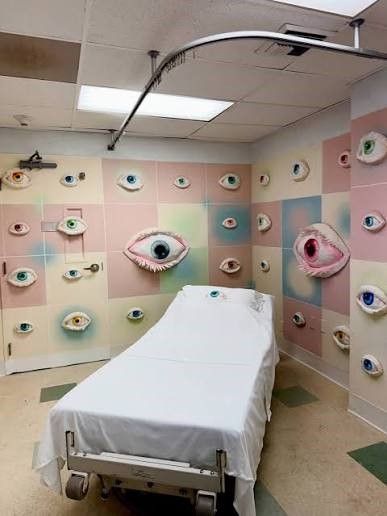
The exhibition brings together a remarkably broad group of artists.
Among the participating artists are Mônica Lóss, Lenny Gerard, David Otis Johnson, Anna Matsumoto, Javiera Estrada, Heather Bellino, Lisa Waud, Jonathan Elkies, Rebecca Ann Carver, Nathalie Auzepy, Madeline Verbica, Caratoes, Dr. Maryam Trebeau, Pablo Thomas, Tommii Lim, Tara Rey, NYCHOS, Mariell Guzman, Jeremy Wojchihosky, Nellie Xie, Moran Sanderovich, Natalia Pavlova, Napo, KASEMONSTER, Corrie Sullivan, It’s A Living, Greg Corbino, Michelle Lougee, Ginger Pearson, Adam Kyron Murillo, Leslie K Monroy, Ray Karam, Sayoko Osada, Sandra Monty, Tim Schwartz, Rose Zhang, Mads Christensen, Emily Strange, and many more.
What makes the roster particularly interesting is its variety. The exhibition doesn’t seem interested in creating one uniform visual language. Instead, artists from different backgrounds and disciplines bring their own ways of thinking about emotion into the building.
And that variety is important because there is no universal visual language for feeling. One artist may respond to fear through darkness and abstraction. Another may turn it into something playful. Someone else might approach grief through memory, while another artist might think about resilience through humor.
That is the beauty of giving artists the freedom to interpret an emotion for themselves.
A Few Rooms That Stay With You
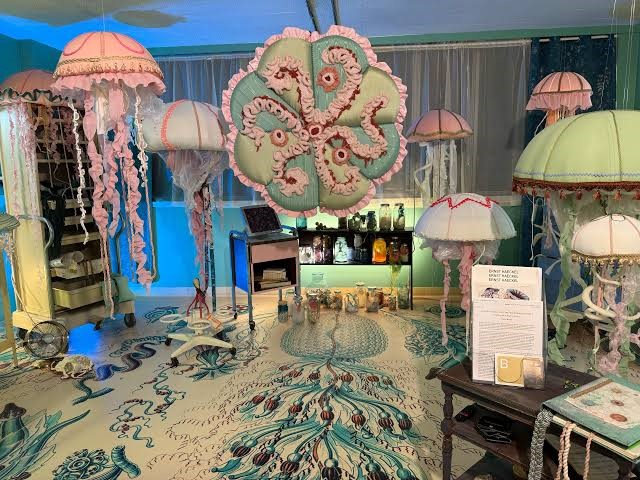
Some of the exhibition’s installations demonstrate just how differently artists can approach the same broad question: What does this emotion feel like?
In the Fear Department, artist Kamil Cazpiga, working as Cosmodernism, created a room filled with television screens displaying strange, fluid, maze-like imagery. The imagery comes from paint drops viewed under a powerful microscope, revealing something almost biological and otherworldly within something as familiar as paint.
In the Resilience Department, Israeli street artist Guy “Dioz” Bloom created a scene involving a sick patient and anxious family members, represented through colorful, horned creatures known as Techno Trolls. The work is playful in appearance while carrying a much heavier emotional reality underneath.
Then there is a completely different kind of tenderness in the Sadness Department.
Artist and art director Pablo Thomas transformed a hospital room with paintings resembling intimate family photographs: memories of childhood, parents, children, and moments of ordinary life. The room becomes a meditation on memory and the rush of images that can accompany profound emotional moments.
And in the Joy Department, curator Yaara Sachs herself transformed IV stations by filling the saline bags with colored liquid, turning clinical medical objects into something almost playful and candy-like.
These examples make one thing particularly clear: An emotion doesn’t have to look the way we expect it to.
Joy can exist inside a hospital. Fear can be strangely beautiful. Sadness can be full of color. Resilience can have a sense of humor.
Why This Exhibition Belongs in an Artist Wellness Conversation
There is something very comforting about seeing emotions given space. Especially for artists.
Creative people are often encouraged to turn difficult experiences into something beautiful. But there is a difference between creating from an experience and feeling pressured to make every difficult experience productive.
Hospital of Emotions offers another possibility. You can simply walk through. You can encounter someone else’s interpretation of grief without having to explain your own. You can stand in a room about fear and recognize that you’re not the only person who knows what fear feels like.
You can find joy in an unexpected corner. You can leave a room because it feels like too much. You can stay in another because you don’t want to leave yet. There is no requirement to make meaning out of everything. And perhaps that is one of the gentlest ideas an art experience can offer.
You are allowed to feel something without immediately fixing it.
For artists who spend so much of their lives creating, sharing, performing, applying, exhibiting, and putting pieces of themselves into the world, that permission can feel surprisingly meaningful.
Art Outside the White Cube
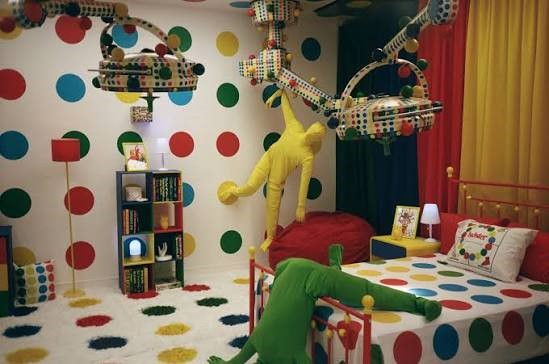
Hospital of Emotions also asks us to reconsider where contemporary art belongs.
The project was deliberately created outside the traditional museum and gallery environment, with the aim of making contemporary art more accessible and approachable to a wider public. You don’t need an art history degree to walk through these rooms. You don’t need to know the “right” interpretation. You don’t even have to be someone who regularly visits exhibitions.
You can simply be curious. And perhaps that is one of the strongest things about the project: it begins with something everyone understands. Emotion. Before we are artists, designers, curators, collectors, or art lovers, we are people.
We all experience joy. We all know fear. We all carry memories. We all lose things. We all hope. We all need healing in one form or another.
A Temporary Place to Slow Down
Hospital of Emotions opened to the public on May 27, 2026, and was originally expected to close at the end of July. Following a strong response from visitors, the exhibition has been extended and will now remain open through September 30, 2026.
The exhibition is located at 2131 W 3rd Street, Los Angeles, California, inside the former St. Vincent Medical Center. Visitors enter at a scheduled time and then explore the exhibition at their own pace rather than following a guided tour.
That unhurried aspect feels fitting. Because if the exhibition is asking us to pay attention to our emotions, rushing through it would almost miss the point.
Maybe We All Need a Hospital of Emotions
There is a particular kind of exhaustion that comes from constantly trying to be okay.
As artists, as professionals, as friends, as family members, as people simply trying to make it through ordinary days, we can become very good at moving forward without checking in with ourselves.
Hospital of Emotions offers a playful, colorful, sometimes strange reminder that there is more to wellness than simply keeping ourselves functioning.
That is what makes this exhibition worth paying attention to. It isn’t asking art to solve our emotions. It is allowing art to sit beside them.
For a temporary moment, an old hospital in Los Angeles becomes something completely different: not a place where we are expected to arrive with answers, but a place where we can arrive exactly as we are. And perhaps that is the loveliest prescription of all.
Come as you are. Feel what you feel. Stay for a while.
Editor’s Note:
If Hospital of Emotions has you thinking about how much a face can reveal, explore that connection further through our ongoing open call, 101 Art Book: Faces Edition. Submit your work and share the emotions, stories, and expressions that live within a face. The deadline to submit is September 10, 2026.