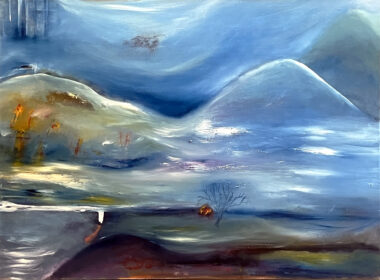



Why Do Women Artists Get Judged By Their Story Instead Of Their Work? Wei Xue
👁 164 Views
At Arts to Hearts Project, we’re always looking for ways to showcase artists who deserve attention, artists whose work makes you stop and feel something you can’t quite name.
When we were planning our Everything is Art exhibition, we wanted artists who understood that art doesn’t have to shout to be powerful. That sometimes the quietest work carries the most weight. That creating space can matter more than filling it.
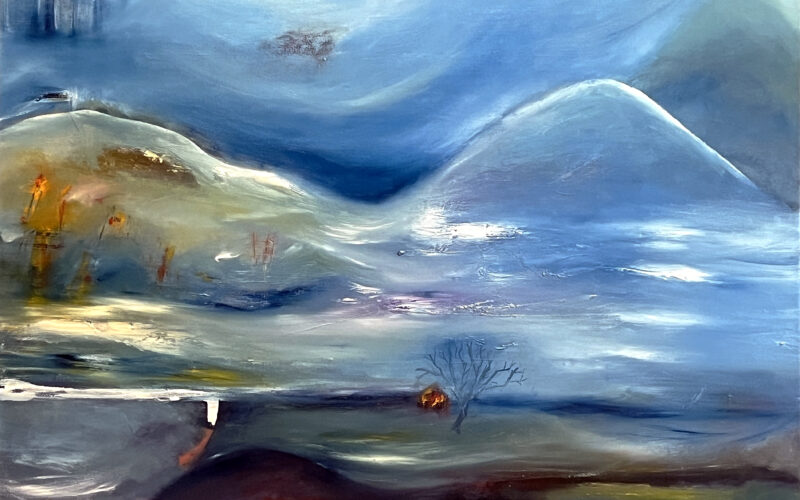
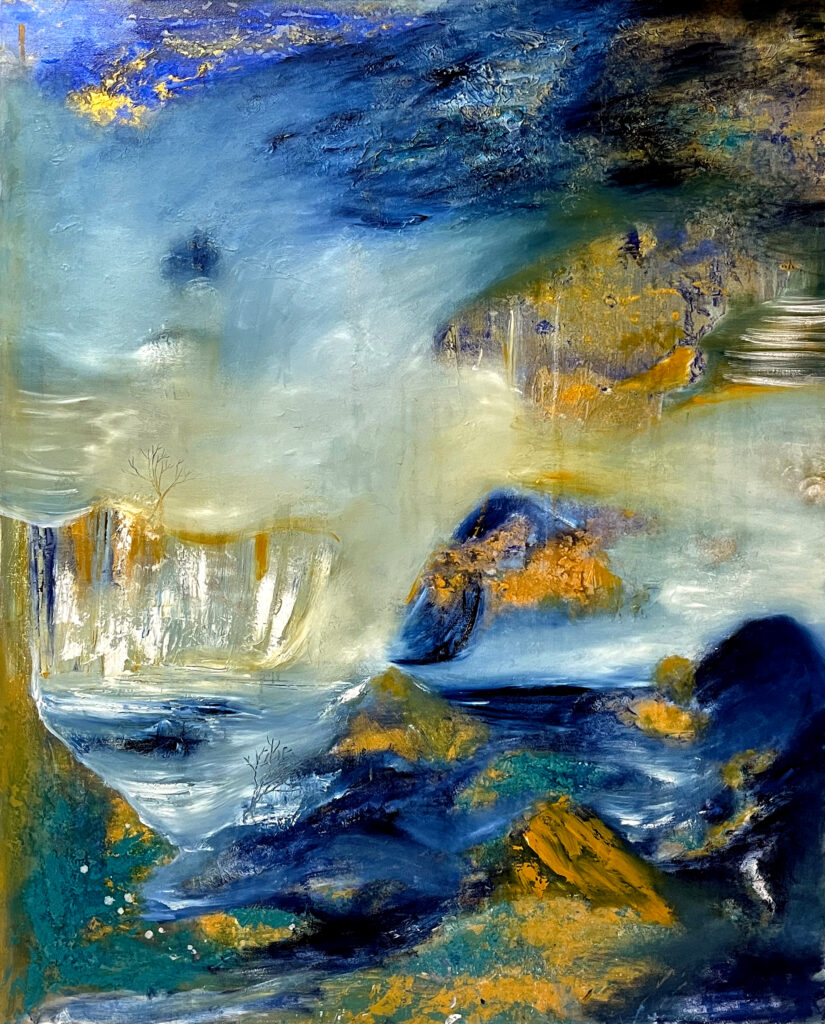
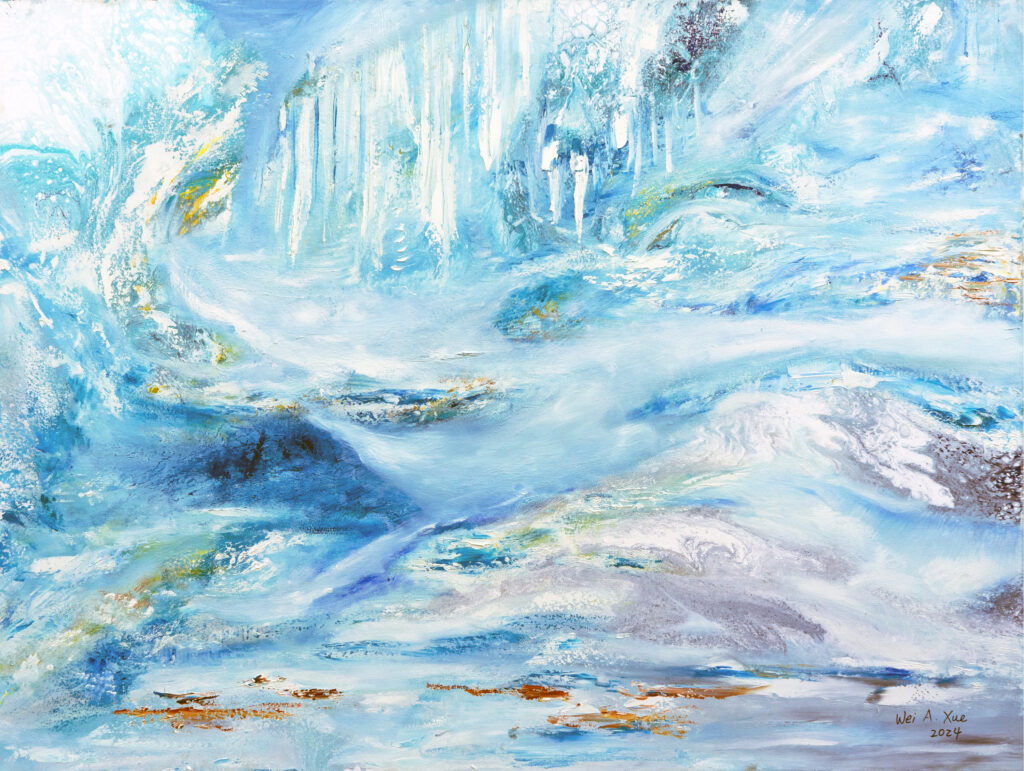
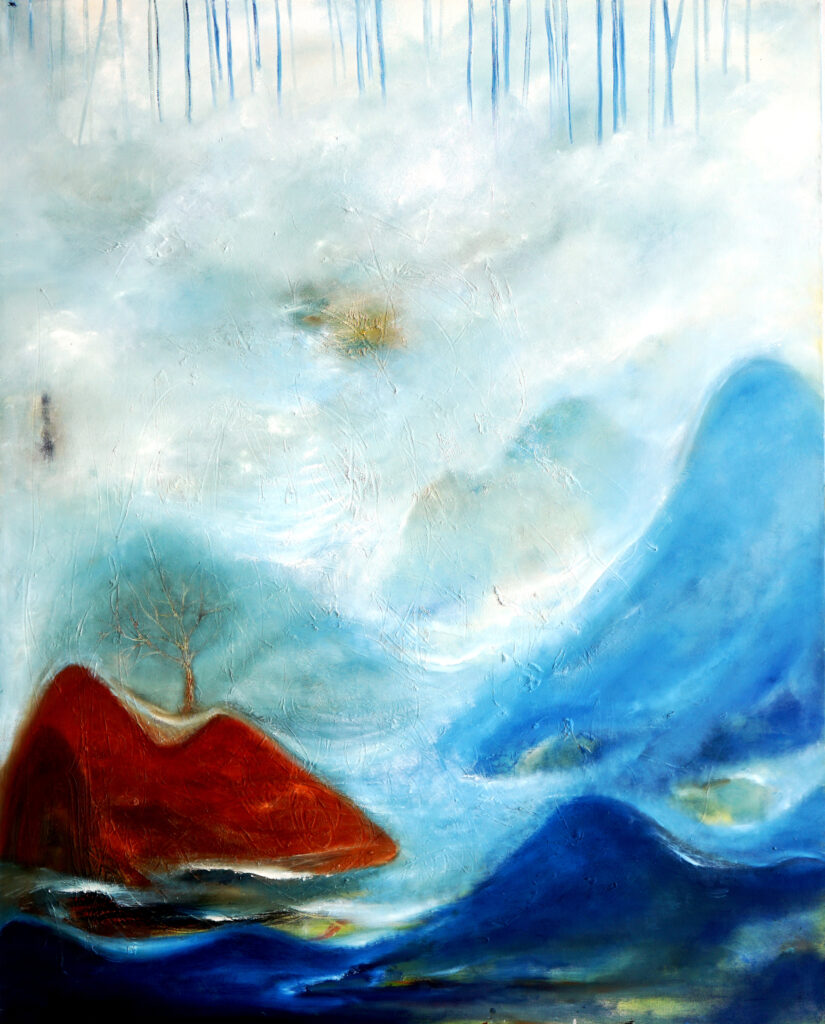
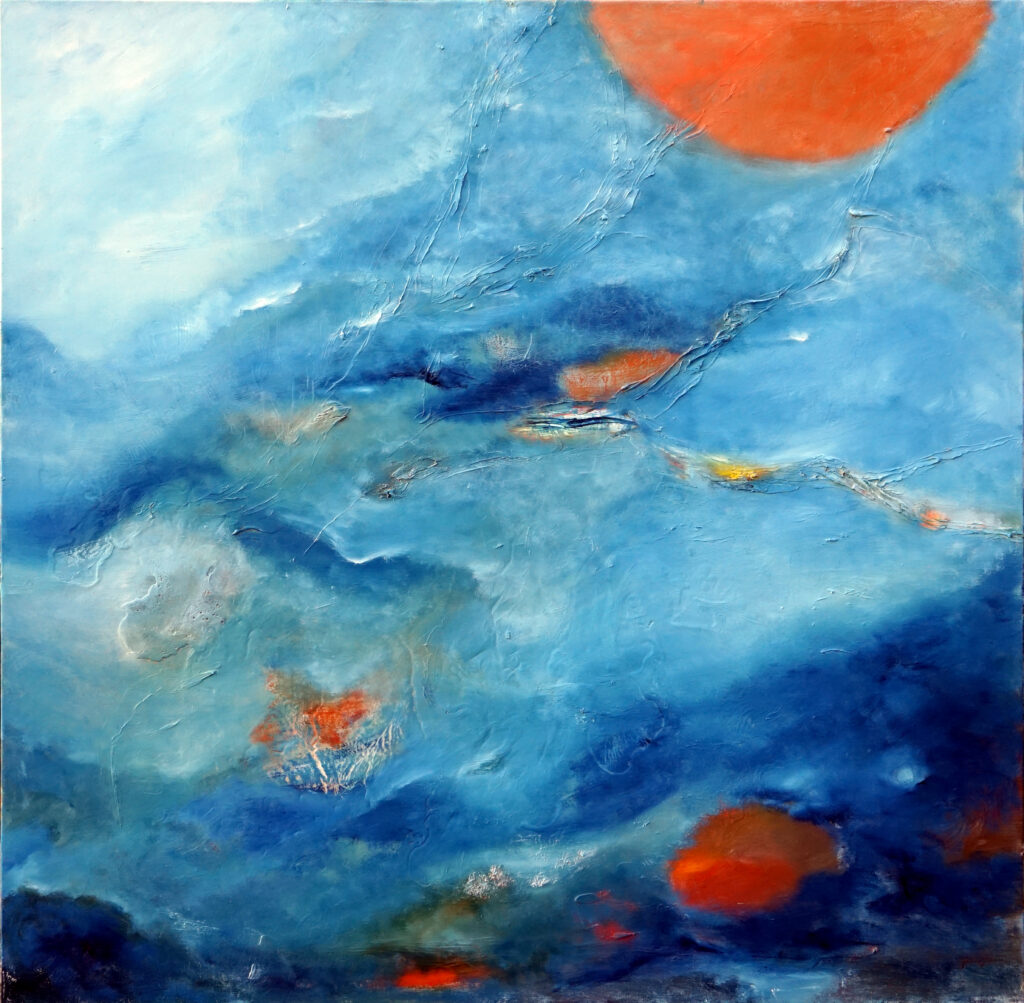
Then we came across Wei Xue’s paintings, and something clicked immediately. Her abstract landscapes didn’t just look beautiful they behaved like memories do. Hovering between clear and blurred. Present but elusive. Familiar yet impossible to pin down. You know that feeling when you’re trying to recall something and it stays just out of reach? That’s what her work does. It lives in that in-between space.
We selected Wei for the exhibition because her work proves exactly what the theme suggests: everything is art. Memory is art. The way feelings linger after moments pass is art. The space between what you remember and what you’ve forgotten—that’s art too. And Wei knows how to paint it.
Before we move into our conversation with her, here’s what you need to know about Wei.
Born in China, now based in New York, Wei Xue (also known as April Xue) is a contemporary abstract artist who taught herself to paint. No formal training. No prescribed methods. Just paying attention to what felt right, to inner experiences that didn’t have language yet, to emotional atmospheres that stuck around long after specific moments faded.
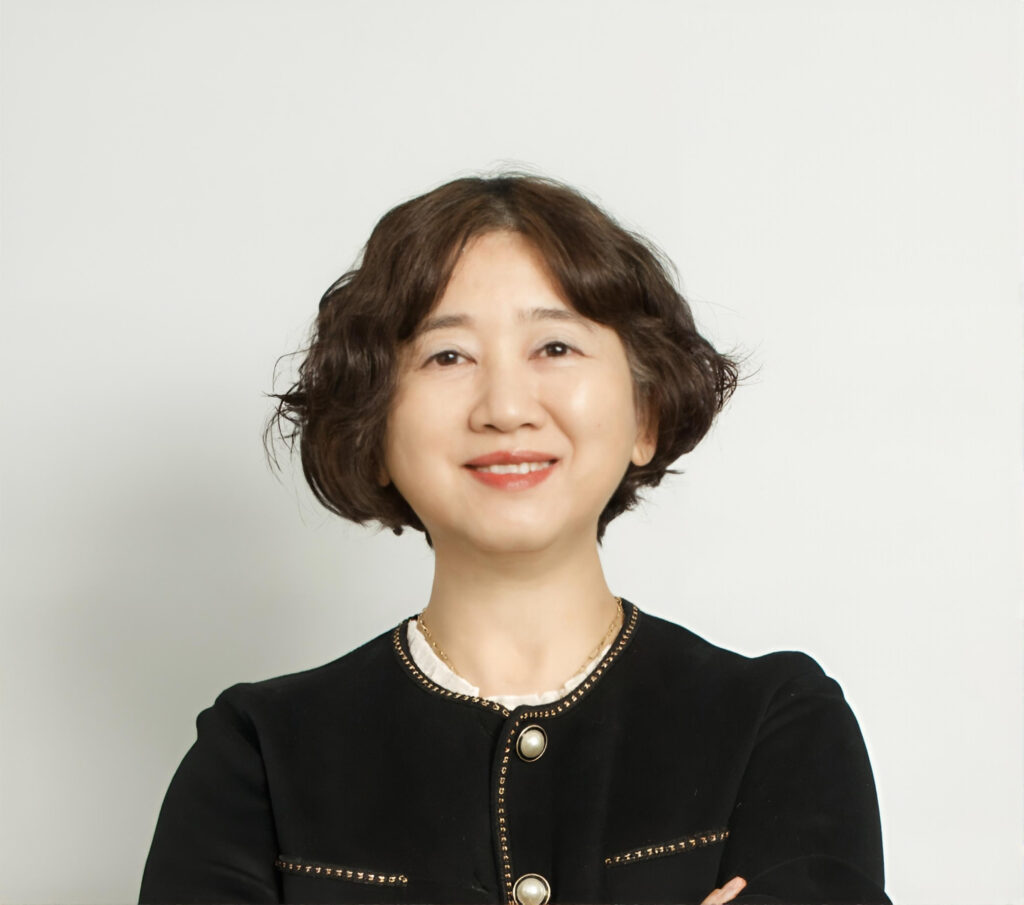
Over time, that attention became her creative language, a way of recording memory and time through paint. And it’s taken her work to exhibitions across the United States, Europe, and Asia, including a solo show at the Mora Museum and recent success at the Hampton Fine Art Fair. But here’s what matters more than the exhibition history: Wei doesn’t make art to impress you. She makes it to create stillness. To offer space where you can slow down and maybe encounter your own memories waiting quietly.
She works in layers applying paint, letting some marks stay visible, covering others partially. Nothing gets completely erased, but nothing stays entirely clear either. It’s exactly how memory actually works. Fragmented. Softened over time. Still present underneath, just harder to see.
Her influences pull from both worlds. Eastern philosophies about energy, emptiness, and inner balance meet Western abstract traditions that value intuition and trust the subconscious. What she’s creating is these quiet emotional spaces that don’t tell you what to feel. They just invite you in.
Wei’s path into the art world hasn’t been conventional. Being self-taught and entering highly professional environments like Art Miami and the international art fair circuit—that takes real courage. And the challenge wasn’t technical skill. It was learning to trust her slow, intuitive creative rhythm in spaces that move fast and demand immediate results.
Art fairs want clarity. Quick reads. Work that positions easily and delivers impact right away. Wei’s process is the opposite, slow, repetitive, shaped by uncertainty. Early on, there was pressure to simplify her visual language, to make things more immediately digestible so they’d fit market expectations better.
She had to resist that. Had to figure out how to stay visible without compromising what felt honest to her practice. And then something unexpected happened that changed how she understood her work.
She also talks about childhood in her work, but not nostalgically. She’s interested in childhood as a state of being that time when emotional perception is most open and least filtered. Before we learn how to explain feelings, control them, protect ourselves from them, we experience the world more directly and honestly.
Those early emotional impressions don’t disappear as we grow up. They settle deeper inside us and keep shaping how we feel and respond throughout our lives. Wei’s paintings aren’t trying to recreate specific childhood memories. They’re trying to reconnect with that way of sensing open, sensitive, emotionally present without needing justification.
She believes that’s why collectors respond so strongly to her work. Because those early emotional layers are universal. The paintings don’t ask you to look backward, but to reconnect with something that still lives inside you right now.
Now here’s something Wei’s observed in her years navigating professional art spaces—and honestly, it’s something that needs saying.
As a woman working in abstraction within the international art fair circuit, she’s noticed how often women’s work gets framed primarily through biography and identity rather than through the depth, rigor, and evolution of the practice itself.
People want the story first. Who is she? What happened to her? Where does she come from? And yes, context matters. Background matters. But what about the artistic language she’s spent years developing? The rigor of her process? The way her work has evolved and deepened over time?
Wei wants to see greater emphasis placed on those things on artistic language, process, evolution. She wants the work to be allowed to stand on its own terms. She wants sustained support for women painters. Curatorial trust. Space to develop over time without constant pressure to conform to trends or accelerate to meet commercial timelines.
Because many women painters work in these quiet, process-driven ways that don’t always align with fast market cycles. But that work is essential to the broader cultural landscape.
She’s hoping for an environment where women painters aren’t positioned as exceptions or special categories, but as integral contributors to abstraction supported with the same patience, seriousness, and long-term commitment that’s automatically extended to their male counterparts.
Now, let’s hear from Wei herself.
Q1. Please share your bio and an artist statement to give our readers a deeper insight into your background and creative philosophy.
Artist Bio Wei Xue (also known as April Xue) is a contemporary abstract artist based in New York. Her practice grew out of a quiet attention to inner experience and gradually evolved into a way of recording memory and time through painting. Self-taught, she developed a layered, process-driven approach that embraces traces, pauses, and revision. Her work has been exhibited internationally across the United States, Europe, and Asia, and featured in several art publications. For her, painting is both a creative act and a way of being present in the world. Artist Statement I began painting not to tell a clear story, but to respond to feelings that had no language. Often, what stays with us is not a specific event, but a lingering emotional atmosphere—a quiet echo that continues to surface over time. In my process, paint is applied in layers, allowing some marks to remain while others are partially covered. These traces resemble memory itself: fragmented, softened, yet never fully erased. I don’t try to resolve everything on the surface. Instead, I stay with uncertainty and allow irreversible moments to exist, because it is there that time becomes visible. My work is influenced by Eastern ideas of energy, emptiness, and inner balance, as well as Western abstract traditions that value intuition and the subconscious. Through abstraction, I hope to create spaces of stillness—places where viewers can slow down, enter the painting, and encounter their own memories and emotions in a quiet, personal way.
Q2. Your practice moves between dreams, memory, and imagined landscapes. How did this way of working begin, and what keeps drawing you back to that space over time?
This way of working began very quietly. I’ve always been sensitive to internal images—moments that appear somewhere between waking and dreaming, or memories that don’t return as clear stories but as feelings, colors, or atmospheres. Painting became a way to stay with those moments rather than explain them. What keeps drawing me back is their openness. Dream-like and imagined landscapes don’t ask for certainty; they allow space for ambiguity, for emotional truth rather than factual accuracy. Each time I return to that space, it feels slightly different, shaped by time and experience. Painting there allows me to slow down, listen inwardly, and create a place where both my own memories and those of the viewer can quietly coexist.
Q3. Being self-taught while exhibiting at fairs like Art Miami is not a common path. What challenges shaped you most as you navigated those worlds side by side?
As a self-taught artist, entering highly professional art fair environments such as Art Miami has not been a straightforward path. The greatest challenge for me was never technical skill, but learning how to trust my inner creative rhythm within a fast-paced, results-driven system. Art fairs often emphasize clarity, positioning, and immediate response, while my process is slow, repetitive, and shaped by uncertainty. Early on, I had to resist the pressure to simplify my language too quickly in order to meet external expectations. Finding a balance between being visible and remaining honest has been essential to my growth. At the same time, these professional settings brought unexpected moments of resonance. My work does not depict sorrow or explicit narratives; it exists as inner landscapes—quiet, open emotional spaces. When I first saw viewers standing before Echoes of a Forgotten Sky or Distant Memories, quietly crying without realizing it themselves, I was deeply moved. They did not speak, but simply remained there, as if something long buried had been gently touched. In those moments, I understood that painting does not need to be literally “understood” to be effective. It can work on a quieter, more intimate level, forming connections with the viewer’s inner world. These experiences continue to remind me that being self-taught does not mean lacking depth, but rather carrying a deep responsibility to one’s own lived experience. I’ve learned that what matters most is not adapting to every system, but remaining honest to inner perception within them. Often, a work is not completed in the studio, but in the moment it is quietly received by another person.
Q4. Texture and movement play a central role in your paintings. How do you decide when a surface feels complete rather than overworked?
For me, a painting is finished not by how much has been done, but by whether the surface still feels alive. I pay attention to two kinds of movement at once: the physical movement of the paint, and the emotional movement within myself as I work. When the surface begins to feel overly controlled, or when I realize I’m repeating familiar gestures rather than responding to a real necessity, I know I’m approaching the point of overworking. In the end, I trust an unexpected sense of stillness. When the painting no longer asks me to act, but instead seems to look back at me, that is usually the moment I put the brush down.
Q5. Many collectors respond strongly to themes connected to childhood and emotion in your work. Why do those early experiences continue to hold relevance for you today?
For me, childhood continues to hold relevance not because of nostalgia, but because it is a time when emotional perception is most open and least filtered. Before we learn how to explain, control, or protect ourselves, we experience the world in a more direct and honest way. Those early emotional impressions often stay with us, quietly shaping how we feel and respond throughout life. In my work, childhood is not about recreating specific memories, but about returning to a way of sensing—being open, sensitive, and emotionally present. As we grow older, we learn to rationalize or conceal these feelings, but they never truly disappear; they simply settle deeper within us. Painting allows me to reconnect with that pre-verbal state, where emotion exists before explanation. I believe collectors respond to this because those early emotional layers are universal. The work doesn’t ask viewers to look back, but to reconnect with something that still lives within them. In this sense, childhood is not something we leave behind—it continues to shape how we experience the present.
Q6. Your solo exhibition at the Mora Museum and the recent success at the Hampton Fine Art Fair marked important milestones. How did those moments influence your confidence moving forward into 2025?
For me, childhood continues to hold relevance not because of nostalgia, but because it is a time when emotional perception is most open and least filtered. Before we learn how to explain, control, or protect ourselves, we experience the world in a more direct and honest way. Those early emotional impressions often stay with us, quietly shaping how we feel and respond throughout life. In my work, childhood is not about recreating specific memories, but about returning to a way of sensing being open, sensitive, and emotionally present. As we grow older, we learn to rationalize or conceal these feelings, but they never truly disappear; they simply settle deeper within us. Painting allows me to reconnect with that pre-verbal state, where emotion exists before explanation.
I believe collectors respond to this because those early emotional layers are universal.
The work doesn’t ask viewers to look back, but to reconnect with something that still lives within them. In this sense, childhood is not something we leave behind it continues to shape how we experience the present.
Q7. As a woman working in abstraction within the international art fair circuit, what changes would you like to see in how women painters are presented and supported?
As a woman working in abstraction within the international art fair circuit, I hope to see a shift away from presenting women painters through narrowly defined narratives. Too often, women’s work is framed primarily through identity or biography, rather than through the depth, rigor, and longevity of the practice itself. I would like to see greater emphasis placed on artistic language, process, and evolution—allowing the work to stand on its own terms. Support also matters beyond visibility. This includes sustained representation, curatorial trust, and the space to develop over time without pressure to conform to trends or expectations. Many women painters work in quiet, process-driven ways that don’t always align with fast commercial cycles, yet these practices are essential to the broader cultural landscape. Ultimately, I hope for an environment where women painters are not positioned as exceptions or categories, but as integral contributors to abstraction—supported with the same patience, seriousness, and long-term commitment afforded to their male counterparts.
As our conversation drew to a close, I kept thinking about how Wei defines completion. Most artists finish when the work looks done. Wei finishes when it still feels alive. When it stops asking for more and just looks back at her.
That’s a completely different relationship to making art.
We’re taught that discipline means pushing through, adding more, perfecting every detail. But Wei’s saying sometimes discipline means knowing when to stop. When to trust that what’s there is enough, even if you could technically do more.
Her path taught her that the hard way. Self-taught, navigating spaces like Art Miami where everyone wants clarity, speed, immediate impact. Her process is the opposite—slow, layered, uncertain. The pressure to simplify was real. She resisted it.
And then people started crying in front of her paintings without knowing why. Not because the work explained something to them. Because it gave them space to feel something they’d buried. That’s when she understood: her job isn’t to make meaning clear. It’s to create openings where meaning can emerge on its own.
What stays with me most is her observation about being a woman in abstract art. How often women’s work gets framed through biography first, practice second. People want your story before they’ll engage with your language.
Male painters get discussed through innovations and formal development. Women painters get discussed through emotions and personal narratives. Both matter, but the imbalance shapes how work gets valued and remembered. Wei’s asking for something simple: let the practice speak first. Give women the same sustained, serious attention automatically given to men.
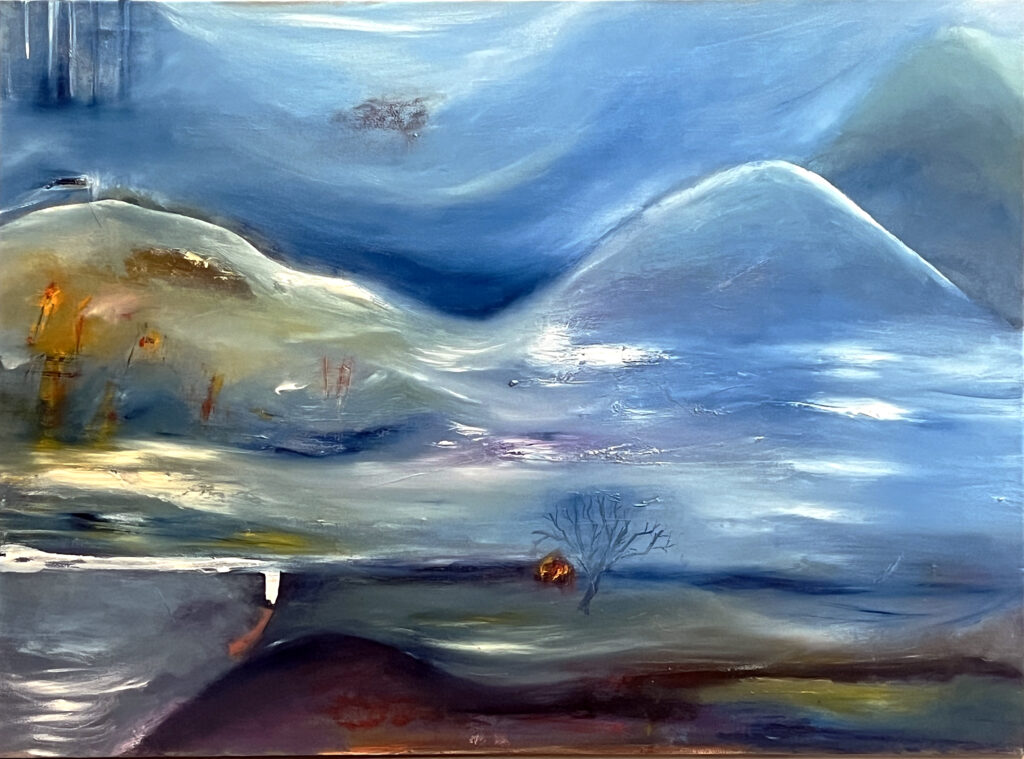
Here’s what her work showed me: Not everything needs to be understood to matter. Some of the most powerful experiences happen in that space where words fail. Where you feel something shift but can’t explain why.
If you’re making work and feeling pressure to package it neatly, to explain every choice maybe resist that. Trust that mystery has value. That uncertainty can be honest. That the right people will connect even if they can’t articulate how.
And if you’re being reduced to your biography instead of your practice keep insisting your work deserves better. Quietly. Firmly. By making work so honest it can’t be ignored.
Follow Wei Xue through the links below and witness paintings that hold uncertainty instead of solving it, that create space instead of filling it, that prove feeling doesn’t need explanation to be real.