



Who Really Won the Turner Prize in 2025?

👁 85 Views
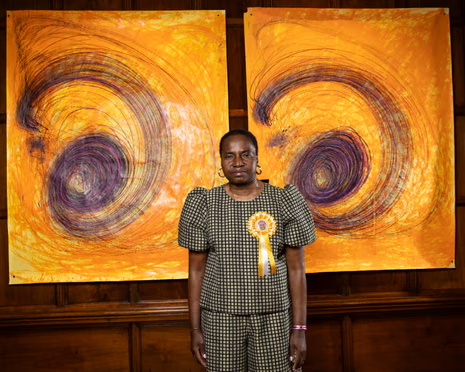
When the Turner Prize was announced in December 2025, the art world didn’t just read a name , it felt a shift. Nnena Kalu, a 59-year-old artist from Glasgow, took home the prestigious Turner Prize, becoming the first artist with a learning disability to ever win Britain’s most celebrated contemporary art award and taking center stage at the ceremony in Bradford, the UK City of Culture. Her work , vividly expressive sculptures and sweeping abstract drawings , drew praise not simply for its identity or backstory, but for its bold, compelling presence that stood out to the jury on its own artistic merit
The Turner Prize was established in 1984 to spotlight contemporary British art and has been an unreliable but influential barometer of what the art establishment values most at any given moment; past winners include Damien Hirst, Anish Kapoor, and Steve McQueen, names that each marked a particular moment in art history. In 2025, that lineage continued with Kalu’s win not as an anomaly, but as an indicator of how the conversation around artistic value and relevance has widened.The Independent
This year’s decision isn’t just notable because of who won, but why she won. The jury, chaired by Tate Britain director Alex Farquharson, emphasized Kalu’s “bold and compelling” work and the “powerful presence” of her sculptures and drawings , a recognition rooted in the sensory impact and directness of her visual language. It speaks to a moment when tactile, experiential art is resonating widely, beyond conventional expectations of medium or narrative.
The broader reaction to Kalu’s win , from celebratory endorsements to sharper critical pushback , reveals much about how contemporary artistic values are being negotiated this year. For some, her victory feels long overdue, a moment that affirms that art can and should defy narrow definitions and embrace forms that challenge and expand perception. For others, the debate itself underscores how ideas about merit, accessibility, and innovation in art remain unsettled
So what does this Turner Prize result really say about artistic values in 2025? It suggests that the art world is increasingly valuing direct experience, sensory engagement, and expressive power , qualities that can come from unexpected places and voices. Kalu’s win highlights a growing willingness among institutions and audiences to rethink what excellence looks like, and whose work gets to define contemporary art’s shape and direction.
1. Artistic Merit or Milestone Moment? Unpacking Kalu’s Win
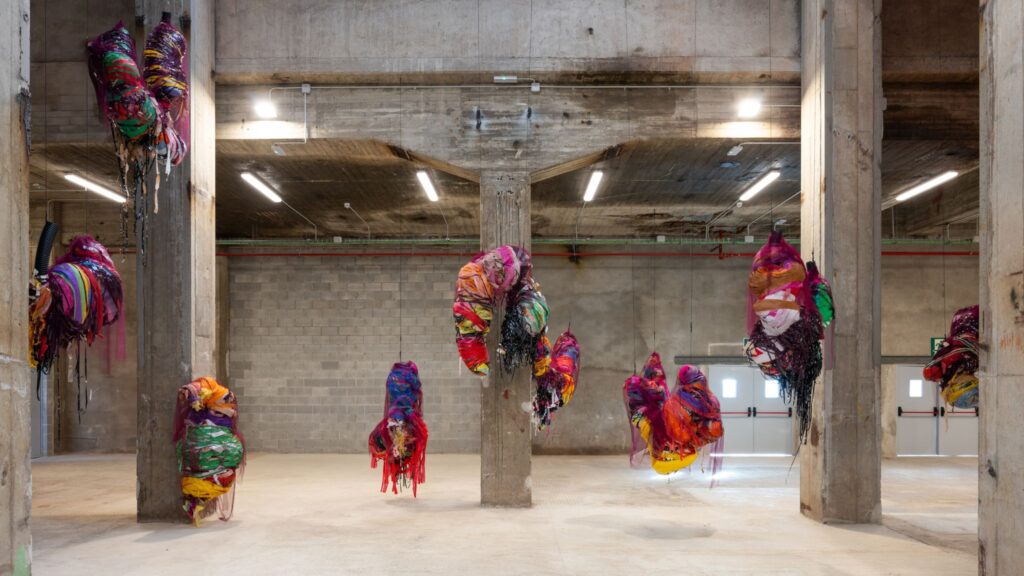
When Nnena Kalu’s name came up as the winner of the 2025 Turner Prize, a lot of people cheered, some whispered, and others scratched their heads , and that reaction tells you something right away about how artistic value is read today. Kalu’s work, described by the judges as “bold and compelling,” includes large-scale abstract drawings alongside cocoon-like hanging sculptures made from layered, repurposed materials like rope, VHS tape, and fabric. It’s tactile, direct, and visually striking in a way that doesn’t depend on art theory to make an impact on the viewer. (Source: Euronews review of the award and jury statement)euronews
But the conversations this win stirred aren’t just about aesthetics , they’re about what merit means in 2025. For many people, the fact that she is the first artist with a learning disability to win the prize felt like a watershed moment, one celebrated by ActionSpace and other supporters as “breaking a very stubborn glass ceiling.” (Source: AP/NDTV coverage of her win)
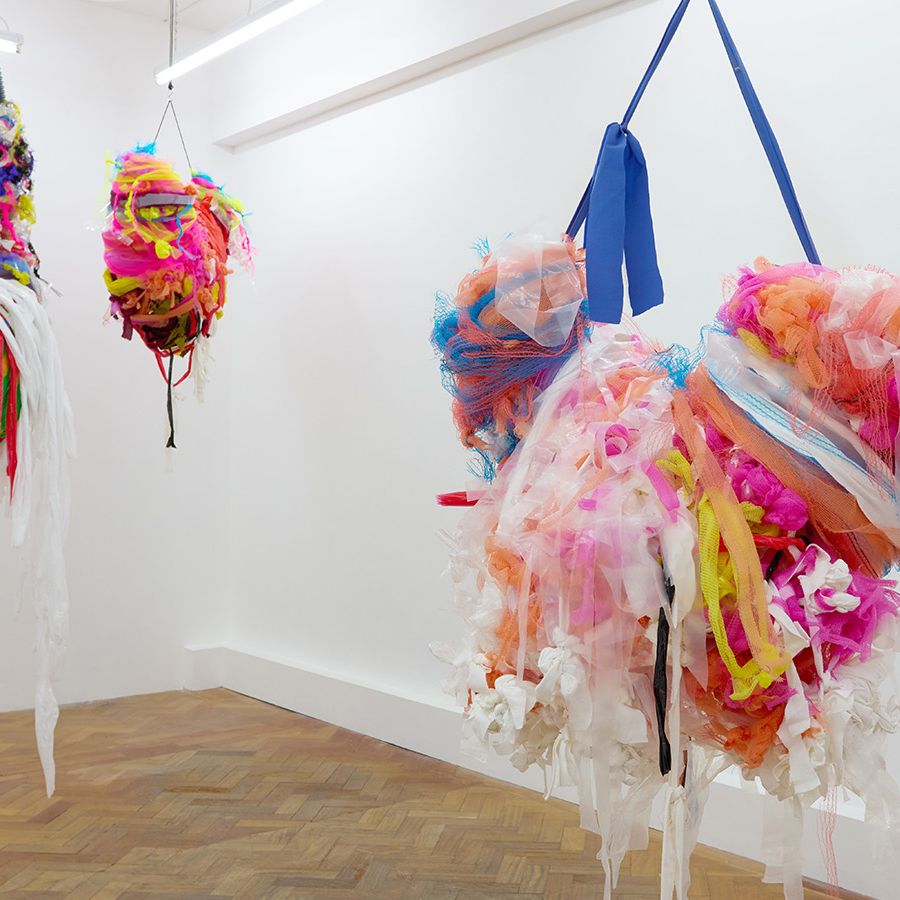
That phrase , glass ceiling , pops up because historically, the Turner Prize has been associated with established contemporary art discourses, sometimes steeped in conceptualism or academic framing. Kalu’s work, in contrast, operates more through visceral gesture and material rhythm than through layered theoretical framing, and that has made this a moment of reflection for both supporters and critics. Artnet News
Interestingly, some critics have framed her win as a kind of identity-narrative triumph, reducing it to “inclusion for inclusion’s sake.” Others have pushed back, arguing that calling Kalu’s achievement a victory for art and not just representation misses half the story. (Source: Eastern Eye commentary on the divide)EasternEye
The jury was clear, however: Kalu’s win was based on artistic quality and presence, not merely identity, and their emphasis on scale, composition, colour, and gesture speaks to an evolving understanding of what strong visual expression can be. (Source: Euronews on jury comments)euronews
So the first interesting takeaway from her win isn’t just that she made history , it’s that the art world is talking openly about how it values art, not just who makes it.
2. Why the Art Itself Matters
Let’s be honest: when a win is historic, people first talk about the story. But if you peel back the headlines, what differentiates Kalu’s work from the rest of the field isn’t just her background , it’s the way her pieces hit the viewer in the gut and then linger in the mind. According to Artsy’s review of her work, the jury credited her “unique command of material, colour and gesture” , language reserved for artists whose work truly holds up on its own merits. (Source: Artsy editorial on Kalu’s work)Artsy
Her sculptures don’t whisper, they announce themselves in space , change the way a room feels. That is something you can’t fake with concept or curatorial framing alone. Her vortex-like drawings and large hanging pieces resist cute categorisation; there’s a physicality and persistent rhythm to them that draws viewers in, almost like a conversation without words. (Source: NDTV/AP description of her work)www.ndtv.com
This isn’t outsider art as a niche curiosity, either , Kalu’s pieces have been shown in major contexts, including group exhibits at Walker Art Gallery in Liverpool and Manifesta 15 in Barcelona, showing that the institutional frame for her work isn’t just a token gesture but a sustained engagement with important international platforms. (Source: Artsy on her exhibition history)Artsy
There’s a real artistic honesty at play here. Her process, which involves repetitive wrapping and binding, echoes movements and rhythms that are visceral and immediate, rather than mediated by dense art criticism language. What she does throws down a challenge to the art world’s often over-intellectualized definitions of “serious” art , and that’s something many viewers, not just art insiders, have picked up on. (Source: Artnet opinion piece on reactions)Artnet News
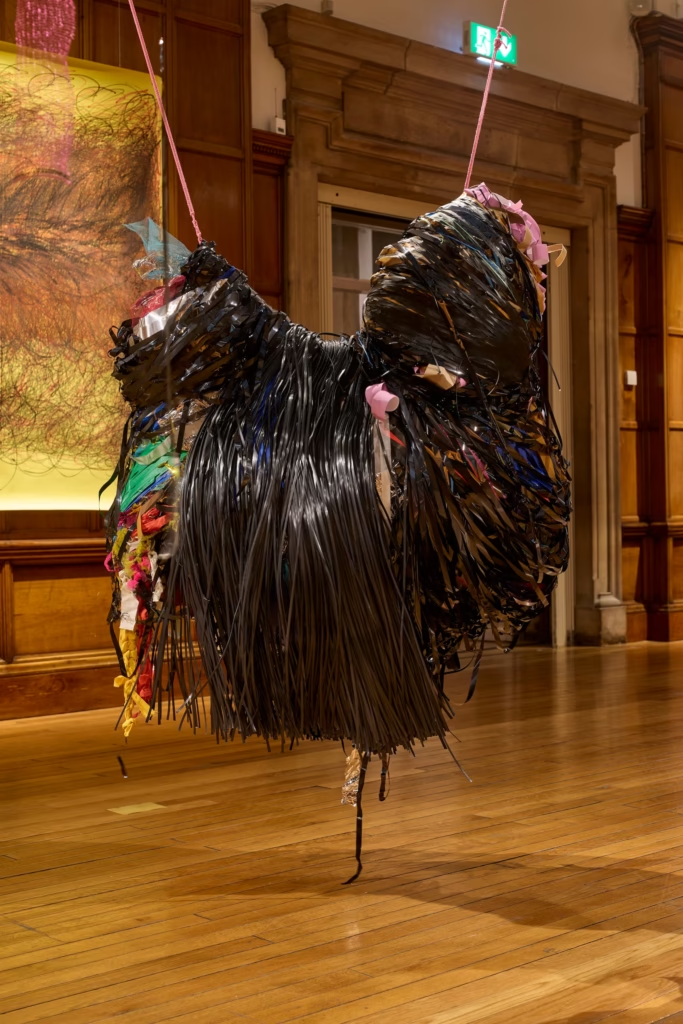
Part of what makes this win rich for analysis is that it’s not a simple narrative. You can celebrate it as progress for inclusion, and you can analyze it as a shift in taste , but to appreciate it most fully, you need to look at why the work resonates on its own artistic terms.
3. Debate in the Art World
If you hang around art criticism long enough, you realize that a major prize win always triggers debate , not just applause. In Kalu’s case, responses range from rapturous praise to dismissive pushback, and that spectrum itself says something about how artistic values are being negotiated right now. Some critics, including high-profile voices, have described the work , particularly the large hanging pieces , in dismissive, almost hostile terms, suggesting that the prize jury confused emotional or symbolic narrative with artistic excellence. (Source: Artnet reaction to media coverage and criticism)Artnet News
That kind of reaction matter-of-factly reveals that for some of the art establishment, traditional markers of institutional approval and conceptual density still hold sway. When a body of work doesn’t fit neatly into familiar critical frameworks , especially one made by someone outside the usual institutional pipelines , there’s often a reflex to minimize or dismiss. But that reflex is precisely what the broader conversation is challenging. (Source: Eastern Eye debate article)EasternEye
And then there’s the enthusiastic embrace from other corners of the art world, which celebrate the prize as not just recognition for one artist, but a moment that reaffirms the value of sensory experience, directness, and material presence. This aligns with an increasing appetite among audiences and institutions for work that engages the body and the senses as much as the intellect , and that’s a distinct shift from the conceptual dominance of previous decades. (Source: The Independent on reactions and artist comments)The Independent
From a values perspective, this debate isn’t a distraction , it’s the heart of what makes the 2025 Turner Prize significant. It shows that the art world isn’t settled on a single definition of value anymore. Some still favor theory and conceptual frameworks, while others are rooting for work that speaks with immediacy and material presence , and Kalu’s win sits directly in that tension. (Source: Euronews on shifts and interpretations)euronews
Ultimately, what the debate reveals is that artistic values are now a living, public conversation, not a closed elite consensus. That’s a meaningful change in itself.
4. What This Win Means
One Turner Prize does not exist in a vacuum, and that is the key thing to understand here. Kalu’s win lines up with a broader institutional shift that has been unfolding across museums, prizes, and major exhibitions for several years now. Institutions are increasingly valuing direct engagement, material intelligence, and lived experience alongside traditional critical frameworks. According to Tate’s own programming over the past decade, there has been a clear increase in exhibitions foregrounding artists whose practices emphasize process, repetition, and embodied making rather than conceptual explanation alone (https://www.tate.org.uk/about-us/press-office).
This shift also shows up in how museums frame accessibility and artistic excellence together rather than as separate goals. Tate has publicly stated that accessibility is not an add-on but part of how artistic quality is understood and evaluated today. That framing matters, because it reframes inclusion as a lens for seeing art more fully, not as a charitable gesture (https://www.tate.org.uk/about-us/mission-and-history).
Importantly, this does not mean standards are being lowered. It means standards are being expanded. When institutions choose artists like Kalu, they are saying that intensity, persistence, and formal confidence count just as much as academic articulation. That resonates with audiences who often connect more immediately with how work feels in space than with wall text explanations.
This shift has also been echoed across Europe. Major exhibitions such as Manifesta and Documenta have increasingly emphasized practices rooted in social context, material exploration, and non-linear thinking. Kalu’s participation in Manifesta 15 places her work firmly inside that evolving institutional conversation (https://www.manifesta.org).
So when the Turner Prize jury made their decision in 2025, it did not come out of nowhere. It reflected years of quiet recalibration about what museums believe contemporary art should do when someone encounters it in real life.
5. How Audiences Are Responding to Art
Another reason this win matters is how closely it aligns with what audiences are already gravitating toward. Visitor studies consistently show that audiences spend more time with works that offer strong visual or sensory presence rather than pieces that rely heavily on explanation. According to research published by the UK’s Audience Agency, immersive and materially engaging works significantly increase dwell time and emotional recall in gallery spaces (https://www.theaudienceagency.org/insight/research).
Kalu’s work fits squarely into that pattern. Her large hanging sculptures physically occupy space in a way that changes how a viewer moves through a room. That kind of bodily engagement is something audiences increasingly value, especially in a world saturated with screens and text. People want to feel something when they enter a gallery.

Tate’s own visitor engagement reporting has highlighted that exhibitions emphasizing scale, texture, and repetition tend to receive stronger qualitative feedback from visitors, particularly younger audiences (https://www.tate.org.uk/about-us/press-office).
What is interesting here is that this audience response is not driven by novelty alone. It is driven by clarity. Work like Kalu’s does not require specialized knowledge to enter into. You can stand in front of it, feel its rhythm, notice its density, and form a response without needing permission from theory.
That matters in 2025 because audiences are less interested in being told why something is important and more interested in discovering that feeling themselves. The Turner Prize jury’s decision reflects an understanding that audience engagement and artistic value are not separate conversations anymore.
6. What This Signals for Future Prizes, Artists, and Gatekeepers
If you look at Kalu’s win as a signal rather than a single event, it points to a future where gatekeeping looks different. Prizes like the Turner Prize do more than reward individual artists. They send messages to curators, collectors, and emerging artists about what kinds of practices are worth pursuing and supporting.
For artists, this moment quietly validates practices that are process-driven, repetitive, and deeply physical. It suggests that you do not need to translate your work into dense theoretical language for it to be taken seriously. That is a meaningful reassurance for many artists working outside traditional academic pipelines.
For institutions, the message is equally clear. Artistic value is increasingly being assessed through impact, presence, and resonance, not just intellectual positioning. According to ArtReview’s analysis of recent institutional trends, museums and prizes are responding to audience fatigue with overly cerebral exhibitions by embracing work that communicates through form and material first (https://artreview.com).
Collectors are paying attention too. While the Turner Prize itself is not a market award, past winners have often seen increased institutional acquisitions and exhibition opportunities following their win. Artsy has repeatedly documented how major awards influence visibility and long-term career sustainability rather than short-term sales (https://www.artsy.net/article).
Taken together, what the 2025 Turner Prize win really says is this: artistic value is being defined more openly, more generously, and more attentively to how art actually operates in the world. Not as theory. Not as symbolism alone. But as something that occupies space, time, and human attention in a very real way.