
When Working with Steel Feels More like Working with a Partner


In this interview, Jersey-based blacksmith Theo Hey discusses how his practice has grown from making useful objects to exploring form, process, and expression through steel. What began as a fascination with how things are made has turned into a thoughtful exploration of how material and maker interact. Theo’s introduction to forging came at just eleven years old, watching a smith shape a simple hook at a country fair. That early spark stayed with him, guiding him through years of practical work before he began to see blacksmithing as something that could also question, provoke and inspire.
He shares how studying at Hereford College of Arts changed his view of what making could be. Through lectures, exposure to art history and the stories of other makers, he began to understand that craft and art sit much closer together than he once thought. Hearing world-renowned metalworkers speak about their influences showed him how creative intention can shift the meaning of a piece, turning technical skill into communication.
Theo’s process balances structure with freedom. He begins with sketches and simple digital models to guide the form, but once at the forge, he lets the steel react. He describes this as a kind of conversation, one where he suggests a direction and the material responds. The surface marks left behind are an essential part of that dialogue, showing the trace of each interaction and decision rather than being polished away.
His recent series, Unfurled/Reformed, explores the relationship between built and natural forms, combining the strength of steel with the rhythm and flow of plant growth. Nature continues to be a key source of inspiration for him, both as visual reference and as a system of structure and movement.
Life in Jersey gives Theo’s practice a steady rhythm. The island’s landscape offers constant material for study, while his restoration work with Victorian ironwork keeps him grounded in the techniques and traditions of the past. Through it all runs a consistent thread: a curiosity about how making, material, and intention can meet to create objects that carry a sense of process and presence.
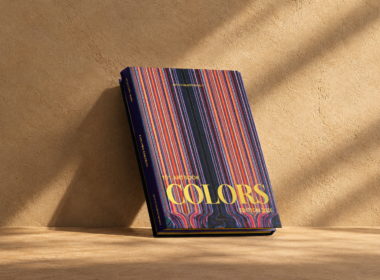
Theo Hey is a featured artist in our book called “The Great Book of Art Makers” You can explore her journey and the stories of other artists by purchasing the book here:
https://shop.artstoheartsproject.com/products/art-and-woman-edition-

My name is Theo Hey, and I am an emerging artist blacksmith based in Jersey, Channel Islands. I have always been drawn to making. My first introduction to forging was at a country fair when I was 11, watching a smith make a simple hook. Blacksmithing captivated me through its pairing of functionality and artistic creativity to produce beauty in everyday objects. This thread of functionality was fundamental to me, an aspect I struggled to let go of. It wasn’t until my time at university that I truly saw the value of “art for art’s sake” and realised that some things are allowed just to be beautiful, while others exist to evoke emotion or thought. Thus began my journey into sculptural blacksmithing.
Forging has a place in the public consciousness as purely practical, often rural, and mostly obsolete —a relic of the past reserved only for conservation work and weekend hobbyists. But due to the process’s incredible versatility and strong materiality, it deserves its place on the contemporary art stage as much as any 3D craft does. To me, narrative-making is vital to the social value of handmade objects in the modern world of automation. Hammer marks, file scuffs, and forge textures provide physical evidence of my personal interaction with the work, which, when viewed by the audience, create a direct link between us —something often missing in the objects we buy. Steel has a close association with industrial design: its malleability when hot, paired with its rigidity and strength when cold, earns it the title of the material of construction.
However, given the opportunity to flow and react to the hammer without constraint, wild ‘grown’ shapes emerge. This material’s ability to exert its own apparent agency over its form when forged led me to research the field of New Materialism. This theoretical framework decentres human input from the design process, allowing me to work cooperatively rather than directly with my medium. Each forging process has direct and indirect effects, which are usually corrected. For example, fullering stretches the steel and causes some bending that needs to be straightened, but by leaving a few of these side effects in, the piece becomes dynamic, adding depth and movement to my work. This process-driven methodology pairs intentional forging with the steel’s natural reactivity to guide it into a constructed form whilst preserving its organic character.

1. What first made you see blacksmithing as something that could go beyond craft and become a form of creative expression?
Blacksmithing seemed a technical pursuit to me for a long time: there was beauty in the objects, but it mostly came from the impressive application of hard-won skill. My time at Hereford College of Arts really changed this view for me, partly through the study of art history, which showed me how the different movements affected the design of everyday objects, demonstrating to me how slight the separation between art and craft truly is.
Guest lectures were another experience which got me to consider what my work expressed. Hearing world-renowned artists talk with passion about their practices and influences opened my eyes to the extent to which creative intent can change a piece’s impact. An example would be Junko Mori: I was already a fan of her work from an aesthetic perspective, but hearing her talk about the history behind her series Propagation (a childhood spent cultivating vegetables in her family allotment at the edge of a city), I found myself viewing the series with an emotional appreciation rather than simply visual.
Forged textures show the history of the piece’s creation, my interaction with blank stock to create a complex three-dimensional shape with character and intent.
Theo Hey

2. Your pieces seem to balance control and spontaneity. When you’re at the forge, how do you know when to let the steel lead the way and when to step in?
When I have an idea for a piece, I tend to create a rough sketch, then make a quick-and-dirty sample with no set plan, which helps refine the design in my head. From there, I create a simple CAD model which contains all the key features of my design, but leaves the broader details blank. Most of my work is composed of multiple parts which need to fit together, which creates a few strict constraints I need to follow, so having this visual guide to work to helps keep me from straying too far from the design, whilst leaving me enough freedom to experiment and improvise.

3. You’ve described working “with” the metal rather than against it. What does that relationship feel like in practice — is it more like a dialogue or a negotiation?
When forging, you are using directed force to change the dimensions or direction of the steel, but the steel has its own internal stresses, which interact with your forces and affect the outcome. Sometimes, to get the desired effect, the steel really has to be fought with, the same processes repeated multiple times, correcting for any unwanted effects as you go. Recently, however, I’ve been focusing on using these side effects to my advantage by carefully choosing the techniques I use so the steel works with me.
Say I wanted an even spiral in my piece, I could curve the steel around into a flat circle, then stretch it out in the other plane. What I’ve been doing instead is forging the steel along the outside edge, which causes it to stretch, compressing the inside edge, leading to a natural spiral forming. In this way ,this method feels like a dialogue, I’m saying “I would like this shape, what process will get me there in the fewest steps possible?” and the steel provides an answer.
4. The textures and marks in your work carry a real sense of touch. Do you think about the viewer noticing those details, or do they come naturally as part of your process?
The textures in my work do appear naturally as part of the process, but I chose not to polish them out at the end. Forged textures reveal the piece’s history, my personal interaction with blank stock to create a complex three-dimensional shape with character and intent. I care about process, and making marks is the path for viewers to see that process in the finished piece.

When forging you are using directed force to change the dimensions or direction of the steel, but the steel has its own internal stresses which interact with your forces and affect the outcome.
Theo Hey
5. Nature seems to run quietly through your work, especially in Unfurled/Reformed. How do organic forms like plants or seed pods find their way into what you make?
Nature is a source of endless visual and intellectual intrigue. From the microscopic to the monumental, it’s unfathomably complex but not random. From geometric lattices of cell colonies to mathematical fractals of leaf capillaries, wave interference patterns on rippling water, and cathedral-like spires on the surface of microscopic spores, organic forms contain hundreds of fascinating structures. Whenever I’m searching for inspiration on what to make, I find myself looking closer at the nature around me and always find something worth focusing on.

6. Living and working in Jersey must give your practice a certain rhythm. How does your environment influence the way you think and create?
Living in Jersey affects my work in several ways. Of course, being on a small island with plenty of countryside and coastline is a fantastic source of primary research. Still, an unexpected influence would be from the amount of heritage ironwork. A large portion of my business comes from restoring Victorian railings using traditional technics, such as hot punching, riveting and forgewelds. Whilst this restoration work doesn’t offer much opportunity for creative expression, I do get plenty of technical practice, which I then apply to my artistic work.

Theo Hey’s work shows how traditional blacksmithing can move beyond utility and become a conversation between maker, material, and process. His approach invites the steel to take part in shaping its final form, allowing minor imperfections and natural reactions to guide the outcome. Through this, his sculptures carry a quiet rhythm of control and release.
What we learn from Theo’s journey is that making is not only about mastering technique, but also about listening to the material, understanding how it behaves, and letting that dialogue shape the result. His practice offers a thoughtful look at how craft, nature, and experimentation can come together to create work that feels alive with process and intent.
To learn more about Theo, click the following links to visit her profile.
Arts to Hearts Project is a global media, publishing, and education company for
Artists & Creatives, where an international audience will see your work of art, patrons, collectors, gallerists, and fellow artists. Access exclusive publishing opportunities and over 1,000 resources to grow your career and connect with like-minded creatives worldwide. Click here to learn about our open calls.