




The Weirdest Ways Artists Became Famous, From Van Gogh to Banksy

Not every famous artist became well known because people immediately understood their work. Some became famous after death. Some built entire public personas around mystery and spectacle. Others shocked audiences, challenged institutions, or accidentally turned themselves into cultural phenomena.
The history of art is filled with strange fame stories that feel almost impossible in hindsight. In fact, some of the weirdest ways artists became famous had little to do with talent alone and everything to do with timing, controversy, reinvention, or pure chance. One artist became legendary only because his family refused to let his work disappear. Another transformed anonymity into global recognition. One treated celebrity itself as an artistic medium, while another changed modern art forever simply by placing a urinal inside a gallery.
What makes these stories fascinating is not just the art they created, but the unusual ways the world finally decided to pay attention to them.
From street walls in New York to silent museum rooms and chaotic public performances, these artists became famous through obsession, controversy, reinvention, and sometimes pure accident. And in many cases, the stories behind their fame became just as unforgettable as the artworks themselves.
Vincent van Gogh Became Famous Only After He Died
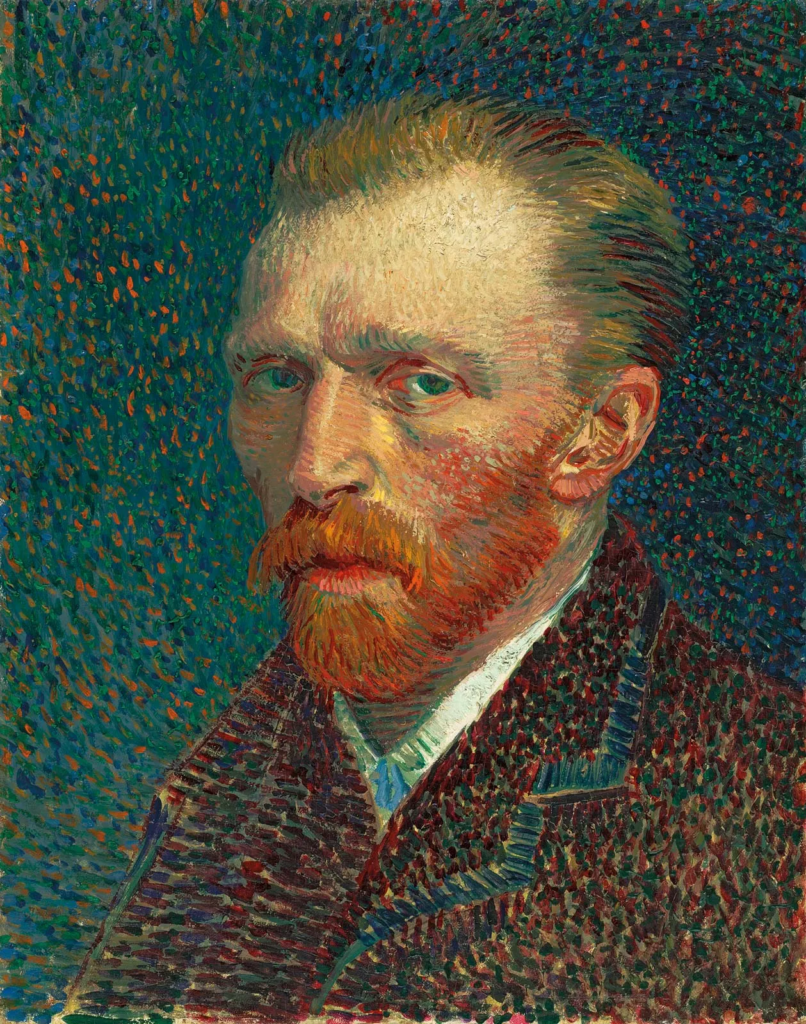
Before Vincent van Gogh became one of the most recognizable artists in history, he spent most of his life convinced he had failed.
Today, his paintings appear on tote bags, phone cases, museum walls, and immersive exhibitions across the world. But during his lifetime, van Gogh struggled financially, battled severe mental health crises, and lived largely in obscurity. He painted obsessively, producing more than 2,000 artworks in just over a decade, yet sold almost nothing while he was alive. The often-repeated claim that he sold only one painting is debated by historians, but what is certain is that commercial success never arrived for him in any meaningful way.
His younger brother Theo supported him emotionally and financially for years, preserving hundreds of Vincent’s letters along the way. But the strange part of van Gogh’s fame story came after both brothers died. Theo’s widow, Johanna van Gogh-Bonger, inherited the paintings and quietly began the enormous task of organizing exhibitions, publishing letters, and introducing Vincent’s work to the public at a time when almost nobody knew who he was.
Without Johanna’s efforts, van Gogh may never have become a global icon.
There is something almost unbelievable about the fact that one of the world’s most famous artists spent his life feeling invisible. The mythology surrounding van Gogh today, the tortured genius, the misunderstood painter, the solitary figure with the red beard and piercing eyes, was built slowly, years after he was gone.
Banksy Became Famous by Never Revealing Who He Was
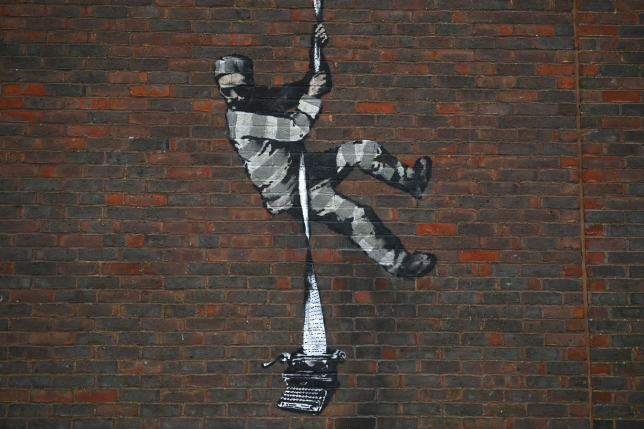
Most artists spend years trying to get people to recognize their name. Banksy became famous by making sure nobody could recognize his face.
The anonymous street artist began appearing in Bristol, England, during the 1990s, spray-painting politically charged images onto public walls, bridges, and buildings. His stenciled works were sharp, funny, rebellious, and instantly understandable, rats carrying signs, children floating away with balloons, riot police with smiley faces. But as the artworks spread across cities, so did the mystery surrounding the person behind them.
Nobody officially knew who Banksy was.
That mystery became part of the art itself. Newspapers tried to uncover his identity. Fans analyzed interviews, photographs, and old footage like detectives. Rumors linked him to musicians, graffiti crews, and even entire collectives. The less Banksy appeared in public, the larger the fascination became.
At the same time, the art world did something even stranger: it transformed illegal street graffiti into luxury collectibles. Walls were literally cut from buildings so Banksy works could be sold at auctions for enormous sums. Collectors who once dismissed graffiti suddenly treated it like treasure.
Banksy understood something long before the internet fully embraced anonymity as branding: mystery creates obsession. By refusing celebrity culture while simultaneously becoming one of the most famous artists alive, he turned invisibility into a global identity.
Salvador Dalí Became Famous by Turning Himself Into a Spectacle
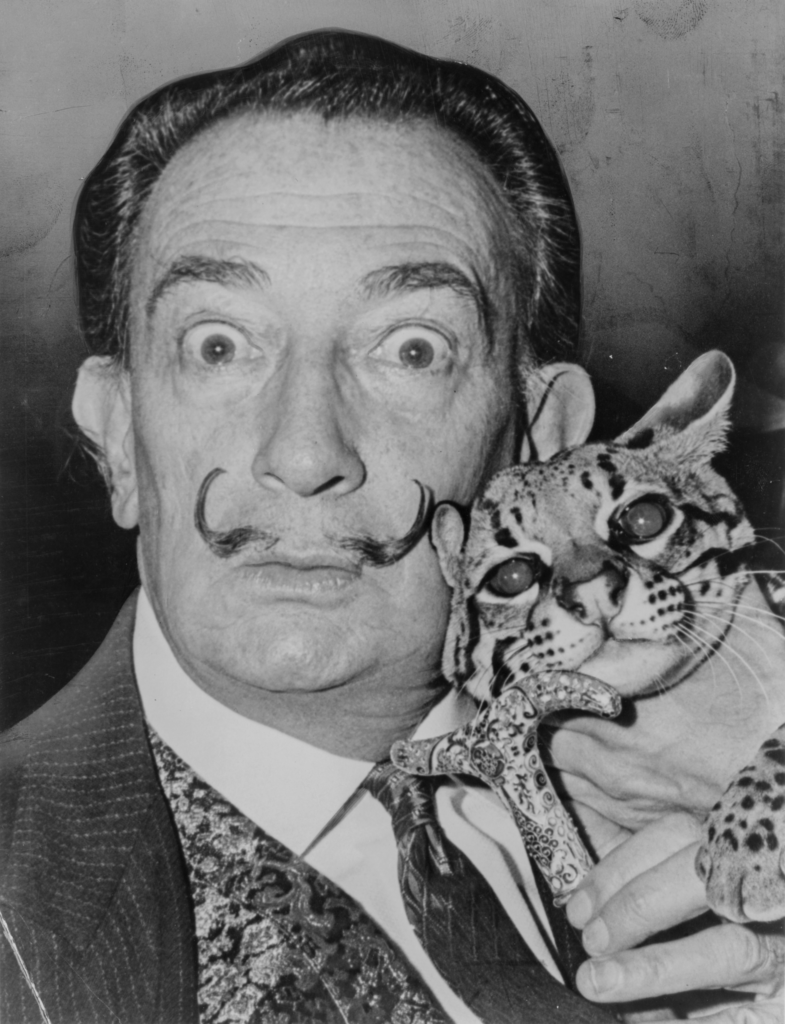
Long before artists carefully built personal brands online, Salvador Dalí understood that fame itself could become an art form.
The Salvador Dalí people remember today is not just the painter behind melting clocks and dreamlike landscapes. It is the man with the razor-sharp mustache, the dramatic stare, the strange interviews, and the constant performances that made him impossible to ignore. Dalí didn’t simply create surrealism, he lived inside it.
Over the years, he staged increasingly bizarre public appearances. He once arrived at a lecture in a deep-sea diving suit, nearly suffocating inside it before assistants managed to remove the helmet. Another time, he walked around Paris with a pet anteater. He gave interviews that sounded intentionally absurd, made outrageous statements to the press, and treated attention almost like another artistic medium.
Some critics thought he had become too theatrical. Others believed he was a genius at manipulating media long before modern celebrity culture existed. Either way, it worked.
Dalí became one of the few twentieth-century artists whose face was as recognizable as his paintings. He understood that people were not just looking for great art, they were looking for unforgettable personalities. By transforming himself into a living performance, Dalí blurred the line between artist, entertainer, and myth in a way that still feels strangely modern today.
Andy Warhol Became Famous by Turning Everyday Fame Into Art
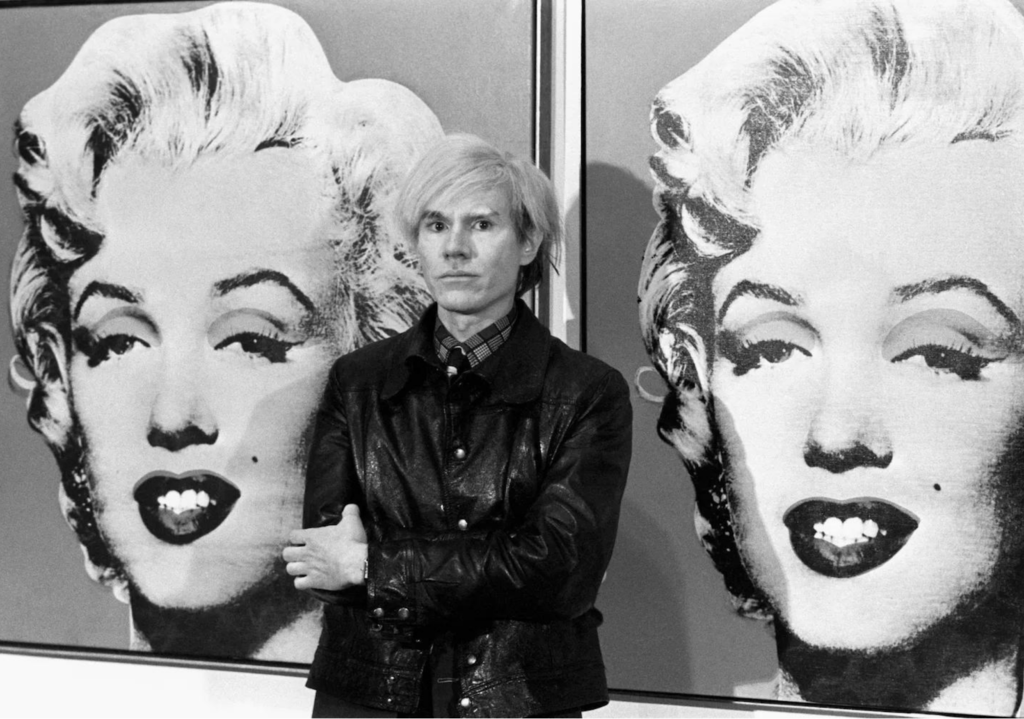
Before social media turned everyday life into performance, Andy Warhol was already turning fame itself into a kind of artwork.
In the 1960s, while much of the art world still focused on traditional painting and serious abstraction, Warhol became fascinated with things many people considered superficial: celebrities, advertisements, soup cans, tabloids, television, and mass production. He painted repeated images of Marilyn Monroe, Elvis Presley, and Coca-Cola bottles with the same visual language used in commercial printing, making fine art look strangely industrial.
But Warhol’s real breakthrough was understanding how modern fame worked.
He surrounded himself with musicians, actors, models, socialites, and underground performers inside his legendary New York studio, The Factory. The space became part nightclub, part film set, part art laboratory. Warhol filmed people endlessly, recorded conversations, hosted chaotic gatherings, and slowly turned his own life into a spectacle people wanted access to.
His famous line that “everyone will be world-famous for fifteen minutes” sounded absurd at the time. Now it feels almost prophetic.
What made Warhol’s rise so unusual was that he did not become famous despite popular culture, he became famous by fully embracing it. At a moment when many artists tried to separate “high art” from consumer culture, Warhol collapsed the distance between them completely. In the process, he helped invent the blueprint for the modern celebrity artist.
Yayoi Kusama Turned Obsession Into a Global Phenomenon

For years, Yayoi Kusama was known mainly within art circles. Today, people wait in hours-long lines just to spend a few seconds inside her installations.
Her rise to global fame did not happen in the traditional way. Kusama built her artistic world from repetition, endless dots, mirrored rooms, repeating patterns, and immersive spaces that seem to stretch infinitely in every direction. She has spoken openly about experiencing hallucinations and obsessive visions since childhood, describing how patterns would consume entire rooms, objects, and even people around her.
Instead of hiding those experiences, she transformed them into art.
In the 1960s, Kusama staged provocative performances in New York involving body painting, public happenings, and anti-war demonstrations that shocked audiences at the time. But decades later, it was her Infinity Mirror Rooms that introduced her to an entirely new generation. Visitors began sharing photographs online, turning the installations into some of the most recognizable museum experiences in the world.
The strange irony of Kusama’s fame is that deeply personal psychological experiences became globally shareable images. Her work exists somewhere between intimacy and spectacle: part meditation, part illusion, part internet phenomenon.
At a time when museums increasingly compete for viral moments, Kusama’s immersive worlds proved that emotional experience, visual repetition, and social media could merge into one of the most powerful forms of contemporary artistic fame.
Marcel Duchamp Became Famous by Calling a Urinal Art
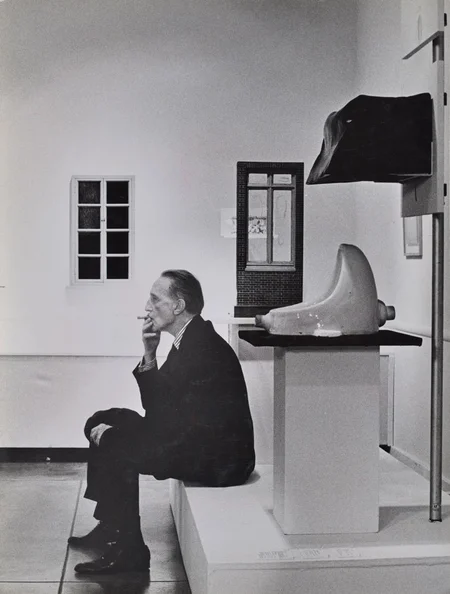
In 1917, an artist bought a porcelain urinal, signed it with a fake name, submitted it to an exhibition, and accidentally changed the course of modern art.
The artist was Marcel Duchamp. The artwork was titled Fountain. And almost nobody knew what to do with it.
At the time, Duchamp was already growing tired of traditional ideas about artistic skill and beauty. Instead of painting something by hand, he selected an ordinary manufactured object, rotated it sideways, signed it “R. Mutt,” and presented it as art. The exhibition he submitted it to claimed that any artist who paid the fee could display their work. But when organizers saw the urinal, they quietly removed it from view.
The scandal exploded almost immediately.
Some critics believed Duchamp was mocking the art world entirely. Others argued that the real artwork was not the object itself, but the idea behind it: if an artist chooses something and places it in a gallery, does it become art simply because they say it is?
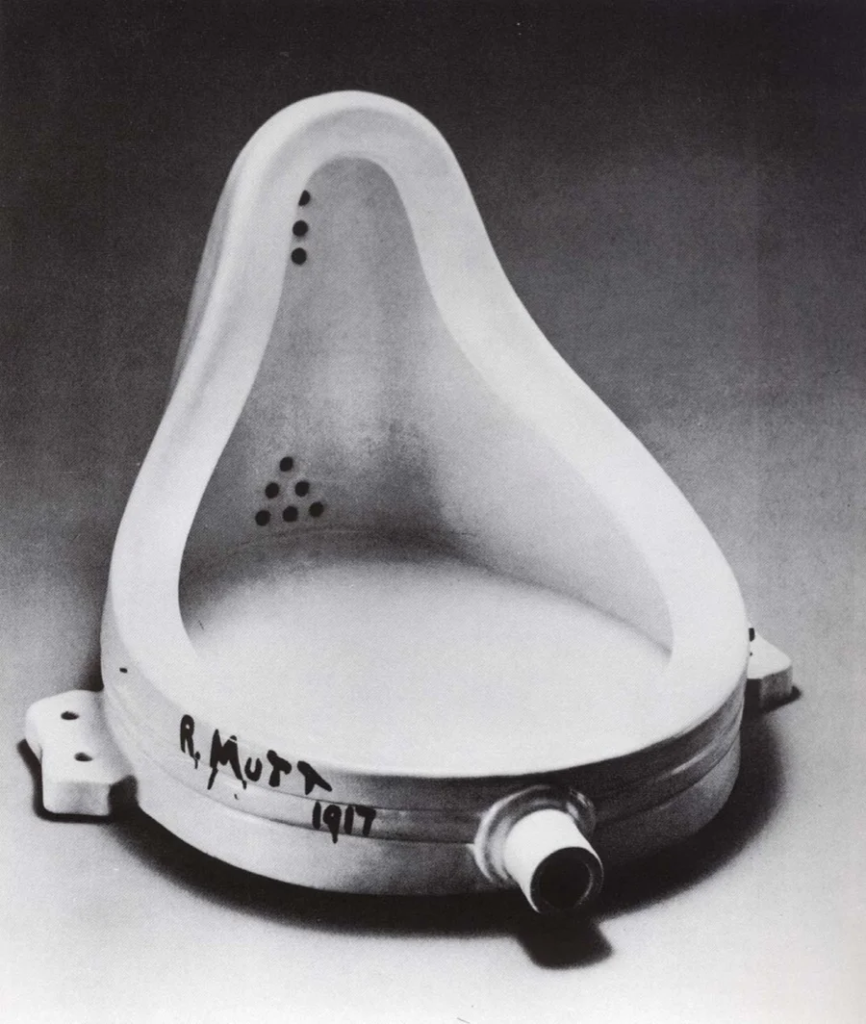
That question made Duchamp famous.
What makes his rise so strange is that one of the most influential artists of the twentieth century became legendary not through technical mastery, but through an act many people initially dismissed as a joke. More than a century later, Fountain still irritates, fascinates, and divides audiences, which is probably exactly what Duchamp wanted.
Jean-Michel Basquiat Went From Street Graffiti to the Center of the Art World
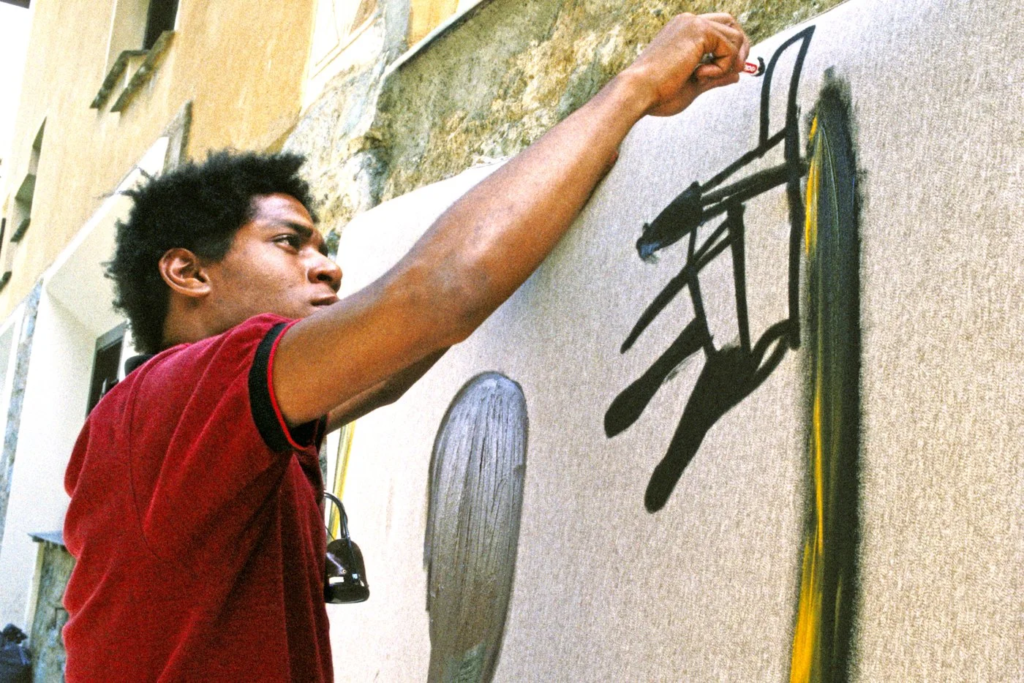
Before galleries and collectors fought over his paintings, Jean-Michel Basquiat was anonymously writing cryptic messages across downtown Manhattan.
In the late 1970s, Basquiat and his friend Al Diaz began spray-painting walls and buildings under the name “SAMO,” short for “same old shit.” Instead of traditional graffiti tags, the messages were strange, poetic, sarcastic, and impossible to ignore. Phrases like “SAMO AS AN END TO MINDWASH RELIGION” appeared across SoHo and the Lower East Side, turning the city itself into a kind of public notebook.
People became obsessed with figuring out who was behind them.
At the same time, Basquiat was living a chaotic downtown life, sleeping on friends’ couches, selling handmade postcards and painted clothing, and moving through New York’s underground music and art scenes. His breakthrough came quickly once gallery owners noticed that the mysterious graffiti artist had begun translating the same raw energy onto canvas.
By his early twenties, Basquiat had become one of the most talked-about young artists in America. His paintings, filled with fractured text, crowns, anatomy sketches, jazz references, and sharp commentary on race and power, felt urgent and entirely new. Collaborations with Andy Warhol pushed him even further into the spotlight.
What made Basquiat’s fame story so unusual was the speed of it all. In just a few years, he went from writing on city walls anonymously to becoming one of the defining faces of the contemporary art world.
Fame in the art world has never followed a predictable path. Some artists became legends only after they died, while others carefully transformed themselves into spectacles, mysteries, or cultural phenomena that people could not stop talking about. In many cases, the stories behind their rise became just as memorable as the artworks themselves.
What makes these artists so fascinating is not only their talent, but the strange ways they forced the world to pay attention. Whether it was through anonymity, controversy, obsession, performance, or pure reinvention, each of them changed the meaning of what it means to be an artist in their own time.
And perhaps that is what makes art history so endlessly interesting: sometimes the most unforgettable artists are not the ones who followed the rules, but the ones who completely rewrote them.
Which of these fame stories did you find the strangest?
And if these unusual rise-to-fame stories surprised you, the art world’s obsession with the bizarre does not stop there. Some of the strangest objects ever imagined have also ended up selling for astonishing amounts at auction, proving that art history is often stranger than fiction. You can read more in The Strangest Things Ever Sold at Auction.