
This Artist Thinks Clarity Is Overrated I Jarik Jongman

👁 60 Views
For some artists, creativity arrives with clarity, a straight line, a chosen path. For Jarik Jongman, it arrived as a quiet echo that refused to leave, a pull felt long before it was understood. Art wasn’t a childhood proclamation or a destined route it was a whisper that grew louder over time, returning again and again until it became impossible to ignore.
This week in our Best of Art World series we are very honoured to share Jarik’s journey, from early sketches and paint-stained afternoons to years spent exploring different jobs, searching, wandering toward purpose, his journey unfolded not through certainty but through curiosity. It wasn’t until his late twenties, stepping into art school with lived experience already behind him, that the calling began to take form. And even then, the true awakening came later assisting a renowned artist in the South of France, watching creation happen at scale, feeling the pulse of a real studio and realizing this could be a life, this could be a world worth claiming.

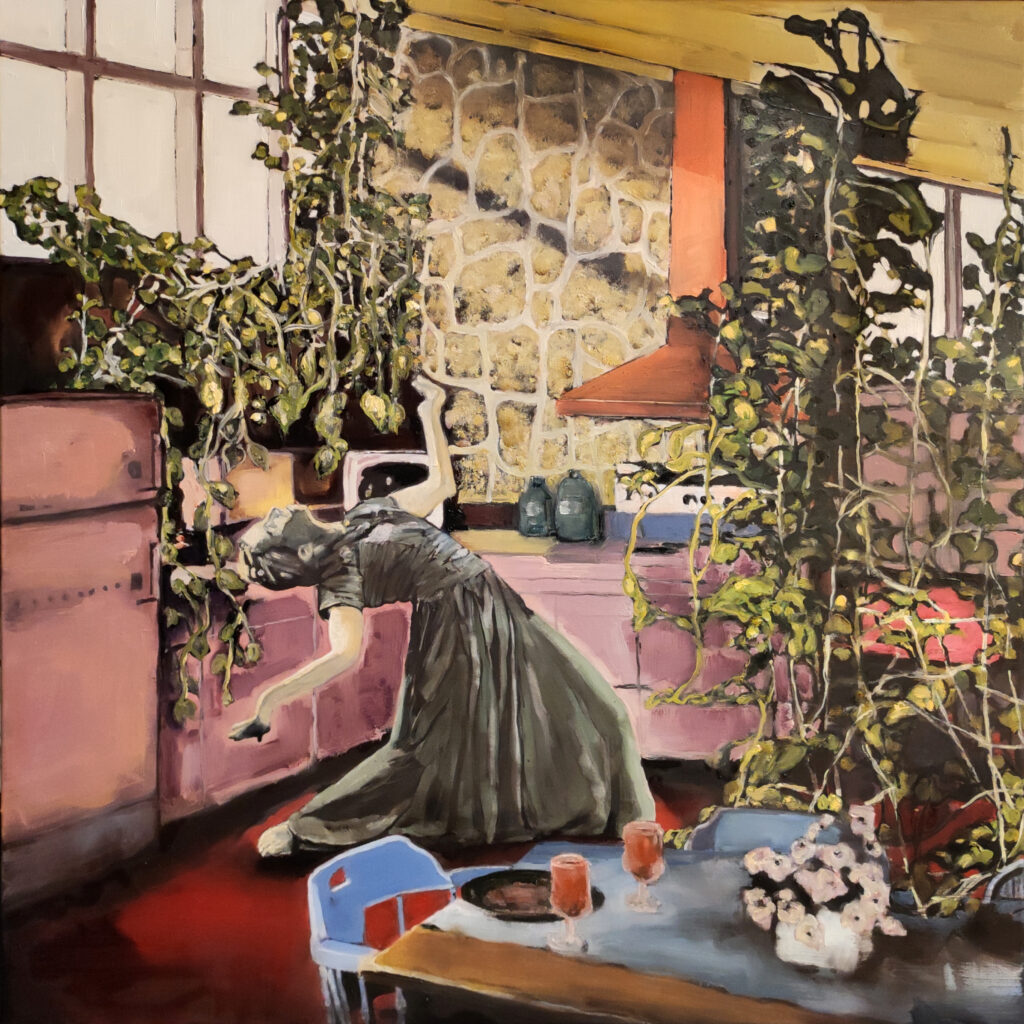
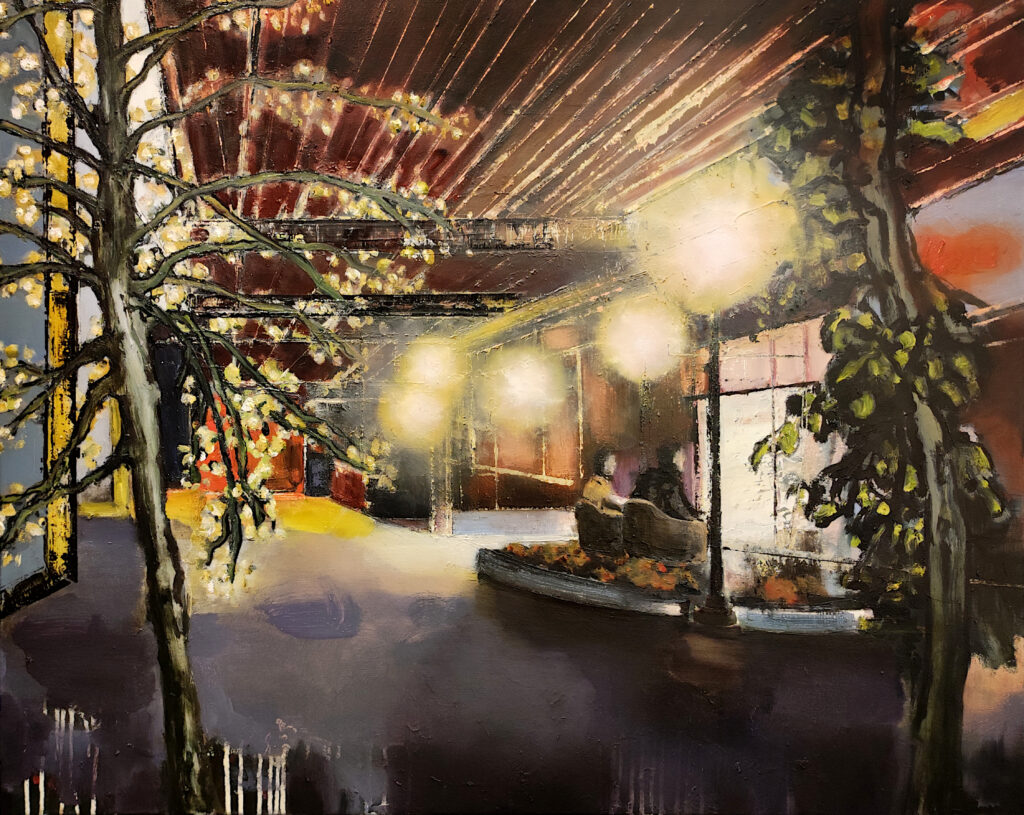
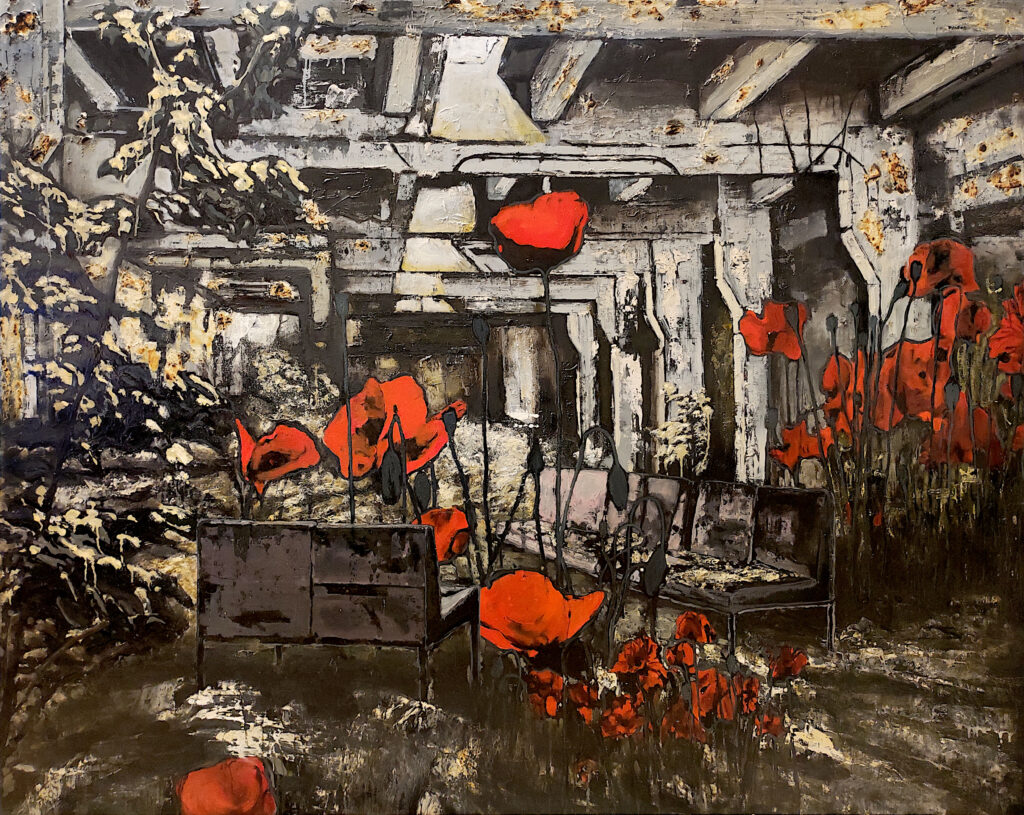
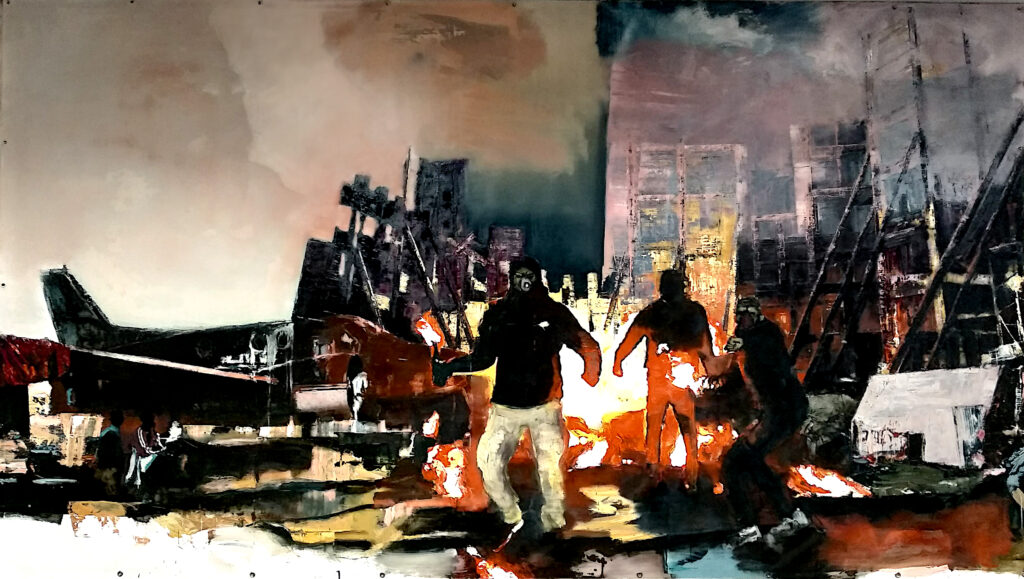
His practice refuses stillness or repetition. It shifts, evolves, stretches abstraction meets narrative, history merges with metaphysics, and architecture dissolves into organic reclamation as ruined spaces bloom back into nature. Each painting wrestles with time, transformation, and the fragile myth of permanence. There is restraint and rebellion, ambiguity and clarity, a constant dancing between the seen and the felt.
For him, art is not a statement, it is an inquiry. It is mystery held open. It is permission for the viewer to think, sense, and interpret without being told where to land. The work breathes between meaning and ambiguity, asking us not only to look, but to wonder.
To wander through his landscapes and engage with their mysteries, we must start with the voice of the artist himself. Let’s hear Jarik speak.
Can you share your journey of becoming an artist? Was their any turning point in your life that led to choosing art as a career?
I come from an artistic background and have been drawing and painting from a young age. After secondary school I had no idea what to study so I went out to have a number of different jobs. I didn’t go to art school until my late twenties and after that, it still wasn’t until after I had worked as an assistant to a famous artist in the south of France, that I started thinking that art could be my career.
What are the main emotions/themes that you aim to invoke through your works?
I find myself making different types of work, both in style and technique, as well as thematically. Maybe because I get a bit bored with doing the same thing. But I like to think of it as an urge to experiment and try new approaches. Some recurring themes in my work include metaphysics, transience, history and the human condition. Also, in a recent series of work I depict abandoned buildings overtaken by nature Those works are both unsettling and comforting due to the underlying idea that, after all human activity has ceased, the earth and nature will endure. As far as aiming to invoke certain emotions; I think it’s difficult to try and instil in the viewer the same emotions that I am feeling as the creator of the work. Also, I’m not sure if you would necessarily want to do that. The artwork is in a way only created in the mind of the viewer, through their personal filter of knowledge and experience. And much also takes place on a subconscious level so I think it’s best to always have some ambiguity or a level of mysteriousness in the work.

Can you take us through your process of creation, from ideation to completion?
Depending on whether there are some parameters in place, like making new work for a themed exhibition or, as I recently had the opportunity of doing, being invited to a residency at the Vincent van Gogh House where the work had to relate to Van Gogh in some way, the process can vary. But I generally start from images that I have collected. In the past those were physical images like photographs, postcards, etc. but nowadays I find them mostly on the internet. I collect them without much thought, perhaps on the basis of some subconscious trigger, but there is obviously something that attracts me to them. When preparing for a new series of work I will be juxtaposing them on the screen and by doing so a certain theme or meaning will emerge, after a bit of time has passed. I then make digital sketches of the selected works, often in a collage format, which will serve as a basis for the paintings. Because I work with oil paint I usually work on multiple pieces at the same time. Which is also helpful because working on one piece alone can result in you losing the oversight of the idea you had and losing the insight of whether the painting is good or not. It’s best to then leave them for a while and I will often find that they have ‘finished themselves’.
How do you title your works and how do these titles guide the viewer’s perception or expectations of your work?
You can obviously communicate much of what a painting might be about but I often also just like to use a very generic description, or give it an ironic title. For instance, one of my first exhibitions was entitled ‘All Will Be Explained’, in which of course little to nothing was explained to the viewer.
You’ve received honors including the Luxembourg Art Prize and Gottlieb grant. How have these acknowledgments influenced your momentum, practice, and self-belief?
It’s absolutely wonderful to find yourself being honoured in these ways. And it does wonders to boost your professional self-esteem. In the case of the Luxembourg Art Prize, it’s hard to pinpoint how much of the momentum is directly linked to the prize but the financial breathing room it offers is priceless and allows you to focus and spend more time on your work. Likewise, receiving a grant like the Gottlieb grant can make all the difference, especially since I received it right when the Covid pandemic hit the Netherlands.
What are the areas, materials, and themes are you curious to explore next?
The only concrete plans I have are for next year. I would like to present my work at an art fair in Amsterdam and at the end of the year I will be doing a residency at the Drents museum, focusing again on Vincent van Gogh. One of the things I’d like to do there is trying to paint with peat, as this has been endemic to the region for thousands of years. For now, I might further explore painting on enlarged photographs, creating an artist’s book with them, or think about making another installation. But I have a bit of time right now so I’m taking a break at the moment. I feel a bit stuck, and I want to try and find a new direction. It’s a great feeling if you manage to surprise yourself and be excited about new work and that’s what I’m hoping to achieve during this period.

As our conversation with Jarik comes to a close, one truth rises gently through his words and work: art is not fixed terrain, it is evolution, uncertainty, and a willingness to remain porous to the world. His practice does not cling to comfort or formula, but instead finds purpose in exploration, in tension, in the quiet bravery of not yet knowing.
Across abandoned interiors reclaimed by nature, layered meanings, and compositions where time breathes and structures dissolve, his paintings remind us that nothing is static not spaces, not histories, not the self.

In an art world eager for finality and identity, he offers instead the gift of becoming a practice rooted in experimentation, introspection, and the quiet confidence that transformation is not only inevitable, but essential. His story is not one of sudden arrival, but of patience, persistence, and trust in the slow unfolding of creative purpose.
Follow Jarik as his journey continues into new materials, new questions, and new ways of seeing. Because if his work teaches us anything, it is that art like life is shaped not by certainty, but by the courage to explore beyond it.