
This Artist Said NO to Stability and YES to Obsession I Alex Odnoralov

👁 16 Views
Every horizon, every sky, every shimmer of light tells a story in the work of Alex Odnoralov. His landscapes are more than depictions of place, they are meditations on memory, emotion, and the natural world. From classrooms filled with graphite sketches to hours spent imagining form and depth before he ever named himself an artist, Alex grew up seeing the world through shape, rhythm, and contrast. Yet his path wasn’t linear. It moved through practicality, structure, industrial design a world of intention and precision, before slowly bending back toward intuition, paint, and possibility.

This week, in our Best of Art World series, we’re proud to share Alex’s journey a path that begins with a fascination for drawing, continues through industrial design at MSU Denver, and evolves into landscapes shaped by travel, memory, and the ever-changing light of Colorado and the American West. What began as abstract explorations gradually transformed into richly layered oil paintings, where light, texture, and composition work together to evoke emotion as much as scenery.
From the still shimmer of a lakeside reflection to the rugged grandeur of distant peaks, Alex Odnoralov’s paintings invite us to experience a world both familiar and transformed a place where the fleeting beauty of nature meets the depth of human perception.
To truly understand his landscapes, we need to hear the story behind them. Let’s step into the world of Alex Odnoralov.
Can you share your background and the journey that led you from design into fine art, and specifically into oil landscape painting?
I’ve always loved to draw. As a kid, you could find me sketching in school or at home every chance I got. That passion stayed with me through high school and into college, where I occasionally painted as a hobby. During my early college years, I wasn’t sure whether to pursue art or take a different path. In my mind, an art degree seemed impractical for the real world. Around that time, my cousin suggested I look into the industrial design program at MSU Denver. Once I learned more about it, I was hooked. It combined practical, real-world skills with artistic expression. I really enjoyed the program and gained valuable skills, but it didn’t fully satisfy my artistic drive. After graduation, I began searching for a job in the industrial design field but wasn’t having much luck. During that time, I noticed artists on Instagram making a living solely from their art, and I decided to give it a try. I started out painting abstracts using acrylics since they were beginner friendly. Gradually, I built my Instagram page and found some success selling my work locally. Over time, my abstracts evolved into abstract landscapes, and eventually, my landscapes became more refined. I began following and learning from artists I admired, many of whom worked with oil paint and that became my introduction to landscape oil painting.
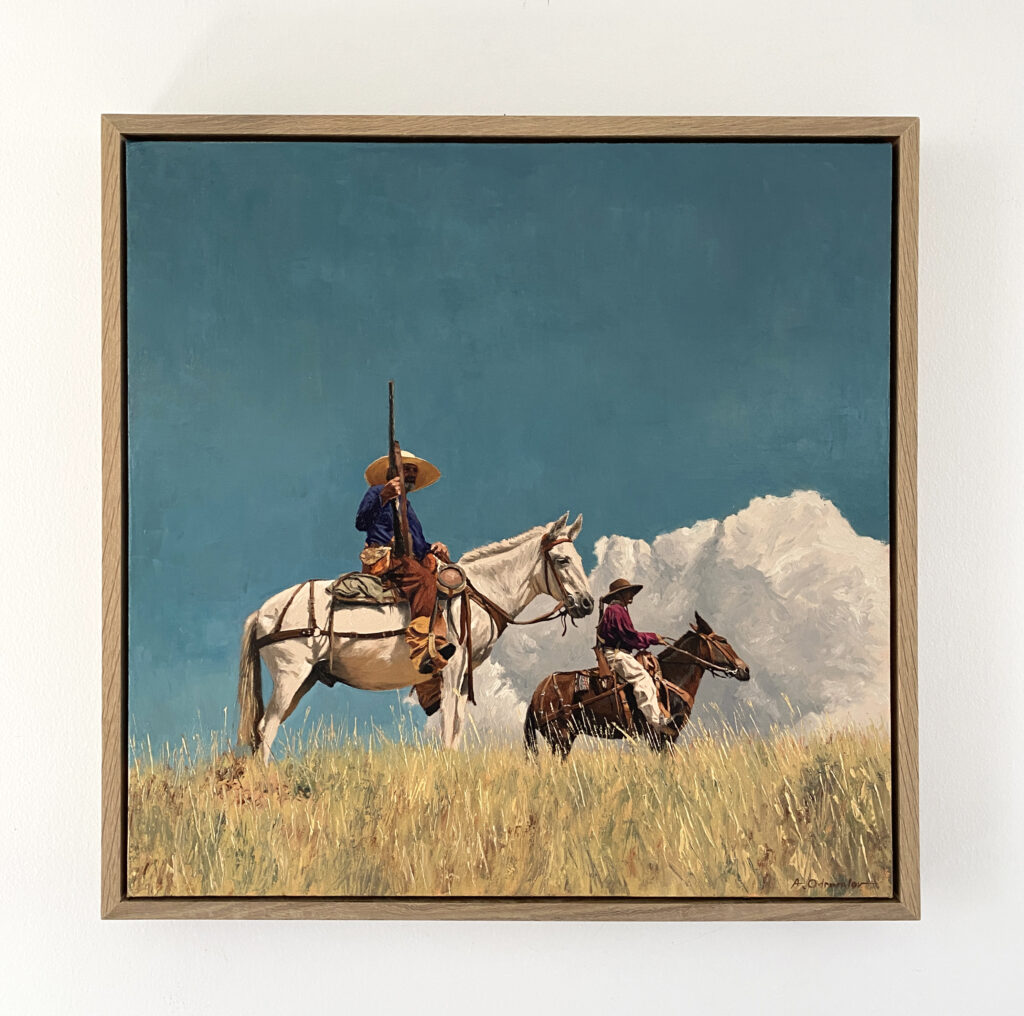
Your brushwork is both representational and intuitive. Can you walk us through the tension between control and freedom when do you decide to refine a detail versus letting spontaneity guide you?
Painting loosely while maintaining control over proportions, colors, and values is like walking a razor’s edge. It’s very challenging, and I’m still learning how to do it. My general rule is to paint with more precision and control in the focal areas of a piece, while relaxing and painting more loosely in the less emphasized areas
Light is a recurring element in your landscapes. How do you capture the transient qualities of natural light, and what role does it play in your compositions?
Light is an incredibly important aspect to painting. it defines shapes and gives contrast to objects and forms. I use it to highlight the focal areas of a piece. Capturing light takes practice but it’s all about having your values under control.
Many artists connect landscapes with personal experiences. What landscapes in your own life carry the deepest emotional weight, and how do those memories reappear in your work?
I visited the Southwest, and there’s something truly special about it. The vastness and variety of its rocky landscapes are a major source of inspiration for me. When the sun sets, the warm colours make the land glow with life. Those moments carry the deepest emotions for me, and that’s what I strive to capture in some of my work.
Have there been moments when a painting took an unexpected direction? How do you respond to surprises in your work, and what have you learned from them?
I’m a big proponent of planning my paintings and sticking to the plan so there aren’t too many surprises. Still, there have been times when a piece didn’t turn out as I’d hoped, even after careful preparation. I’d often be surprised because the sketch looked great on paper, but once transferred to a large canvas, something felt lacking. From there, I had to identify what wasn’t working and make adjustments on the spot.
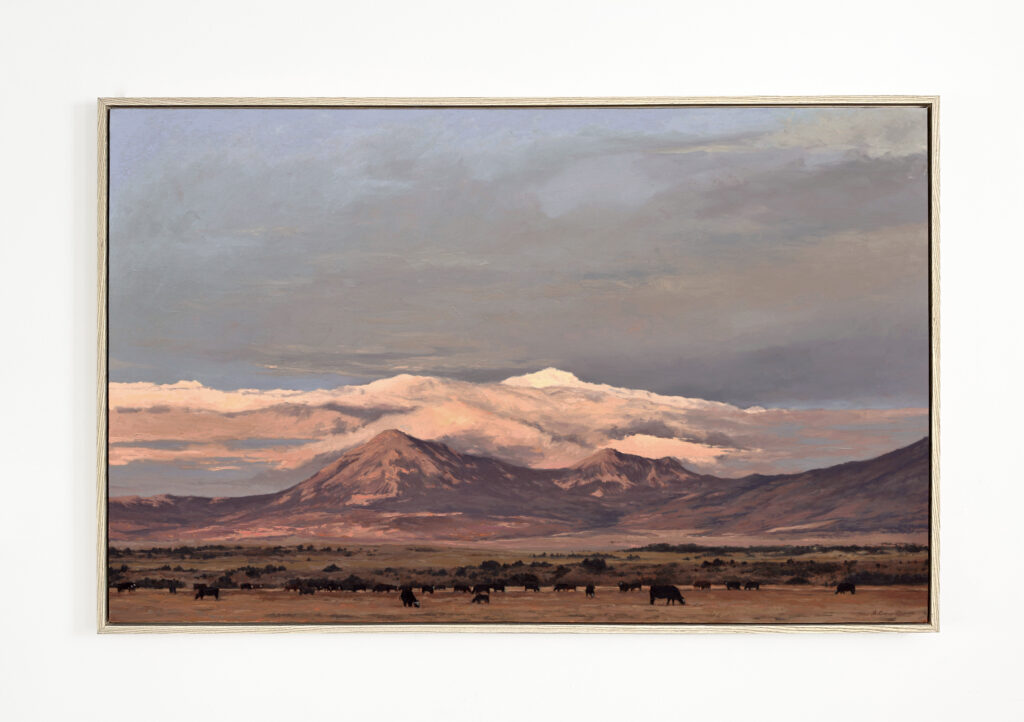
The natural environment of Colorado seems to influence many of your pieces. Can you describe a moment when a specific location inspired an entire painting?
I remember taking a quiet walk around Standley Lake, not far from where I live. In late summer, the meadows surrounding the water begin to shift. The grasses fade into soft, neutral tones while others bloom into deep maroon, creating a harmony of warm and muted colors. At one spot, I stopped and looked out across the meadow. The lake shimmered in the mid-ground, and beyond it, the distant Rocky Mountains rose in cool shades of blue. In that moment, everything felt perfectly balanced. I knew right then I had to paint it. Colorado is endlessly inspiring for me!
In your “Wilder Horizons” exhibition, the work is described as blending the timeless beauty of the West with a modern, contemporary sensibility. How do you define that blend for yourself? Which contemporary techniques or sensibilities are you exploring?
I define my work largely through composition. Traditional paintings often follow established rules and formats, but I enjoy testing those boundaries and sometimes breaking them altogether. For example, in some of my pieces, the horizon line doesn’t follow the rule of thirds. I might place it lower or higher than expected to create a different sense of balance or tension within the scene.
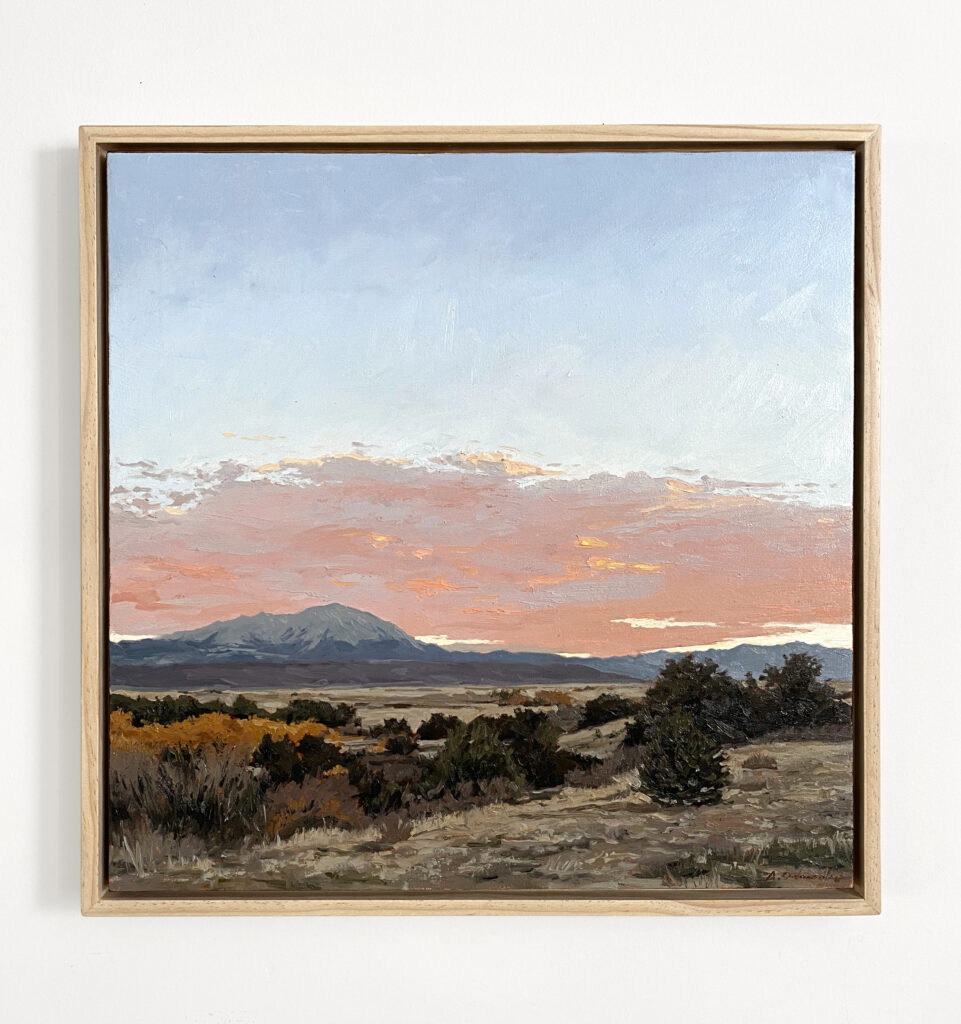
How do you choose the locations or scenes you paint? Are they drawn from travel, memory, photography, plein air work, or imagination? What role do you allow yourself to adapt or alter reality for the sake of composition or mood?
Much of my work begins with traveling and capturing photographs of scenes that resonate with me. These moments serve as a starting point rather than a strict blueprint. I take full creative liberty in altering, removing, or adding elements from my reference photos to better express the mood or strengthen the composition. Still, I have to be mindful not to change things so much that I lose the essence of what first drew me to the scene that made it special. My goal is to honor that initial spark while allowing artistic intuition to shape it into something new.
How do you perceive the role of the viewer in interpreting your work? Do you encourage personal interpretations, or do you aim to convey a specific message?
The role of the viewer is important to me, though it isn’t always at the forefront of my process. I encourage personal interpretation, knowing that each person will bring their own experiences and emotions to what they see. No matter how intentionally I try to convey a specific narrative or mood, the viewer’s perception inevitably shapes it into something unique. Over time, I’ve learned to embrace that and to see it not as a loss of control, but as a collaboration between artist and viewer.

Looking back at your earlier works, how do you feel your style has evolved? Are there elements from your past pieces that you still carry forward?
I feel that my work has evolved dramatically over time. I began by painting abstracts in acrylics, and now I find myself creating highly refined Western landscapes and figurative pieces. Still, there are elements from my earlier work that continue to influence what I do today like the use of rich texture in my skies and foregrounds. Those traces of my past style serve as a bridge between where I started and where my artistic journey has led me.
What advice would you offer to emerging artists, especially those interested in landscape painting and abstraction? How can they develop their unique voice and overcome challenges?
My advice would be to paint often and paint what truly inspires you. Study the work of artists you admire, learn from their techniques and ideas, and then channel that knowledge into creating something uniquely your own. The more you paint, the more your voice will reveal itself through the process.

As our conversation with Alex Odnoralov concludes, his paintings stand as more than landscapes they are explorations of light, memory, and emotion. His work reminds us that artistry thrives at the intersection of discipline and intuition, of study and freedom, and of the personal and universal. Through careful composition, luminous colour, and bold yet nuanced brushwork, Alex transforms the fleeting beauty of the natural world into enduring visual poetry.
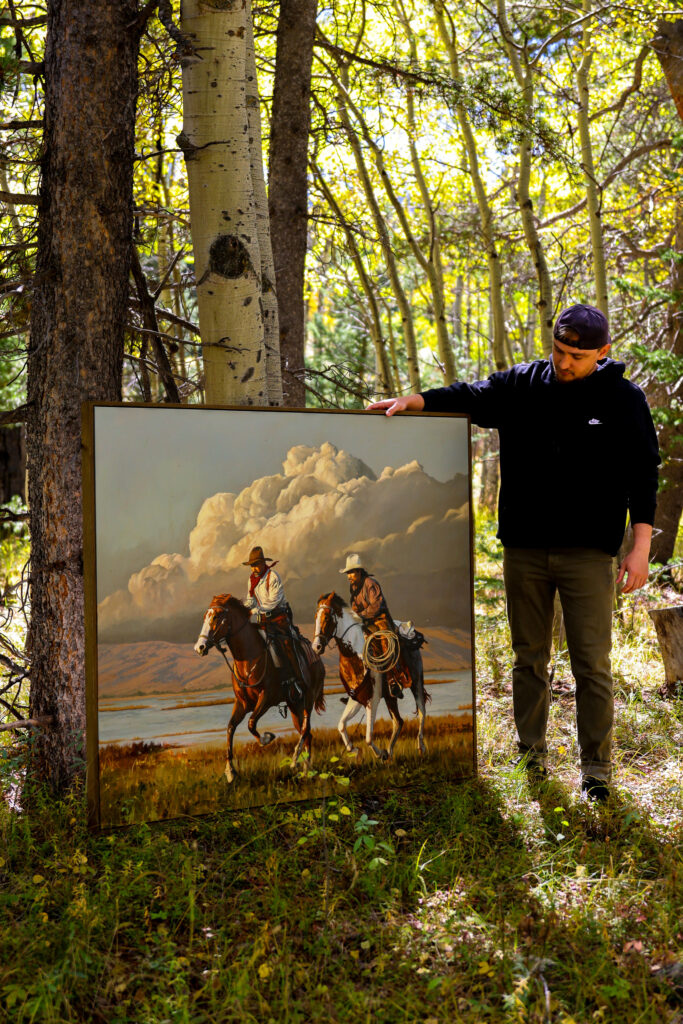
Every piece reflects a story of observation, reflection, and transformation. His landscapes invite us to pause, to see familiar places with fresh eyes, and to feel the quiet power of nature mirrored in our own experiences. Alex’s journey from design into oil painting is a testament to following one’s instincts, embracing evolution, and creating a body of work that resonates deeply with viewers.
Follow Alex Odnoralov to witness how his devotion to craft, his reverence for the land, and his evolving artistic vision continue to shape landscapes that are at once intimate, evocative, and unmistakably his own.