
Melih Polat the Eskisehir artist paints entire psychological worlds in oil on canvas
At Arts to Hearts, everything we do comes back to one purpose finding the most extraordinary creative voices in the world and bringing them closer to the people who need to discover them.
Our Best of the Art World editorial was born from exactly that commitment. And over the course of this series, we have had the privilege of introducing you to some truly remarkable artists painters, sculptors, illustrators, gallerists each one doing something that expanded our understanding of what art can be and what it can do.
Today we are so honoured to add another name to that list. And this one genuinely excited us. Melih Polat is a Turkish artist based in Eskişehir, and the first thing you need to know about him is that he has been making things since he was two years old.
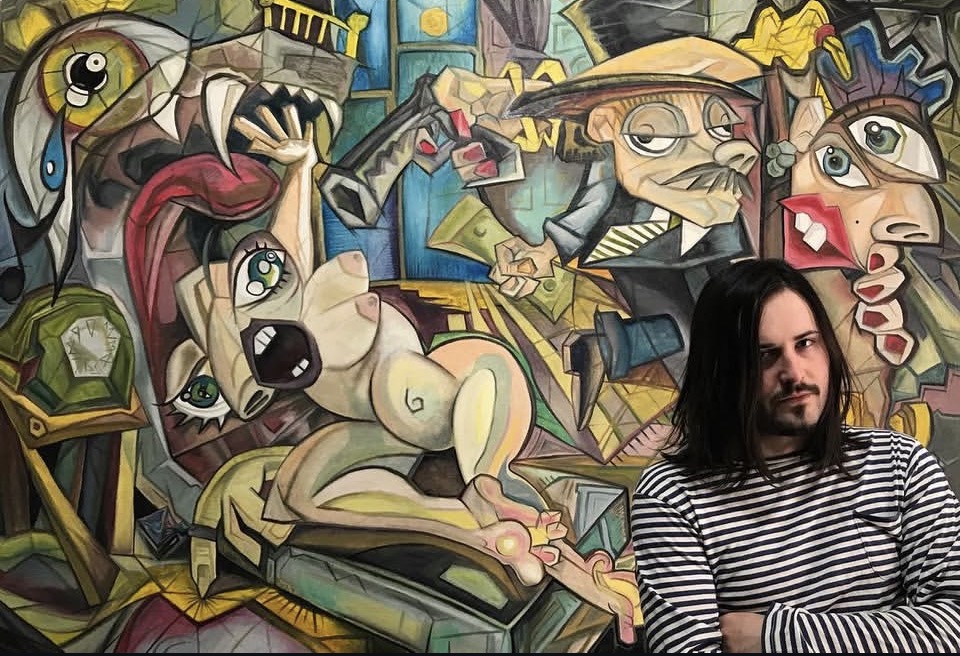
Not as a prodigy story. Not as a cute detail. But as the truest possible description of who he is someone for whom creating is not a profession or a practice but simply the way he moves through the world. He picked up a pencil before he had the words to explain why. And he has never really put it down.
He grew up in a family where that impulse made sense. A grandfather who was a gifted draftsman. A father with remarkable hands and a craftsman’s instinct. A sister who became a graphic artist. Creativity was in the air he breathed before he ever thought to name it. And as he grew, it only got wider.
Sculpting clay figures as a child. Writing and directing short films in high school. Teaching himself the piano. Each new discipline arriving not as a detour but as another room in the same house he has always been building a house that now contains oil painting, sculpture, ceramics, printmaking, and digital art, all under the same roof, all speaking the same language.
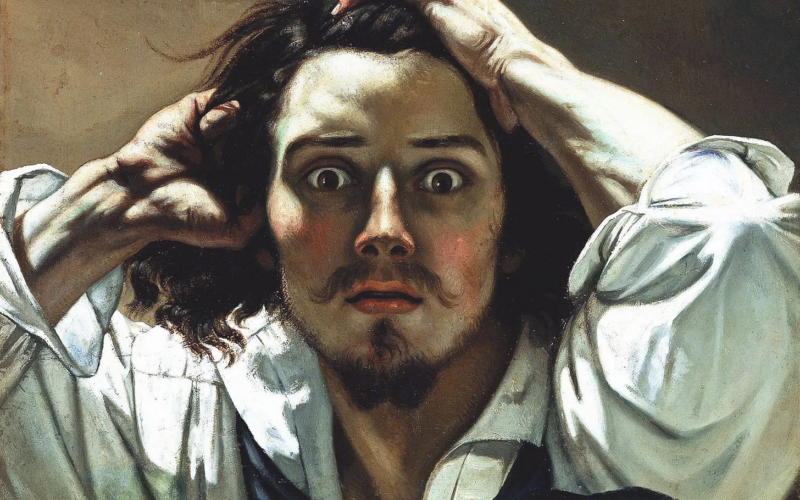
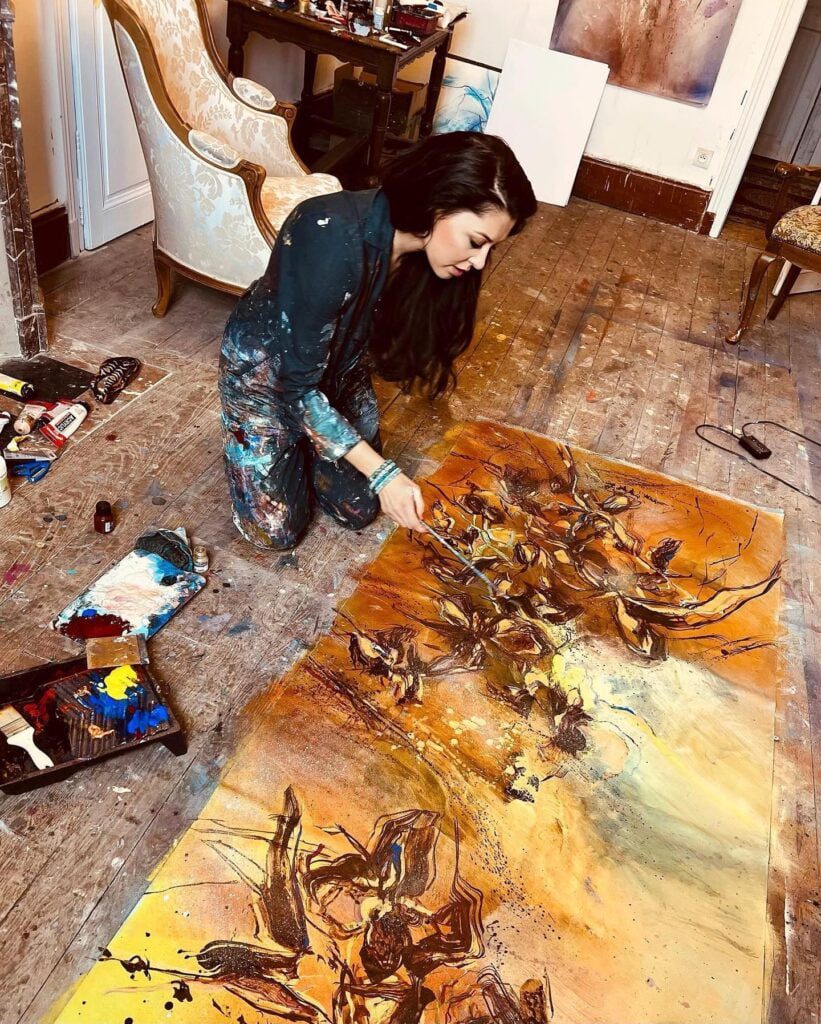
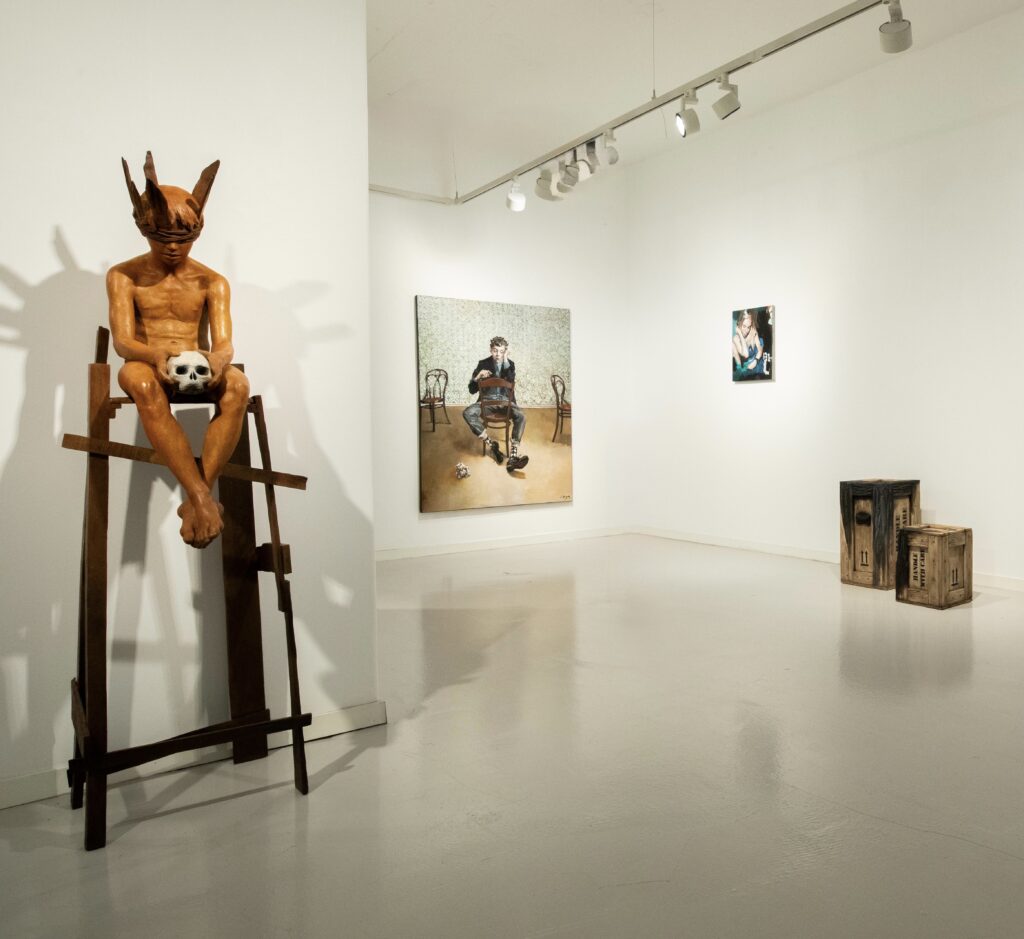
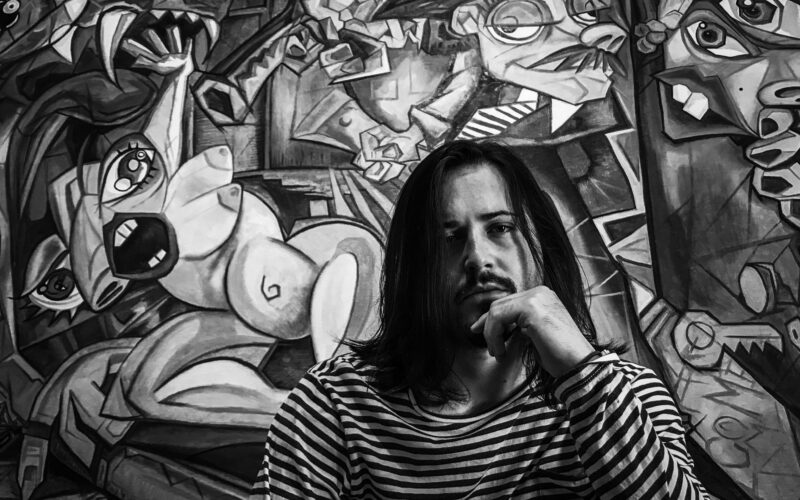
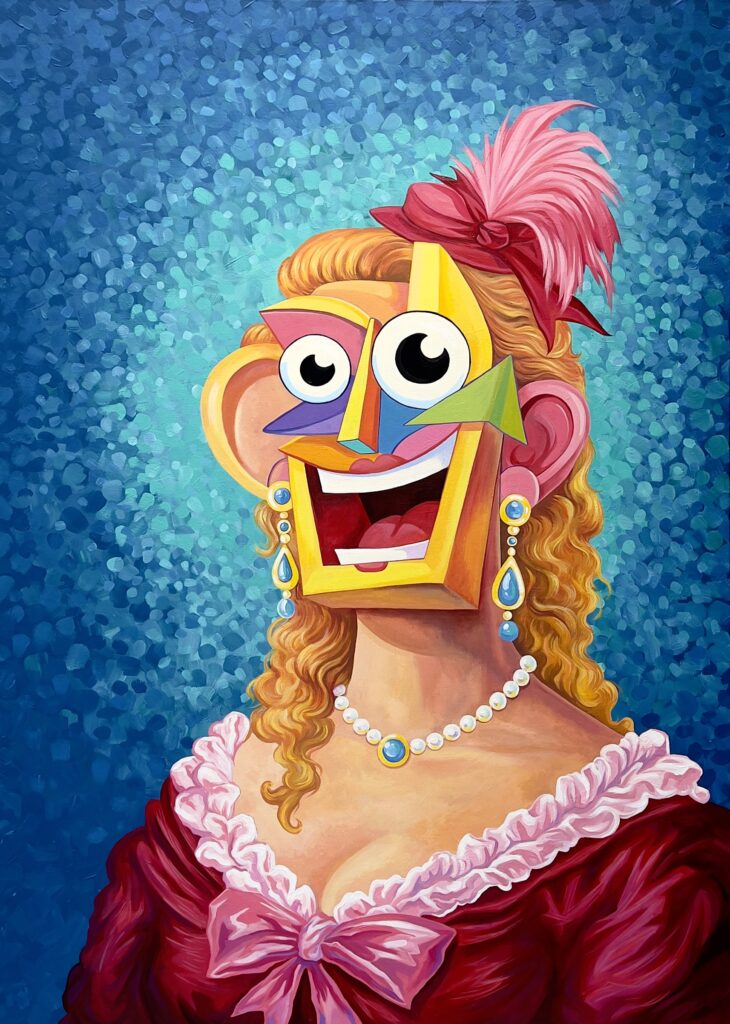
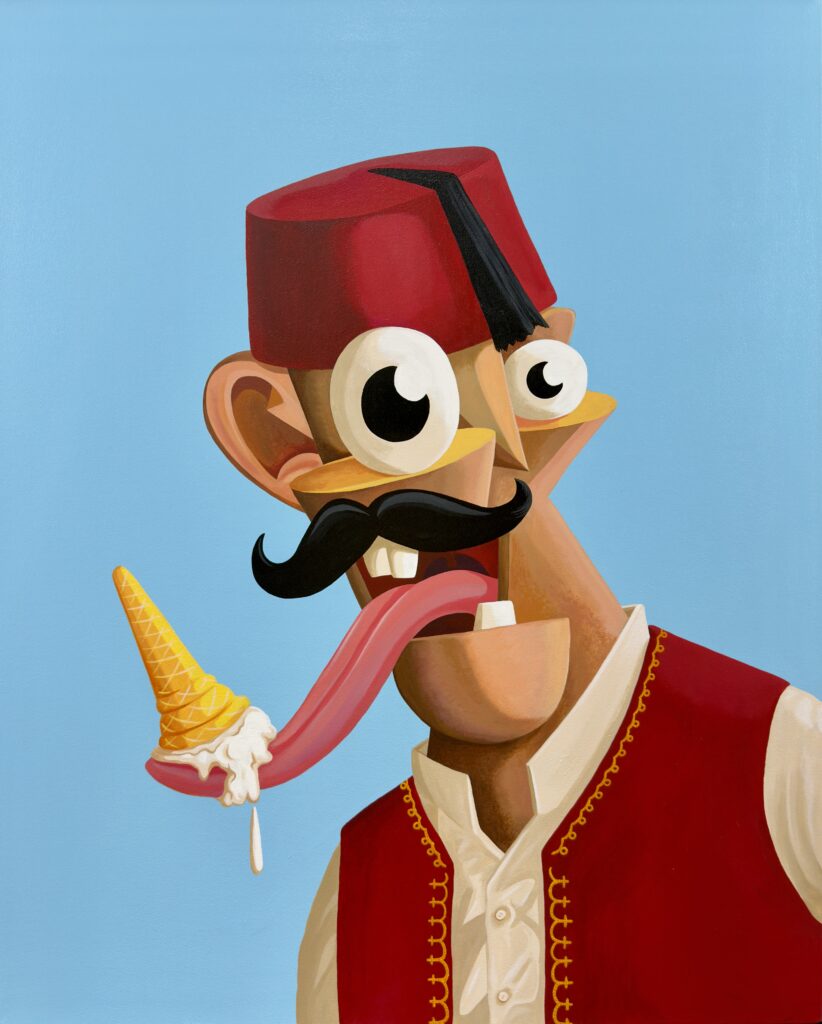
His paintings are where that language is most fully and most strikingly expressed. He works at night, standing in front of the canvas with no preliminary sketch, letting whatever has accumulated inside him throughout the day find its way out. The results are extraordinary, neo-cubist geometric structures woven through with surrealist imagery, familiar objects and fragmented figures appearing in relationships that logic cannot explain but emotion immediately recognises. Innocence sitting alongside discomfort.
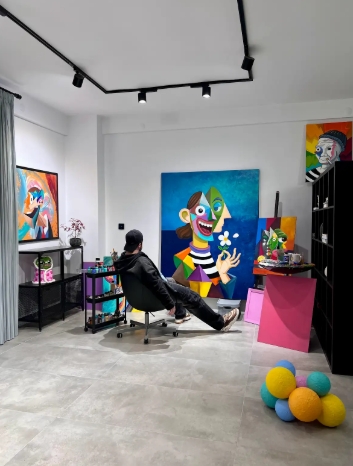
And then there is the side of his practice that the traditional art world did not see coming. When NFTs emerged, Melih did not dismiss them. He bought a tablet out of curiosity, learned an entirely new way of creating, and within two years had become one of Foundation’s Top 100 selling artists reaching international collectors across the world who found his digital work and followed it back to his paintings. He has never seen technology and tradition as opposing forces. To him they are simply different tools for the same endless search.
He lives surrounded by nature with his wife, herself a passionate collector of rare seashells and figurines in a home shaped with the same careful aesthetic attention he brings to his studio. In their house, art is not something that lives separately from life. It is simply part of how they live.
We loved getting to know him. And we think you will too.
Let’s get to know Melih through our conversation with him, where he talks about curiosity as a way of life, the worlds he builds through his work, and what it really means to choose this path and keep walking it.
Q1. Melih! Before we talk about art, can you tell us a little about yourself? Who is Melih Polat beyond the studio and the paintings?
Ever since I can remember, I’ve understood the world through making things. From the moment I could hold a pencil, around the age of two, I was constantly drawing, inventing my own characters and building small imaginary worlds. My childhood was filled with sculpting figures out of clay, creating fictional beings, and endlessly searching for new images to bring to life.
Looking back, I realize that the only thing that has really changed over the years is the medium I use. I’ve never believed that a single form of expression could be enough. At different points in my life I became deeply fascinated by photography, wrote and directed short films during high school, and even devoted myself to learning the piano.
Today I work across painting, sculpture, ceramics, printmaking, and digital media, but the motivation behind all of them has always remained the same: finding the most honest visual language for an emotion or an idea. That’s probably why I’ve never seen myself simply as a painter. More than anything, I’ve always been someone who feels compelled to build worlds and tell stories.
Outside the studio, my life is actually quite simple. I share it with my wife and our animals, surrounded by nature, in a home that I shape with the same care I bring to my paintings. The flowers in my garden, the changing seasons, the
way light shifts throughout the day none of these are merely parts of nature to me. They are aesthetic experiences. Perhaps that’s why I so often find inspiration not in extraordinary events, but in the quiet beauty of ordinary moments.
My wife is also a passionate collector of rare seashells and figurines, so art and aesthetics are not confined to my studio; they are woven into our everyday life. Her eye for detail, her patience in collecting, and the sensitivity she brings to every object continue to inspire me. In many ways, we share our home as two collectors, each building different worlds, yet driven by the same curiosity and appreciation for beauty.
Today, as I approach my mid-thirties, I still carry the same creative impulse I felt as a child. For me, art has never been just a profession; it has always been my way of understanding the world and communicating with it. If there’s one thing I’d hope to leave behind one day, it wouldn’t simply be my paintings, but the unique world that exists through them. I think that’s what brings me the greatest sense of fulfillment.
Q2. You started scribbling and making marks from the age of two. where do you think that early creative impulse came from?
I think a large part of the answer lies within my family. I grew up hearing stories about my grandfather, who was a gifted draftsman. My sister became a graphic artist, and my father has always had remarkable craftsmanship and an incredible ability to work with his hands. Looking back, I feel that the impulse to create is something I inherited long before I consciously chose to become an artist.
But beyond that, there’s something much harder to explain. At that age, I wasn’t aware that I was drawing all the time. I wasn’t trying to become an artist or prove anything to anyone, I simply drew because it felt completely natural. That’s why I’ve always believed it wasn’t something I learned; it was something that was already part of me.
Even today, I sometimes feel as though I was born carrying an endless creative energy. That feeling has never really disappeared.
The lines have changed, the materials have changed, and the way I express myself has evolved, but the impulse itself has remained exactly the same. Every painting I make still carries the curiosity and creative spirit of the two-year-old child who first picked up a pencil.
Q3.You work across painting, sculpture, ceramics, printmaking, and digital art, what keeps you exploring different mediums?
I think the answer is simply rooted in my personality. I’m someone who needs to explore. Whenever I go through periods without learning something new, experimenting, or deliberately pushing myself beyond what feels comfortable, I don’t just become bored, I begin to feel as though I’m no longer being honest with myself. Curiosity has always been the driving force behind everything I create.
That’s why I’ve never wanted to define myself through a single discipline. Whether it’s painting, sculpture, ceramics, printmaking, or digital art, I don’t see them as separate practices. To me, they’re simply different languages for expressing the same idea.
Sometimes a thought finds its way onto a canvas, sometimes into clay, and sometimes onto a digital surface. The medium has never been the most important part of the process. What matters is allowing each idea to find the form that expresses it most truthfully.
I’m far more interested in rediscovering myself than in repeating myself. Every new discipline teaches me more than just a different technique, it reshapes the way I think. That’s why I’ve never seen my practice as something complete or finished.
I still feel like someone who is constantly learning, questioning, and discovering something new with every body of work. To me, remaining faithful to my curiosity is far more exciting than remaining faithful to a single technique.
Q4. Your work often feels surreal and dreamlike, what first drew you to surrealism as a way of expressing ideas?
I can’t honestly say that I consciously chose Surrealism. Over time, it simply became the natural language of my paintings. During my university years, especially in the evenings after returning home, I felt an overwhelming need to empty my mind. Throughout the day, thoughts, emotions, and fragments of imagery would quietly accumulate inside me, and when I finally stood in front of a canvas late at night, they seemed to emerge on their own.
Most of the time, I didn’t even make preliminary sketches. Painting became less about executing a plan and more about allowing whatever had gathered inside me to find its own way out.
I think that’s what drew me toward Surrealism. It offered me a language that reality alone never could. Simply depicting life as it appeared was never enough for me. Surrealism gave me the freedom to make the invisible visible, to create relationships that logic couldn’t explain, to give ordinary objects new symbolic meanings, and to transform the human body into a visual language of its own. Over time, those elements naturally became part of my artistic vocabulary.
I’ve always believed that creating begins as an impulse, sometimes an uncomfortable one. It stays with you, follows you, and refuses to let go until you’ve brought it into existence. As I became more fluent in oil painting, that freedom of expression only became more exciting.]
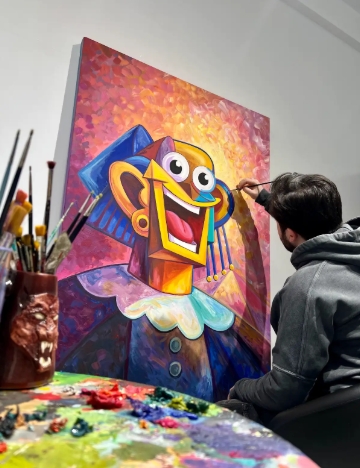
Of course, I make the decisions: I choose the figures, the objects, and the composition. But at a certain point in the process, something shifts. A dialogue begins between conscious intention and intuition that is almost impossible to describe.
Eventually, it feels less like you’re directing the painting and more like you’re negotiating with it. Then, almost like a form of quiet magic, the work begins to establish its own presence. That moment still fascinates me more than anything else.
Perhaps that’s why my visual language has continued to evolve so naturally over the years. While my earlier works leaned more toward a pure Surrealist vocabulary, fragmented forms, geometric structures, and a neo-Cubist sense of space gradually became organic parts of my own visual language. It was never about following a particular movement or artistic doctrine. My paintings simply evolved, and they led me where they needed to go.
Q5. What inspired The White Angel, and why did themes of childhood and innocence feel important to explore?
The White Angel didn’t emerge from a single event. It grew out of observations, fragments of imagery, and ideas that had been quietly accumulating in my mind for a long time. Sometimes inspiration begins with a film, sometimes with a person I happen to notice in everyday life, and sometimes with nothing more than a fleeting mental image.
In this case, the first thing I saw was a winged figure holding a yellow rubber duck. From there, those images gradually began to form meaningful relationships with one another.
To me, the yellow duck evoked childhood, bathing, and a sense of cleansing. The wings suggested purity, innocence, and an almost unattainable ideal of perfection. As those symbols came together, I found myself inventing an imaginary condition I called White Angel Syndrome.
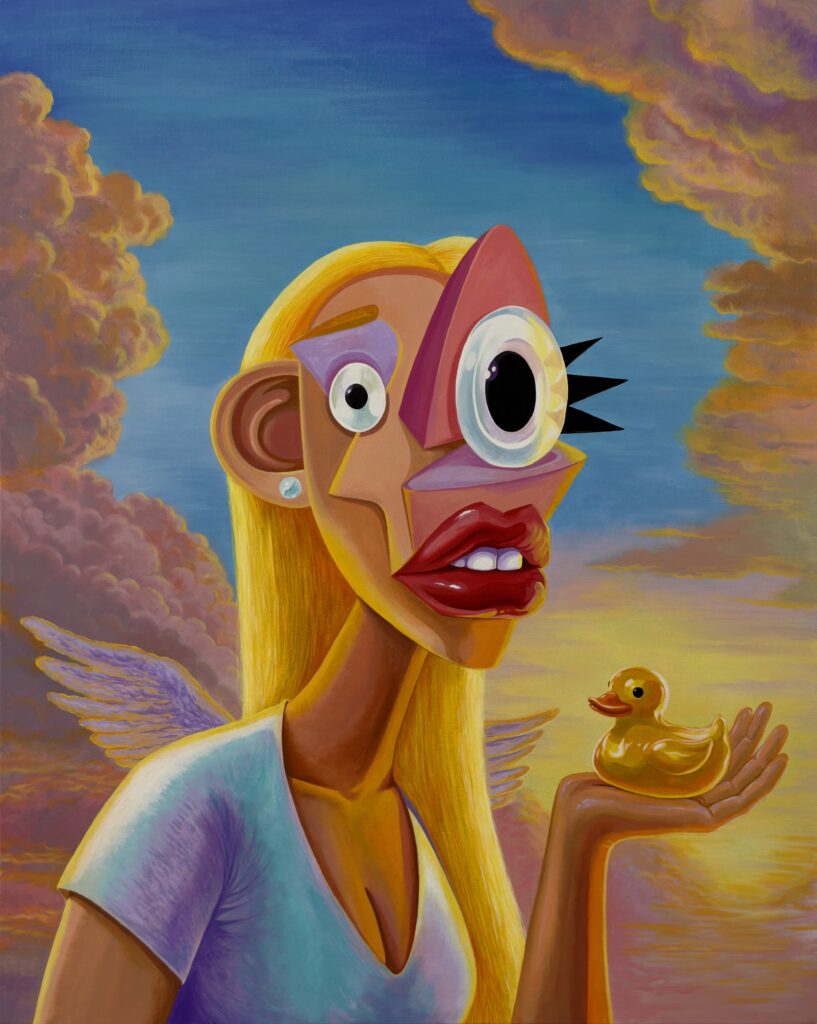
Of course, no such syndrome exists. But that’s one of the things I love most about art, it allows you to create fictional concepts in order to reveal something profoundly real about human behavior.
I see the painting as an ironic reflection on our obsession with beauty, perfection, and the unrealistic aesthetic ideals that society often imposes. It’s as if the figure has reshaped herself, sacrificing something natural and authentic in the pursuit of becoming a “white angel.” That’s why innocence and discomfort coexist in the painting at the same time. That emotional contradiction was precisely what interested me.
Ultimately, the work isn’t about one specific person. It’s a narrative shaped by my observations of people around me, contemporary beauty culture, and the symbolic language that gradually developed in my imagination. What excites me most about creating is exactly that process: first building an imaginary world, and then convincing the viewer of its own internal reality.
Q6. Why are you drawn to exploring the tension between innocence and discomfort in your work?
I think what fascinates me most is the fact that human beings are never made up of a single emotion. In real life, we constantly carry contradictions within us—love and anger, innocence and vulnerability, hope and anxiety can all exist at the same time. That’s exactly the psychological tension I’m interested in making visible through my paintings.
Of course, that’s not an easy thing to achieve. Creating multiple emotional layers within a single image is one of the most difficult aspects of my practice, but it’s also one of the most rewarding. Perhaps that’s precisely what keeps drawing me back to it. Life itself is never one-dimensional, so I don’t believe art should be either.
I enjoy the fact that the same painting can evoke completely different emotions in different people.
Someone with an optimistic outlook might discover humor or hope in it, while someone else may experience discomfort, loneliness, or uncertainty.
I never want to dictate a single emotional response.Instead, I’m interested in allowing each painting to establish a different relationship with every individual who encounters it.
Ultimately, that’s what I’m trying to create in my work: something that functions almost like a magnetic field generating both tension and attraction between different minds at the same time.
Q7. You’ve built an international collector base through Instagram and NFTs, what has that path given you, and what has it cost?
Honestly, I don’t feel this path has taken anything away from me. Looking back, the balance has always remained overwhelmingly positive. Early in my career, my work began reaching international collectors and galleries through an art representative. Then NFTs entered my life. Why? The answer is actually very simple: curiosity.
For me, NFTs were never just a new market or another way to sell work. At that point, I had spent years working exclusively with traditional media. Then one day I bought a tablet and decided to learn an entirely new way of creating.
I was excited precisely because it was unfamiliar. Looking back, I genuinely believe it was one of the best decisions I made as an artist. My first two years on Foundation were incredibly formative. During that time, I became one of the platform’s Top 100 selling artists, which introduced my work to collectors from all over the world.
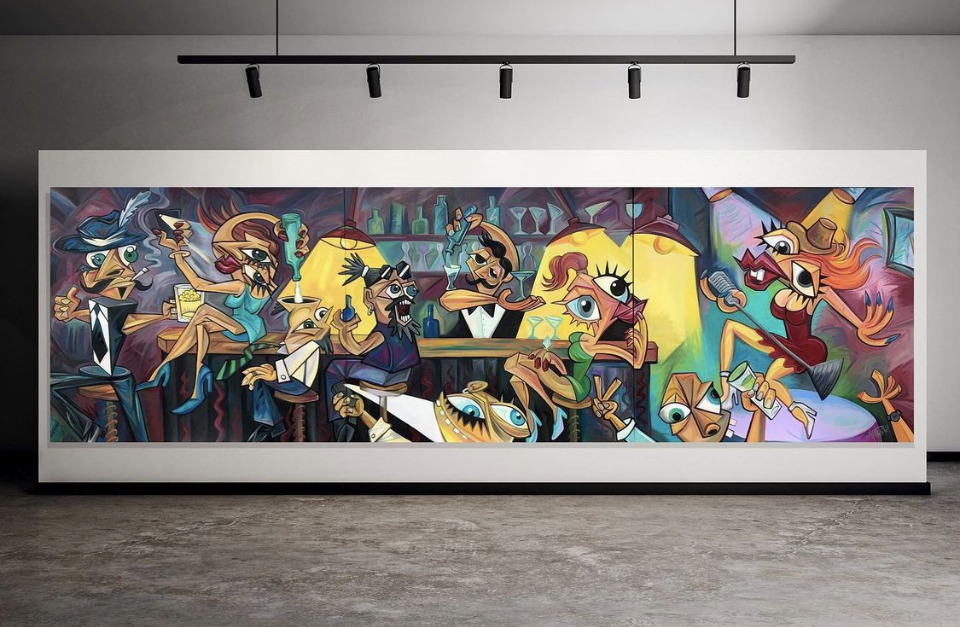
Many of them discovered my practice through that visibility and reached out to me directly. It wasn’t just an opportunity to expand my international audience, it fundamentally broadened the way I thought about making art.
Working digitally influenced my traditional painting practice far more than I ever expected. It sharpened my instinct for composition, accelerated the way I think about color relationships, and transformed my sense of visual rhythm.
Even today, many of the decisions I make on canvas are informed by what I learned through digital creation.
Perhaps most importantly, I’ve never seen technology and traditional art as opposing forces. To me, every new tool is simply another way of expanding the possibilities of expression. As an artist, I’ve always believed it’s important to grow alongside the time you live in, to remain curious, to keep learning, and to allow every new experience to deepen your visual language rather than replace it.
Q8. What does a successful day in the studio feel like when success has nothing to do with sales or output?
I always seem to come back to the same answer: the impulse to create. For me, a truly successful day has nothing to do with commercial success or the number of works I’ve completed. If, at the end of the day, I clean my brushes, switch off the studio lights, and feel the weight I’ve been carrying finally lift from my shoulders, then I know something meaningful has happened.
I think art is often romanticized from the outside. People imagine the artist spending the day in a beautiful, sunlit studio, casually painting with a glass of wine nearby. Those moments certainly exist , but they represent only a small part of the reality. More often than not, a painting occupies your mind long before it exists. It keeps you awake, follows you for days, and sometimes even exhausts you physically. Until it finally comes into being, you’re carrying it with you everywhere.
But creation has another side as well. There are days when everything falls effortlessly into place, when the idea, your hand, and the material seem to speak the same language. You lose all sense of time. Creating no longer feels demanding , it begins to feel like play. Perhaps that’s what I find most magical about making art: it never arrives in quite the same way twice.
For me, the measure of a successful day isn’t how a painting will sell or how it will be received. It’s whether something I’ve carried silently within myself has finally found its way onto the canvas. Because when the work is finished, what remains isn’t just a painting. it’s the quiet I’ve been carrying inside me, finally given a place to exist.
Q9. Do you think today’s artists have more freedom than previous generations, or simply more distractions?
To be honest, I don’t think there’s a definitive answer to that question. We can only imagine what previous generations experienced by studying their lives, listening to their stories, and looking closely at their work. Personally, I consider myself fortunate to belong to a generation that grew up alongside technology. I had access to computers and the internet from an early age, so I’ve experienced that transformation step by step throughout my artistic life.
I imagine the physical challenges faced by earlier generations were far greater than ours. Today, it’s easier than ever to access knowledge, create work, and share it with someone on the other side of the world.
But at the same time, we’ve never been surrounded by so many distractions. Perhaps the real question isn’t whether artists today are more free or more distracted. It’s whether they can still preserve their own voice amid all that noise.
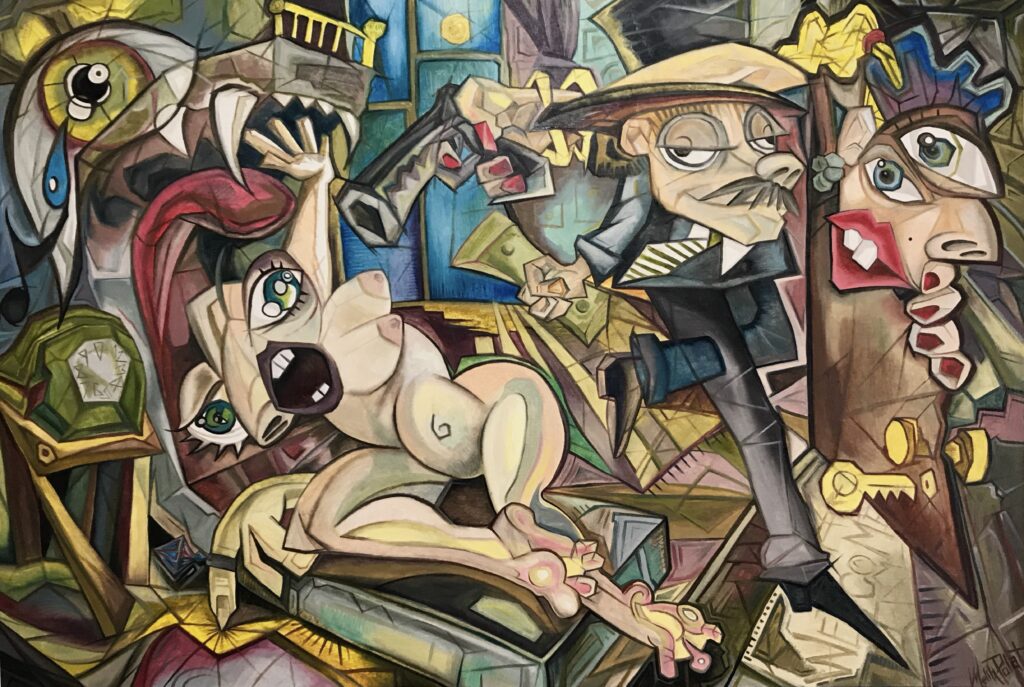
The fact that we still talk about Picasso or Hieronymus Bosch isn’t simply because they were extraordinary artists. It’s because they created worlds that transcended their own time. I believe every generation of artists carries the same responsibility: to absorb what came before us, reinterpret it through the language of our own era, and pass it forward to the next.
Sometimes we leave that legacy behind as oil on canvas. Sometimes as a ceramic form. And sometimes as a digital work permanently recorded on a decentralized blockchain like Ethereum. The tools will continue to evolve, but the human desire to leave a meaningful trace behind never really changes. To me, that’s where the true continuity of art resides.
Q10. What advice would you give a young artist from Eskişehir wondering if it’s possible to build an international career from there?
I actually took a deep breath when I read this question. Because choosing to become an artist is an incredibly difficult decision. Sometimes I even find myself wondering, “Would I honestly recommend this path to someone I love?” It’s a beautiful profession, but it’s also exhausting, uncertain, and far less romantic than it often appears. Many people begin the journey, but far fewer continue walking it. And to be honest, I still feel that I’m somewhere along that road myself.
That’s why I don’t think it’s enough to tell a young artist, “Just follow your heart, you can do it.” This path demands far more than talent or passion alone. It requires patience, resilience, sacrifice, and often the courage to spend long periods alone with yourself. At some point, art has to become more than something you do. it has to become a way of living.
But if, after knowing all of that, the same voice is still there… If they’re determined to create without compromising who they are… If they’re willing to embrace failure as part of the journey… And if they truly believe they have something meaningful to say… then there’s only one thing I would want to tell them:
“I wish you a safe and meaningful journey.” Because to me, art has never been a destination. It’s a path you choose to walk for the rest of your life.
As our conversation with Melih drew to a close, we kept thinking about something that his practice illustrates more powerfully than almost any other we have encountered that curiosity, sustained with real discipline and real honesty over many years, is not just a personality trait. It is a creative strategy. And it is one of the most powerful ones an artist can have.
Because the world keeps asking artists to define themselves. To pick a medium and stay in it. To build a recognisable brand, a consistent aesthetic, a single lane that makes them easy to understand and easy to market.
And Melih has quietly, persistently done the opposite. He has moved between oil and ceramics and printmaking and digital art not because he was unfocused but because he understood something important that every new discipline reshapes the way you think, and that an artist who keeps reshaping the way they think never stops growing.
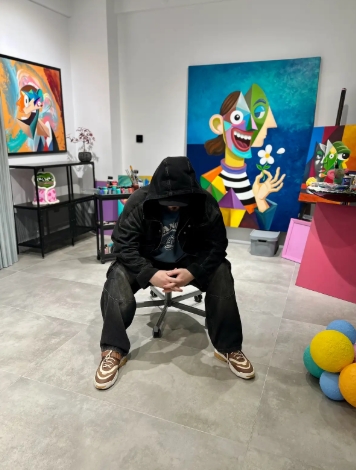
That is a lesson that goes far beyond the studio. It is a way of approaching life. Of remaining genuinely open to the unfamiliar, genuinely willing to be a beginner again, genuinely committed to learning over comfort.
Melih has lived that commitment from the age of two. And the practice that has come from it the international collector base, the surrealist oil paintings, the NFT platforms, the ceramics, all of it is not the result of a strategy. It is the result of someone who simply never stopped being curious.
For collectors and art lovers drawn to work that comes from years of searching, questioning, and refusing to settle, Melih’s paintings offer something that is difficult to find. They hold more than they reveal at first. You can live with them, return to them, and keep finding something different—not only because the paintings have layers, but because you keep changing too.
And perhaps that is because Melih has never treated art as a destination he needs to reach. His paintings continue to change because he continues to change. Art is the path he has chosen to keep walking, and every work carries something from where he has been, who he is now, and what he is still trying to understand.
Follow Melih Polat through the links below and discover a world that has been twenty years in the making and is nowhere near finished.