
The Latest in the Art World: Record Auction Sales, Museum Mergers, and Global Art Fairs

This week’s latest in the art world, conversations moved between record-breaking auction sales, major institutional shifts, global art fairs, and the growing intersections of fashion, collecting, and cultural identity. From Jackson Pollock’s historic $181 million sale at Christie’s and the Metropolitan Museum’s landmark merger announcement to regional solidarity at Art Dubai and South Asia’s expanding global visibility through the Kiran Nadar Museum, the latest developments reveal an art landscape increasingly shaped by international dialogue, market momentum, and evolving cultural partnerships.
Kiran Nadar Museum to Bring Major South Asian Art Exhibition to Christie’s London
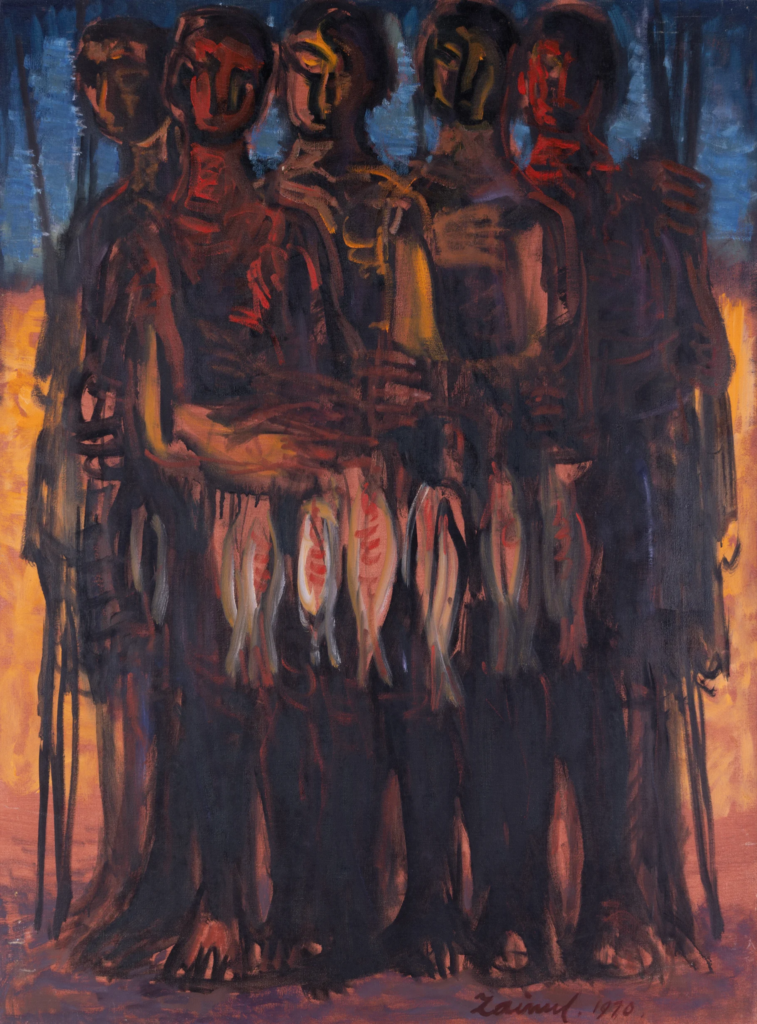
India’s Kiran Nadar Museum of Art is set to present a landmark exhibition at Christie’s in London this summer, marking the first time the auction house’s annual exhibition series has been dedicated to a South Asian institution. Titled The Meeting Ground: Scenes from the KNMA Collection, the exhibition will open at Christie’s King Street headquarters on July 16 and run through August 21.
Drawing from the museum’s extensive collection, the exhibition will bring together modern and contemporary South Asian art alongside folk and Indigenous artistic traditions, reflecting the breadth of artistic production across the region from the 1950s to the present. Featured artists include M. F. Husain, S. H. Raza, F. N. Souza, and Jangarh Singh Shyam.
Founded in 2010 by prominent collector Kiran Nadar, KNMA became India’s first private museum dedicated to modern and contemporary art with free public access. Over the years, the institution has played a significant role in expanding conversations around South Asian art both regionally and internationally.
The exhibition arrives at a major moment of growth for the museum, which is currently developing a new multidisciplinary cultural complex in New Delhi spanning more than one million square feet. According to Christie’s, the collaboration reflects increasing international attention toward South Asian modern and contemporary art within global institutional and collector circles.
Alongside the exhibition, Christie’s Education and KNMA will also host a three-day course exploring South Asian art history and the themes addressed throughout the presentation.
Sources: ARTnews, Kiran Nadar Museum of Art
Art Basel Qatar Appoints Wassan Al-Khudhairi as Artistic Director for 2027 Edition
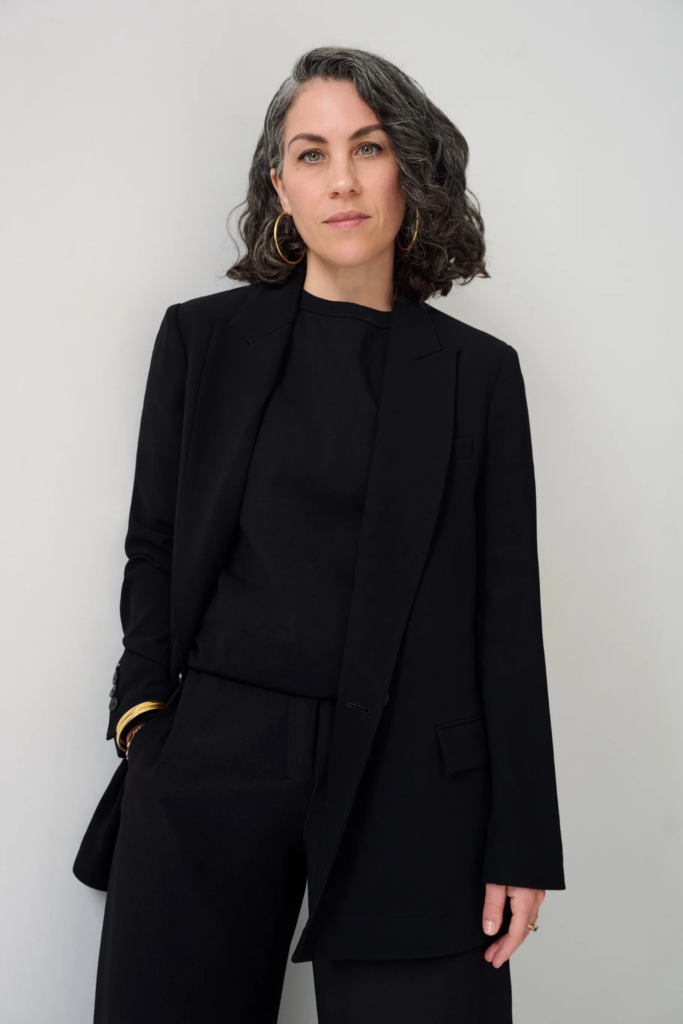
Art Basel has announced Iraqi curator Wassan Al-Khudhairi as the artistic director of the 2027 edition of Art Basel Qatar, marking a significant step in the fair’s evolving vision for contemporary art in the Middle East. Al-Khudhairi will oversee the curatorial direction of the fair’s second edition alongside Art Basel’s chief artistic officer and global director of fairs, Vincenzo de Bellis.
The appointment follows the successful debut of Art Basel Qatar earlier this year, which introduced a curated format centered entirely around solo artist presentations. Led by Egyptian artist Wael Shawky under the theme Becoming, the inaugural edition featured 87 galleries and positioned the fair as a more conceptually driven alternative within the international art fair landscape.
Scheduled to take place in Doha from January 28 to 30, 2027, the upcoming edition will revolve around the curatorial theme, between exploring ideas of exchange, fluidity, and open-ended dialogue across cultures and geographies. According to the organizers, the fair will continue its curated approach while expanding its Special Projects sector with larger immersive presentations.
Al-Khudhairi brings extensive regional and international curatorial experience to the role. She previously served as the founding director of Mathaf: Arab Museum of Modern Art, where she helped establish one of the Gulf region’s leading institutions dedicated to modern and contemporary Arab art. Her broader curatorial work has also included the Gwangju Biennale, the Asian Art Biennial, and the Hawaii Triennial.
The appointment further reflects the growing importance of Doha within the global contemporary art ecosystem as institutions and fairs across the Gulf continue expanding their international cultural influence.
Jackson Pollock Painting Sells for Record-Breaking $181 Million at Christie’s

A major painting by Jackson Pollock shattered auction records this week after selling for $181.2 million at Christie’s in New York, marking the highest price ever achieved for the Abstract Expressionist artist at auction. The sale of Number 7A (1948) surpassed Pollock’s previous auction record by nearly three times and became the fourth most expensive artwork ever sold publicly.
The monumental painting, measuring more than three meters wide, came from the collection of late publishing executive S.I. Newhouse was one of the highlights of Christie’s major evening sales. Created during a pivotal period in Pollock’s career, the work captures the artist’s revolutionary drip-painting technique that transformed postwar American art and redefined abstraction during the twentieth century.
According to reports, the bidding battle lasted nearly seven minutes and involved multiple phone bidders competing intensely before the final hammer price was reached. The sale also contributed to a historic night for Christie’s, which generated more than $1 billion in total sales across two evening auctions, a rare milestone achieved only twice in auction history.
The evening also saw major new records for Constantin Brâncuși and Mark Rothko. Brâncuși’s bronze Danaïde sold for $107.6 million, setting a new sculpture record for the artist, while Rothko’s No.15 (Two Greens and Red Stripe) (1964) achieved $98.4 million.
The results were widely interpreted as a strong sign that confidence remains high at the top tier of the global art market, particularly for historically significant twentieth-century masterpieces with major provenance.
Sources: Artsy, Christie’s
Louis Vuitton’s New Cruise Collection Pays Tribute to Keith Haring at the Frick
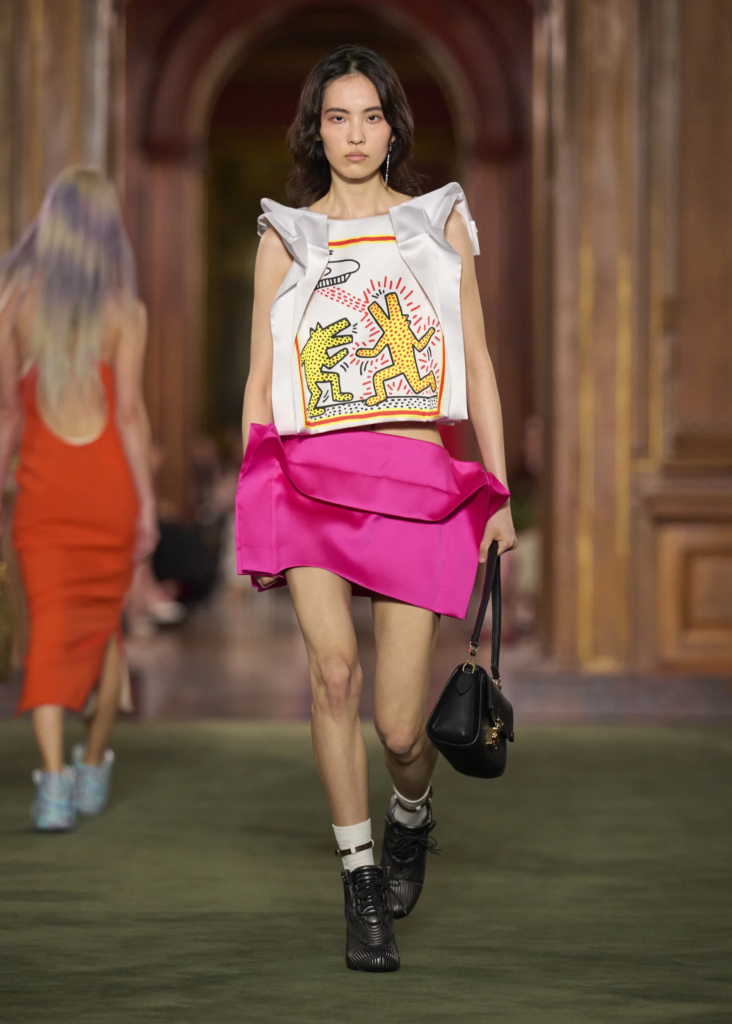
Luxury fashion house Louis Vuitton unveiled its Cruise 2027 collection this week at New York’s The Frick Collection, drawing heavily from the visual language of late Pop Art icon Keith Haring and the rebellious energy of downtown New York’s 1980s art scene.
Designed by Louis Vuitton artistic director Nicolas Ghesquière, the collection was inspired by a Louis Vuitton leather suitcase hand-painted by Haring in 1984. Acquired by the fashion house in 2020, the rare object became the conceptual starting point for a runway presentation filled with references to the artist’s instantly recognizable imagery and spontaneous street aesthetic.
Throughout the collection, Haring’s iconic barking dogs, radiant babies, graphic linework, and hand-drawn motifs appeared across garments, accessories, and leather goods. Several pieces featured painterly details intended to echo the immediacy and public nature of Haring’s subway drawings and street interventions, which helped define New York’s visual culture during the 1980s.
The show also highlighted fashion’s ongoing relationship with contemporary art and institutional spaces. Held at the recently reopened Frick Collection, the presentation follows the announcement of a new three-year cultural partnership between Louis Vuitton and the museum. The collaboration continues the brand’s long history of engaging with major artists, following earlier projects with Takashi Murakami, Richard Prince, and Stephen Sprouse.
More than three decades after his death, Haring’s imagery continues to move fluidly between art, fashion, activism, and popular culture, reinforcing his lasting influence on visual culture and contemporary design.
Sources: ARTnews, Louis Vuitton
The Met and Neue Galerie Announce Historic Museum Merger for 2028
New York’s Neue Galerie will officially merge with The Metropolitan Museum of Art in 2028, creating a major institutional partnership that will preserve one of the world’s most significant collections of early twentieth-century Austrian and German art. Following the merger, the institution will be renamed the Met Ronald S. Lauder Neue Galerie, commonly referred to as the Met Neue Galerie.
Founded in 2001 by cosmetics heir and collector Ronald Lauder, the Neue Galerie has become internationally recognized for its holdings of Austrian modernism, German Expressionism, Bauhaus design, and Viennese decorative arts. The agreement was arranged in part to ensure the long-term preservation of the museum, its collection, and its curatorial vision beyond Lauder’s lifetime.
The museum’s collection includes major masterpieces by Gustav Klimt, Egon Schiele, and Max Beckmann, alongside works by Oskar Kokoschka, Josef Hoffmann, and Bauhaus figures including László Moholy-Nagy and Ludwig Mies van der Rohe. One of the collection’s most iconic works, Klimt’s Portrait of Adele Bloch-Bauer I, widely known as Woman in Gold, will remain permanently housed at the Neue Galerie under the terms of the merger.
As part of the agreement, Ronald Lauder and his daughter Aerin Lauder have also established an estimated $200 million endowment to support the institution’s future preservation and operations. The family additionally donated 13 major artworks from their personal collection to the combined museums.
The merger represents one of the most significant museum consolidations in recent years and further strengthens the Met’s position within the global museum landscape while preserving the Neue Galerie’s distinct identity and specialized focus.
Sources: The Metropolitan Museum of Art, ARTnews
Art Dubai’s 20th Edition Focuses on Regional Solidarity Amid Ongoing Gulf Tensions
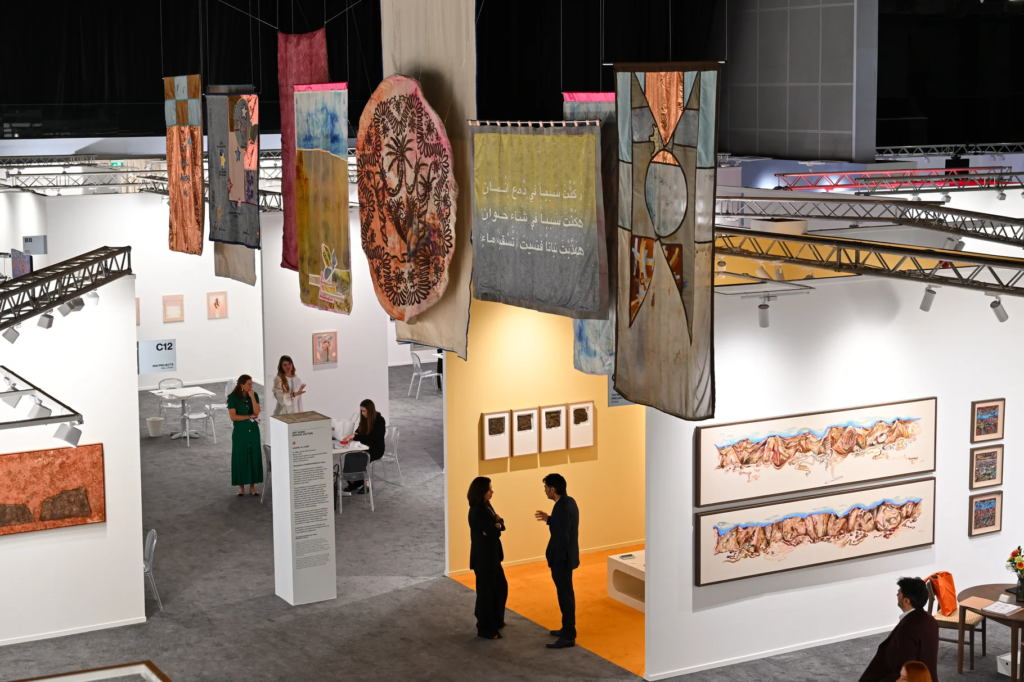
Art Dubai opened its 20th edition this week with a smaller but more regionally focused format, positioning the fair as a space for resilience, collaboration, and community following months of instability across the Gulf region. Originally postponed earlier this year due to the Iran–Israel conflict and resulting regional disruptions, the fair returned as a “Special Edition” centered largely on galleries and artists from the Middle East and surrounding regions.
Held at Dubai’s Madinat Jumeirah from May 14 through May 17, this year’s edition featured 50 galleries from cities including Beirut, Jeddah, Ramallah, Abu Dhabi, and Dubai. Unlike previous editions that emphasized broader international participation, the 2026 fair concentrated more intentionally on regional artistic voices and local cultural networks. Organizers also made admission free to encourage wider public access and engagement.
According to fair director Dunja Gottweis, the event became an opportunity for the region’s art community to reconnect during a difficult period marked by uncertainty, travel restrictions, and economic caution. Several exhibitors echoed that sentiment, describing the scaled-back edition as more intimate, collaborative, and community-driven than in previous years.
Among the presentations drawing attention was a solo booth by Palestinian artist Amjad Ghannam at Gallery One, alongside installations by Lebanese artist Lana Khayat and Armenian-Syrian artist Kevork Mourad. The fair also included talks, performances, institutional presentations, and digital works.
Despite ongoing regional tensions, collectors and galleries reported steady engagement and sales, suggesting that cultural events like Art Dubai continue to serve not only as marketplaces, but also as important spaces for dialogue, visibility, and regional connection during periods of uncertainty.
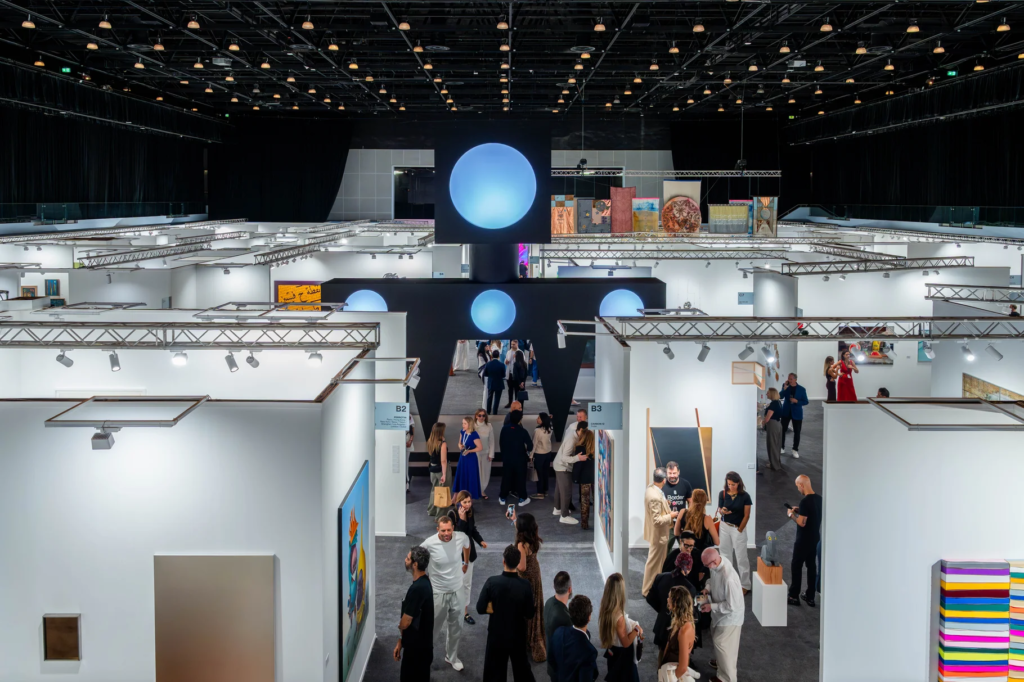
Taken together, this week’s stories reflect an art world navigating transformation on multiple levels, from blockbuster auction results and museum expansions to regional resilience and cross-disciplinary collaborations between art and fashion. As institutions continue to rethink their global roles and artists gain visibility across new platforms and markets, contemporary art remains deeply connected to larger conversations around identity, community, history, and cultural exchange. Across New York, London, Doha, Dubai, and New Delhi, this week’s developments highlighted how art continues to operate not only as a market force, but also as a space for connection, preservation, and dialogue in an increasingly interconnected world.
Also, explore our coverage of the 2026 Venice Biennale and the artists shaping its quieter, more reflective themes: In Minor Keys at the Venice Biennale 2026