

How childhood memories shape an artist’s imaginary worlds I Veronica Gomez
👁 10 Views
At Arts to Hearts, we spend a lot of time looking. Looking for artists who are not just making beautiful things, but making meaningful ones. Artists whose work stops you mid-breath and asks you to stay a little longer, look a little closer, feel a little more than you were planning to.
Our Best of the Art World editorial exists for exactly that reason, to bring those artists to you, and to celebrate what they are doing with the time and the talent and the courage they have chosen to pour into their practice.
And today, we are truly honoured to bring you one of those artists.
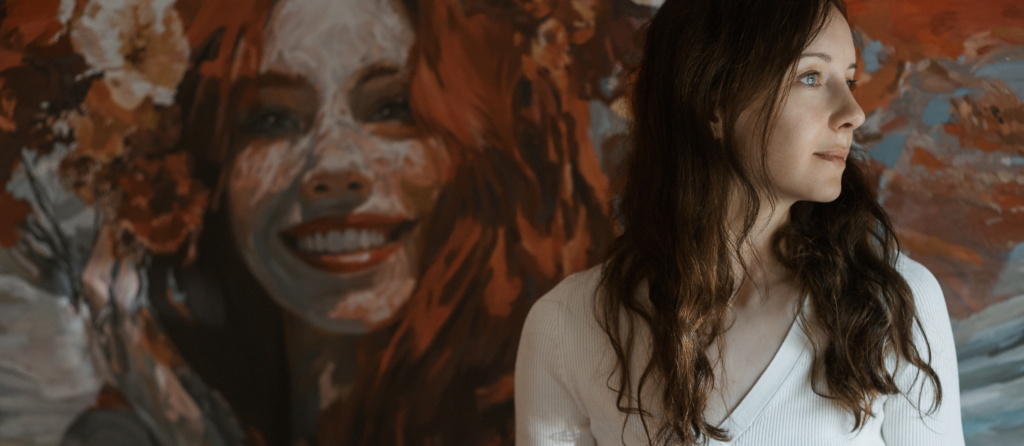
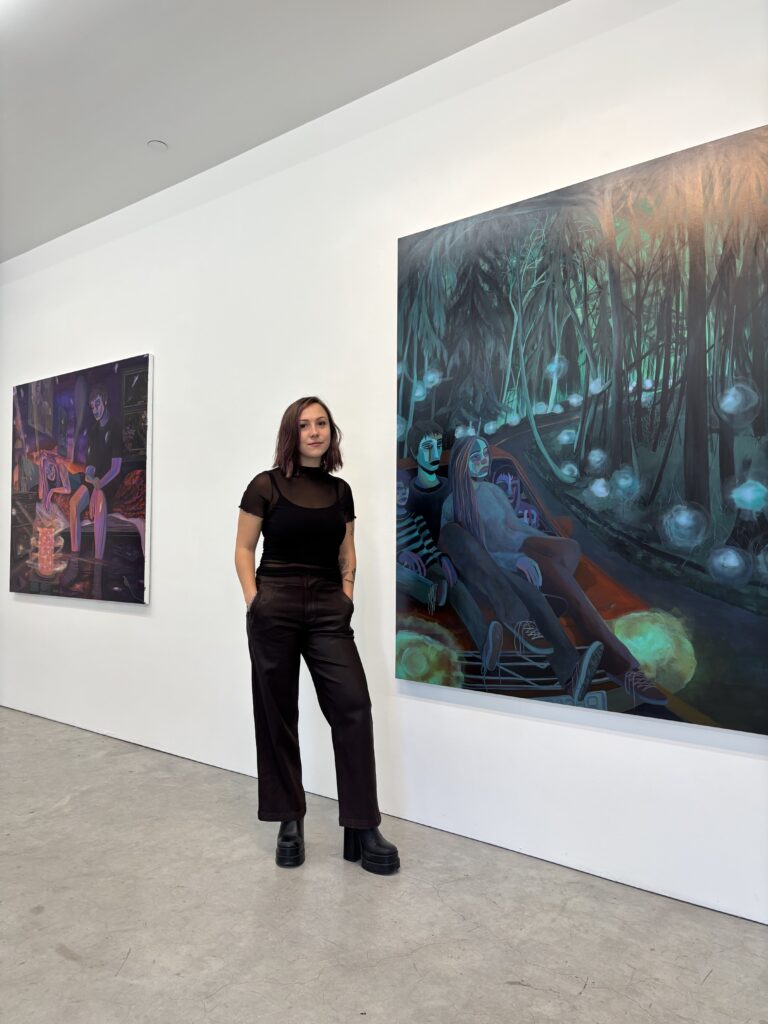
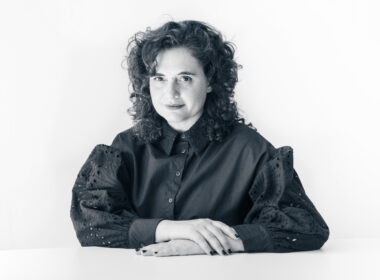
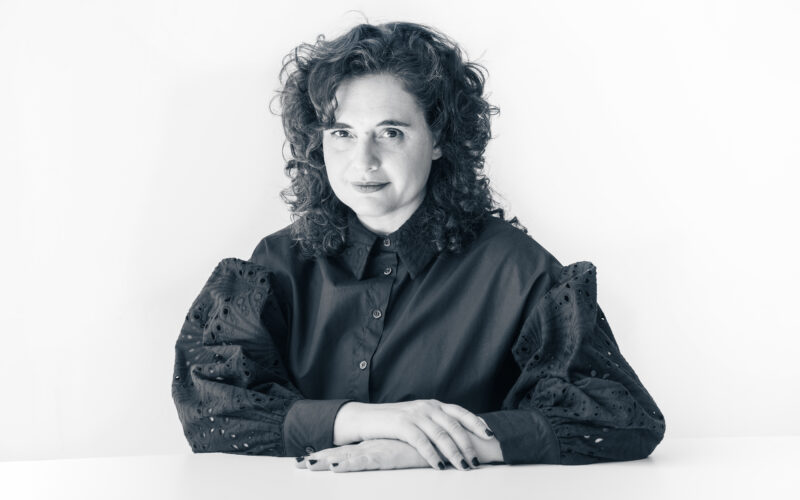
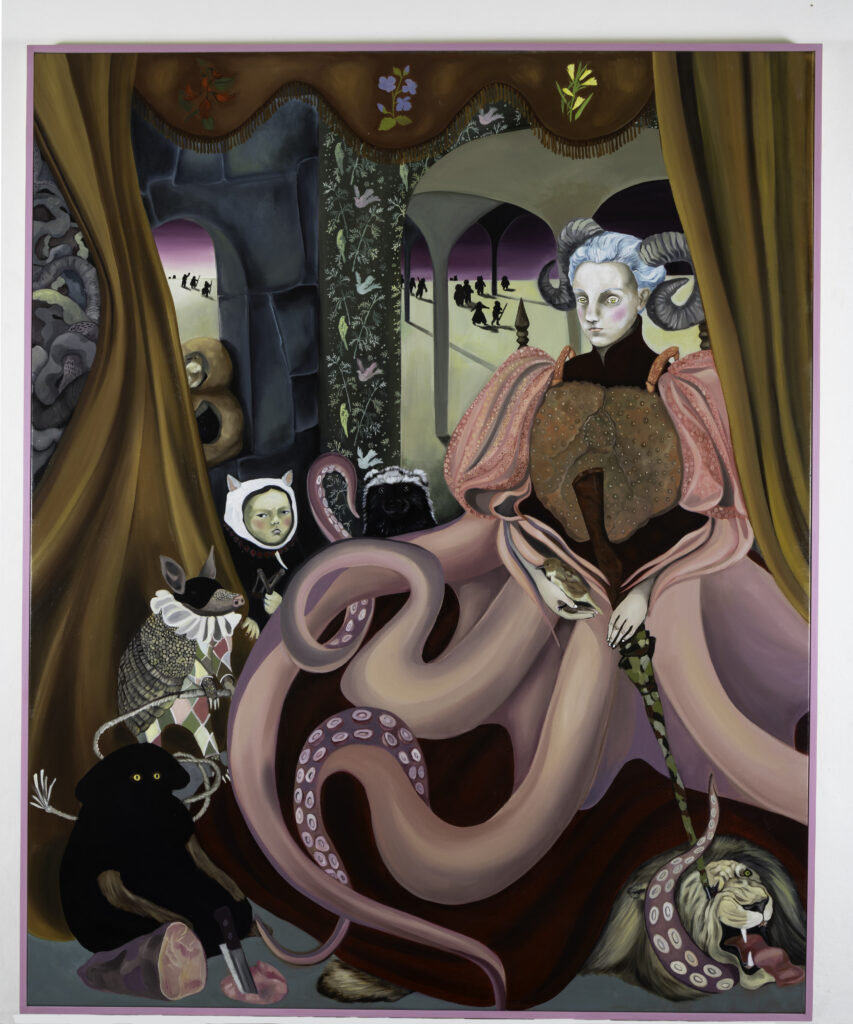
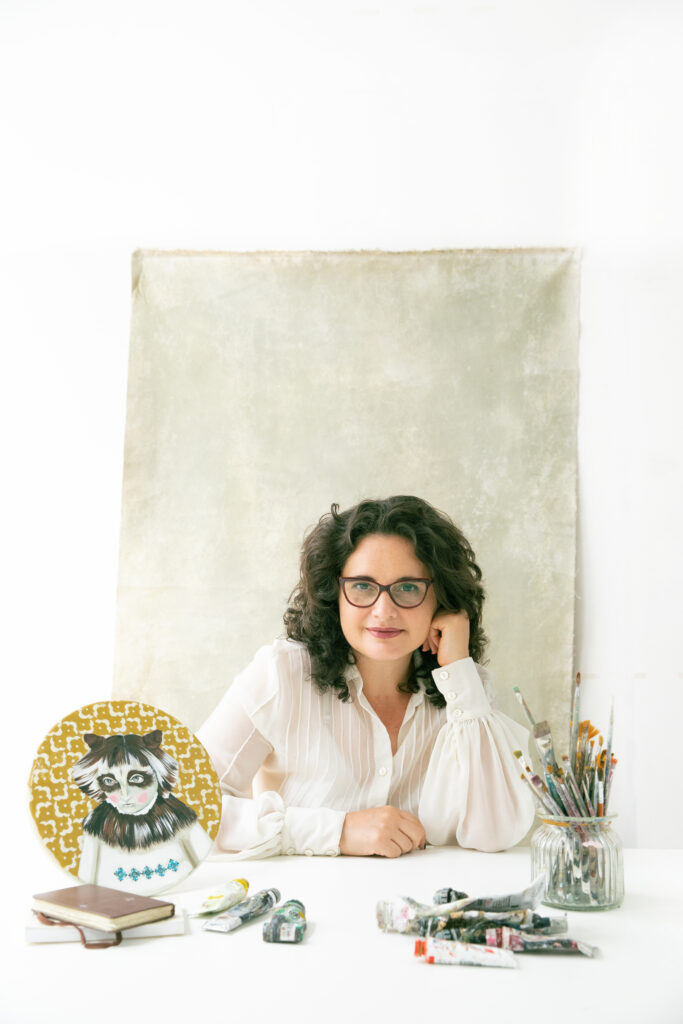
Verónica Gómez is a painter from Buenos Aires whose work feels like stepping into a dream you have had before but cannot quite name. Her paintings are filled with young female figures, strange animals, symbolic objects, and domestic spaces layered with pattern and memory and a particular kind of quiet tension that gets under your skin and stays there. Parquet floors. Patterned furniture. Rooms that feel like they belong to someone real someone whose inner life is complicated and rich and worth sitting with.
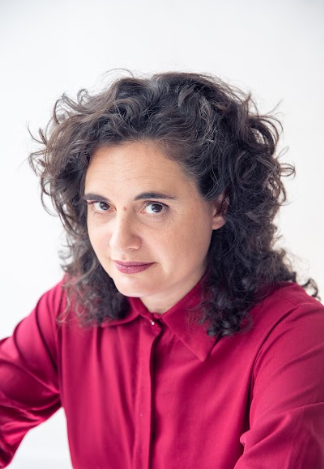
The figures she paints are young women who carry both vulnerability and power in the same breath, who seem frozen in a moment that is somehow still moving underneath. There is something deeply familiar about her worlds and something completely impossible about them at the same time.
That is exactly where she wants you in that in between space where reality starts to blur at the edges and something truer begins to surface. She calls it the improbable real. Not another dimension you have to travel to, but one that is already quietly seeping into the everyday, if only you slow down enough to notice it.
She came to painting through inheritance her father’s abandoned box of oil paints, a childhood spent feeling things too deeply to keep them inside, and a shy little girl in the suburbs of Buenos Aires who discovered that paint was the one language that didn’t require her to speak out loud. She has been speaking through it ever since.
And the more she paints, the deeper she goes, into memory, into paradox, into the strange and tender beauty she finds in the things most people walk past without a second glance.
Let’s get to know Verónica through our conversation with her, where she shares the childhood memories, the imaginary worlds, and the practice she has spent a lifetime building.
Q1. For those discovering your work for the first time, can you share a bit about your background and how your journey into art began?
My father painted as a child; my grandmother used to take him to study with a teacher
who made him copy reproductions of European paintings. As an adult, he stopped
painting and became a scientist, but I inherited his box of oil paints and his palette.
When I was 11, I asked to study at an art workshop in the suburbs of Buenos Aires, a
place that was both bohemian and academic. There was no connection in my family to
contemporary art, let alone to the gallery or art fairs. But I do remember my mother
taking me to the Museum of Fine Arts and the Museum of Decorative Arts. Those
experiences marked me deeply. I was an extremely shy child. I remember feeling a
great desire to hide. And painting was a form of communication that didn’t need words.
When I graduated from high school, it was quite clear to me that I was going to study
Fine Arts.
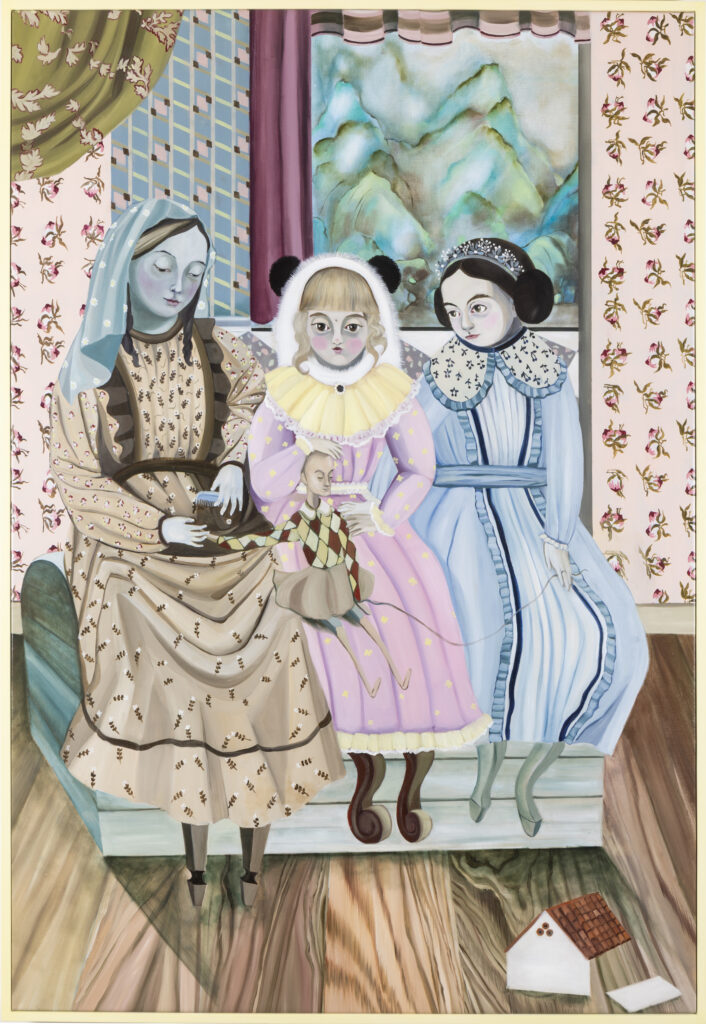
Q2. You emerged as an artist within Buenos Aires’ vibrant art scene. Looking back, what were some early influences or experiences that shaped the way you see and create today?
I believe a very early influence, something that strongly shaped my taste and that I see
appearing again and again in my paintings, is the way my mother decorated my
childhood home. That style isn’t found in any decorating magazine; it’s a combination of
more or less spurious styles, closely tied to the Argentine middle class—those children
of poor immigrants who, in the mid-20th century, achieved social mobility. There’s a
great freedom in that taste, in that idiosyncrasy. It’s an impulse guided by the logic of
collage and the tyranny of emotions, capable of harboring contradictions without guilt:
suburban grandeur and Provençal kitsch, aspirational and folkloric.
Q3. Your paintings feel like entering a world that is both familiar and strange filled with figures, animals, and symbolic objects. How do these worlds begin for you?
They begin quite naturally. I have a sense of familiarity with the strange. I don’t usually
perceive it as sinister. I think the key word is “affection.” I grow fond of oddities, so
much so that I want to paint them. It’s a kind of homage. A vindication.
Q4. Your work often suggests a story, but never fully explains it. How important is it for you to leave space for ambiguity rather than offering a clear narrative?
More than ambiguity, I’m interested in paradox. It’s not that something can be one way
or another. It’s that the thing is both ways at the same time, and that doesn’t present
any contradictions. I’m also interested in redundancy. It amuses me, too.
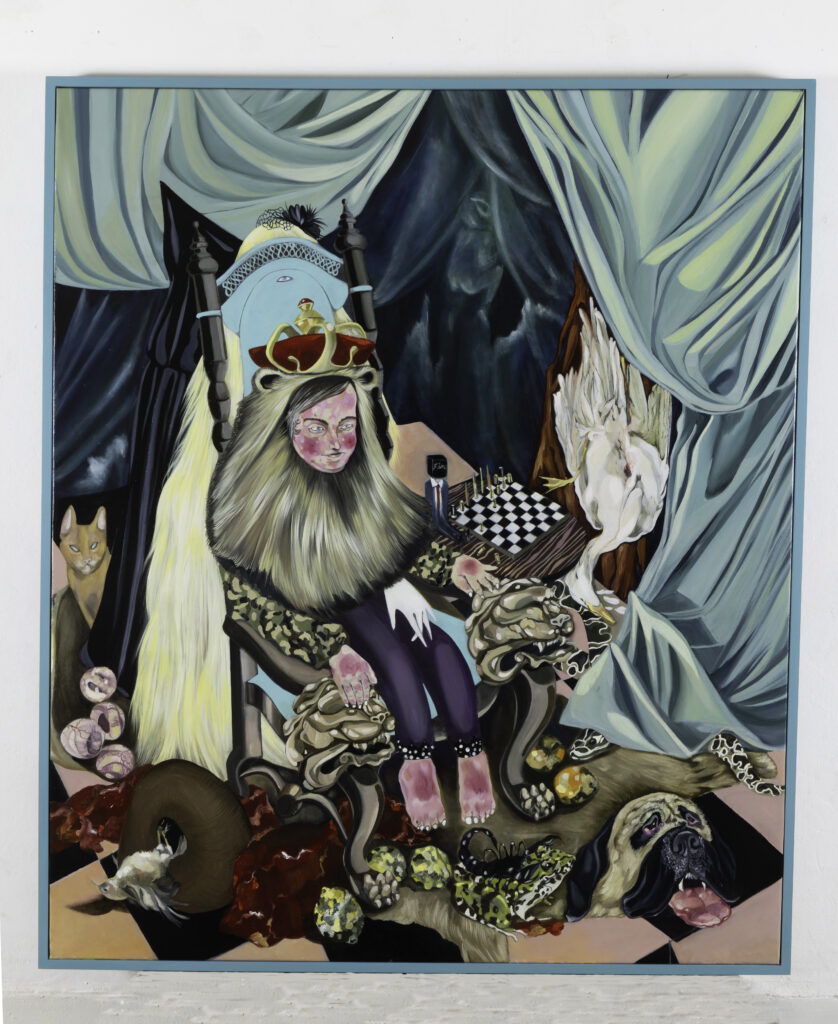
Q5. There is a quiet tension in your work something that feels both delicate and unsettling at the same time. How do you approach creating that emotional balance?
I think painting always carries a certain tension. Because it’s something still and silent.
If we see figures frozen in time on a stage, there’s an inevitable sense of tension. My paintings don’t deny that tension; I don’t paint atmospheres that could soften and
integrate, recreate movement, a breath. I paint separate, isolated things. There’s a lot
of line in my painting. A lot of cutting. Eduardo Chillida said: with a line the world unites,
with a line the world divides; drawing is beautiful and tremendous.
Q6. Many of your works feature young female figures who appear both vulnerable and powerful. How do you think about these characters when you create them?
I don’t really know why they insist on coming out. Every time I think I’ve had enough,
another one of these women knocks on the door. And I have to open it. It’s a
relationship that always interests me: how vulnerabilities are protected, what forms
emerge in defense mechanisms, in survival strategies. There are forms there of
tremendous beauty, monstrous and delicate.
Q7. Your paintings move between reality and imagination in a very fluid way. Do you see your work as an escape from reality, or a way of looking at it more closely?
If you look at things too closely, they inevitably become strange. And that strangeness
isn’t necessarily an escape, but rather an emphasis, an exaggeration. A call to linger in
one place and delve deeper. It seems to me to be the opposite of fleeing. I like to think
that my work deals with the improbable real; that is, you don’t have to travel to another
dimension, there’s no portal to cross, but rather other dimensions that seep into our
everyday world.
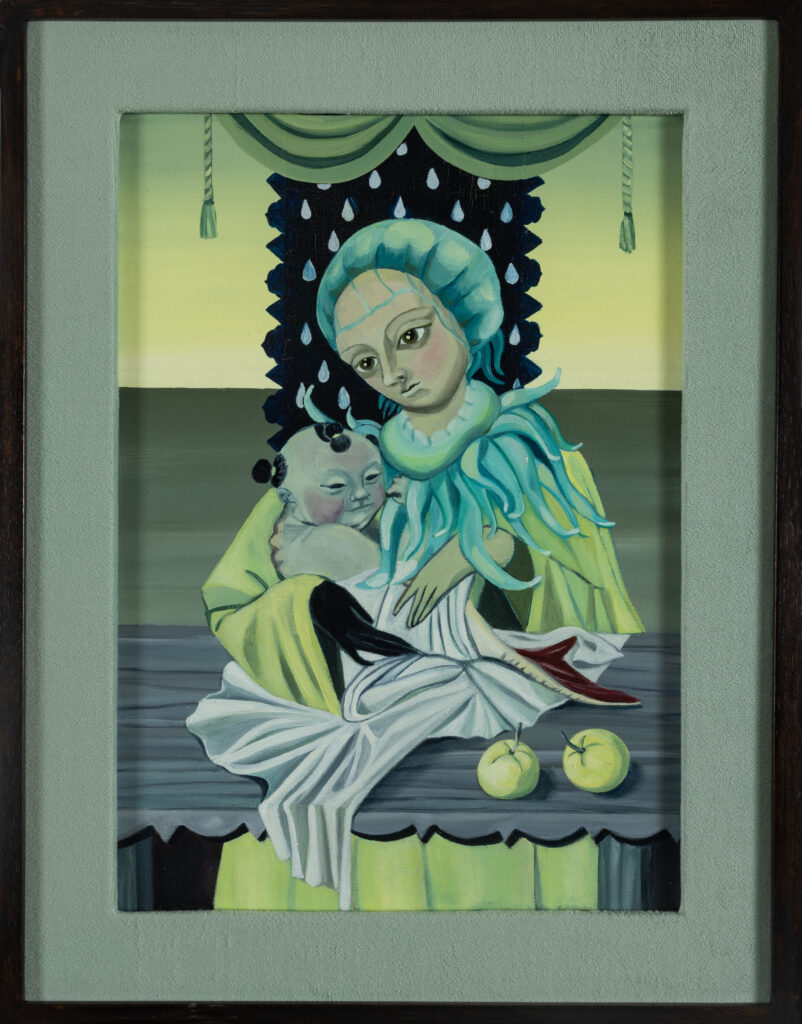
Q8. Your work has been described as reflecting personal and political realities through allegory. How consciously do you engage with the social or political context around you?
I’m quite aware of the elements of the political context that seep into my work. They
reach my paintings shouting and stumbling, like an internal turmoil that, if I don’t paint
it, will unravel my life. Emotionally, I have to do something with it. And painting is my
tool, my language. So I organize them a bit, I stage them, I assign roles as if it were a
play. Fable and allegory are effective forms that serve me for that.
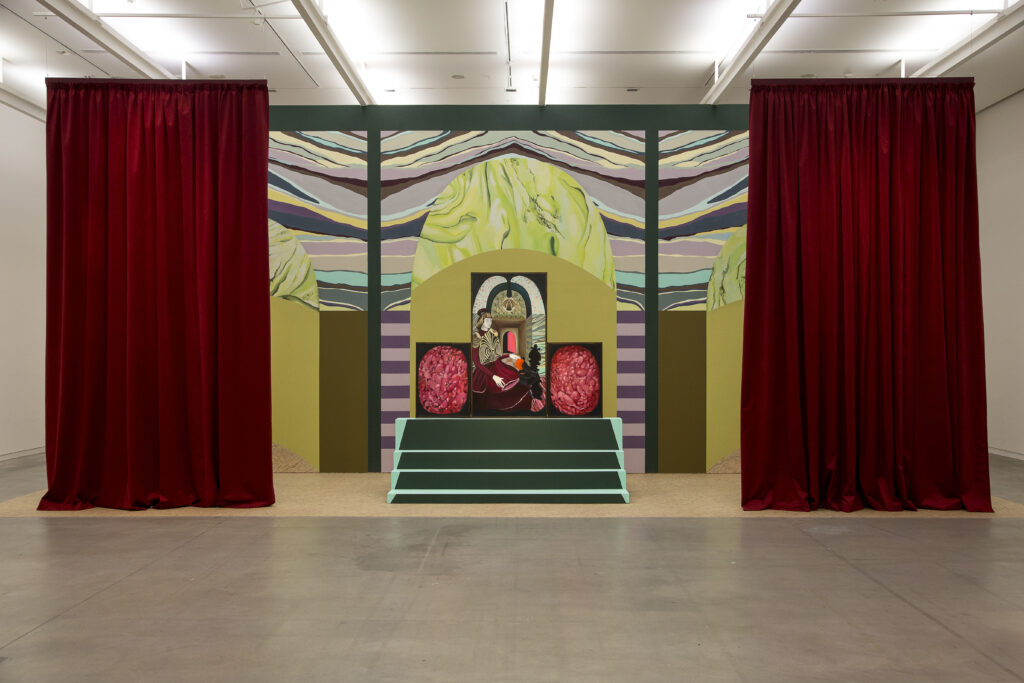
Q9. In Las casas de las niñas inusuales, the domestic space becomes almost theatrical, as if something is hidden beneath its surface. What was the starting point for that series?
The stories of my childhood. And how those stories continue to affect me in the
present.
Q10. Many of your works include very specific details, parquet floors, furniture, decorative elements. What draws you to these markers of domestic life?
I think all those elements support the characters. Decorating is fundamental for me. It’s
one of the possible relationships we establish with emptiness, with death. Something
Gombrich explained beautifully in his book “The Sense of Order.” Now, the type of elements I choose—the patterns, the textures—I’m also interested in them bringing up
a story, an origin, and that’s where what I was saying at the beginning about my mother
and collage comes in.
Q11. Alongside your creative practice, you are also an educator. How does teaching influence the way you think about your own work?
Being a teacher and an artist are, for me, two sides of the same coin. It’s a dialectical
relationship. One wouldn’t exist without the other. It’s an incredibly powerful economic
and psychological alliance for me. But be aware that you have to differentiate the roles;
that’s the most beautiful thing, because it allows for flexibility, it’s an exercise in
crossing thresholds, in expanding yourself. When I’m a teacher, I’m the artist at the
service of someone else’s world; when I’m an artist, I bring influences from my
experiences into my own works. As for writing, I’ve always developed it in relation to
the visual arts; anyway, someday I’d like to publish fiction. But in any case, I recognize
reading as an important influence on my paintings.
Q12. Your work engages with painting as a tradition, while also feeling very contemporary. How consciously do you position yourself in relation to painting history?
Very aware. In fact, I’m deliberately aware, because there are references I take care to
make explicit. Regarding contemporary art, I feel like I always have one foot outside of
it. That I’m a bit of a 19th-century type. At most, from the 20th century. That’s where I
do escape, to the past; I have a melancholic spirit. But I understand that this is also
part of being contemporary.
Q13. What advice would you offer to emerging artists who are trying to find their voice while navigating uncertainty and self-doubt?
My advice would be that they to remain in close contact with that which initially led
them to paint, draw, and bring objects and images into this world. It’s important not to
lose the connection to their art despite financial issues. There’s a song by Silvio
Rodríguez that says something like: “You must embrace the time of trying, you must
embrace the hour that never shines, and if not, don’t expect to touch what is certain,
only love breeds wonder.” I think that’s the way it is.
As our conversation with Verónica came to a close, we kept thinking about what it means to spend a lifetime painting the things that cannot be fully explained. Not because explanation is impossible, but because some things lose something essential the moment you try to pin them down. Verónica understands this instinctively.
Her paintings do not resolve. They do not tie themselves up neatly and hand you a conclusion. They open something instead, a door into a space that feels both deeply interior and strangely universal, as if she has found a way to paint not just her own inner world but the one we all carry quietly inside us and rarely speak of.
What also strikes us is how personal and how universal her imagery manages to be at the same time. The domestic spaces she returns to again and again those rooms filled with pattern and memory and the very specific aesthetic logic of the Argentine middle class, are particular enough to feel real and open enough to feel like everywhere.
Like everyone’s childhood home, slightly distorted. Like a memory you are not entirely sure belongs to you. That is an extraordinarily difficult thing to achieve in paint, and Verónica achieves it with what looks, from the outside, like complete ease. Though we know by now that nothing about this work is accidental.
There is also something worth saying about how rare it is to find an artist who is in such honest, conscious conversation with art history not to hide inside it, but to push against it, to pull from it, to make something that could only exist right now and yet feels like it has always existed. Her work carries that kind of depth. The kind that rewards return visits. The kind that reveals something different every time, because what you bring to it changes, and the painting quietly changes with you.
There is a particular kind of artist who makes you feel less alone in your strangeness. Who finds the uncanny in the domestic, the mythic in the mundane, and holds it up to the light without flinching. Verónica Gómez is that kind of artist.
And in a world that constantly rewards the loud and the obvious, her quiet, patient, deeply layered work feels like an act of real defiance. We are so glad we found her. And we are even more glad that you now have too.
Follow Verónica Gómez through the links below and spend some time in her world. It will stay with you longer than you expect