



This Artist Turned Cliffs, Deserts, and Parking Lots into Her Studio I Britni Mara
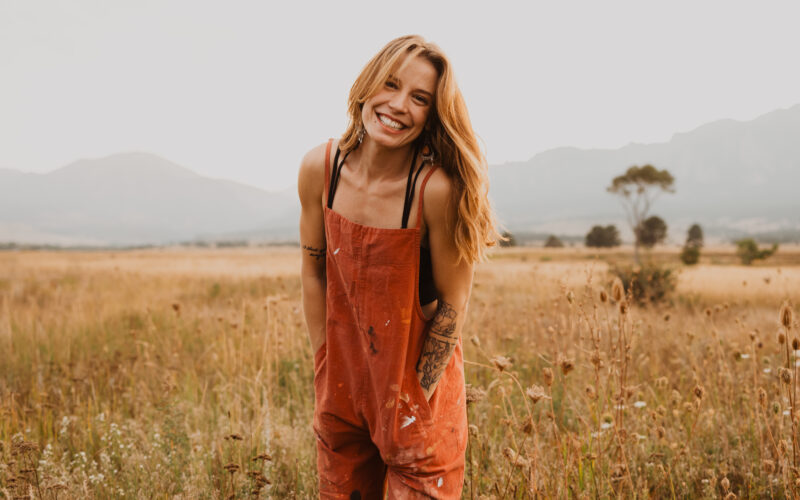
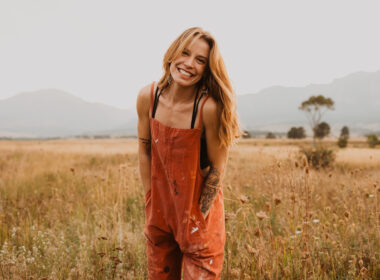
Some artists grow into their work through steady discipline, but others arrive by paying attention to the quiet shifts in their own lives the moments that pull them forward, the ones that break things open, and the ones that ask them to start again. Britni Mara falls into that second group. Her path hasn’t been straight or predictable. It has unfolded through detours, resets, and small awakenings that slowly built the language she paints with today.
For this week’s Best of the Art World series, we’re honoured to share Britni’s story a journey shaped less by certainty and more by the courage to keep beginning, even when the next step isn’t obvious.
Britni started with a strong foundation. At Bradley University, she learned the basics that every painter needs colour, composition, structure, the discipline of putting in the hours. Studying at the Siena Art Institute widened her world further. It was her first time leaving the country, and the people she met, the places she saw, and the unfamiliar rhythms of life abroad shaped her in ways no classroom ever could.
But the real turning points in her creative life came later. Chicago challenged her. It pushed her to build a full-time art business and eventually pushed her to the edge of burnout. At the same time, rock climbing entered her life something completely unexpected that opened a new part of her. When everything finally felt too heavy, she did something most people only dream about: she packed up her studio, sold her car, moved into a van, and drove toward whatever came next.
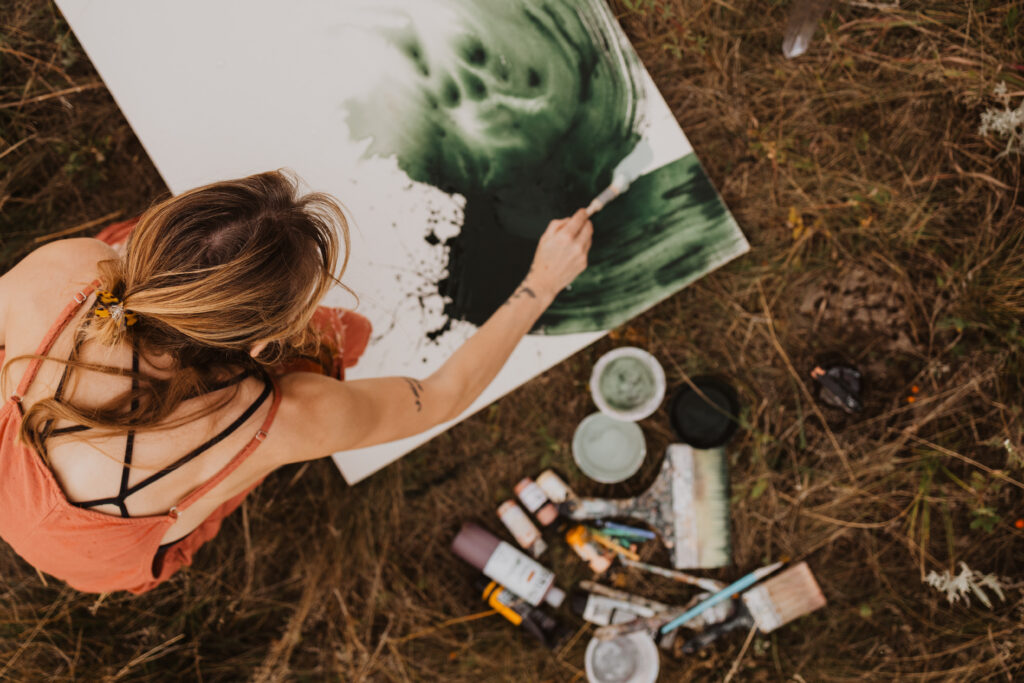
Painting on the road changed her. Working beside cliffs, stretching canvases on the ground, rolling them up and tucking them away before driving to the next place it stripped her practice down to what really mattered. It made her pay attention again. It made her remember why she paints.
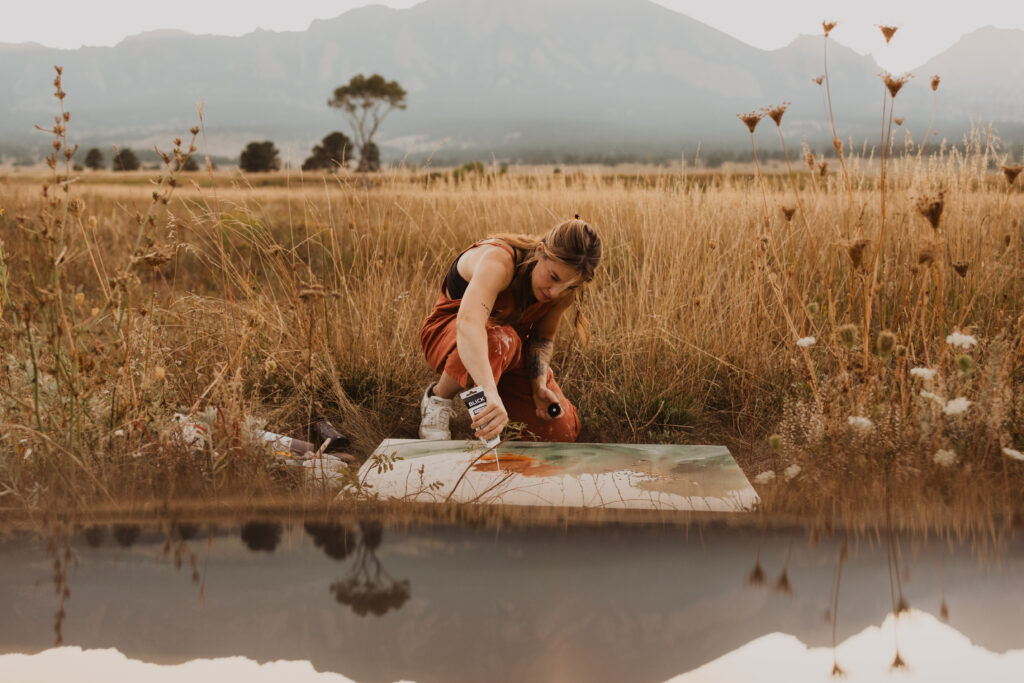
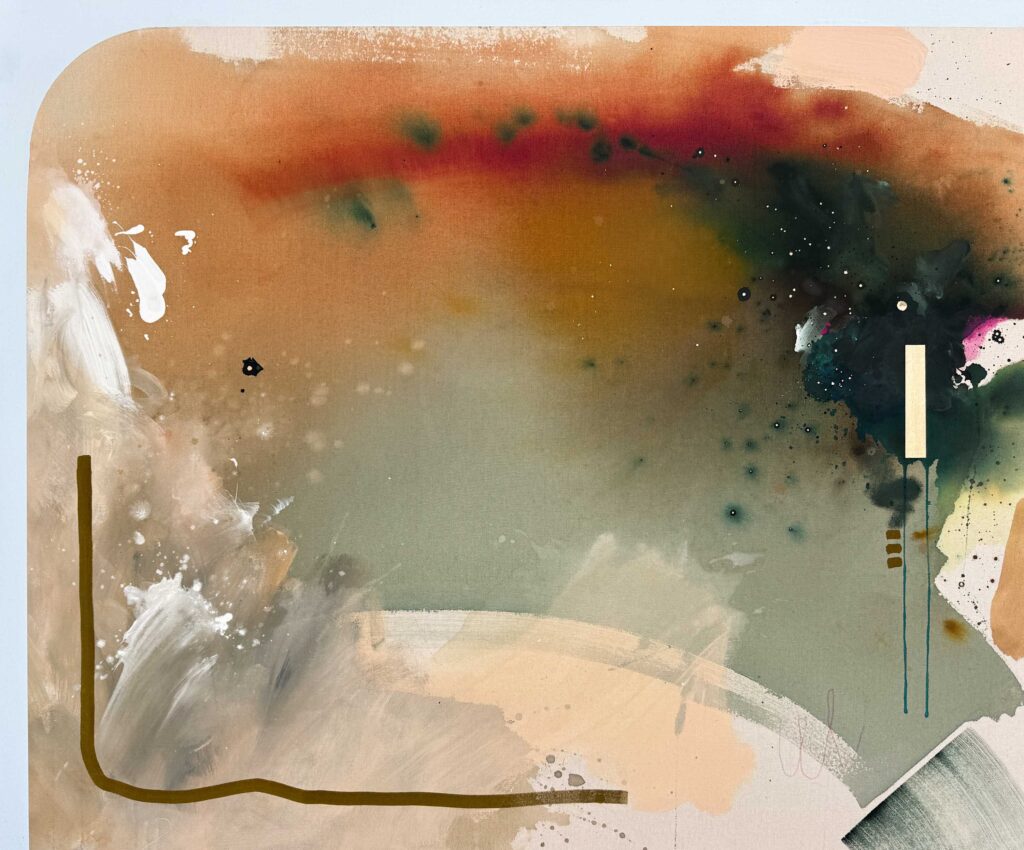
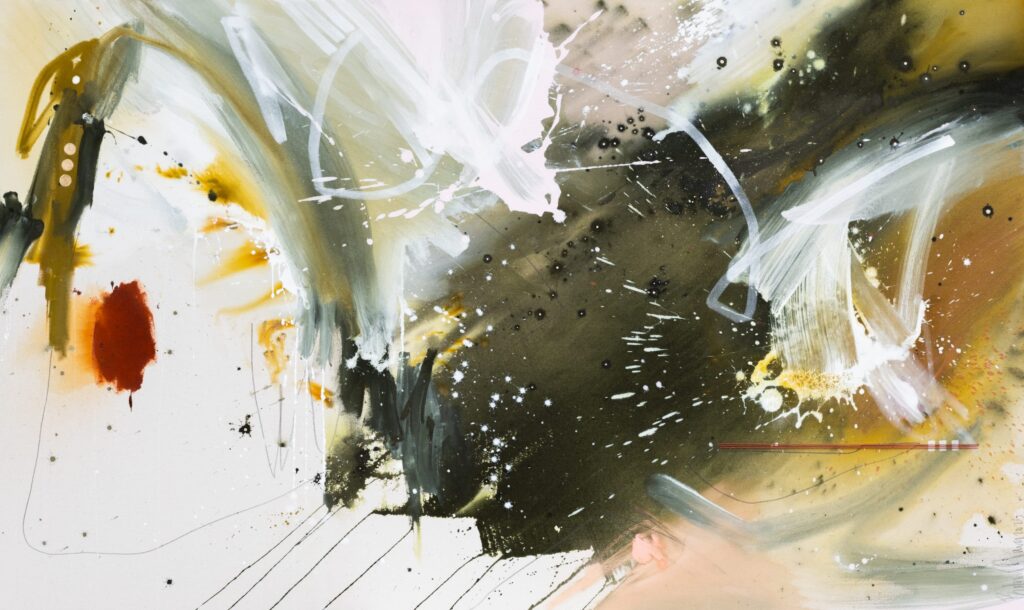
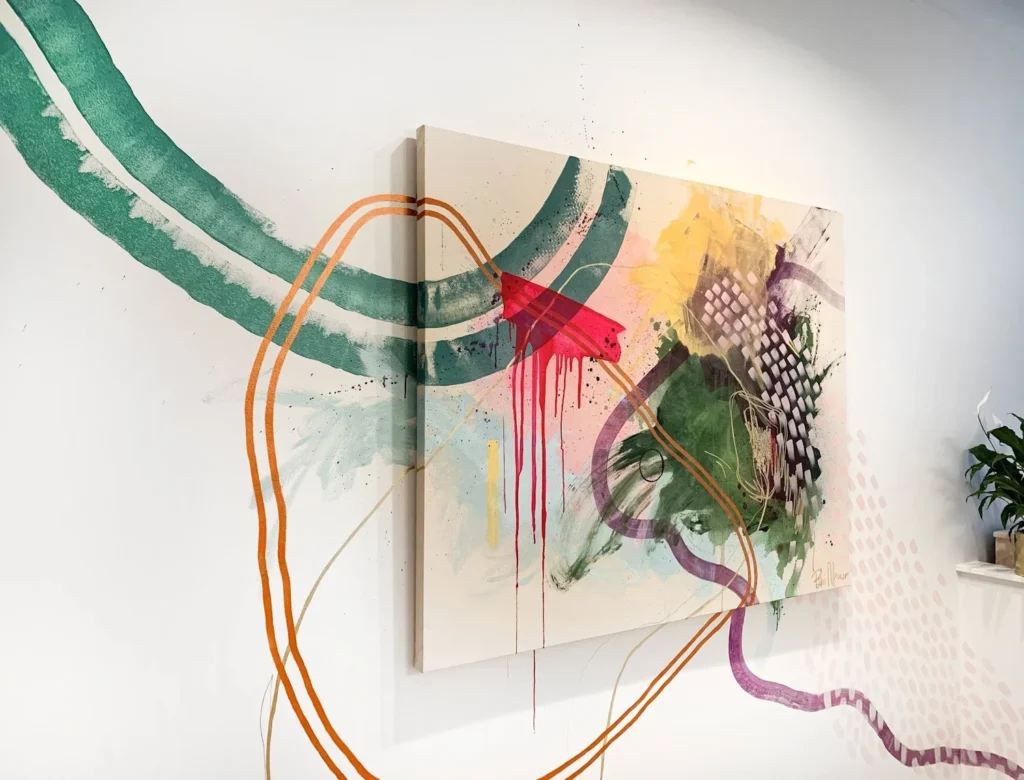
Her work today carries all of that with it. Britni begins with instinct: loose marks, open gestures, colours that find their way on their own. Then she returns with structure and intention. The paintings settle into a balance between freedom and clarity a balance she learned first in life, then in the studio. Her experiments with natural dyes came from a moment of curiosity in her kitchen, and they became a reminder that creativity doesn’t have to be grand; it can begin with something as ordinary as a beet staining a cutting board.
Beyond her personal practice, Britni has built space for others, too. The Hallway Gallery, her nonprofit dedicated to women and nonbinary artists, grew from noticing a gap and deciding it didn’t have to stay there. She didn’t wait for permission. She created the kind of opportunity she wished existed when she was starting out. That spirit is generous, practical, grounded and runs through everything she does.
Britni’s world is one of colour, motion, experimentation, and honesty. Nothing is forced. Everything is felt. And each canvas carries a piece of the life she has chosen again and again, one reinvention at a time.
Let’s step into Britni Mara’s world, where colour moves with purpose, where experimentation becomes empowerment, and where every canvas holds the trace of a life lived boldly, openly, and in motion.
Q1. Can you share a bit about your journey from your early training at Bradley University and Siena Art Institute to your move from Chicago to Boulder and how these experiences have shaped your abstract practice today?
Bradley was a great school to learn the foundations of an art practice. I felt like I had a good handle on the core principles and design elements and it definitely made me a better painter. I wish there was a bit more education on real world applications like starting an LLC, or filing taxes, but hey I figured it out eventually. Studying abroad also greatly shaped me. It was my first time out of the country, and I met so many beautiful souls along the way. That experience moulded me as a person and therefore changed my art pretty significantly. Chicago -> van life -> Boulder, CO… it was a ride for sure! I was full-time with my art business when I left Chicago and I kept the work/sales flowing while on the road. It was hard, and I definitely took that time to take a step back from the business. Boulder seemed like the most logical choice for me to resettle and reestablish my business. There’s a ton of access to nature here and a great art community. I’m excited to dig in and become part of the fold!
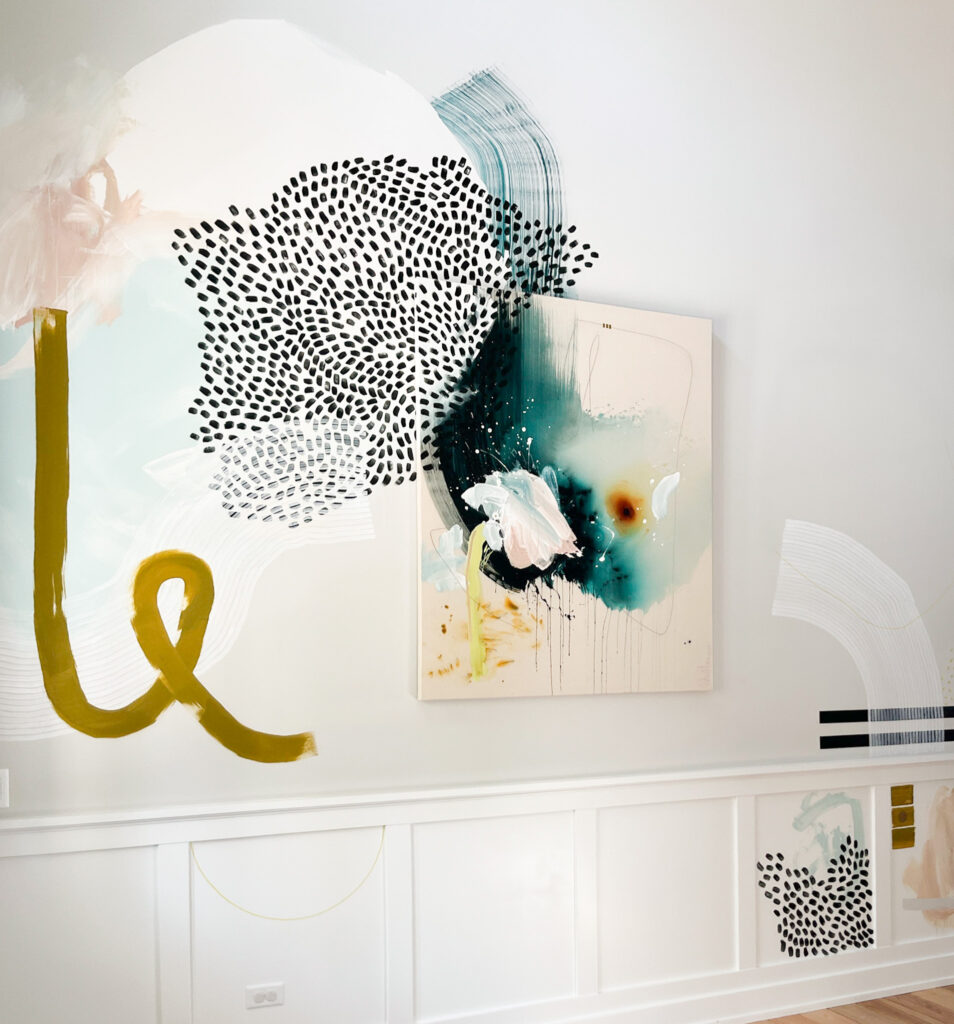
Q2. You’ve said your work is about bringing structure to coincidence and finding freedom in gesture and colour. How does that philosophy guide you when you start painting each day?
My favourite part of painting is the first layer, it’s the most freeing, meditative experience for me. Sometimes I’ll plan out a few colours, but I am largely working instinctively, with little to no planning involved. After the first layer dries, I go back in to refine or draw attention to certain Areas of a painting. This is when the work really comes together and feels more cohesive or structured.
Q3. You often use natural dyes and pigments made from food sources (beets, turmeric, avocado, hibiscus, etc.). How did you first start experimenting with that, and what does it mean to your art practice?
Ah yes! That body of work is one of my favourites. I started experimenting with natural, edible dyes in 2017. At the time, I felt stuck in my art practice and unsure of what would come next. While cutting up beets in my kitchen, I noticed how they stained my hands and the cutting board.
I thought to myself, “What if I could make paint out of this?” That moment sparked a deep curiosity.
I began playing around with materials like saffron, cilantro, beets, and blue pea flower. I learned a lot from natural dyers and gained insight into how to extract colour from the environment around me. I didn’t use any chemicals or paint mediums to seal the work; it was purely organic pigment and water on canvas. I hold “The Natural Series” very close to my heart. Creating a body of work that explored themes of recycled living and mindfulness about the environment felt deeply meaningful. I still think about returning to it. Ultimately, I set it aside because I found that people were hesitant to purchase in artwork without a guarantee of how it would age over time. Maybe that mindset has shifted, but back then, I wasn’t selling enough to make a living—and that’s the tough reality of being a working artist: sometimes, you have to follow sales.
Q4. In 2023, you took your art on the road in a converted van what inspired that decision, and how has living and creating on the move influenced your work?
I did! I fell in love with rock climbing in 2021. I loved my life in Chicago and was so grateful to have built my art career there, but I knew I wanted something different. I felt immense burn out from running a full-time art business and needed a reset. I left in search of nature, rocks, and a deeper understanding of myself. I grew up in Chicago and felt like it was the right time to see what the rest of the world had to offer. In four weeks, I packed up my commercial studio, sold my car, and bought a Sprinter van. It was truly the best decision I’ve ever made. I followed a dream, and I feel incredibly lucky I had the chance to do it. I downsized all of my supplies into four small bins, a big roll of unprimed canvas, and a few stretcher bars. On the road, I would build, stretch, and paint outside on the ground. Once the work dried, I’d pull the staples from the back, roll it up, deconstruct the stretcher bars, and pack everything back into the van. Painting became a tedious, methodical process—but also incredibly meaningful. I’ve always been inspired by my surroundings, and though it was exhausting at times, it felt like a true privilege to paint all across this beautiful country.
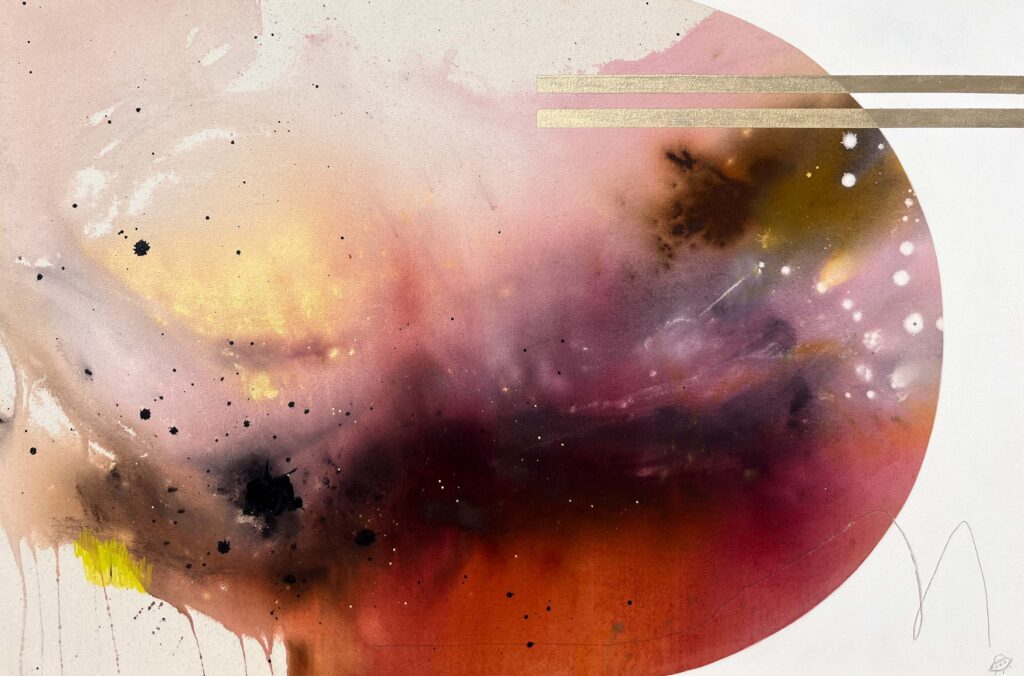
Q5. You founded The Hallway Gallery, which turns underutilized walls into exhibition space especially for women and nonbinary artists. Why was that important to you, and how has it fed into your own practice?
While building my career in Chicago, I noticed there wasn’t much support for women and non-binary artists. Although the landscape has evolved a lot since 2020, there used to be a significant barrier to entry for emerging artists. I saw empty walls in high-rise lobbies and coffee shops, while artists struggled to find exhibition space — so I set out to change that. The Hallway Gallery offered not only a platform to showcase artwork but also a safe, welcoming space to gather and connect. It also increased the Chicagoland community’s access to local art. It was truly beautiful to watch artists learn from one another and gain the confidence to exhibit their work through this nonprofit gallery. The experience shifted my definition of “success”—I felt happiest when I saw other local artists thriving.
Q6. Your New Body Series engages self-image, vulnerability, and power, emerging from personal upheaval. How did you set ethical, emotional, and aesthetic boundaries for yourself and your collaborators in that work?
I don’t think I intentionally considered these boundaries before creating the work—they emerged naturally as the project evolved. As new ideas came up, so did the boundaries. The core theme was about empowering women in their own bodies and creating artwork that felt deeply relatable to the female experience. I was fortunate to be surrounded by embodied, supportive women during a tumultuous divorce—women who not only stood by me but also felt comfortable making art alongside me. I photographed myself and these women, capturing powerful moments of resilience that spoke to the complexity and strength of the female experience.
Q7. When you guide artists through their portfolios and pricing, what are some common challenges you notice, and how do you gently help them build a sustainable practice without diluting their voice?
One of the most common challenges I see is artists not knowing the worth of their work. Art is subjective, of course but there’s still a market for it. Many artists tend to undervalue their own creations and often struggle with self-promotion. The goal of my business and portfolio reviews is to empower artists to recognize the value of their work, charge fairly, and build a sustainable practice doing what they love. When our capitalist society undervalues art (as it does), I think artists struggle to find a proper price point.
Q8. You’ve been candid about burnout and the reset it prompted. What boundaries or rhythms now keep your healthy creative sprints, seasonal breaks, or “no-phone” studio hours?
I have! Burnout is real, and I think we should all be more candid about it. As a full-time artist, I wear a lot of hats—creator, inventor, marketing director, customer service rep, content creator, photographer, graphic designer, writer, financial analyst, sales rep… and so much more. It’s exhausting. I definitely needed the reset I took in 2023. Since then, I’ve gotten much better at carving out time for myself. Climbing rocks in nature helps a lot—there’s often no cell service at the wall, and the sport forces you to be fully present. I’ve also set firmer boundaries around when I answer emails or take calls. I don’t work weekends unless I’m teaching a workshop, and most importantly, I make time for the things that creatively fill my cup. I go to art shows and music festivals. I explore new creative outlets that spark curiosity and inspiration. I keep things fresh—and I’ve also learned to rest without guilt. That’s been a game-changer. Creatives need time to be still, to read, to write, to simply be—especially in a world that never seems to slow down. I used to feel terrible about downtime, but I’ve let go of that mindset, and it’s made all the difference.
Q9. During quarantine you briefly returned to acrylics to work through creative blocks. What did that period teach you about momentum, medium, and mental health in practice?
Yes! During the early stages of Covid lockdown, I was working with natural dyes and felt I needed time to play, explore and freely create. I revisited acrylics and started to create work that felt unhindered. The work started selling, and my business started flourishing. Creating work freely allowed me to make work that people wanted to purchase, stronger paintings with better compositions and colour palette lets. I learned that it was really important to push through mental blocks and creative lulls by simply playing in the studio.
Q10. From your perspective as a painter, curator, and mentor, where do you see the most promising opportunities emerging for women and nonbinary artists today & what changes do you feel are still needed to create a more supportive art world?
I think the landscape has changed a LOT from when I first started out. There are so many more grant opportunities, non-profits supporting women and galleries with a mindset to support historically marginalized communities. I find it to be very promising and exciting!! White men are still selling the most “expensive” work, I’m eager to see high end sales to catch up with the times!
Q11. What advice would you offer emerging artists especially those exploring unconventional materials or carving out space for themselves and others?
Keep going! Nothing works until it does. Apply for all the shows, galleries, open calls, art walks, and get involved with your community in any way that you can!
It’s so important to keep throwing spaghetti at the wall to see what sticks!
If you’re noticing a gap in representation, fill it! Create the space and the community you’re looking for.
As this conversation with Britni comes to a close, what stays with us is how open she is about the messy, human parts of being an artist, the burnout, the doubts, the rebuilding, and the everyday choice to keep going. She reminds us that a creative life isn’t about constant progress. It moves in cycles. It speeds up, slows down, and sometimes stops completely so something new can take shape. Britni has learned to trust that rhythm rather than fight it.
Her paintings carry that same feeling. They begin loose and instinctive, then settle into something more grounded. The early marks hold freedom; the later ones bring clarity. You can sense the movement in them the pauses, the returns, the moments when something suddenly clicks into place. They feel alive because they come from someone who allows her work to shift as she shifts.
And outside the studio, she keeps creating room for others to grow. Through The Hallway Gallery, through her portfolio reviews, through simple conversations with emerging artists, she offers something rare: practical guidance paired with genuine care.
Britni knows the art world can feel intimidating, expensive, and closed-off. Her work on and off the canvas pushes against that. She has decided that community matters, that generosity matters, and that success is something people can build together.
What her story ultimately shows is that reinvention isn’t a detour it’s part of the path. You’re allowed to step away. You’re allowed to rest. You’re allowed to start again. Britni’s life is proof that beginning again doesn’t erase what came before; it strengthens it.
Follow Britni Mara to witness an artist who leads with honesty, curiosity, and courage and who reminds us that the space we’re searching for often begins by creating it ourselves.


